32 Schoolyard Games That Kept Kids Busy for Hours Without a Single Screen
Nobody scheduled these games. There were no coaches, no referees, no registration fees, and no app to track progress. The bell rang, children poured outside, and within about 90 seconds something was already underway — usually without any adult involvement whatsoever. The rules were passed on by older kids to younger ones, modified by local custom, argued over constantly, and occasionally abandoned mid-game when everyone agreed the current version wasn’t working anymore.
What these games produced, aside from scraped knees and genuinely high heart rates, was a specific kind of social education that no structured activity quite replicated. You learned to negotiate, to lose without quitting, to lose and then come back tomorrow. You learned which kids were faster than they looked and which ones would cheat when they thought no one was watching. Here are 32 of the games that made recess what it was.
Tag
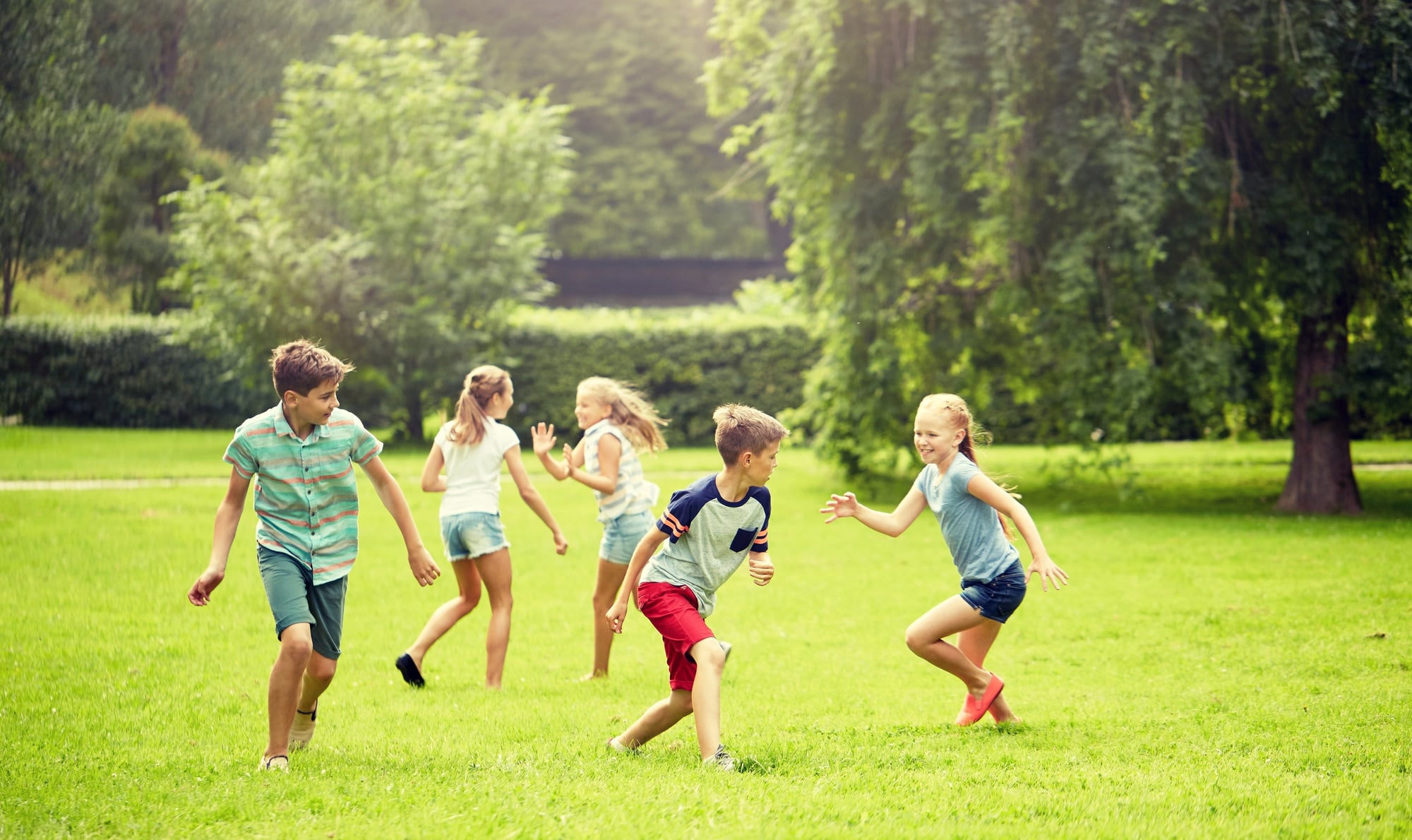
The foundational game. One person is “it,” and their job is to touch someone else to transfer the status. The genius of tag is that it requires nothing — no equipment, no preparation, no team selection — and scales to any number of players from two upward.
Endless regional variations exist: freeze tag (tagged players are frozen until touched by a teammate), shadow tag (you tag someone’s shadow), and tunnel tag (frozen players must wait to be crawled through). The purist version remains the most popular and requires the least explanation.
Freeze Tag
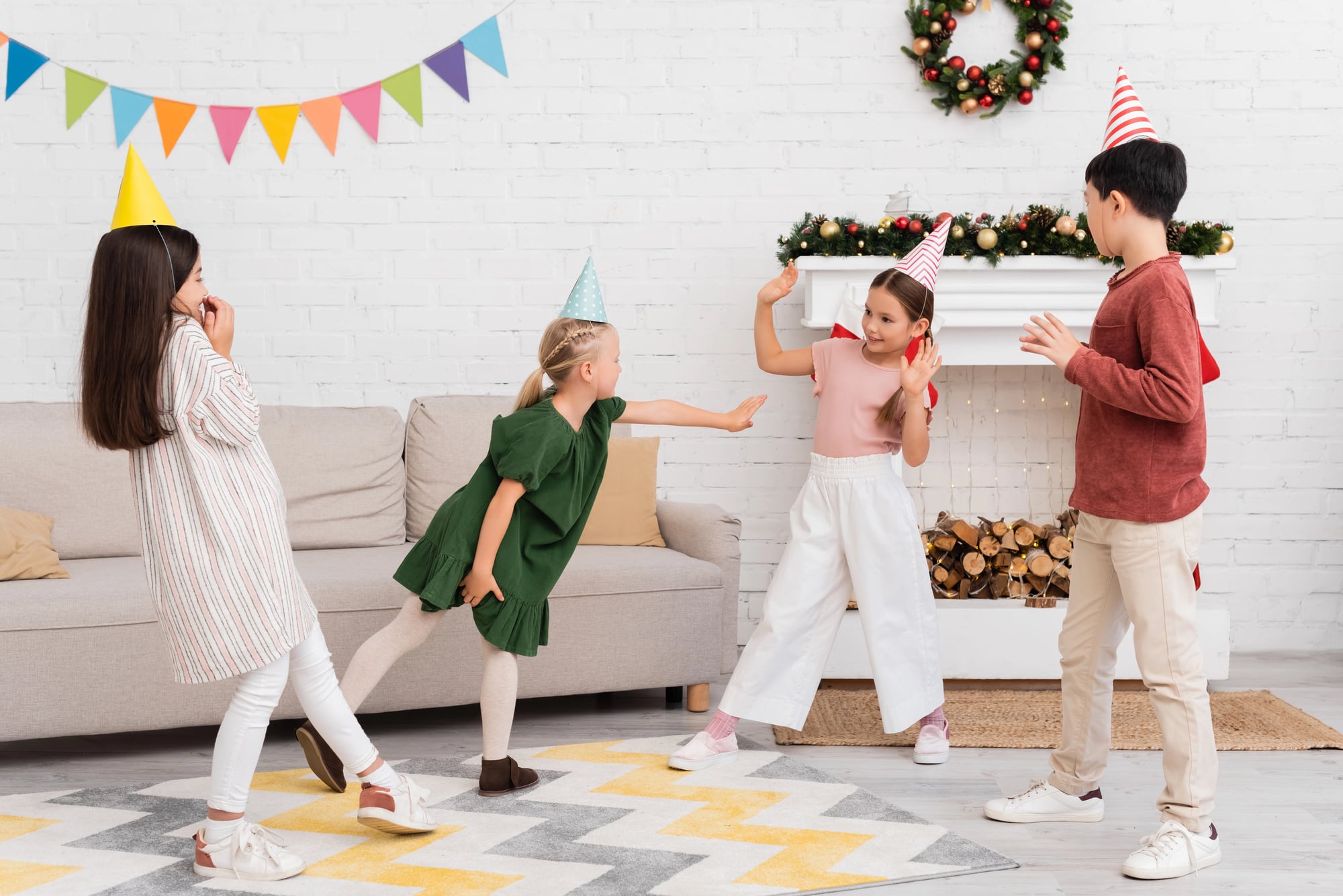
In freeze tag, being tagged doesn’t eliminate you — it freezes you in whatever position you were in at the moment of contact, arms out, mid-leap, sometimes in genuinely uncomfortable poses. A teammate can unfreeze you by touching you.
This creates a more cooperative dynamic than standard tag and produces the characteristic spectacle of a frozen child standing rigidly in the middle of a field while the game swirls around them, trying not to laugh.
Hopscotch
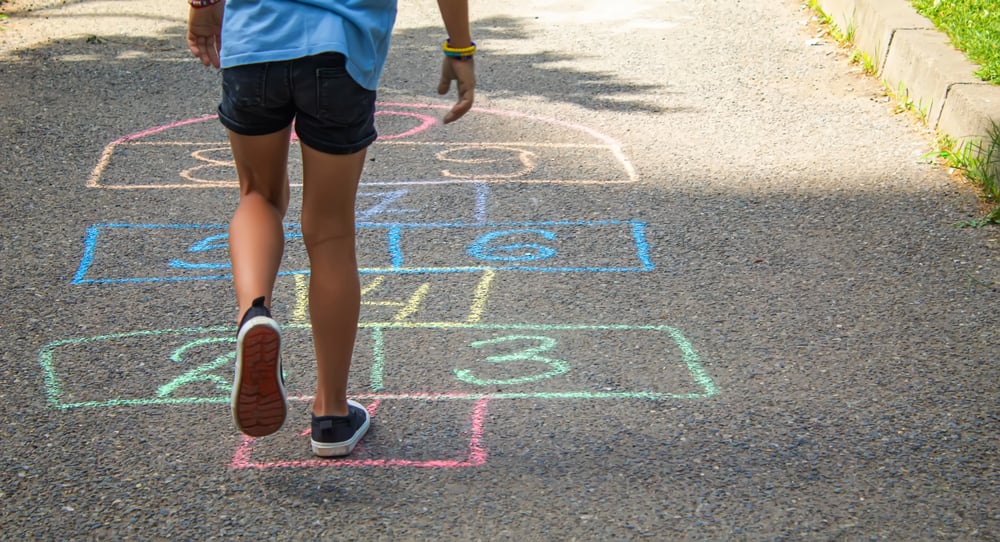
A stick of chalk and a pebble. Players draw a grid of numbered squares on the pavement, throw a marker into the squares in sequence, and hop through the grid on one foot — using two feet only when the layout places two squares side by side.
You skip the square containing your marker and retrieve it on the return hop. Step on a line, and you lose your turn. The skill required is genuine: balance, aim, and the patience to restart when you’ve made it to square eight and wobbled out.
Marbles
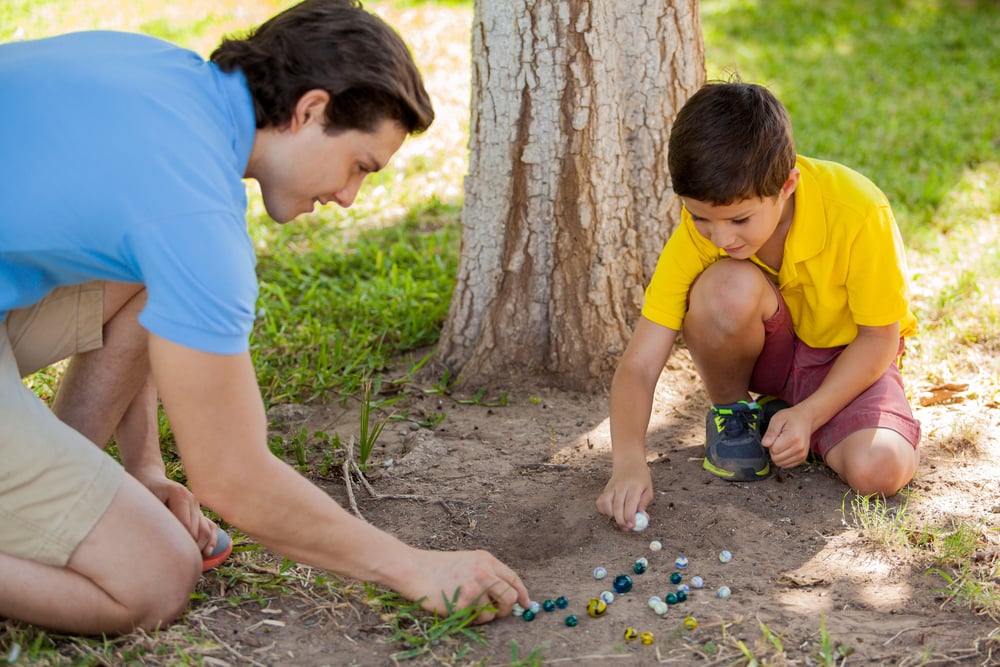
Marbles involved drawing a circle on the ground, placing a collection of small glass marbles inside it, and flicking a larger “shooter” marble to knock others out of the circle. Any marble knocked out was yours to keep — or you could play “friendlies” and return everything at the end.
Certain marbles had status: cat’s-eyes (clear with colored glass inside), swirls, and steelies all occupied different rungs of the hierarchy. A child who amassed a large collection through sustained tournament play was regarded with genuine respect.
Four Square
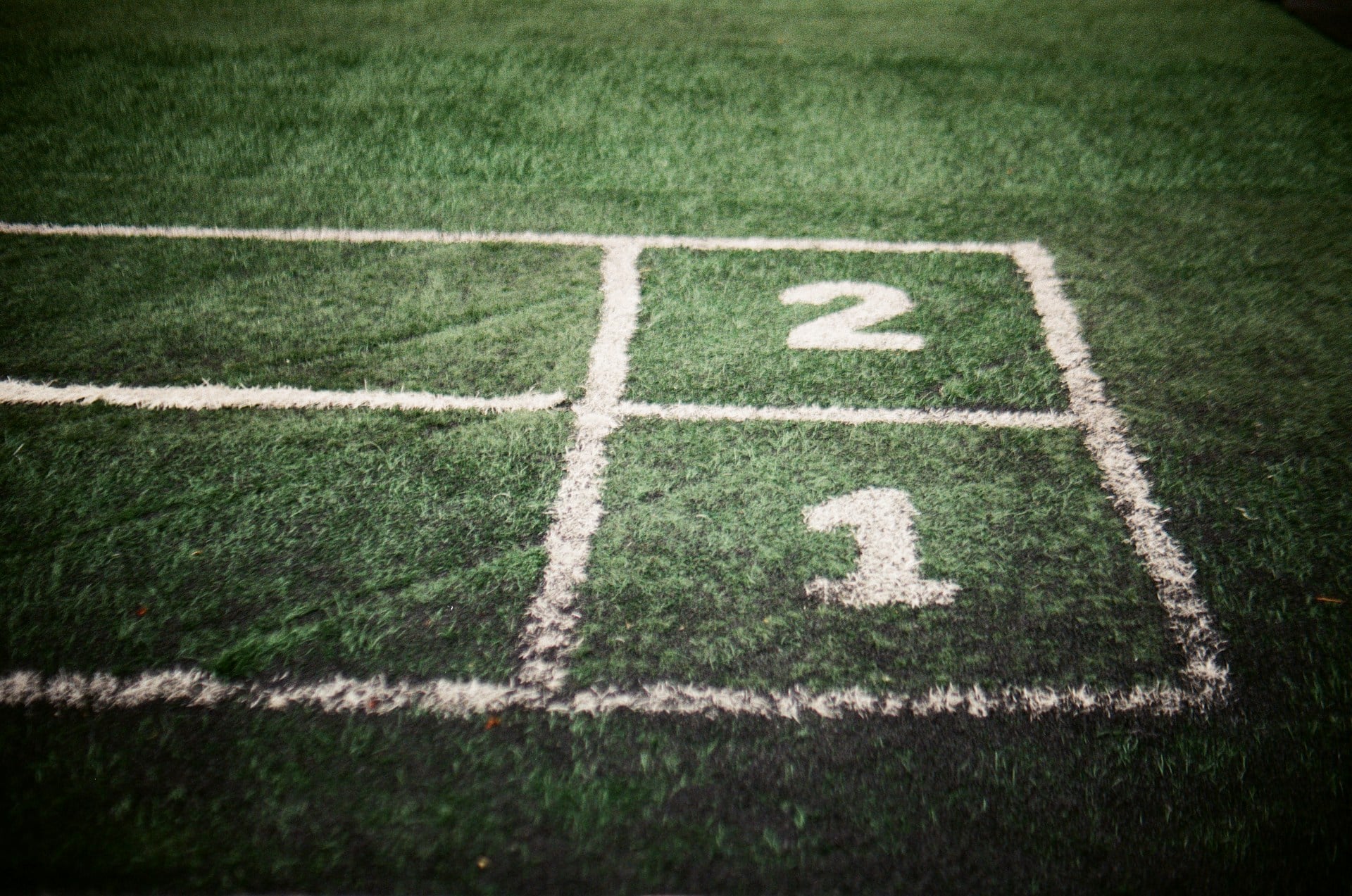
Four squares chalked on pavement, four players, one rubber orb. Each player occupies a square and the orb must be bounced into another player’s square — the receiving player must bounce it again without catching it.
The player in the top square (King or Ace depending on local convention) had the authority to add rules to the game, which created an interesting power dynamic that children somehow accepted without irony. Failing to return the orb properly sent you to the lowest square or out of the rotation entirely.
Kickball
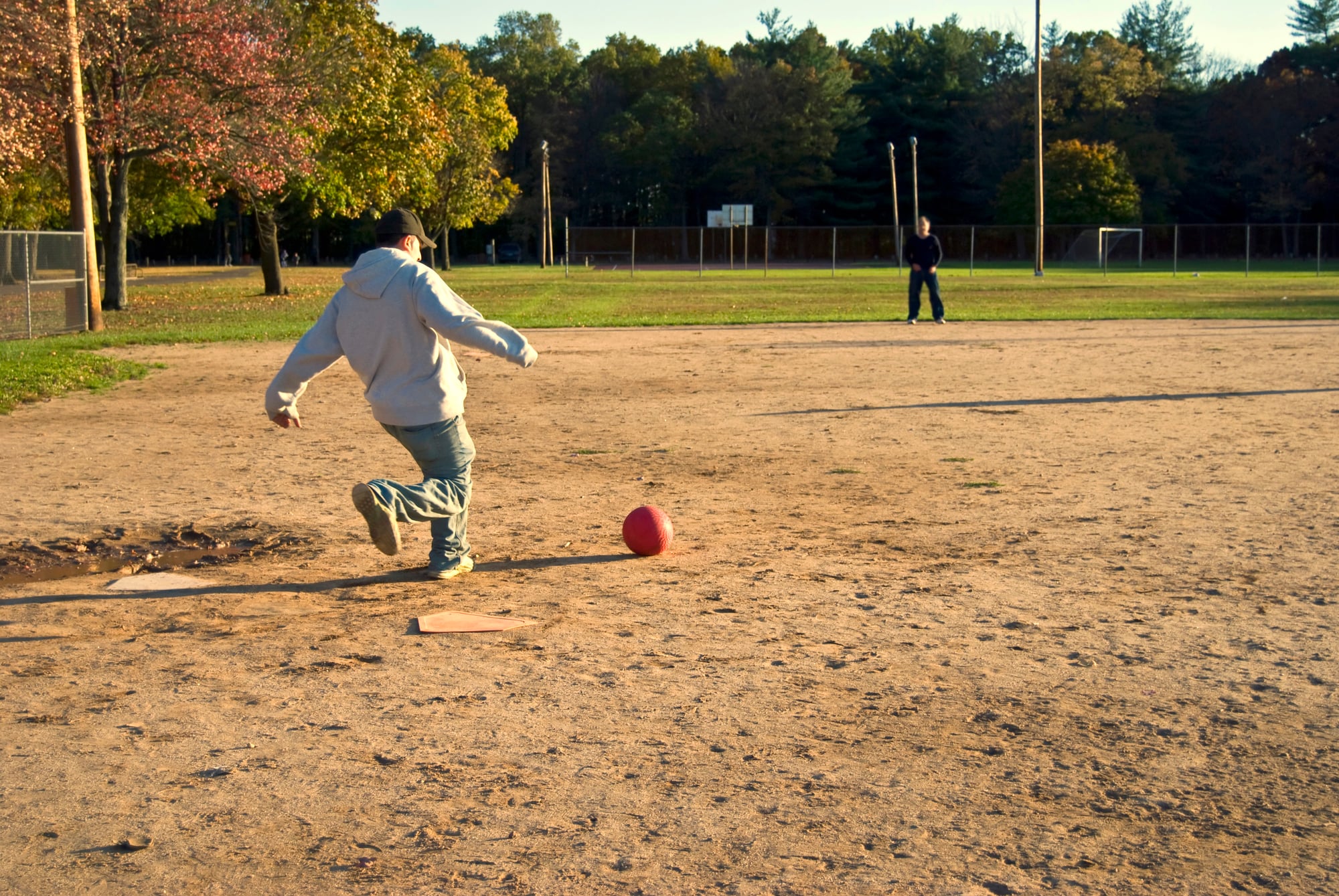
Kickball uses the general structure of baseball — bases, runs, outs, innings — but replaces the bat with a large rubber orb rolled toward a kicker. The sport’s appeal over baseball for schoolyard purposes is that it requires no specialized equipment, can be played with virtually any number of players, and scales easily when three more kids show up midway through an inning.
The child who could kick the orb consistently over the outfielder’s head held a status in kickball that transferred, unjustifiably but undeniably, to the general social hierarchy of the class.
Dodgeball
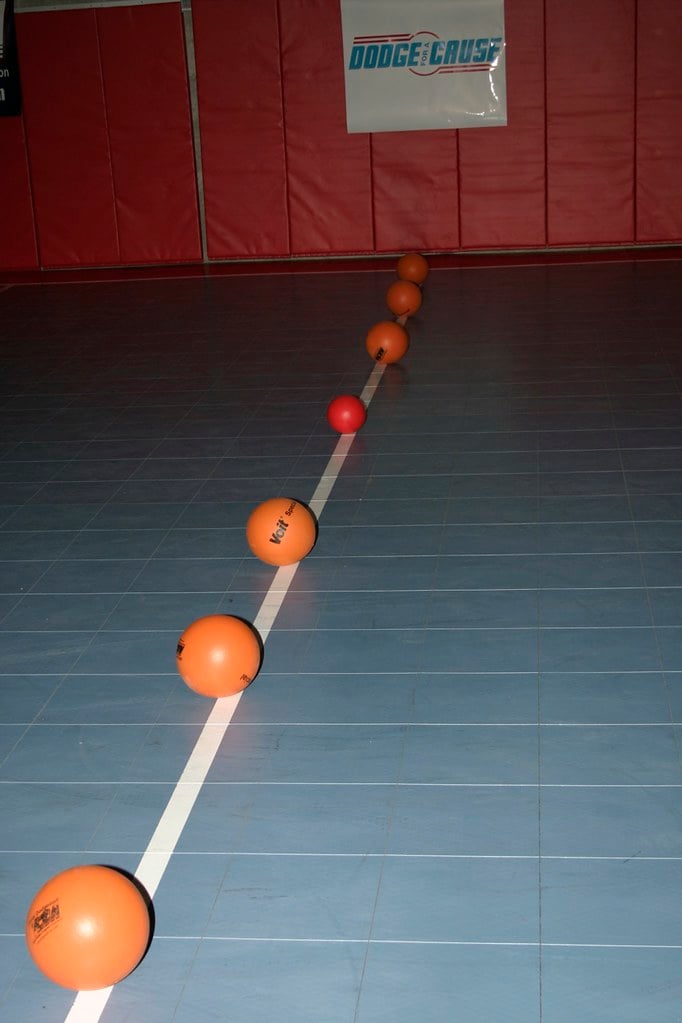
Players split into two teams, one or more rubber orbs in play, and the objective is to hit players on the opposing team to eliminate them while avoiding being hit yourself. A caught throw eliminates the thrower rather than the catcher.
Dodgeball has been banned from many modern school systems on the grounds that it encourages targeting weaker players, which is a fair criticism of the game but also an accurate description of how it works. The version every adult remembers involved at least one child who threw significantly harder than seemed reasonable given their size.
Red Rover
Two teams line up facing each other, holding hands to form chains. One team calls “Red Rover, Red Rover, send [name] right over” — and the named child runs full-speed at the opposing chain, attempting to break through at the weakest point.
Successfully breaking through means taking a captured team member back. Failing means joining the other chain. Red Rover has been removed from many school playgrounds due to injury concerns — the running child collides with linked arms at speed — but was considered completely unremarkable entertainment for several previous decades.
Capture the Flag
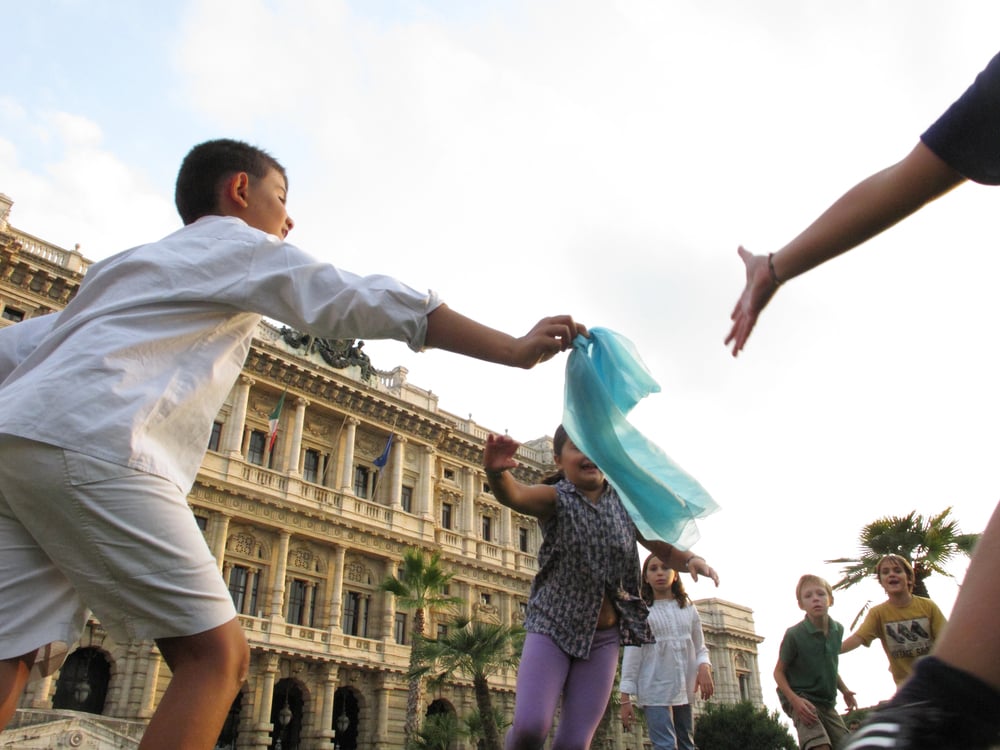
Two teams, two territories, each team’s flag hidden somewhere in their half of the playing field. The objective is to enter enemy territory, find and retrieve their flag, and return it to your side without being tagged.
Tagged players are imprisoned in a designated area and can be freed by a teammate who reaches them. Capture the Flag required more sustained strategic thinking than most other playground games — who covers the flag, who attacks, who waits to spring the rescue — and the best games could stretch across an entire lunch break.
British Bulldog
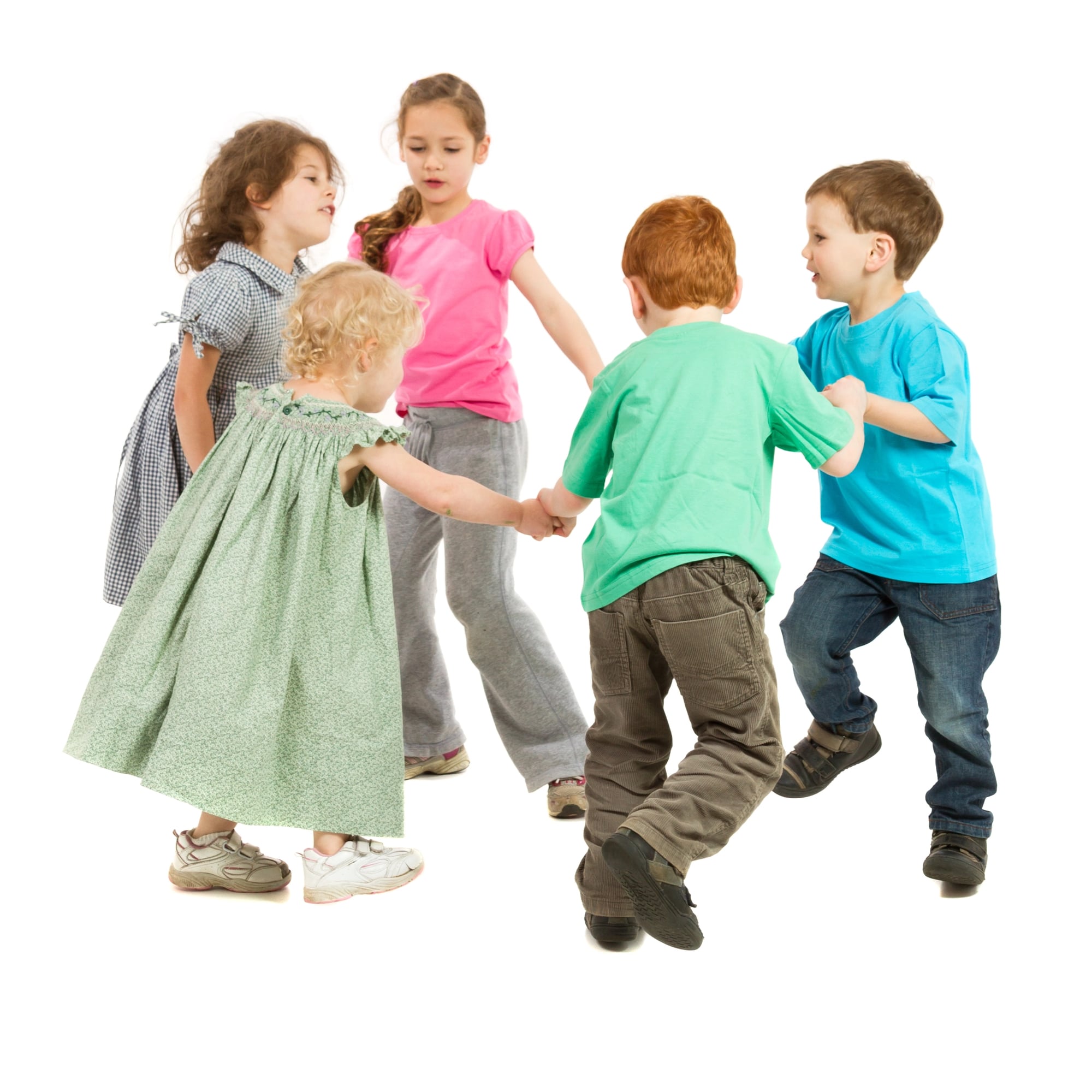
All players line up against one wall. The child chosen as bulldog stands in the middle. On a signal, everyone runs for the opposite wall, and the bulldog tries to grab and hold a runner long enough to call “British Bulldog, one-two-three.”
Captured players become bulldogs, growing the middle-field population. The last uncaptured player wins. British Bulldog is a contact game with a higher intensity than most playground options — which is precisely why it was played constantly and why many schools eventually banned it.
Hide and Seek
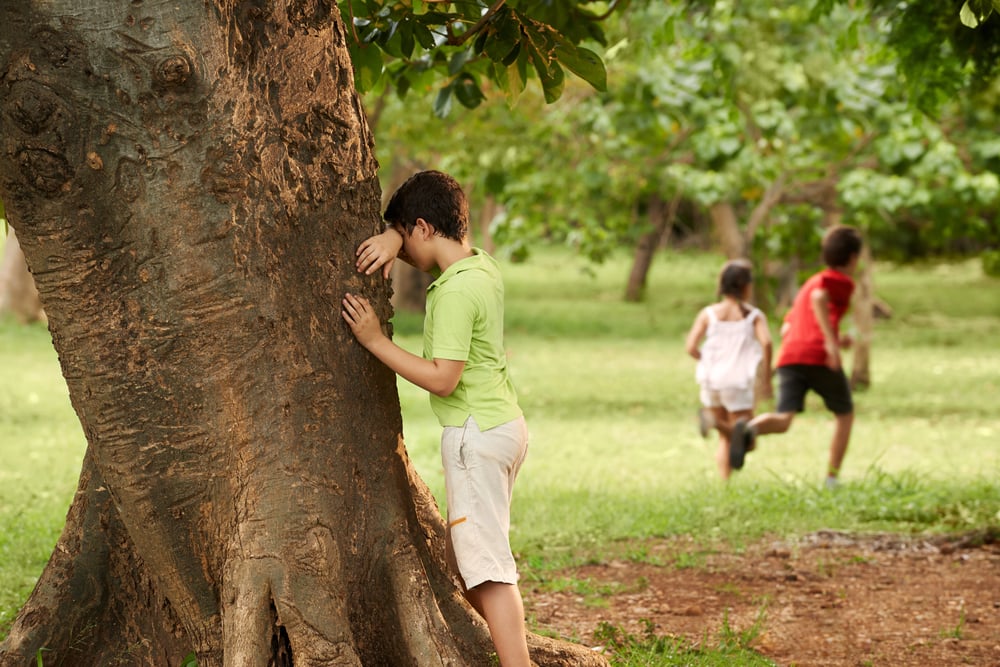
Arguably the oldest children’s game in existence in any recognizable form. One player counts (face to the wall, eyes closed, “one, two, three…”) while all others hide.
The seeker then attempts to find them. The specific joy of hide and seek came from the quality of hiding spots, which were finite and became well-known over time, forcing increasingly creative solutions. The best hiding spots were occasionally so good that the child was forgotten entirely and had to come out on their own.
Sardines
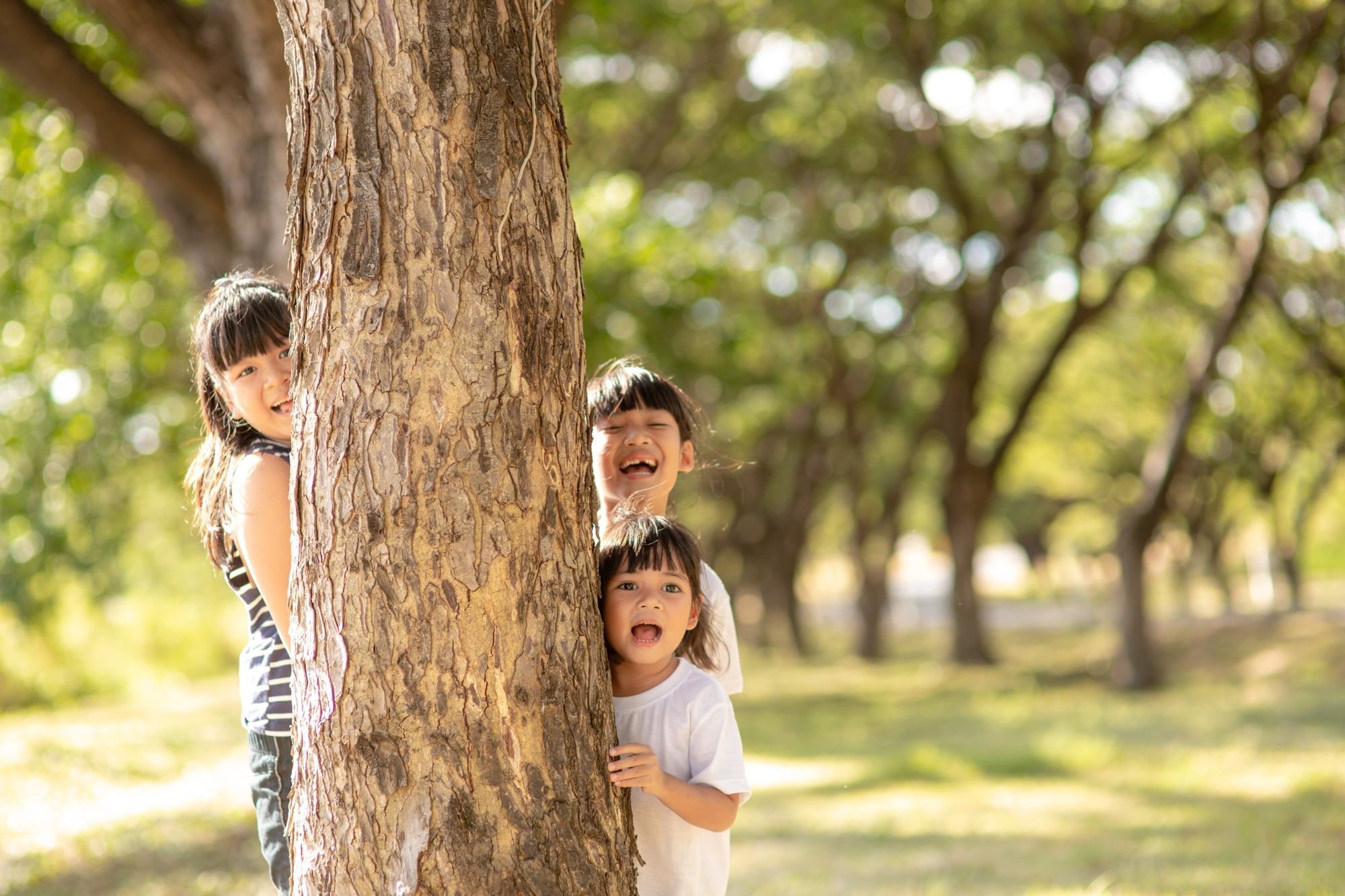
Sardines is the inversion of hide and seek: one child hides and all others seek independently. When a seeker finds the hider, they quietly squeeze into the same spot rather than announcing the discovery.
The hiding group grows progressively more crowded — and harder to conceal — until only one seeker is still searching, which generally ends in laughter given the spectacle of seven children crammed behind a single large bush.
Jump Rope

Jump rope could be played solo (individual skipping) or in its most demanding form, with two players swinging a long rope while others jumped in and out. Rhymes were integral — “Cinderella dressed in yellow,” “Miss Mary Mack,” and others — which synchronized the rope swing and gave jumpers a rhythm to follow.
Double Dutch, using two ropes swinging in opposite directions simultaneously, was the advanced version and required a level of timing and coordination that genuine practitioners wore as a mark of distinction.
Double Dutch

Double Dutch elevated jump rope into something approaching a performance art. Two ropes turn simultaneously in opposite directions, and the jumper enters, navigates both ropes at once, and exits cleanly — failing to do so usually means a rope wrapped around an ankle at some speed.
Children who could enter a Double Dutch sequence mid-swing, maintain rhythm for twenty or thirty jumps, and exit smoothly were respected accordingly. It was, by any reasonable measure, a physical skill.
Simon Says
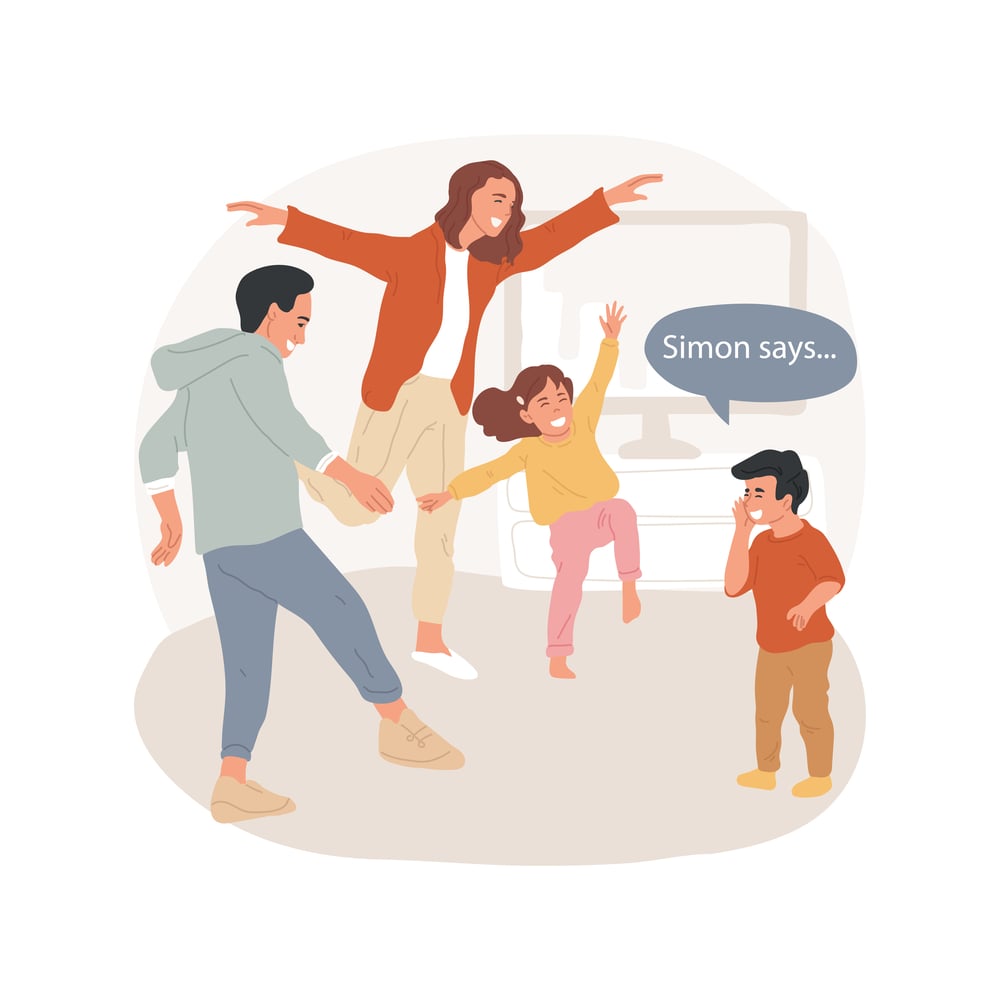
One player is Simon and gives instructions prefaced by “Simon says” — and players must follow only those instructions, ignoring any given without that prefix. The game’s entire tension is built on the false sense of security that develops in a streak of “Simon says” instructions before a bare command catches someone moving.
Simon Says was one of the few schoolyard games that could be played equally well standing still, which made it a useful rainy-day option indoors.
Musical Chairs
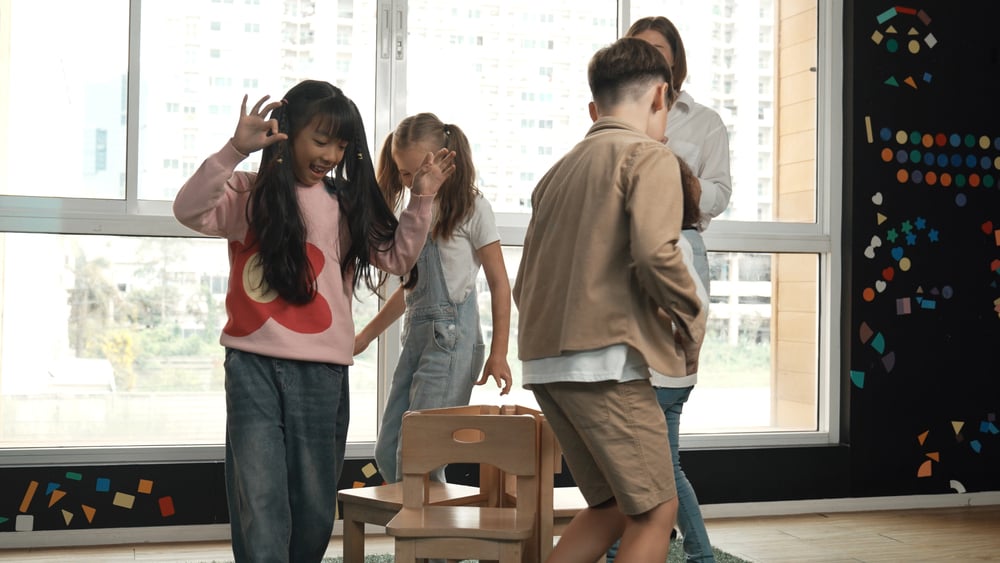
Chairs arranged in a circle, one fewer than the number of players. Music plays, children walk around the chairs; when it stops, everyone sits.
The child who doesn’t find a seat is eliminated, one chair is removed, and the game continues. Musical Chairs had a particular brutality in its final rounds, when two players circled a single chair with the concentration of people who had invested significant emotional energy in this outcome.
Duck, Duck, Goose

Players sit in a circle. One child walks around the outside, touching each head and saying “duck” — until choosing one person and saying “goose,” then running.
The goose must stand and chase the walker around the circle, trying to tag them before they sit down in the goose’s vacated spot. If caught, the walker repeats the role. Duck, Duck, Goose worked for very young children because the rules were simple enough to follow before the first round was over, and being chosen as goose — whether caught or not — felt exciting rather than punitive.
Jacks

A set of metal or plastic jacks scattered on the ground, a small rubber orb. The player bounces the orb and, before it bounces a second time, picks up one jack (then two on the next turn, then three) while the orb is still in the air.
Each successful round advances the quantity that must be grabbed. The physical precision involved in jacks — the quick grab, the correct number, without disturbing the remaining pieces — was surprisingly difficult to develop and created clear rankings among children who played regularly.
Tug of War
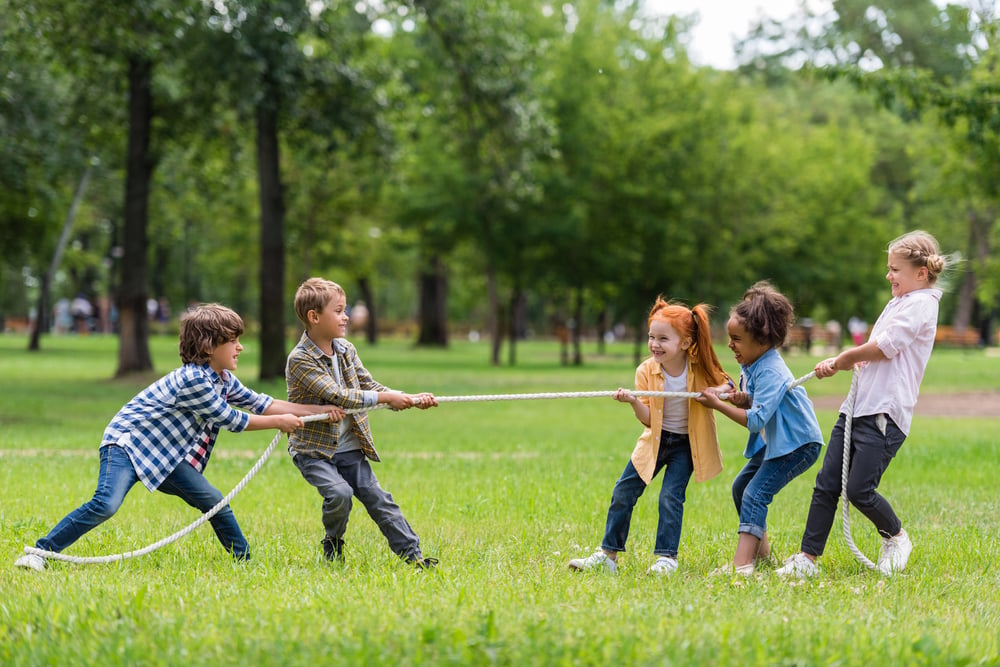
Two teams grab opposite ends of a rope and pull. The team that drags the opposing team across the center line wins.
Tug of War required coordination — pulling in unison was significantly more effective than individuals pulling at their own pace — and occasionally ended with the losing team falling into a pile on the ground, which was considered a satisfying resolution by everyone not in the pile.
Stuck in the Mud
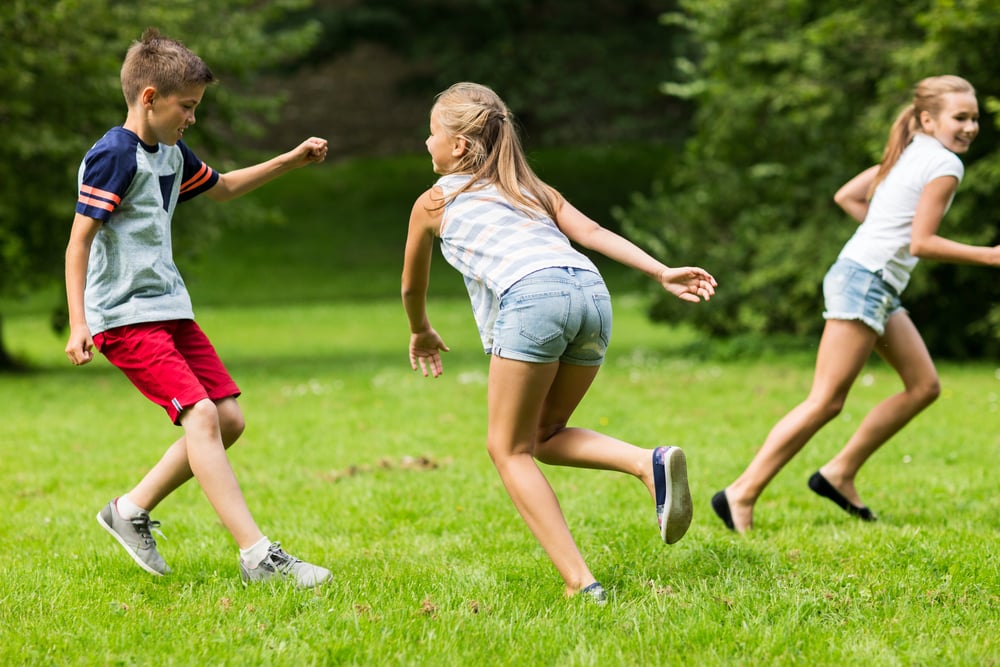
Stuck in the Mud is tag with an escape mechanism. When tagged, players freeze with their legs apart.
They can be freed when another player crawls through their legs. The game creates an ongoing rescue dynamic that prevents elimination from removing players permanently, keeping the game inclusive while increasing the complexity of the middle-ground — who to tag, who to rescue, where the tagger should focus their energy.
Handball
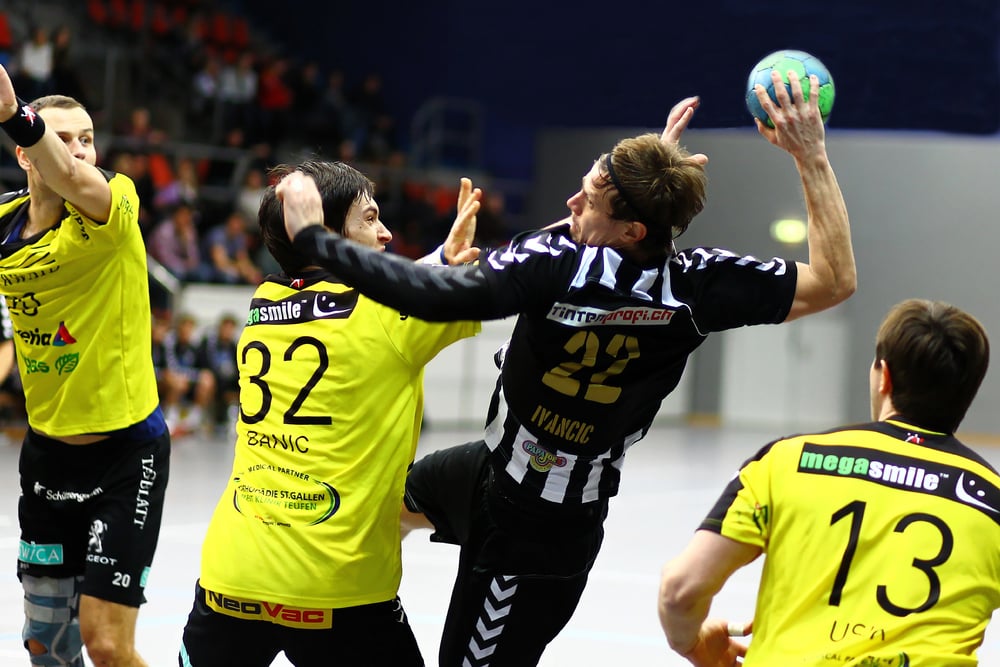
Played against a wall, handball involves hitting a rubber orb against the vertical surface and allowing it to bounce once before returning it. Serving, receiving, scoring — the basic structure borrowed from tennis — but requiring only a wall and a small rubber orb.
The game scaled from two players to multiple with queuing systems. Many urban schoolyards had specific handball walls — often the windowless side of a building — that became the de facto centers of gravity for the outdoor social hierarchy.
What’s the Time, Mr. Wolf?

One player is the wolf and stands with their back to the others. Players call “What’s the time, Mr. Wolf?” and the wolf responds with a time — “three o’clock” means three steps forward, “ten o’clock” means ten steps.
When the wolf decides to respond with “Dinner time!” they turn and chase the players back to the safety line. The unpredictability of when “Dinner time” would come was the game’s core tension, and experienced wolves exploited it by giving many ordinary time responses before springing.
Clapping Games

Miss Mary Mack. Pat-a-Cake. Down Down Baby. Clapping games were played in pairs, seated or standing, and involved synchronized sequences of hand movements — sometimes extremely complex ones — performed while chanting a rhyme.
The prestige value of mastering a complicated clapping sequence with a specific partner was localized and genuine. Boys generally didn’t participate, which meant girls’ clapping game culture developed largely independently of adult observation and encoded social information in the rhymes that is still being analyzed by folklorists.
Ring Around the Rosie

Children hold hands in a circle, walk or skip in one direction while chanting the rhyme, and fall down at the end. Ring Around the Rosie is essentially the earliest possible introduction to group games — it requires no reading, no counting, no coordination beyond holding hands and falling on cue.
The folk etymology connecting the rhyme to the Black Plague is almost certainly false, a piece of retroactive meaning-making that adults applied to a much simpler children’s song, but it has proven remarkably durable as an explanation.
Kick the Can

An object — a can, though any equivalent worked — is placed in a central spot. One player guards it while others hide.
The guard seeks the hidden players; if spotted, they are called out by name, run to the can, and are captured. But any hidden player who can run to the can and kick it before being tagged frees all captured players. Kick the Can sustained longer and more complex games than standard hide and seek because the rescue mechanism kept eliminated players invested in the outcome.
Leapfrog
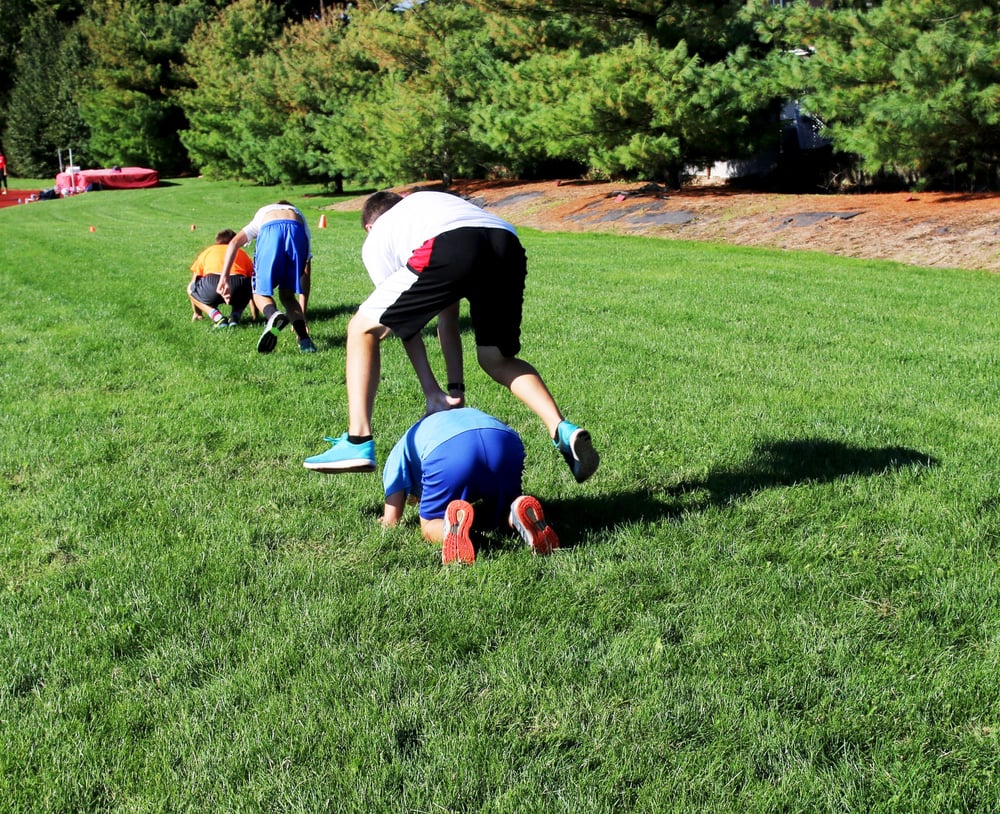
Players crouch, and others leap over them, one after another, creating a chain of leapers and crouching targets. Leapfrog required no particular athletic gift and was inclusive in a way that direct competition games were not.
The only question was whether the spacing was appropriate for the leaper’s stride. It was often more of a cooperative activity than a competitive one, which is probably why it appears in children’s physical education programs across vastly different cultures and centuries.
Mother, May I?
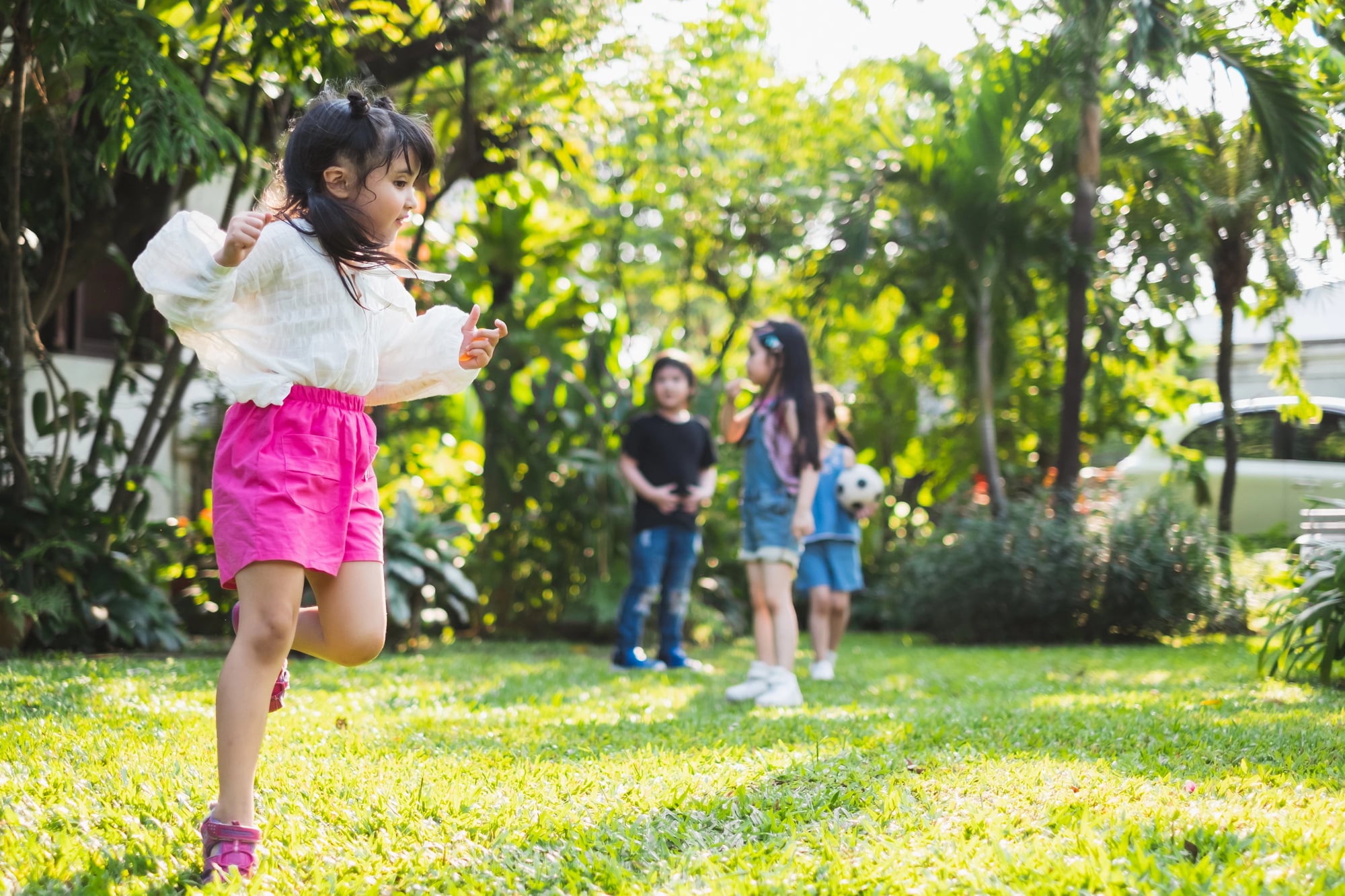
One player is the Mother, standing at a distance from the others. Players call “Mother, may I?” and request to take steps toward the Mother — “Mother, may I take three giant steps?”
The Mother either grants the request or modifies it. The game is about remembering to ask permission: moving without asking “Mother, may I” first sends you back to the start. The specific cruelty of the game was in the Mother’s arbitrary power to grant or refuse requests, which children found funny rather than unjust.
Bullrush
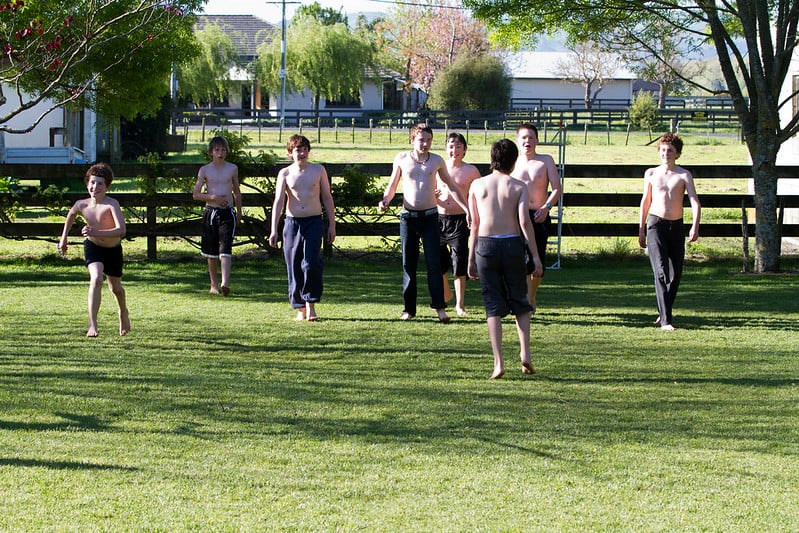
Bullrush is a variant of British Bulldog common in New Zealand and Australia. Players line up against a wall, the bullrusher stands in the middle and calls individual players by name.
Called players must run for the opposite wall; the bullrusher tries to tackle them. Successfully tackled players join the middle. The game ends when everyone is in the middle, and it was widely understood by participants to be significantly rougher than most alternatives — which, depending on the school, was either a selling point or a reason for teacher intervention.
Elastics
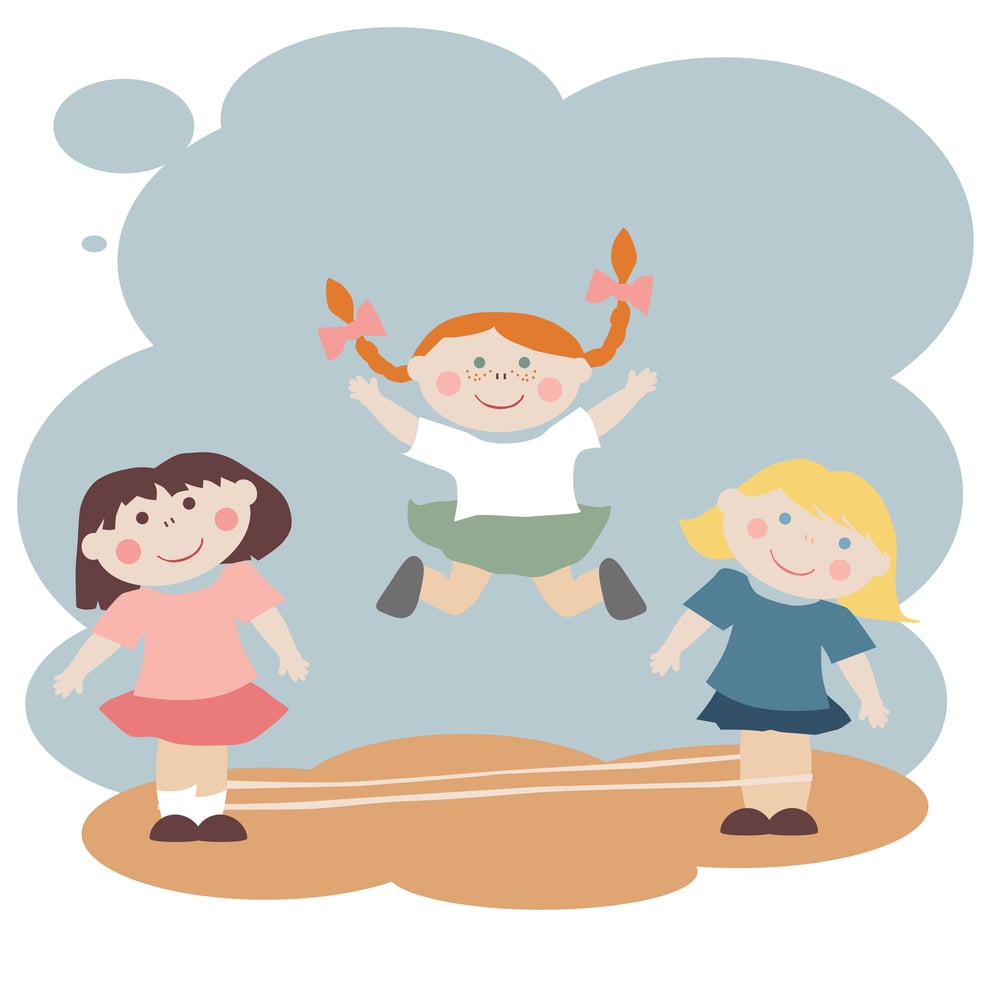
Elastics — also known as Chinese jump rope — uses a long elastic loop held at ankle, knee, or waist height by two players while a third jumps in, out, and through in a sequence of increasingly complex patterns. Like Double Dutch, elastics rewarded regular practice and created a clear performance hierarchy.
Regional variations in the pattern sequences were significant enough that children who moved between schools sometimes found that the elastics sequences they knew didn’t match the ones played at the new school.
Street Cricket
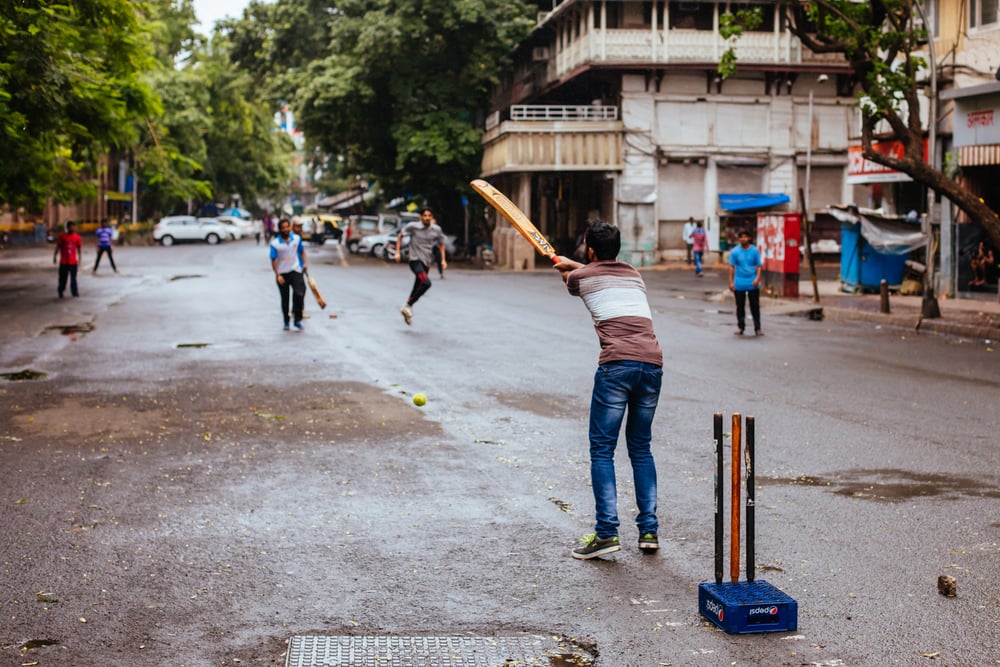
An informal version of cricket played with whatever was available — a bat improvised from a plank of wood, a tennis orb, stumps chalked on a wall. Street cricket adapted the rules of the formal game for limited space and small numbers, typically reducing fielding, adjusting LBW rules, and often adding local variations like “six and out” (hitting the orb over a fence is a six but also ends your innings).
In countries where cricket has deep cultural roots — particularly England, Australia, India, Pakistan, and the Caribbean — street cricket was genuinely the first form of the game most children ever played.
Tinikling — Philippines
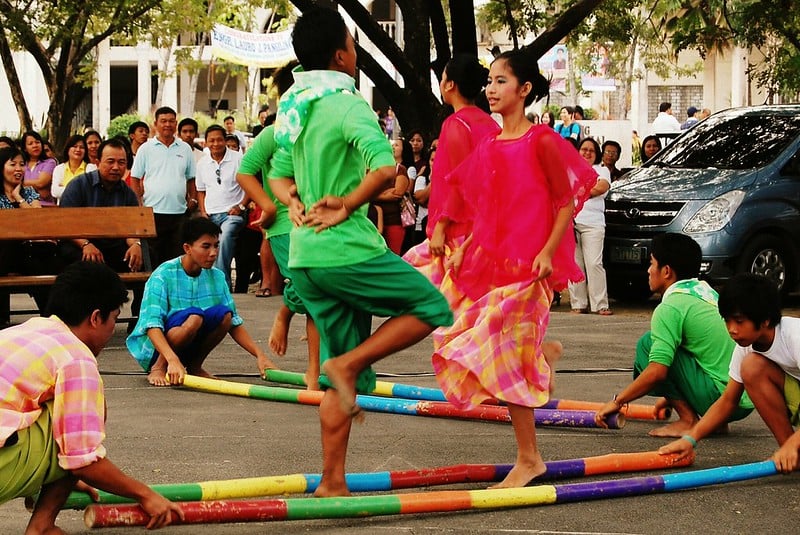
Tinikling is a traditional Filipino game in which two players bang and slide bamboo poles in a pattern while one or more dancers step in and out between the poles. The game requires speed, rhythm, and precise timing — stepping between the poles as they close is more demanding than it looks from a distance.
Tinikling has been part of the Philippine physical education curriculum for decades and is performed competitively as well as recreationally. The fact that it appears in schoolyards in a region where most other games have been entirely displaced by screens speaks to how deeply embedded it is in Filipino childhood culture.
Conkers — Britain

Played primarily in Britain and Ireland, conkers involves threading a horse chestnut on a string and using it to strike an opponent’s chestnut with the aim of breaking theirs. Players alternate strikes.
A new conker is called a “none-er”; once it defeats another, it becomes a “one-er.” Conkers killed by an experienced conker inherit all its victories — so a conker that defeats a “fiver” becomes a “six-er.” The game was a staple of British autumn schoolyards for generations. Some schools banned it citing injury risk; the British conkering community has responded to this with sustained and articulate opposition.
The Games Nobody Scheduled
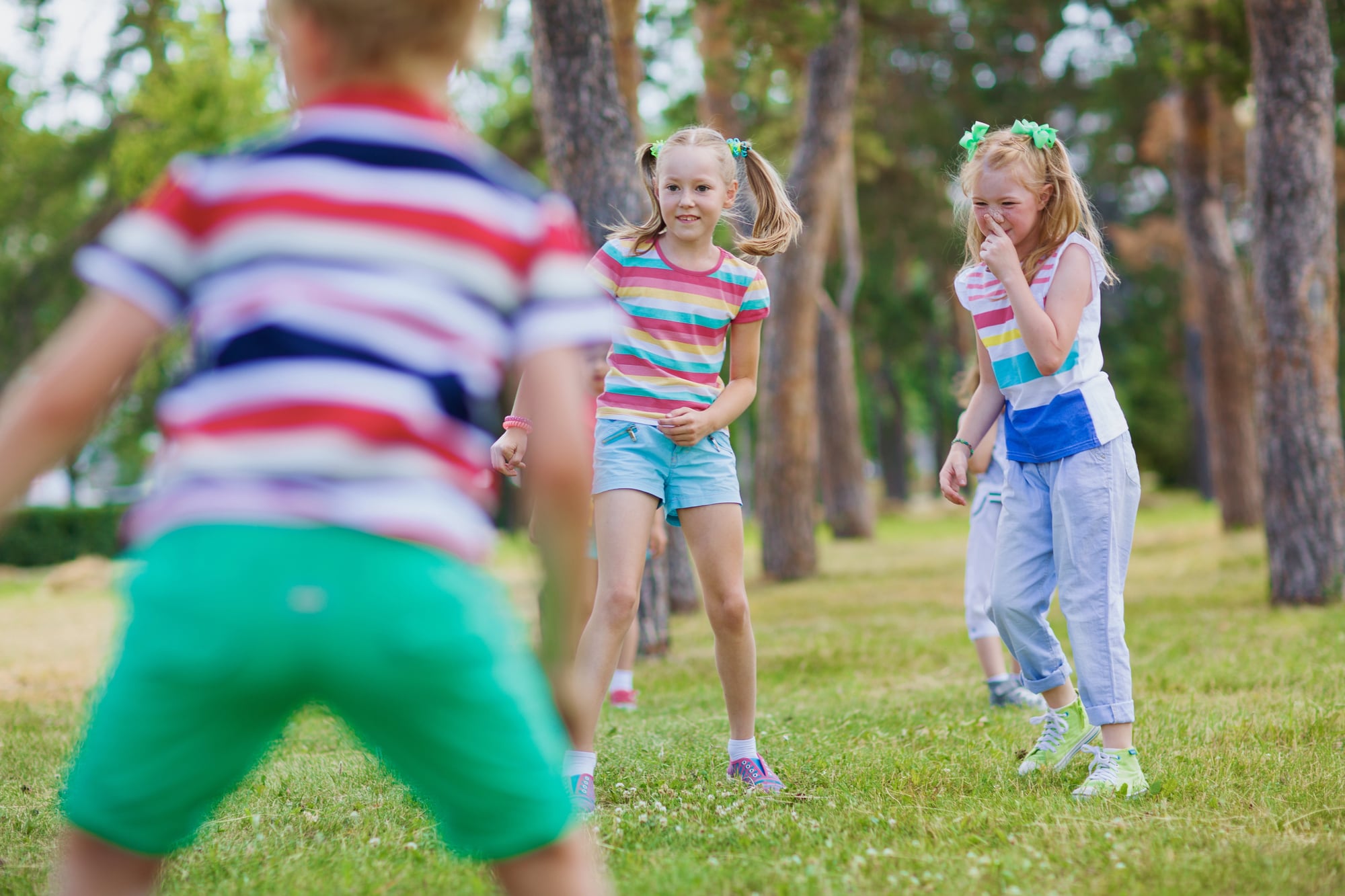
What bound all of these games together wasn’t the rules — many rules were inconsistent from school to school, year to year, and child to child — but the negotiation. Before the first move was made in any of them, there was usually a discussion: who’s it, what are the boundaries, are we playing for keeps or friendlies.
That negotiation, conducted entirely without adult input and usually resolved in under two minutes, was itself a kind of social education that no structured activity could manufacture. Nobody taught children to organize themselves this way. They just did it, every recess, with whoever was available, using whatever was on the ground. The games were the excuse. Getting outside and figuring it out together was always the point.
More from Go2Tutors!

- The Romanov Crown Jewels and Their Tragic Fate
- 13 Historical Mysteries That Science Still Can’t Solve
- Famous Hoaxes That Fooled the World for Years
- 15 Child Stars with Tragic Adult Lives
- 16 Famous Jewelry Pieces in History
Like Go2Tutors’s content? Follow us on MSN.