Odd Beauty Gadgets Women Tried in the Jazz Age
The 1920s were a time of liberation, rebellion, and bold experimentation — and nowhere was this more apparent than in the beauty routines of Jazz Age women. As hemlines rose and social conventions fell, women embraced a new ideal of beauty that was both glamorous and daringly modern.
This pursuit of perfection led to some truly bizarre beauty gadgets that promised everything from perfect curls to flawless complexion, often with questionable results.
The Dimple Machine

Dimples were considered the height of feminine charm in the 1920s. Women without natural dimples felt cursed by genetics, so enterprising inventors created mechanical solutions.
The dimple machine looked like tiny metal clamps that pressed against the cheeks for hours at a time.
Users would wear these contraptions while reading or doing housework. The theory was simple enough — constant pressure would eventually create permanent indentations.
It didn’t work, naturally, but that didn’t stop thousands of women from trying.
Electric Hair Curling Helmets
Before there were hair dryers, there were electric curling helmets that looked like something from a science fiction movie (and worked about as well as you’d expect from 1920s electrical engineering, which is to say they were mildly terrifying and occasionally effective). These dome-shaped devices fit over a woman’s entire head, with dozens of heated rollers suspended from the ceiling of the helmet, and the whole apparatus plugged into the wall with cords thick enough to power a small factory.
Women would sit under these mechanical marvels for an hour or more, sweating profusely while their hair was simultaneously heated, pulled, and twisted into submission. The results were hit or miss — some emerged with perfect Marcel waves, others with hair that looked like they’d been struck by lightning.
And the burns! The number of women who walked away with singed scalps was considerable, but beauty demanded sacrifice.
Nose Straightening Clips
The 1920s obsession with the perfect profile led to an entire industry of nose-shaping devices. These metal clips promised to reshape noses overnight through constant pressure — the same dubious science behind dimple machines, applied to cartilage.
Women wore these clamps to bed, enduring hours of discomfort for the promise of a more refined nose. The clips came in different strengths, marketed like exercise equipment.
Some women reported wearing them so regularly that they developed permanent indentations on their nose bridges — though not the kind they were hoping for.
Face Slapping Machines

There’s something beautifully absurd about the mechanical face-slapping device, which operated on the principle that repeated gentle blows to the face would stimulate circulation and maintain youthful skin tone (because apparently women in the 1920s had decided that what their beauty routine really needed was to be literally slapped around by a machine). The contraption resembled a small punching bag attached to a spring-loaded arm, and women would sit patiently while it delivered hundreds of tiny taps to their cheeks and forehead.
The rhythm was supposedly scientific — measured strikes that would awaken dormant facial muscles and bring color to pale cheeks. But watching someone use one of these devices must have been like observing a very polite assault by a tireless mechanical assailant.
The whole thing had an air of resigned determination about it, women subjecting themselves to this peculiar battery in the name of beauty.
Bust Developers And Reducers

The ideal silhouette of the 1920s was famously flat-chested, which created a market for both breast reduction devices and, confusingly, breast enhancement gadgets. The same companies often sold both, depending on what nature had given you and what fashion demanded you do about it.
Suction cups, weighted pulleys, and spring-loaded contraptions promised to reshape women’s figures. The breast reduction devices looked like medieval torture instruments.
The enhancement versions weren’t much better — elaborate harnesses with weights and pulleys that women wore under their clothes throughout the day.
Wrinkle Removing Masks

The pursuit of smooth skin led to some truly nightmarish-looking facial treatments, and none were more unsettling than the rigid wrinkle-removing masks that covered the entire face like something from a horror movie, complete with eyeholes and a breathing slit for the mouth (because suffocating for beauty was apparently where even 1920s women drew the line, though just barely). These masks were made of everything from plaster to metal, designed to hold the face in a completely immobile expression while mysterious creams and lotions worked their supposed magic underneath.
Women would wear these masks for hours, unable to speak or move their facial muscles, looking like elegant mannequins or well-dressed corpses depending on your perspective. The theory was that preventing any facial movement would allow the skin to reset itself into a smoother configuration — which is roughly equivalent to believing that if you hold your breath long enough, your lungs will learn to work more efficiently.
So naturally, it became wildly popular.
Electric Scalp Massagers

Electric scalp stimulation was believed to promote hair growth and prevent baldness. These devices looked like small torture instruments with dozens of metal prongs that vibrated against the scalp when plugged in.
The sensation was reportedly somewhere between therapeutic and mildly electrocuting. Women would sit for lengthy sessions while these buzzing contraptions worked over every inch of their scalp.
The electrical current was supposed to awaken dormant hair follicles — a theory that sounds almost plausible until you consider 1920s electrical safety standards.
Chin Reduction Straps

The double chin was public enemy number one for Jazz Age women, leading to an array of straps, bands, and harnesses designed to hold excess chin flesh in place until it presumably gave up and retreated (which is not how anatomy works, but the 1920s were not a decade particularly concerned with anatomical accuracy when it came to beauty solutions). These contraptions wrapped around the head like elaborate bonnets, with tight bands positioned under the chin to provide constant upward pressure.
Women wore these chin-lifters while sleeping, reading, or doing housework, walking around looking like they had sustained some sort of peculiar jaw injury. The elastic bands would leave deep red marks that took hours to fade, but this was considered a small price to pay for a more defined jawline.
And the headaches! The constant pressure gave many users splitting headaches, but they persevered, convinced that beauty required suffering and that suffering would eventually yield beauty.
Complexion Rollers
Smooth skin was achieved through mechanical intervention, according to 1920s beauty logic. Complexion rollers were cylindrical devices covered in tiny spikes or bumps that women rolled across their faces with varying degrees of pressure.
The idea was that this micro-trauma would stimulate skin renewal and create a flawless complexion. Different rollers promised different results — some for wrinkle removal, others for acne treatment, still others for general skin improvement.
Women would spend twenty minutes each morning rolling these medieval-looking instruments across their faces, often leaving themselves red and irritated in the name of beauty.
Eyelash Growing Serums And Contraptions
Long, dark eyelashes were essential to the 1920s look, leading to some truly bizarre lash-enhancement methods. Beyond the primitive mascaras of the era, women used mechanical eyelash curlers that looked like tiny torture devices and applied homemade serums made from questionable ingredients.
Some contraptions used heated metal rods to curl lashes — a process that frequently resulted in singed or broken lashes. The serums contained everything from petroleum jelly to various oils and sometimes alcohol-based solutions that burned the delicate eye area.
Women endured stinging, watering eyes in pursuit of the perfect flutter.
Posture Correcting Harnesses

The elegant posture of the Gibson Girl era carried into the 1920s, spawning a variety of mechanical aids to enforce proper carriage. These harnesses strapped around the torso and shoulders, pulling them back into what manufacturers claimed was the ideal position.
Women wore these contraptions under their clothes throughout the day, enduring the discomfort of having their shoulders yanked backward by springs and straps. The harnesses left marks and caused muscle fatigue, but slouching was apparently a worse fate than being slowly pulled apart by mechanical tension.
Eyebrow Shaping Templates
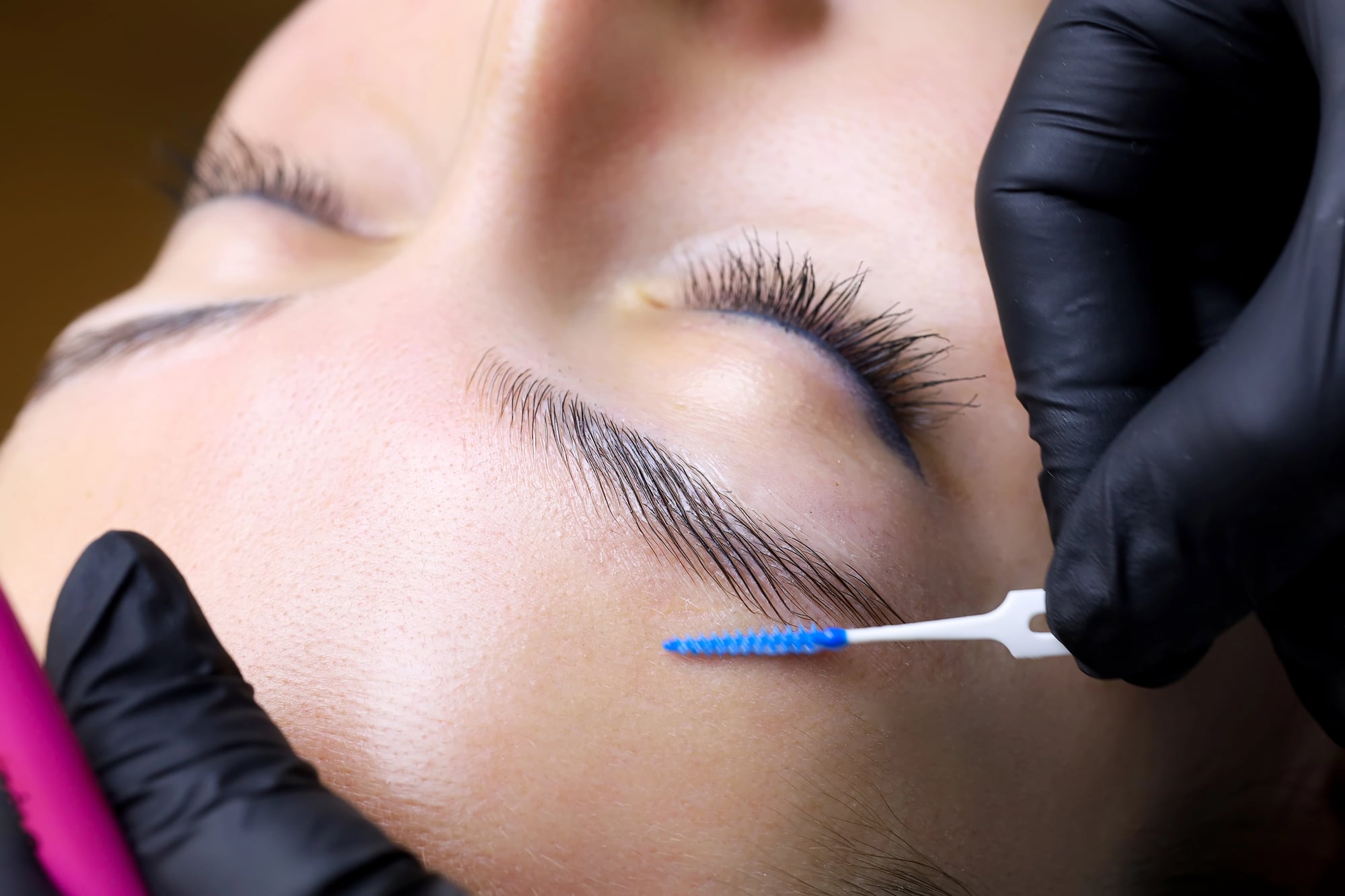
The thin, arched eyebrow was the signature look of the Jazz Age, and achieving the perfect shape required precision that many women didn’t trust to their own hand with tweezers, so metal templates were created to guide the plucking process — because what could go wrong with pressing a piece of metal against your face and using it as a guide to remove hair permanently?
These templates came in various shapes, each promising to deliver the ideal brow arch that would complement any face shape. Women would hold the template against their brow and pluck away everything that didn’t fit within the cutout.
The results were often disastrous — perfectly symmetrical brows that looked drawn on, or worse, brows that were over-plucked into thin lines that took months to grow back.
Weight Loss Vibrating Belts

While various exercise and mechanical devices existed in the 1920s, vibrating belts marketed as weight loss tools became commercially popular in the 1950s and 1960s rather than during the Jazz Age. Early electrical devices of the 1920s could not reliably produce the vibration technology needed for such machines.
The belts were loud, uncomfortable, and completely ineffective — but they sold remarkably well to women desperate to achieve the fashionable silhouette of the era.
Beauty In The Age Of Invention

Looking back at these curious contraptions reveals something touching about human optimism — the belief that technology could solve any problem, even the perceived flaws of genetics and aging. Jazz Age women approached beauty with the same experimental spirit they brought to music, fashion, and social conventions, willing to try anything that promised transformation.
These gadgets may have been ineffective, but they represent a moment when beauty rituals were as bold and unconventional as the women who used them.
More from Go2Tutors!

- The Romanov Crown Jewels and Their Tragic Fate
- 13 Historical Mysteries That Science Still Can’t Solve
- Famous Hoaxes That Fooled the World for Years
- 15 Child Stars with Tragic Adult Lives
- 16 Famous Jewelry Pieces in History
Like Go2Tutors’s content? Follow us on MSN.


