Forgotten Military Experiments That Were Classified
The military’s pursuit of tactical advantage has always pushed boundaries, but some experiments crossed lines that weren’t meant to be crossed. Behind closed doors and classified stamps, researchers explored territories that ranged from innovative to disturbing, often blurring the line between scientific progress and ethical compromise.
Many of these projects remained buried in classified files for decades, emerging only through declassified documents, whistleblower accounts, and freedom of information requests. These forgotten experiments reveal a side of military research that’s both fascinating and unsettling—a reminder that the quest for superiority sometimes leads down paths better left unexplored.
Project MKUltra
Mind control isn’t science fiction. The CIA spent decades trying to crack the human brain like a safe.
Between 1953 and 1973, they drugged unwitting subjects with LSD, subjected prisoners to sensory deprivation, and tested torture techniques on mental patients. None of it worked the way they hoped.
Operation Northwoods
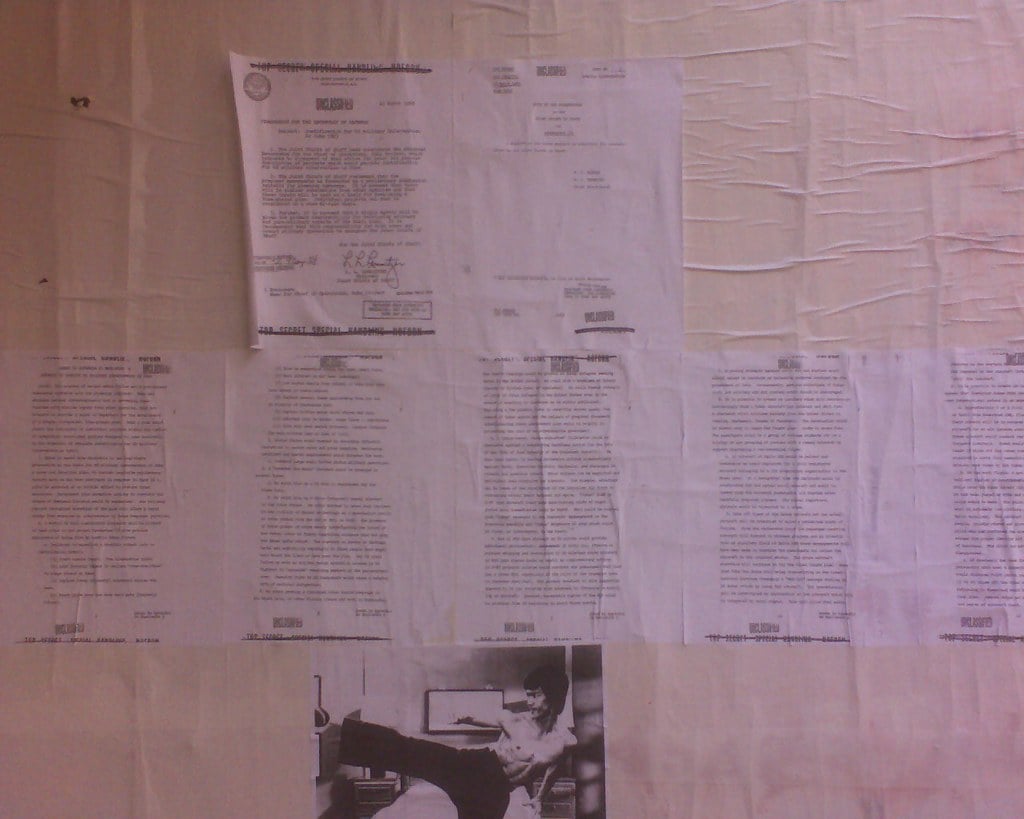
The Pentagon once drafted plans to stage terrorist attacks against American civilians. The 1962 proposal included bombing Miami, sinking refugee boats, and hijacking planes—all to justify invading Cuba.
President Kennedy rejected it, but the documents prove how far military planners were willing to go. The fact that high-ranking officials seriously considered killing their own citizens remains one of the most chilling revelations in declassified history.
Project Stargate

There’s something almost endearing about a group of serious military officers sitting in sterile rooms, trying to will their consciousness across continents to spy on Soviet installations. The Pentagon’s remote viewing program ran for over two decades (though it operated under various names and administrative umbrellas), employing psychics and training soldiers to project their minds beyond physical boundaries.
And yet, despite the inherent absurdity of asking someone to “see” inside a building thousands of miles away using nothing but meditation techniques, the program persisted with the stubborn dedication of true believers. The results, when they eventually surfaced, were about as useful as you’d expect from trying to turn fortune tellers into intelligence assets—which is to say, not particularly useful at all.
But that didn’t stop them from spending millions of dollars and countless hours pursuing what amounted to an expensive form of wishful thinking.
Unit 731
Medical research becomes monstrous when human subjects become lab rats. Japan’s Unit 731 conducted biological warfare experiments on Chinese prisoners during World War II.
They infected people with diseases, performed vivisections without anesthesia, and tested weapons on living subjects. The unit’s commander escaped prosecution by sharing research data with American forces—a deal that buried the evidence for decades.
The Tuskegee Airmen Radiation Experiments
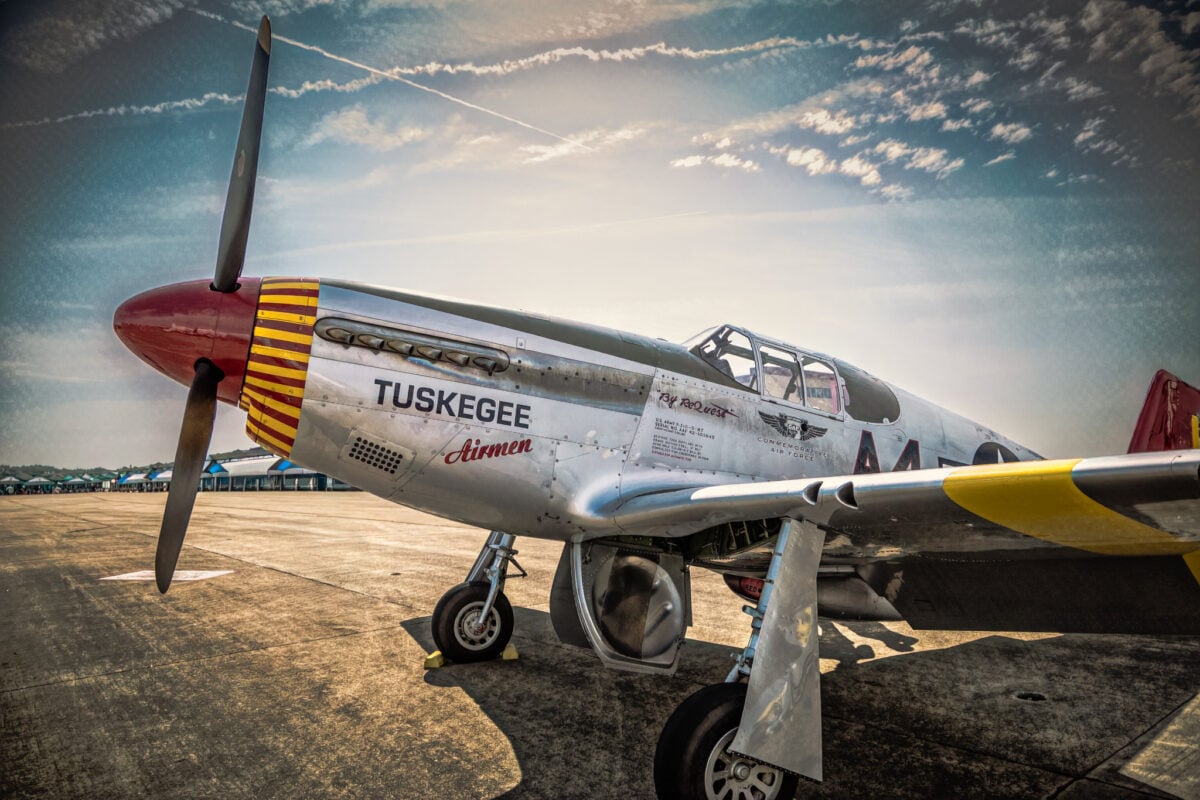
While the Tuskegee Airmen earned fame for their combat prowess, another group of African American servicemen became unwitting subjects in radiation experiments. Military researchers (and this gets complicated quickly, because the lines between different agencies and institutions were deliberately blurred to obscure responsibility) subjected these men to doses of radiation that far exceeded safe levels, ostensibly to study the effects on military personnel who might encounter nuclear fallout in combat situations.
But the real purpose—and this becomes clear when you read through the declassified documentation—was to establish baseline data for radiation exposure in a population that military planners assumed would be expendable in nuclear warfare scenarios. The subjects were never informed about the true nature of the experiments, never gave meaningful consent, and certainly never understood that they were being systematically poisoned in the name of scientific inquiry.
Some lived with the consequences for decades. Others didn’t live at all.
Project Blue Book

UFO investigations sound harmless until you realize they were mostly about discrediting witnesses. The Air Force ran Project Blue Book from 1952 to 1969, officially investigating unidentified flying objects.
The real mission was debunking sightings and maintaining public calm. Investigators often arrived at crash sites before local authorities, confiscated evidence, and intimidated witnesses into silence.
The Edgewood Arsenal Experiments

Chemical weapons testing requires test subjects, and for twenty years, the military found them among its own ranks. Soldiers at Edgewood Arsenal were exposed to nerve agents, psychoactive drugs, and incapacitating chemicals between 1955 and 1975. Many volunteers thought they were testing protective equipment.
Instead, they became guinea pigs for weapons designed to disable enemy forces—and discovered that their own forces were perfectly willing to disable them first.
Operation Paperclip
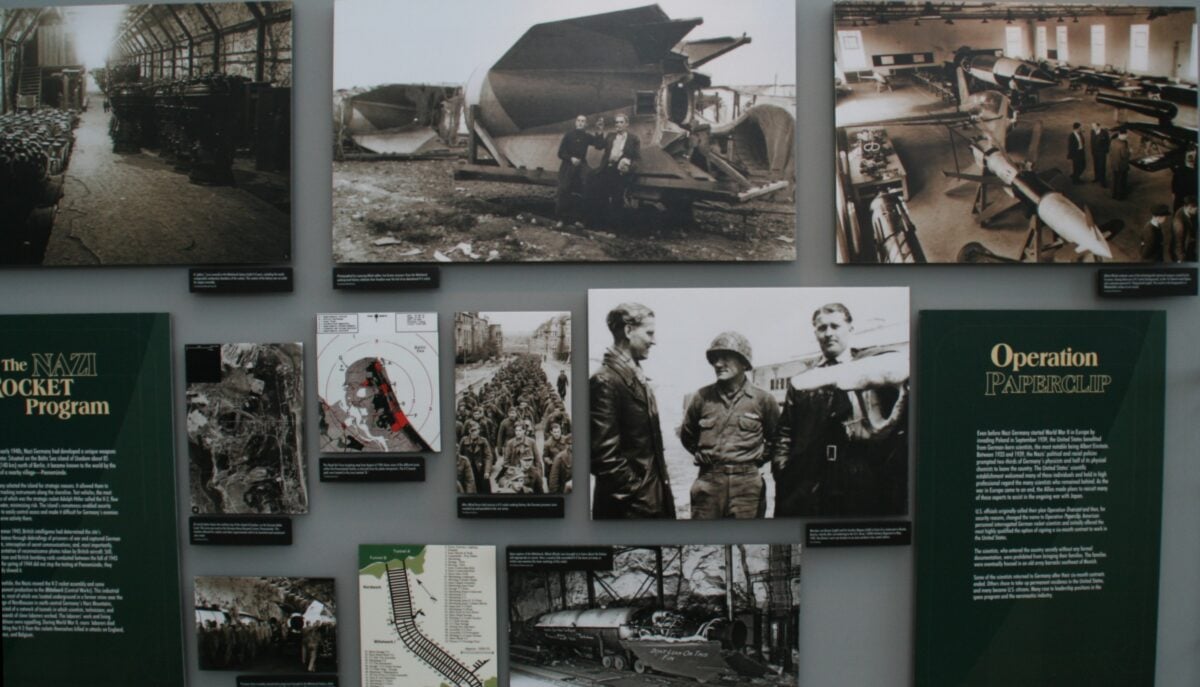
Picture this: the war against fascism ends, and within months, former Nazi scientists are setting up laboratories in American facilities, drawing government salaries, and working on the same projects they pursued under Hitler—except now they’re doing it for the United States. Operation Paperclip brought over 1,600 German scientists to America after World War II, many with documented war crimes in their backgrounds, because their expertise in rockets and chemical weapons was considered too valuable to leave for the Soviets to claim.
The moral calculus was simple and disturbing: these men had participated in genocide, but they understood technology that could provide military advantage. So their pasts were scrubbed, their records sanitized, and their crimes forgotten in exchange for their knowledge. The rocket technology that eventually put Americans on the moon was developed by the same hands that built V-2 missiles to terrorize London. Progress, apparently, has no memory.
The Anthrax Island Experiments

Gruinard Island off the coast of Scotland became uninhabitable for fifty years after British researchers tested anthrax bombs there during World War II. Sheep died within days of exposure.
The island remained contaminated until a massive decontamination effort in the 1980s. Military planners considered using similar weapons against German livestock, but the war ended before deployment.
Project SHAD
The military tested chemical and biological agents on its own ships and crews during the 1960s without informing participants about the risks. Ships would sail into test zones where planes dropped everything from nerve gas to bacteria designed to simulate biological warfare attacks.
Sailors developed respiratory problems, skin conditions, and neurological symptoms that persisted for decades—and spent years fighting for recognition that their illnesses were connected to secret experiments they never knew they were part of.
The Denver Airport Experiments

Long before Denver International Airport became the subject of conspiracy theories, the original Stapleton Airport served as a testing ground for psychological manipulation techniques. Military researchers studied crowd control and behavioral modification by introducing stimuli designed to increase anxiety, confusion, and compliance among travelers.
Hidden cameras recorded passenger reactions while researchers tested everything from subliminal audio messages to strategically placed visual cues. The goal was developing methods for controlling civilian populations during martial law scenarios.
Operation Ranch Hand

Agent Orange wasn’t just used in Vietnam—it was tested extensively on American soil first. Military researchers sprayed defoliants across forest areas in the Pacific Northwest, agricultural regions in the Midwest, and coastal marshlands along the Eastern seaboard to study environmental impact and effectiveness.
Local populations were never warned about the testing, and many communities didn’t learn about their exposure until decades later when cancer clusters and birth defects prompted investigations. The irony is sharp: while protesters opposed the use of chemical weapons in Southeast Asia, those same weapons were being deployed against American ecosystems and communities.
The Sleep Deprivation Studies

How long can a human stay awake before breaking completely? Military researchers spent considerable effort finding out. Subjects were kept awake for up to 180 hours while researchers monitored cognitive function, physical performance, and psychological stability.
The methods for maintaining consciousness ranged from stimulant drugs to physical intimidation. Some subjects experienced permanent psychological damage from the prolonged stress and chemical interventions.
Project Pandora

The discovery that the Soviet Union was bombarding the American embassy in Moscow with microwave radiation led to a secret research program studying the effects of electromagnetic fields on human behavior and health. Military contractors exposed animals and human volunteers to various frequencies and intensities of microwave energy, ostensibly to develop countermeasures against Soviet attacks.
The real purpose involved weaponizing the technology for crowd control and interrogation enhancement.
Echoes in Empty Files

These experiments share a common thread that runs deeper than their classification levels or ethical violations. They represent moments when institutions convinced themselves that any method was justified by sufficient necessity, that any boundary could be crossed if the stakes seemed high enough.
The files that document these projects—the ones that survived deliberate destruction—read like case studies in how ordinary people can participate in extraordinary cruelty when it’s dressed up as patriotic duty or scientific progress. What’s most unsettling isn’t the experiments themselves, but how easily they were rationalized by smart, educated people who should have known better.
The real lesson lives in that gap between what happened and what people told themselves was happening—a reminder that the most dangerous experiments aren’t always the ones conducted in laboratories.
More from Go2Tutors!

- The Romanov Crown Jewels and Their Tragic Fate
- 13 Historical Mysteries That Science Still Can’t Solve
- Famous Hoaxes That Fooled the World for Years
- 15 Child Stars with Tragic Adult Lives
- 16 Famous Jewelry Pieces in History
Like Go2Tutors’s content? Follow us on MSN.