13 Ways Your Brain Forms a First Impression Before You’ve Said a Word
One-tenth of a second. Princeton psychologists Janine Willis and Alexander Todorov found that exposing participants to a face for exactly that long — less time than a blink — produced judgments of trustworthiness that closely matched those formed with unlimited viewing time.
Lengthening the exposure to half a second didn’t meaningfully change the ratings. It only made people more confident in the same conclusions they’d already reached.
This is what your brain does to strangers every time you meet one. It assembles a verdict before the conversation begins, and then it spends the rest of the interaction looking for reasons to confirm rather than revise it.
Understanding the mechanics of that process doesn’t give you perfect control over it, but it does give you something most people never have: a clear view of what’s actually happening in the first few seconds of any encounter.
Your Face Is Read Before Your Name Is Given

The brain’s evaluation of a face begins at the level of raw visual processing — before conscious thought has engaged at all. Warmth is assessed first, then competence. The irony, well-documented in research, is that most people devote their self-presentation energy to projecting competence — their credentials, their accomplishments, their expertise — when the snap judgment that matters more is whether you seem like someone who means well.
A person assessed as warm first will have their competence evaluated charitably. A person assessed as cold first will have their competence doubted regardless of what follows.
The Halo Effect Colours Everything Afterward

The halo effect is the psychological mechanism by which a strong positive first impression in one area colors assessments of unrelated areas. A person who is physically attractive is consistently rated by study participants as more competent, more honest, and more intelligent than less attractive counterparts — without any evidence bearing on those qualities.
The effect isn’t limited to attractiveness; any strongly positive initial signal triggers it. Once the halo is in place, subsequent information tends to be interpreted in ways that preserve it rather than challenge it.
Clothing Is Processed as Social Information

Within the first seconds of an encounter, clothing signals social category, competence, and intent. Research shows that people can make surprisingly accurate inferences about personality from clothing alone — and that accuracy doesn’t improve much with more information. What’s more revealing is that people don’t consciously decide to assess clothing: the processing happens automatically, the same way faces are assessed.
The deliberate choice of what to wear to a meeting or interview is an attempt to influence a process that the other person doesn’t experience as a deliberate evaluation.
Body Language Speaks Before You Do

The way a person holds themselves — posture, how they occupy space, whether their movements are contained or expansive — is processed in the first seconds of an encounter and contributes significantly to the initial impression. Contractive postures (hunched shoulders, crossed arms, reduced physical presence) read as low confidence and low social status.
Expansive postures read as the opposite. Research by Amy Cuddy and colleagues at Harvard, though subject to ongoing debate about the physiological claims, established the basic social reading of postural signals with reasonable confidence.
Your Handshake Is Evaluated as a Personality Measure

Handshake characteristics — grip strength, duration, eye contact during the grip, and whether the contact is firm or limp — are consistently associated by research participants with specific character assessments. A firm, confident handshake produces higher ratings for extraversion and emotional stability.
A weak, brief, or overly dominant grip produces different assessments in predictable directions. The specific content of these associations varies somewhat by cultural context, but the fact that a handshake is experienced as a personality signal — rather than just a greeting — is stable across studies.
Your Voice Is Judged in Its First Sentence

The tone, pitch, speed, and resonance of a voice produce immediate impressions of trustworthiness, authority, and emotional state. Research on political outcomes has found that voters can predict election results with above-chance accuracy from brief audio clips of candidates’ voices — without seeing the candidate or hearing the content of what’s said.
Deeper voices are consistently associated with authority and competence in Western cultural contexts. Vocal warmth — achieved through pace, modulation, and apparent ease — is evaluated alongside facial warmth as part of the first overall impression.
Eye Contact Sets the Social Contract
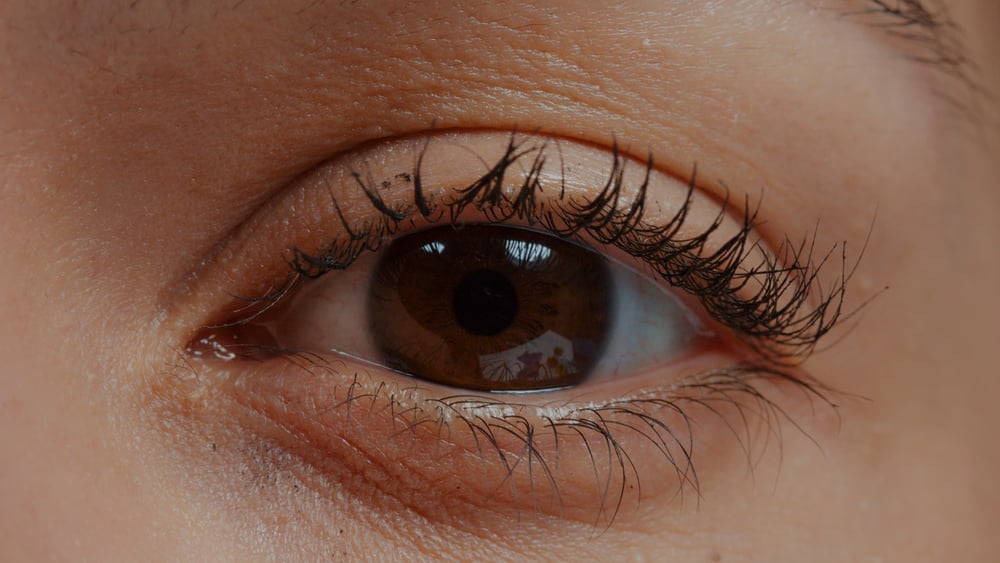
The degree of eye contact in an initial encounter signals both confidence and engagement. Too little reads as evasiveness, low confidence, or discomfort.
Too much reads as aggression or a challenge. The sweet spot — sustained eye contact that breaks naturally and returns — is processed as social ease and signals that the encounter is being taken seriously.
People rarely consciously decide how much eye contact to make with a stranger; the calibration happens automatically, which is why deviations from norms are so immediately noticeable and so strongly felt.
Scent Is a Faster Signal Than Sight

Olfactory signals bypass the thalamus — the brain’s general sensory relay station — and travel directly to the limbic system, the emotional processing centre. This means smells reach emotional processing faster than visual information does.
First impressions include an olfactory component that most people don’t consciously register but that contributes to the overall “feeling” of someone before any explicit assessment has been made. This is one of the reasons physical presence generates a stronger impression than video or photographs: the full complement of sensory signals is available.
The Primacy Effect Makes First Information Stickiest

In psychology, the primacy effect describes the tendency for information encountered first to carry disproportionate weight in forming an overall impression. Tell someone that a person is “intelligent, hardworking, and occasionally cold” and they rate that person more positively than if you present the same three traits in reverse order — “cold, hardworking, and occasionally intelligent.”
The first adjective sets a frame that everything subsequent is filtered through. Applied to real encounters, this means the impression formed in the first seconds shapes how all subsequent information is interpreted.
Confirmation Bias Locks In the Initial Verdict

Once a first impression is formed, the brain doesn’t evaluate new information neutrally. It applies confirmation bias — the tendency to weigh information that confirms the existing view more heavily than information that challenges it.
A person judged as untrustworthy on first encounter will have ambiguous behaviours interpreted uncharitably. A person judged as warm will have the same behaviours interpreted generously.
Changing a first impression requires not just new information but information strong enough and consistent enough to overcome the interpretive framework already in place. This is why the saying “you never get a second chance to make a first impression” understates the problem: the second and third and tenth chances are all still being filtered through the first.
Physical Attractiveness Triggers Unfair but Predictable Advantages

The association between attractiveness and positive character assessments is one of the most replicated findings in social psychology. More attractive individuals receive lighter sentences in legal contexts, higher performance ratings in employment contexts, and more charitable interpretations of ambiguous behaviour across nearly every setting that has been studied.
Attractiveness is processed as part of the first impression automatically and unconsciously — people aren’t deliberately deciding to apply the halo. They experience the impression as an accurate assessment, not as bias.
The Setting Shapes the Impression

First impressions aren’t formed in a vacuum. The context in which an encounter happens influences what signals are attended to and how they’re interpreted.
The same person encountered at a job interview generates different impressions than the same person encountered at a social event, because the frame of “job interview” activates different evaluation criteria. Research on thin-slice judgments — the rapid assessments Nalini Ambady described — found that even brief observations are processed in light of available context.
Change the context and you change the impression, even if the person is identical.
You Can’t Watch Yourself Having a First Impression

The most uncomfortable aspect of first impression research is that the process isn’t conscious. You experience the conclusion — this person seems trustworthy, that one seems guarded — but you don’t experience the mechanism.
The face was processed before your conscious attention engaged. The posture was assessed before you decided to assess it.
The voice was evaluated before you formed an opinion about it. This means that telling yourself to be less biased in forming first impressions doesn’t significantly reduce the speed or automaticity of the process.
What it can do is slow down the decision-making that follows the impression — introducing a gap between the gut reaction and the action taken in response to it.
What the Research Is Actually Saying

The science of first impressions isn’t an argument that these judgments are correct. They’re often not.
The rapid assessments the brain makes in those early seconds are based on heuristics that evolved for environments very different from offices, dating apps, and job interviews. They produce systematic errors — the halo effect, the attractiveness bias, the primacy effect — that disadvantage people in ways that have nothing to do with their actual qualities.
What the research establishes is that these errors happen reliably, quickly, and outside conscious awareness. The first step toward anything better is knowing what the process actually is, rather than assuming your initial gut feeling reflects a fair read of a real person.
More from Go2Tutors!

- The Romanov Crown Jewels and Their Tragic Fate
- 13 Historical Mysteries That Science Still Can’t Solve
- Famous Hoaxes That Fooled the World for Years
- 15 Child Stars with Tragic Adult Lives
- 16 Famous Jewelry Pieces in History
Like Go2Tutors’s content? Follow us on MSN.