Historical Facts About Hawaii
Have you ever wondered how one of America’s most cherished states came to be a group of volcanic islands in the middle of the Pacific? A fascinating tale of extraordinary human bravery, political intrigue, and cultural resilience spanning more than a millennium, Hawaii’s story is more than just stunning beaches and tropical paradise.Consider this: these islands developed one of the most advanced societies in the Pacific despite being cut off from the outside world for centuries.
Hawaii’s history is filled with tales that will fundamentally alter your perspective of these islands, from master navigators traversing thousands of miles of open ocean to a monarchy that was almost as magnificent as European courts.Here are the most captivating historical facts about Hawaii that reveal the remarkable journey from ancient settlement to modern statehood.
Polynesian Master Navigators Found Paradise

Picture this: over a thousand years ago, brave Polynesian voyagers set sail across the vast Pacific in double-hulled canoes, guided only by stars, currents, and their incredible knowledge of the ocean. These weren’t accidental discoveries—they were planned expeditions covering over 2,000 miles of open water.
Archaeological evidence suggests the first settlers arrived between 900-1200 CE, likely from the Marquesas Islands, followed by waves from Tahiti. These navigators accomplished what many consider one of humanity’s greatest feats of exploration, finding tiny island dots in the world’s largest ocean using nothing but traditional wayfinding techniques.
The Islands Had No Single Name Originally

Before Kamehameha I unified the islands, each one existed as a separate kingdom with its own name and ruler. There was no concept of ‘Hawaii’ as a unified place—that name came from the Big Island itself.
Captain James Cook recorded different names for each island during his 1778 visits because that’s exactly how the people saw them: distinct places with their own chiefs and identities. It wasn’t until Kamehameha conquered and unified the island chain that he imposed the name ‘Hawaii’ on the entire group, creating the Kingdom of Hawaii in 1810.
Like Go2Tutors’s content? Follow us on MSN.
Ancient Hawaiians Were Aquaculture Pioneers

By the time European explorers arrived, ancient Hawaiians had already mastered sophisticated aquaculture systems that would impress modern engineers. They built elaborate fishponds using packed earth and cut stone, creating controlled environments that produced around 2 million pounds of fish annually by Captain Cook’s era.
These weren’t simple ponds—they were complex engineering marvels with gates, channels, and carefully managed ecosystems that likely developed over several centuries after initial settlement. The famous Menehune Fishpond on Kauai, dating back at least 1,000 years, still exists today as testimony to their advanced aquaculture knowledge that sustained large populations on isolated islands.
A Teenager Changed Hawaiian History Forever

When Captain James Cook arrived in 1778, he encountered a sophisticated society ruled by powerful chiefs. But it was the death of King Kalani’opu’u in 1782 that set the stage for everything that followed.
His nephew Kamehameha was just a young warrior when he began his campaign to unite the islands. Using European weapons and advisors like John Young and Isaac Davis (shipwrecked sailors who became his trusted allies), this determined leader conquered most of the islands by 1795, culminating in the decisive Battle of Nu’uanu on Oahu.
The Great Mahele Created Unintended Consequences

In the 1840s, King Kamehameha III tried to protect Hawaiian lands by adopting Western property laws through the Great Mahele (Great Division). The plan seemed logical: divide lands between the crown, chiefs, and common people, allowing Hawaiians to claim individual ownership.
But there was a catch—people had to file claims within two years under the Kuleana Act. Since land ownership was a foreign concept to many Hawaiians, less than 1% of the population actually filed claims.
Like Go2Tutors’s content? Follow us on MSN.
Hawaii’s Monarchy Lived in Electric Luxury Before the White House

When ‘Iolani Palace was completed in 1882, it was more technologically advanced than both the White House and Buckingham Palace. King Kalakaua ensured his royal residence had electric lights, indoor plumbing, and even telephones before these amenities reached other world capitals.
The palace represented Hawaii’s monarchy attempting to demonstrate that their kingdom could match any European court in sophistication and modernity. This wasn’t just showing off—it was a strategic statement about Hawaiian civilization and independence on the world stage.
The Bayonet Constitution Stripped Royal Power

Imagine being forced at gunpoint to give away most of your authority—that’s exactly what happened to King Kalakaua in 1887. A group of American and European businessmen, backed by armed militia, forced him to sign what became known as the Bayonet Constitution.
This document stripped the monarchy of most powers, limited voting rights primarily to wealthy foreign residents, and essentially gave control of the government to foreign business interests. The constitution got its name from the obvious threat of violence behind Kalakaua’s ‘consent’ to sign it.
Queen Lili’uokalani Fought to Restore Hawaiian Rights

When Lili’uokalani became Hawaii’s first and only reigning queen in 1891, she inherited a monarchy that had been stripped of real power. Her brother Kalakaua’s forced acceptance of the Bayonet Constitution had left the throne largely ceremonial.
The queen’s attempt to promulgate a new constitution that would restore voting rights to Native Hawaiians and return power to the monarchy triggered the crisis that led to her overthrow. She wasn’t trying to create absolute rule—she was attempting to restore the balance of power that had existed before foreign businessmen forced their control over the Hawaiian government.
Like Go2Tutors’s content? Follow us on MSN.
The Overthrow Involved Just 13 Conspirators

The end of the Hawaiian Kingdom came down to the actions of just 13 men—the Committee of Safety composed of American businessmen and lawyers living in Hawaii. On January 17, 1893, with the backing of U.S. Marines from the USS Boston, this small group staged a coup against Queen Lili’uokalani.
The queen yielded her authority under protest, believing that the United States government would restore her once they learned the facts. She was wrong—what followed was five years of struggle between those supporting Hawaiian independence and those pushing for American annexation.
President Cleveland Called the Overthrow Illegal
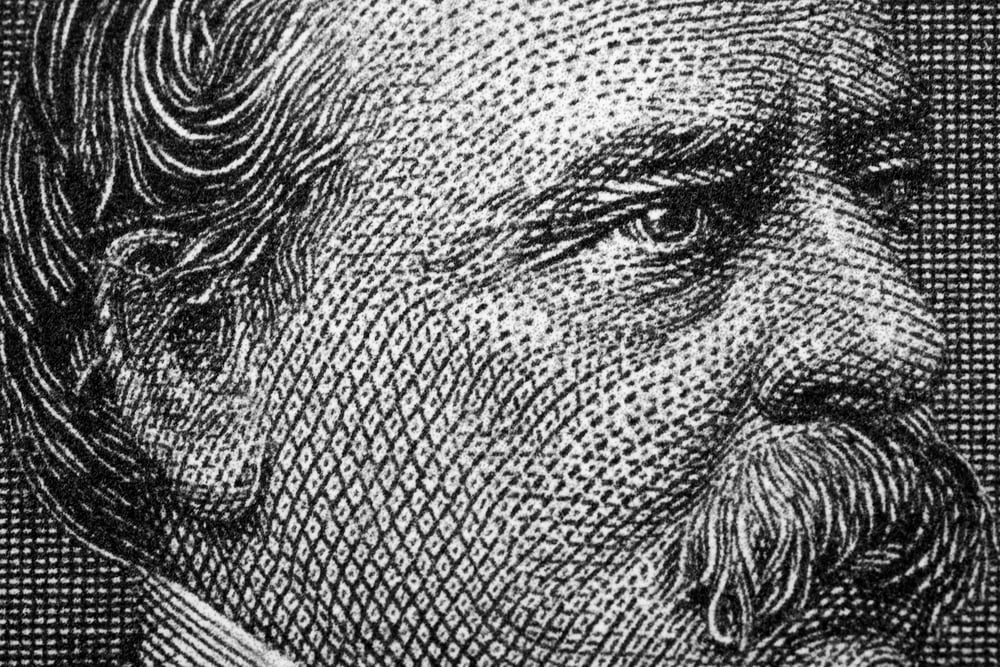
When President Grover Cleveland investigated the 1893 overthrow, he concluded it was an illegal act of war committed with the help of American officials. Cleveland actually tried to restore Queen Lili’uokalani to power, but with conditions—he wanted her to grant amnesty to the conspirators who had overthrown her.
The queen initially resisted this requirement but eventually agreed to Cleveland’s terms. However, the provisional government leaders who had seized control refused to step down regardless of presidential pressure, and Congress wouldn’t support Cleveland’s restoration efforts.
37,000 Hawaiians Petitioned Against Annexation
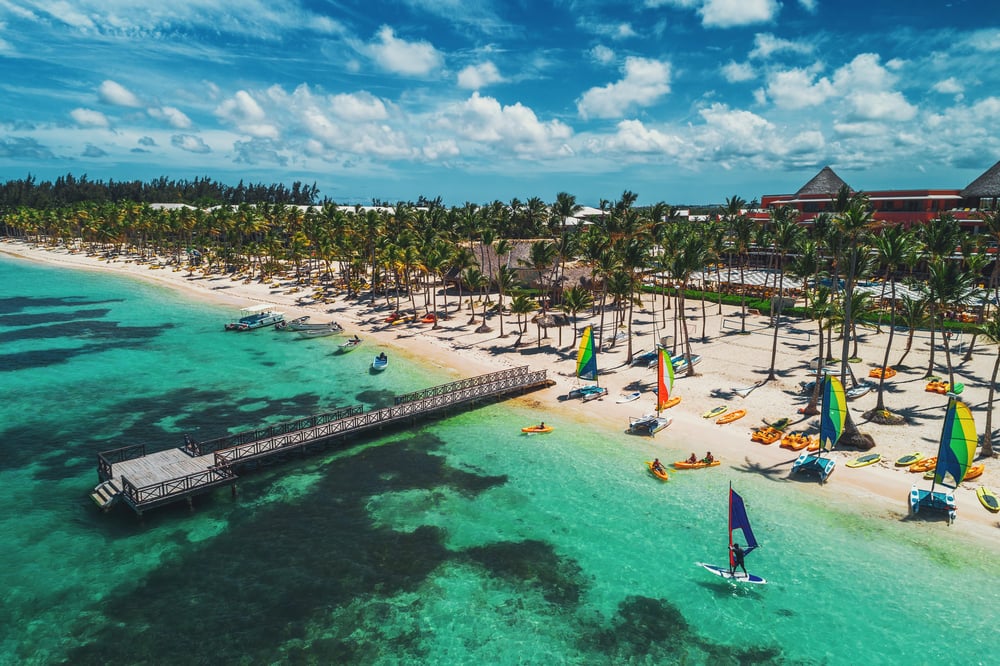
When the Republic of Hawaii pushed for U.S. annexation in 1897, Native Hawaiians mounted a massive resistance campaign. They collected over 37,000 signatures on petitions opposing annexation—representing the vast majority of Hawaii’s Native Hawaiian population at the time.
Queen Lili’uokalani personally traveled to Washington D.C. to present these petitions to Congress, demonstrating that annexation was being imposed against the clear will of the Hawaiian people. Despite this overwhelming opposition, political and strategic considerations during the Spanish-American War led to annexation in 1898.
Like Go2Tutors’s content? Follow us on MSN.
Hawaii Was America’s First Overseas Imperial Acquisition

Hawaii’s annexation marked the United States’ first overseas annexation of a sovereign, non-contiguous nation, setting the stage for later imperial acquisitions. Unlike previous American expansion that involved continental territories or lands that would become states populated by American settlers, Hawaii represented something fundamentally different—taking control of a distant island kingdom with its own people, culture, and government.
This precedent paved the way for America’s later acquisition of the Philippines, Guam, and Puerto Rico during the same era, marking the country’s emergence as an imperial power with overseas territories inhabited by diverse populations who had never sought American rule.
The Sugar Industry Transformed Hawaiian Demographics

Sugar plantations created one of the world’s most ethnically diverse societies. Starting in the 1850s, plantation owners recruited workers from China, Japan, Portugal, Korea, and the Philippines to work the sugarcane fields.
Each immigrant group brought their own languages, foods, religions, and traditions, creating Hawaii’s unique multicultural identity. By 1900, Native Hawaiians had become a minority in their own homeland due to both population decline from introduced diseases and massive immigration for plantation labor.
Ancient Wisdom Guides Modern Hawaii

Hawaii today is a remarkable fusion of contemporary American culture and traditional Polynesian knowledge. Many Hawaiians’ attitudes toward relationships and environmental stewardship are still influenced by traditional ideas like aloha (love, compassion, mercy), malama ‘aina (caring for the land), and ‘ohana (family).
The history of the islands serves as a reminder that paradise is about more than just the splendor of nature; it is also about the tenacity of those who have preserved their cultural identity in the face of centuries of significant change. Knowing this background makes it easier for us to value Hawaii as a destination for vacations as well as a place where traditional wisdom and contemporary issues are combined in amazing ways.
More from Go2Tutors!

- 16 Historical Figures Who Were Nothing Like You Think
- 12 Things Sold in the 80s That Are Now Illegal
- 15 VHS Tapes That Could Be Worth Thousands
- 17 Historical “What Ifs” That Would Have Changed Everything
- 18 TV Shows That Vanished Without a Finale
Like Go2Tutors’s content? Follow us on MSN.