25 Superstitions People Follow Without Knowing Where They Started
Most people who knock on wood don’t believe in tree spirits. Most people who toss spilled salt over their shoulder aren’t genuinely worried about the devil.
They do these things out of habit, or instinct, or because refusing feels uncomfortable in a way that’s hard to articulate. Superstitions survive not because people believe in them fully but because the cost of ignoring them feels just high enough to not bother.
What’s interesting is how few people know where these habits actually came from. Some trace back to pagan belief systems predating Christianity. Some started as practical safety warnings that acquired magical dressing.
A few are genuinely modern — not ancient at all. And some contradict each other completely depending on which country you’re in. Here’s where they actually started.
Knocking on Wood

The most common explanation points to Celtic and Indo-European pagan belief: trees were inhabited by spirits and gods, and knocking on the trunk called them for protection or thanked them for good fortune. A competing theory connects the habit to Christian practice — knocking on wood was touching the wooden cross, invoking divine protection.
British folklorist Steve Roud has proposed a more recent and thoroughly unglamorous origin: a Victorian children’s game called “Tiggy Touchwood,” in which players were only “safe” when touching wood. Whatever the root, the habit survived because it gives anxious feelings a small physical outlet.
Throwing Salt Over Your Shoulder

Salt was expensive, preserved food, and was so central to Roman economic life that soldiers were sometimes paid in it — which is where the word “salary” comes from. Spilling salt was genuinely wasteful long before it was considered unlucky. The religious dimension came later: in Leonardo da Vinci’s The Last Supper, Judas Iscariot is depicted with an overturned salt cellar at his elbow, linking spilled salt to betrayal.
The corrective gesture — throwing a pinch over the left shoulder — targets the devil, who was believed to lurk on that side. The Latin word for left, sinistra, is also the origin of the English word “sinister.”
Breaking a Mirror Brings Seven Years of Bad Luck

The Romans believed mirrors reflected the soul, and that damaging one could damage the soul itself. When mirrors were made from polished bronze and silver, breaking one also represented a real financial loss. The specific “seven years” penalty only appears in records from the mid-nineteenth century, making that detail surprisingly recent.
Folklorists have traced the general superstition about mirrors and bad luck only to 1777, suggesting it emerged from associations between mirrors, magicians, and divination rather than from a single ancient source.
Black Cats Crossing Your Path
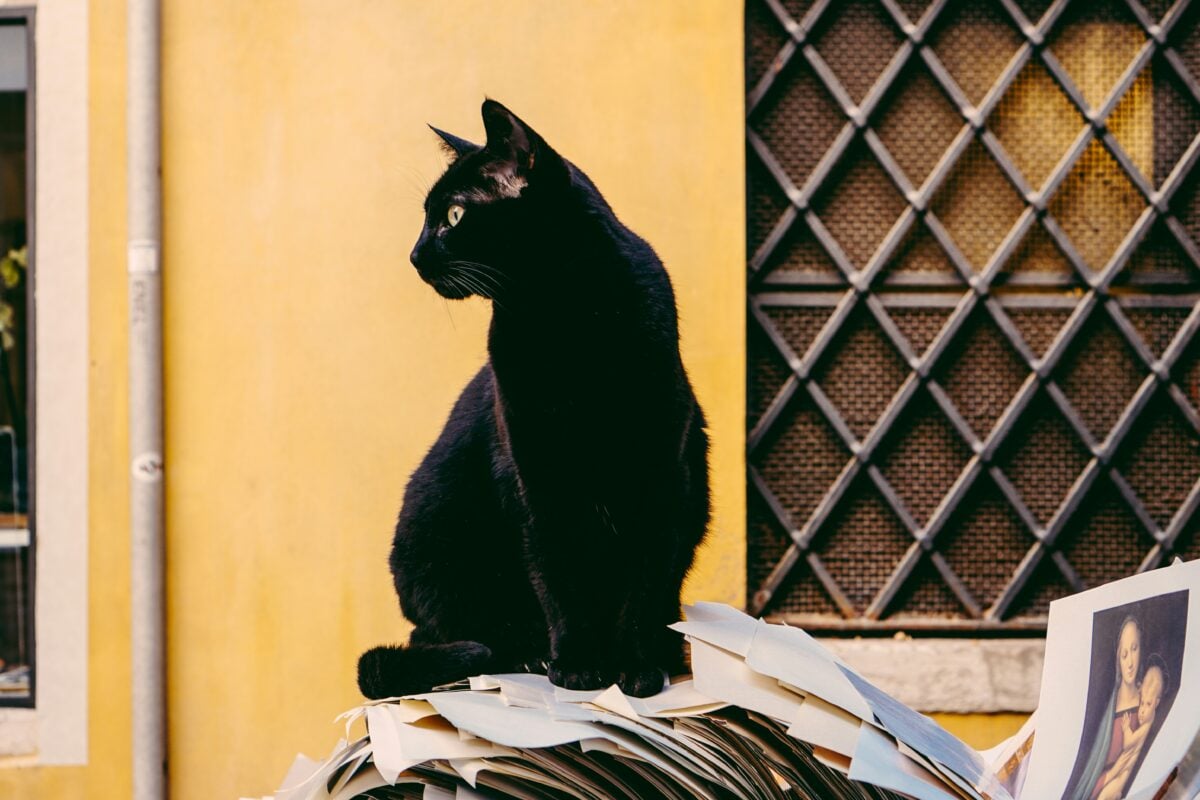
This superstition travels in opposite directions depending on where you are. In parts of Japan and the United Kingdom, a black cat crossing your path brings good luck. In much of continental Europe and the United States, it signals misfortune. The bad-luck version originates in thirteenth-century Europe, when the Catholic Church associated black cats with witchcraft following a papal decree linking them to heretical rituals.
The fear was reinforced during European witch trials, in which cats were cast as companions to witches, and eventually crossed the Atlantic with early settlers. In ancient Egypt, by contrast, black cats were revered and associated with the goddess Bastet.
Walking Under a Ladder

Some of this one is practical — if there’s a ladder against a wall, someone is probably on it, and walking under it creates real hazards for both parties. But the superstition runs deeper. A ladder leaning against a wall creates a triangle, which was a sacred shape in ancient Egypt, representing the geometry of the pyramids and the connection between earth and the gods.
Walking through it “broke” the sacred form. In Christian tradition, the trinity made the same shape sacred. The practical danger reinforced an already-established supernatural taboo, which is how this particular superstition survived long past its practical origins.
Friday the 13th

Two older, separate superstitions merged. Thirteen had long been considered unlucky — at the Last Supper, Judas was the thirteenth guest, and in Norse mythology, the troublemaker Loki was the uninvited thirteenth guest at a divine dinner that resulted in the death of the god Balder.
Twelve was seen as the number of completeness (twelve apostles, twelve months, twelve zodiac signs), making thirteen inherently irregular. Fridays had their own bad reputation in Christian tradition as the day of the crucifixion. The Victorians combined these two existing traditions. A historical event that likely cemented the pairing: on Friday, October 13, 1307, King Philip IV of France ordered the mass arrest and execution of the Knights Templar.
The Evil Eye
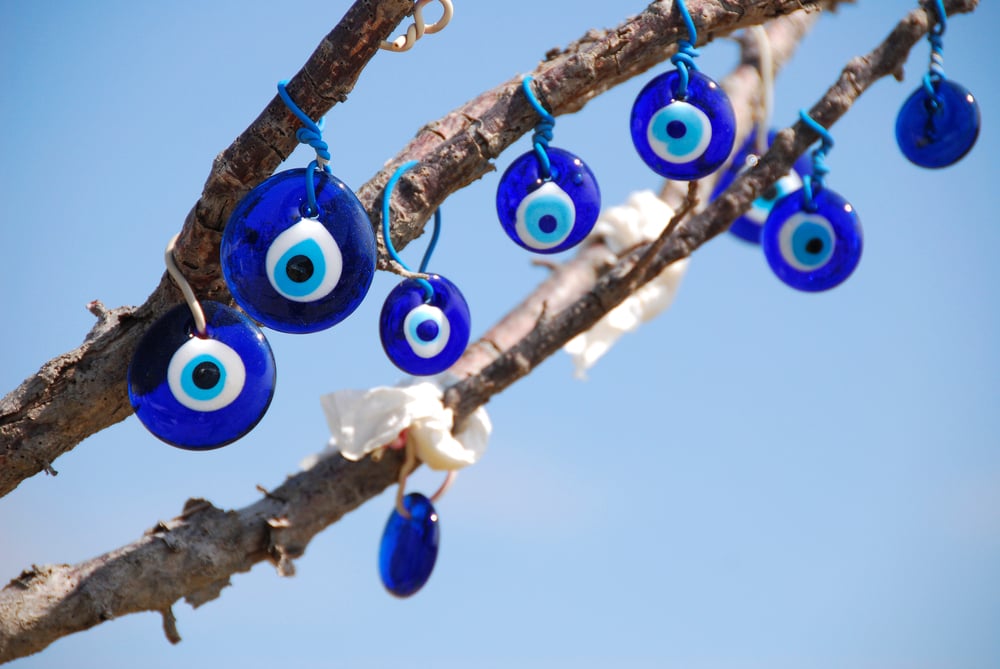
The belief that envy or malicious glances can cause real harm appears across the Mediterranean, the Middle East, South Asia, and Latin America, with amulets and countermeasures that vary by culture. The blue eye-shaped charm common in Turkey and Greece, the red string in some Jewish traditions, the spitting gesture in others — all address the same underlying anxiety: that being envied is dangerous, and that goodwill can be weaponised.
The concept may be among the oldest superstitions in continuous practice, with references in ancient Greek, Roman, and Near Eastern texts.
Horseshoes Over Doorways

The horseshoe’s protective power draws from two sources. Iron was considered capable of warding off evil spirits across multiple European folk traditions — there’s an old belief that fairies and malevolent supernatural creatures feared iron, possibly because iron-using cultures were displacing older communities.
The horseshoe shape also mimics the crescent moon, associated with fertility and divine protection in many pre-Christian traditions. Whether the open end should face up (to “hold” luck inside) or down (to let luck flow down to whoever passes beneath) is a point of genuine disagreement between different regional traditions.
Opening an Umbrella Indoors

This one has a straightforwardly practical origin that simply acquired supernatural framing later. Victorian-era umbrellas with metal spokes and spring-loaded mechanisms were genuinely dangerous to open in small spaces — they could break objects, injure bystanders, and take out an eye.
The practical warning “don’t open umbrellas inside” was more convincingly enforced as “it brings bad luck.” Safety instructions delivered as superstitions have a strong track record of survival, because the emotional weight of a curse outlasts the memory of the original hazard.
Spilling Salt

Before refrigeration, salt was the primary means of preserving food. Wasting it was a genuine economic loss, which is probably how it came to signal bad fortune in practical terms before it acquired any supernatural meaning.
The religious layer — Judas at the Last Supper — followed later, as visual art reinforced the association between salt and betrayal. The ancient Romans also viewed salt as a purifying substance, which meant its mishandling carried additional weight in ritual contexts.
Crossing Your Fingers

The crossed finger gesture appears in two different traditions. In early Christian practice, forming a cross with the index fingers of two people was a way of sealing a wish or agreement under divine protection. Over time, one person could make the cross alone with their own two fingers.
A parallel tradition holds that the cross shape trapped good luck at the intersection point. By either account, the gesture became a portable, private ritual for hoping something works out — which is why people now cross their fingers behind their back when they’re crossing something else: they’ve retained the hope but abandoned the belief.
The Number 13

Western fear of thirteen predates its Friday pairing. At the Last Supper, thirteen sat at the table and the evening ended badly. In Norse mythology, thirteen broke the completeness of twelve. Some buildings in the United States and Europe still skip the thirteenth floor — the floor exists, but it’s labelled fourteen, an architectural concession to a superstition.
The specific fear of the number is called triskaidekaphobia, a Greek-derived word that arrived in English in the early twentieth century when the superstition was being formally studied rather than simply practiced.
Finding a Penny

The rhyme “find a penny, pick it up, all the day you’ll have good luck” associates copper coins with good fortune based partly on older beliefs that metals — particularly those associated with gods — carried protective power. In some traditions, the luck depends on whether the penny is face-up (fortuitous) or face-down (better left alone).
The ritual also has a simpler explanation: finding any money is objectively better than not finding it, and the rhyme simply made a small piece of good fortune feel ceremonially significant.
Saying “Bless You” After a Sneeze

In several ancient traditions, a sneeze was understood as a moment of vulnerability: the soul might escape the body, or evil spirits might enter through the open mouth. Pope Gregory I is said to have encouraged the “God bless you” response during a sixth-century plague, when sneezing was associated with illness.
The Roman equivalent was “Jupiter preserve you.” Whatever its origin, the custom is now so deeply embedded in social etiquette that not saying it after someone sneezes feels actively rude — the superstitious content has been entirely replaced by social obligation.
Stepping on Cracks

The rhyme “step on a crack, break your mother’s back” draws from older European and African-American folklore traditions in which cracks — in pavements, in walls, in the earth — represented openings between this world and another.
Stepping on them created contact with whatever lay beneath, which was typically imagined as something threatening. The specific targeting of the mother in the English version appears to be a localisation of a more general idea that crossing thresholds between worlds caused harm to those connected to the person crossing.
The Number Seven as Lucky

Seven’s lucky reputation is ancient and cross-cultural, though the reasons differ by tradition. In the Bible, God rested on the seventh day, making seven sacred. Ancient astronomers identified seven classical planets (the sun, moon, and five visible planets), which shaped calendars and cosmology.
Many folk traditions around the world independently arrived at seven as a significant number. The combination of religious weight, astronomical grounding, and widespread cultural repetition made seven’s lucky status unusually stable across centuries and geographies.
Rabbit’s Foot

The rabbit’s foot as a lucky charm has Celtic origins, where rabbits were associated with the underworld because they lived in burrows beneath the earth — and therefore were thought to have access to the spiritual forces below.
The specific requirement that it be the left hind foot of a rabbit caught in a cemetery by a cross-eyed person (in some versions of the tradition) represents the kind of accumulating specificity that folk charms tend to acquire over time as practitioners try to maximise their potency.
A Bird Flying Into Your Window

The superstition that a bird striking a window foretells death has multiple cultural sources, but the core logic is ancient: birds moving between sky and earth were seen as messengers between worlds. A bird forcing its way into a human space uninvited represented the boundary between life and whatever follows being momentarily breached.
In practice, birds do strike windows with enough regularity that the superstition’s predictive record would have been maintained by sheer statistical frequency — something bad eventually happens to everyone, and the bird visit is easy to remember in retrospect.
Breaking a Wishbone

The wishbone ritual — two people each grip an end, pull until it snaps, and the person holding the longer piece gets a wish — derives from Etruscan divination practices, in which the collarbone of a sacrificed chicken was dried and used for augury. The Romans adopted the practice and brought it north, where it merged with European folk traditions. The specific “wishing” element came later in the English tradition.
The word “wishbone” only appears in English records from the early nineteenth century, though the bone itself had been ritually significant for much longer.
Sleeping With Shoes on the Table

The belief that placing shoes on a table brings bad luck has a grim practical origin in parts of northern England and Wales: shoes were placed on a table to notify the household that a miner had died in a pit accident. The shoes arrived before the body.
The superstition preserves the memory of that association without anyone needing to remember its cause, which is how a lot of household superstitions survive — the original tragedy fades, the warning gesture remains.
Itchy Palms Mean Money Is Coming

The idea that an itching right palm signals incoming money (and an itching left palm means you’ll lose some) circulates widely enough to be familiar without a clear single origin. One historical thread traces it to the ancient Saxons, who rubbed silver on itching skin as a remedy for various ailments, thus associating silver with palm-scratching.
Another connects it to Roma folk tradition, in which physical sensations were read as signs of future events. The right-versus-left distinction appears consistently across versions, with right generally positive and left negative — consistent with the broader “sinister” association of the left side.
Crows and Ravens as Bad Omens

In many European traditions, crows and ravens arriving in unusual numbers or behaving oddly near a house were taken as signs of coming trouble. The association is ancient, connecting these birds to battlefields (where they gathered in number), death, and the transition between life states.
Norse mythology gave Odin two ravens — Huginn and Muninn, thought and memory — as messengers between worlds, which made them powerful but not particularly reassuring company. In some Native American traditions, the raven is a creator and trickster rather than a harbinger of death, illustrating how the same species can carry entirely opposite symbolic weight across cultures.
Beginner’s Luck
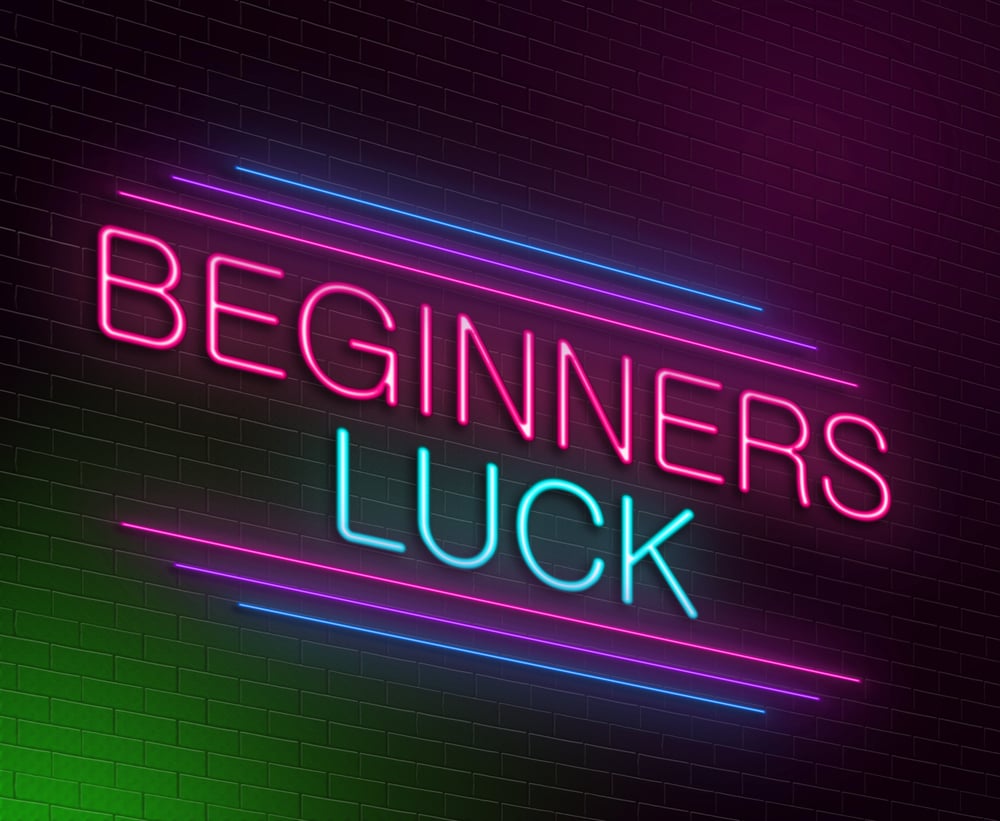
The idea that novices have unusual success on their first try at something is widely observed and has a psychologically credible explanation that has nothing to do with luck. Experienced players often experience performance anxiety that degrades their abilities in high-stakes situations. Beginners, unaware of what’s at stake, approach the same situation without that anxiety — which can genuinely improve performance.
Whether to call this luck or the absence of pressure is a matter of framing. Either way, it tends to disappear on the second attempt.
Never Give a Gift of Shoes to Your Lover

The superstition that gifting shoes to a romantic partner will cause them to walk away from the relationship exists across multiple cultures in varying forms. In some Italian and Chinese traditions, shoes are considered bad-luck gifts between couples.
The most practical explanation is that shoes enable mobility, and mobility enables departure — the symbolic connection between footwear and leaving is obvious enough to have generated the superstition independently in several places. Whether anyone has actually left a relationship because of a shoe gift is between them and whoever bought the shoes.
The Source Doesn’t Matter

The longer you look at superstitions, the more you notice that their content matters less than the function they serve. They give form to anxiety. They create small rituals around moments of uncertainty.
They distribute responsibility for outcomes across forces larger than any individual — which is, when things go wrong, a genuinely useful comfort. The Celtic explanation for knocking on wood and the Victorian children’s game explanation produce exactly the same knock. Whatever route a superstition took to reach you, you’re using it for the same reasons people always have: to feel briefly in control of something that isn’t.
More from Go2Tutors!

- The Romanov Crown Jewels and Their Tragic Fate
- 13 Historical Mysteries That Science Still Can’t Solve
- Famous Hoaxes That Fooled the World for Years
- 15 Child Stars with Tragic Adult Lives
- 16 Famous Jewelry Pieces in History
Like Go2Tutors’s content? Follow us on MSN.