School Lunches Through the Decades: Then and Now
There’s something oddly nostalgic about a school lunch. Whether you remember peeling the lid off a thermos of tomato soup, queuing up for a tray of rubbery pasta, or trading snacks with the kid next to you, the midday meal has always been more than just food.
It’s a snapshot of the time — what society valued, what it could afford, and what it thought children needed. And when you line up the decades side by side, the changes are pretty striking.
The Tin Pail Days

Before school cafeterias existed, lunch was whatever you brought from home. In the early 1900s, most children carried food in a tin lunch pail — bread, cold biscuits, maybe a hard-boiled egg.
Farm kids often had leftovers from breakfast. City kids might have had slightly more variety, but not much.
There was no school meal program. If your family had enough, you ate.
If not, you went hungry or shared with a classmate. Teachers often looked the other way.
Wartime and the First Real Push for School Meals

The 1940s changed everything. During World War II, the U.S. government became deeply concerned about child nutrition — not just out of humanitarian interest, but because military draft boards were rejecting alarming numbers of young men for being malnourished or physically underdeveloped.
Children who grew up without enough food weren’t growing into fit soldiers. That concern helped push the National School Lunch Act into law in 1946.
For the first time, the federal government committed to funding meals in schools across the country. The goal was simple: make sure kids got at least one nutritious meal a day.
The 1950s Cafeteria

Walk into a school cafeteria in the 1950s and you’d find something very specific: mashed potatoes, canned vegetables, a meat of questionable origin, white bread, and milk. Always milk.
Meals were hot, heavy, and designed to fill kids up. The nutritional thinking of the era leaned hard on calories and protein.
Fat wasn’t seen as a problem. Vegetables came from a can.
Flavor was an afterthought. Still, for a lot of families — especially lower-income ones — this was the most reliable meal their child would have all day.
Convenience Foods Move In

By the 1960s and into the 1970s, processed food had started reshaping what Americans ate at home, and schools weren’t immune. Cafeterias began stocking more shelf-stable, pre-prepared items.
Frozen foods became standard. Cooking from scratch in the kitchen gave way to heating things up.
It was cheaper and easier to manage at scale. But the nutritional quality quietly slipped.
Fresh produce appeared less often. Sodium crept up.
Portion sizes grew.
The Pizza-and-Tater-Tots Era

Ask anyone who went to school in the 1980s about lunch and there’s a good chance they’ll say pizza, tater tots, or a rectangular slab of “beef” between two slices of white bread. The era was peak processed food in public schools.
Ketchup was classified as a vegetable by the Reagan administration in 1981 — an attempt to cut school lunch costs that became one of the most mocked policy decisions in nutrition history. It was overturned quickly, but it said a lot about the priorities of the moment.
When Soda Machines Showed Up

Through the 1980s and 1990s, many schools quietly allowed vending machines on campus. Soda companies paid schools for the placement, and schools — often underfunded — welcomed the extra money.
Kids could finish a hot lunch and walk straight to a machine for a can of cola. Some schools had soda available at every break.
The arrangement made money for schools and companies alike, and nobody in charge seemed particularly alarmed about the health implications.
Fast Food Comes to the Cafeteria

By the late 1990s, some school districts had gone further — partnering directly with fast food chains. Taco Bell, Pizza Hut, and Subway all had agreements with various districts to serve branded food in cafeterias.
It was marketed as giving students choice and improving participation in the lunch program. What it actually did was make school food indistinguishable from the strip mall down the road.
For some kids, it was a draw. For the nutrition story, it wasn’t great.
A Reckoning Arrives

The early 2000s brought a wave of attention to childhood obesity rates, which had been climbing steadily for two decades. Researchers, doctors, and journalists began pointing directly at school food as part of the problem — too much fat, too much sugar, too much sodium, not enough fresh produce or whole grains.
School districts started facing real pressure to change. Some cities banned soda machines.
A few districts tried to source local produce. The conversation about what children should eat at school got louder and more serious than it had ever been.
The Healthy, Hunger-Free Kids Act

In 2010, the Obama administration made overhauling school nutrition a priority. The Healthy, Hunger-Free Kids Act set new standards for what schools could serve — more fruits, more vegetables, more whole grains, stricter limits on sodium and calories, and less saturated fat.
It was the most significant update to school meal standards in decades. Cafeterias across the country had to reformulate menus, train staff, and adapt to new requirements almost overnight.
Kids Pushed Back

The backlash was immediate and, at times, funny. Students posted photos of sad-looking meals on social media. “Thanks Michelle Obama” became a sarcastic refrain.
Some schools reported food waste going up sharply because kids simply weren’t eating the new items. The criticism had a point — rolling out new nutritional standards without investing in better ingredients, better cooking techniques, or better training for cafeteria workers meant a lot of schools were serving technically compliant food that tasted like cardboard.
Compliance on paper doesn’t equal a good lunch.
What’s on the Tray Today

School lunches in the 2020s are a mixed picture. The standards from the 2010 act are still largely in place, and over time, many schools have figured out how to work within them without serving depressing meals.
A growing number of districts now work with local farms to source produce. Some urban schools have made scratch cooking a real commitment.
Plant-based options have appeared. Allergy awareness has changed menus dramatically.
And the pandemic-era universal free meal programs introduced in many states permanently shifted how some communities think about school food — not as charity, but as infrastructure.
The Allergy Shift

Few things in today’s school cafeterias stand out like the missing items. Not peanuts, not tree nuts, not even certain grains or milk show up now – gone due to health concerns once unheard of decades ago.
A worker from the 1970s might stare at empty trays and wonder what changed so fast. Allergy rules shape meals more than taste these days.
What vanished matters just as much as what remains. Some say allergies are rising; others argue we’re just spotting them better.
Still, one thing stands out. You’ll find safe eating spots in nearly every school today.
Kitchens keep certain foods apart. Every meal item shows exactly what’s inside.
This attention was missing years ago.
How Other Countries Handle It
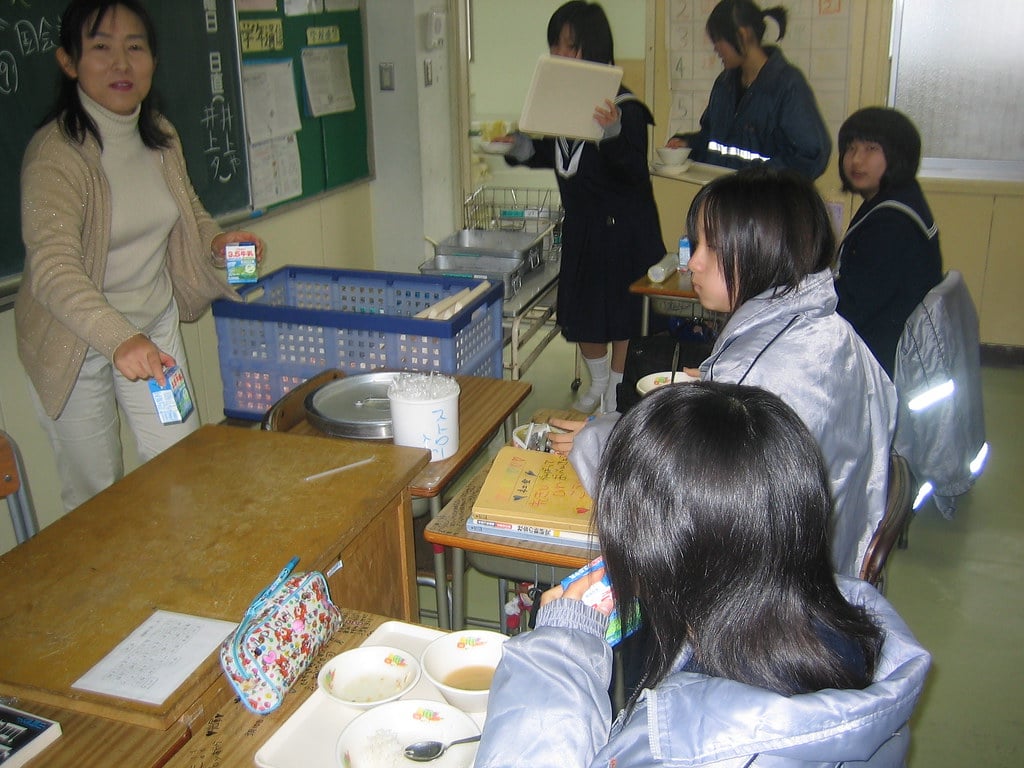
Funny how U.S. school lunches grew around saving time and money – other nations, though, built theirs on entirely separate ideas. Meals at schools in Japan fit right into classroom learning.
Pupils pass out trays, then wipe down tables afterward; dishes come straight from the kitchen, built to fuel growing bodies without fuss. Hot, full lunches – sometimes grown nearby – have long filled French children’s plates every day.
One rule in Brazil makes sure tiny farms get paid from school food funds, keeping money close to home. Faulty setups, these may be, yet they prove one thing clearly: what happens in U.S. school meals isn’t forced by fate.
Different paths exist – decisions shape them instead.
Free Meals and Their Real Meaning

Years passed before schools relied heavily on meal discounts for kids in need. Still, forms piled up, owing money felt shameful, differences across towns caused confusion – sometimes leaving families embarrassed instead.
Folks in places like California, Colorado, and Massachusetts can now count on free lunches for all students, no matter how much their families earn. One big reason?
It wipes out embarrassment around mealtime. More kids actually grab a tray when nobody has to prove they need help.
When hunger isn’t hanging over the classroom, attention tends to stick where it should – on lessons. What stands out is how deeply it reshapes what kids eat at school – something rarely seen lately.
The Lunch Table Still

Fifth period always smelled like steam trays and secrets. Back then, meals stretched longer than the clock suggested.
One kid shared chips, another turned quiet – just like that. Sitting elbow-to-elbow taught you who leaned in, who pulled away.
The food cooled while alliances shifted. Even silence carried weight when spoken between bites.
Meals today look nothing like they once did – now improved, later worse, often circling right back. Yet one thing hasn’t shifted: the lunch table.
Still just hundreds of kids, minutes to spare, trays holding whatever was served.
More from Go2Tutors!

- The Romanov Crown Jewels and Their Tragic Fate
- 13 Historical Mysteries That Science Still Can’t Solve
- Famous Hoaxes That Fooled the World for Years
- 15 Child Stars with Tragic Adult Lives
- 16 Famous Jewelry Pieces in History
Like Go2Tutors’s content? Follow us on MSN.