30 Photographs That Captured Moments So Powerful They Shaped Public Opinion
A photograph is not neutral. It selects a frame from everything happening in all directions at a given moment, and that selection carries intent, accident, and consequence.
Some photographs are taken by people who know immediately what they have. Others land in newspapers before their significance is fully understood, and the response they generate surprises everyone, including the photographer.
The images below did not simply document their moments. They changed how large numbers of people understood what was happening around them — and, in some cases, what they were prepared to tolerate.
Migrant Mother — Dorothea Lange, 1936
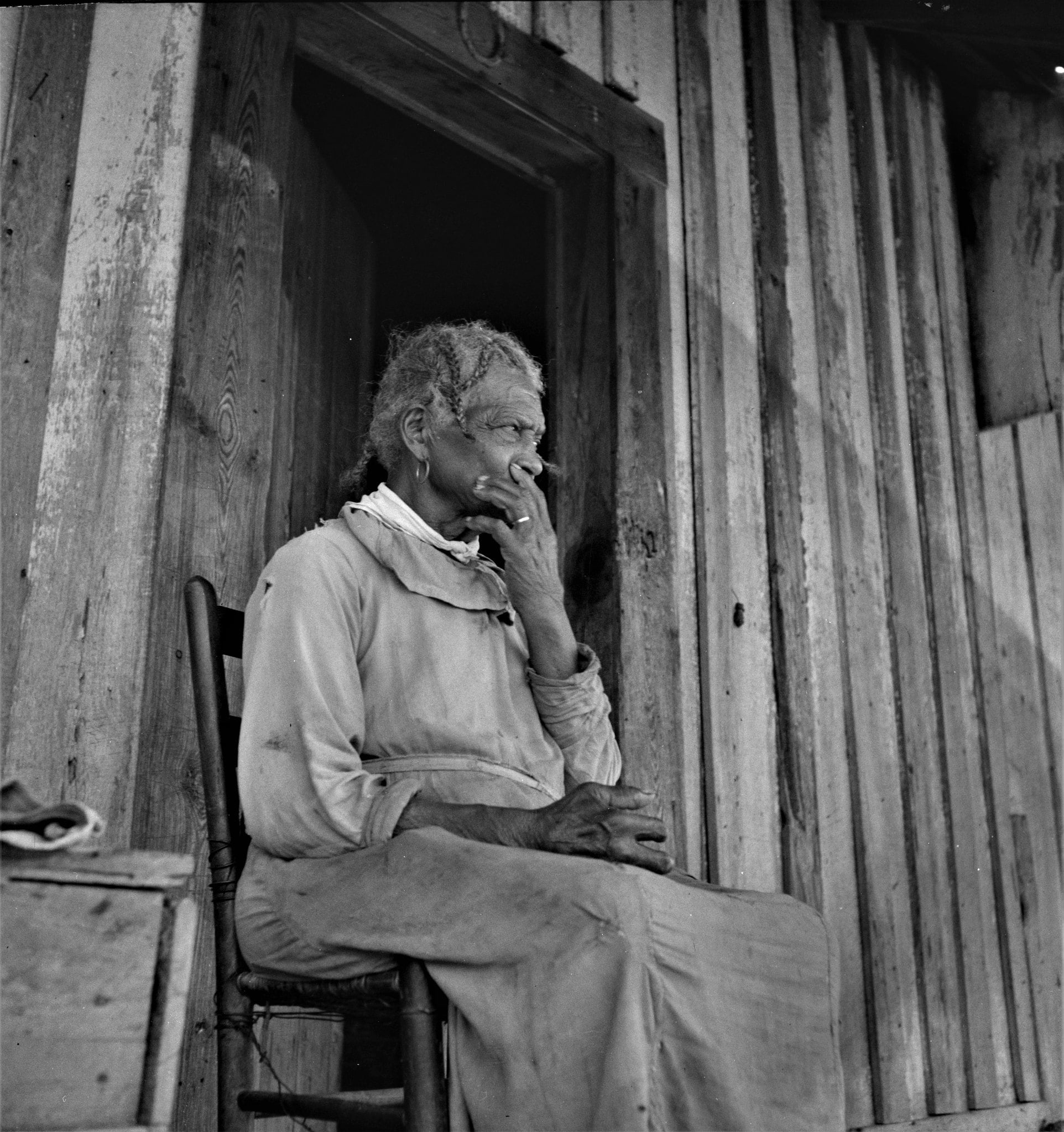
In March 1936, Farm Security Administration photographer Dorothea Lange was driving home from a California assignment when she stopped at a pea-pickers’ camp near Nipomo. She photographed Florence Owens Thompson — a 32-year-old mother of seven whose family had sold their car tires to buy food after the pea crop froze — in a series of six images, the closest of which showed Thompson gazing into the distance with two children pressed against her shoulders.
Published in newspapers within days, the photograph prompted emergency food aid to the camp and became the defining image of the Great Depression. Thompson, who was part Cherokee, was not asked her name and received nothing from the photograph’s subsequent fame. She later said she wished Lange had never taken it.
Saigon Execution — Eddie Adams, 1968
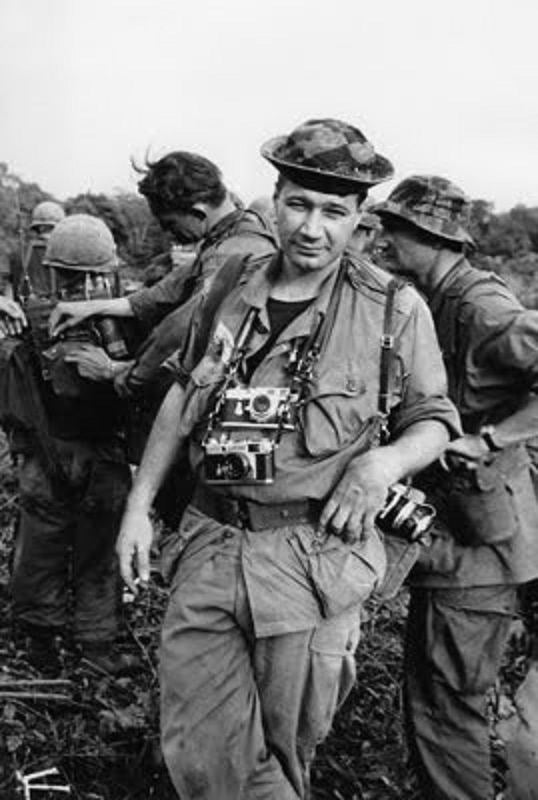
On February 1, 1968, during the Tet Offensive, Associated Press photographer Eddie Adams captured the moment South Vietnamese police chief Nguyễn Ngọc Loan pressed a pistol to the head of a Viet Cong prisoner and pulled the trigger. The photograph, published on front pages across the United States the following day, showed the execution in the millisecond it occurred.
It won the 1969 Pulitzer Prize and is credited with deepening American public skepticism about the war and about South Vietnam’s leadership. Adams spent decades troubled by the image’s legacy, arguing it had been decontextualized and had unfairly destroyed Loan’s reputation.
The Terror of War (Napalm Girl) — Nick Ut, 1972
On June 8, 1972, nine-year-old Phan Thi Kim Phúc ran screaming along a road near Trang Bang in South Vietnam, her back severely burned by a misdirected South Vietnamese napalm strike. AP photographer Nick Ut, 21 years old, photographed her and then put down his camera and drove her to hospital.
The photograph won the Pulitzer Prize and appeared on front pages globally, cementing public opposition to the Vietnam War in its final years. Richard Nixon initially suggested the image might be fake. Phúc survived her injuries after months of treatment and is today a UNESCO Goodwill Ambassador.
Earthrise — William Anders, 1968

Astronaut William Anders of Apollo 8 took this photograph on December 24, 1968, as the spacecraft rounded the Moon’s far side and Earth appeared over the lunar horizon. It was the first photograph to show Earth as a small, isolated sphere suspended in darkness.
Wilderness photographer Galen Rowell later called it “the most influential environmental photograph ever taken.” The image is credited with catalyzing the modern environmental movement and is directly associated with the establishment of Earth Day in 1970. Anders reflected fifty years later that the mission had set out to explore the Moon and instead discovered the Earth.
Tank Man — Unknown Photographer, 1989
On June 5, 1989, the day after the Chinese military crackdown on protesters in Tiananmen Square, an unknown man stood in the path of a column of tanks on Chang’an Avenue in Beijing, blocking the lead vehicle. Multiple photographers — including Stuart Franklin of Magnum and Jeff Widener of the AP — captured the confrontation from hotel balconies.
The man’s identity has never been established. The Chinese government has blocked access to the image domestically since it was taken. It has become one of the most reproduced photographs in the world and a universal symbol of individual resistance to state power.
Kent State — John Filo, 1970
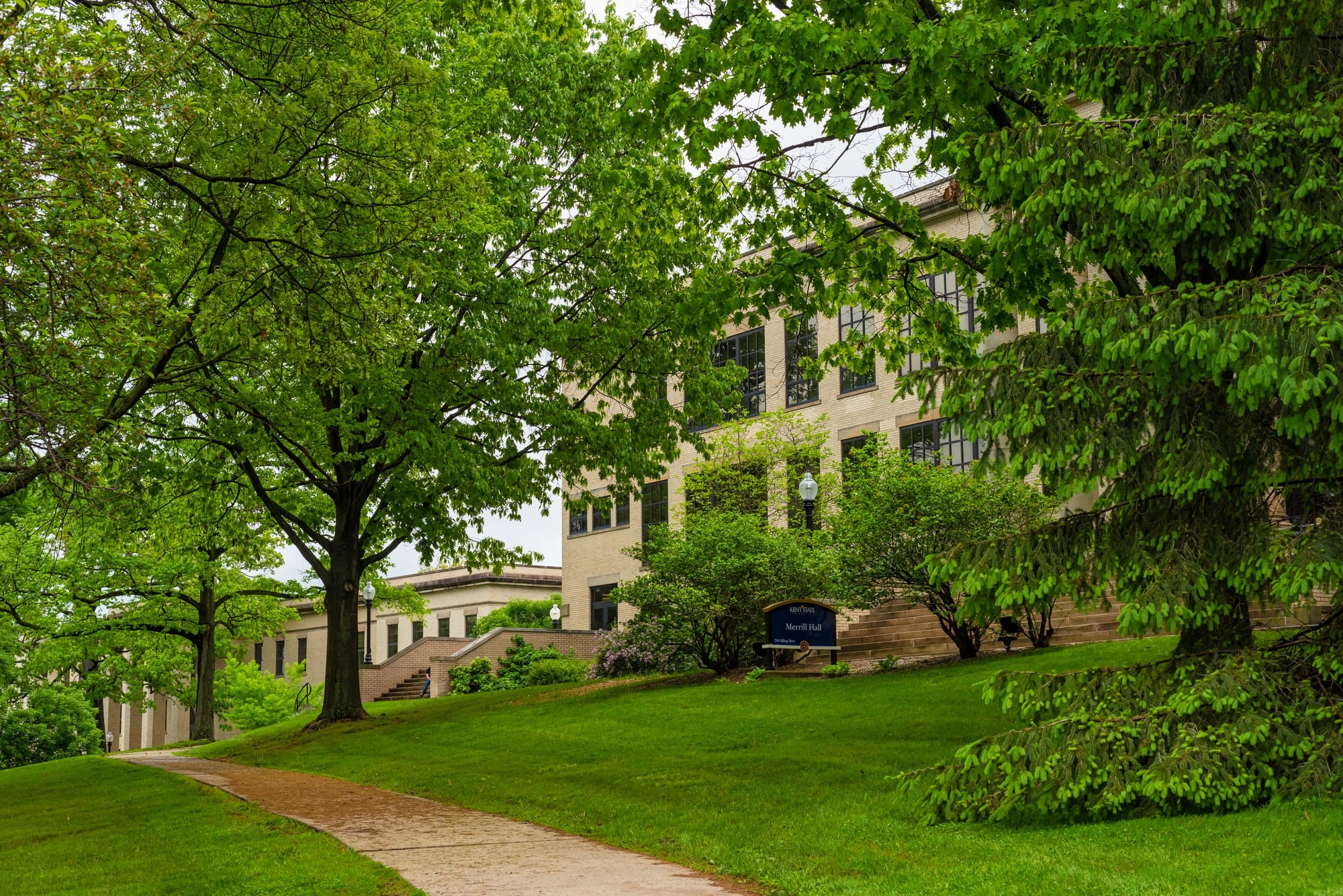
On May 4, 1970, Ohio National Guard troops opened fire on student protesters at Kent State University, killing four students and wounding nine. Photography student John Filo photographed 14-year-old Mary Ann Vecchio kneeling over the body of student Jeffrey Miller, arms spread and mouth open in a scream.
The image won the Pulitzer Prize and crystallized national outrage over the killings in a single frame. Campus strikes erupted across hundreds of universities in the days that followed, and the photograph became one of the defining images of the anti-Vietnam War movement.
The Burning Monk — Malcolm Browne, 1963
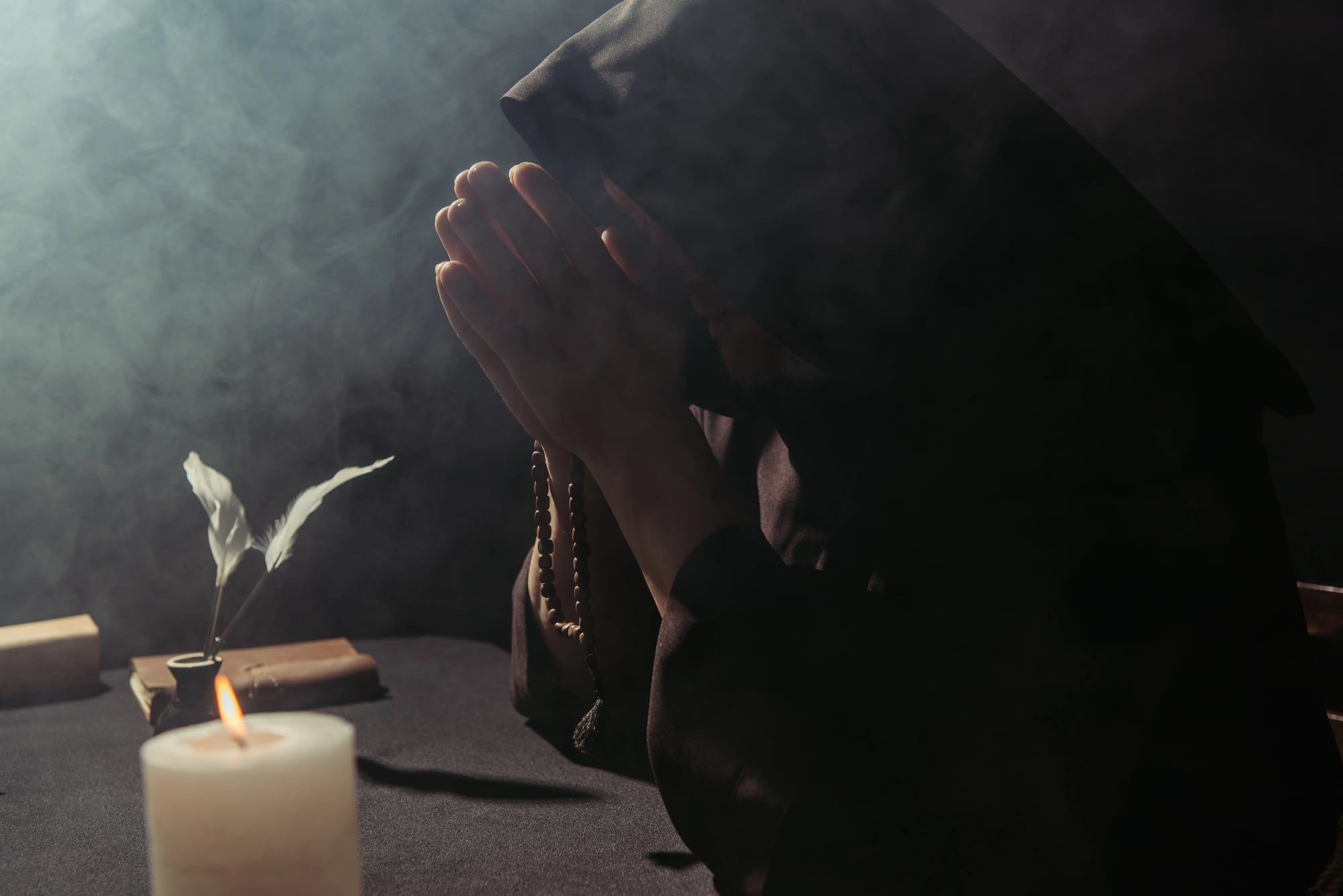
On June 11, 1963, Buddhist monk Thích Quảng Đức sat down at a busy Saigon intersection, was doused with petrol, and set himself on fire to protest the persecution of Buddhists by the South Vietnamese government. AP photographer Malcolm Browne had been tipped off and was present.
The photograph was published worldwide and caused an international political crisis for the Diem government, which President Kennedy called one of the most disturbing images he had ever seen. The monk did not move or cry out during the immolation. The photograph won the World Press Photo of the Year in 1963.
The Flag Raising at Iwo Jima — Joe Rosenthal, 1945
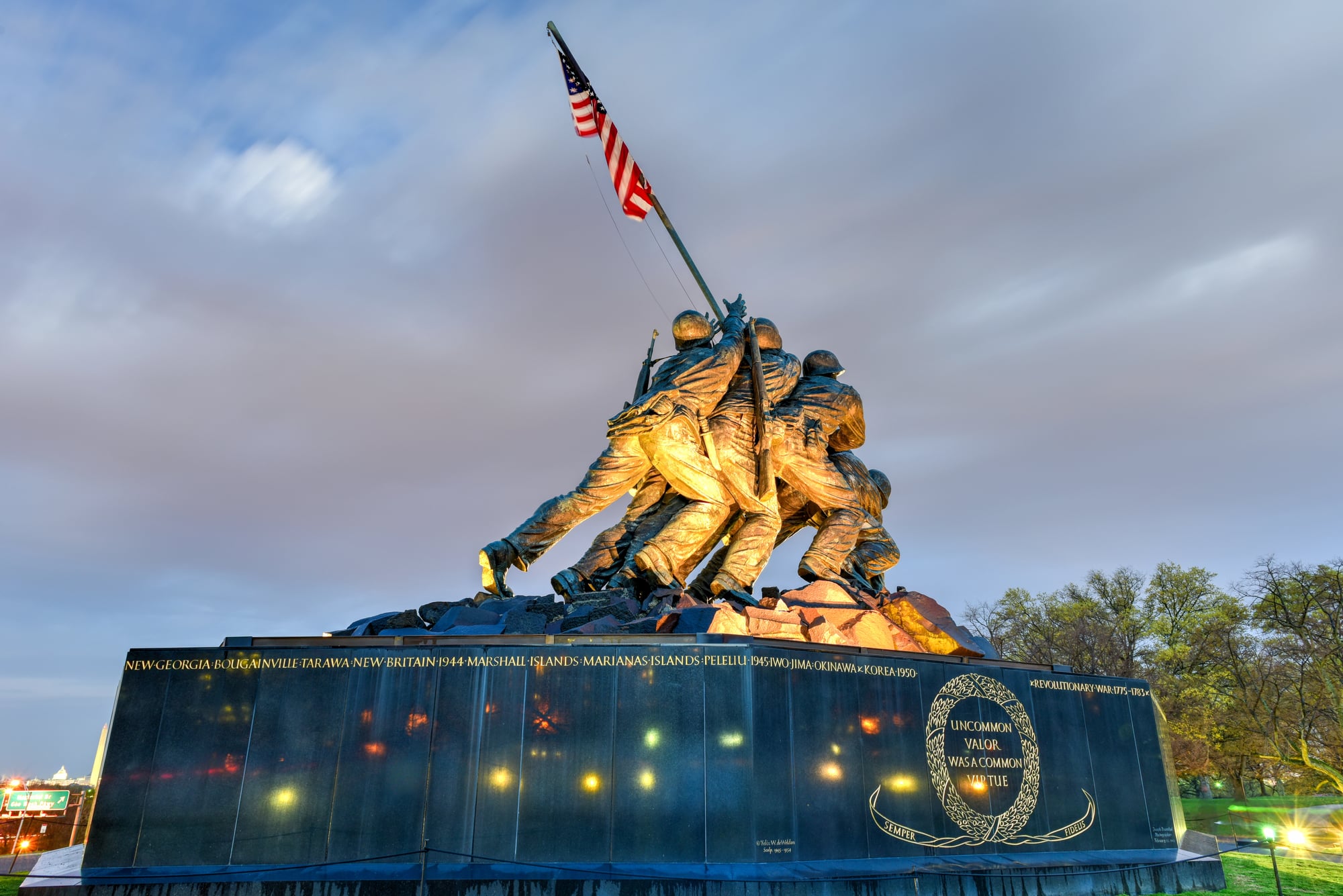
Associated Press photographer Joe Rosenthal captured six Marines raising an American flag on Mount Suribachi during the Battle of Iwo Jima on February 23, 1945. The photograph was taken during a second, larger flag raising that replaced a smaller flag earlier in the day, a fact that generated subsequent controversy about whether Rosenthal had staged it.
He had not. The image won the Pulitzer Prize and became one of the most widely reproduced photographs of the Second World War, used extensively in war bond campaigns. Three of the six Marines pictured were killed in action before the battle ended.
Falling Man — Richard Drew, 2001

Associated Press photographer Richard Drew photographed a man falling from the North Tower of the World Trade Center on September 11, 2001. The identity of the falling man was contested for years — a 2016 investigation by the AP suggested he was most likely Norberto Hernández, though this was disputed by his family.
The photograph was published widely on September 12 and then largely suppressed in the United States for years, with many editors judging it too disturbing for repeated use. Internationally it circulated freely. It is considered the most controversial photograph of the September 11 attacks.
Omaha Beach — Robert Capa, 1944
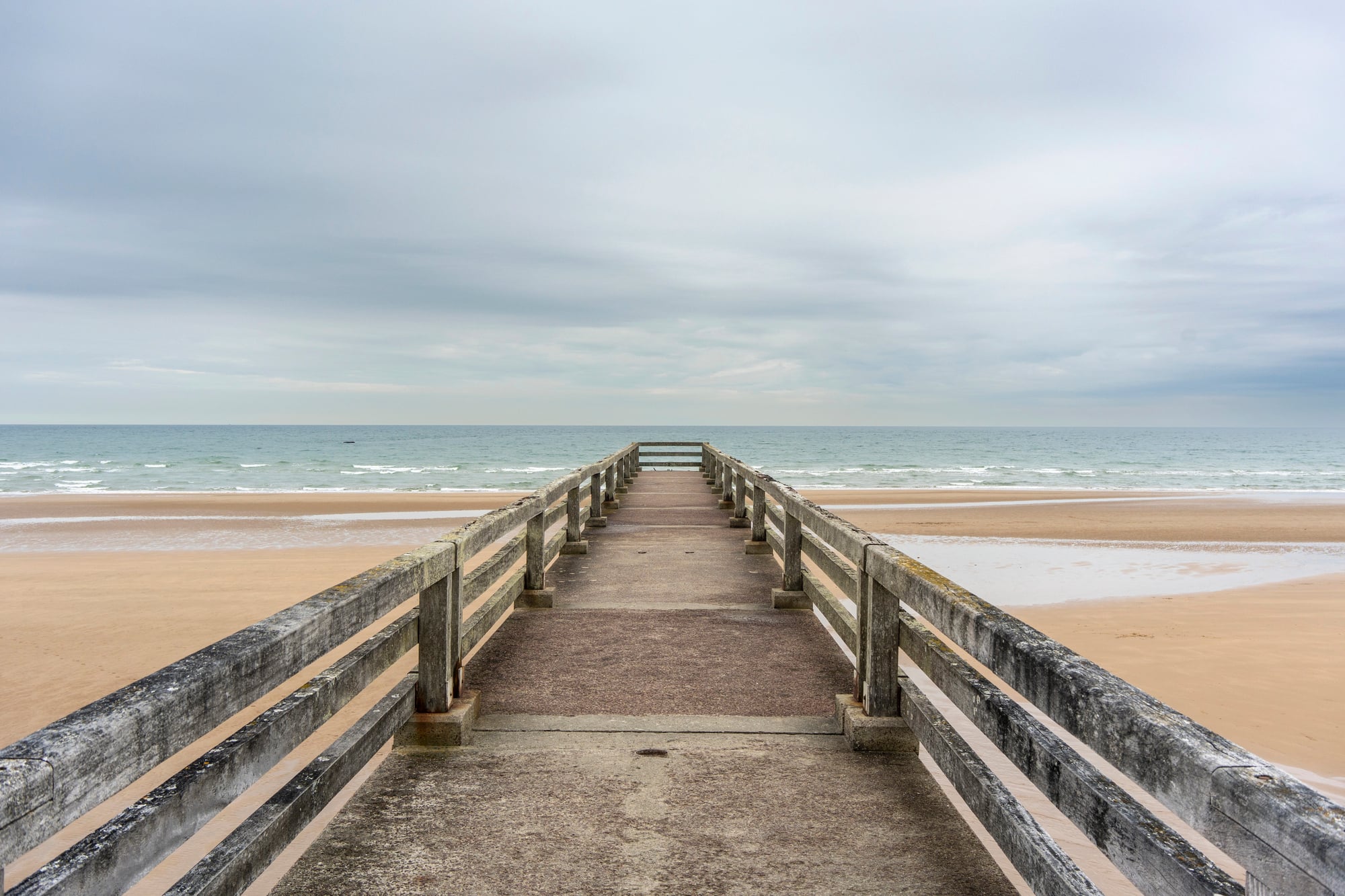
On June 6, 1944, Life magazine photographer Robert Capa waded ashore with the first wave of troops at Omaha Beach during the Normandy landings and took roughly 106 photographs under fire. Of those, only eleven survived when a darkroom assistant in London accidentally overheated the film canisters and destroyed the rest.
The eleven surviving images — blurred, grainy, difficult to read — remain the most visceral visual record of the landing and helped establish the visual language through which World War II is still imagined.
Vulture and Child — Kevin Carter, 1993
— Photo by Yuliia Lakeienko
South African photographer Kevin Carter photographed a severely malnourished Sudanese child who had collapsed while attempting to reach a food distribution center during the 1993 famine. A vulture stood nearby.
The photograph was published in the New York Times and generated intense international attention to the famine, as well as intense controversy about Carter’s decision to photograph rather than assist the child. Carter won the Pulitzer Prize in 1994 and died by self-harm three months later. He was 33.
First Photograph of Earth From Space — 1946
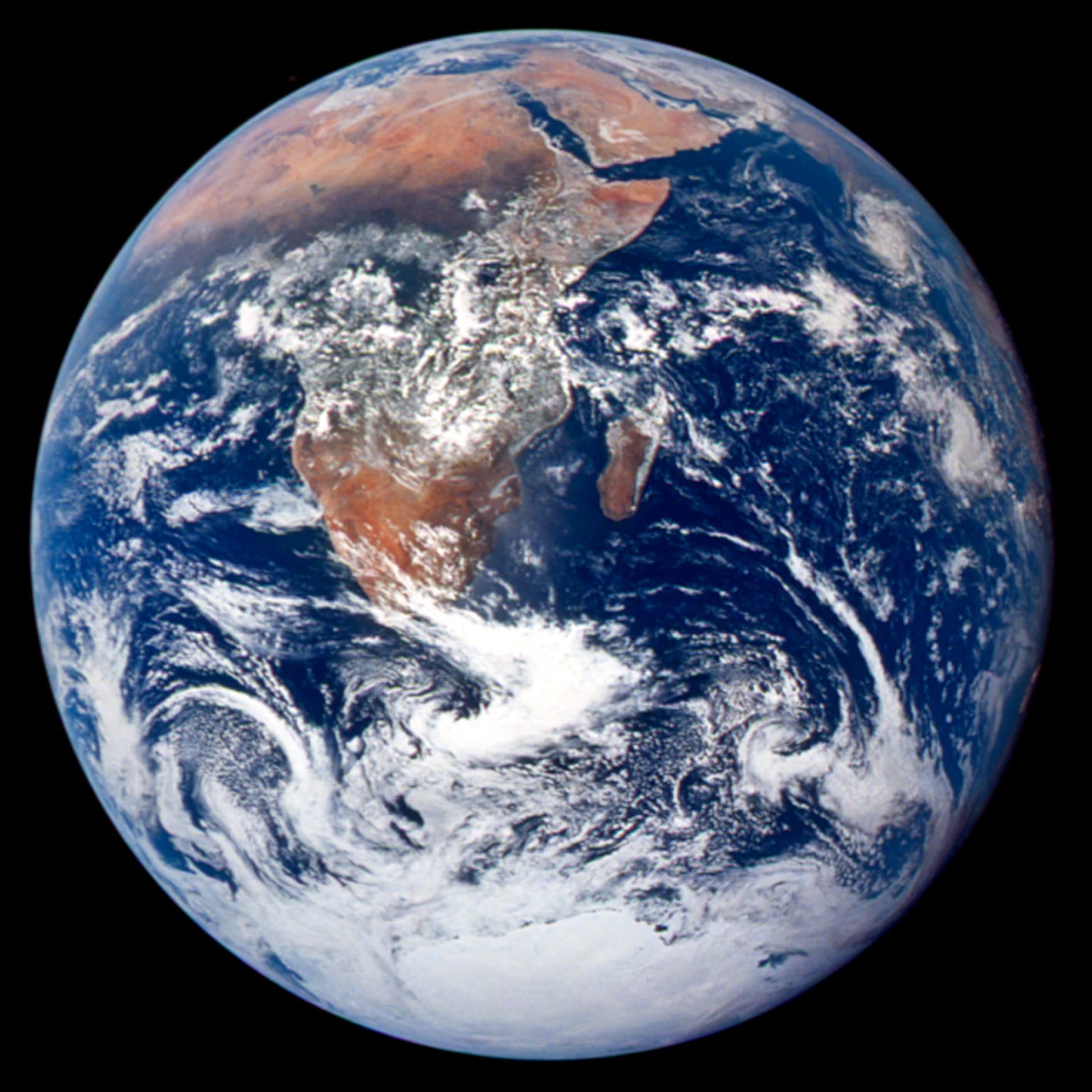
Before Earthrise, before any astronaut had seen the planet from orbit, a V-2 rocket launched from New Mexico on October 24, 1946, carried a motion picture camera that took the first photographs of Earth from space at an altitude of 65 miles. The grainy black-and-white frames, assembling a view of curved horizon and cloud formations, established for the first time that the planet could be photographed from outside it.
The images were not widely distributed at the time, but they prefigured the visual revolution that Earthrise later completed.
The Unknown Rebel — Stuart Franklin, 1989
Stuart Franklin of Magnum Photos also captured the Tank Man confrontation from his Peking Hotel balcony on June 5, 1989. Franklin’s version — slightly different in angle from the Widener image — emphasizes the column of tanks extending behind the lead vehicle and the emptiness of the avenue around the lone figure.
Franklin had smuggled his film out of Beijing in a bag of tea handed to a French student. The photograph shared in international publication and helped bring the scope of the crackdown to global audiences.
The Hindenburg Disaster — Sam Shere, 1937
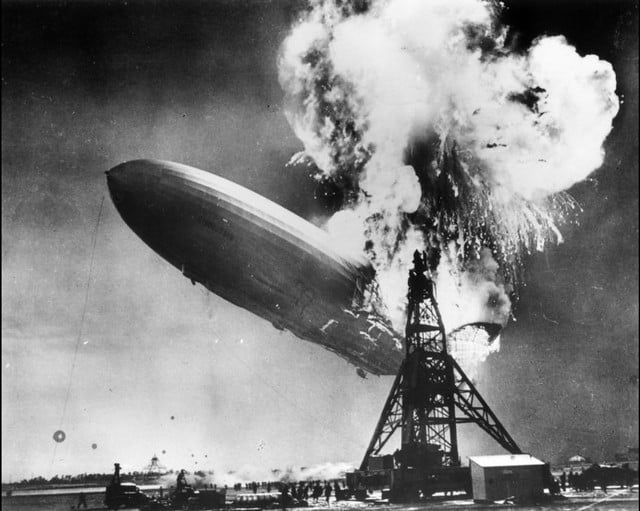
When the German airship Hindenburg caught fire and disintegrated over Lakehurst Naval Air Station in New Jersey on May 6, 1937, killing 35 people, multiple photographers and film crews were present for what was expected to be a routine landing. Sam Shere of International News Photos captured the fireball image most widely associated with the disaster.
The photograph and the radio broadcast by commentator Herb Morrison combined to create the first truly mass-media disaster event, and it ended the commercial airship era within months.
Guerrillero Heroico — Alberto Korda, 1960
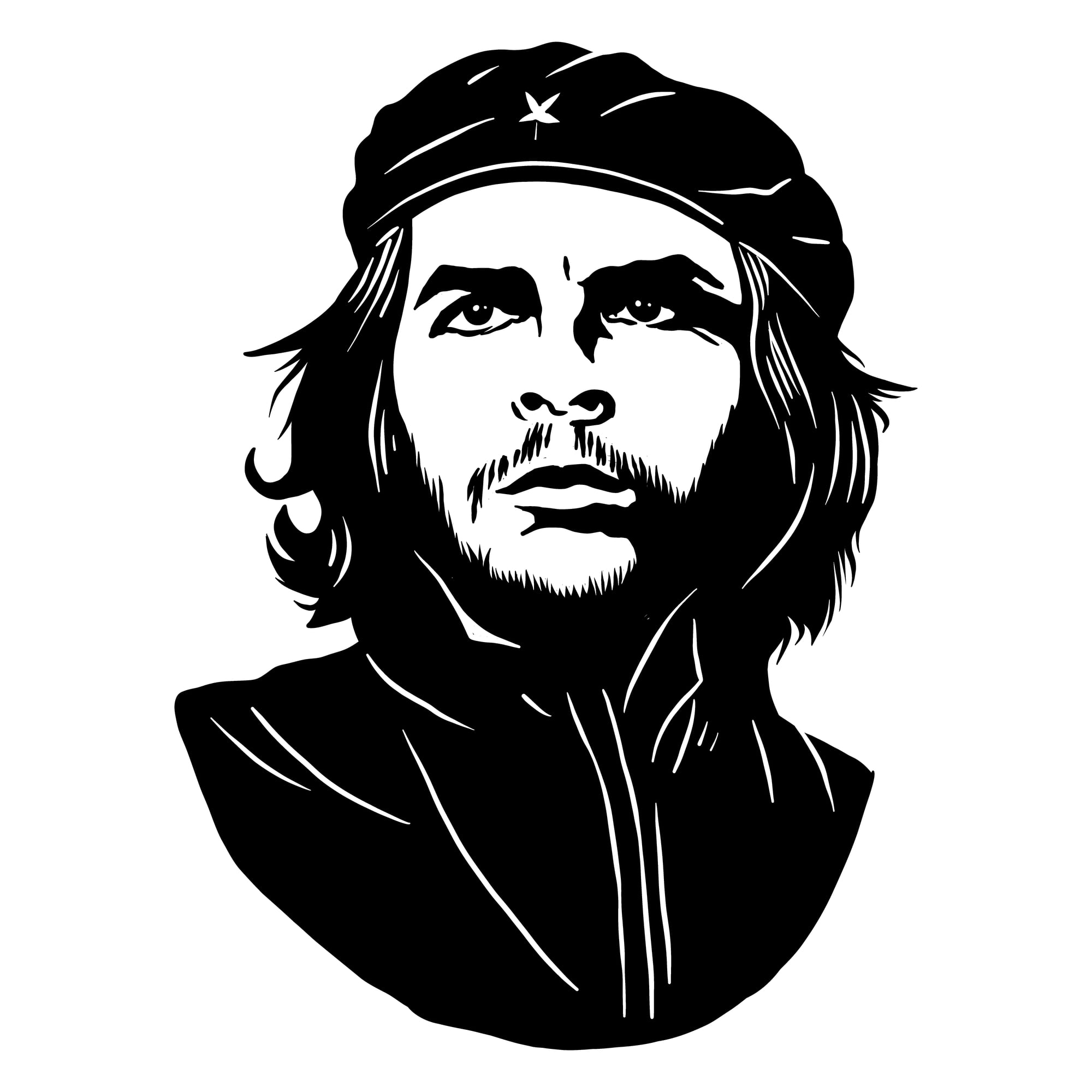
Cuban photographer Alberto Korda photographed Che Guevara at a memorial service in Havana on March 5, 1960. The image went largely unnoticed for seven years until it was used on a poster at the 1967 Democratic National Convention protests and rapidly reproduced across the global counterculture.
Korda never received payment for its use and never sought legal action, stating he wanted the image to circulate freely as an expression of political solidarity. It became what some cultural analysts have called the most widely reproduced portrait in history.
Afghan Girl — Steve McCurry, 1984
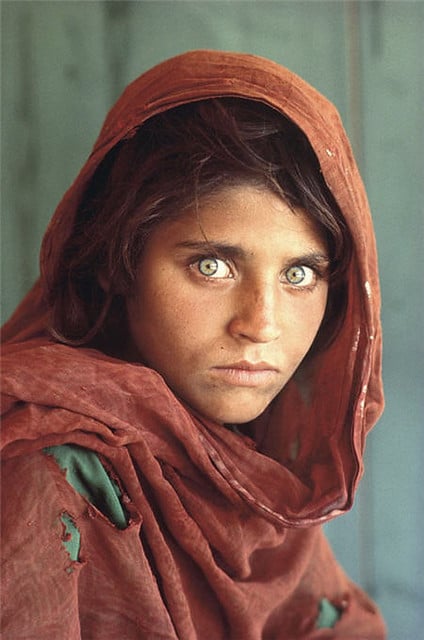
National Geographic photographer Steve McCurry photographed a young Afghan girl at the Nasir Bagh refugee camp in Pakistan in 1984. Her name was unknown for 17 years.
The image appeared on the June 1985 cover of National Geographic and became the magazine’s most recognized cover, raising awareness of the plight of Afghan refugees during the Soviet invasion. In 2002, National Geographic identified the girl as Sharbat Gula through iris recognition technology. She was eventually granted asylum in Italy in 2021 after facing legal troubles in Pakistan.
D-Day Chaplain — Unknown
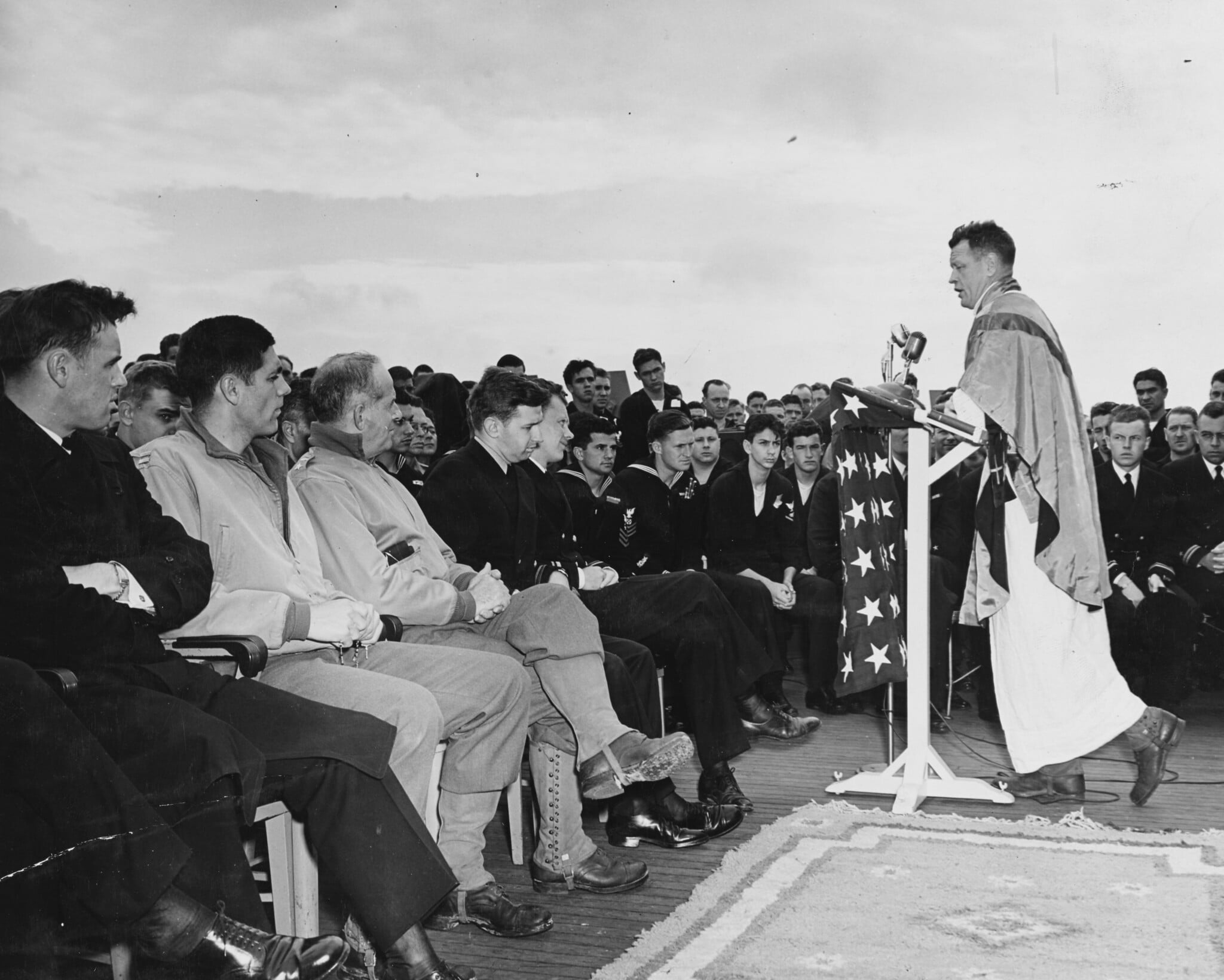
Among the thousands of photographs taken during the Normandy landings, one of the most affecting is of a military chaplain kneeling in prayer on Omaha Beach while troops land around him. The photograph does not appear to be one Capa took, and the chaplain is not identified in most archival records.
It circulated in newspapers across America in the days following D-Day and was among the images that shaped domestic understanding of the landing as not merely a military operation but a moral one.
The Birmingham Campaign — Charles Moore, 1963

Photographer Charles Moore captured images of civil rights demonstrators — including children — being blasted with fire hoses and attacked by police dogs in Birmingham, Alabama, in May 1963. Moore’s photographs were published in Life magazine and drew international attention to the violence being used against peaceful protesters.
They are credited with shifting public and political opinion in ways that contributed directly to the passage of the Civil Rights Act of 1964. President Kennedy reportedly saw the photographs and called them “shameful.”
V-J Day in Times Square — Alfred Eisenstaedt, 1945
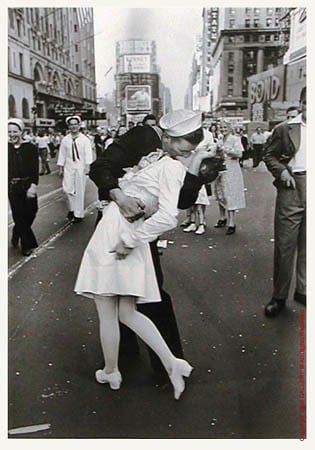
On August 14, 1945, Alfred Eisenstaedt of Life magazine photographed a sailor kissing a woman in Times Square during the celebrations following Japan’s surrender. The image was published without the subjects being identified, and for decades the identities of the man and woman were disputed, with multiple people claiming to be the individuals depicted.
The photograph has since been critiqued for presenting without apparent reflection what appears to be a non-consensual kiss. The debate around it reflects how photographs’ cultural meanings shift across generations.
Fire Escape Collapse — Stanley Forman, 1975
Boston Herald photographer Stanley Forman won the Pulitzer Prize for a sequence of photographs taken on July 22, 1975, showing a woman and a small girl falling from a collapsing fire escape in Boston during a fire. The woman died; the girl survived, caught by a firefighter.
The photographs were published widely and are directly credited with accelerating building code reforms across multiple states. They are a case study in how images of specific incidents translate into systemic legislative change.
Bodies in Buchenwald — Margaret Bourke-White, 1945
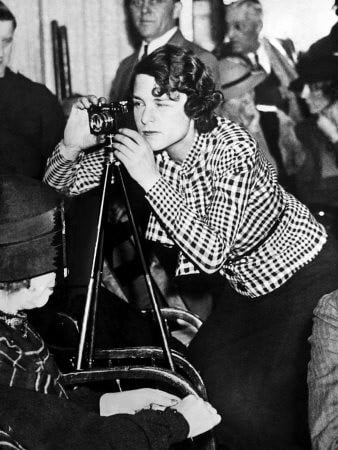
Life magazine photographer Margaret Bourke-White was among the first photojournalists to enter the Nazi concentration camp Buchenwald after its liberation in April 1945. Her photographs of the camp’s survivors — emaciated, barely alive, standing at barbed wire or lying in wooden bunks — were published globally and provided the first widely distributed visual evidence of the camps’ conditions to general audiences who had heard reports but not yet seen images.
General Eisenhower ordered that members of Congress and journalists be brought to witness and document the camps specifically to prevent future denial.
The Electric Chair — Andy Warhol’s Source, 1953
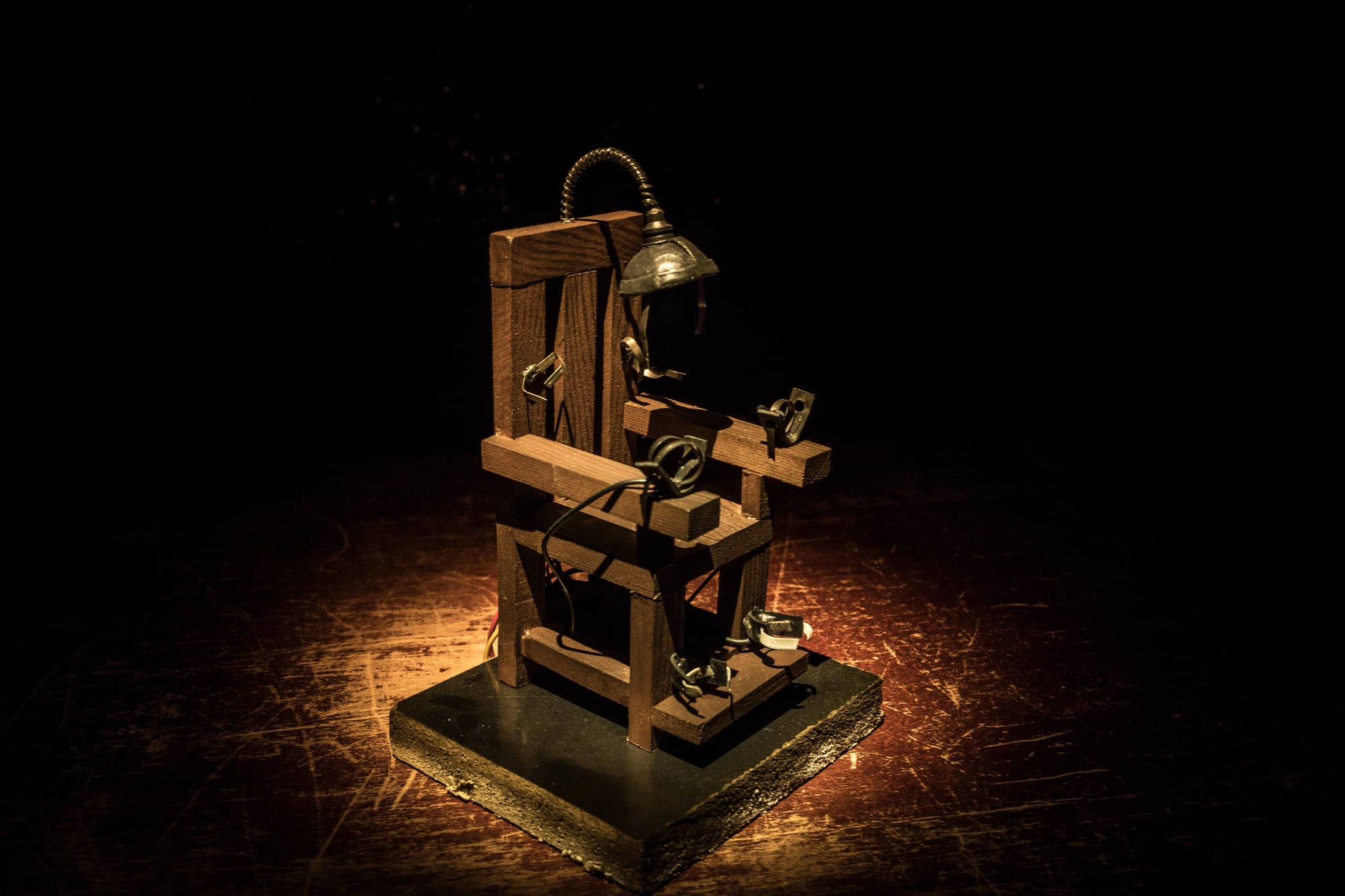
The photograph of Sing Sing’s electric chair that Andy Warhol used in his 1963 Death and Disaster series was originally taken by a New York newspaper photographer. Distributed at the time of Julius and Ethel Rosenberg’s execution in June 1953, the image depicted the empty chair before the executions.
Warhol’s repeated use of it as a silkscreen image a decade later transformed a document of capital punishment into a meditation on American violence and mass reproduction — an example of how a single photograph can be reactivated by artistic context decades after it was taken.
The Lunch Counter Sit-Ins — Jack Thornell and Others, 1960
Multiple photographers documented the Greensboro sit-ins of 1960, in which Black students from North Carolina A&T University occupied segregated lunch counter seats at a Woolworth’s. The photographs — students sitting calmly while white protesters poured ketchup on their heads or screamed in their faces — made visible the discipline of the nonviolent movement and the ugliness of the resistance to it.
They were published in newspapers across the country and the world, creating a moral clarity that abstract descriptions of segregation had not produced.
The Blind Boatman — Lewis Hine, 1908

Lewis Hine’s photographs for the National Child Labor Committee documented children working in coal mines, glass factories, cotton mills, and canneries across the United States between 1908 and 1918. His images were the primary catalyst for the passage of child labor laws, and the committee explicitly commissioned them as lobbying material for legislation.
Hine understood that what legislators could not see, they could not act on. His images gave the abstract argument specific faces and specific ages.
Famine in Ethiopia — Various Photographers, 1984
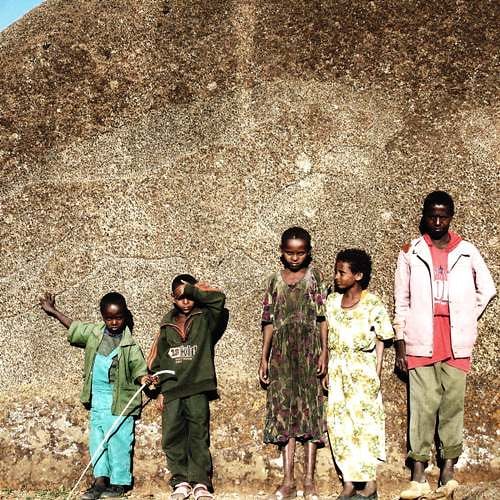
When BBC television reporter Michael Buerk and cameraman Mohamed Amin filed a report from Ethiopia in October 1984 depicting famine conditions that had already killed hundreds of thousands of people, the footage triggered an immediate international response. Still photographs from the same camps — particularly of skeletal children, mothers holding infants, and aid workers unable to reach the scale of need — circulated alongside the broadcast and collectively prompted the formation of Band Aid, Live Aid, and a massive outpouring of international aid.
The photographs had been available for months before the broadcast; the television report made them impossible to ignore.
Aftermath of Hiroshima — Yōsuke Yamahata, 1945
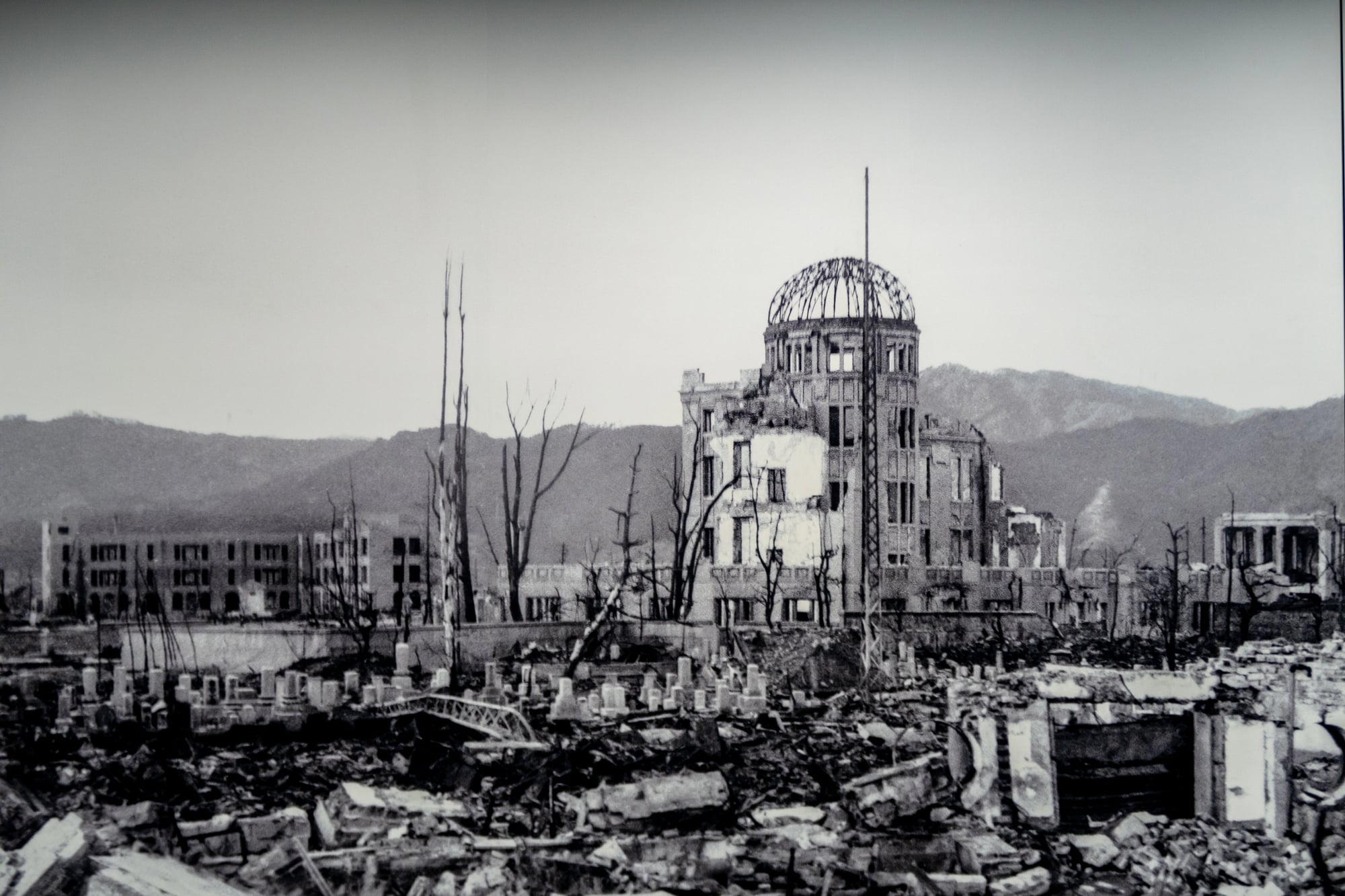
Japanese military photographer Yōsuke Yamahata was assigned to document Nagasaki the day after the atomic bomb was dropped in August 1945. He photographed survivors, ruins, and the dead over a full day of walking through the city.
The photographs were suppressed by American occupation authorities until 1952 and were not widely seen in the United States for years. When they were finally published — in particular in a 1952 edition of a Japanese magazine — they provided the first extended visual account of what the bombs had actually done to human beings at ground level.
The Assassination of Robert Kennedy — Boris Yaro, 1968
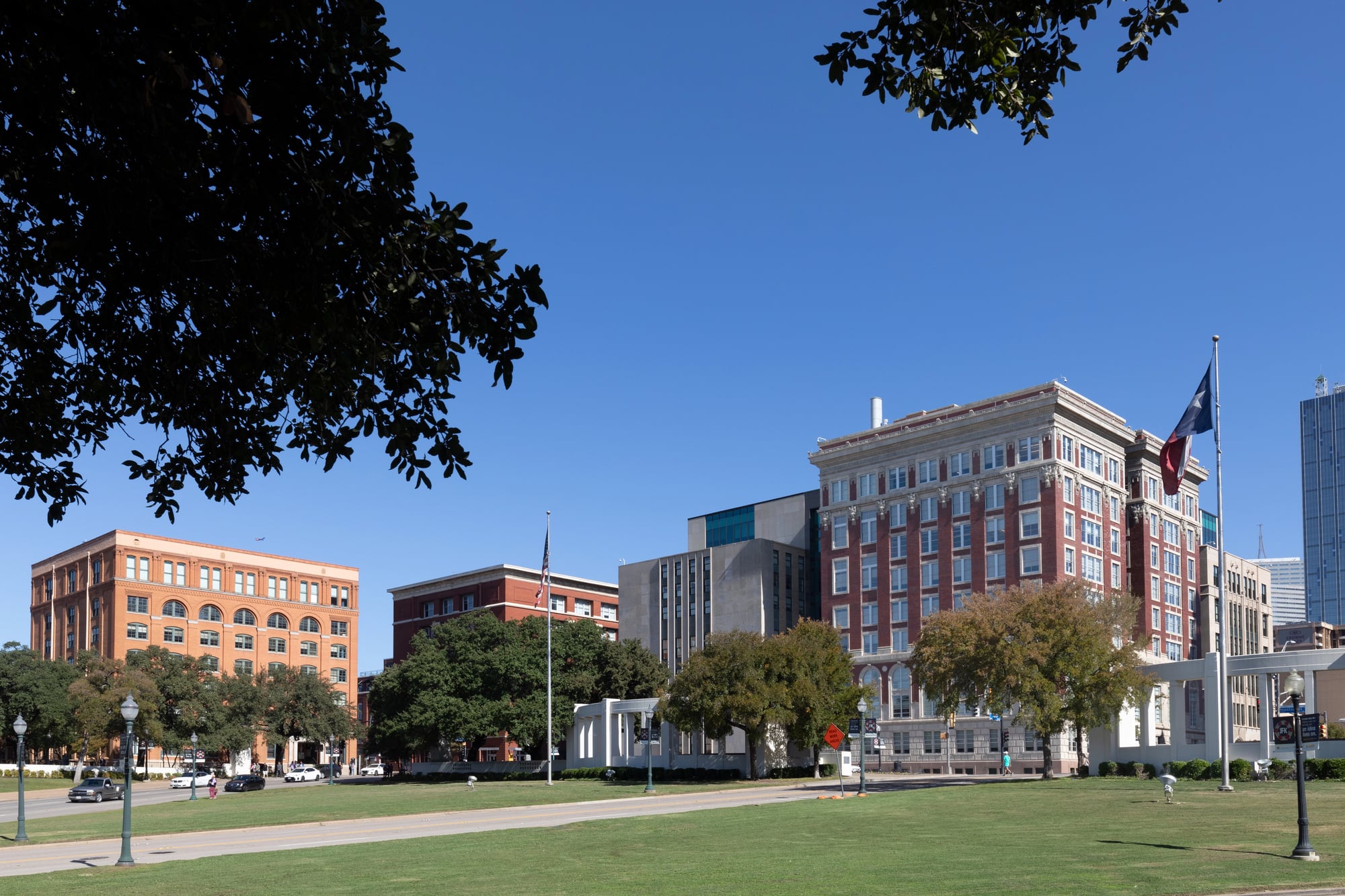
Within moments of Robert Kennedy being shot at the Ambassador Hotel in Los Angeles on June 5, 1968, Los Angeles Times photographer Boris Yaro photographed busboy Juan Romero cradling Kennedy’s head on the floor. Yaro had been at the hotel for another assignment.
The photograph — and the broader context of Kennedy’s death coming just two months after Martin Luther King Jr.’s assassination — made 1968 feel to many Americans like a year in which the country’s political fabric was coming apart. The photograph ran on front pages globally.
Evacuees From Saigon’s Rooftop — Hubert Van Es, 1975
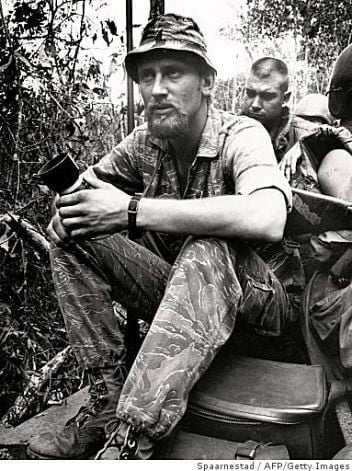
On April 29, 1975, as North Vietnamese forces entered Saigon, Dutch photographer Hubert Van Es photographed people climbing a ladder to a helicopter on the roof of a building near the US Embassy. The image is often incorrectly described as showing the American Embassy itself; the building was actually a CIA station.
The helicopter was not a military craft but a contracted Air America helicopter. The image nonetheless became the defining visual of American withdrawal from Vietnam, of a promise that could not be kept, and of what the end of a lost war looks like from the ground.
Plastic Ocean — Chris Jordan, 2009

American photographer Chris Jordan’s images of albatross chicks on Midway Atoll — their decayed bodies revealing the plastic items their parents had fed them from the ocean surface — became among the most widely circulated environmental photographs of the twenty-first century. The images required no caption to make their point.
They documented not a specific event but an ongoing accumulation: the birds had died from ingesting plastic bottles, lighters, and bottle caps collected from the Pacific Ocean. The photographs catalyzed discussion of ocean plastic pollution and were among the images credited with building public support for plastic bag and straw bans across multiple countries.
Emmett Till’s Open Casket — David Jackson, 1955

When 14-year-old Emmett Till was murdered in Mississippi in August 1955 and his mother, Mamie Till, insisted on an open-casket funeral so the world could see what had been done to her son, photographer David Jackson photographed the casket for Jet magazine. The images were published alongside a description of Till’s injuries, reaching an estimated 40,000 readers initially and many more as the photographs spread.
They are credited by civil rights historians — including the organizers of the Montgomery Bus Boycott, which began four months later — as one of the catalyzing moments of the civil rights movement.
The Moment a Photograph Becomes History
Eddie Adams, who won the Pulitzer for the Saigon Execution photograph, spent years saying that photographs can lie — not through manipulation, but through incompleteness. The photograph of General Loan executing a prisoner showed a moment; it did not show the prisoner’s actions that day, or the broader context of the Tet Offensive, or what either man’s life had looked like before that intersection.
Adams visited Loan in his later years and said he considered him a good man who had done what seemed necessary in war.
The photographs on this list shaped what millions of people felt, what they demanded, what their governments did. They were also individual moments, made by individuals, frozen at a millionth of a second that cannot contain everything true about what preceded or followed it.
The power and the limitation are inseparable. That tension is what makes photographs so compelling and so insufficient at the same time.
More from Go2Tutors!

- The Romanov Crown Jewels and Their Tragic Fate
- 13 Historical Mysteries That Science Still Can’t Solve
- Famous Hoaxes That Fooled the World for Years
- 15 Child Stars with Tragic Adult Lives
- 16 Famous Jewelry Pieces in History
Like Go2Tutors’s content? Follow us on MSN.