27 Common Words and Phrases That Mean Something Completely Different in Other Languages
Language borrowing is one of the oldest and most chaotic processes in human communication. Words cross borders, pick up new meanings, shed old ones, and sometimes end up meaning something so different from the original that the two versions of the word are effectively strangers to each other.
Linguists call these “false friends” — words that look or sound familiar but will send you down entirely the wrong road. The confusion runs in all directions.
English exports words that get reassigned abroad. Other languages contain words that sound like perfectly ordinary English words but carry meanings that range from mildly surprising to genuinely awkward.
Knowing which is which, before you need to know, is considerably more useful than finding out in real time at a bakery, a pharmacy, or a formal dinner.
“Gift” in German Means Poison

The word gift in German has nothing to do with presents. It means poison, derived from an old Germanic root meaning something given — specifically, something deadly administered to someone.
The German word for a present is Geschenk. An English speaker who writes “thank you for the gift” in a card to a German pen pal has written something considerably darker than intended, and an English speaker reading a German warning label that says “Gift” should take it seriously.
“Fart” in Norwegian, Danish, and Swedish Means Speed

Speed and velocity are fart in all three main Scandinavian languages, which means that road signs across Norway, Sweden, and Denmark use the word regularly and without irony. Speed bumps in Sweden are farthinder. A speeding ticket is a fartsbot. Norwegian petrol stations offer products with names like Fartkontroll.
The word appears in formal contexts — government documents, traffic reports, safety campaigns — without any awareness that English speakers in the vicinity may be having difficulty keeping a straight face.
“Embarrassed” in Spanish Does Not Mean Embarrassed

Embarazada in Spanish means pregnant. An English speaker who attempts to describe feeling embarrassed in Spanish by reaching for embarazada will instead announce a pregnancy to their confused conversation partner. The actual Spanish word for embarrassed is avergonzado or apenado.
This is one of the most consistently documented false friend disasters in Spanish-English language learning, and it still happens with regularity to travelers who trust that the similar-looking word will carry them through.
“Demand” in French Means “to Ask”

The French verb demander means to ask or request, not to demand. An English speaker who hears “je vous demande” and interprets it as a demand is hearing a polite question. The escalation between the English and French meanings is entirely a product of the word’s evolution in each language — the French retained the original Latin sense of requesting, while English sharpened it to something more aggressive.
The same divergence applies to Italian and Portuguese, where the equivalent words also mean simply “to ask.”
“Handy” in German Is a Cellphone

Germans adopted the English adjective handy and turned it into a noun meaning mobile phone. If a German person asks for your Handy, they want your phone number. The word appears to have come from Handfunktelefon — an early German term for handheld mobile phones — possibly influenced by the Motorola HT 220 Handie Talkie walkie-talkie used after the Second World War.
Whatever the origin, Handy is now the standard German word for a mobile phone, appearing in shops, advertisements, and casual conversation. The word “cellphone” is not used.
“Actual” in Portuguese, French, Spanish, and German Means “Current”

In most major European languages, the word that looks like “actual” means “current” or “present-day” — not “real” or “genuine.” In Portuguese, atual means current; in French, actuel means current; in German, aktuell means up to date. An English speaker who tells a German colleague that something is “not the actual situation” is saying something the German hears as “not the current situation” — which may be the same thing or may not be, depending on the context.
The English meaning of actual — emphasizing reality rather than currency — is the outlier among European languages.
“Pain” in French Means Bread
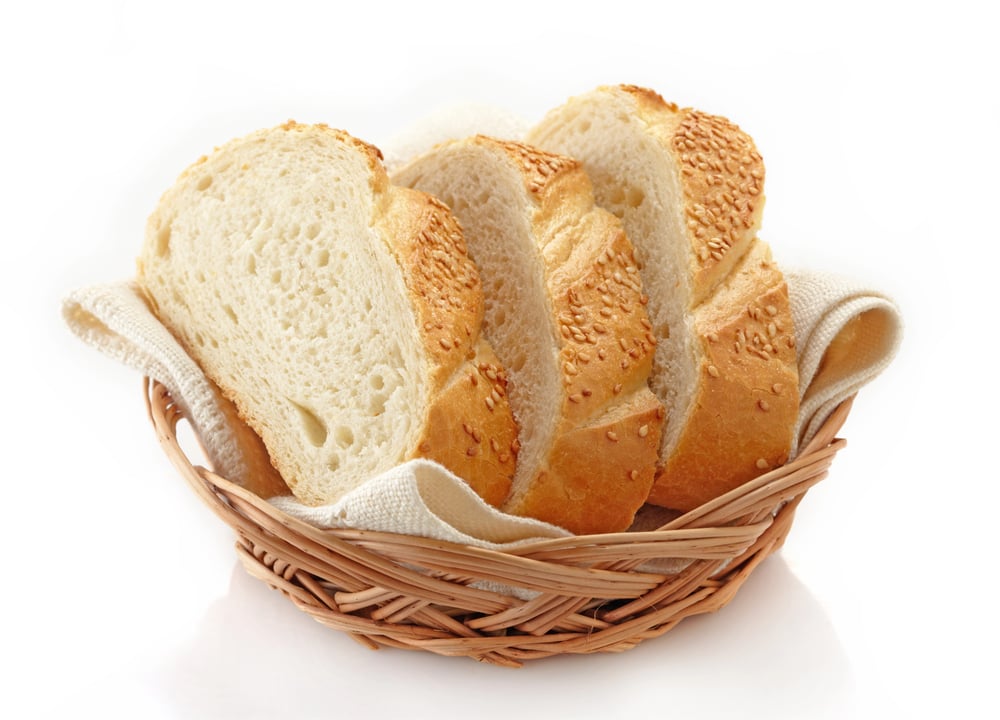
English speakers in French bakeries regularly face a sign that says “PAIN” and experience a small jolt before remembering where they are. The French word pain (pronounced closer to “pan”) is the standard word for bread, derived from the Latin panis.
It appears in croissant displays, on menus, and on bakery storefronts, entirely unbothered by its English double meaning. There is no irony in a French bakery. The pain is simply lunch.
“Preservative” in French and German Means Condom

In French, préservatif and in German, Präservativ both refer to a contraceptive, not a food additive. An English speaker attempting to warn a French or German friend about the preservatives in processed food is communicating something very different from the intended message. The word for what English speakers call a preservative — a substance that prevents food from spoiling — is conservateur in French and Konservierungsstoff in German.
This false friend has caused embarrassment at European dinner tables with sufficient frequency that it features in virtually every guide to false cognates in either language.
“Sympathique” in French Does Not Mean Sympathetic

In English, sympathetic typically means feeling compassion for someone’s distress. In French, sympathique — often shortened to sympa — simply means nice, pleasant, or likeable. A French person who describes someone as “très sympa” is not saying they feel deep empathy for that person’s suffering; they are saying the person is good company.
The English word sympathetic has retained its emotional weight, while the French cognate has flattened to something considerably lighter and more sociable.
“Slip” in French and German Means Underwear

In French and German, slip refers to briefs or underpants — not a stumble, a Freudian revelation, or a printed piece of paper. French pharmacies and department stores have sections labeled “slips.” A German clothing catalogue using the word slip is not discussing mistakes in fabric quality.
English speakers reading European clothing tags or packaging frequently have to recalibrate their understanding of what is being described.
“Bald” in German Means “Soon”

The German word bald has nothing to do with hair loss. It means soon or shortly, used in perfectly ordinary contexts like “ich komme bald” — “I’ll be there soon.”
The confusion this creates for English speakers overhearing German conversation is relatively minor, but the intersection of the two meanings — a German saying something will happen bald, and an English speaker mentally inserting a dermatological observation — remains a reliable source of quiet amusement in multilingual households.
“Mist” in German Means Manure or Garbage

The English word mist — a light, romantic fog — translates in German to dung or garbage. Nebel is the German word for mist or fog. Mist, in German, refers to manure or, more loosely, anything worthless or trashy.
Misthaufen is a dung heap. This divergence becomes particularly apparent when weather reports in tourist areas are translated directly: “misty conditions ahead” becomes something less poetic when processed through German vocabulary.
“Puxe” in Portuguese Looks Like “Push” but Means “Pull”

Portuguese doors across Brazil and Portugal carry the instruction “puxe” — which looks to an English speaker like a phonetic approximation of “push” — but means pull. The Portuguese word for push is empurre.
This produces a reliable confusion at doorways in Lisbon, where visiting English speakers push on doors marked puxe and wonder why the door isn’t moving, which is a minor but very relatable form of international linguistic betrayal.
“Nah” Means “Yes” in Greek

In Greek, nai (Ναι) — which sounds to English ears like “nah” or “nah-ee” — means yes. English speakers who nod along with what they think is a confirmation and hear “nai, nai” in response may take a moment to adjust to the idea that the conversation is proceeding in agreement rather than casual dismissal.
The Greek word for no is ochi (όχι), which sounds nothing like any common English affirmative, providing at least one reliable anchor in an otherwise confusing exchange.
“Lol” in Dutch Means Fun

Before “lol” became an internet acronym for laughing out loud, it was already the Dutch word for fun, amusement, or larks. “Wat een lol” means “what fun.” Dutch children have been reading the word lol in books, on playground signs, and in casual conversation for generations without any awareness of its subsequent internet career.
The two meanings now coexist in the Dutch language without apparent conflict, which is a testament to the language’s adaptability.
“Parents” in Portuguese and Italian Means “Relatives”

In Portuguese, parentes means relatives — any family member, not specifically a mother and father. In Italian, parenti carries the same meaning. An English speaker telling a Portuguese acquaintance “my parents are visiting” using the word parentes would be understood to mean “some relatives are coming,” which may or may not include the parents in question.
The English meaning of parents is narrower and more specific than the original Latin sense that Portuguese and Italian have retained.
“Air” in Indonesian Means Water

In Bahasa Indonesia, air (pronounced “ah-eer”) is the word for water. The irony of using the English word for the gaseous medium surrounding the planet to refer to the liquid medium that covers most of it is not lost on people who think about it for more than a moment, but Indonesians simply ask for air when they are thirsty and have been doing so for as long as the language has existed.
A tourist asking for air in Indonesia may receive a glass of water, which is probably what they wanted anyway.
“Billion” Means Different Things in Different Countries

This one has caused genuine political and financial confusion at the highest levels. In the United States and increasingly worldwide, a billion is a thousand million (1,000,000,000). In traditional British usage — still retained in some European contexts — a billion was a million million (1,000,000,000,000). The two figures differ by a factor of a thousand. International trade agreements, scientific publications, and government budgets drafted across this linguistic gap have occasionally required clarification before signing.
The UK largely adopted the American standard in official usage in 1974, but the confusion persists in informal and historical contexts.
“Barn” in Danish and Norwegian Means Child

The English word barn — a farm building for animals — is the standard word for child in Danish and Norwegian. This makes English visitors to Scandinavia briefly consider whether there is something they have missed about Danish agricultural practices when they first encounter signs or conversations using barn to refer to young people.
The two words share a Germanic root but traveled in entirely different directions in their respective languages — English kept the building, Scandinavia kept the offspring.
“Oldtimer” in German Is a Classic Car

In German, Oldtimer does not describe a person of advanced years. It is the standard term for a vintage or classic vehicle — officially defined as a historic motor vehicle more than 30 years old. German car shows, insurance companies, and registration documents use the word entirely straightforwardly.
An English speaker who sees a sign for an “Oldtimer Markt” in a German town is not heading to a gathering of senior citizens; they are approaching a classic car market.
“Konfetti” in Italian Is Sugared Almonds

The Italian word confetti refers to sugared almonds — the kind thrown at weddings and given as favors at christenings. The paper scraps thrown at celebrations are coriandoli in Italian.
English borrowed the word confetti from Italian and reassigned it entirely to the paper version, leaving Italian and English using the same word for two completely different things thrown at the same events. Italian wedding guests throwing coriandoli into the air while guests eat confetti constitutes a perfectly ordinary Italian celebration and a thoroughly confusing one to describe in English.
“Sensible” in French and Spanish Means “Sensitive”

In French, sensible means sensitive or perceptive — not reasonable or practical. In Spanish, sensible carries the same meaning.
An English speaker who compliments a French colleague by calling them sensible — meaning levelheaded — is telling them they are emotionally sensitive, which may or may not be the intended compliment depending on the context. The English meaning of sensible has evolved toward practical reason; the French and Spanish meanings have stayed closer to the original Latin sense of being capable of feeling.
“Eventual” in Portuguese and French Means “Possible” or “Maybe”

In Portuguese, eventual and in French, éventuel both mean possible or possible but uncertain — not certain to happen at some unspecified future point, as the English word suggests. “Eventual success” in English implies the outcome will arrive, just later. “Eventual success” interpreted through French eventuel implies only that it might arrive.
Legal and business documents drafted across this gap have been the source of more than a few contract disputes where the parties believed they were agreeing on the same timeline and were not.
“Gymnasium” in German Is a High School

In Germany, Austria, and Switzerland, a Gymnasium is an academic secondary school — the type that prepares students for university entrance — not a fitness facility. The physical exercise building is a Turnhalle.
German students who attend a Gymnasium are not unusually athletic; they are following an academic track with a particularly old and dignified name, derived from the Greek word for the place where ancient Athenians exercised and discussed philosophy, which accounts for both meanings existing simultaneously in different countries.
“Fastidious” Across Romance Languages Often Means “Annoying”

The English word fastidious — meaning extremely attentive to detail, or having very high standards — carries a sense of admirable precision in most English contexts. In Italian, fastidioso means annoying, tiresome, or bothersome. In Spanish, fastidioso similarly implies something irritating rather than impressively precise.
The Latin root fastidium meant disgust or squeamishness, and the Romance languages generally retained the negative flavor while English elevated the sense to something approaching a compliment for thoroughness.
“Wand” in German Means Wall

A magical implement in English, a structural surface in German: Wand (plural Wände) is the ordinary word for a wall in German — an interior wall specifically, as distinct from a Mauer, which is an exterior or defensive wall. Fantasy novel translation discussions between English and German publishers occasionally produce moments of confusion when characters are described interacting with wands, and German readers briefly picture them approaching interior surfaces before context clarifies the situation.
“Lecture” in French Means “Reading”

In French, lecture refers to the act of reading — not the act of giving a formal address to an audience. A French book club discusses the group’s lecture for the month; they are not listening to a speaker. The English word “lecture” in the sense of an academic address is conférence or cours in French.
A French student who says they spent the evening in lecture is not at a university hall; they are at home with a book, which is a considerably more relaxing way to spend an evening by most accounts.
The Gap Between Words and Meanings

What makes false friends genuinely fascinating rather than merely inconvenient is what they reveal about how languages evolve independently. The English word gift and the German gift started from the same root — an idea of something given — and one ended up meaning a present while the other ended up meaning poison.
Both evolutions make sense on their own internal logic. The gap between them is not an error in either language; it is just history moving at different speeds in different places.
Every false friend is a small record of how two communities diverged from a shared starting point, carried a word with them, and used it differently enough over time that the original connection is no longer obvious. That divergence is not a problem to be corrected.
It is the language doing exactly what languages do — which is to say, whatever the people speaking it need it to do, regardless of what anyone expects.
More from Go2Tutors!

- The Romanov Crown Jewels and Their Tragic Fate
- 13 Historical Mysteries That Science Still Can’t Solve
- Famous Hoaxes That Fooled the World for Years
- 15 Child Stars with Tragic Adult Lives
- 16 Famous Jewelry Pieces in History
Like Go2Tutors’s content? Follow us on MSN.