33 Board Games Pulled Out on Rainy Days Before Screens Took Over
There was a particular sound a board game box made when it hit the kitchen table: the rattle of dice, the shuffle of a lid coming loose, the click of pieces spilling onto felt or cardboard. A rainy afternoon used to mean someone dug through a hall closet until they found one of these.
None of them needed batteries, a login, or a router reset. They just needed enough players willing to sit still long enough to finish.
Monopoly
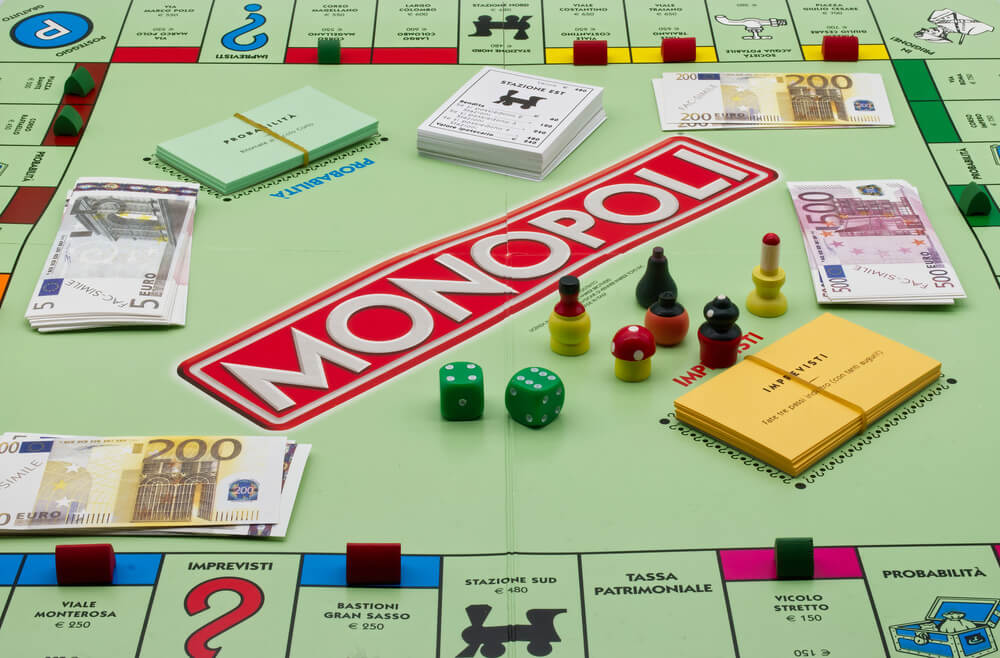
Parker Brothers began mass-producing Monopoly in 1935, and the game became infamous for turning family game night into a multi-hour negotiation over rent and railroads. Games routinely ran so long that many households adopted unofficial house rules just to end them sooner.
The Free Parking jackpot rule, beloved by generations, was never part of the original instructions.
Clue
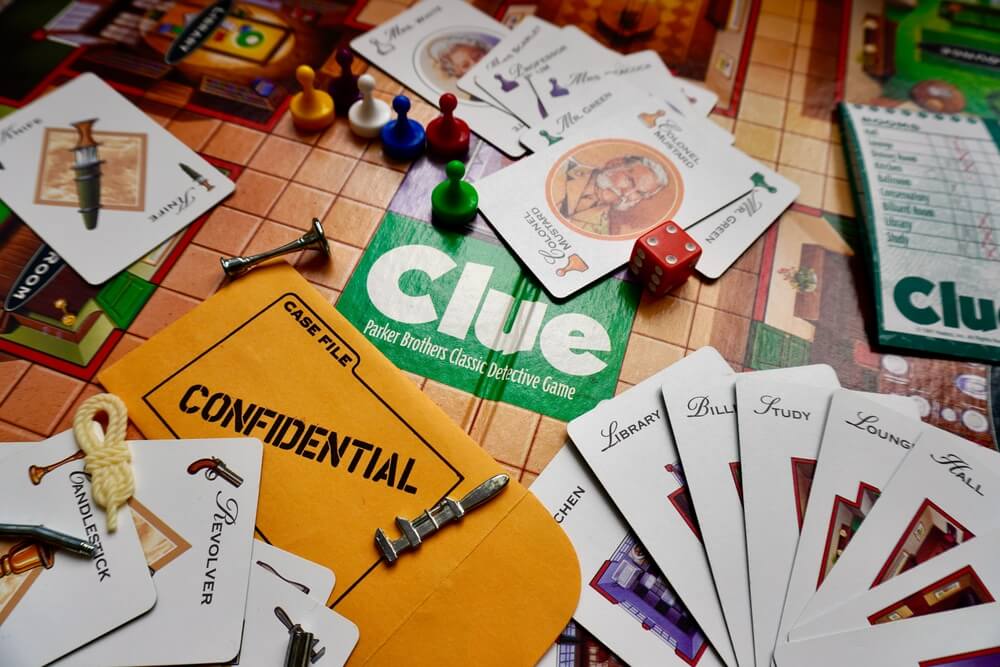
Clue arrived in the United States in 1949 after being invented in England during World War II blackouts, when a factory worker imagined a parlor mystery to pass the time indoors. Players spent evenings eliminating suspects, weapons, and rooms with a small notepad and a growing sense of superiority.
The game’s six original weapons included a candlestick and a lead pipe, both still recognizable today.
Sorry!
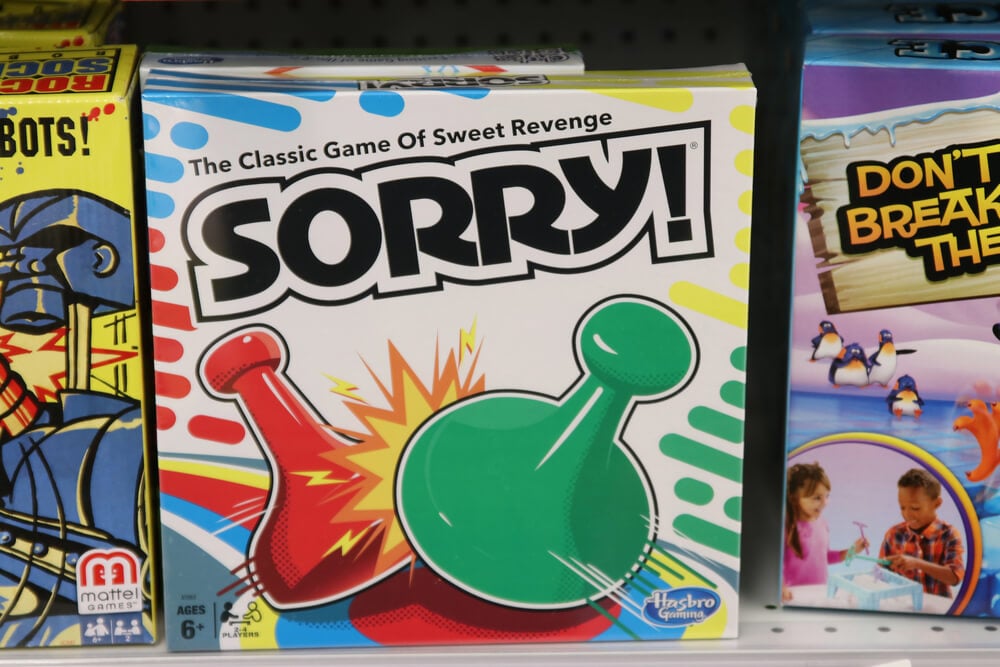
Sorry! turned simple card draws into a game of calculated cruelty, since sending an opponent’s piece back to Start was the entire point. W.H. Storey patented the concept in England in the 1930s, and Parker Brothers brought it to American shelves in 1934.
The apology built into the title rarely matched the tone at the table.
Trouble
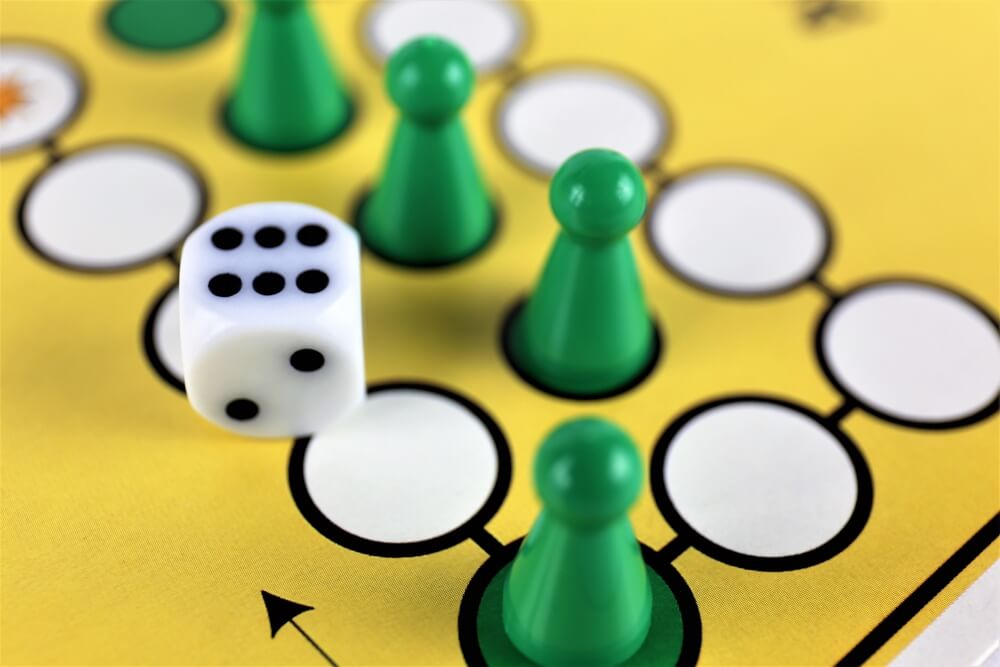
Trouble is remembered less for its rules than for its center dome, a plastic bubble housing a single die that popped with a satisfying click. That Pop-O-Matic mechanism, patented in the 1960s, meant no dice ever rolled off the table and under the couch.
Kids fought over whose turn it was to press the dome almost as much as they fought over the game itself.
Candy Land
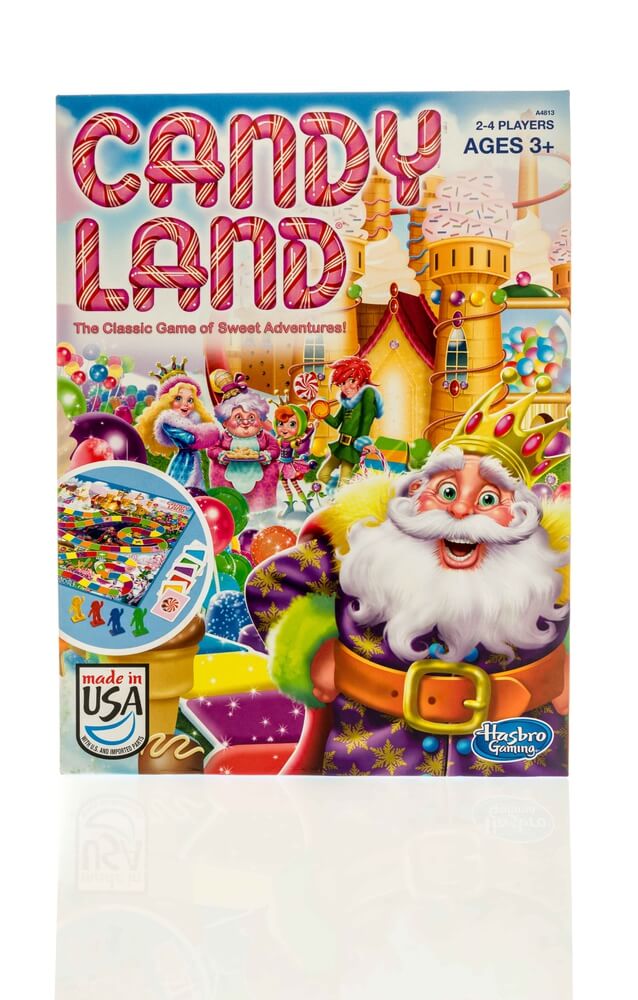
Candy Land required no reading and no real strategy, which made it one of the first games many children ever played independently. Eleanor Abbott designed it in 1948 while recovering from polio, intending it for children in hospital wards who needed something simple and colorful.
The board’s landmarks, including the Gumdrop Mountains and Molasses Swamp, became shorthand for early childhood itself.
Chutes and Ladders
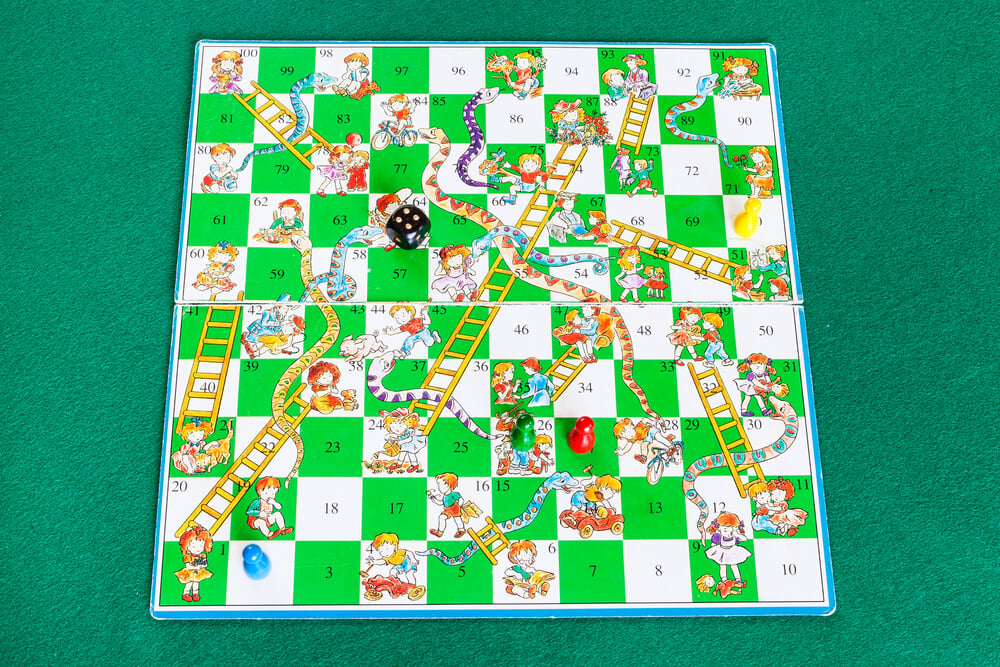
Chutes and Ladders traces back to an ancient Indian game called Snakes and Ladders, which used the imagery to teach lessons about fate and morality. Milton Bradley adapted it for American audiences in 1943, swapping serpents for playground slides.
The game offered zero decisions to make, which was exactly why it worked for players barely old enough to count.
The Game of Life

Milton Bradley designed the original Checkered Game of Life in 1860, making it one of the oldest board games still sold today in a modern form. The spinning wheel replaced dice to avoid associations with gambling, a decision that stuck through every later edition.
Landing on a space marked with a baby meant adding a small plastic peg to the car, a detail kids took very seriously.
Risk
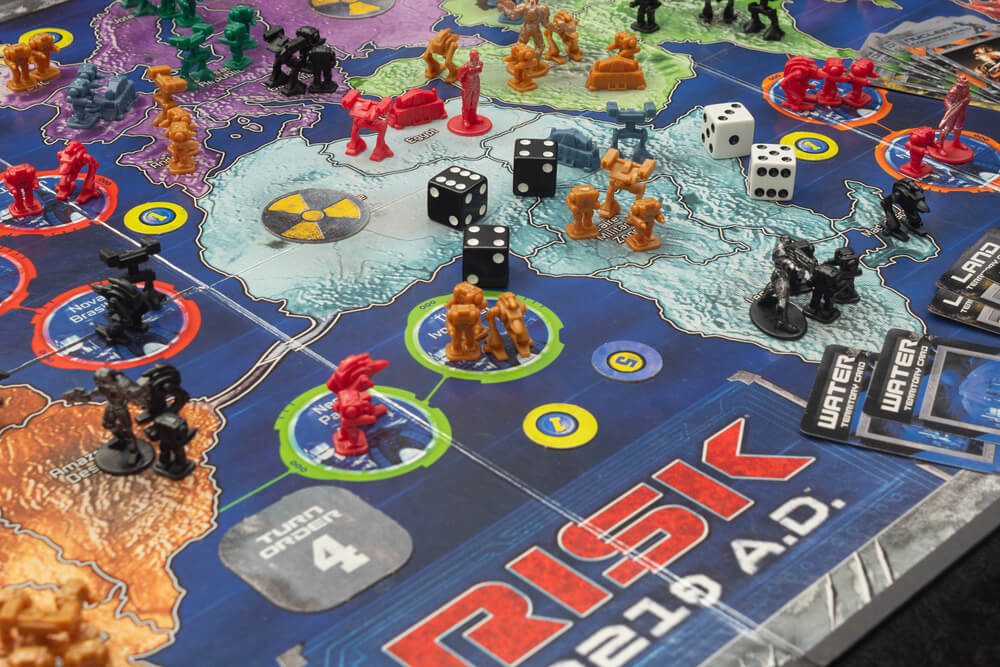
Risk was created by French filmmaker Albert Lamorisse and released in the United States in 1959, turning a folding map of the world into hours-long campaigns for global domination. Alliances formed and collapsed within a single evening, often ending friendships temporarily.
The game’s reputation for outlasting patience made it a rainy weekend project rather than a quick afternoon activity.
Battleship

Battleship existed as a pencil-and-paper game for decades before Milton Bradley released the plastic grid version in 1967, complete with red and white pegs. Calling out coordinates like B-4 became a universal shorthand understood even by people who had not played in years.
The satisfying snap of a peg locking into the grid was part of the appeal.
Connect Four
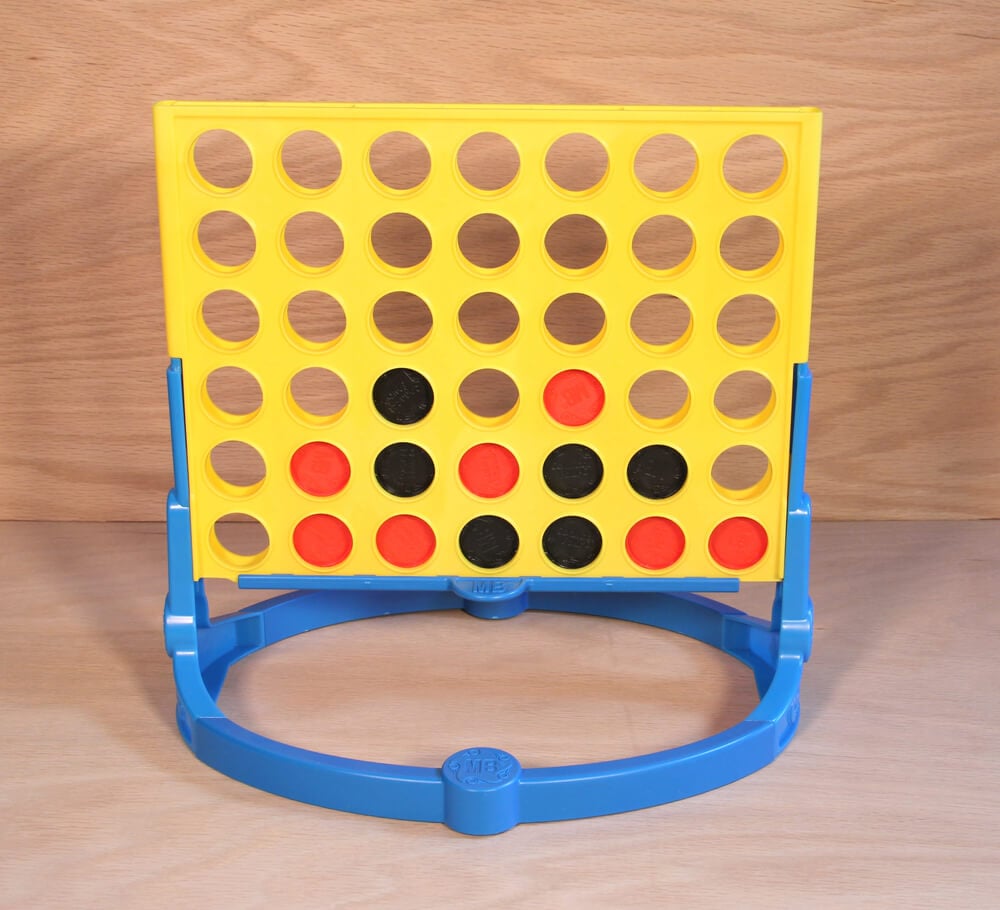
Connect Four debuted in 1974 as a vertical spin on tic-tac-toe, requiring players to drop discs into a plastic grid and think several moves ahead. Its simple premise disguised real strategic depth, and competitive players developed documented winning techniques within years of release.
The game remains one of the few from this era proven to be mathematically solvable by the first player.
Operation
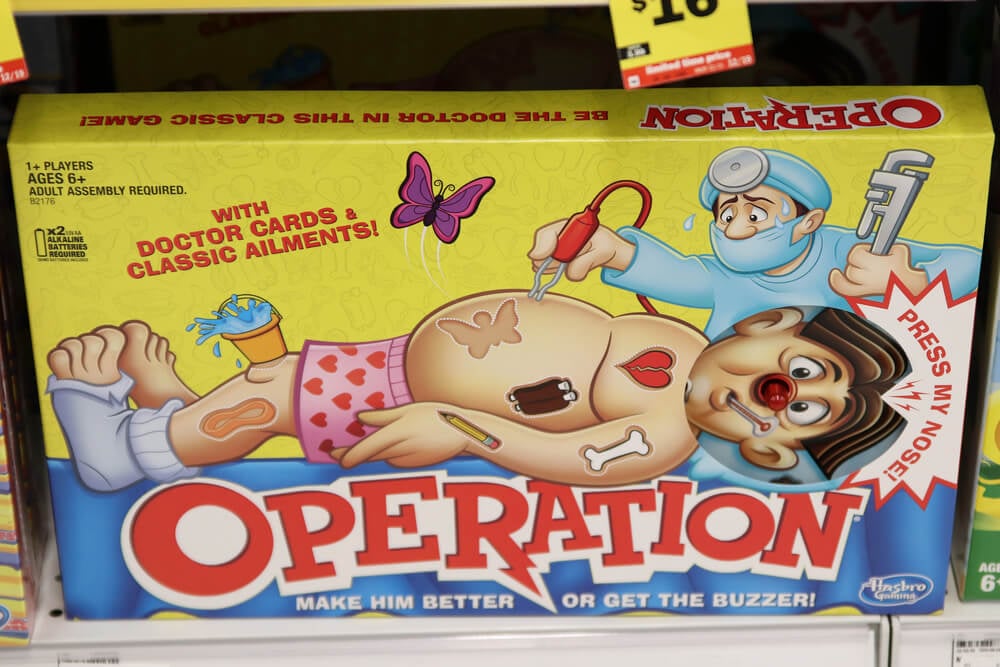
Operation, released in 1965, turned a buzzing metal tray shaped like a patient into a test of steady hands. Tweezers brushing the edge of a cavity triggered a jarring electric buzz and a red nose light, a design so simple it barely changed for decades.
The patient, nicknamed Cavity Sam, became one of the most recognizable characters in tabletop game history.
Mouse Trap
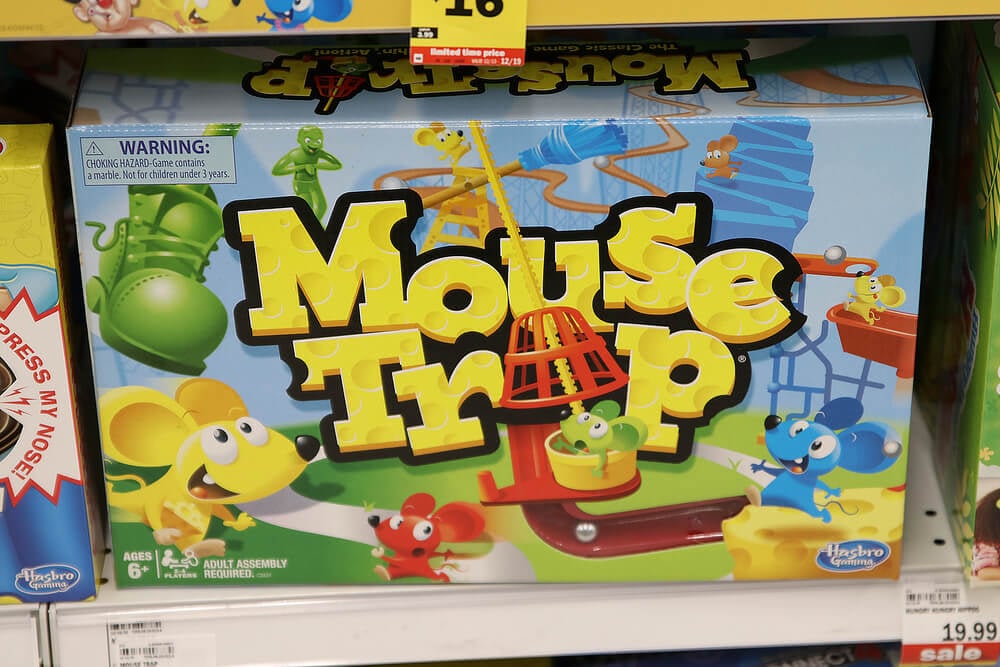
Mouse Trap combined a board game with a working Rube Goldberg machine, where players built a chain reaction of gears, levers, and a tiny diving man before ever trying to trap an opponent’s mouse piece. Ideal Toy Company released it in 1963, and the appeal was often building the contraption more than actually playing the game.
Half the fun ended the moment the trap successfully worked.
Yahtzee
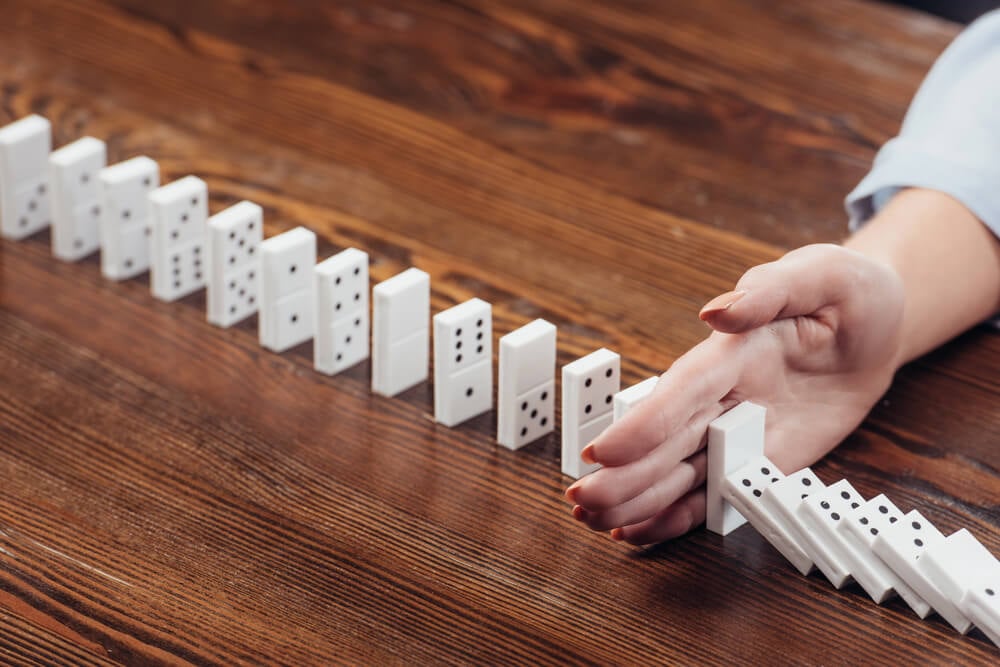
Yahtzee’s five-dice scoring system dates to the mid-1950s, when a Canadian couple developed it for private boat parties before Edwin Lowe acquired the rights. The tension of a final roll, needing one specific number to complete a full house or a straight, made it addictive in short bursts.
Score pads became collectible in their own right among frequent players.
Scrabble
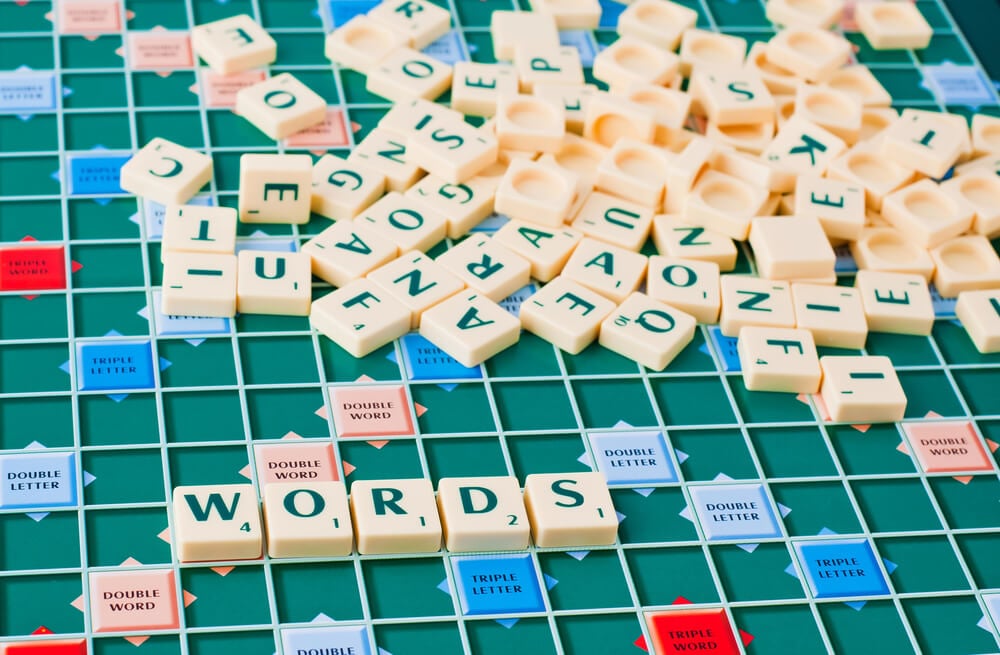
Scrabble was invented by architect Alfred Mosher Butts during the Great Depression, who calculated letter frequencies from newspaper front pages to set the point values still used today. Selchow and Righter picked up distribution in the 1950s after a Macy’s executive discovered the game on vacation.
Triple word scores turned quiet vocabulary games into fierce competitions between family members who suddenly disputed obscure two-letter words.
Boggle
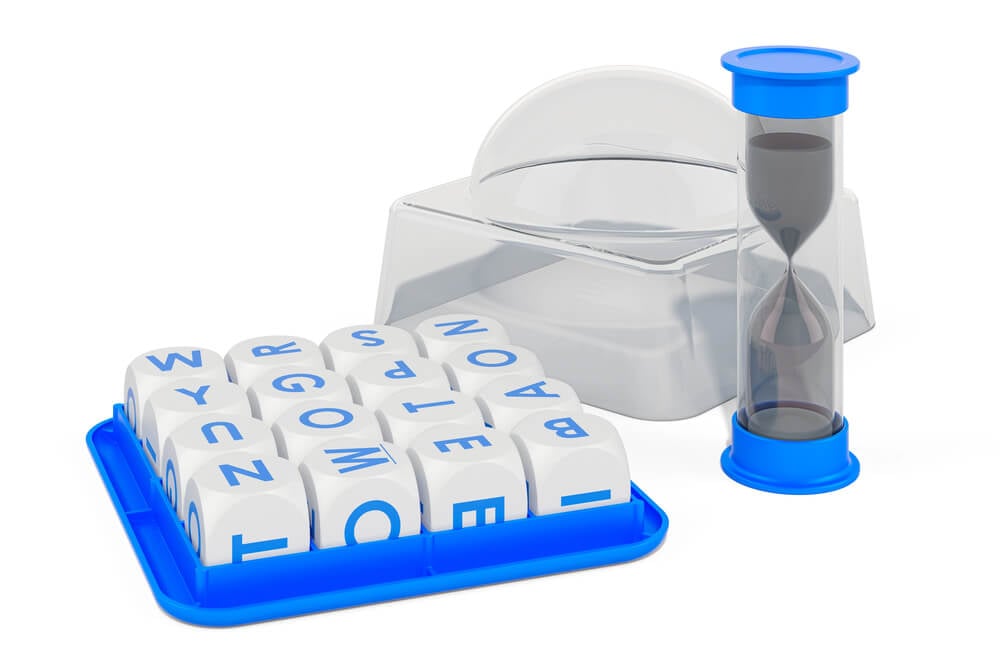
Boggle used a plastic dome and sixteen shaken letter dice to generate a new word grid every round, giving players three minutes to find as many words as possible. Parker Brothers released it in 1972, and its timer made it one of the faster-paced games available for family night.
Words had to connect through adjacent letters, which turned the search into a small spatial puzzle.
Trivial Pursuit
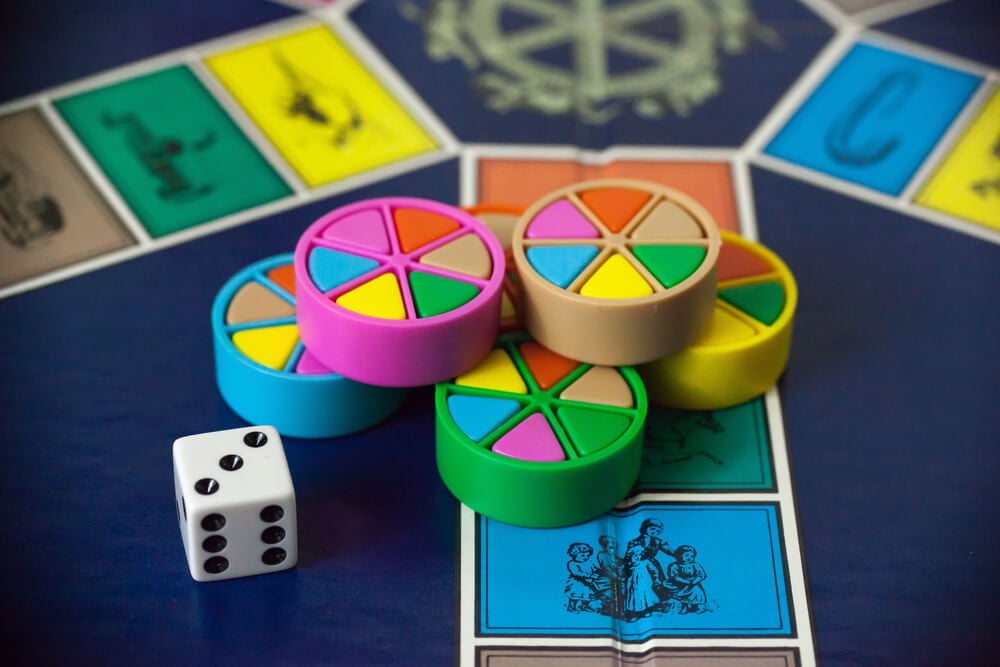
Trivial Pursuit launched in Canada in 1979 and became a cultural phenomenon by the mid-1980s, selling over twenty million copies in its second year alone. Its pie-shaped tokens, filled wedge by wedge with colored pieces, turned general knowledge into a visible scoreboard.
Categories like Entertainment and History created natural rivalries between players with different strengths.
Pictionary

Pictionary combined charades with rushed sketching, requiring teammates to guess a word from a drawing completed against a sixty-second timer. Robert Angel created the game in 1985 after struggling to spell the word “aardvark” and deciding drawing might be easier.
Terrible stick-figure art became part of the game’s charm rather than a flaw.
Guess Who?

Guess Who? asked players to eliminate cartoon faces on a flip-up board through a process of yes-or-no questions about hair color, glasses, and facial hair. Theora Design created it in the Netherlands, and Milton Bradley released it in the United States in 1979.
The flat clacking sound of flipping down eliminated faces became instantly recognizable to anyone who grew up with the game.
Mastermind
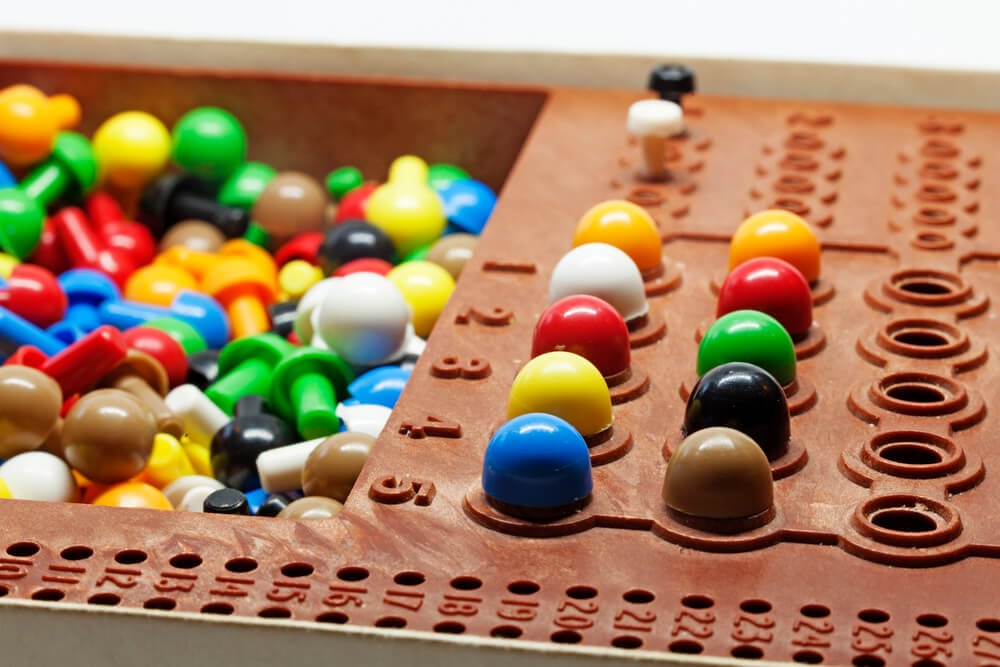
Mastermind challenged one player to guess a hidden code of colored pegs while a second player offered only black and white feedback pegs as clues. Mordecai Meirowitz, an Israeli postmaster and telecommunications expert, designed it in the early 1970s, and it became one of the best-selling games of that decade.
The logic puzzle underneath the simple plastic pegs later influenced computer science coding-theory problems.
Stratego
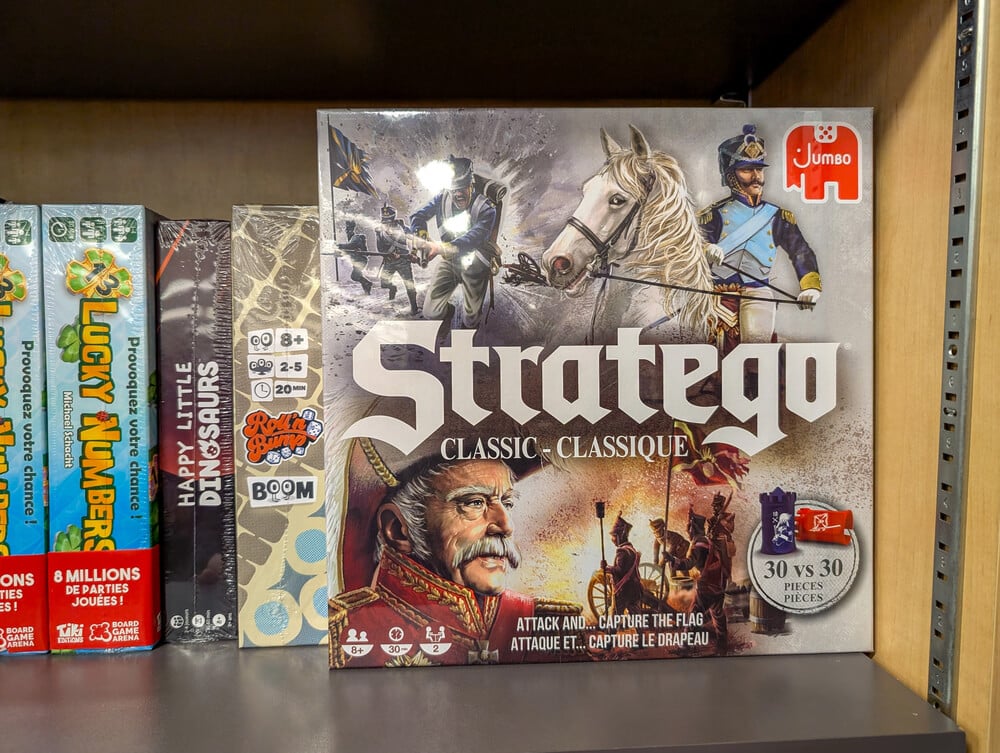
Stratego placed forty pieces of hidden rank on each side of a board, turning every attack into a gamble on what an opponent’s piece actually represented. The game descended from a French original from the early twentieth century before Milton Bradley standardized the American version.
Capturing the enemy Flag while protecting a Spy capable of defeating the Marshal required patience most other games did not demand.
Parcheesi
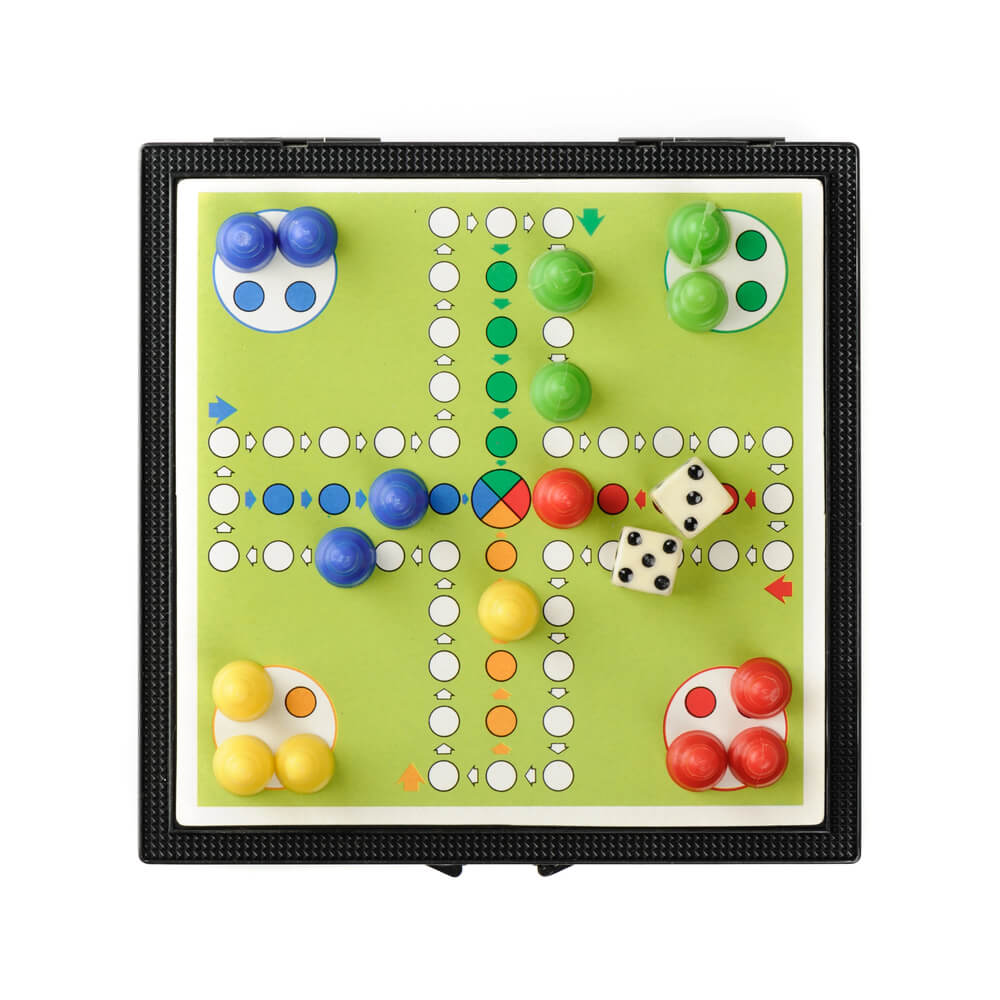
Parcheesi adapted the ancient Indian cross-and-circle game Pachisi, once played by Mughal royalty on courtyards large enough to walk across as a living board. Selchow and Righter trademarked the American version in the early twentieth century.
Sending an opponent’s piece back to home base by landing on their square gave the game a competitive edge beneath its simple movement rules.
Rummikub
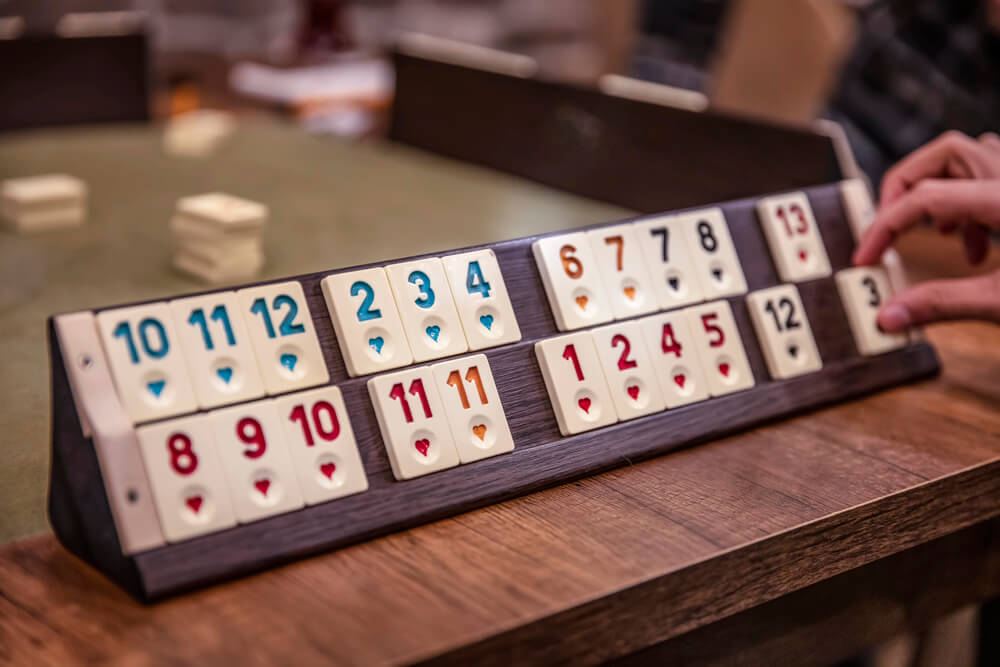
Rummikub combined tile-based Rummy mechanics with a rack system, requiring players to build runs and groups of numbered tiles before opponents emptied their racks first. Ephraim Hertzano developed it in Israel during a period when card games were restricted, so he built the equivalent using numbered tiles instead.
The clack of tiles being rearranged on a rack became the game’s signature sound.
Perfection

Perfection challenged players to fit twenty-five small plastic shapes into their matching slots before a wound-up timer expired and the entire board violently popped upward. Lakeside Games released it in 1973, and the pop startled nearly every first-time player regardless of how many warnings they received.
Later shapes were often missing from well-used sets, having been launched somewhere across the living room years earlier.
Hungry Hungry Hippos

Hungry Hungry Hippos turned marble collection into a frantic contest of slamming plastic levers to make hippo heads snap forward and swallow marbles from the center. Milton Bradley released it in 1978, and the noise level alone made it a favorite for younger siblings.
The game rewarded speed and force over any real strategy, which suited its target age group.
Twister
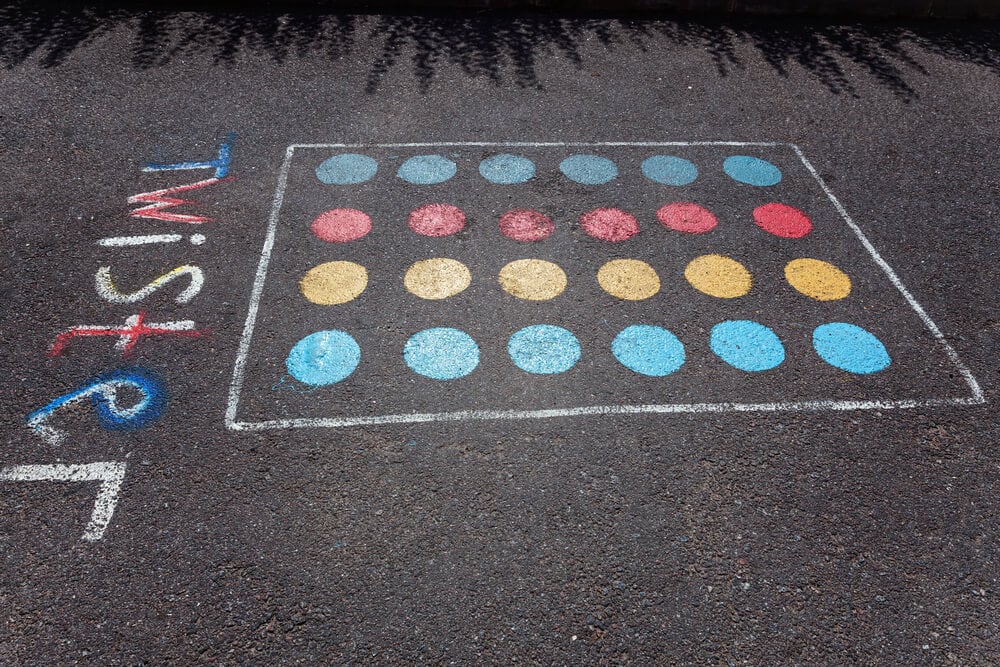
Twister required a spinner, a plastic mat printed with colored circles, and a willingness to end up in physically awkward positions with friends or relatives. Milton Bradley released it in 1966 after early hesitation from retailers uncertain whether a game requiring this much physical contact would sell.
A televised appearance helped normalize it for American living rooms almost overnight.
Jenga

Jenga asked players to remove wooden blocks from a stacked tower and place them on top without causing the entire structure to collapse. Leslie Scott developed the concept from a game her family played in Ghana using discarded lumber blocks, later formalizing it commercially in the early 1980s.
The word “jenga” itself comes from the Swahili verb meaning to build.
Don’t Break the Ice
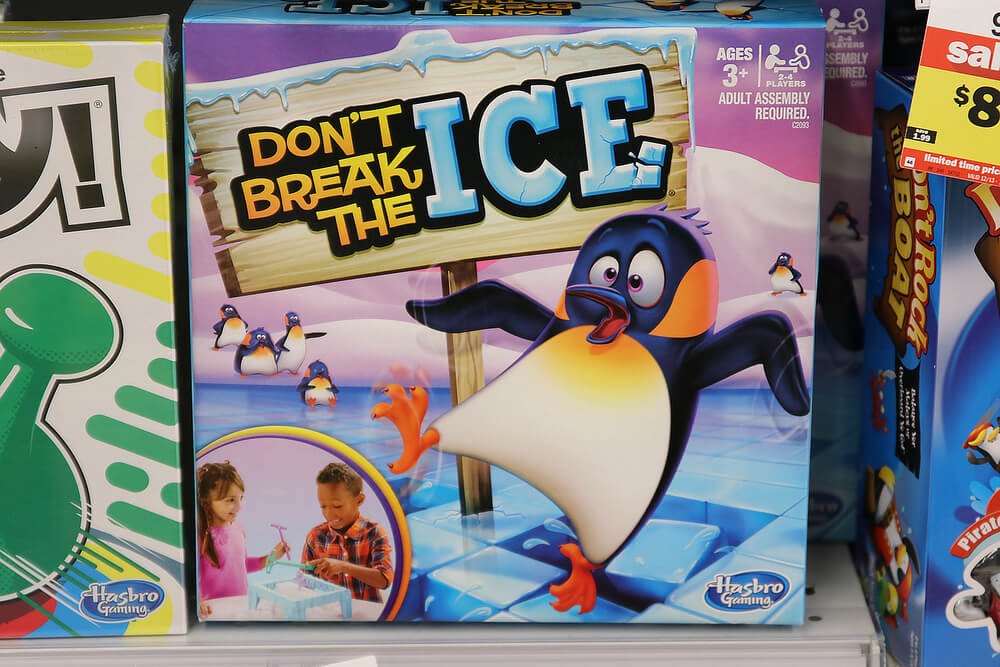
Don’t Break the Ice gave players small plastic hammers to tap out ice cubes from a frozen grid, hoping a tiny plastic figure balanced on top would not fall through. Schaper Manufacturing introduced it in 1968, and the tension built with every cube removed as the surface grew thinner.
The final collapse always felt inevitable, which somehow never made it less satisfying.
Payday
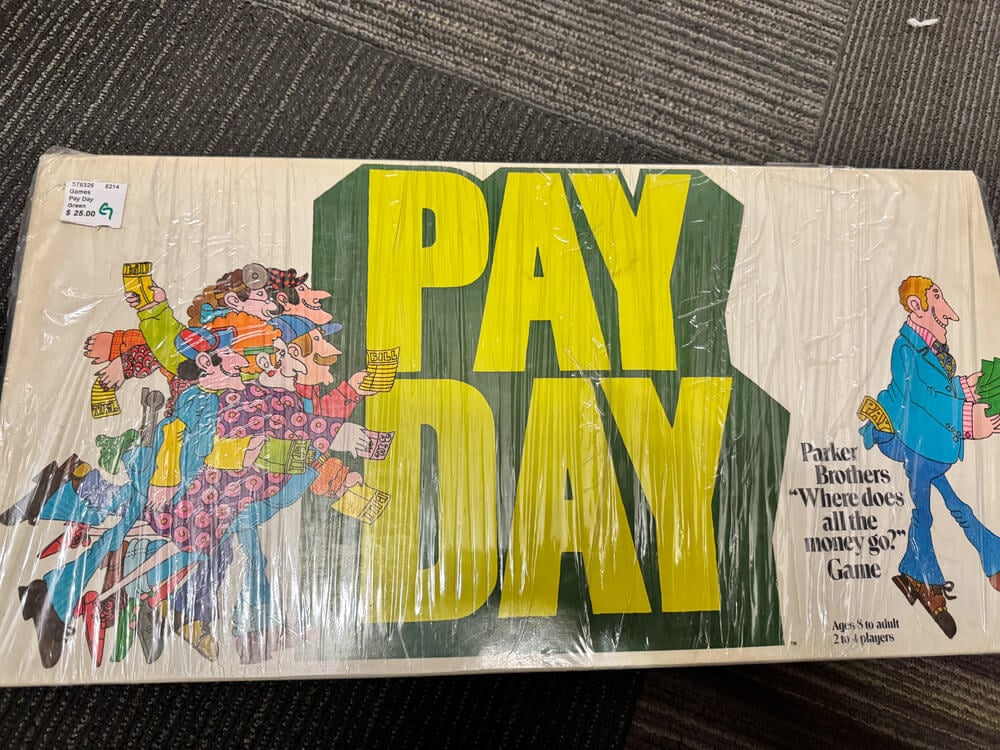
Payday simulated a full calendar month of bills, paychecks, and unexpected expenses, giving children an early and occasionally brutal introduction to household budgeting. Parker Brothers released it in 1975, and its mail-order catalog mechanic let players buy fictional items on credit.
Falling behind on payments in Payday taught a financial lesson many players only appreciated as adults.
Scattergories
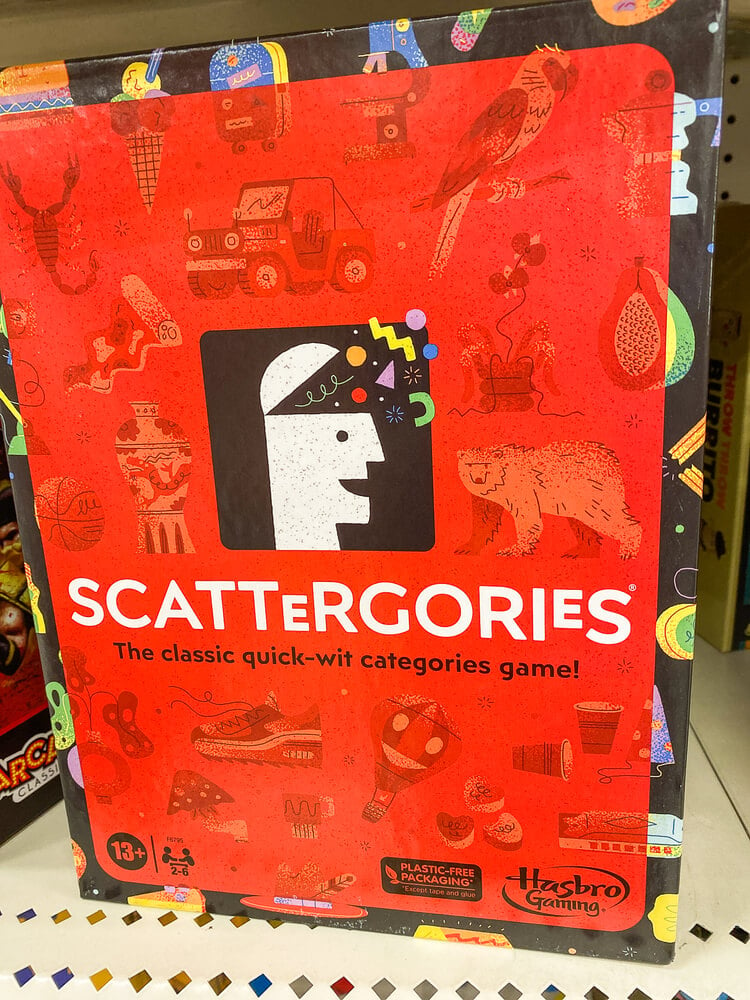
Scattergories used a twenty-sided die and category lists to force fast, creative thinking under a timer, rewarding unusual answers over obvious ones. Milton Bradley released it in 1988, and the game’s format made repeat answers between players void for points.
Arguments over whether an obscure answer technically counted became as much a part of the game as the timer itself.
Taboo
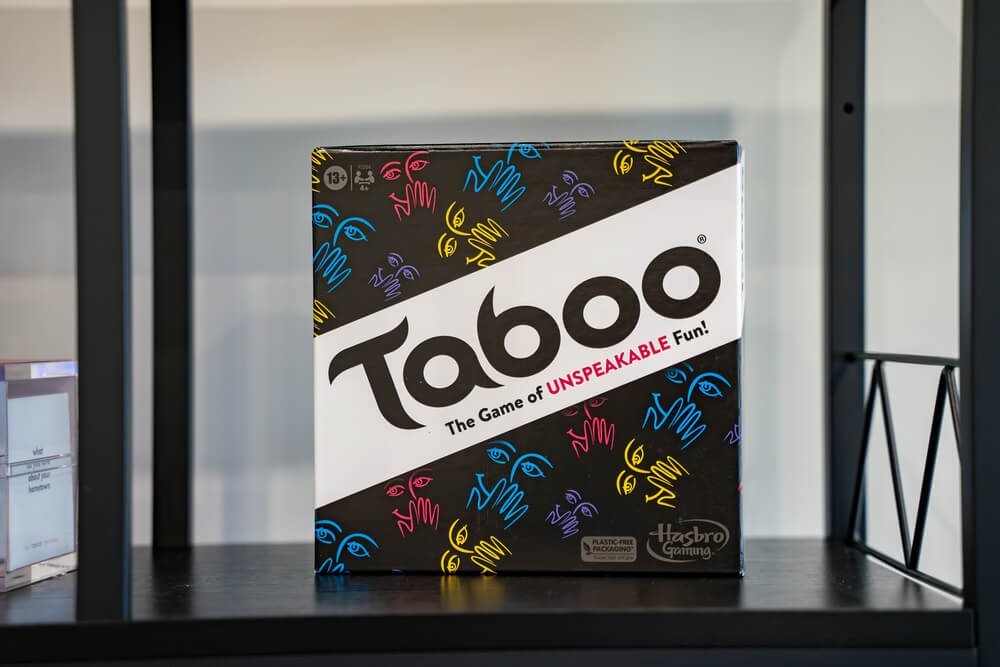
Taboo required players to describe a word to teammates without using five common related terms printed on the card, forcing creative workarounds under time pressure. Hasbro released it in 1989, and a buzzer sounded whenever an opponent caught a forbidden word slipping out.
The game rewarded quick thinking far more than trivia knowledge.
Mille Bornes
Mille Bornes, a French card game whose name translates to “a thousand milestones,” tasked players with racing an imaginary car down a highway while sabotaging opponents with hazard cards like flat tires and empty fuel tanks. Edmond Dujardin created it in France in 1954, and it found a steady American following through the following decades.
Safety cards that blocked specific hazards became prized possessions within a hand.
Diplomacy

Diplomacy replaced dice entirely with negotiation, requiring players representing European powers before World War I to form and break alliances purely through conversation. Allan Calhamer designed the game in 1954 while a graduate student at Harvard.
Its lack of randomness meant outcomes depended entirely on trust, betrayal, and persuasive argument between friends who did not always stay friends afterward.
Axis & Allies
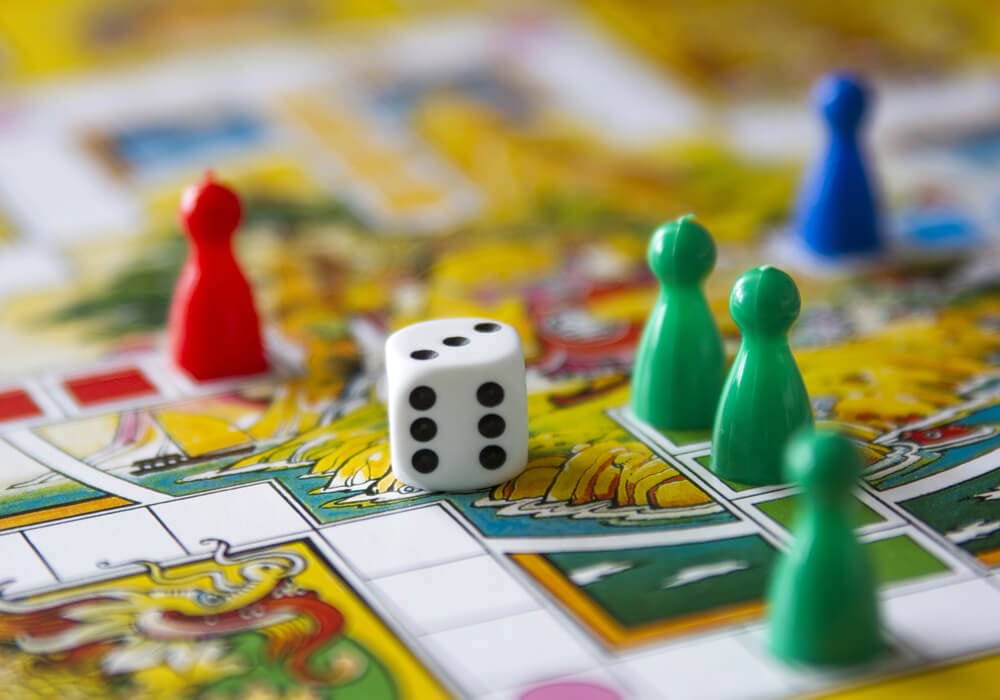
Axis & Allies scaled World War II strategy down to a kitchen-table level, letting players command entire nations across a global map using plastic miniatures for infantry, tanks, and battleships. Milton Bradley released the original edition in 1981, and games often stretched across multiple sittings.
Its complexity marked a step up from lighter family games, appealing to players ready for something that demanded real planning.
When the Box Lid Was the Whole Evening
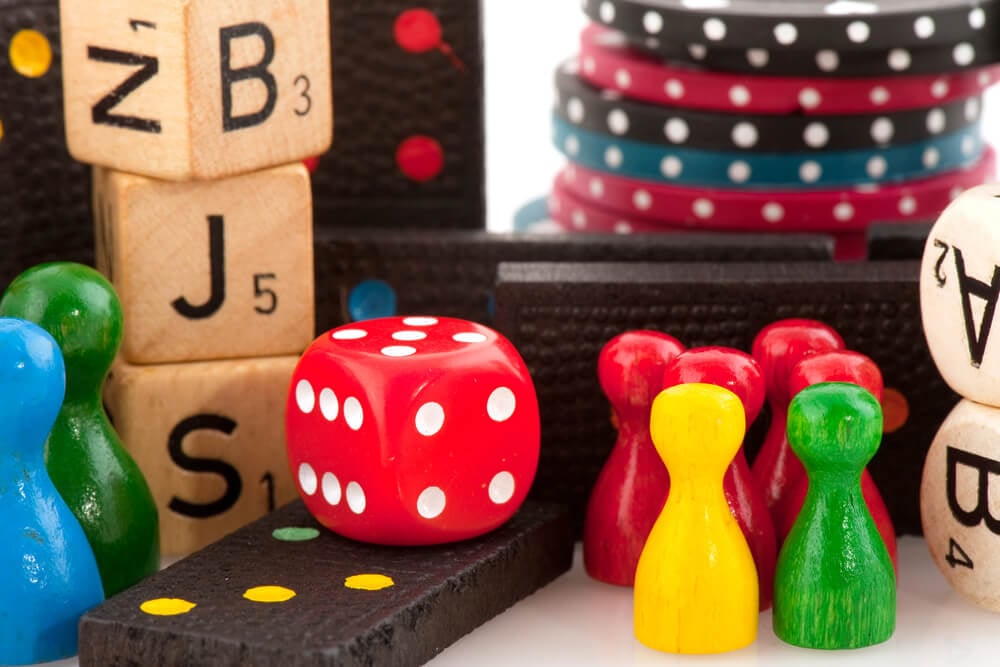
None of these games asked for an update, a subscription, or a charging cable. They asked for a table, a few players, and enough patience to make it to the end of the box’s rules.
That was often the entire appeal: a fixed set of pieces that meant the same thing every single time the lid came off.
What has faded is not the games themselves, since most are still in print somewhere, but the specific ritual around them. A rainy day used to have a natural shape, starting with a closet search and ending with an argument over whether the rules actually said that.
Screens replaced the search, but they never quite replaced the argument.
More from Go2Tutors!

- The Romanov Crown Jewels and Their Tragic Fate
- 13 Historical Mysteries That Science Still Can’t Solve
- Famous Hoaxes That Fooled the World for Years
- 15 Child Stars with Tragic Adult Lives
- 16 Famous Jewelry Pieces in History
Like Go2Tutors’s content? Follow us on MSN