15 Punishments Small Towns Handed Out for Minor Offenses
Long before standardized criminal codes, small towns across America and Europe improvised their own consequences for minor offenses, and the results ranged from mildly humiliating to genuinely brutal. These punishments were often designed less to correct behavior than to make an example in public.
The Pillory

The pillory, a wooden frame that locked a person’s head and hands in place in a public square, was used across colonial America and Europe for offenses as minor as fraud, gossip, or public drunkenness. Passersby were often permitted to throw rotten food or worse at the restrained offender, turning punishment into public spectacle.
The device fell out of legal use in most of the United States by the early 19th century, though England did not formally abolish it until 1837.
The Stocks

Similar to the pillory but restraining only the feet, stocks were a common fixture on colonial town greens and were used for offenses including swearing, sabbath-breaking, and minor theft. Sentences were typically measured in hours rather than days, but the public exposure was the actual punishment rather than the physical restraint itself.
Many small New England towns kept a set of stocks in continuous use well into the 18th century.
The Ducking Stool

The ducking stool, a chair mounted on a pivoting beam that dunked the occupant repeatedly into a pond or river, was used specifically to punish “scolds” — typically women accused of nagging or public quarreling — in both colonial America and England. Its use reflected the gendered nature of many minor-offense punishments, targeting speech and behavior deemed inappropriate rather than criminal in a modern sense.
Some towns continued using ducking stools into the early 19th century even after they had fallen out of favor elsewhere.
Branks, or the Scold’s Bridle
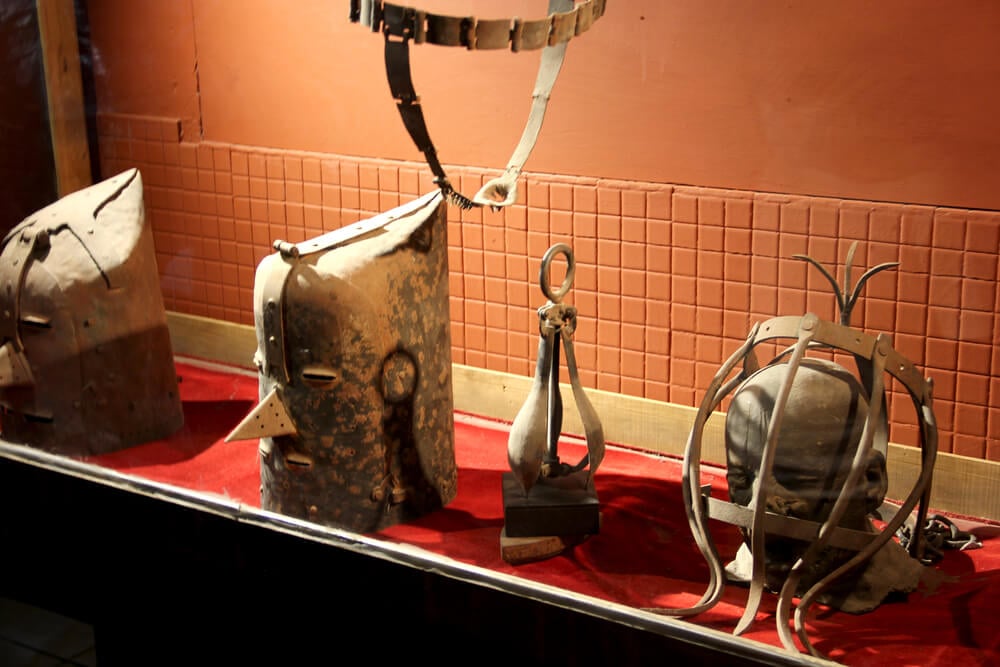
A metal cage fitted over the head with a bit or spike that pressed into the tongue, the branks was used primarily in Scotland and parts of England to punish women for scolding or public arguing. The device prevented speech entirely while the wearer was paraded through town, combining physical discomfort with public humiliation.
Surviving examples are now held in several British museum collections as artifacts of early modern punishment.
Public Whipping Posts
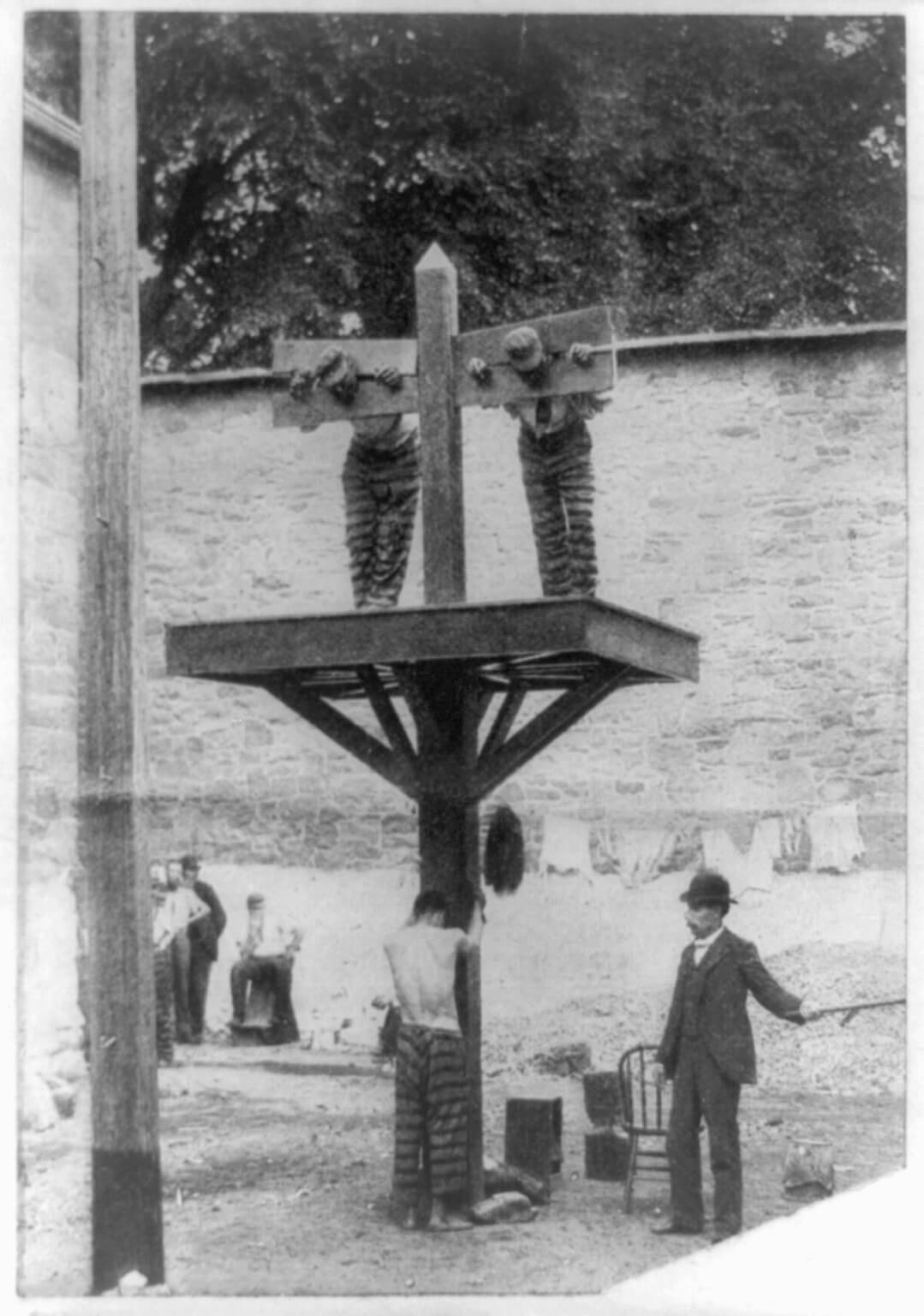
Whipping posts stood in many colonial American town squares and were used for offenses ranging from theft to vagrancy, with the number of lashes typically specified by a local magistrate rather than a formal court. Delaware notably retained legal whipping as a punishment far longer than most states, not formally repealing it until 1972.
The posts themselves often stood permanently in the town square as a visible deterrent even when not actively in use.
Bread and Water Confinement

Minor offenders in many colonial and early American towns were sentenced to short jail confinements on a diet restricted to bread and water, a punishment cheap enough for small towns to administer without significant public expense. The sentence was typically brief, often a matter of days, and was considered a step below more severe corporal punishments.
Some 19th-century military and naval codes retained bread-and-water confinement long after it had faded from civilian use.
Public Confession and Church Discipline

In many Puritan New England towns, minor moral offenses were punished not by secular courts but by mandatory public confession before the congregation, a practice recorded extensively in surviving church discipline records. Offenders were required to stand before the community and admit specific wrongdoing, with the humiliation of public admission functioning as the actual penalty.
This form of discipline operated in parallel with, and sometimes instead of, formal court punishment.
The Cucking Stool

Distinct from but often confused with the ducking stool, the cucking stool was a chair used to publicly display an offender, particularly for offenses like being a disorderly tavern keeper, without necessarily involving dunking in water. Its use is documented in English town records going back to medieval times, making it one of the longer-running minor-offense punishments on record.
By the time it faded from use, the terms cucking and ducking stool had become largely interchangeable in popular usage.
Branding for Repeat Minor Offenses

Some colonial jurisdictions used branding, typically a small letter burned into the hand or cheek, to permanently mark repeat offenders of minor crimes such as petty theft, making the punishment visible for the rest of the person’s life. The practice was intended partly as a warning to future potential victims and partly as a deterrent, though its permanence made it far more severe in practice than the underlying offense often warranted.
Branding for such offenses had largely disappeared from American law by the early 19th century.
The Wooden Horse

Soldiers and, in some towns, civilians accused of minor infractions were occasionally sentenced to sit astride a narrow wooden rail called a wooden horse, sometimes with weights attached to their feet, for a set period of time. The punishment caused significant discomfort without lasting physical harm, making it a favored option for offenses considered too minor for whipping but too serious to ignore.
Its use is best documented in military and militia contexts in colonial America.
Public Shaming Signs

Offenders in some colonial towns were required to wear signs around their neck listing their offense — a practice most famously fictionalized in “The Scarlet Letter” but grounded in actual court records from Puritan New England. Signs specified crimes ranging from drunkenness to theft, and the wearer was typically required to stand in a public place for a set duration.
The practice relied entirely on community shame as the mechanism of punishment rather than any physical penalty.
Forced Labor on Public Works

Minor offenders in many small towns, particularly in the post-Reconstruction American South, were sentenced to forced labor on roads or public projects rather than jail time, a practice that saved towns the cost of maintaining a jail. This system, sometimes called the chain gang in its more organized form, disproportionately targeted Black residents for minor or fabricated offenses under discriminatory local ordinances.
The practice persisted in various forms well into the 20th century in some jurisdictions.
Banishment From Town Limits

Rather than incarcerate an offender, some small colonial towns simply banished individuals for minor but repeated offenses, ordering them to leave town limits under threat of more severe punishment if they returned. This was a practical response to the absence of formal jail infrastructure in many small settlements, effectively exporting the problem to a neighboring town.
Banishment records survive in numerous New England town archives from the 17th and 18th centuries.
Fines Payable in Goods

Because currency was often scarce in small colonial towns, fines for minor offenses were frequently payable in goods such as wheat, grain, or livestock rather than money, with local magistrates setting conversion rates. This practical arrangement meant the actual burden of a fine varied significantly depending on a person’s occupation and what goods they had available.
Court records from Virginia and Maryland document extensive use of this in-kind fine system through the colonial period.
The Pillory Combined With Ear Cropping
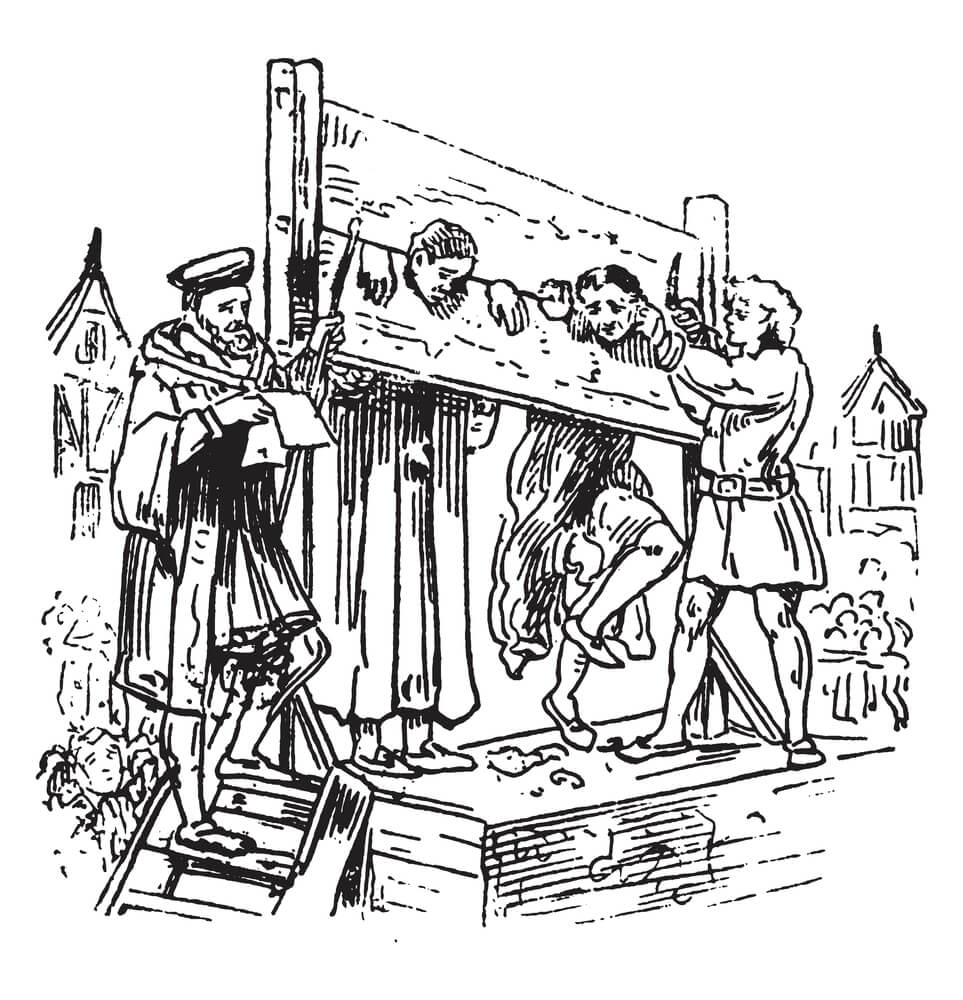
For certain minor but repeated offenses, some colonial courts combined confinement in the pillory with the cropping of an ear, a punishment severe enough that it blurred the line between minor and serious criminal penalty. The practice is documented in Massachusetts Bay Colony records for offenses including repeated theft and certain religious violations.
It represents one of the more extreme escalations applied to offenses that began as comparatively minor infractions.
Punishment as Public Theater
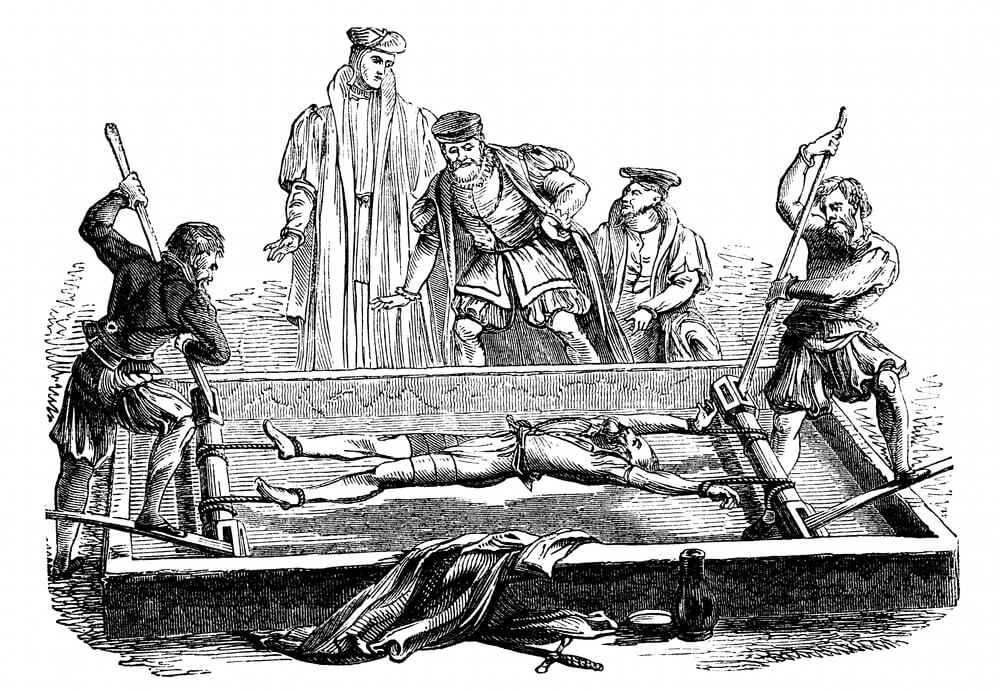
What connects nearly all of these practices is their reliance on an audience. A fine paid privately doesn’t deter the way a person locked in a public square does, and small towns without the resources for formal incarceration leaned heavily on shame and spectacle as a substitute for a justice system they couldn’t otherwise afford.
Most of these punishments disappeared not because towns grew more lenient, but because legal systems eventually centralized, formalized, and moved punishment out of the town square and into institutions built specifically for it. The shift traded visibility for scale, and in doing so quietly erased a whole vocabulary of public consequence.
More from Go2Tutors!

- The Romanov Crown Jewels and Their Tragic Fate
- 13 Historical Mysteries That Science Still Can’t Solve
- Famous Hoaxes That Fooled the World for Years
- 15 Child Stars with Tragic Adult Lives
- 16 Famous Jewelry Pieces in History
Like Go2Tutors’s content? Follow us on MSN.