Metal Lunchboxes Selling for Hundreds
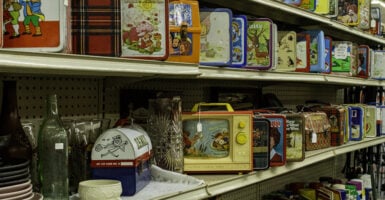
For about three decades, a stamped steel box with a cartoon on the lid was the most public thing a child carried into school. It announced favorite shows, favorite heroes and, occasionally, a parent’s questionable taste.
Most of those boxes were dented, rusted and thrown out by the time their owners reached high school. The survivors now trade among adults who remember the cafeteria table with surprising precision.
A clean lid, a matching bottle and the right year can turn a dime-store purchase into a serious line on an auction catalog.
Mickey Mouse Lunch Kit by Geuder, Paeschke and Frey
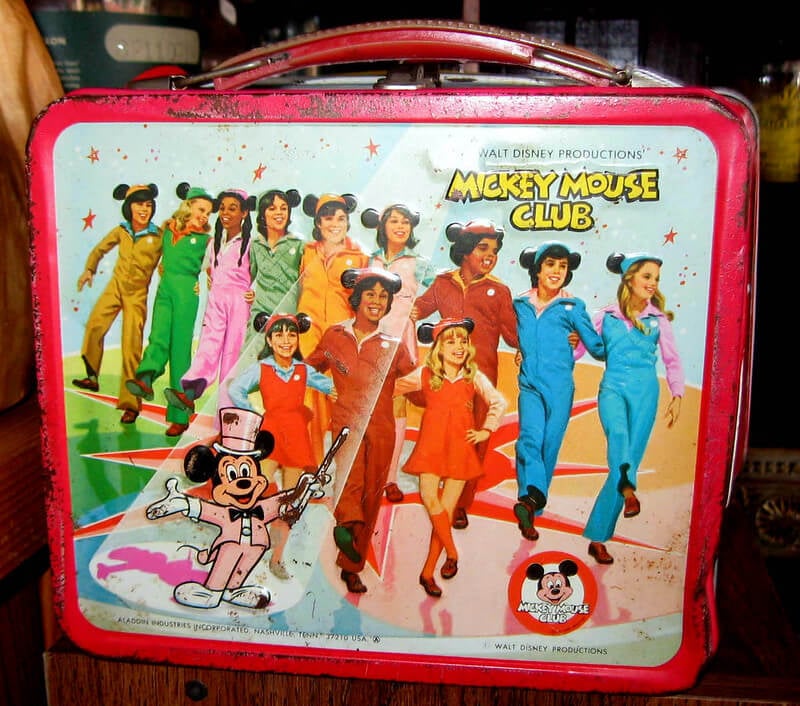
Collectors generally trace the character lunchbox back to 1935, when the Milwaukee firm Geuder, Paeschke and Frey produced a lithographed tin Mickey Mouse lunch kit with a carrying handle. It was sold as a novelty rather than a school staple, and the idea did not catch on widely for another fifteen years.
Disney licensing was still young, and the kit shows Mickey and friends in the pie-eyed style of the period. Surviving examples are scarce, and collectors pay a few thousand dollars for one with bright graphics, while heavy paint loss, rust spotting or a replaced handle pulls the figure down sharply.
Hopalong Cassidy From Aladdin Industries
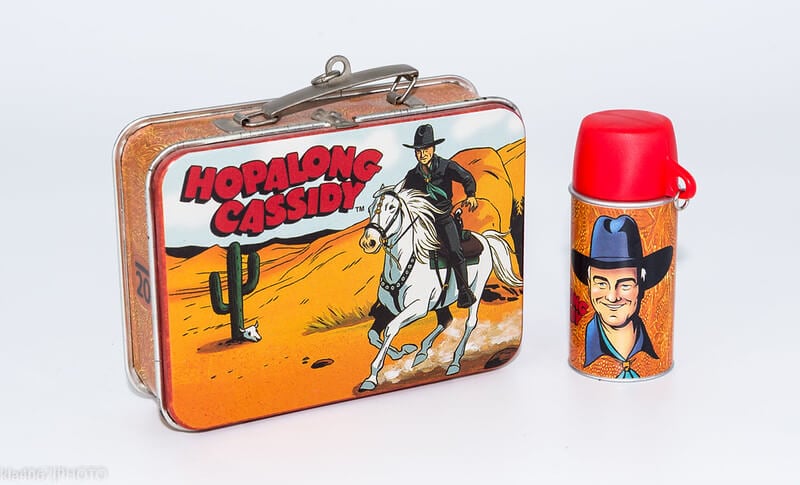
In 1950 Aladdin Industries released its Hopalong Cassidy box, and the cowboy star’s popularity turned it into a runaway hit that is widely credited with launching the character lunchbox boom. Early versions used a paper decal on a plain red or blue box rather than a fully printed surface.
Reports put first-year sales at roughly 600,000 units, a figure that convinced competitors to rush in. Clean examples go for about 300 to 800 dollars with the original bottle, though a decal that has peeled, yellowed or flaked at the edges cuts that number in half.
Roy Rogers and Dale Evans by American Thermos
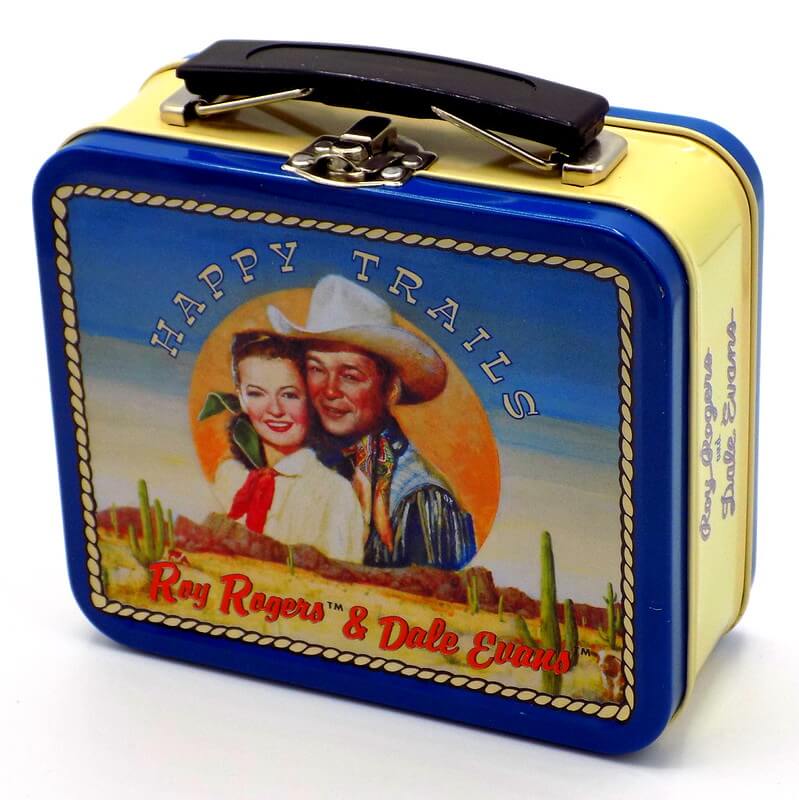
American Thermos answered Aladdin in 1953 with a Roy Rogers and Dale Evans box printed in full color across every side. That approach, with art wrapped around the entire surface, became the standard for the industry within a couple of years.
The design went through several variations during the decade, including versions showing the Double R Bar Ranch and the horse Trigger. Prices usually land between 200 and 600 dollars depending on which variant it is, and scratches across the lid art or a missing bottle drop the value considerably.
Superman From Universal
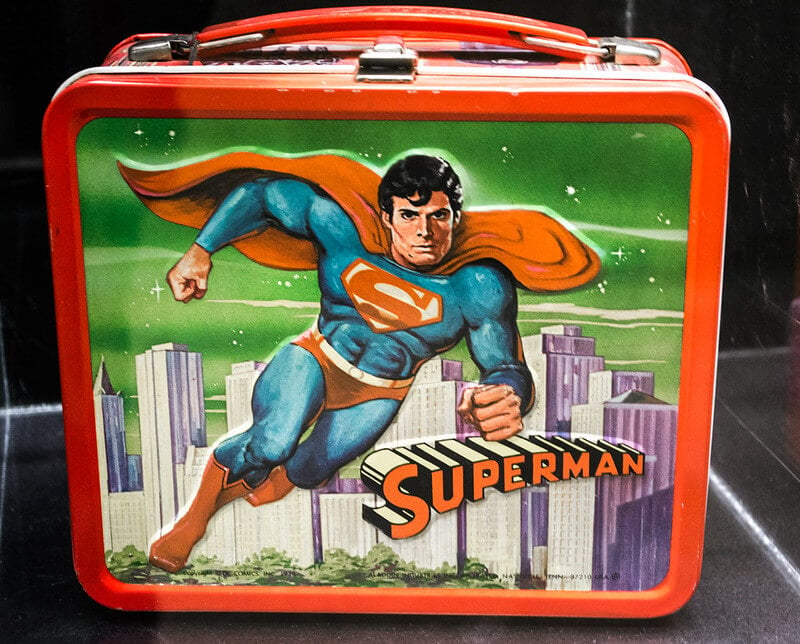
Universal released a Superman lunchbox in 1954, and it is regularly cited among the most valuable metal boxes ever made. The art shows the hero in action, rendered in the bold comic-book style of the era.
Few survived in high grade because the box was carried hard and the paint wore quickly at the corners. Pristine examples have reportedly changed hands for five figures, though ordinary playworn copies with fading and rubbed edges trade far lower, typically in the high hundreds to about 2,000 dollars.
Howdy Doody From Adco Liberty
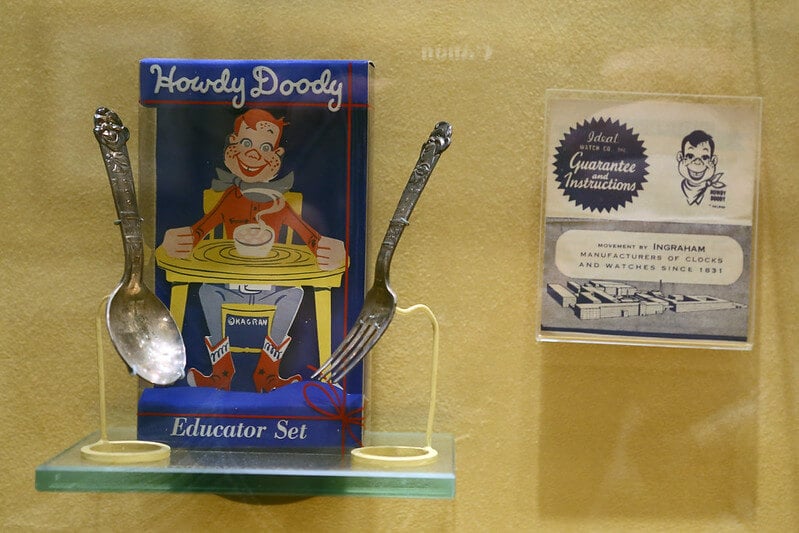
Adco Liberty produced a Howdy Doody box in 1954, built around the freckled marionette who anchored one of early television’s most popular children’s programs. The lithograph shows Howdy alongside Clarabell the clown and other members of the Doodyville cast.
Adco Liberty made relatively few character boxes, and that short catalog adds to the appeal for completists. A complete kit with its bottle reaches roughly 600 to 1,500 dollars, although rust along the hinge or a lid that no longer closes tightly sends buyers looking elsewhere.
Gene Autry and Champion by Universal
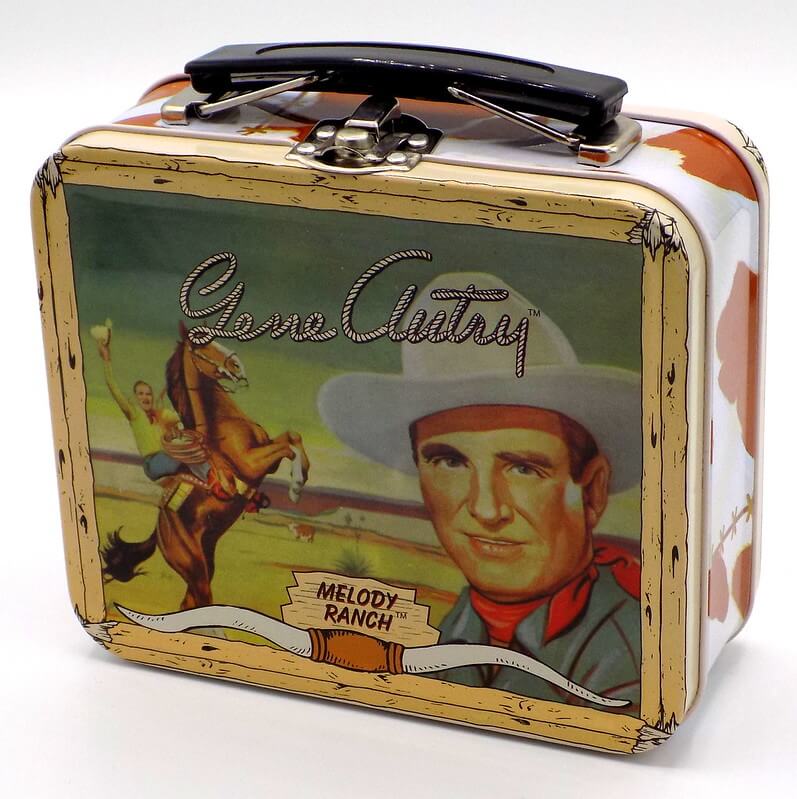
Gene Autry, the singing cowboy of radio, film and early television, appeared on a 1954 Universal box built to cash in on the western craze that dominated children’s entertainment. The art pairs Autry with his horse Champion, and the matching bottle carries its own western scene.
Universal boxes from the mid-1950s were made in smaller numbers than Aladdin or Thermos products, which keeps supply thin. Collectors pay about 300 to 900 dollars for a sharp example, and the bottle alone has value, since glass liners broke constantly and many survivors have been swapped or repaired.
Davy Crockett and the Coonskin Craze
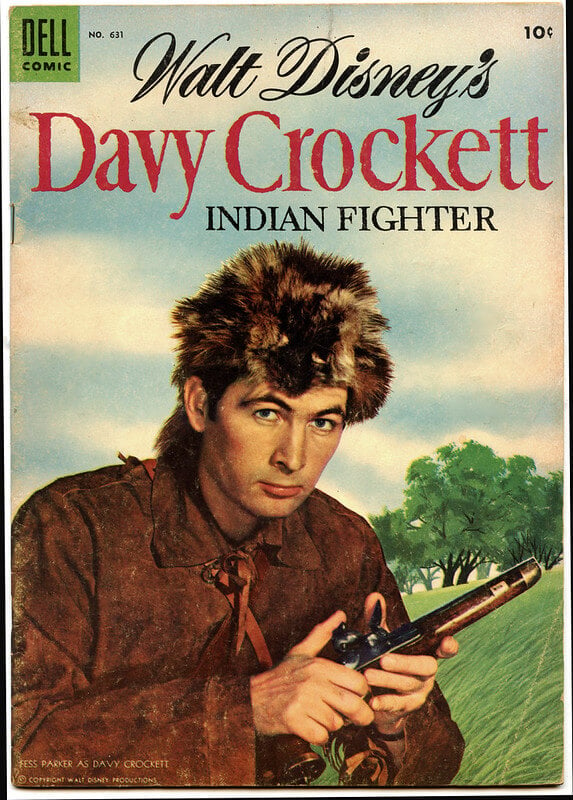
Disney’s Davy Crockett episodes in 1954 and 1955 set off one of the first great merchandising frenzies, and lunchboxes were part of the flood. Several manufacturers issued Crockett boxes in a rush to cash in, which is why collectors pay close attention to maker marks and art variations.
Coonskin caps sold by the millions during the same craze, and the boxes captured that frontier fever in bright greens and browns. Typical prices run 200 to 600 dollars, with fading from sunlight being the most common flaw that knocks a box down a grade.
Gunsmoke and the Misspelled Marshal
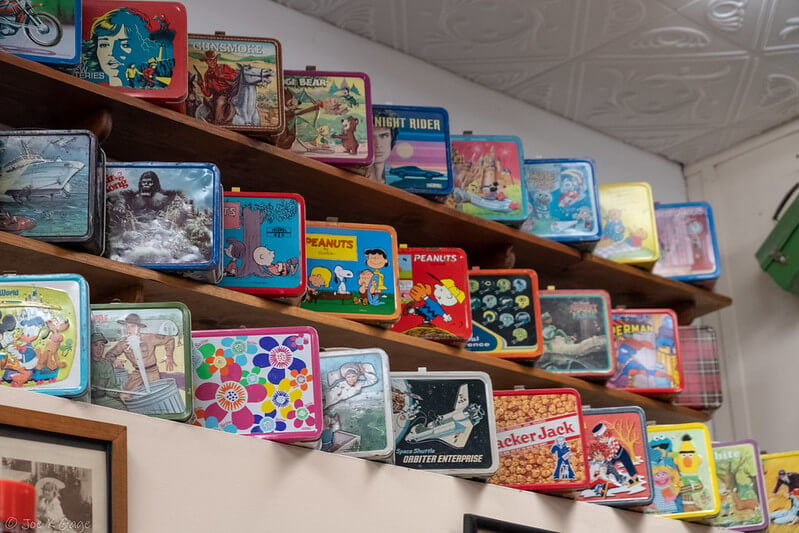
The 1959 Gunsmoke box from Aladdin features James Arness as Matt Dillon, and one version of the lid misspells his title as “Marshall” with a double l. That error turned an ordinary western box into a variant hunt, since correctly spelled and misspelled versions sit side by side in the market.
The Smithsonian’s National Museum of American History holds a Gunsmoke lunch box in its collection. Error versions generally carry a premium of several hundred dollars, provided the lettering on the lid is crisp and the paint has not chipped through to bare steel.
Bullwinkle and Rocky From Universal
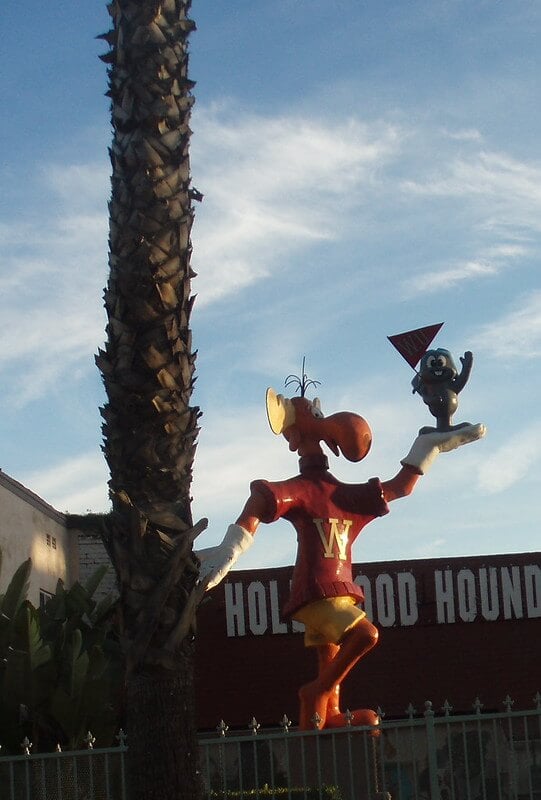
Universal’s 1962 Bullwinkle and Rocky box is one of the harder Jay Ward items to find, featuring the moose and flying squirrel in a cheerful outdoor scene. The box came with a matching bottle, and the pair together is considerably rarer than the box alone.
Its scarcity has made it a regular feature on lists of top-tier lunchboxes. Clean examples go for 1,500 dollars or more, while a copy with dents in the lid or rust bubbling under the paint may struggle to reach half that amount.
Jetsons Dome From Aladdin
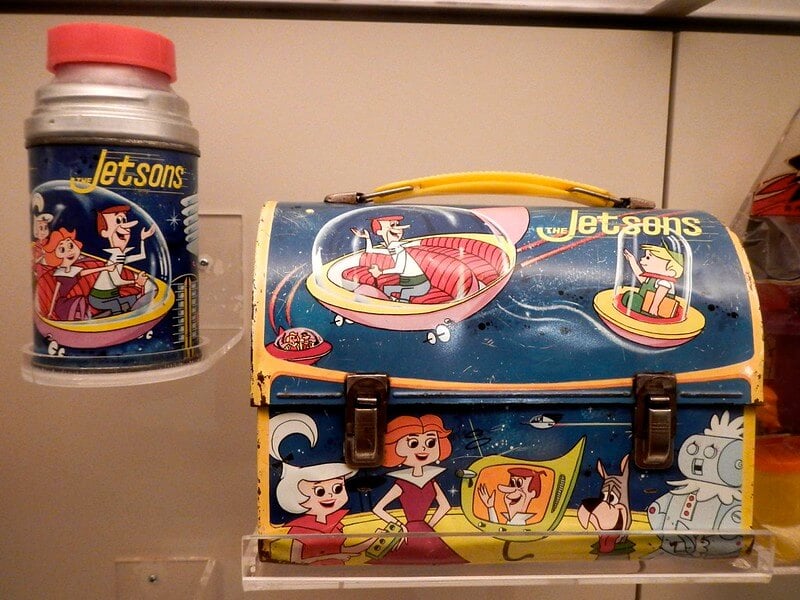
Space-age optimism got its own dome-topped box in 1963, when Aladdin turned The Jetsons into a lunch kit with a rounded silhouette that looked like something George Jetson might carry. The Henry Ford museum in Dearborn, Michigan, includes a 1963 Jetsons lunchbox and bottle in its digital collections.
Dome boxes were more expensive at retail and less common, which explains much of the modern premium. Values typically land between 1,000 and 3,000 dollars, with the curved roof being the first place where scratches and paint wear show up.
Disney School Bus Dome by Aladdin
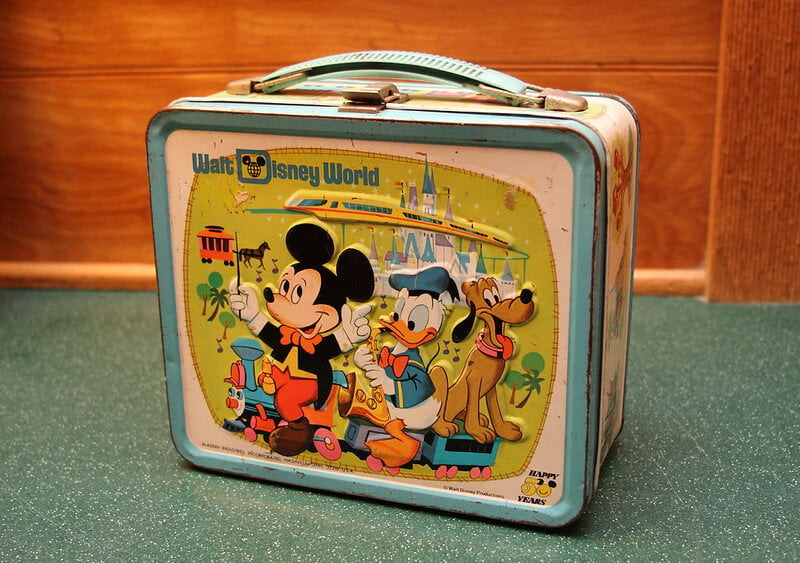
Disney’s School Bus dome from Aladdin debuted in 1961 and stayed in production for years, showing Mickey, Donald, Goofy and others riding a yellow bus. Its long run means plenty survive, which makes it one of the more approachable dome boxes for new collectors.
Later printings differ in small ways, so early examples with original details attract more attention. A complete kit with its bottle reaches about 100 to 300 dollars, and examples with a strong yellow color and no rust inside the base sit at the top of that range.
Munsters by King-Seeley Thermos
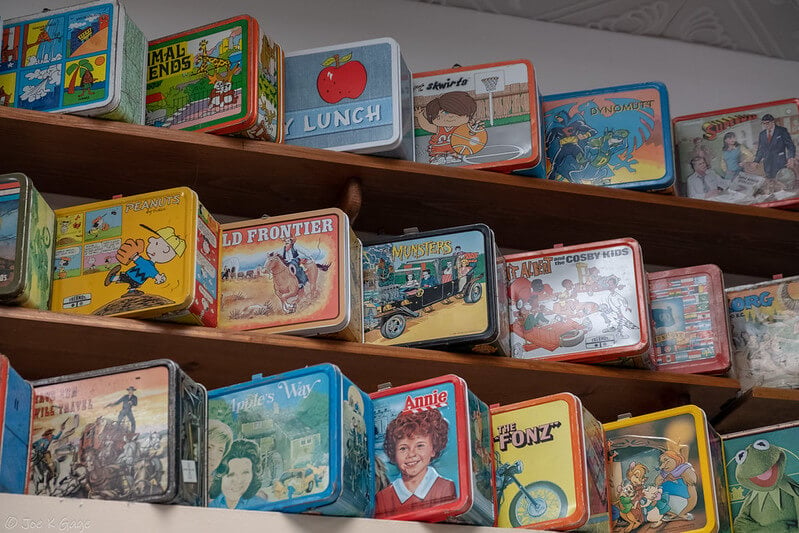
Television’s friendliest monsters landed on a King-Seeley Thermos box in 1965, during the brief window when The Munsters aired on CBS. The show ran only two seasons, which limited how long the box stayed on store shelves and helps explain why so few turn up today.
Herman, Lily, Grandpa and the rest of the household appear in a spooky but goofy scene that matches the program’s gentle tone. Collectors pay roughly 400 to 900 dollars for a nice example, and fading on the dark artwork, which shows sun exposure clearly, lowers prices quickly.
Beatles From Aladdin
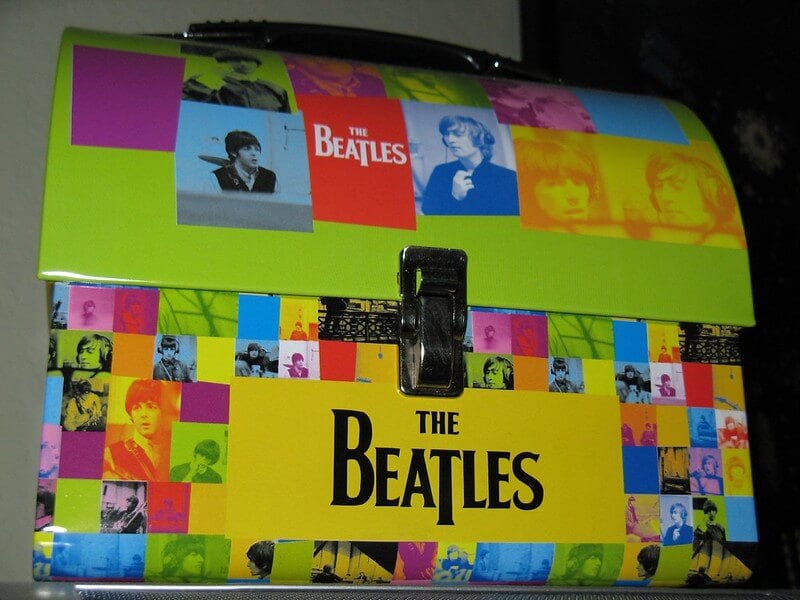
Beatlemania reached the cafeteria in 1965, when Aladdin released a bright blue Beatles box riding the wave that followed the band’s American television debut. The Smithsonian and The Henry Ford both hold examples, which says something about how seriously museums now take this ordinary school object.
The lid shows the four members in portraits, with a matching bottle sold alongside. Clean examples go for about 500 to 1,500 dollars with the bottle, though a box missing its original handle or showing deep scratches across the band’s faces draws much less interest.
Batman and Robin From Aladdin
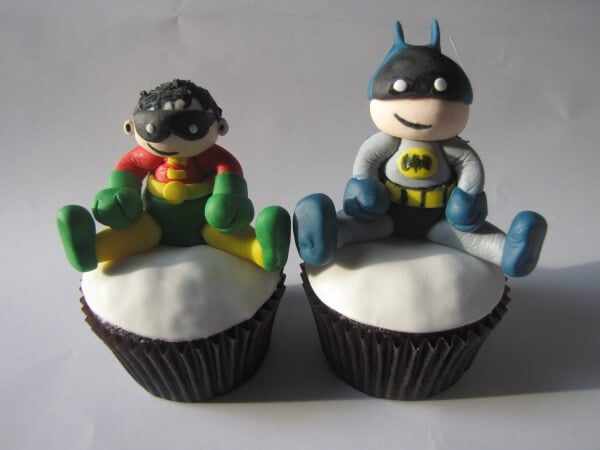
The 1966 Batman television series produced a flood of merchandise, and the Batman and Robin box from Aladdin was one of the most popular pieces of the entire licensing push. The art shows the Dynamic Duo in action, with the Batmobile and costumed Gotham villains filling the sides and back.
Because so many were sold to eager kids, condition rather than rarity drives the value today. Prices typically run 300 to 800 dollars, and a box that still has its original bottle with an undamaged stopper and cup adds meaningfully to the total.
Lost in Space Dome by King-Seeley Thermos
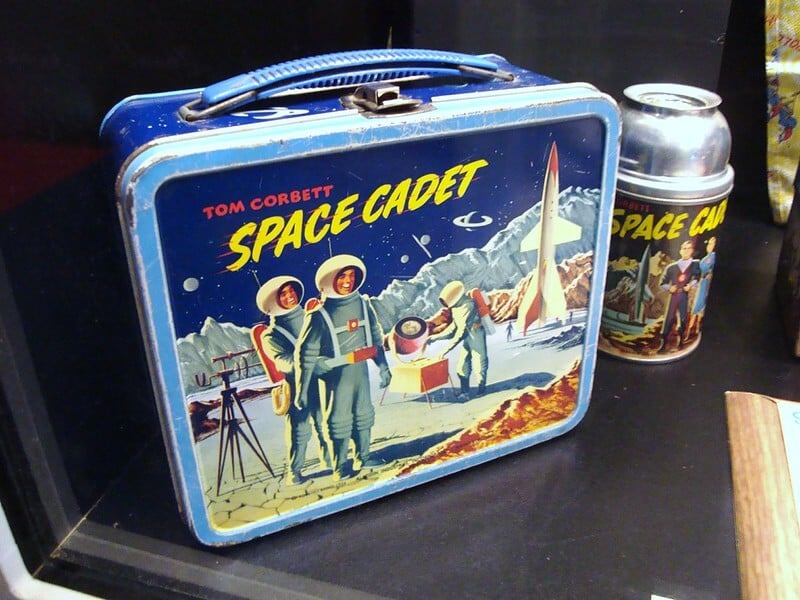
Irwin Allen’s Lost in Space got a dome box from King-Seeley Thermos in 1967, showing the Robinson family, the Jupiter 2 and the Robot in a colorful science-fiction scene. The Smithsonian’s National Museum of American History holds an example in its collection, and the memorabilia auction house Lelands has offered the box in past sales as well.
Dome boxes of the period generally cost more at retail and survive in smaller numbers than flat designs. Collectors pay roughly 800 to 2,000 dollars, and a dome that has kept its shape without crushed corners or bent rims lands at the higher end.
Star Trek Dome From Aladdin
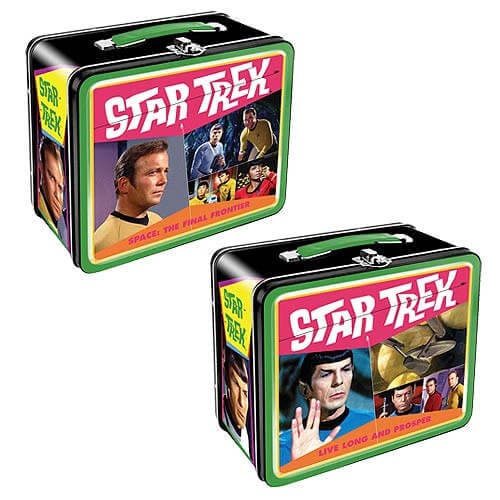
Star Trek fans and lunchbox collectors both chase the 1968 dome from Aladdin, which creates competition from two directions. The art shows the Enterprise and members of the crew, and The Henry Ford holds one in its collection.
The box came out during the original series run on NBC, years before the show became a syndication phenomenon and launched a film franchise. A complete kit with its bottle reaches about 1,000 to 2,500 dollars, with chipped paint along the dome edges and rust at the latches being the most common faults.
Yellow Submarine by King-Seeley Thermos
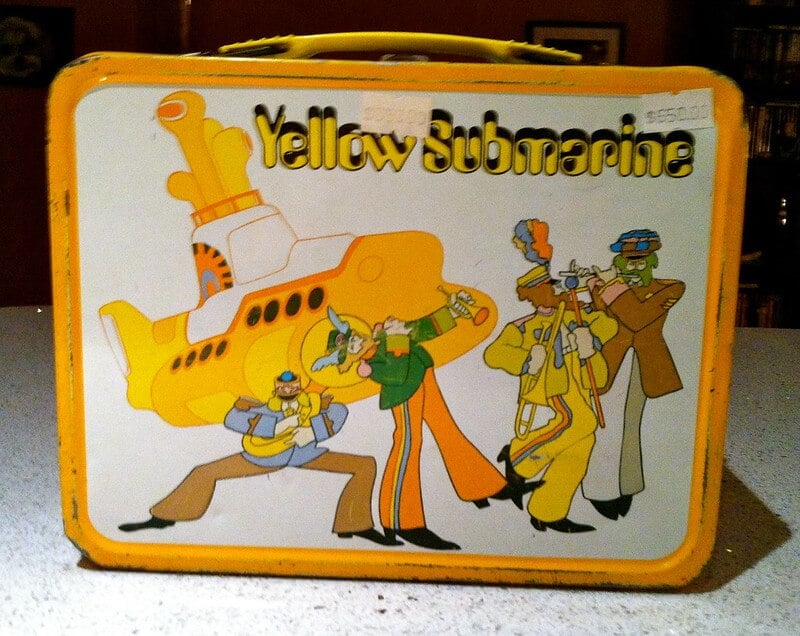
Psychedelia arrived in lunch aisles in 1968, when King-Seeley Thermos released a Yellow Submarine box to accompany the animated Beatles film. The swirling art borrowed directly from the look of the movie, which was shaped by art director Heinz Edelmann, and it made the box unlike anything else on the shelf at the time.
It now appeals to Beatles collectors and pop-art enthusiasts as much as to lunchbox specialists. Clean examples go for 500 to 1,200 dollars, while copies with heavy rubbing on the raised areas of the lid lose much of their appeal.
Brady Bunch by King-Seeley Thermos
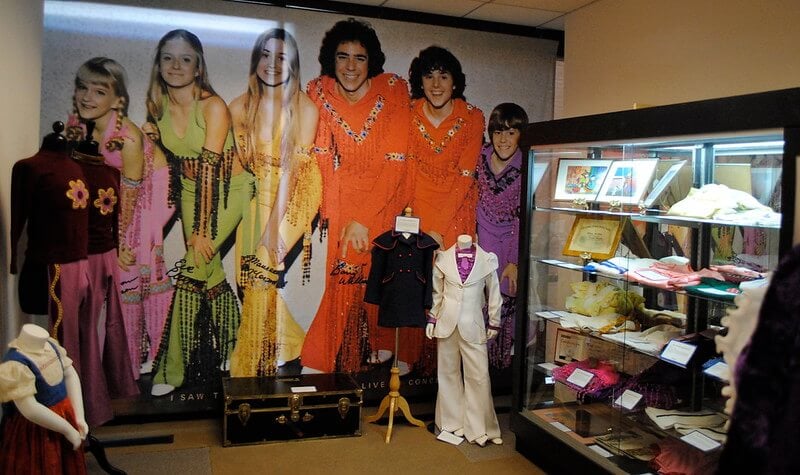
Sherwood Schwartz’s blended family arrived on a King-Seeley Thermos box in 1970, the year after The Brady Bunch premiered on ABC. The lid shows the cast in scenes that echo the show’s sunny suburban tone, with Alice the housekeeper included.
Because the sitcom grew more popular in reruns than in its first broadcast, the box has a larger audience now than it did when it sat on store shelves. Prices typically run 300 to 700 dollars, and an example with clean interior steel and no dents is worth noticeably more.
Underdog From Okay Industries
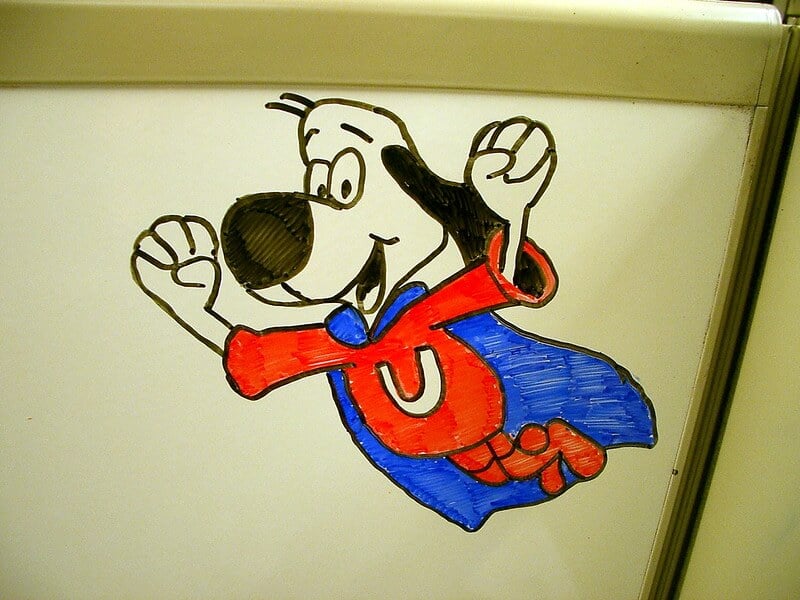
Okay Industries, a small manufacturer, made an Underdog lunchbox in the mid-1970s that has become one of the more sought-after boxes of that decade. The company produced only a handful of character boxes, and its distribution was limited compared with the giants of the trade.
Few Underdog examples are known to survive in decent shape, and the rarity has been highlighted in newspaper collecting columns over the years. Collectors pay several thousand dollars for a solid example, although heavy wear, surface rust and dents are common on the survivors.
Evel Knievel From Aladdin
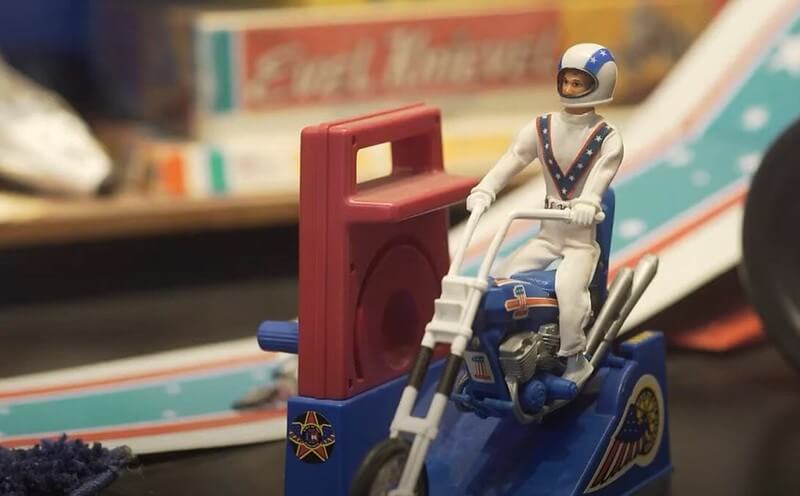
Daredevil Evel Knievel got his own box in 1974, the same year he attempted to jump Snake River Canyon in Idaho aboard a rocket-powered Skycycle. Aladdin printed the lid with Knievel in his white jumpsuit, mid-stunt, surrounded by the patriotic stars and stripes he favored on his gear.
Plenty of these boxes were sold during the height of his fame, which means pristine condition is what separates the good ones. Clean examples go for 150 to 400 dollars, with bright red and blue paint and an intact bottle making the biggest difference.
Star Wars by King-Seeley Thermos
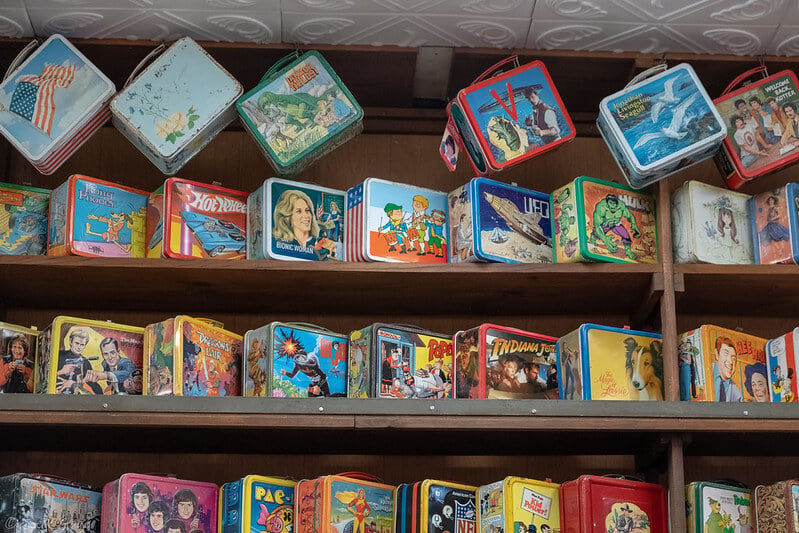
George Lucas’s space opera reached lunch tables in 1977, when King-Seeley Thermos released a Star Wars box shortly after the film became a box-office phenomenon. The art shows Luke Skywalker, Darth Vader, the droids and other characters in scenes lifted from the movie.
Because it was produced in large numbers, it is not rare, but steady demand from the enormous Star Wars collecting community keeps prices firm. A complete kit with its bottle reaches about 150 to 400 dollars, and sharp corners and unscratched lid art push it toward the higher figure.
KISS From Aladdin
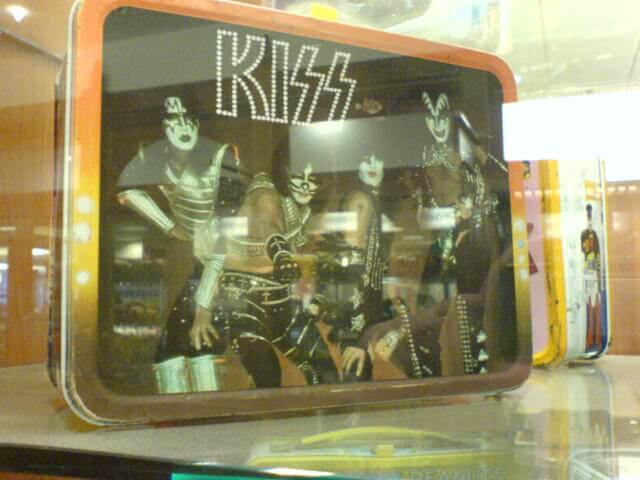
Rock arrived in full face paint in 1977, when Aladdin released a KISS box showing all four members in their famous makeup and stage costumes. The band was at the height of its fame, selling out arenas and moving enormous amounts of merchandise to young fans.
The box is now a crossover piece, sought by music memorabilia collectors as well as lunchbox specialists, and the matching bottle is part of the appeal. Collectors pay roughly 200 to 600 dollars, with fading of the dark background and scratches across the band’s faces being the main issues.
Rambo and the Closing of the Steel Era
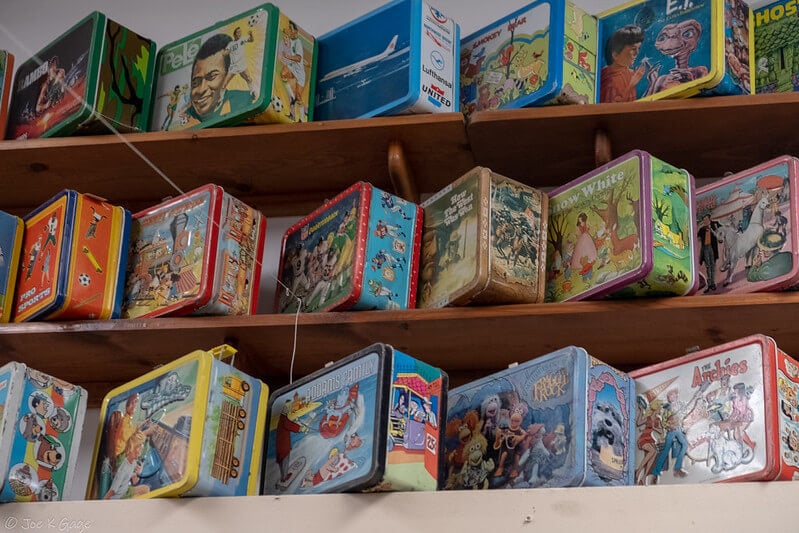
In 1985 King-Seeley Thermos released a Rambo box, and it is often described as the last metal character lunchbox produced in America. The story that circulates among collectors holds that parents in Florida pushed for restrictions, worried the hard steel boxes could be used as weapons.
Plastic boxes had already been gaining ground for years. Prices are modest by lunchbox standards, about 75 to 200 dollars, but an unused example with tags or store stickers still attached adds a premium for those who want the final chapter.
Lithograph Art That Rode the School Bus
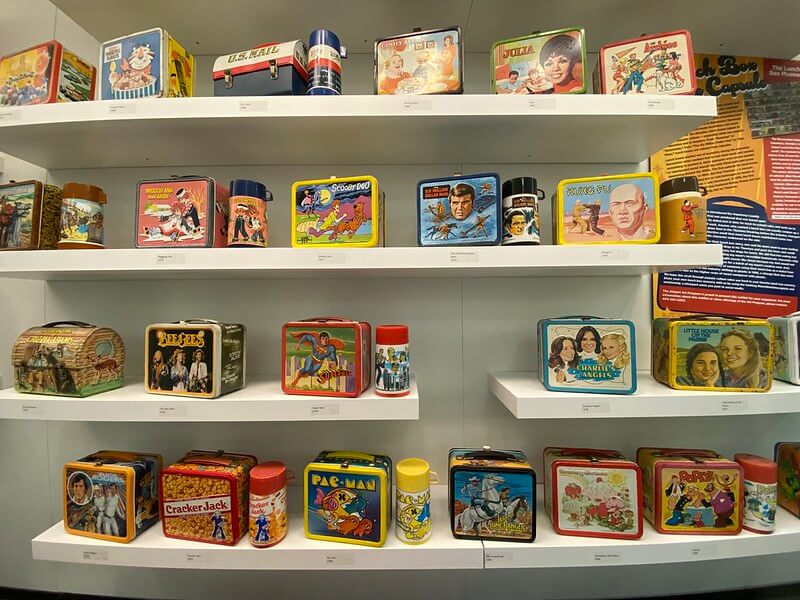
Every box on this list was built to be carried, dropped, kicked under a desk and replaced the following September. That is precisely why the clean ones are scarce.
Steel that survived three decades of school buses and closets rarely kept its paint, and bottles with their glass liners intact are even harder to find. The market for these boxes is really a market for memory, sorted by year and maker.
Collectors are paying for the version of childhood they remember, rendered in lithographed color on a lid. Condition, completeness and the matching bottle decide the number, but nostalgia decides whether anyone wants to bid at all.
More from Go2Tutors!

- The Romanov Crown Jewels and Their Tragic Fate
- 13 Historical Mysteries That Science Still Can’t Solve
- Famous Hoaxes That Fooled the World for Years
- 15 Child Stars with Tragic Adult Lives
- 16 Famous Jewelry Pieces in History
Like Go2Tutors’s content? Follow us on MSN.