30 Old Arcade Machines Collectors Track Down
A coin-op cabinet is a strange thing to want. It weighs as much as a refrigerator, it needs a monitor technology that nobody has manufactured in years, and its artwork was printed on plastic laminate that fades the moment sunlight touches it.
None of that stops people from spending years hunting one specific machine from one specific year.
The ones below are the cabinets that keep turning up on wanted lists, forum threads, and auction results. For every one of them, the price depends heavily on condition, on whether the artwork, monitor, and circuit boards are original, and on whether the thing actually powers up and plays.
Computer Space, the Fiberglass Original From 1971
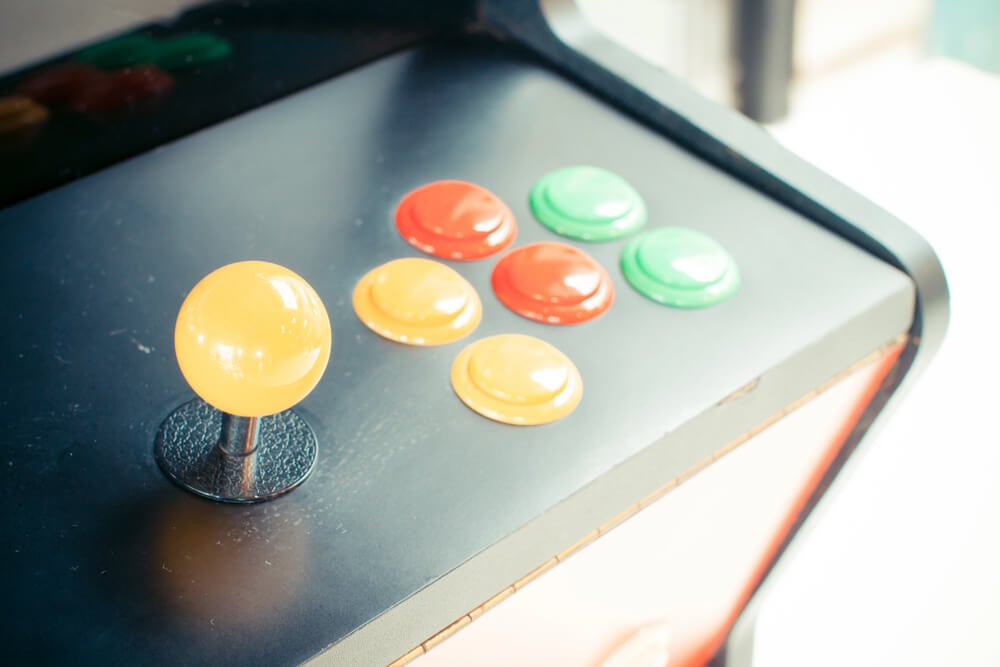
Nutting Associates released Computer Space in 1971, and it is generally regarded as the first commercially sold coin-operated video game. Nolan Bushnell and Ted Dabney built it before founding Atari, and its sculpted fiberglass body came in colors including blue, red, yellow, and green metal flake.
The game was difficult to grasp in a tavern setting, and production is usually put at around 1,500 units, which makes a surviving example genuinely scarce. Working machines with intact fiberglass and an original monitor have sold for well into five figures, while cracked shells, missing control panels, or dead boards pull the figure down sharply.
Originality matters more here than on almost any other cabinet.
Pong, the Atari Cabinet That Launched an Industry
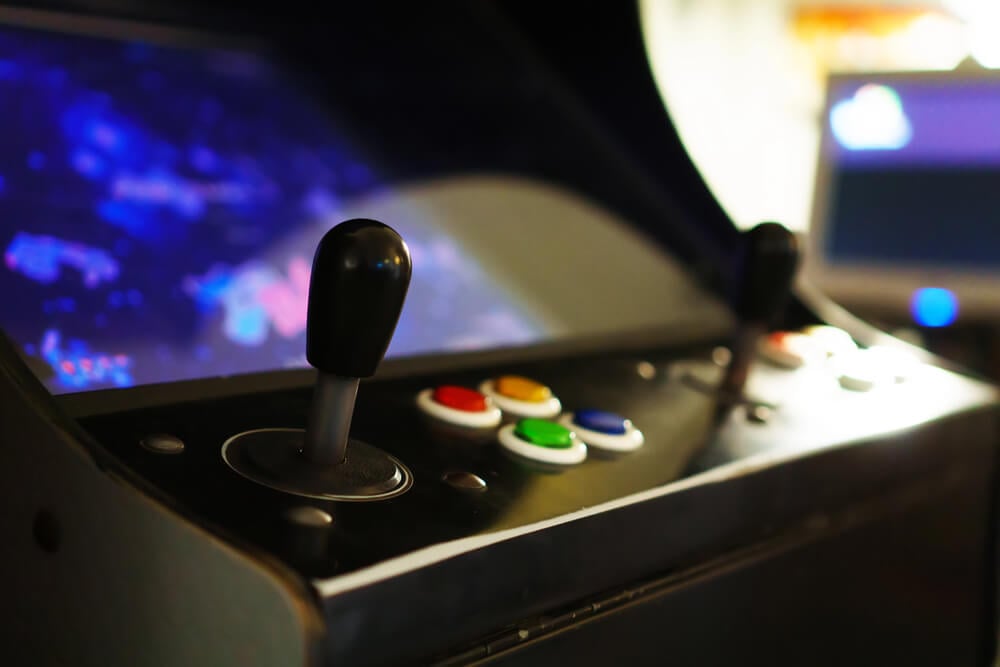
Atari’s Pong arrived in 1972 in a plain wood-grain upright with a simple yellow marquee and two rotary paddles. The first test unit went into Andy Capp’s Tavern in Sunnyvale, California, where the coin box reportedly jammed because it was too full. Atari built thousands of Pong cabinets, and many rivals cloned it, so collectors pay close attention to whether a given machine is a genuine Atari unit with the correct board.
Original Atari examples in working order have sold for several thousand dollars and sometimes more, while clones and heavily modified cabinets trade for far less. Condition of the cabinet veneer and the original control panel drives much of the gap.
Space Invaders, the 1978 Machine That Caused Coin Shortages
Taito released Space Invaders in Japan in 1978, with Midway handling the American license, and the game became such a phenomenon that stories circulated about localized shortages of 100-yen coins. The game was sold in upright and cocktail-table form, and the cocktail version with its two-player flip-screen play is a favorite for home game rooms.
Early units used a black-and-white monitor with colored cellophane strips over the screen to fake color, and collectors want those strips intact. Clean, working uprights have sold in the low thousands, with cocktail tables and the rarer Taito-branded examples ranging higher depending on originality.
Asteroids, Atari’s Vector Best Seller From 1979

Asteroids was released by Atari in 1979 and became the company’s best-selling coin-op, with production commonly cited at more than 70,000 cabinets. It used a vector monitor that drew crisp white lines instead of pixels, and that same monitor is the machine’s weak point today, since the high-voltage boards and deflection circuits fail with age.
The cabinet’s side art of a lone ship among tumbling rocks is iconic, and sun-faded or scratched panels are common. Working examples with a healthy monitor have sold for a few thousand dollars, while non-working units with a dead vector display go for much less.
A documented, unrestored original with bright artwork commands the premium.
Pac-Man, the Yellow Cabinet Everyone Recognizes
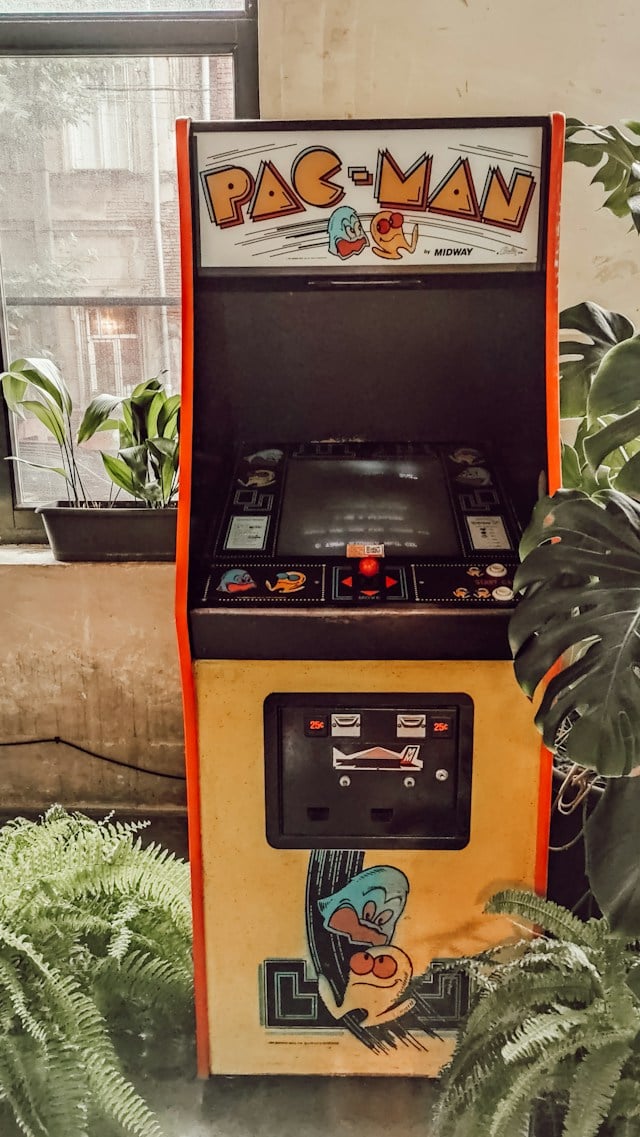
Namco’s Pac-Man reached America through Midway in 1980, and its bright yellow cabinet became the single most recognizable arcade machine ever built. Hundreds of thousands were produced worldwide, so finding one is not hard, but finding an untouched original is a different matter.
Many were converted to other games in the mid ’80s, and many more were cheaply restored with reproduction artwork and replacement control panels. Collectors check for the Midway serial plate, original side art, and the correct amber-bezel monitor.
Clean originals have sold in the low to mid thousands, with cocktail tables and mini cabinets forming their own markets, and reproduction-heavy units trading lower.
Ms. Pac-Man, the Conversion Kit That Became a Classic
Ms. Pac-Man was released by Midway in 1982 and began life as an unauthorized enhancement kit called Crazy Otto, built by General Computer Corporation before Midway bought the rights. Production is commonly cited at well over 100,000 units, which makes it one of the most-produced American arcade games of all time.
Its pink-and-blue side art and distinctive cabinet shape are so familiar that reproduction cabinets and bootleg boards are everywhere, so verifying the original Midway board set matters. Working originals with good artwork have sold for a few thousand dollars, with later Namco-authorized re-releases and multi-game boards valued differently.
Cocktail versions remain a steady favorite for home use.
Donkey Kong, Nintendo’s Radar Scope Rescue From 1981
Donkey Kong was released by Nintendo in 1981, and many of the first American units were built inside unsold Radar Scope cabinets that Nintendo of America had been unable to move. Those early red Radar Scope conversions are now especially sought after, since they tie the machine to Nintendo’s near-failure in the US market.
The blue dedicated cabinet with its hand-painted-looking side art is the more common form. The game introduced the characters later known as Mario and Pauline, and its original Nintendo board set with the correct sound board is what buyers look for.
Working examples have sold in the low to mid thousands depending on artwork, and the Radar Scope conversions can go higher.
Galaga, the Midway Cabinet That Never Left the Floor
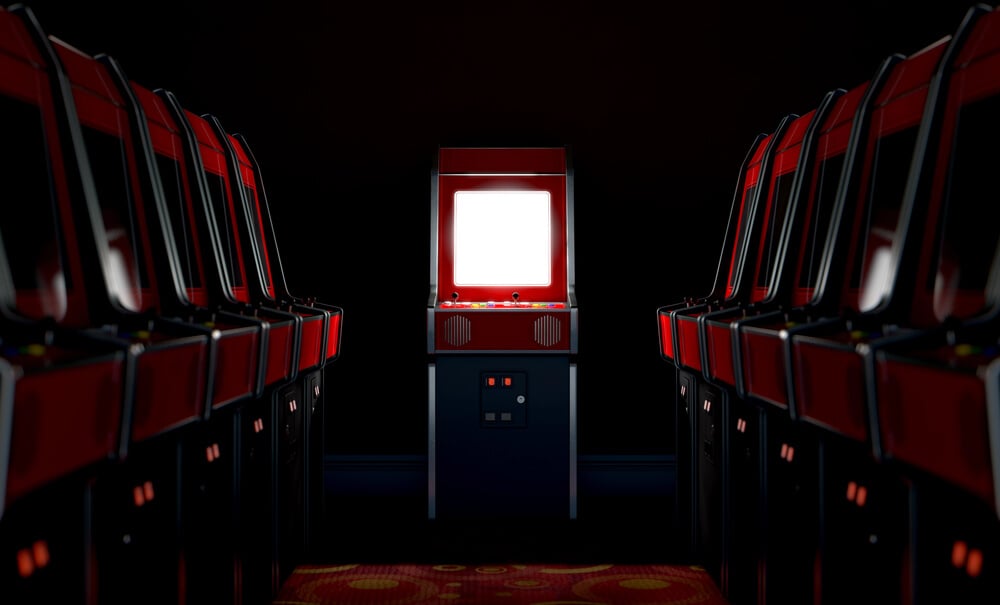
Galaga was released by Namco in 1981 and sold in the US by Midway, and it earned a reputation as one of the few early ’80s games that operators never bothered to remove, because it kept earning for decades. The dual-fighter mechanic, where a captured ship is rescued to double the firepower, kept players coming back.
Dedicated Midway uprights are plentiful, but original artwork and the correct Namco board, rather than a bootleg, separate the good ones. Clean working units have sold in the low thousands, with cabaret and cocktail variants sitting in their own ranges.
Faded blue side art and swapped monitors are the usual issues that pull prices down.
Defender, the Williams Machine Operators Nearly Rejected
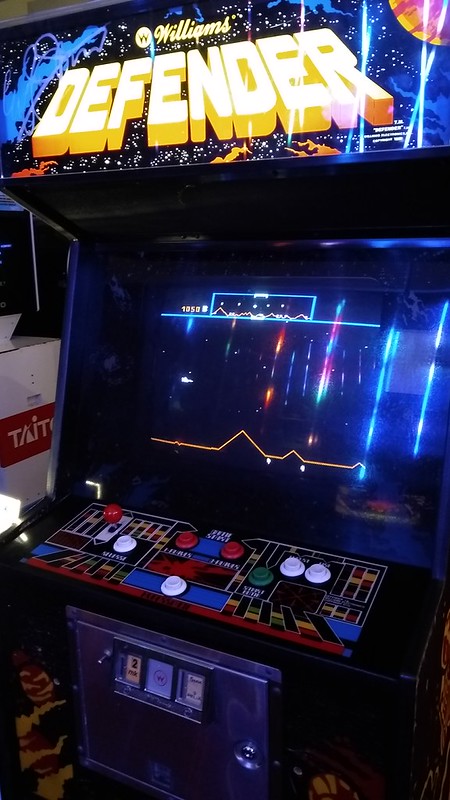
Williams released Defender in 1981 after it reportedly tested poorly at the trade show because of its intimidating five-button control layout. It went on to sell roughly 55,000 units and became one of the top-earning arcade games of its time.
The cabinet’s red-and-black styling and the distinctive sound of the smart bomb make it a centerpiece for Williams collectors. The original boards are known for failing RAM and the control panel overlays wear through from heavy play.
Working examples with original overlays and side art have sold for a few thousand dollars, while units with reproduction panels or repaired cabinets trade lower.
Tempest, Atari’s Color Vector Spinner Game
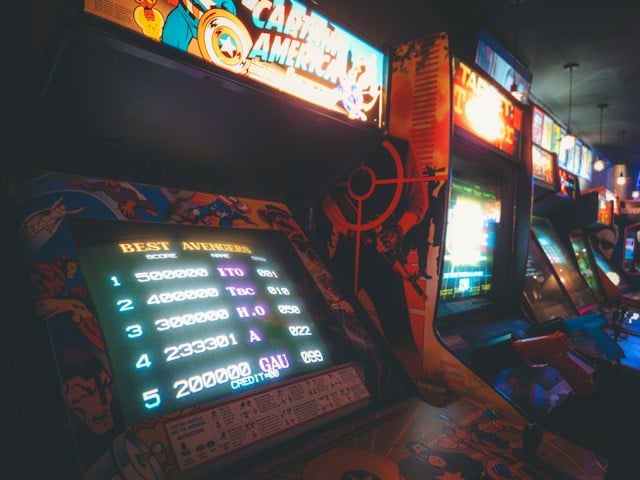
Atari released Tempest in 1981 with a color vector monitor and a rotary spinner control, both of which make the machine expensive to keep running today. The Wells-Gardner color vector display is notorious for deflection and high-voltage failures, and replacement tubes are no longer produced.
Dave Theurer designed the game based on a nightmare about monsters climbing out of a pit, and its tube-shaped playfields looked like nothing else on the floor. Working units with a healthy original monitor have sold for several thousand dollars, with the rarer cabaret cabinet drawing its own interest.
A dead monitor can cut the value by more than half.
Centipede, the Mushroom Field With a Rolling Control Sphere
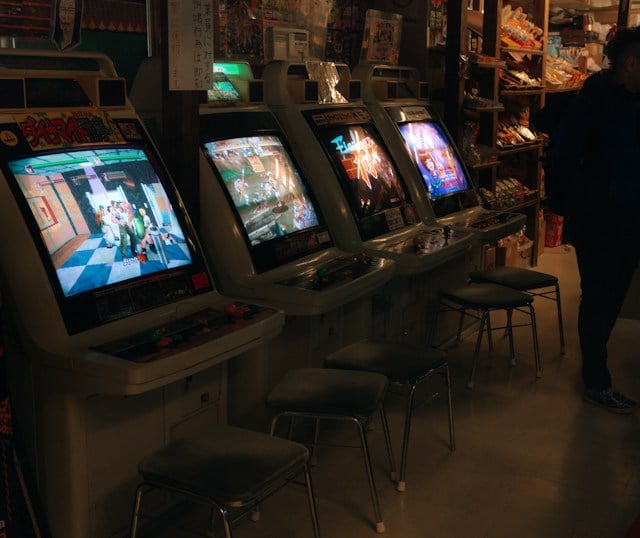
Atari released Centipede in 1981, co-designed by Dona Bailey and Ed Logg, and it became one of the few early arcade games with a large female player base. Its control is a rolling sphere set into the panel, which gives it a feel that no joystick replicates and is also a frequent casualty of heavy use.
The cabinet’s side art with its colorful insect motifs tends to fade badly. Original uprights with the correct rolling controller and unfaded art have sold in the low to mid thousands, while the cabaret and cocktail forms are priced separately.
Replacement controllers and reproduction art lower the figure for purists.
Missile Command, the Cold War Cabinet From 1980
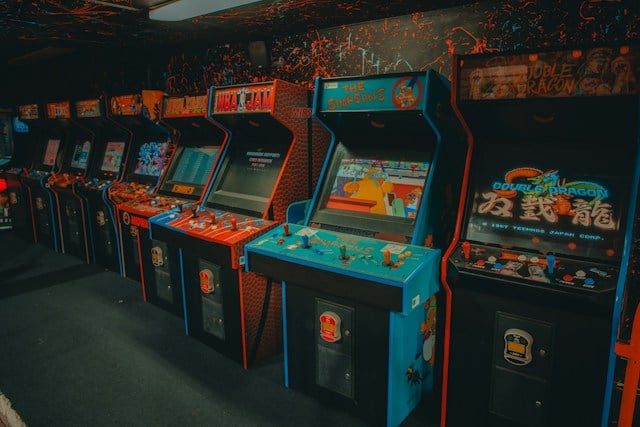
Atari released Missile Command in 1980, and designer Dave Theurer later said the game’s nuclear-war premise gave him recurring nightmares. The cabinet uses a rolling sphere controller and three fire buttons, one for each missile battery, and its side art depicts cities under attack.
Many cabinets were converted to other titles during the mid-’80s industry crash, so a surviving dedicated unit with original art and the correct Atari board is what buyers seek. Working examples have sold in the low thousands, with the cocktail version and the rarer cabaret cabinet attracting their own followings.
Worn control panel overlays are the usual flaw.
Tron, the Backlit Midway Machine That Glows
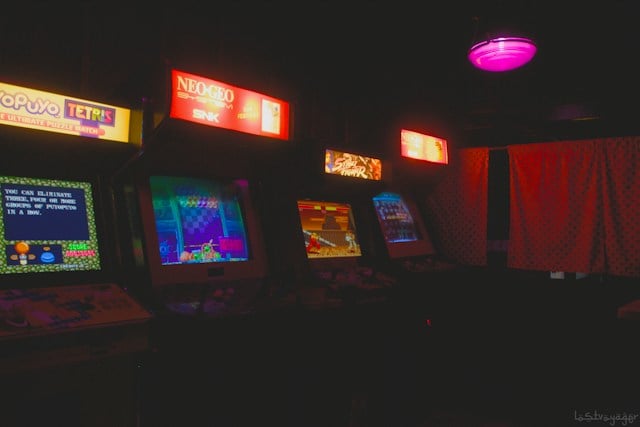
Midway released Tron in 1982 alongside the Disney film, and the cabinet is unusual for its blacklight-lit control panel and side art that glows under ultraviolet tubes. The game bundles four sub-games, including the light cycle chase, and the control panel combines a glowing joystick with a rotary dial.
Because the cabinet shape is tall and the glowing effect depends on the original fluorescent fixtures and translucent artwork, many surviving units have lost their lighting. Working examples with functioning blacklights and original art have sold for several thousand dollars, and the game reportedly out-earned the film at American theaters in 1982.
Replaced panels and dead lights lower the value noticeably.
Discs of Tron, the Environmental Sit-In Cabinet
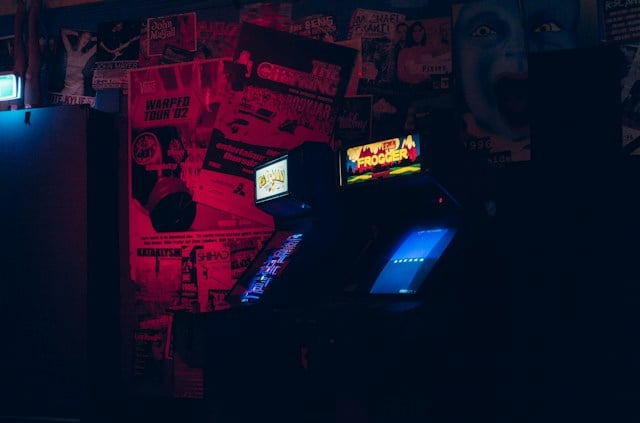
Midway followed up in 1983 with Discs of Tron, and the environmental version placed the player inside an enclosed booth with speakers near the head and a glowing interior. The upright version exists too, but the environmental cabinet is the one collectors track down, since far fewer were built and the sheer size made it hard to keep in a home.
A working environmental unit rescued from a neighbor’s discarded pile made news in 2023. Complete, working environmental cabinets have sold for five figures in strong condition, while uprights go for a fraction of that.
Interior lighting, speakers, and the mirrored backdrop all need to be present for the top of the range.
Q*bert, the Gottlieb Cabinet With a Knocker Inside
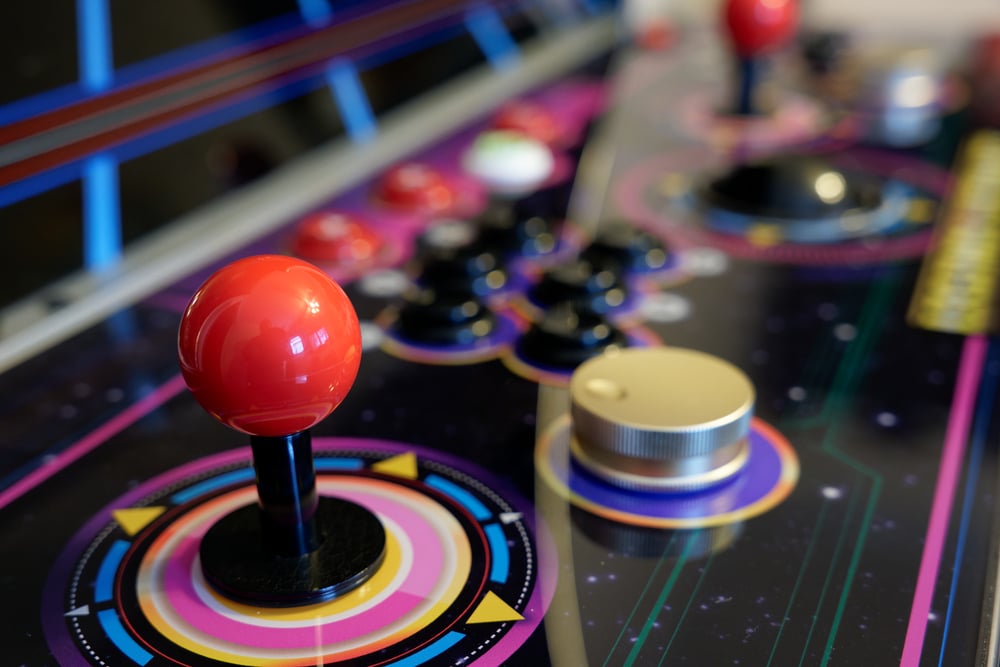
Gottlieb released Q*bert in 1982, and the cabinet includes a mechanical knocker that thumps inside the cabinet whenever the orange character falls off the pyramid, a holdover from the company’s flipper-table background. The diagonal four-way joystick and the isometric cube pyramid were unusual for the time, and the character’s speech-bubble cursing became part of its charm.
Many cabinets have had the knocker disconnected or removed, so a working one is a small bonus for buyers. Working originals with intact side art have sold in the low to mid thousands, and the correct Gottlieb board set with its speech chip is a key check for authenticity.
Joust, the Flying Ostrich Game From Williams
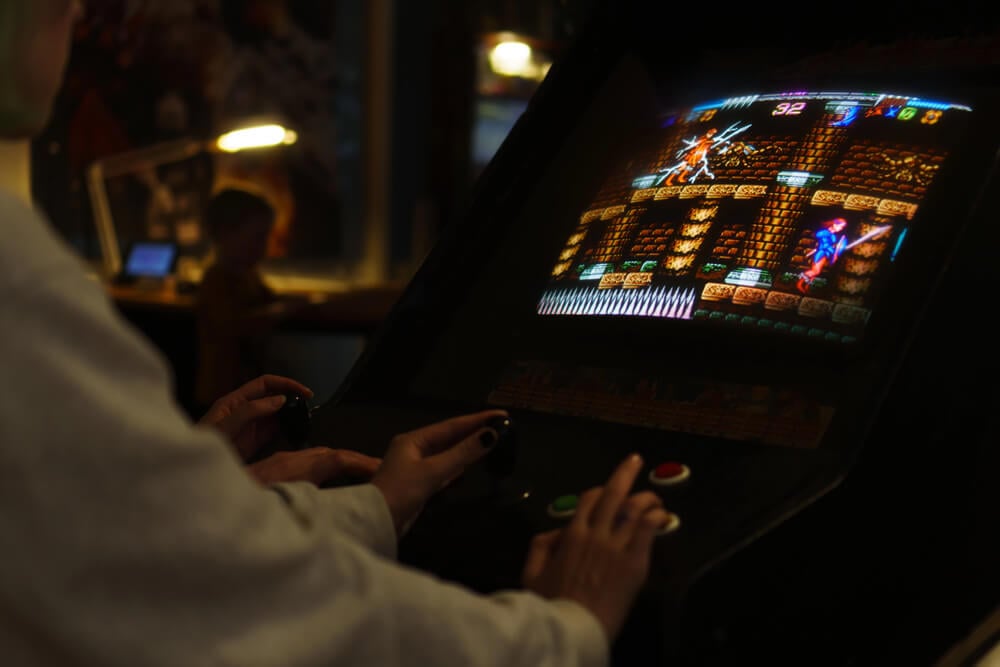
Williams released Joust in 1982, with John Newcomer designing a game where players ride flying ostriches and defeat enemy knights by landing on them from above. The two-player cooperative mode was a novelty, and the cabinet’s yellow-and-brown side art is relatively durable compared with other Williams games.
The original boards share the same failure-prone RAM as Defender, so a working unit with documented repairs is worth more than one with mystery boards. Clean examples have sold in the low thousands, with the cocktail version and the later Joust 2 upright valued separately.
Original control panel overlays and buttons are what separate collector-grade units from the rest.
Robotron: 2084, the Twin-Joystick Williams Machine
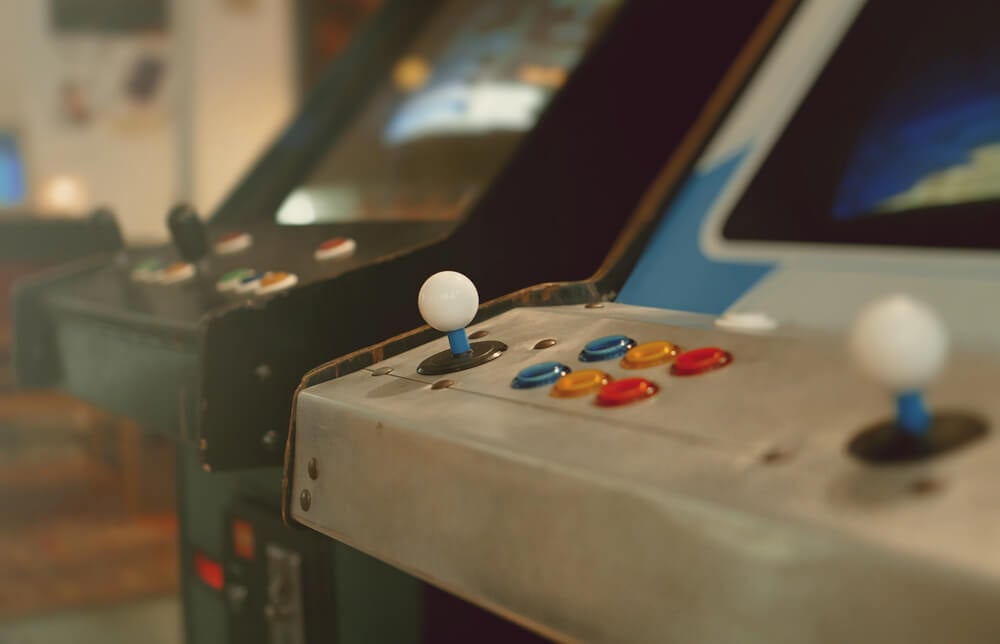
Williams released Robotron: 2084 in 1982, designed by Eugene Jarvis and Larry DeMar, and its two eight-way joysticks, one for movement and one for firing, created a control scheme still copied today. The cabinet’s deep blue side art and red control panel are distinctive, and the original Wico leaf-switch joysticks are prized because reproduction sticks feel different under rapid play.
The board set is the same architecture as Defender and Joust and suffers the same RAM failures. Working examples with original joysticks and art have sold for a few thousand dollars, and the rare cocktail version commands more attention.
Heavy wear on the panel is almost universal.
Sinistar, the Williams Game That Taunts the Player
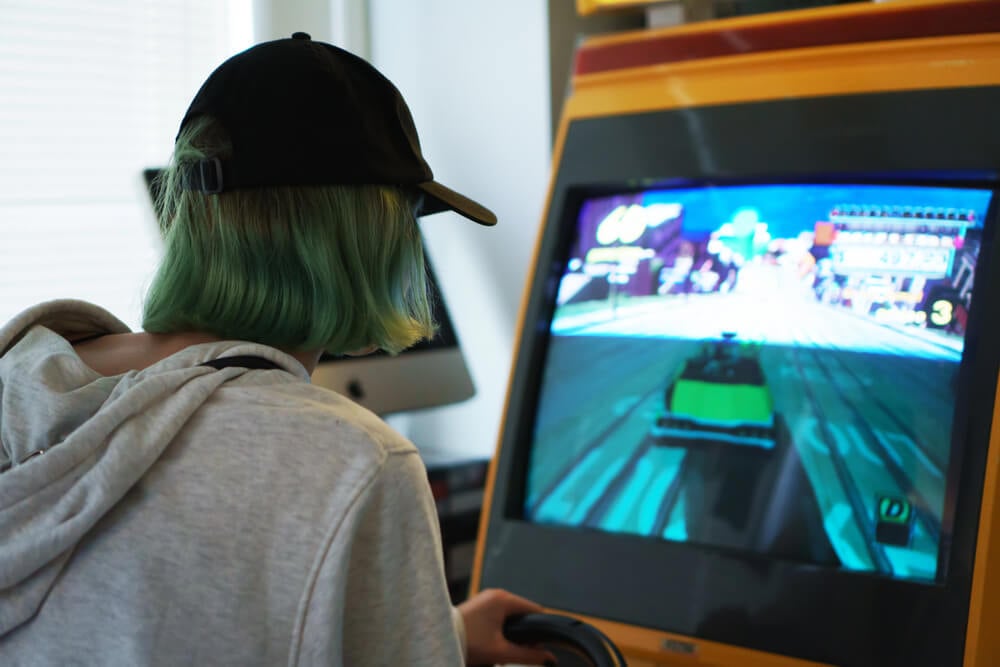
Williams released Sinistar in 1983 with a 49-way optical joystick and digitized speech, including a hungry growl from the enemy that still unsettles players when the giant skull-faced enemy appears. The 49-way joystick is complex, hard to repair, and a key reason intact machines are hard to find.
The upright cabinet with its menacing side art is the common form, while the cockpit version, which placed the player in a semi-enclosed cabinet with stereo sound, is considerably rarer. Working uprights have sold in the low to mid thousands, and the cockpit variant can go higher.
Speech board failures and swapped joysticks are the most common reasons a unit falls short.
Quantum, the Atari Vector Game Built by General Computer
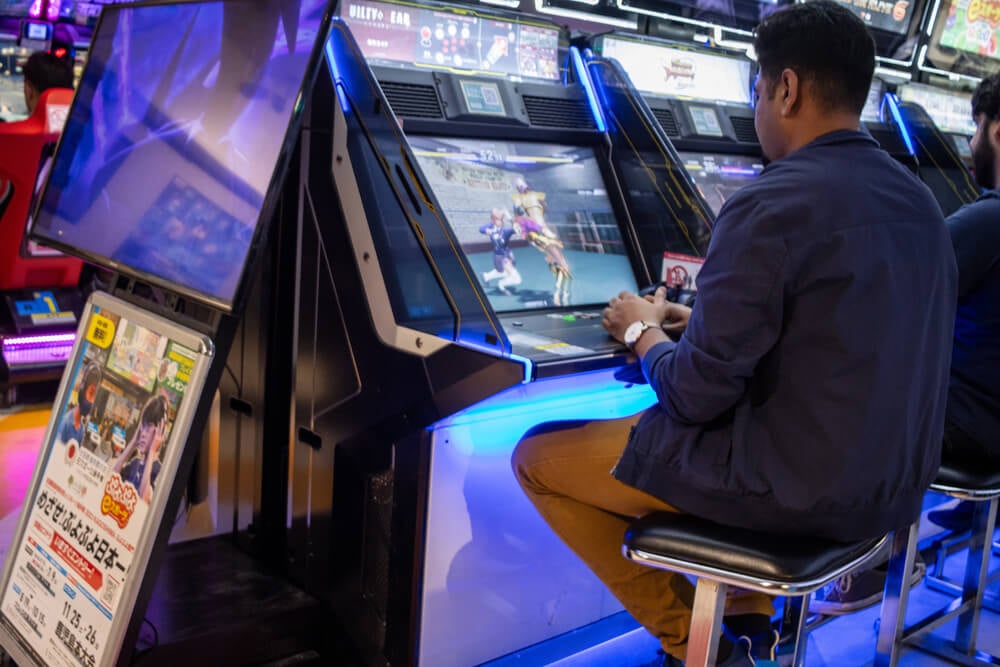
Atari released Quantum in 1982, developed by General Computer Corporation, and it uses a rolling sphere controller to draw loops around particles on a color vector monitor. It was not a commercial success, and production is commonly cited at only around 500 units, which places it among the rarest Atari vector cabinets.
The cabinet shares the color vector hardware that makes Tempest costly to maintain, and finding a replacement monitor is a serious project. The game is also notable for having been programmed by Betty Ryan, one of the few women credited as a lead arcade programmer in that era.
Working examples have sold for several thousand dollars and up, with non-working units still drawing interest.
Major Havoc, the Atari Vector Platformer Few Operators Bought

Atari released Major Havoc in 1983, designed by Owen Rubin, and it combines space combat, maze exploration, and platforming on a color vector monitor with a roller controller. It arrived during the industry’s downturn and sold poorly, and a large share of the surviving units were sold as conversion kits for Tempest cabinets rather than as dedicated machines.
That makes a dedicated Major Havoc cabinet with original side art and the correct control panel one of the harder Atari finds. Collectors have gone so far as to build cabinets from scratch when originals could not be found.
Dedicated working units have sold for several thousand dollars, with conversions valued lower.
I, Robot, Atari’s First Filled-Polygon 3D Game

Atari released I, Robot in 1984, designed by Dave Theurer, and it is widely credited as the first commercial arcade game to render filled 3D polygon graphics. It also included a doodle mode where players could draw shapes with the controller instead of playing.
The game confused players and operators alike, and production is commonly cited at somewhere between 750 and 1,000 units, many of which were later scrapped. The cabinet’s unusual shape and the specialized hardware make repairs daunting.
Working examples have sold for five figures in documented cases, and even non-working units attract offers because of the game’s place in graphics history.
Dragon’s Lair, the Laserdisc Cabinet From 1983
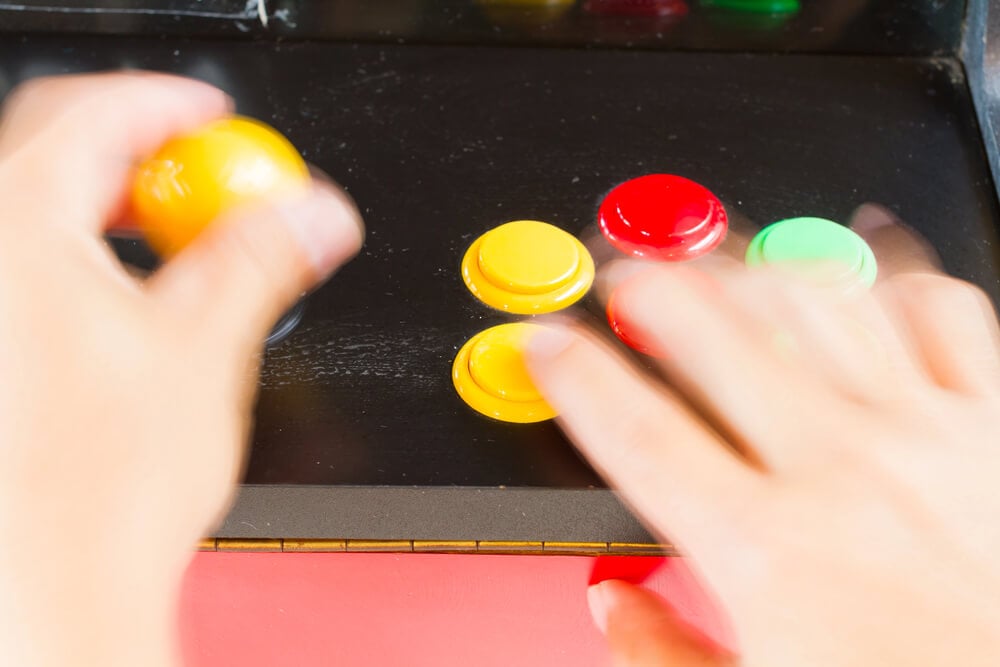
Cinematronics released Dragon’s Lair in 1983 with animation by Don Bluth’s studio, and it was the first widely distributed arcade game to use a laserdisc player for its visuals. The game charged 50 cents at a time when a quarter was standard, and it was reportedly so popular that operators placed monitors above the cabinet for spectators.
The laserdisc players inside, built by Pioneer, were never designed for continuous use, and failures were common even when the game was new. Working cabinets with a functioning original player and the correct disc have sold for several thousand dollars, with many owners substituting modern digital playback boards, which purists discount.
Star Wars Cockpit, the Sit-Down Vector Experience

Atari released Star Wars in 1983 in both upright and cockpit form, and the cockpit cabinet, which enclosed the player with a yoke controller and sampled dialogue from the film, is the version collectors chase. The game uses a color vector monitor to render the Death Star trench run, and the cockpit’s wraparound graphics and sound make it one of the most immersive cabinets of its era.
The cockpit version made up a minority of total production, and its size means many were broken up or converted. Complete, working cockpits with original art have sold for five figures, while uprights trade for considerably less.
The flight yoke’s optical encoders are a frequent repair item.
Marble Madness, the Atari System 1 Game With Two Rolling Controllers
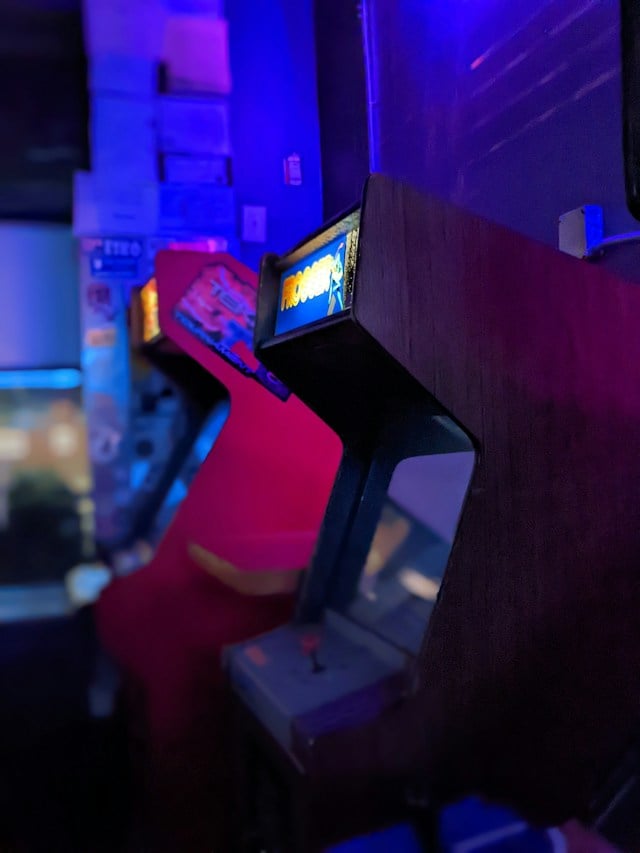
Atari released Marble Madness in 1984, designed by Mark Cerny, and it was the first game on Atari’s System 1 hardware. The cabinet has two rolling sphere controllers for simultaneous two-player racing through isometric courses, and the game is short enough that skilled players can finish all six levels in a few minutes.
The controllers take enormous abuse, and the game’s FM sound chip was an early arcade use of that technology. Dedicated cabinets with original art and both controllers working have sold in the low to mid thousands, and because the System 1 board was designed for conversion, buyers verify that the cabinet was not converted from or to another title.
Punch-Out!!, Nintendo’s Twin-Monitor Boxing Cabinet
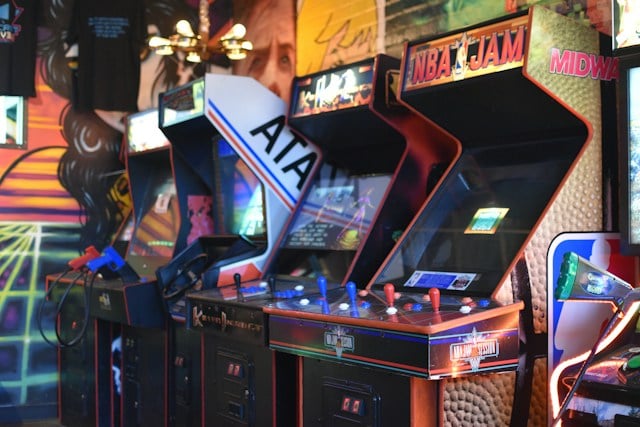
Nintendo released Punch-Out!! in 1984, and the cabinet uses two monitors stacked vertically, with the lower screen showing the fight and the upper screen showing fighter stats and the crowd. The player’s character is drawn as a green wireframe so the opponent can be seen through him.
The dual-monitor setup means twice the display maintenance, and the specialized cabinet shape rules out easy conversion from other games. The arcade version was later followed by Super Punch-Out!! on the same hardware.
Working units with both original monitors and clean side art have sold for several thousand dollars, and matched-set Super Punch-Out!! cabinets draw similar interest.
Space Harrier Deluxe, Sega’s Motion Sit-Down From 1985
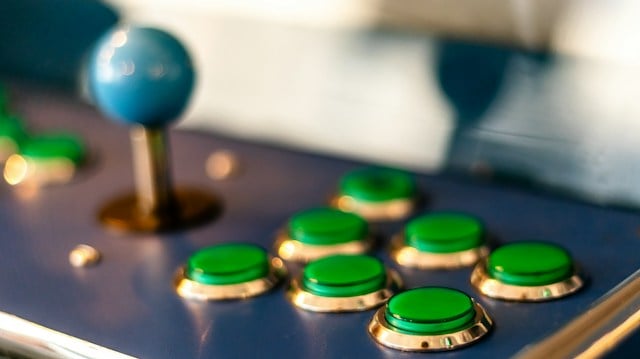
Sega released Space Harrier in 1985, and the deluxe version placed the player in a motorized seat that tilts in response to the flight stick. Yu Suzuki’s design pushed sprite-scaling hardware to create a pseudo-3D sense of speed over a checkerboard landscape, and the deluxe cabinet is the first of Sega’s motion machines that collectors generally try to own.
The moving seat mechanism relies on motors, belts, and wiring that need regular attention, and non-working motion is a common condition. Complete, working deluxe units have sold for five figures in strong condition, while the non-motion upright and the later sit-down versions without motion are priced lower.
Out Run Deluxe, the Moving Ferrari Cabinet
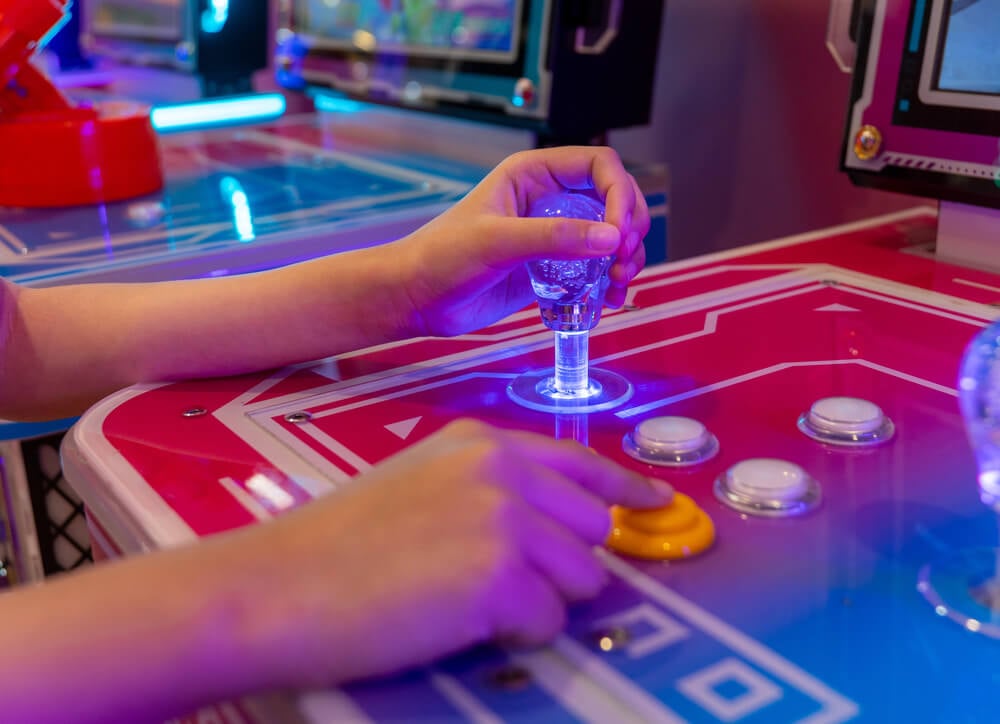
Sega released Out Run in 1986, and the deluxe sit-down cabinet is shaped like a convertible and moves on electrically driven motion mechanism in response to steering input. The game offers a selectable in-game radio with three tunes, including “Magical Sound Shower,” and branching routes that give the race five possible endings.
The deluxe cabinet is heavy, large, and dependent on a motion system that was often disconnected by operators tired of maintaining it. Working deluxe units with the motion system and original artwork have sold for five figures, while the upright and the stationary sit-down are far more affordable.
Cracked fiberglass and reproduction steering wheels are frequent compromises.
Street Fighter II, the Capcom Cabinet That Revived Arcades

Capcom released Street Fighter II in 1991, and it is widely credited with reviving the arcade business in the early ’90s, selling tens of thousands of dedicated cabinets and far more conversion kits. The dedicated Capcom cabinet with its two six-button layouts and distinctive side art is the version collectors want, since most locations ran the game inside generic conversion cabinets.
The original Capcom CPS board set, as opposed to the many bootlegs that flooded the market, is a central authenticity check. Dedicated working cabinets have sold in the low to mid thousands, with Champion Edition and Hyper Fighting boards valued on their own.
Panel wear from years of play is nearly universal.
Teenage Mutant Ninja Turtles, Konami’s Four-Player Beat-‘Em-Up
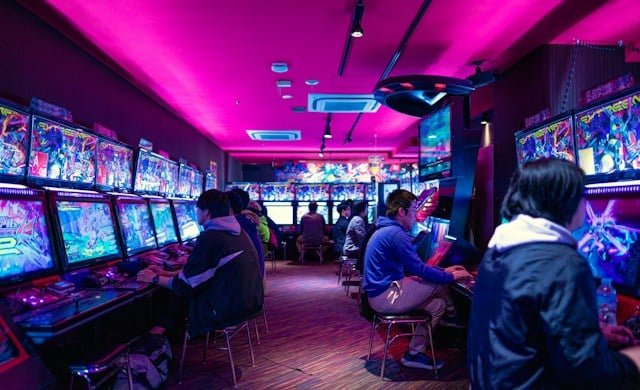
Konami released Teenage Mutant Ninja Turtles in 1989, and the dedicated four-player cabinet with its wide control panel became a staple of pizza parlors and arcades during the cartoon’s peak popularity. Each player picks a specific turtle assigned to their position, and the wide cabinet means the artwork panels on both sides are large and easy to damage during moves.
A two-player conversion version also exists, so buyers check that they are getting the genuine four-player dedicated unit. Working four-player cabinets with original art and all four control sets have sold for several thousand dollars, and the 1991 sequel, Turtles in Time, is tracked just as eagerly.
X-Men, the Six-Player Konami Cabinet With Two Monitors
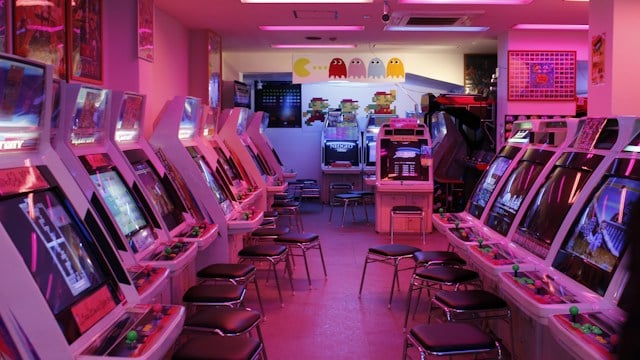
Konami released X-Men in 1992, and the six-player version places two monitors side by side behind a single wide bezel to create an ultra-wide playfield for six characters at once. It is one of the largest standard arcade cabinets ever sold, and moving one through a doorway is a known collector ordeal.
The four-player single-screen version is more common, so the six-player dual-monitor unit is the one on wanted lists. Both monitors need to be matched and working, and the original Konami board must support the six-player configuration.
Complete six-player units have sold for five figures in strong condition, with the four-player cabinet valued well below that.
Why the Monitor Matters More Than the Game
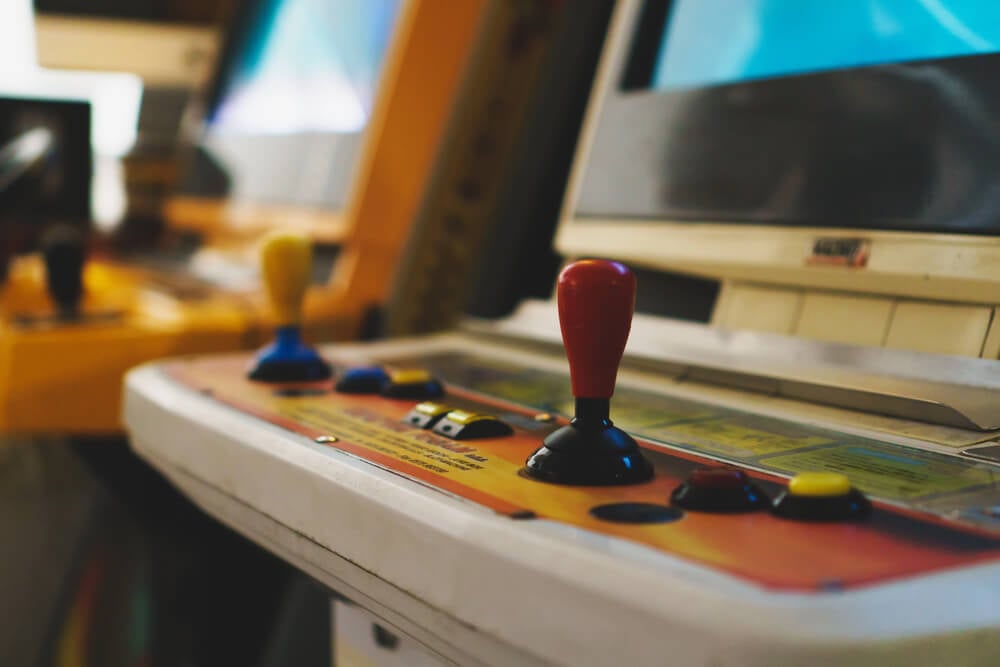
Every one of these cabinets runs on hardware that stopped being manufactured decades ago, and the most expensive component is usually the display. Vector monitors, color CRTs, and laserdisc players all fail in ways that are expensive or impossible to fix with new parts, which is why a working original commands such a premium over a dead one.
A pretty cabinet with a replacement LCD is a different object from the machine that sat in an arcade in 1983.
That distinction is what turns a buyer into a collector. The serial plate, the original board set, the factory artwork, and the controls that match the manual are the evidence that a machine is what it claims to be.
Prices will keep shifting with nostalgia and supply, but the one constant is that originality and working order decide where in the range a given cabinet lands.
More from Go2Tutors!

- The Romanov Crown Jewels and Their Tragic Fate
- 13 Historical Mysteries That Science Still Can’t Solve
- Famous Hoaxes That Fooled the World for Years
- 15 Child Stars with Tragic Adult Lives
- 16 Famous Jewelry Pieces in History
Like Go2Tutors’s content? Follow us on MSN.