24 Vintage Toy Soldiers Collectors Hunt
Somewhere in an attic, a shoebox of mismatched metal and plastic infantry is waiting to be found. Most of it will be worthless.
A few figures in the pile could be the reason an auction house phones back.
Knowing the makers is half the fun, because every factory left its own fingerprints on a casting. Stamp marks, paint styles, and the way a rifle is held can separate a common find from a prize.
Britains Hollow-Cast Lead Regiments
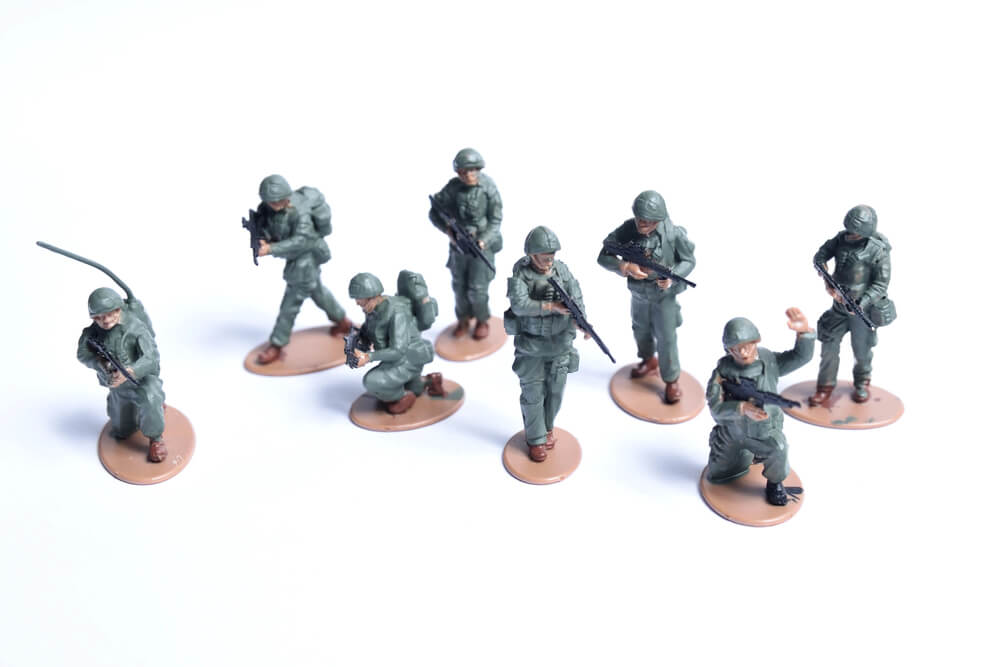
William Britain Jr. introduced hollow casting for toy soldiers in 1893, and the technique changed the entire hobby. Pouring molten metal into a mold and draining the center before it set used far less lead, which kept prices low and allowed livelier poses.
The figures came in boxed regiments, and that packaging matters enormously today. Value depends heavily on condition, paint wear, and whether the original box and its label survive intact.
Britains Swoppets
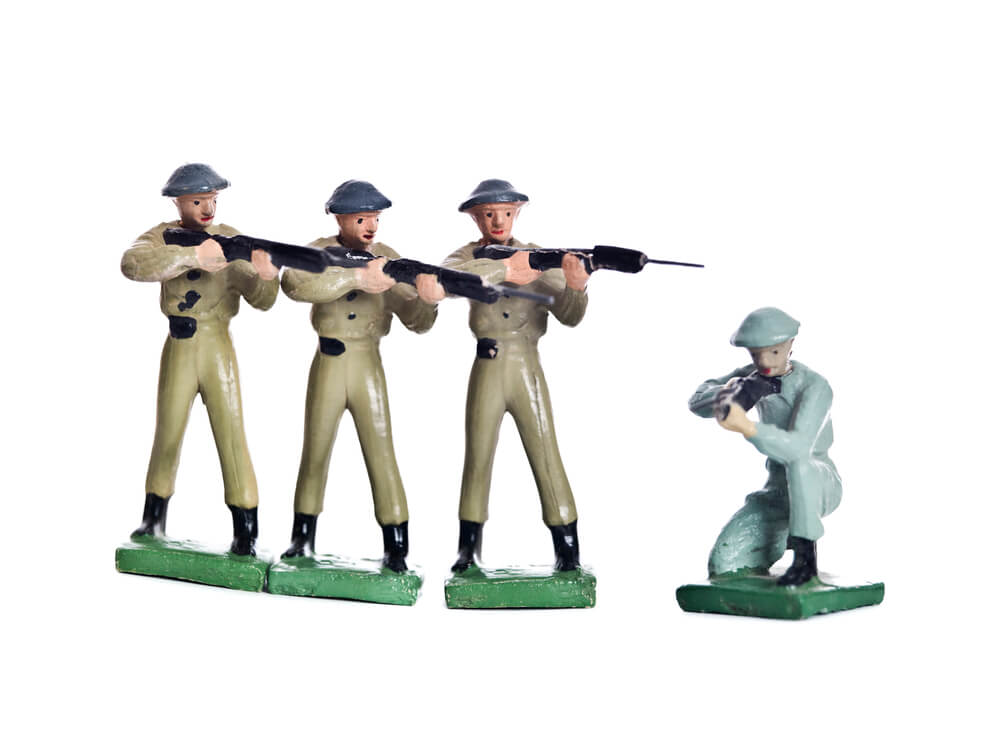
Swoppets arrived in the mid-1960s as a plastic answer to the lead soldier, built from pieces that pegged together. Heads, arms, and weapons could be swapped between bodies, so a child could give a Napoleonic grenadier the head of a cavalryman.
That flexibility is a headache for collectors, since loose figures are often assembled from mismatched parts. Complete, original sets in their packaging are the ones that earn attention, and condition drives the price.
Britains Deetail
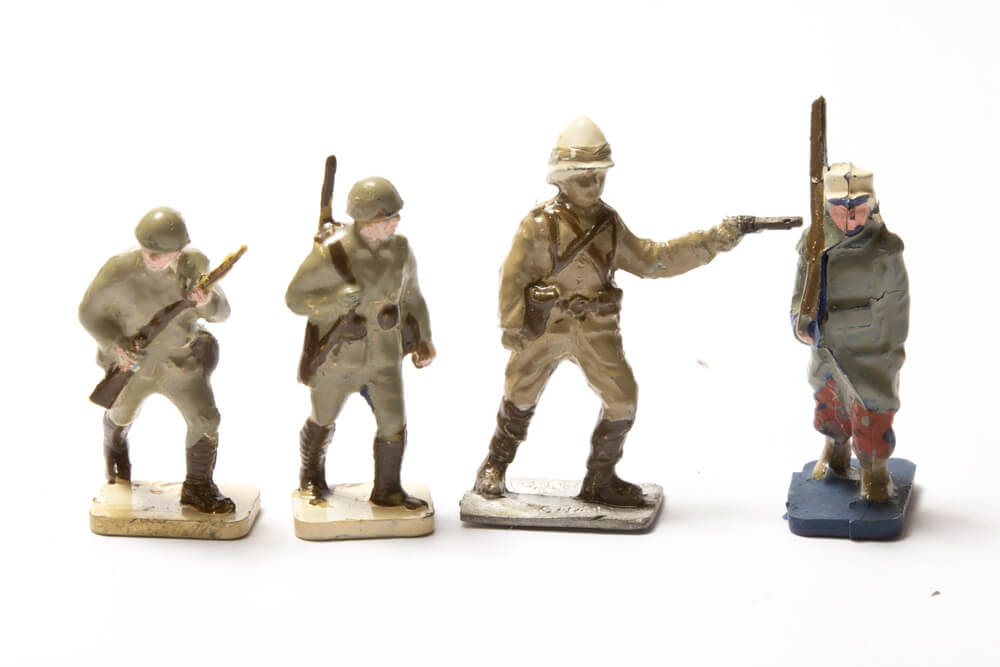
Deetail appeared in the early 1970s and aimed for sharper sculpting than the older Britains plastics. The multipart figures were assembled with glue, and the range covered subjects such as medieval knights and Napoleonic infantry.
The modeling was crisp, but the hobbyist assembly meant that finished examples vary wildly in quality. Collectors prize unbuilt, boxed sets, and any figure with paint chips or broken fittings sells for noticeably less.
Britains Herald Plastics
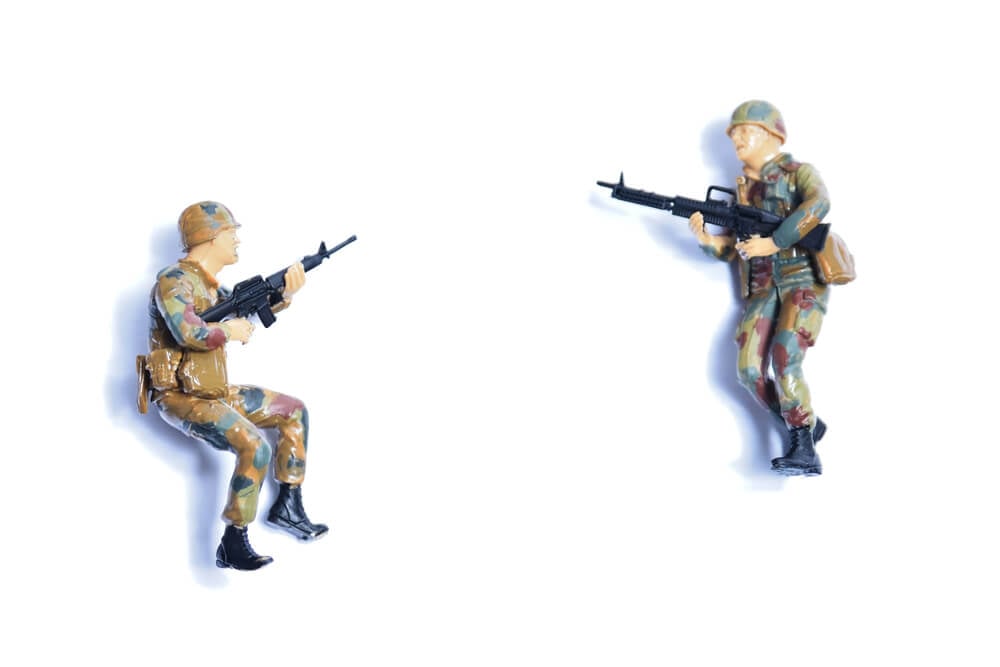
Britains eventually moved away from lead, and the Herald line shows the transition in action. These plastic soldiers and cowboys arrived in the 1950s, when cheaper materials and changing safety attitudes pushed makers toward polystyrene and similar plastics.
The lead hollow-cast range itself faded out during the 1960s. Herald pieces are less glamorous than the old metal regiments, but boxed examples in clean condition are increasingly sought after.
Johillco
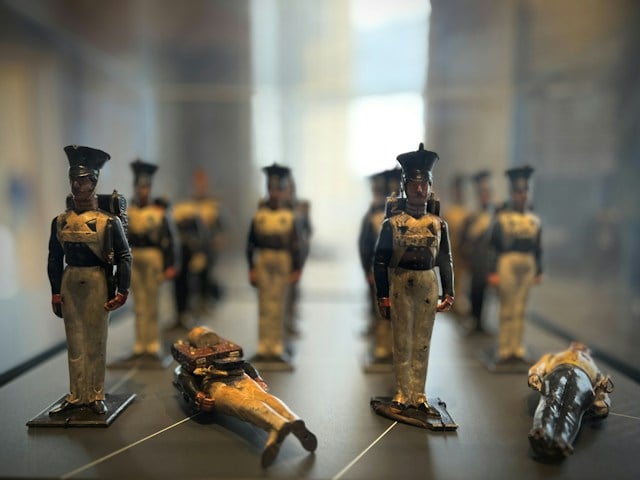
Johillco is shorthand for John Hill and Company, a London firm that went head to head with Britains. The company sold hollow-cast soldiers and other metal figures at prices meant to undercut the market leader.
The brand name is simply a contraction of John Hill and Company. Collectors treat Johillco as a distinct and affordable alternative, though paint loss and bent parts hit values hard.
Charbens
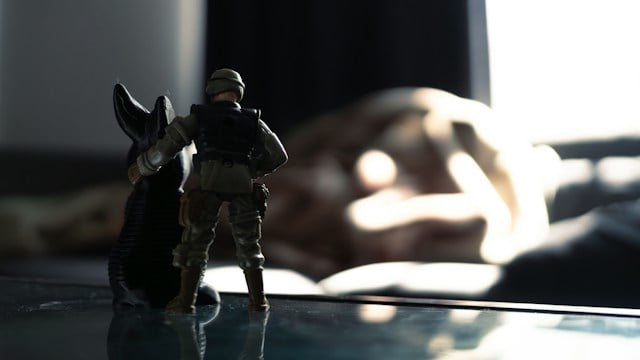
Charbens was a London toy maker that produced lead soldiers and farm figures before shifting into plastic as tastes changed. Its military sets, often smaller and plainer than those from Britains, are a favorite of collectors who like to assemble full armies on a budget.
As with all lead figures, flaking paint and missing weapons reduce value, and boxed sets command more.
Crescent Toys
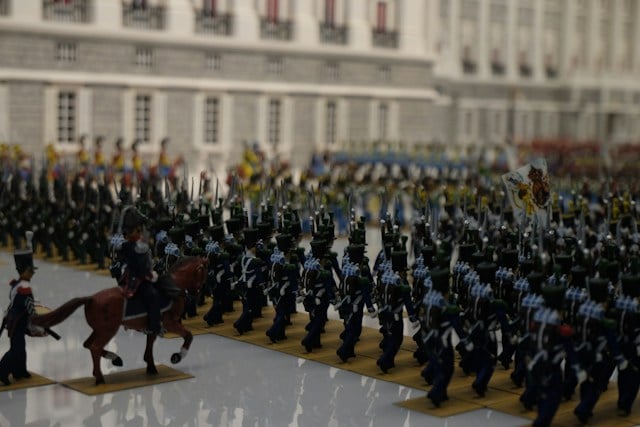
Crescent Toys of London produced lead and later plastic figures, along with diecast cars that many people remember better than the soldiers. The firm’s military range included infantry and gun crews sold in simple cartons.
Because the company made so much besides soldiers, its figures turn up in odd places, mixed into lots of unrelated toys. Condition remains the main factor in price, and original packaging adds a premium.
Cherilea
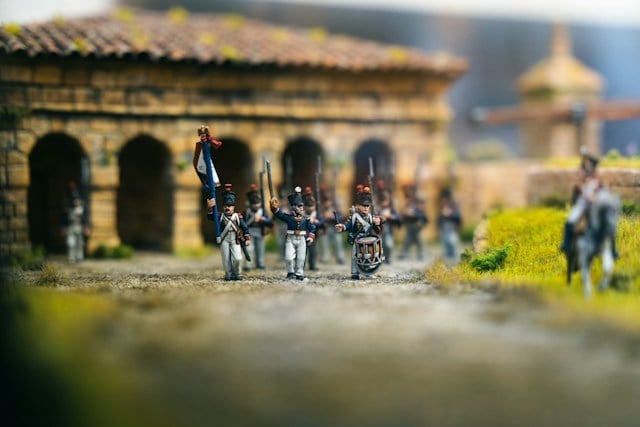
Cherilea operated from Blackpool, England, and turned out plastic soldiers and Wild West figures in bulk. The figures were sold cheaply, which explains why so many survive in play-worn form and so few survive in pristine condition.
Soft plastic bends, and some examples warp when stored near heat, so a straight, unmarked figure is something of an achievement. Boxed and bagged sets from the original run fetch the best prices.
Timpo
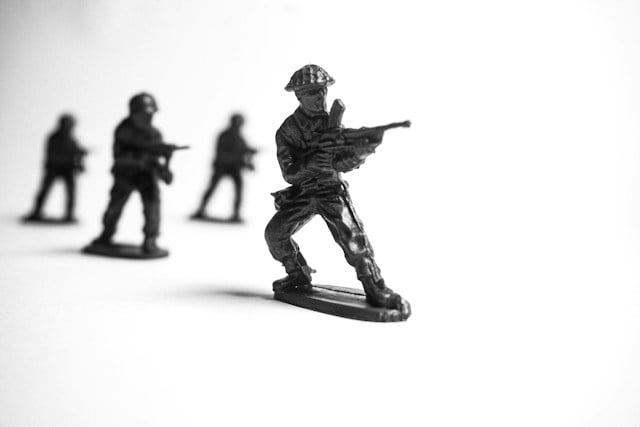
Timpo takes its name from Toy Importers, the London company behind the brand. Before the war its lead soldiers competed in the same market as Britains, and afterward it moved into plastic knights, cowboys, and military figures.
The company’s output is varied enough that identification can take patience, since figures changed from metal to plastic and styles shifted across decades. Condition and completeness shape what any Timpo set is worth today.
Airfix 1:72 Figures
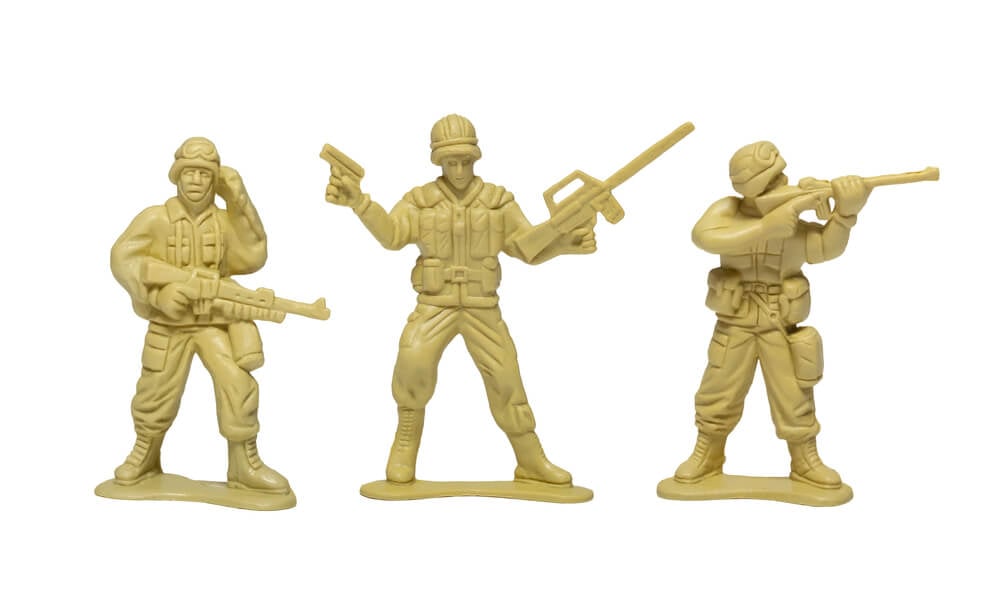
Airfix is best known for model kits, yet the firm began by making inflatable rubber toys, and the name was chosen to land at the front of alphabetical lists. Its small 1:72 scale soldiers were sold in inexpensive bags and became a staple of wargaming.
Because the figures were so cheap to produce, enormous numbers survive, and rarity depends on the specific set. Unopened packaging and crisp mold lines are what collectors look for.
Marx Battle of Navarone Playset
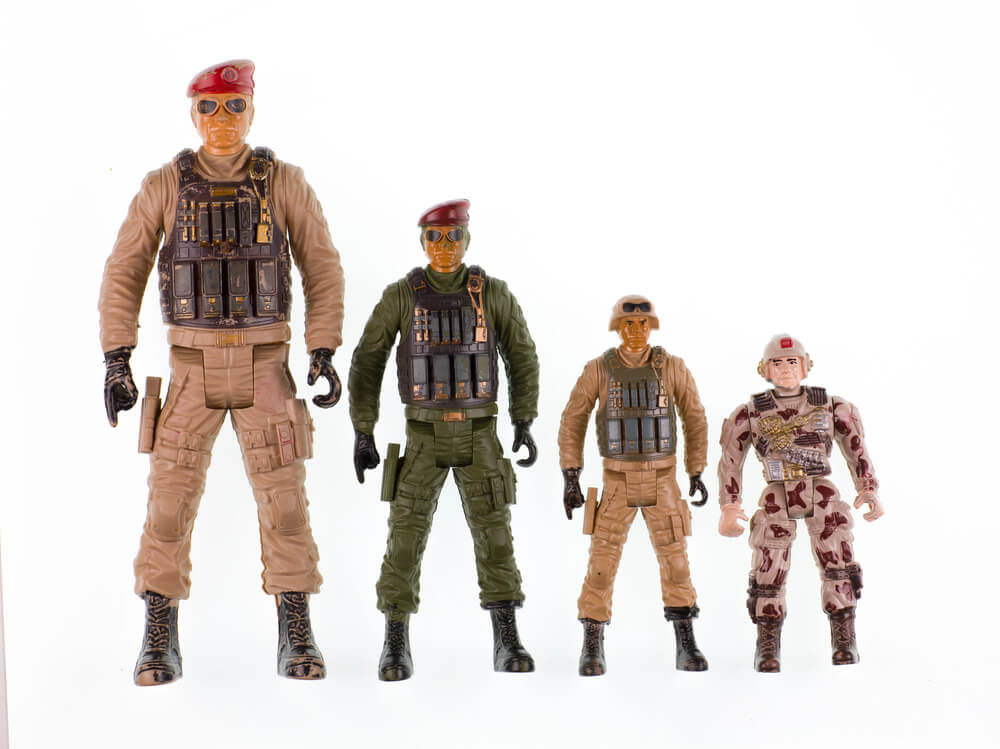
Louis Marx and Company turned a film into a toy mountain with its Navarone playset, which echoed the 1961 movie The Guns of Navarone. The set pairs a large stronghold with plastic soldiers, giving children a ready-made battleground.
Playsets like this are rare in complete form because small accessories vanished first. Value depends on condition, the presence of all the pieces, and whether the original box has survived.
Marx Fort Apache
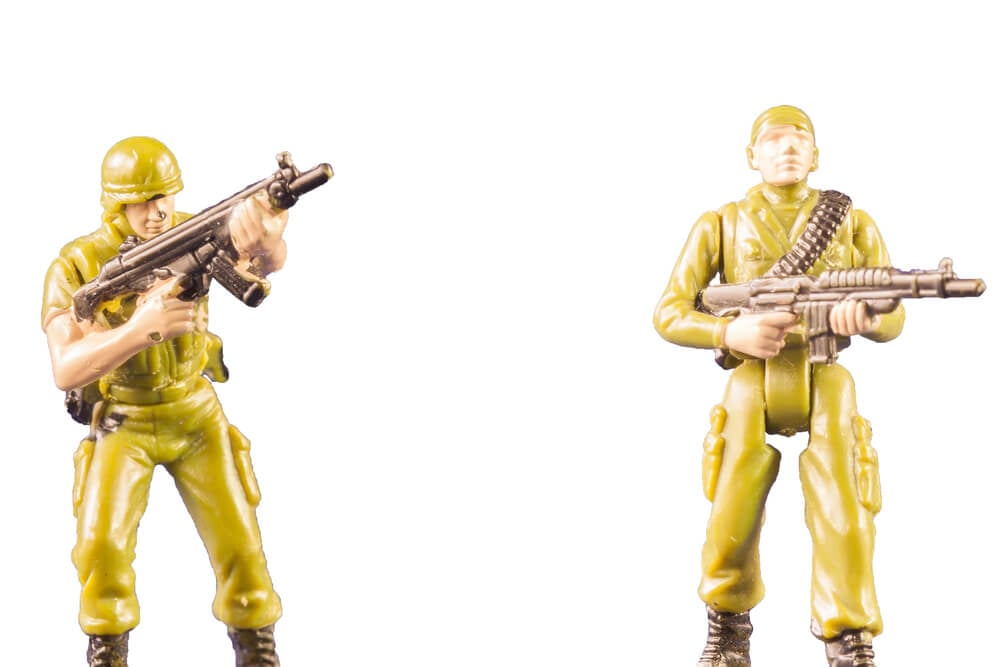
Marx made a Fort Apache playset that put plastic cavalry, frontier settlers, and Native American warriors inside a tin-lithographed stockade. The line tied into the television show The Adventures of Rin Tin Tin, which was set at a frontier fort and starred a famous German shepherd.
Complete sets are scarce because the tiny figures and accessories were easy to lose. Rust, fading, and missing parts all lower the price.
Tim Mee Toys
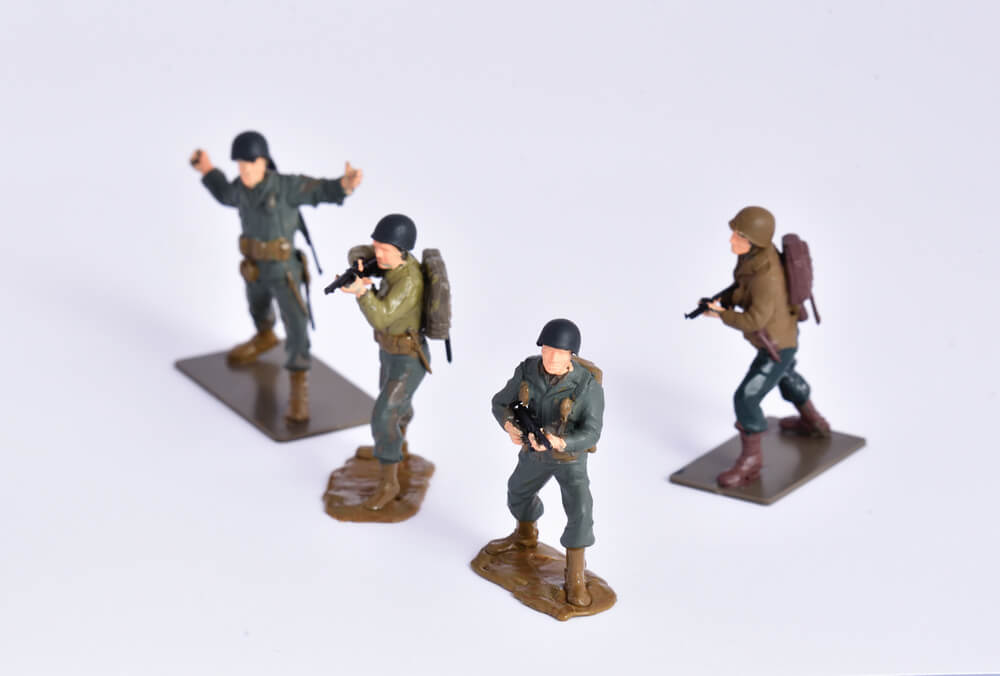
Tim Mee was an American producer of plastic soldiers sold in bags and boxes, usually in bright single colors. The company also made playsets, including a Pirate Fortress that collectors still discuss today.
Tim Mee figures lack the finesse of Britains, but their bold molding and low price gave them huge appeal to young players. Surviving examples are valued by condition, completeness, and original packaging.
Barclay Podfoot Soldiers
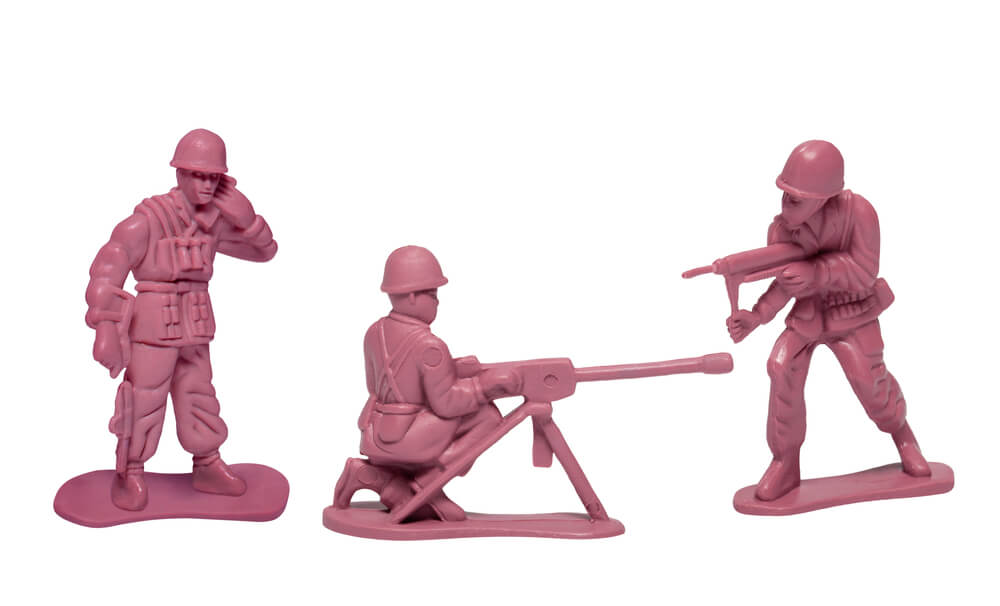
Barclay Manufacturing Company of New Jersey made the dime-store soldiers known as podfoot figures. Their legs end in small rounded pods rather than visible feet, which gives them an unmistakable stubby look.
The lead-alloy figures were slush-cast, and they sold for pocket change in five-and-dime shops. Today the value depends on rarity of pose, paint condition, and whether the figure still has its original details.
Manoil Army Figures
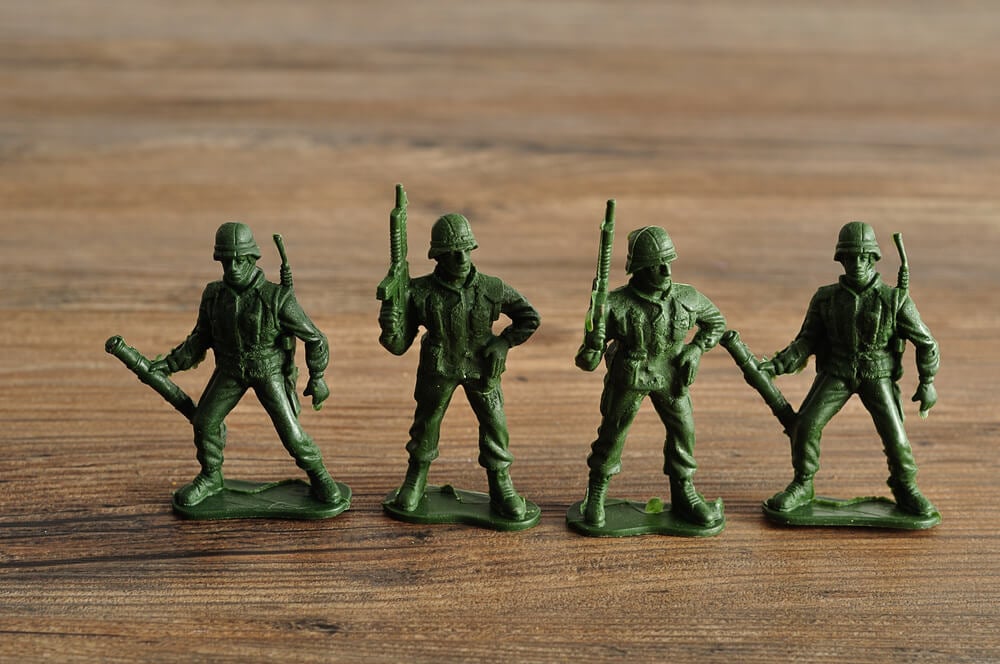
Manoil of New York produced lead-alloy dime-store soldiers that competed directly with Barclay. The firm is known for its slender, detailed figures, which many collectors consider more refined than the stubby podfoot style.
Manoil also made toy vehicles, so its soldiers often turn up alongside cast cars and trucks. As with all slush-cast toys, paint wear and bent weapons affect price more than most buyers expect.
Grey Iron Casting Company
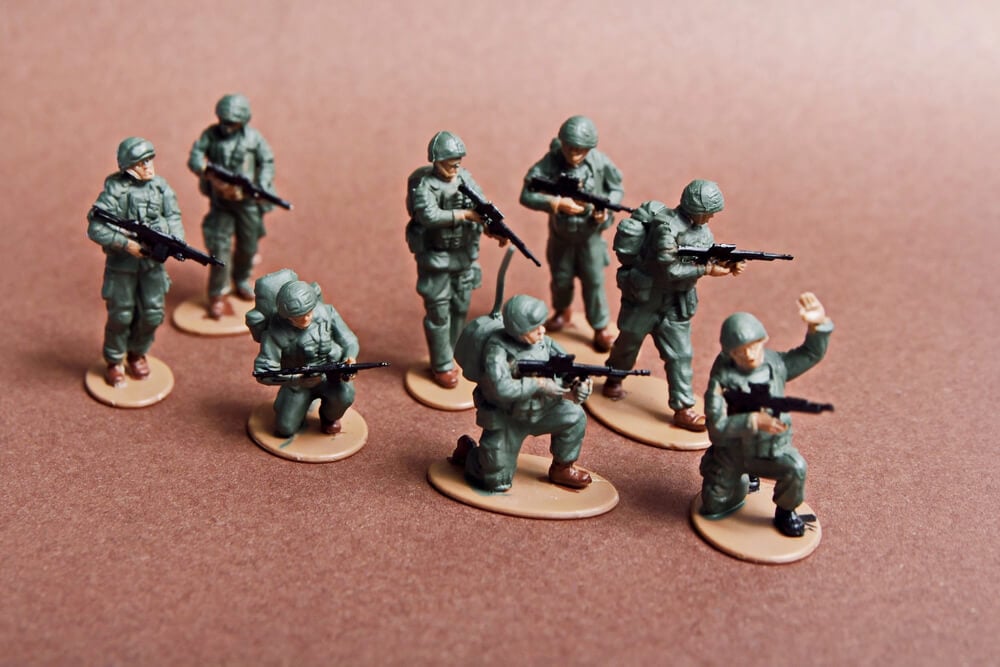
Grey Iron Casting Company of Mount Joy, Pennsylvania, specialized in cast iron toys, including soldiers. Iron gave the figures a weight that lead and aluminum could not match, though it also made them brittle when dropped.
The company produced a range of military subjects in the early twentieth century. Rust, chipped paint, and cracks are the major condition issues, and each one can cut value sharply.
Auburn Rubber Soldiers
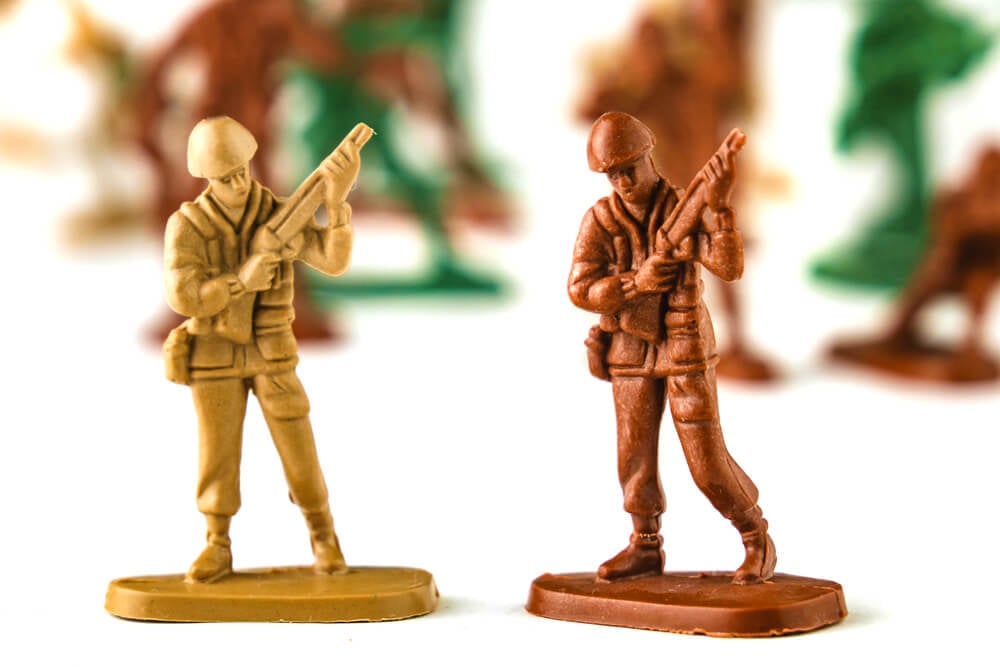
Auburn Rubber Company of Auburn, Indiana, made rubber toy soldiers that were safer and softer than lead. The figures were molded in a flexible material and often show crisp, simple detail.
Rubber ages poorly, though, and old examples can harden, warp, or crack. Collectors look for figures that are supple and uncracked, since condition determines value more than anything else.
Elastolin by Hausser
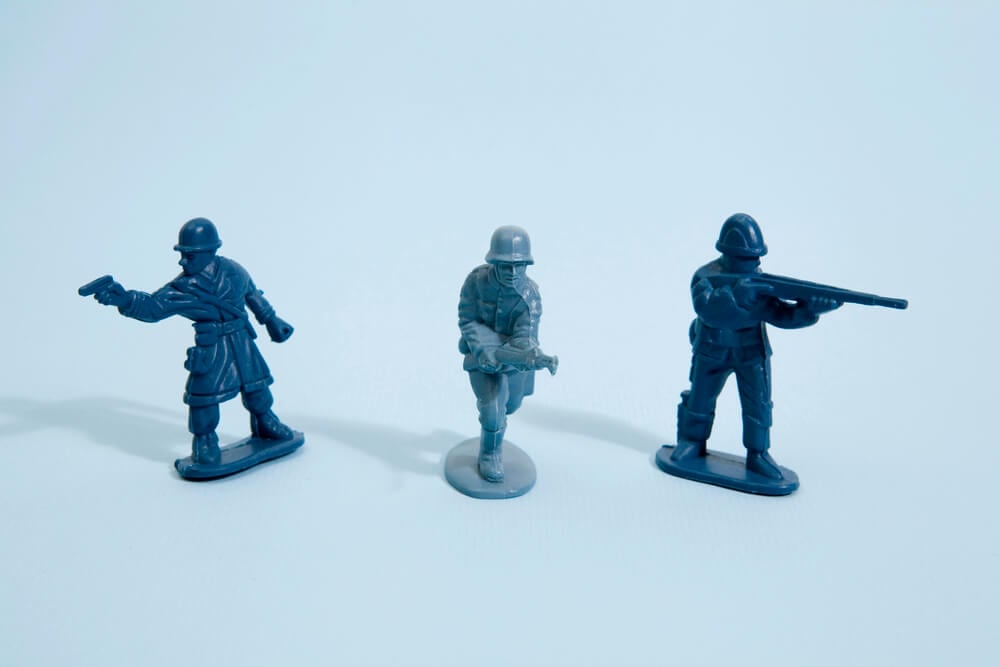
Elastolin figures were made by the German firm Hausser, and the brand name refers to a composition material rather than a metal. The mixture of sawdust, kaolin, glue, and similar ingredients was pressed over a wire armature.
This gave the figures a distinctive matte finish and a lightweight feel. The material also cracks and crumbles, so intact paint and undamaged limbs are crucial to value.
Lineol Composition Figures
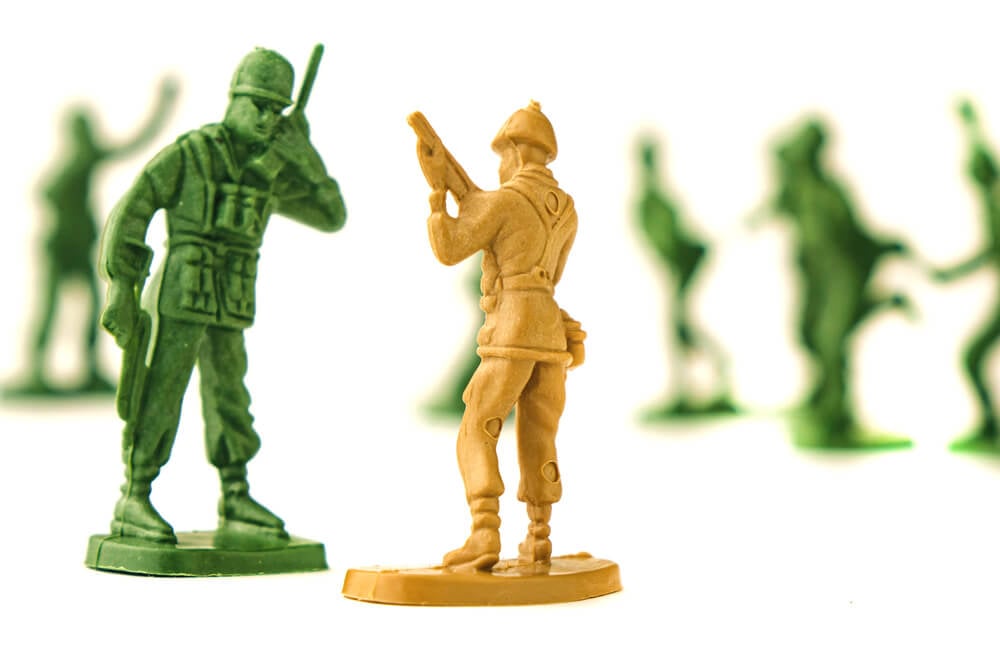
Lineol worked out of Brandenburg an der Havel and competed with Elastolin in the German composition market. Its figures used wire armatures and a molded material, and the firm also produced tinplate vehicles to go with them.
Collectors prize Lineol for paint quality and crisp facial detail. As with Elastolin, cracks and flaking are common problems, and a complete figure in good condition is worth far more than a damaged one.
Heyde of Dresden
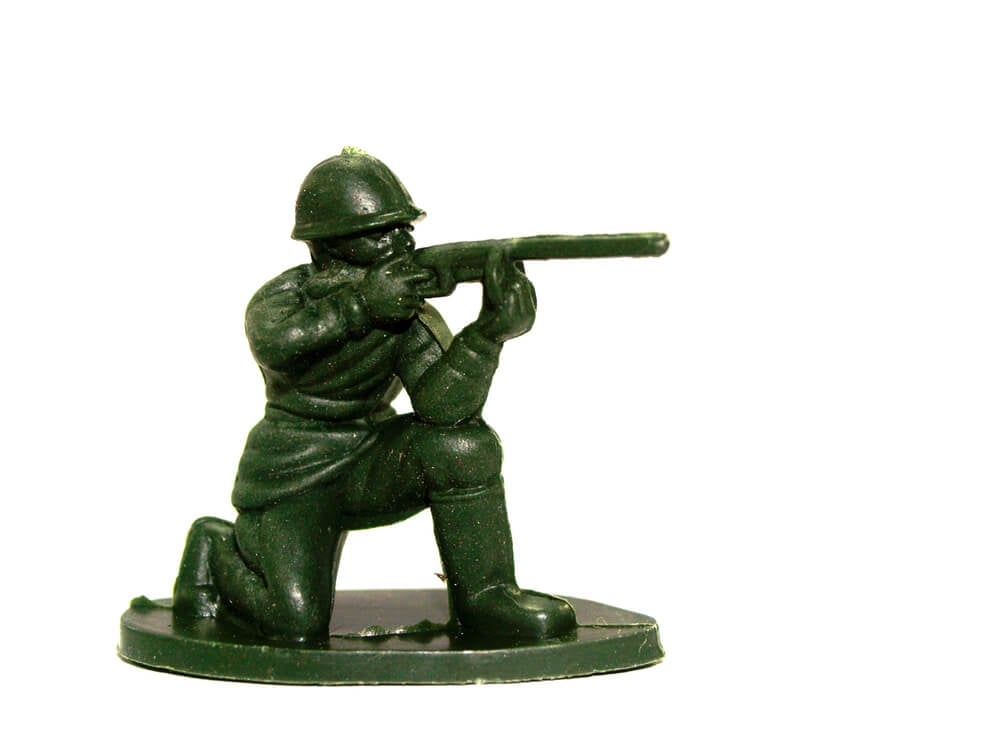
Georg Heyde founded his firm in Dresden in 1870, and it became known for small, solid-cast figures. The scale was tiny, which let a child stage entire armies on a tabletop without a large budget.
Heyde sets were produced in enormous variety, covering many nations and periods. Values depend on paint condition, completeness of the set, and the presence of the original box.
Heinrichsen Nuremberg Flats
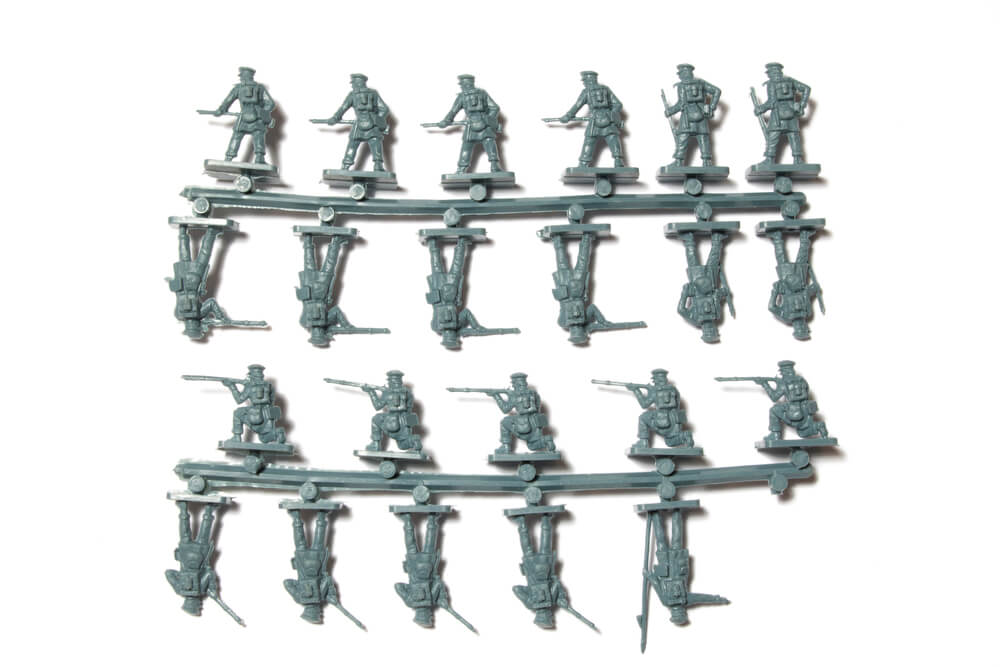
Ernst Heinrichsen of Nuremberg is credited with establishing the roughly 30 millimeter standard that became known as the Nuremberg scale. His flat tin figures were engraved in slate molds, and the design was nearly two-dimensional. That small thickness made them easy to pack and cheap to ship.
Collectors look for crisp engraving, intact paint, and complete sets, because condition drives value.
Mignot of Paris
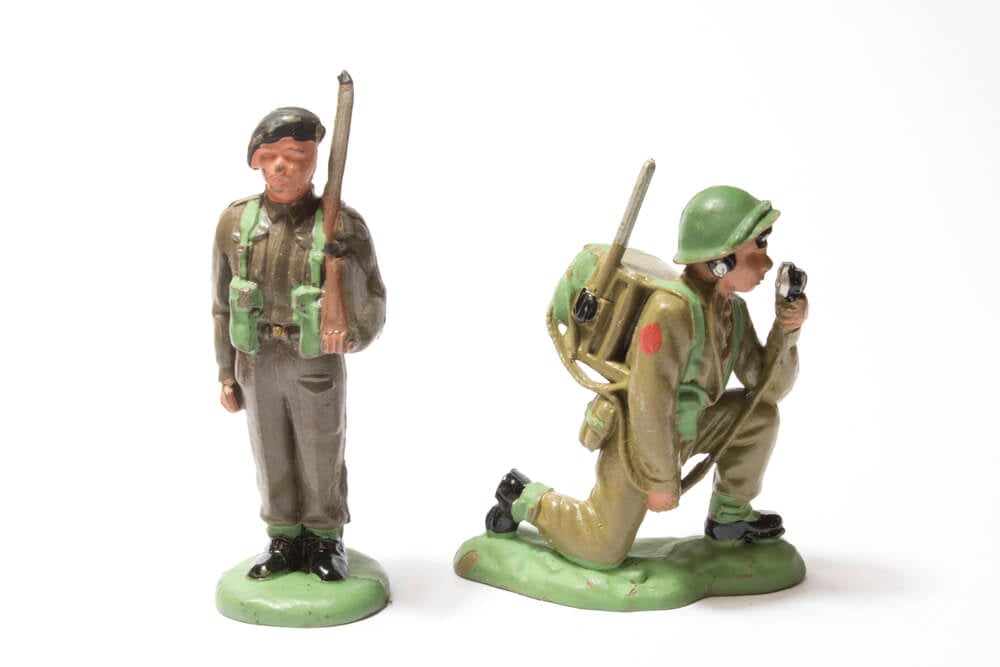
C.B.G. Mignot of Paris was a French producer of solid-cast lead soldiers, with a strong focus on Napoleonic regiments. Unlike the hollow Britains figures, Mignot soldiers are solid and noticeably heavier in the hand.
The firm produced a huge catalog of historical uniforms, which makes it a favorite for collectors who care about military history. Paint wear and bent parts reduce value, and boxed sets are worth more.
Quiralu Aluminum Soldiers
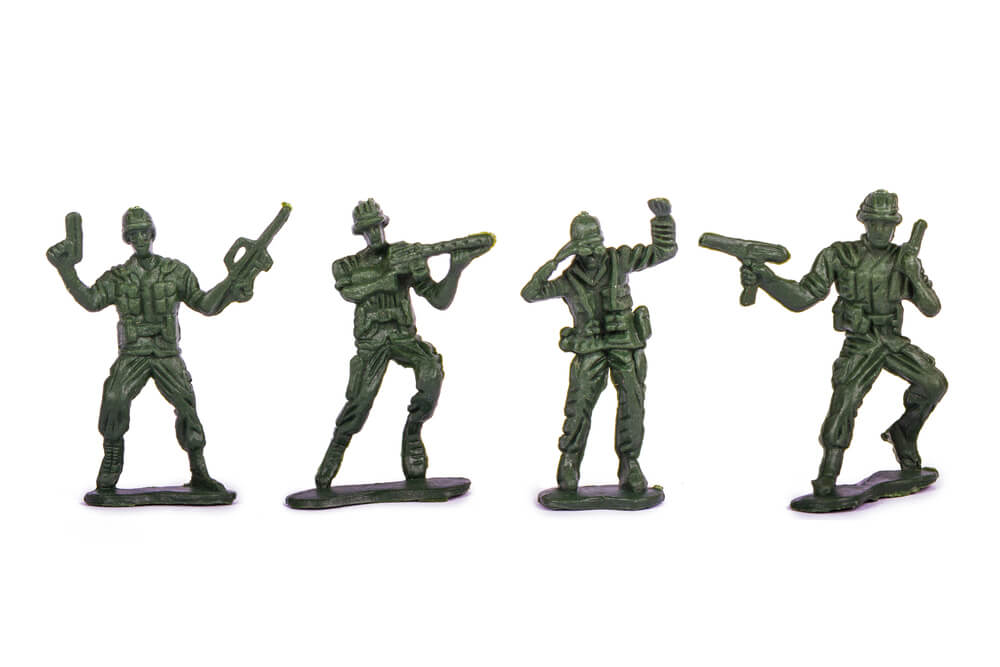
Quiralu was a French maker that cast soldiers in aluminum rather than lead. Aluminum is lighter, and it avoids the decay known as lead rot, which can corrode old lead figures from the inside.
Quiralu produced Napoleonic and other military subjects with a distinct, polished look. Prices depend on paint condition, the rarity of the particular figure, and whether the original box is present.
Reamsa of Spain
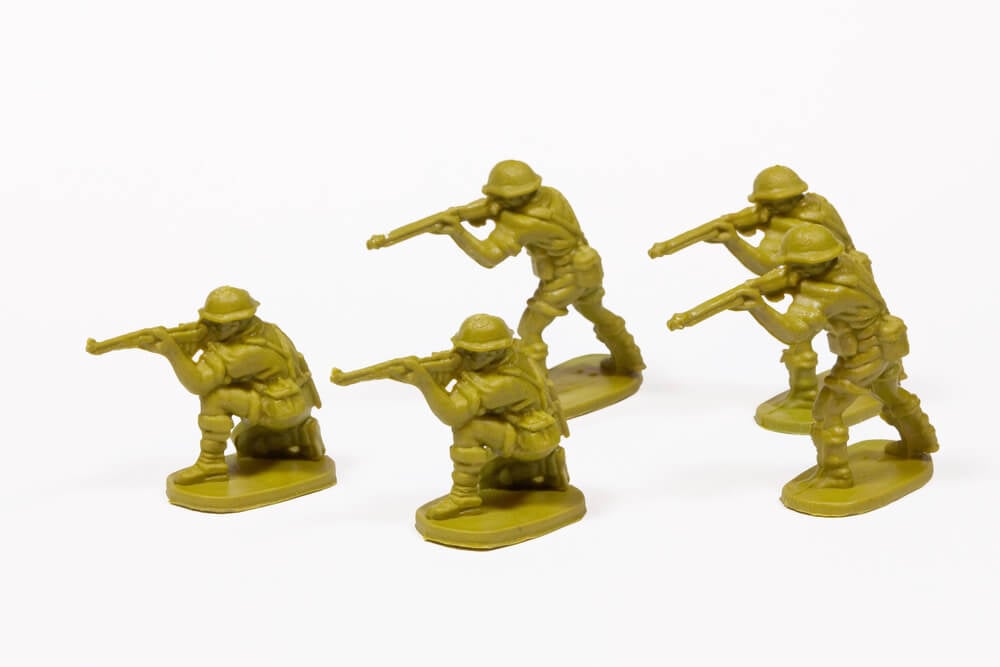
Reamsa was a Spanish producer of plastic figures that covered ancient and medieval warriors alongside more modern soldiers. The molds were detailed for the price, and the figures were sold in boxed sets that appealed to young historians.
Reamsa figures are less common in some markets, which adds to their appeal. Soft plastic can warp over time, so condition and set completeness remain the main drivers of value.
The Long Afterlife of Small Armies
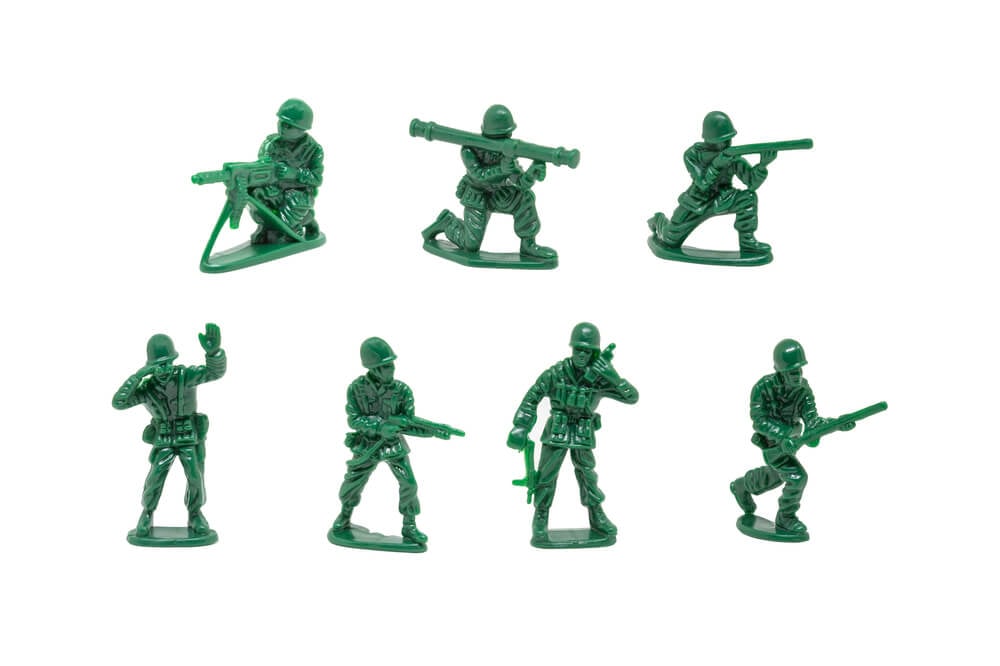
Toy soldiers outlast almost everything else children owned. They survive in drawers, in tins, and in the margins of estate sales, carrying with them a record of materials and factories that no longer exist.
Lead gave way to composition, aluminum, rubber, and plastic, and each change reveals what a maker believed children wanted.
That is why the hunt rewards patience more than money. A collector who learns to read a base, a paint style, or a box label can spot a bargain that a casual buyer walks past.
The best finds are the ones that still carry their original packaging, and condition will decide how much any of them is worth.
More from Go2Tutors!

- The Romanov Crown Jewels and Their Tragic Fate
- 13 Historical Mysteries That Science Still Can’t Solve
- Famous Hoaxes That Fooled the World for Years
- 15 Child Stars with Tragic Adult Lives
- 16 Famous Jewelry Pieces in History
Like Go2Tutors’s content? Follow us on MSN.