Yellow Pages Ads That Looked Like Art
Remember flipping through the Yellow Pages and suddenly stopping because an ad caught your eye? Not because you needed a plumber or a lawyer, but because something about the design made you pause.
Some businesses treated their quarter-page or half-page ad like a canvas, and the results could be stunning. These weren’t your typical directory listings. They were miniature posters, tiny galleries printed on newsprint that cost a fortune to maintain each year.
And yet businesses kept paying, kept creating, kept trying to make something beautiful in the most unlikely place.
The Typography Obsessives
Some advertisers went deep into typeface selection. They’d choose fonts that reflected their business personality—a 1970s hair salon might use flowing, organic letters that looked hand-drawn.
A watch repair shop might opt for precise, mechanical typography that mimicked clock faces. The best ones treated each letter as part of the composition. Spacing mattered. Weight mattered.
Illustrated Worlds in Miniature

Hand-drawn illustrations gave ads characters that photography couldn’t match. A hardware store might feature a detailed pen-and-ink drawing of their storefront, complete with architectural details and careful shading.
These weren’t quick sketches—they were labored-over pieces that took hours to create. Artists would pack incredible detail into a three-by-five-inch space.
The Color Experiments

Most Yellow Pages ads ran in basic process colors, but some businesses splurged on additional spot colors or metallic inks. A jeweler might add gold ink to their ad.
A pool company might use a special blue that seemed to shimmer on the page. Color choices said everything about a brand before you read a single word.
Negative Space Masters
The smartest designers understood what to leave out. A locksmith might place a single, perfectly rendered key against a sea of white space.
The emptiness made the key feel important, significant. Your eye had nowhere else to go.
The Border Artists
Ad borders became their own art form. Some businesses commissioned custom borders—intricate patterns, Art Nouveau flourishes, geometric designs that framed their message.
A frame shop might have a border that mimicked actual picture frames. A bakery might use a border of illustrated pastries and bread loaves.
Surrealist Approaches

Some advertisers went weird on purpose. A moving company might show elephants carrying furniture. A tax service might depict a man walking a tightrope made of calculator tape.
These surreal images stuck in your mind precisely because they made no logical sense. The risk was looking silly or confusing.
Photography as Statement
While many ads used stock photos, some businesses invested in custom photography that approached fine art. A restaurant might commission a dramatically lit food photograph that belonged in a magazine.
An auto body shop might show a car detail so sharp and perfectly exposed it looked sculptural. These photos cost real money. Professional photographers, studio time, styling, lighting—all for a Yellow Pages ad that would last one year before the new book came out.
The Calligraphers

Before digital fonts, hand-lettering added a human touch. Calligraphers would create custom text for ads, especially for businesses that wanted to project elegance.
Wedding planners, stationers, and upscale restaurants often went this route. Each letter flowed into the next with a personality that printed fonts couldn’t match.
Geometric Precision
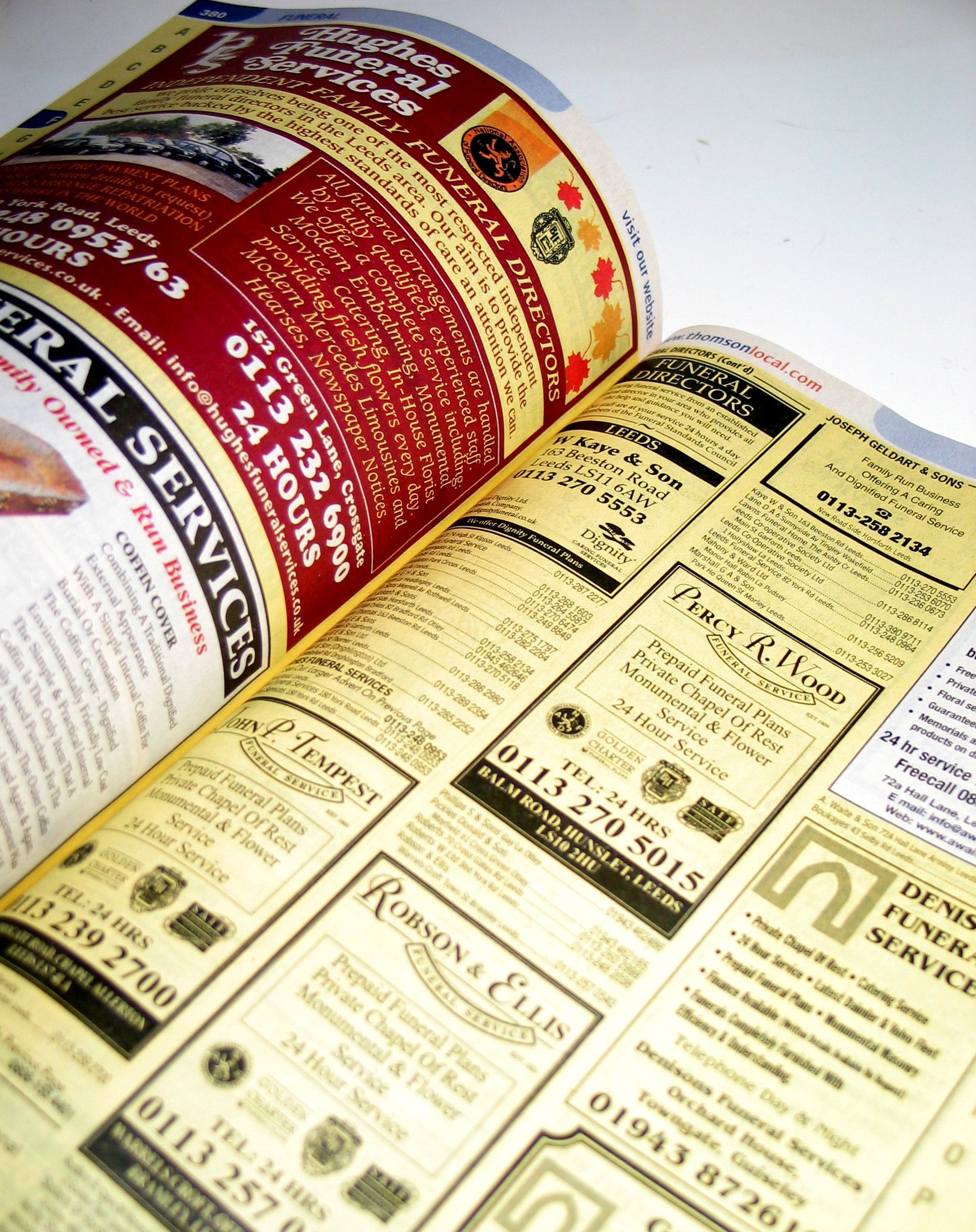
Some designers embraced rigid geometry—perfect circles, precise angles, mathematical layouts. A drafting service might arrange their ad in a technical drawing style.
An accounting firm might use grids and right angles to suggest order and accuracy. These ads felt purposeful and controlled.
The Storytellers
Certain ads tried to tell a complete story in a few square inches. An insurance agent might show a visual narrative of a family protected through different life stages.
A home remodeler might depict a before-and-after transformation through sequential illustrations. These mini-narratives gave the ad depth.
When Humor Became Art
Funny ads walked a fine line, but some nailed it. A plumbing service might show a cartoon character in an absurd situation that somehow captured the desperation of a burst pipe at 2 AM.
The illustration style itself became part of the joke. Humor required artistic skill to work on paper.
The Minimalists
Before minimalism became a design trend, some Yellow Pages advertisers stripped everything down to essentials. Just a business name, a number, and maybe one simple graphic element.
This approach required absolute confidence in the quality of execution. When minimalism worked, the ad felt sophisticated and modern.
Finding Beauty in Commercial Space

A few Yellow Pages adverts looked more like sketches than sales pitches. Not just listing numbers or addresses, these stood out by feeling alive somehow.
Because of bold colors or odd shapes, folks would pause mid-flip through the book. Even though meant to sell plumbing or pizza, they played like tiny gallery pieces slipped into the phone directory.
Folks behind these designs got a basic truth right. Beauty hides in ordinary places when attention and imagination show up.
Take a page from a phone book—plain stuff, really—until a person treats it differently. For twelve months, before the next edition came along, that small sheet of type lived two lives at once, stuck on a wall where usefulness met wonder.
What sticks around isn’t just function or form—it’s both, tangled together. Old phone books hold these moments like fossils.
Beauty showed up where you’d least expect it: in classifieds, in print runs nobody saved. Today, few try this blend at all. Yet somewhere in digital drawers and dusty shelves, proof lingers.
More from Go2Tutors!

- The Romanov Crown Jewels and Their Tragic Fate
- 13 Historical Mysteries That Science Still Can’t Solve
- Famous Hoaxes That Fooled the World for Years
- 15 Child Stars with Tragic Adult Lives
- 16 Famous Jewelry Pieces in History
Like Go2Tutors’s content? Follow us on MSN.