Actors With the Most Screen Credits Ever
The movie credits roll past faster than you can read them. Hundreds of names flash by for every film or TV show produced, but some performers manage to appear in those credits again and again.
Not just dozens of times or even a hundred times. Some actors have built careers that span thousands of screen appearances.
These aren’t always the names you think of first when someone mentions Hollywood. You won’t find many Oscar winners at the top of this list.
Instead, these are the people who showed up, day after day, sometimes for decades, building filmographies that defy belief.
Mel Blanc: The Voice That Launched a Thousand Characters

Over a thousand screen credits sounds impossible until you consider that Mel Blanc voiced nearly every major Warner Brothers cartoon character for over 30 years. Bugs Bunny, Daffy Duck, Porky Pig, Tweety Bird, Sylvester, Yosemite Sam, Foghorn Leghorn, the Road Runner, Wile E. Coyote, Speedy Gonzales, Marvin the Martian, and dozens more all came from the same person.
Blanc didn’t just read lines. He created distinct personalities for each character through vocal technique alone.
Sylvester was his natural speaking voice with a spray at the end. Yosemite Sam required him to shout so loudly it hurt his throat.
The famous carrot-crunching sound from Bugs Bunny came from Blanc actually eating carrots during recording sessions, though he disliked them and spat them into a bucket between takes. Warner Brothers signed him to an exclusive contract in 1941, but Blanc negotiated something unprecedented in 1944.
He demanded on-screen credit for his voice work. Before that, voice actors remained anonymous.
Studio executives initially refused, but Blanc held firm. By 1946, his contract stipulated that every Warner Brothers cartoon featuring his voices would include the credit: “Voice characterization by Mel Blanc.”
That single negotiation changed the industry. Other voice actors remained uncredited for years, but Blanc became famous.
People recognized his voice on the street. After his exclusive Warner Brothers contract ended in 1960, he expanded his work to Hanna-Barbera, voicing Barney Rubble and Dino in The Flintstones, plus Mr. Spacely in The Jetsons.
He worked until shortly before his death in 1989. His career spanned radio, television, film, and commercials.
He survived a near-fatal car accident in 1961 and continued recording while in a full body cast, with his co-stars and equipment crowded into his hospital room. According to his son Noel, doctors struggled to wake Blanc from his coma after the accident until one asked, “Bugs? Bugs Bunny? Are you there?” Blanc responded in Bugs’ voice: “What’s up, Doc?”
Brahmanandam: India’s Comedy Machine

The Guinness World Record for most screen credits belongs to Brahmanandam Kanneganti from India. He appeared in over 1,200 films between 1987 and 2025, mostly in Telugu cinema.
That works out to roughly 50 films per year over a 24-year period at his peak. Brahmanandam started as a Telugu lecturer with a master’s degree before director Jandhyala cast him in Chantabbai in 1986.
His comedic timing clicked immediately with audiences. Producer D. Rama Naidu gave him another role in Aha Naa Pellanta the following year, and the offers never stopped. Telugu cinema produces hundreds of films annually, and Brahmanandam became the go-to actor for comic relief roles.
Directors knew they could count on him to elevate any scene. He won numerous awards throughout his career and earned recognition as one of the greatest comedians in Indian film history.
His workload seems physically impossible until you consider that many of his roles required just a few days of shooting. He could film scenes for multiple movies in the same week.
The sheer volume of production in Indian cinema, combined with his efficiency and reliability, created the perfect conditions for breaking records.
Eric Roberts: Hollywood’s Unstoppable Force

Eric Roberts holds the record for most screen credits among English-speaking actors with over 700 appearances. Julia Roberts’ older brother started strong with a Golden Globe nomination for King of the Gypsies in 1978 and an Oscar nomination for Runaway Train in 1984.
Then his career took an unexpected turn. Roberts became the actor who said yes to almost everything.
Low-budget films, direct-to-video releases, streaming content, independent projects. He worked constantly.
In one year alone, he appeared in 33 films. At one point, he had 66 projects in various stages of production.
Roberts doesn’t apologize for his choices. He considers himself lucky to work steadily in an industry where most actors struggle to find employment.
His approach differs from the traditional Hollywood model where actors wait for the perfect role. Roberts treats acting as a job and shows up ready to work.
His filmography includes major studio productions like The Dark Knight alongside countless low-budget films you’ve never heard of. Critics sometimes question the quality of his work, but Roberts keeps his schedule packed.
He films multiple projects back-to-back, sometimes shooting different movies in the same day. The strategy works for him.
Younger actors recognize him from his hundreds of recent roles even if they never saw his early work. He built a second career through sheer volume, making himself available to any project that needed a professional actor who could deliver a solid performance efficiently.
James Hong: Six Decades Across Every Medium

James Hong amassed 463 screen credits across a career that started in the 1950s and continues today. He studied civil engineering at the University of Minnesota and worked as a road engineer before switching to acting.
That late start didn’t slow him down. Hong appeared in everything from Chinatown and Big Trouble in Little China to Kung Fu Panda and Everything Everywhere All at Once.
His role as David Lo Pan became a cult classic. His work in the Oscar-winning Everything Everywhere All at Once introduced him to a new generation of fans when he was in his 90s.
Television provided Hong with steady work throughout his career. He guest-starred on countless shows, often in single-episode roles.
167 of his credits come from television alone, including appearances on Family Guy, American-Born Chinese, and Muppet Mayhem. Voice acting extended his range even further.
Animation, video games, and documentaries all needed Hong’s distinctive voice. The versatility kept him employed across multiple industries simultaneously.
Hong represents the character actor who built a legendary career through consistency rather than stardom. He took roles that others might have declined.
Directors knew they could count on him to show up prepared and deliver what the script required. That reliability transformed into one of Hollywood’s most impressive resumes.
Danny Trejo: From Juvenile Hall to 475 Credits
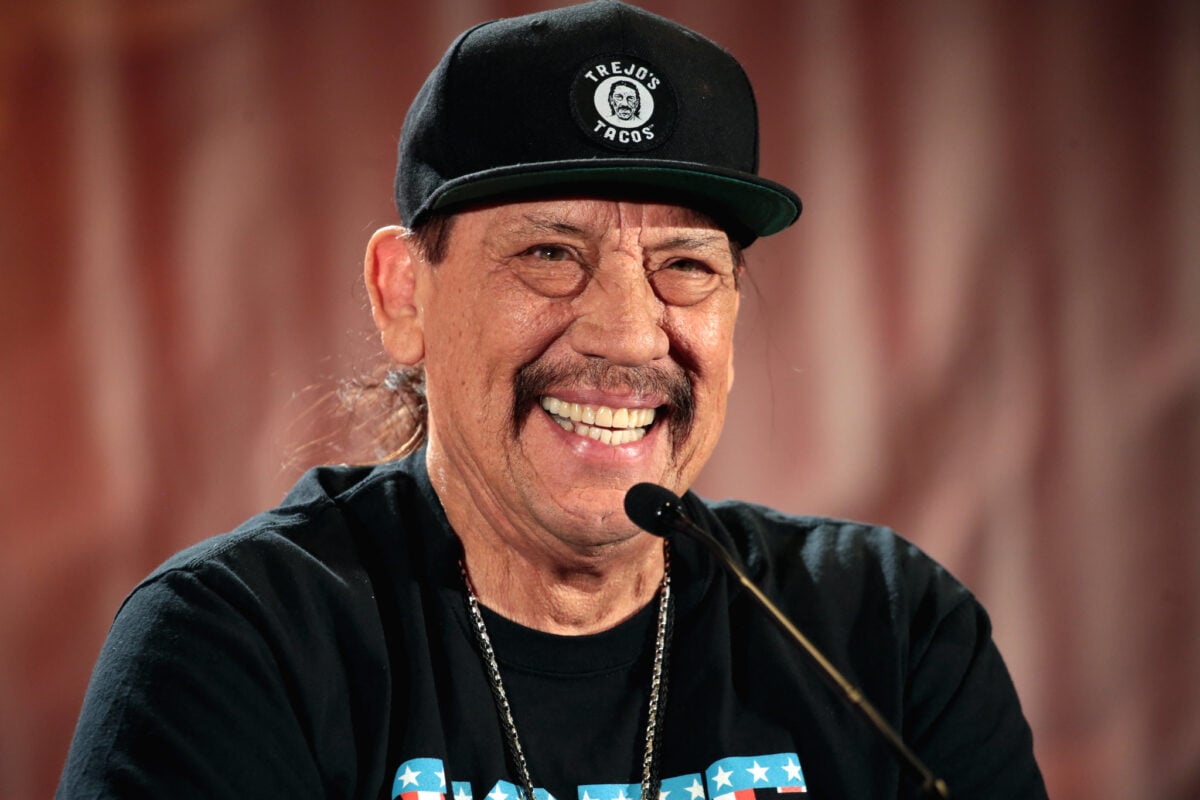
Danny Trejo’s path to acting started in prison. After serving time, he got sober and worked various jobs, including boxing training.
A screenwriter hired him to train actors for a boxing scene and offered him $320 per day. Director Andrei Konchalovsky saw Trejo training Eric Roberts and immediately cast him as Roberts’ opponent.
Trejo found his niche playing tough criminals and villains. His distinctive appearance and authenticity made him memorable even in small roles.
Directors started calling him regularly. He appeared in everything from major studio films to direct-to-video action movies.
Voice acting became another avenue for Trejo to increase his output. Animation requires less time than live-action filming.
An actor can record dialogue for multiple projects in a single day. Trejo used voice work strategically to keep his credit count climbing while maintaining his live-action career.
He never turned down work based on the size of the role or the budget of the production. That willingness to appear in projects regardless of their prestige level meant he stayed constantly employed.
His 475 credits span television, film, video games, and animation.
Christopher Lee: The Hammer Horror Legend
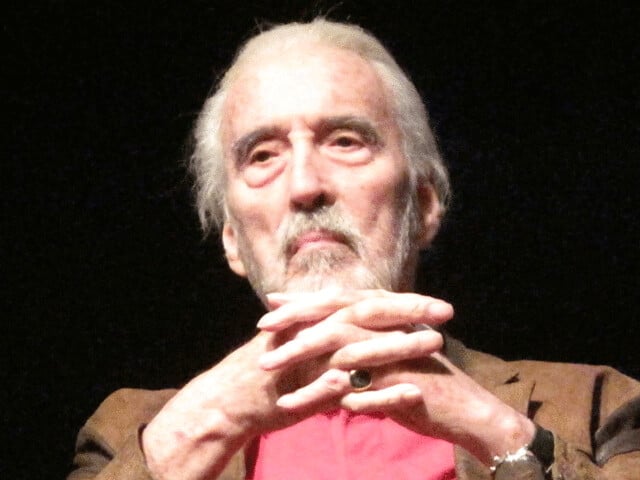
Christopher Lee accumulated 291 credits before his death in 2015. British horror studio Hammer Films made him famous through classics like The Curse of Frankenstein and Dracula Has Risen from the Grave.
His portrayal of Dracula became definitive for a generation. Lee refused to be typecast despite his horror success.
He appeared in The Wicker Man, played Francisco Scaramanga in the James Bond film The Man with the Golden Gun, and portrayed Count Dooku in Star Wars. Peter Jackson cast him as Saruman in The Lord of the Rings trilogy.
His aristocratic bearing and commanding voice made him perfect for villain roles, but Lee demonstrated range throughout his career. He recorded heavy metal albums in his 80s and continued acting until shortly before his death at age 93.
The studio system of his early career churned out films rapidly. Hammer produced horror movies on tight schedules and low budgets, allowing Lee to appear in multiple productions each year.
Later in his career, his reputation brought him roles in major franchises that introduced him to new audiences.
Ed Asner: Television’s Reliable Presence
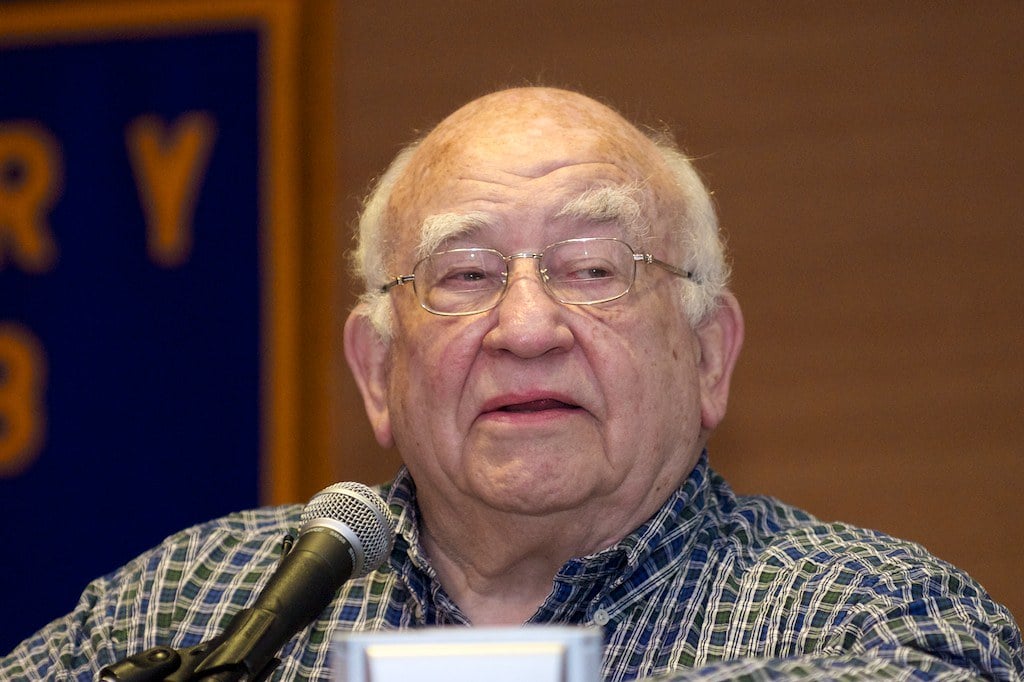
Ed Asner earned 417 screen credits playing tough, gravelly-voiced authority figures. He won seven Emmy Awards from 21 nominations, all in the Primetime category.
His role as Lou Grant on The Mary Tyler Moore Show and its spinoff Lou Grant made him a household name. But Asner worked constantly outside those signature roles.
He guest-starred on dozens of shows including Route 66, The Untouchables, The Fugitive, and How the Ghosts Stole Christmas. His voice work extended his career into animation and video games.
Television provided steady employment for character actors like Asner. A successful TV show meant years of guaranteed work, but between those anchor roles, he filled his schedule with guest appearances, voice work, and film roles.
John Carradine: The Golden Age Workhorse
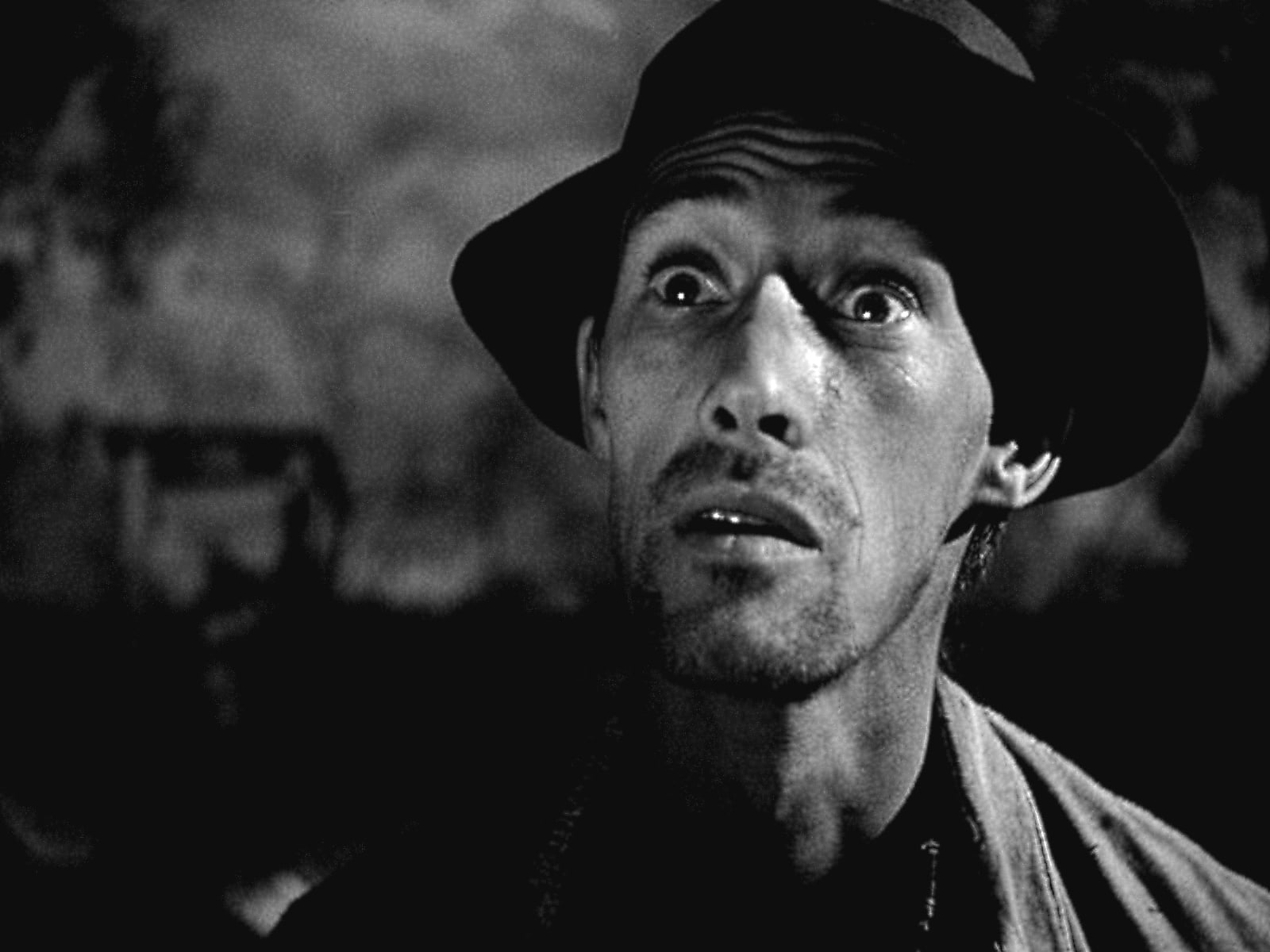
John Carradine died in 1988 with 353 screen credits. He arrived in Los Angeles in 1927 and worked in local theater before Cecil B. DeMille gave him voice work.
His on-screen debut came in 1930, and he never stopped working. Carradine maintained a stage career performing Shakespeare’s Hamlet and Malvolio while simultaneously building his film resume.
Director John Ford used him regularly, making Carradine part of what became known as “The John Ford Stock Company.” Horror films typed him later in his career.
He appeared in numerous low and ultra-low budget horror productions, taking any role offered. The sheer volume of film production during Hollywood’s Golden Age meant actors could work constantly if they stayed available.
John Rhys-Davies: From Classical Theater to 270 Credits
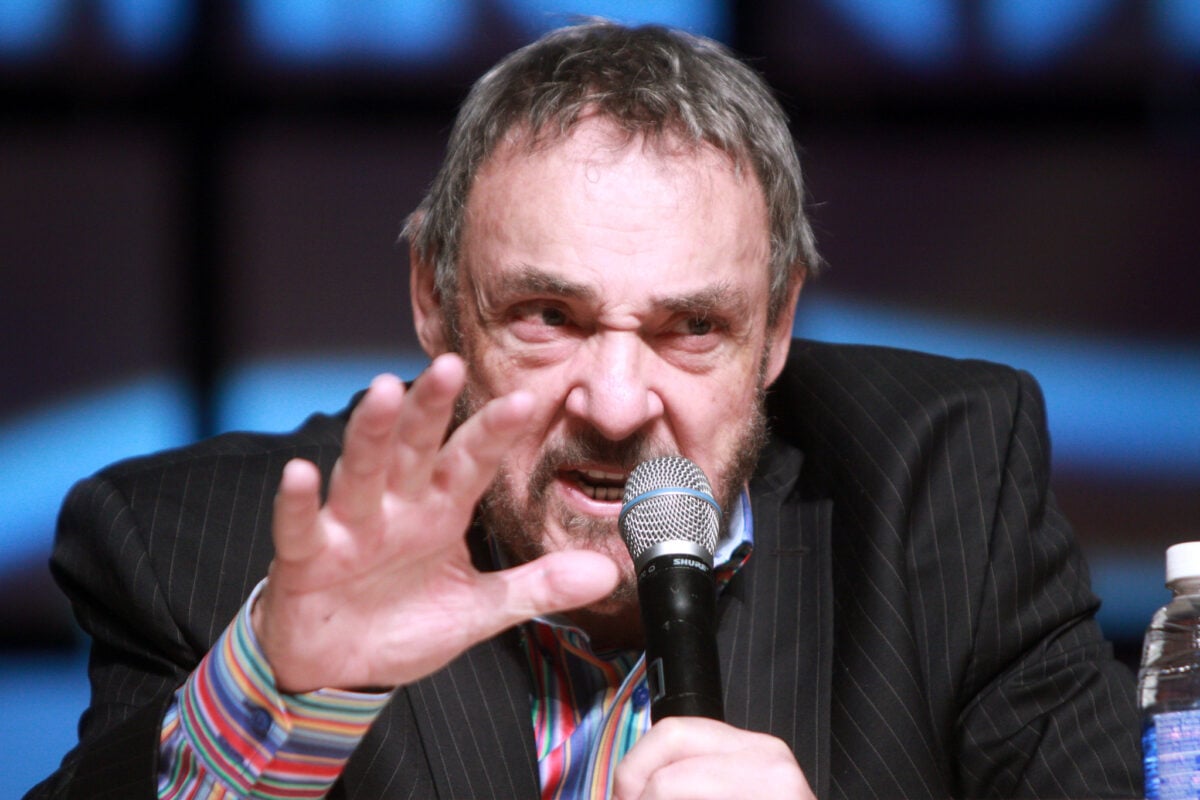
John Rhys-Davies earned 270 credits spanning high art and pure schlock. Best known for playing Gimli in The Lord of the Rings trilogy and Sallah in the Indiana Jones films, Rhys-Davies worked extensively in television as a cast member on Sliders.
He lent his distinctive voice to animation series like Gargoyles and video games like Risen. His theater background gave him the ability to go broad or be nuanced depending on what the role required.
That versatility kept him employed across multiple formats. Rhys-Davies collected vintage automobiles and performed in theater productions of The Misanthrope, Hedda Gabler, and most of Shakespeare’s works.
He divided his time between Los Angeles and the Isle of Man while maintaining a steady stream of screen work.
Fred Willard: The Master of Improvisation
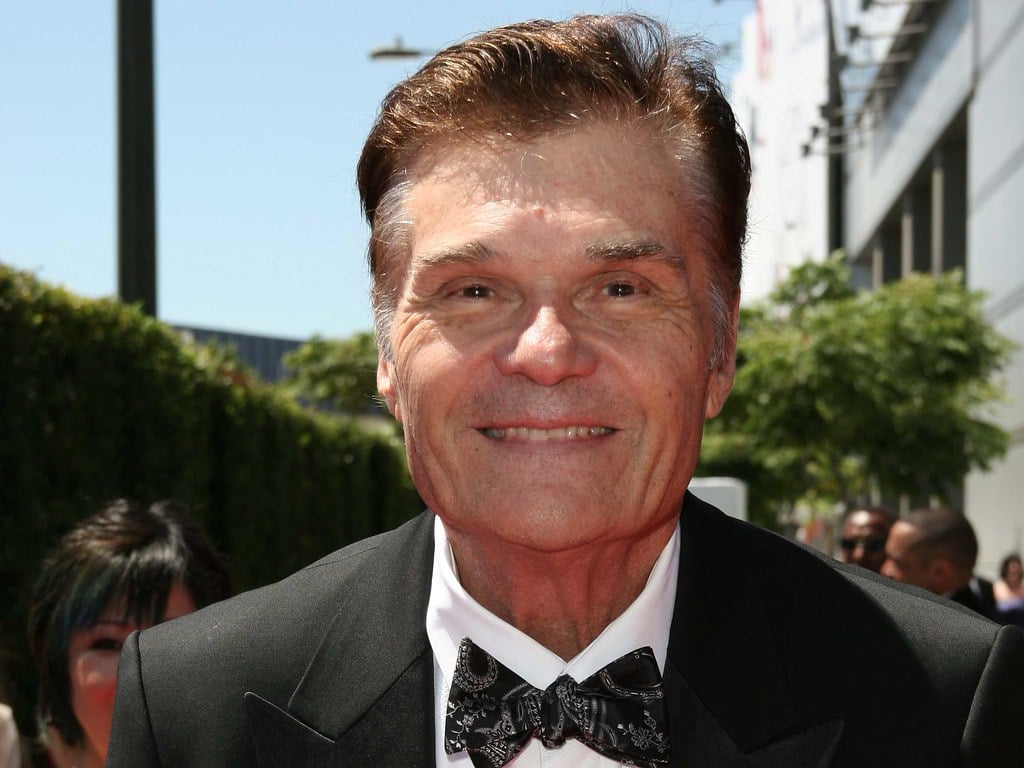
Fred Willard radiated a unique charm through 256 screen credits. He first came to prominence as the ambitious but dimwitted J. Hubbard opposite Martin Mull’s talk-show host in Fernwood Tonight.
His quick wit and improvisational expertise made him a favorite for sketch comedy. He made 50 appearances in sketches on The Tonight Show with Jay Leno, demonstrating his ability to transform any character into a unique comic portrayal.
His one-man show “Fred Willard: Alone At Last!” sold out regularly and won two Los Angeles Artistic Director Awards. Willard worked steadily until his death, taking roles in Christopher Guest’s mockumentary films and countless television guest spots.
His comedic timing never relied on being the center of attention, making him valuable in ensemble casts.
The Studio System’s Assembly Line

Hollywood’s Golden Age from the 1930s through 1940s produced over 7,500 feature films. Major studios controlled everything from talent to distribution.
Actors worked under exclusive contracts, essentially becoming studio employees. The infrastructure allowed studios to produce films efficiently even during the Great Depression.
Movies provided affordable entertainment, and studios met the demand by operating like factories. They could shoot multiple films simultaneously on their backlots.
Actors like Gertrude Astor accumulated 358 credits during this era despite working for smaller Universal Studios. She started as a trombonist before transitioning to silent films and then talkies.
Most of her roles were non-speaking parts as extras, but she appeared in more films listed in the National Film Registry than any other actor. Film serials in the 1940s increased output further.
These short theatrical episodes ended on cliffhangers and played in theaters before television existed. They required constant production and fresh supporting characters, creating more opportunities for working actors.
Voice Acting’s Modern Explosion

Streaming platforms changed the calculation for accumulating screen credits. Services like Netflix, Hulu, and Disney+ need constant content to satisfy subscribers.
That demand fuels production volume that dwarfs previous eras. Voice actors benefit especially from this shift.
Recording dialogue takes less time than filming live-action scenes. A voice actor can work on multiple projects in a single day, hopping between animation studios, video game developers, and streaming content producers.
The work doesn’t guarantee fame. Some actors accumulate hundreds of credits without mainstream recognition.
Success still depends on script quality, critical reception, timing, and countless other variables beyond anyone’s control.
The Numbers Behind the Names

Across screens big and small, today’s performers show up everywhere at once. One actor might appear in a movie one moment, then star in a web series the next.
Television roles blend into voice work for animated shows. Some lend their presence to digital game worlds instead.
Others step into documentary scenes or pop up in ad spots. Music visuals also feature familiar faces now and then.
It is this spread through many kinds of media that builds wide visibility. A single moment on screen still makes the list, no matter how short.
Even if you say just one line on television, it weighs the same as holding center stage in a movie. Saying lines for a character in a game holds equal value to standing front and center when the lights blaze bright at premiere night.
Now it means more than just film roles, thanks to how entertainment changed. Moving pictures once played in theaters week after week before vanishing into TV reruns.
After that came channels you needed a box for, filling nights with endless episodes. Then stories started arriving through internet streams, on demand.
Meanwhile, pretend worlds inside video games grew large enough to hire real performers. Drawn characters also shifted from quick kid shows to serious movies seen worldwide.
With every shift, fresh places opened up where actors could appear and earn recognition.
Work That Feels Worth Doing

Few performers with more than two hundred credits ever became widely recognized. Yet they kept working, paid their bills, landed solid jobs, still filled out long résumés without fame.
A handful chose it that way, preferring steady work instead of rolling the dice on stardom. Their names stayed off marquees, though their filmographies spoke volumes.
Some folks ended up stuck in one kind of role. Think horror performers, quirky supporting players, or those known only by their voices.
Good at it, sure. That’s why studios called them again and again.
Slowly, doing just that turned into an advantage. What looked like being boxed in became the thing that set them apart.
Not every big name started with fame. Some just showed up more than they turned things down.
A role here, a minor part there – small jobs added up over years. Time helped too, of course.
Being around when film changed, when TV grew, made space for extra appearances. Often it was the ones okay with less spotlight who ended up everywhere.
Decades pass. Choices stack.
Suddenly the count is higher than anyone expected. Most roles go to those who stay ready.
Not magic, just showing up when others wait. Some performers stack projects by treating work like clockwork – no fuss, no pause.
It is less about picking the right part, more about never stepping away. Longevity comes from saying yes while stamina holds.
What adds up? Time on set, lines spoken, scenes finished.
Opportunity favors motion, not perfection. Staying active writes its own history.
More from Go2Tutors!

- The Romanov Crown Jewels and Their Tragic Fate
- 13 Historical Mysteries That Science Still Can’t Solve
- Famous Hoaxes That Fooled the World for Years
- 15 Child Stars with Tragic Adult Lives
- 16 Famous Jewelry Pieces in History
Like Go2Tutors’s content? Follow us on MSN.