Animals Knighted or Given Military Honors
History has a strange way of honoring bravery, and sometimes that bravery comes on four legs, two wings, or even flippers. Across centuries and continents, animals have earned ranks, medals, and titles that most humans never achieve.
Some carried ammunition under enemy fire. Others delivered messages through storms of bullets.
A few simply waddled through ceremonies while dignitaries saluted them. Their stories range from genuinely heroic to wonderfully absurd, but each one reveals something about how humans recognize courage and loyalty—even when it comes in an unexpected form.
The Penguin Who Outranks Most Soldiers

At Edinburgh Zoo in Scotland lives Sir Nils Olav III, a king penguin who holds the rank of Major General and the title of Baron of Bouvet Island in the Norwegian military. The relationship between Norway’s King’s Guard and Edinburgh’s penguins started in 1972, when Lieutenant Nils Egelien became fascinated with the zoo’s penguin colony during a military drill display.
He convinced the regiment to adopt a penguin, naming it after himself and Olav Siggerud, the contingent commander that year.
The original Nils Olav started as a lance corporal. Each time the King’s Guard returned to Edinburgh for the Military Tattoo, the penguin received a promotion.
He made corporal in 1982, then sergeant in 1987. When that penguin died, a successor inherited both the name and the rank.
This has happened twice now.
In 2008, King Harald V of Norway approved a knighthood for Nils Olav II. The ceremony drew 130 guardsmen in full dress uniform and hundreds of spectators.
A citation read aloud declared the penguin “in every way qualified to receive the honour and dignity of knighthood.” British Major General Euan Loudon performed the knighting on behalf of the Norwegian king.
The current penguin was promoted to brigadier in 2016 and to major general in 2023. He now outranks the very lieutenant he was named after.
A Stray Dog Who Became America’s Most Decorated War Dog

Sergeant Stubby wandered onto a Yale University campus in 1917, where soldiers from the 102nd Infantry were training. Corporal J. Robert Conroy adopted the stray, a Boston Terrier mix with a stubby tail that gave him his name.
When the unit shipped out for France, Conroy smuggled him aboard.
The story goes that when a commanding officer discovered the dog, Stubby lifted his right paw in a salute. Charmed, the officer allowed him to stay.
Over 18 months, Stubby participated in 17 battles on the Western Front. He learned to warn soldiers of mustard gas attacks after being gassed himself, recognizing the scent before humans could detect it.
He located wounded men in no man’s land and comforted them until medics arrived. His sharp ears detected incoming artillery shells before the soldiers could hear them, giving his unit precious seconds to take cover.
His most famous act came in the Argonne, where he caught a German spy mapping American positions. Stubby grabbed the man by the seat of his pants and held on until soldiers arrived to take the prisoner.
For this, he was nominated and promoted to sergeant through combat—the only dog in American history to receive a rank this way.
After the war, General John J. Pershing presented Stubby with a gold medal from the Humane Education Society, calling him the greatest war dog in American history. The dog met three sitting presidents and led parades across the country.
When he died in 1926, The New York Times ran an obituary that stretched half a page—longer than many prominent humans received. His preserved body, decorated with medals, now sits in the Smithsonian National Museum of American History.
The Bear Who Carried Ammunition at Monte Cassino
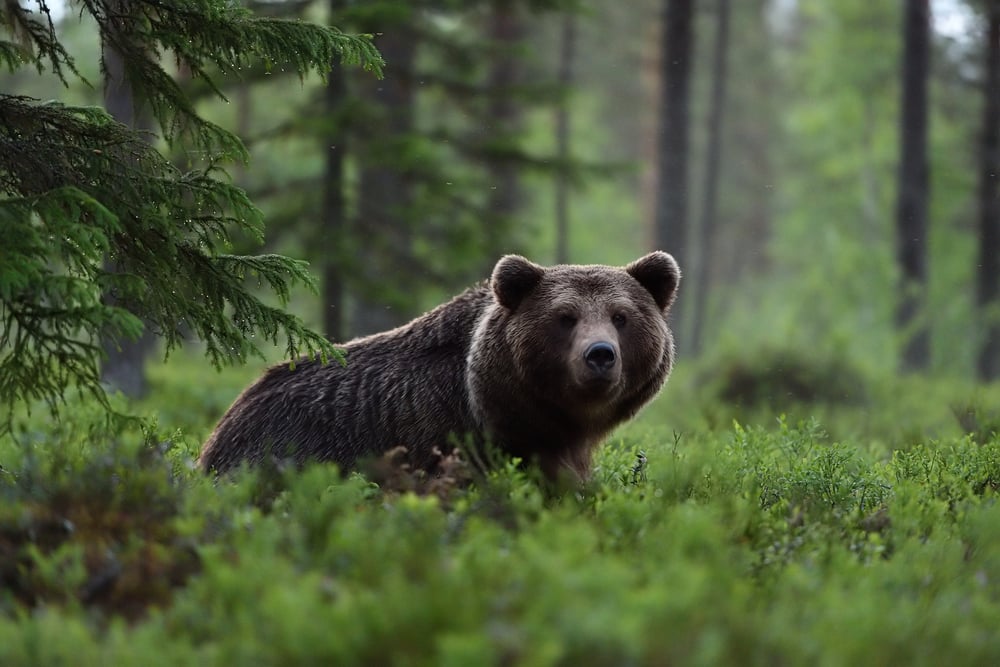
Polish soldiers found a Syrian brown bear cub in Iran in 1942. A shepherd boy had discovered the orphan, whose mother was likely killed by hunters, and traded him for a Swiss Army knife, some canned beef, and chocolate.
The soldiers fed the cub condensed milk from an empty vodka bottle and named him Wojtek—Polish for “joyful warrior.”
Wojtek grew up with the 22nd Artillery Supply Company. He learned to wrestle with the men, enjoyed long showers (sometimes using all the camp’s hot water), and developed a taste for beer.
When British regulations prevented the transport of pets to Italy for the Allied campaign, the soldiers officially enlisted him as a private. He received his own paybook, rank, and serial number.
During the Battle of Monte Cassino in May 1944, Wojtek watched his human companions carrying heavy crates of artillery shells to the front lines. Then he began helping.
The bear hoisted 100-pound crates that would have required four men to carry and delivered them to the guns, apparently unbothered by the shelling around him.
For his service, Wojtek was promoted to corporal. The 22nd Company changed its official emblem to an image of a bear carrying an artillery shell.
After the war, his comrades refused to send him back to Soviet-controlled Poland, fearing he would be used for propaganda. He retired to Edinburgh Zoo, where he lived until 1963.
Former soldiers visited regularly, bringing him beer and speaking to him in Polish. Bronze statues of Wojtek now stand in Edinburgh, Kraków, and several other cities.
A Marine Horse Who Made 51 Solo Trips Under Fire
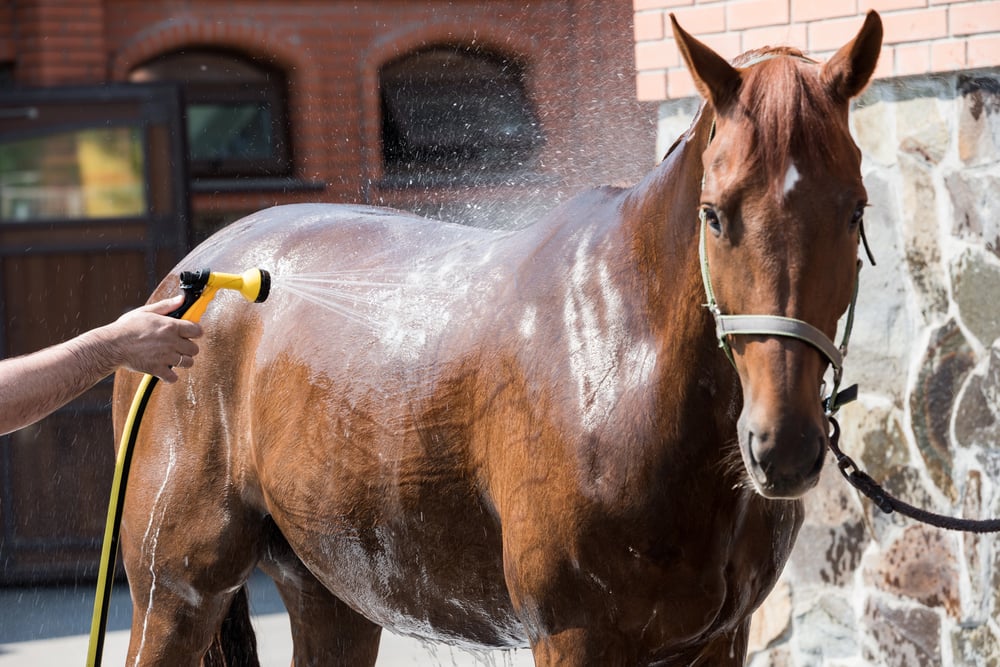
The mare came from a Seoul racetrack, sold to the U.S. Marines in 1952 for $250 by a stable boy who needed money for his sister’s prosthetic leg. She had been born to race, named “Morning Flame” in Korean, but the Marines called her Reckless after the recoilless rifles she would carry ammunition for.
Gunnery Sergeant Joseph Latham trained her to step over communication lines and barbed wire, to lie down in trenches when she heard “Incoming!”, and to navigate supply routes after being shown them just once or twice.
She learned so well that she could make the journey alone, without a handler.
During the Battle for Outpost Vegas in March 1953, Reckless made 51 solo trips in a single day, carrying nearly five tons of ammunition up steep mountain trails under constant enemy fire. She was wounded twice during the battle.
The Marines covered her with their own flak jackets when they could not spare men to lead her.
Reckless received battlefield promotions to corporal in 1953 and sergeant in 1954. In 1959, Marine Corps Commandant General Randolph M. Pate personally presided over her promotion to staff sergeant at Camp Pendleton, complete with a 19-gun salute and a 1,700-man parade.
She is the only horse to have held an official rank in the Marine Corps.
Her decorations included two Purple Hearts, a Marine Corps Good Conduct Medal, and both American and Korean Presidential Unit Citations. In 2016, she posthumously received the Dickin Medal—the animal equivalent of the Victoria Cross.
In 2019, she became the first recipient of the American Animals in War & Peace Medal of Bravery.
The Only Cat to Win the Victoria Cross Equivalent

A 17-year-old British sailor named George Hickinbottom found a sickly black-and-white cat wandering the dockyards of Hong Kong in 1948. He smuggled the cat aboard HMS Amethyst, where Simon, as they called him, quickly proved his worth by killing rats in the lower decks.
The captain discovered the stowaway and, rather than throwing him overboard, let Simon sleep in his cap.
In April 1949, the Amethyst was sailing up the Yangtze River during the Chinese Civil War when the People’s Liberation Army opened fire. One of the first shells tore through the captain’s cabin, killing him and seriously wounding Simon with shrapnel burns and embedded metal.
Medical staff did not expect the cat to survive the night.
Simon recovered, though he would never be the same. For the next 101 days, as the Amethyst remained stranded under siege, the cat patrolled the ship and killed rats that threatened the crew’s dwindling food supplies.
One particularly massive rat, nicknamed after Mao Zedong, had terrorized the ship until Simon dispatched it. The cat also visited wounded sailors in the sick bay, curling up beside them.
When the Amethyst finally escaped, Simon became an international celebrity. He received the Dickin Medal—and remains the only cat ever to do so.
The Royal Navy promoted him to the fanciful rank of “Able Seacat.” Thousands of letters arrived for him, so many that an officer was assigned solely to handle his correspondence.
Tragically, British quarantine regulations required Simon to be held upon arriving in England. He contracted a virus and died in November 1949, weakened by his war wounds.
The entire crew of the Amethyst attended his funeral, where he was buried with full military honors, his coffin draped with the Union Jack.
A Goat Who Got Demoted for Headbutting

The British Army’s tradition of goat mascots dates to the American Revolutionary War, when a goat allegedly wandered onto the battlefield at Bunker Hill and led Welsh troops into battle. Since then, the Royal Welsh regiment has maintained goat mascots drawn from the royal herd.
William “Billy” Windsor arrived in 2001, a cashmere goat with impeccable lineage. He became a salaried lance corporal with his own Army number, receiving daily rations of Guinness “to keep the iron up.”
His duties included leading parades and representing the regiment at official functions. Queen Elizabeth II personally presented him with a silver headdress.
In 2006, Billy failed to keep step during a parade celebrating the Queen’s birthday—and attempted to headbutt a drummer. The regiment demoted him to fusilier, the lowest enlisted rank.
He was the first goat to be demoted in decades.
After a period of what the Army described as “more acceptable behavior,” Billy earned back his lance corporal stripes. He served eight years before retiring with full honors, replaced by a successor who maintains the position today.
When Pigeons Saved More Lives Than Generals

Messenger pigeons received more Dickin Medals than any other animal—32 out of the 75 awarded since 1943. Their heroism is easily overlooked because it involved simply flying home, but that flight often meant navigating bullets, storms, falcons, and distances that would kill a lesser bird.
G.I. Joe may have saved more lives in a single flight than any other animal in military history. On October 18, 1943, British troops captured the Italian village of Calvi Vecchia ahead of schedule.
American bombers were already en route to level the town, and the British had no way to radio the air base. They released G.I. Joe, who flew 20 miles in 20 minutes.
He arrived just as the planes were warming up on the runway. Had he been five minutes later, over 100 British soldiers and Italian civilians would have died under American bombs.
Cher Ami became famous during the Meuse-Argonne Offensive of 1918, when the “Lost Battalion” of the 77th Infantry Division found itself surrounded by German forces and under friendly fire from American artillery. Seven pigeons had already been shot down trying to carry messages.
Cher Ami took off with the coordinates and was hit almost immediately. He kept flying, arriving at headquarters 25 miles away in 25 minutes—blinded in one eye, shot through the breast, and with one leg dangling by a tendon.
The message saved the remaining 194 men. The French awarded him the Croix de Guerre.
A Dog Who Charged a Machine Gun Nest
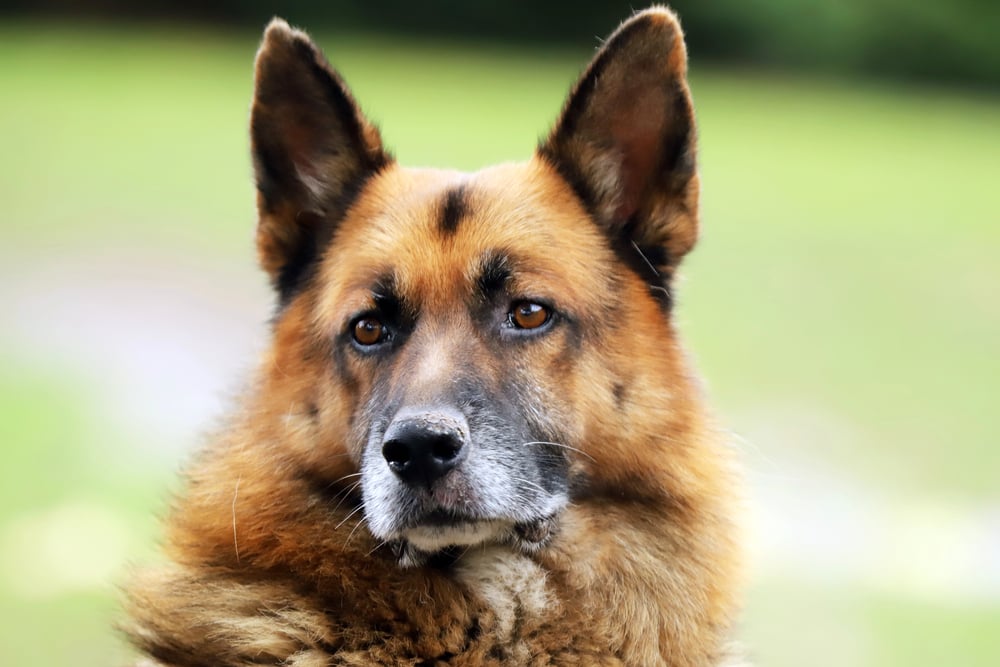
Chips was a German Shepherd-Collie-Malamute mix donated to the Dogs for Defense program in 1942 by the Wren family of New York. He trained as a sentry dog and shipped out to North Africa, Sicily, Italy, France, and Germany with the 3rd Infantry Division.
On July 10, 1943, during the invasion of Sicily, Chips and his handler were pinned down on a beach by Italian machine gun fire. Chips broke from his handler and charged the pillbox alone.
He grabbed the gun barrel and pulled it off its mount, then attacked the gunners. Four men surrendered to American troops with Chips still at one soldier’s throat.
That same day, Chips helped capture ten more Italian soldiers trying to ambush his unit. For his actions, he was recommended for the Distinguished Service Cross and awarded the Silver Star and Purple Heart.
However, the War Department revoked the awards after complaints that medals should not go to animals.
Chips allegedly bit General Dwight Eisenhower during a meeting—the future president reportedly said he understood, since that was what the dog was trained to do.
In 2018, 75 years after his heroics, Chips posthumously received the Dickin Medal. His boyhood owner John Wren, who was four years old when Chips came home from the war, flew to London for the ceremony.
The Poodle Who Became Air Chief Marshal
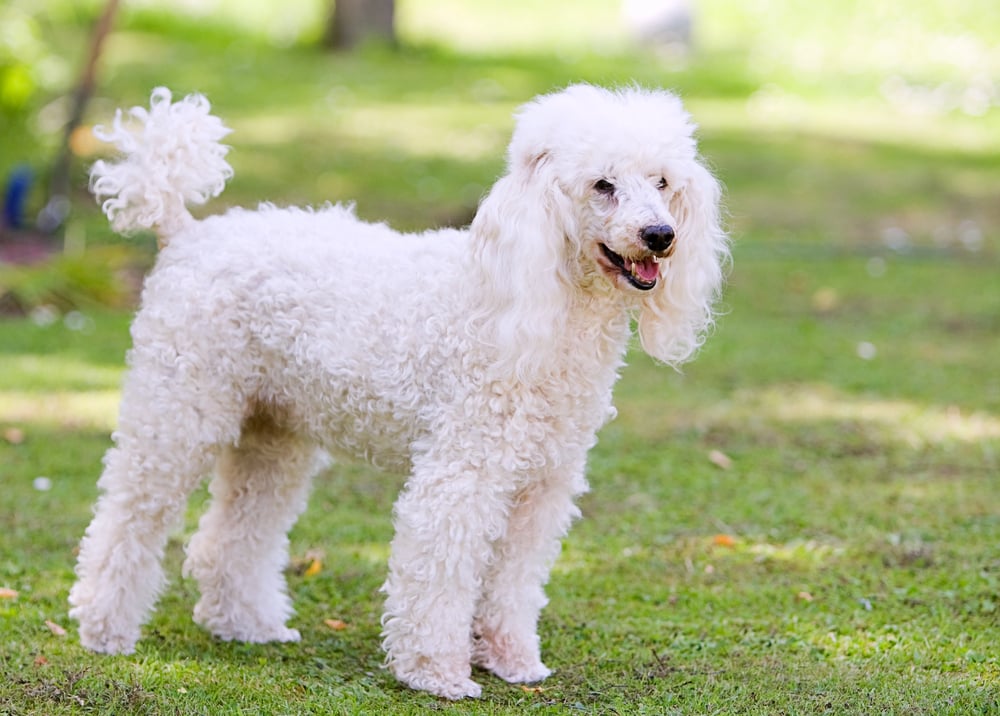
Not all military animal honors involve bravery. Fufu was a miniature white poodle belonging to Maha Vajiralongkorn, the Crown Prince of Thailand (now King Rama X).
At some point in the 2000s, the Crown Prince “promoted” Fufu to Air Chief Marshal in the Royal Thai Air Force—the highest rank in that branch.
The poodle attended formal dinners in evening attire complete with paw mitts. According to a U.S. diplomatic cable released by WikiLeaks, during one gala hosted by the American ambassador, Fufu “jumped up onto the head table and began lapping from the guests’ water glasses.”
The cable noted that “the Air Chief Marshal’s antics drew the full attention of the 600-plus audience members.”
When Fufu died in 2015, he received four days of Buddhist funeral rites and a cremation ceremony. Thai citizens shared images of the elaborate proceedings, though Thailand’s strict lèse-majesté laws made direct commentary on the royal family’s relationship with the dog legally risky.
A Dog Who Helped Win the Pacific War

Smoky was a four-pound Yorkshire Terrier found in an abandoned foxhole in New Guinea in 1944. An American soldier sold her to Corporal William Wynne for two Australian pounds.
Smoky accompanied Wynne on 12 combat missions and survived 150 air raids on New Guinea. She once ran through a 70-foot pipe under an airstrip to thread communication wire that would have taken men three days to install using heavy equipment.
The wire kept the airstrip operating for fighters and bombers during a critical period of the Pacific campaign.
After the war, Smoky pioneered animal-assisted therapy by visiting wounded soldiers in hospitals. She performed tricks that Wynne had taught her and boosted morale among men recovering from serious injuries.
She appeared on television 42 times and became one of the first therapy dogs in American history.
Multiple monuments honor her today, including a life-size bronze statue in Cleveland that depicts her sitting in a soldier’s helmet.
The First Recipients of the Animal Victoria Cross

Maria Dickin founded the People’s Dispensary for Sick Animals in 1917 to provide free veterinary care to the pets of London’s poor. When World War II began, she recognized that animals were contributing to the war effort and deserved recognition.
In 1943, she instituted the Dickin Medal, awarded for “conspicuous gallantry or devotion to duty while serving or associated with any branch of the Armed Forces or Civil Defence Units.” The first recipients were three pigeons: White Vision, George (also called Tyke), and Winkie.
White Vision flew 60 miles through fog and against 25-mile-per-hour headwinds to deliver coordinates of a ditched Catalina flying boat. Rescue crews reached the aircraft’s crew just before they would have died from exposure.
George carried a message 100 miles after his bomber went down off the Libyan coast, saving four men stranded on rafts in the Mediterranean. Winkie flew 120 miles covered in oil after escaping from a crashed Bristol Beaufort, leading rescuers to the crew.
The medal has now been awarded 75 times, plus one honorary award in 2014 to all animals who served in World War I.
Military Dogs Have Automatic Rank

A tradition in U.S. military working dog units holds that dogs outrank their handlers by one grade. If a handler is a sergeant, his dog is technically a staff sergeant.
This is not an official regulation but a widely observed custom meant to remind handlers that they must always treat their dogs with respect.
The practice serves a practical purpose. A handler who mistreats their dog would be “disrespecting a superior,” which carries different weight in military culture.
The dogs cannot enforce this, of course, but human soldiers will.
Some units take this more seriously than others. Military working dogs who complete distinguished service have received formal retirement ceremonies, with commanders reading citations of their accomplishments while the dogs sit at attention—or at least sit.
When Honor Meets the Absurd
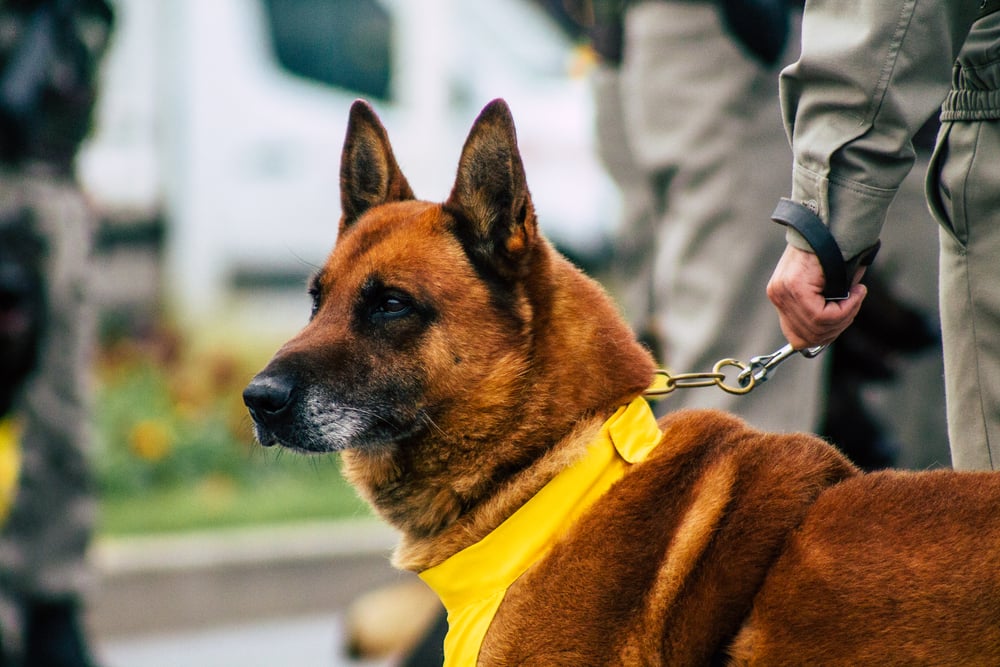
These stories exist along a spectrum from genuinely moving to intentionally comic. Sergeant Reckless carried wounded men to safety under artillery fire.
Nils Olav waddles through inspection ceremonies while guardsmen struggle not to laugh. Both hold military ranks.
What connects them is a human impulse to acknowledge service in the language we normally reserve for ourselves. A medal cannot mean anything to a pigeon.
A penguin does not understand that he outranks most humans. But the ceremonies and awards say something about the people who organize them—about wanting to honor sacrifice and loyalty wherever they find it.
The tradition continues. The Dickin Medal was most recently awarded in 2023 to Bass, a Belgian Malinois who served with U.S. Marine Special Operations in Afghanistan.
The penguin at Edinburgh Zoo will presumably receive another promotion the next time the Norwegian King’s Guard comes to visit.
And somewhere, a military working dog with more combat deployments than most soldiers is technically outranking the handler who feeds him.
More from Go2Tutors!

- The Romanov Crown Jewels and Their Tragic Fate
- 13 Historical Mysteries That Science Still Can’t Solve
- Famous Hoaxes That Fooled the World for Years
- 15 Child Stars with Tragic Adult Lives
- 16 Famous Jewelry Pieces in History
Like Go2Tutors’s content? Follow us on MSN.