Athletes Who Became Sports Broadcasters
The transition from playing field to broadcast booth has become one of the most natural career moves in professional sports. Former athletes bring insider knowledge, credibility, and often a touch of personality that resonates with fans who watched them compete.
While some struggle to articulate what made them great on the field, others have found a second act that rivals their playing days in both impact and longevity.Here is a list of athletes who successfully made the leap to sports broadcasting.
Tony Romo

When Tony Romo hung up his cleats after 14 seasons with the Dallas Cowboys, CBS took a gamble that changed sports broadcasting forever. The network skipped the usual apprenticeship period and immediately paired him with veteran play-by-play announcer Jim Nantz for their top NFL games.
Romo’s ability to predict plays before they happened became legendary, with his pre-snap analysis so accurate that some joked CBS had to ask him to dial it back. His enthusiasm was infectious, and suddenly other networks were scrambling to find their own recently retired quarterback who could replicate his success.
John Madden

John Madden never actually played in the NFL despite being drafted by the Philadelphia Eagles in 1958. A knee injury ended his playing career before it started, but his coaching legacy with the Oakland Raiders led to an even bigger second act.
After retiring as one of the youngest coaches to win 100 games, Madden joined CBS in 1979 and revolutionized football broadcasting with his enthusiastic, everyman approach. He pioneered the use of the telestrator to draw on screens during replays, making complex plays understandable for casual fans while keeping diehards engaged with his deep football knowledge.
Charles Barkley

The self-proclaimed ‘Round Mound of Rebound’ brought the same unfiltered personality from his 16-year NBA career to TNT’s studio show. Barkley joined Inside the NBA in 2000 and quickly became must-watch television alongside Ernie Johnson and Kenny Smith.
His willingness to speak candidly about players, teams, and controversial topics made him a cultural phenomenon beyond basketball. Barkley’s chemistry with fellow analyst Shaquille O’Neal, who joined in 2011, turned postgame analysis into entertainment that sometimes drew better ratings than the actual games.
Terry Bradshaw

Four Super Bowl rings with the Pittsburgh Steelers gave Bradshaw instant credibility, but it’s his boisterous personality that has kept him on Fox NFL Sunday since 1994. The Hall of Fame quarterback plays up his good ol’ boy persona from Louisiana, though colleagues insist he’s far sharper than he lets on.
Bradshaw’s willingness to be the butt of jokes and his unpredictable commentary style have made him a fixture on one of the longest-running pregame shows in sports television.
Michael Strahan
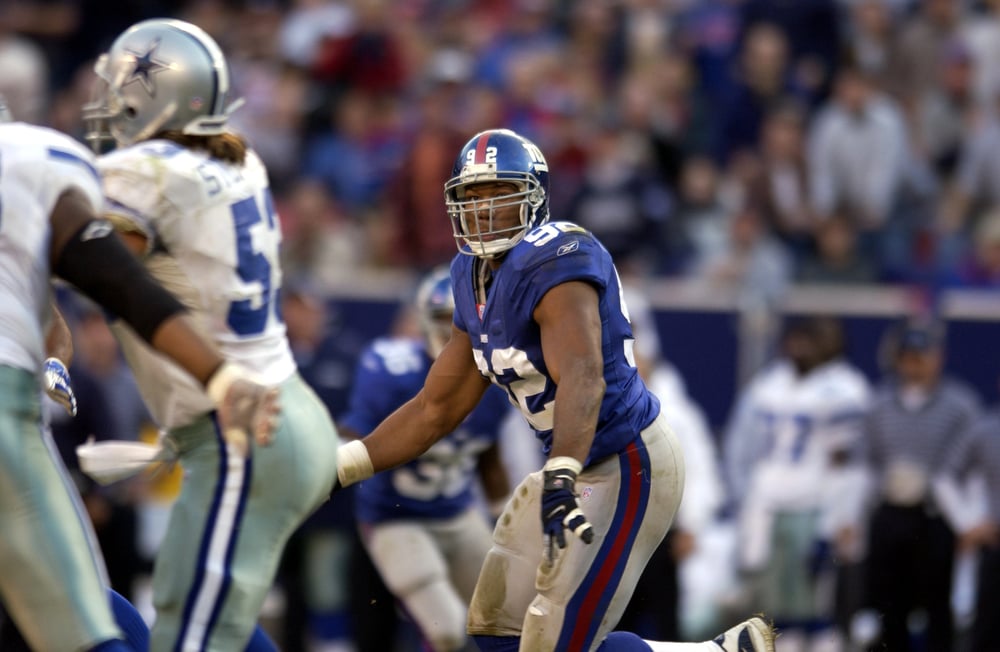
Few athletes have parlayed their sports career into mainstream media success like the former New York Giants defensive end. Strahan joined Fox NFL Sunday in 2008 and quickly became one of the faces of the network’s football coverage.
His gap-toothed smile and affable personality opened doors beyond sports, landing him co-hosting gigs on Live with Kelly and Ryan and Good Morning America. Strahan’s annual salary from his various broadcasting roles reportedly exceeds what he ever made during his Hall of Fame playing career.
Cris Collinsworth

The former Cincinnati Bengals wide receiver started his broadcasting journey on local radio before quickly ascending to national prominence. Collinsworth became the lead NFL analyst for NBC’s Sunday Night Football in 2009 when John Madden retired, and he’s collected 17 Sports Emmy Awards along the way.
His detailed breakdowns of pass routes and defensive schemes showcase the preparation he puts into each broadcast, and his voice has become synonymous with primetime football for over a decade.
Shaquille O’Neal
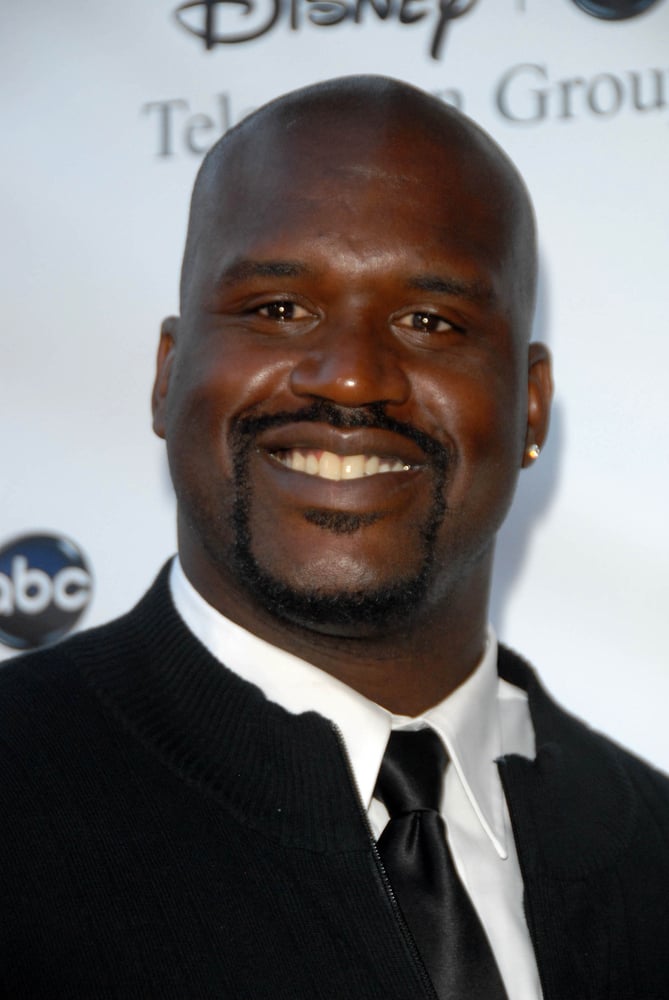
Shaq dominated the paint for 19 NBA seasons, winning four championships and establishing himself as one of the most physically imposing players in league history. When he joined TNT’s Inside the NBA in 2011, he brought his larger-than-life personality to the studio.
O’Neal created the popular ‘Shaqtin’ a Fool’ segment featuring bloopers from around the league, and his playful feuds with Charles Barkley became appointment television. Despite being the newest member of the core group, his presence helped elevate the show to new heights.
Troy Aikman

The Dallas Cowboys quarterback won three Super Bowls in the 1990s before transitioning to the broadcast booth with Fox in 2001. Aikman spent two decades as part of Fox’s top NFL broadcast team alongside Joe Buck before both made a surprising move to ESPN’s Monday Night Football in 2022.
His contract reportedly pays him around $18 million annually, making him one of the highest-paid sports broadcasters in the world. Aikman’s cerebral approach to analyzing quarterbacks reflects the same intelligence that made him successful on the field.
Tara Lipinski and Johnny Weir
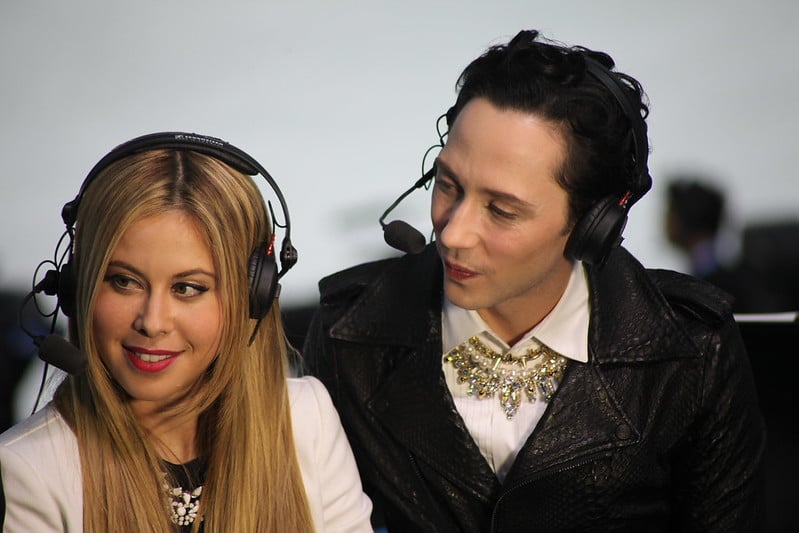
Figure skating found its most colorful commentary duo when Olympic gold medalist Lipinski partnered with Olympian Weir for NBC’s coverage. Lipinski won gold at the 1998 Olympics at just 15 years old, while Weir was a three-time U.S. national champion.
The pair became a cultural phenomenon when they started working together in 2014, with their fashion choices often making as many headlines as their commentary. Their willingness to give blunt critiques combined with deep technical knowledge made them the go-to voice for figure skating at the Winter Olympics.
Candace Parker
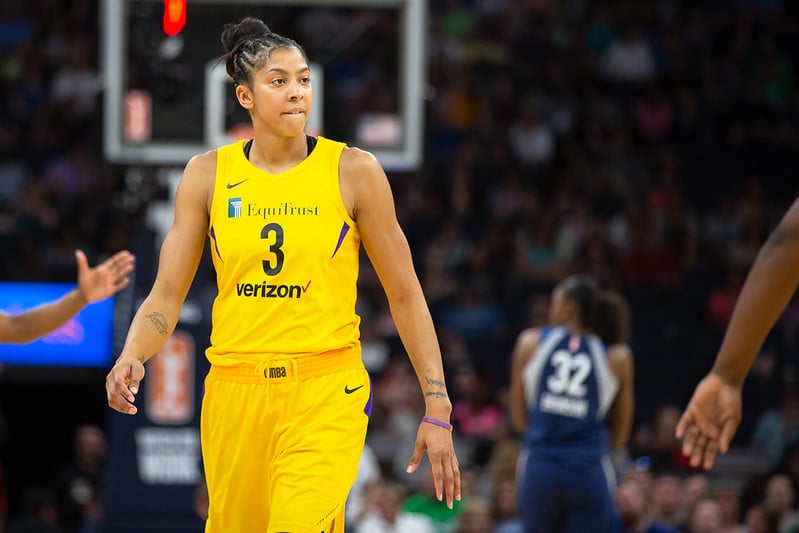
The three-time WNBA champion made history in 2023 when she became the first woman to provide color commentary for an NBA All-Star Game. Parker had already been juggling playing and broadcasting careers since 2018, when she signed a full-time analyst contract with ESPN while still competing professionally.
She retired from playing in 2024 but had already established herself as one of the most insightful basketball analysts on television, covering everything from NBA games to NCAA Tournament broadcasts.
Kenny Smith

The former Houston Rockets point guard won back-to-back NBA championships in 1994 and 1995 before joining TNT’s Inside the NBA in 1998. Smith serves as the analytical balance to Charles Barkley’s bombast and Shaquille O’Neal’s showmanship, often providing the X’s and O’s breakdowns while his co-hosts generate headlines.
His nickname ‘The Jet’ from his playing days reflects the quick wit he brings to studio discussions, and he’s been an integral part of making Inside the NBA one of the most decorated studio shows in sports television history.
Pat Summerall
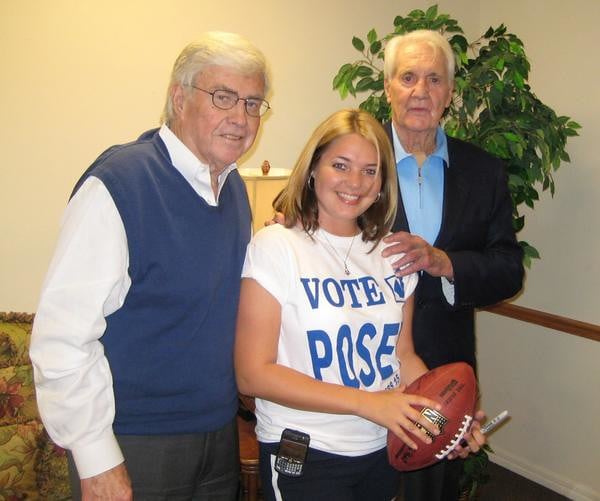
The former NFL kicker with the Cardinals and Giants started his broadcasting career in the 1960s and eventually became CBS’s lead NFL announcer in 1974. Summerall’s minimalist style stood in perfect contrast to the effusive John Madden when the two were paired together, creating one of the most iconic broadcasting partnerships in sports history.
His less-is-more approach let the game speak for itself, with Summerall providing just enough information at just the right moments. The duo worked together for nearly two decades across CBS and Fox.
Jessica Mendoza

The softball star won gold with Team USA at the 2004 Olympics and silver in 2008, all while setting multiple records at Stanford University. Mendoza made history as the first female analyst for a Major League Baseball game in 2015, and within a year she joined ESPN’s Sunday Night Baseball crew full-time.
Her ability to break down baseball strategy in clear, accessible terms earned respect from players and fans alike, even as she occasionally faced criticism simply for being a pioneer in a male-dominated field.
Grant Hill

Injuries robbed Grant Hill of what should have been an even greater NBA career, but the Duke standout still played 19 seasons and earned seven All-Star selections. Hill transitioned to broadcasting as the lead analyst for CBS and Turner Sports’ NCAA Tournament coverage, where he’s gotten better with each passing year.
His knowledge of college basketball from his days as one of Duke’s greatest players combined with his pro experience gives him a unique perspective on evaluating young talent during March Madness.
Bill Walton

The late Hall of Famer overcame a debilitating stutter to become one of the most distinctive voices in basketball broadcasting. Walton won NBA championships with the Portland Trail Blazers in 1977 and Boston Celtics in 1986 before embarking on a decades-long broadcasting career.
His tangential ramblings about everything from the Grateful Dead to the beauty of certain cities drove some viewers crazy and delighted others. Walton’s unabashed love for the game and willingness to let his personality shine made him unlike any other broadcaster.
Doris Burke
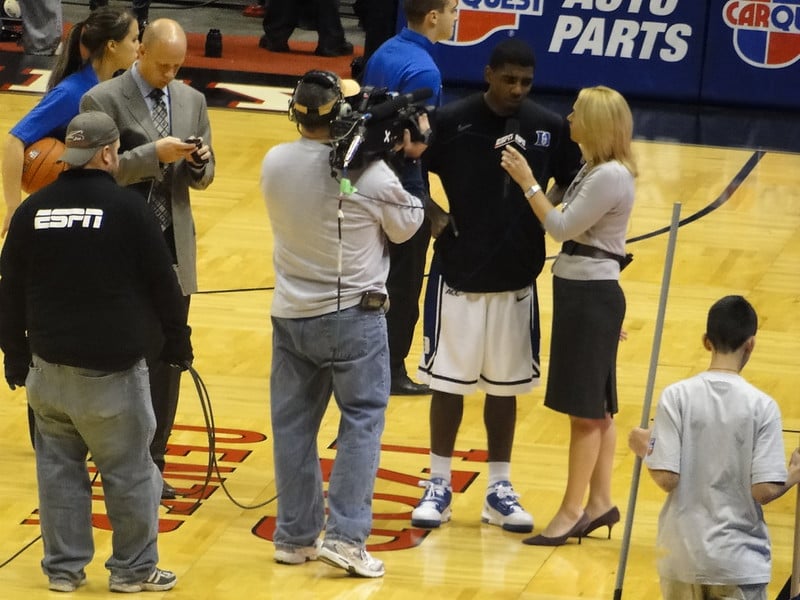
While Burke never played professionally, her standout college basketball career at Providence College gave her the credibility to become one of the most respected analysts in the sport. She’s been breaking barriers since the 1990s, working her way from sideline reporter to becoming the first woman assigned to an NBA Finals broadcast as a game analyst for ESPN and ABC.
Burke’s preparation is meticulous, her knowledge encyclopedic, and her insights have earned praise from players, coaches, and fellow broadcasters across the basketball world.
Joe Theismann
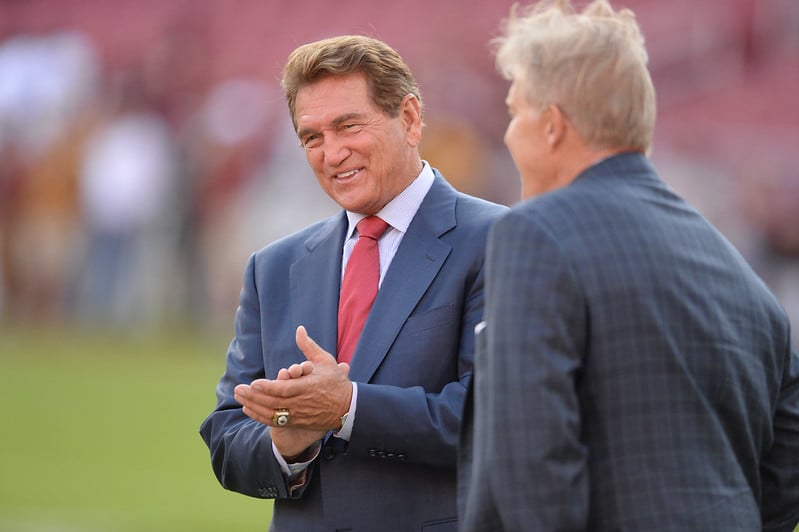
The former Washington quarterback had his playing career end in gruesome fashion with a broken leg on Monday Night Football in 1985. Theismann quickly transitioned to broadcasting and spent over two decades as an NFL analyst for networks including ESPN, where he worked on Monday Night Football from 1988 to 2006.
His detailed knowledge of quarterbacking and offensive schemes made him a natural fit, though his tendency toward verbosity occasionally drew criticism from viewers who preferred more concise analysis.
Phil Simms
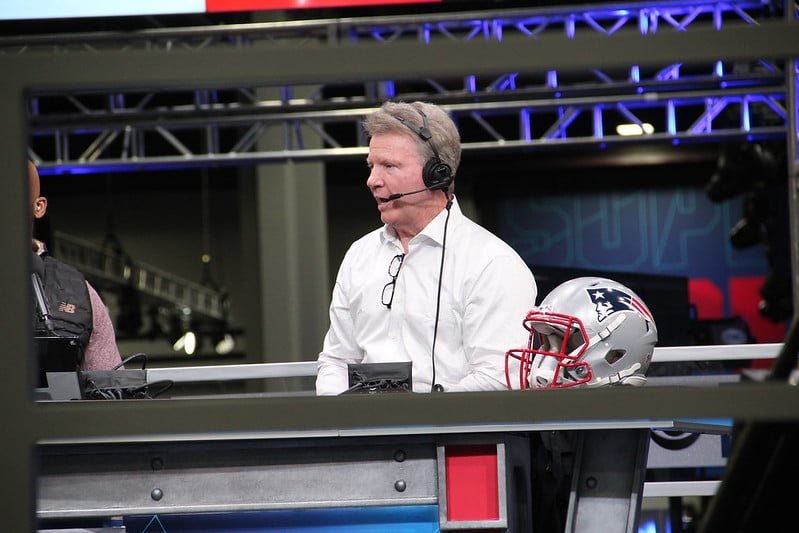
The former New York Giants quarterback won two Super Bowls before moving to the broadcast booth in the 1990s. Simms spent nearly two decades as CBS’s lead NFL analyst before being replaced by Tony Romo in 2017, a move that shocked many given Simms’ long tenure in the role.
His analysis focused heavily on quarterback play, which made sense given his background, and he worked numerous Super Bowls as CBS’s top analyst during his run with the network.
Doug Collins

The former Philadelphia 76ers guard had three distinct careers in basketball as a player, coach, and broadcaster. Collins played eight seasons in the NBA before knee injuries forced him into retirement, then coached several teams with mixed success.
His broadcasting work included stints at every major network covering the NBA, and his enthusiasm for the game remained evident whether he was coaching or calling games from the booth.
Lisa Leslie

The WNBA legend and first player to dunk in a league game transitioned seamlessly into broadcasting after her playing career ended. Leslie won four Olympic gold medals and two WNBA championships with the Los Angeles Sparks, establishing herself as one of the greatest women’s basketball players ever.
She’s worked as a commentator for networks including NBC and ABC, and in 2018 joined Fox Sports Florida as an Orlando Magic analyst, bringing the same professionalism to the booth that marked her Hall of Fame playing career.
The Broadcasting Evolution

The path from athlete to broadcaster has become increasingly lucrative and competitive. Networks now sign recently retired stars to massive contracts, hoping to replicate the Tony Romo phenomenon where fresh perspective combines with elite communication skills.
Not every great player makes a great broadcaster, and not every great broadcaster was an elite player. But when the formula works, these former athletes give fans insight that journalists simply can’t match, making the games we watch richer and more entertaining in the process.
More from Go2Tutors!

- The Romanov Crown Jewels and Their Tragic Fate
- 13 Historical Mysteries That Science Still Can’t Solve
- Famous Hoaxes That Fooled the World for Years
- 15 Child Stars with Tragic Adult Lives
- 16 Famous Jewelry Pieces in History
Like Go2Tutors’s content? Follow us on MSN.