Iconic Cartoon Characters and Their Voices
Behind every memorable cartoon character lies a voice that brings them to life.
These aren’t just people reading lines off a script.
They’re artists who create entire personalities through tone, pitch, and timing, transforming drawings into beings we remember for decades.
The best voice actors disappear into their work so completely that audiences forget there’s a real person behind the character.
Some have voiced hundreds of different personalities over careers spanning half a century, while others become so synonymous with a single role that the character and actor merge in the public imagination.
These voices shaped childhoods, defined entire eras of animation, and proved that what you hear can be just as powerful as what you see.
Here’s a closer look at the legendary voice actors and the characters they made unforgettable.
Mel Blanc
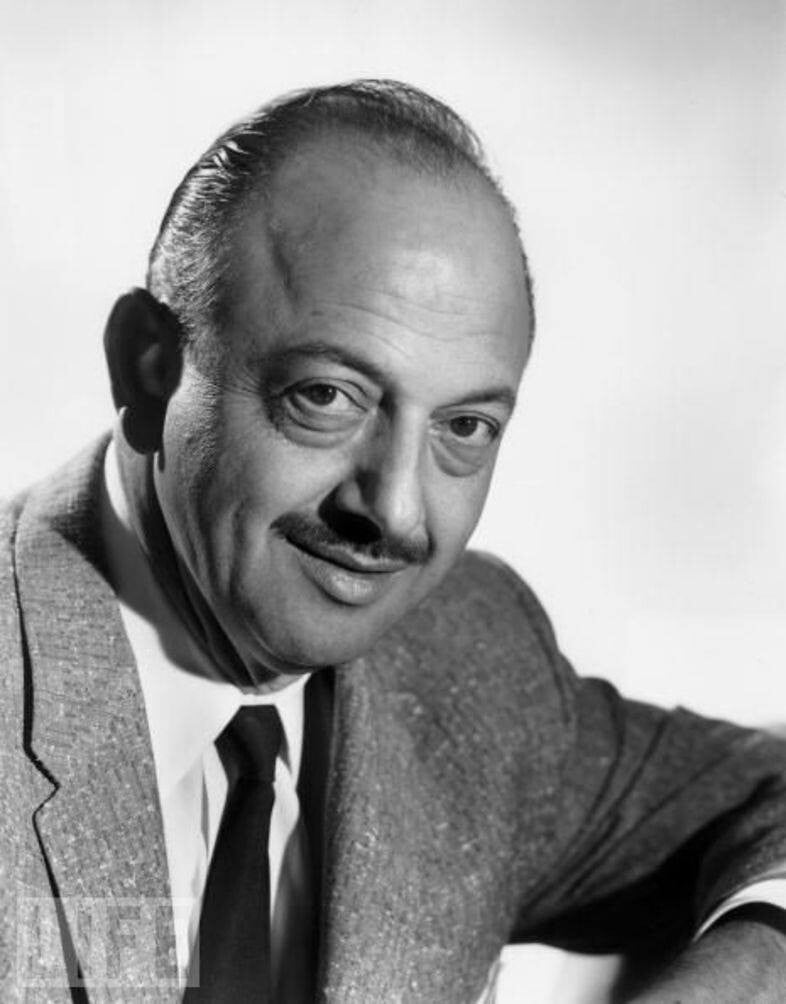
Mel Blanc created voices for an estimated 90 percent of Warner Bros. characters during the Golden Age of Animation, including Bugs Bunny, Daffy Duck, Porky Pig, Tweety, Sylvester the Cat, Yosemite Sam, Foghorn Leghorn, and dozens more.
The man earned the nickname ‘The Man of 1,000 Voices,’ though that might have been selling him short.
Over his career spanning more than 60 years, he appeared in over 5,000 cartoons and created over 400 different voices.
What made Blanc truly remarkable wasn’t just the quantity but the distinctiveness of each character.
He invented Bugs Bunny’s tough guy accent as a hybrid of Brooklyn and the Bronx, gave Foghorn Leghorn a Texas drawl, and created French lover Pepe Le Pew’s unmistakable romantic lilt.
Even more impressive, Blanc could have his characters impersonate each other, like when Bugs mimicked Daffy and vice versa, a feat that fellow voice actors describe as nearly impossible.
Blanc joined Warner Bros. in 1936 and by 1944 became the first voice actor to receive on-screen credit for his work.
According to his autobiography, he asked for and received this credit from studio boss Leon Schlesinger after being denied a salary raise.
That compromise changed the industry forever, giving visibility to voice actors who’d previously worked in complete anonymity.
Blanc also voiced Barney Rubble and Dino on The Flintstones, Mr. Spacely on The Jetsons, and numerous other characters for Hanna-Barbera’s television cartoons.
His work continued right up until his death in 1989, and his gravestone at Hollywood Forever Cemetery bears the perfect epitaph: ‘That’s All Folks!’
Nancy Cartwright

Nancy Cartwright voices Bart Simpson on The Simpsons, a role she’s played since the character debuted in animated shorts on The Tracey Ullman Show in 1987.
The twist that surprises most people is that Cartwright originally intended to audition for Lisa Simpson.
When she arrived at the audition, she found Lisa didn’t have much personality at the time, but Bart was described as ‘devious, underachieving, school-hating, irreverent, and clever,’ which immediately grabbed her attention.
Series creator Matt Groening let her try out for Bart and gave her the job on the spot.
That snap decision created one of television’s most enduring characters.
Cartwright describes Bart’s voice as easy to perform compared with other characters, noting she’d previously used elements of it in shows like My Little Pony, Snorks, and Pound Puppies.
The recording sessions for the original shorts were often primitive, with dialog recorded on a portable tape deck in a makeshift studio above the bleachers on the set of The Tracey Ullman Show.
When the shorts spun off into a half-hour show in 1989, Bart quickly became the show’s breakout personality, with his popularity in 1990 and 1991 becoming known as ‘Bartmania.’
The character was named one of the 100 most important people of the 20th century by Time magazine, which is remarkable considering he’s a fictional 10-year-old troublemaker.
Cartwright also voices Nelson Muntz, Todd Flanders, Ralph Wiggum, and numerous other Springfield residents, proving her range extends well beyond Bart’s rebellious energy.
Tom Kenny

Tom Kenny has been voicing SpongeBob SquarePants since the show’s debut in 1999, along with Gary the Snail, the French Narrator, and appearing in live-action as Patchy the Pirate.
Before SpongeBob made him famous, Kenny worked in sketch comedy on shows like The Edge and Mr. Show, where he met his wife Jill Talley, who voices Karen on SpongeBob.
Kenny actually first used the voice for SpongeBob on a minor female alligator character named Al in Rocko’s Modern Life, where he also voiced the main character Heffer Wolfe.
When creator Stephen Hillenburg developed SpongeBob SquarePants, he showed Kenny a clip of that character to remind him of the voice he wanted.
Kenny described SpongeBob’s voice as somewhere between a child and an adult, saying ‘Think a Stan Laurel, J. Lewis kind of child-man.’
To produce SpongeBob’s trademark laugh, Kenny pats his throat while saying ‘ah.’
The show became a massive commercial success and cultural phenomenon that’s now in its 36th season with no end in sight.
Kenny has received two Daytime Emmy Awards and two Annie Awards for his voice work as SpongeBob and the Ice King from Adventure Time.
Frank Welker

Frank Welker might be the most successful voice actor you’ve never heard of, which is ironic considering you’ve almost certainly heard his work.
He’s been the voice of Fred Jones on Scooby-Doo since 1969 and took over as Scooby himself in 2002, making him the sole continuous presence across more than five decades of the franchise.
Welker specializes in animal sounds and creature effects, which means he’s voiced everything from Abu in Aladdin to Megatron in multiple Transformers series.
His vocal range is staggering.
He can do the dignified heroism of Fred, the comedic cowardice of Scooby, and the menacing growls of dozens of monsters, all in the same recording session.
Dan Castellaneta
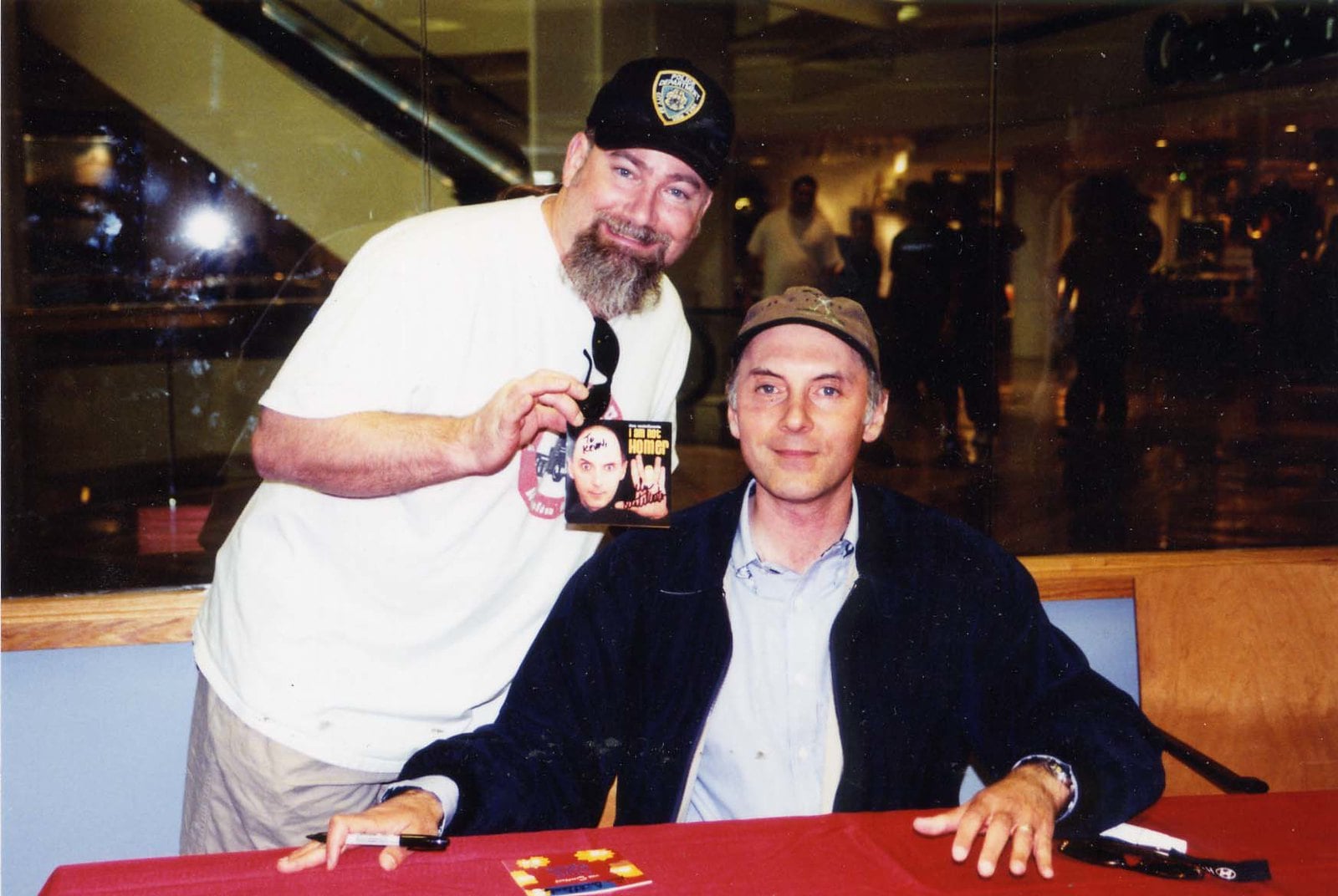
Dan Castellaneta voices Homer Simpson, along with Grampa Simpson, Krusty the Clown, Groundskeeper Willie, Mayor Quimby, Barney Gumble, and numerous other Springfield residents.
Homer’s signature ‘D’oh!’ became so iconic that it was added to the Oxford English Dictionary in 2001.
Castellaneta based Homer’s voice partly on Walter Matthau, creating that distinctive gravelly tone that’s instantly recognizable worldwide.
What’s impressive about his Homer work is the emotional range he brings to a character who could easily have remained one-dimensional.
Homer can be stupid, thoughtful, angry, loving, selfish, and heroic, often within the same episode, and Castellaneta navigates all those shifts seamlessly.
Tara Strong

Tara Strong has voiced so many beloved characters that listing them all would require its own article.
Her most famous roles include Timmy Turner in The Fairly OddParents, Bubbles in The Powerpuff Girls, Raven in Teen Titans, Twilight Sparkle in My Little Pony: Friendship is Magic, and Harley Quinn in various DC animated projects.
What’s remarkable about Strong’s career is her ability to switch between vastly different vocal styles.
She can do the high-pitched innocence of Bubbles, the deep monotone of Raven, and the manic energy of Harley Quinn, making each character sound completely unique.
Her versatility has made her one of the most in-demand voice actors in the industry.
Jim Cummings

Jim Cummings took over as Winnie the Pooh in 1988 after the death of original voice actor Sterling Holloway, and he’s been the bear of very little brain ever since.
He’s also the voice of Tigger, having assumed that role from Paul Winchell.
Voicing both characters means Cummings essentially carries the entire Hundred Acre Wood on his shoulders, and he does it so well that most people don’t realize the original actors are long gone.
His Pooh is gentle and warm, while his Tigger is bouncy and energetic, two completely different energies that he can switch between instantly.
Beyond the Hundred Acre Wood, Cummings has voiced Darkwing Duck, Cat in CatDog, and countless villains across multiple Disney projects.
Hank Azaria

Hank Azaria voices Moe Szyslak, Chief Wiggum, Apu Nahasapeemapetilon, Comic Book Guy, and dozens of other characters on The Simpsons.
His vocal range is impressive, from Moe’s gravelly depression to Comic Book Guy’s sarcastic nasally whine.
Azaria has won six Emmy Awards for his work on the show, more than any other cast member.
He’s also worked extensively in live-action films and television, making him one of the few voice actors to successfully maintain parallel careers in front of the camera.
His ability to disappear into characters extends beyond animation; he’s a skilled impressionist and mimic who brings that same chameleonic quality to everything he does.
June Foray

June Foray was Rocky the Flying Squirrel, Granny from the Looney Tunes cartoons, and Cindy Lou Who in the original How the Grinch Stole Christmas.
Her career spanned eight decades, from the 1930s until her death in 2017 at age 99.
Foray worked alongside Mel Blanc at Warner Bros. but never received the same screen credit or recognition, a disparity she addressed throughout her career as she advocated for voice actors’ rights and visibility.
She was instrumental in getting voice acting recognized as a legitimate category at the Emmy Awards, finally winning her own Emmy in 2012 at age 94 for her role on The Garfield Show.
Billy West

Billy West is the voice of Fry, Professor Farnsworth, Dr. Zoidberg, and Zapp Brannigan on Futurama, along with dozens of other characters on that show alone.
He also took over as Bugs Bunny, Elmer Fudd, and other Looney Tunes characters after Mel Blanc’s death, a daunting task that West handled with respect for the originals while adding his own subtle touches.
Before Futurama made him famous, West voiced Stimpy in The Ren & Stimpy Show, creating that character’s distinctive voice that was equal parts infantile and disturbing.
His ability to voice multiple main characters on the same show without them sounding similar is remarkable.
Fry and Farnsworth could be related (they are, actually), but their voices are distinct enough that you never confuse them.
Where voices live forever

The voice actors who created these characters did more than just read lines.
They gave personality, emotion, and life to drawings, transforming them into beings that feel as real as any live-action performer.
Many of these voices have outlived the actors who created them, passed down to new performers or preserved forever in recordings.
Children today still watch cartoons from the 1940s and laugh at the same jokes, recognize the same vocal inflections, and connect with characters whose voices were recorded before their grandparents were born.
That’s the unique power of animation and voice acting.
While live-action actors age and change, cartoon characters and their voices remain frozen in time, eternally young and ready to entertain new generations.
The best voice actors understood they weren’t just performing for the moment; they were creating something that would echo forward through time, shaping how future audiences would hear and understand these characters forever.
More from Go2Tutors!

- The Romanov Crown Jewels and Their Tragic Fate
- 13 Historical Mysteries That Science Still Can’t Solve
- Famous Hoaxes That Fooled the World for Years
- 15 Child Stars with Tragic Adult Lives
- 16 Famous Jewelry Pieces in History
Like Go2Tutors’s content? Follow us on MSN.