Automotive Designs That Inspired Films
Cars have always been more than just transportation. They’re symbols of freedom, power, and style.
Some vehicles made such a strong impression on designers and directors that they became the stars of movies, not just background props. These cars didn’t just show up on screen—they shaped entire storylines, influenced character development, and sometimes even defined what a film looked like from start to finish.
Let’s take a look at the vehicles that left the garage and rolled straight into cinema history.
Aston Martin DB5

James Bond needed a car that matched his sharp suits and cool demeanor. The Aston Martin DB5 delivered exactly that in ‘Goldfinger’ back in 1964.
This wasn’t just a pretty face with four wheels—it came loaded with gadgets that seemed impossible at the time. Ejector seats, machine guns hidden behind the headlights, and a bulletproof shield made this car a character all by itself.
The sleek lines and sophisticated British engineering made it the perfect match for 007’s personality. Every spy movie that came after had to measure up to what this Aston Martin created.
1959 Cadillac Miller-Meteor

‘Ghostbusters’ needed a vehicle that could haul equipment and look weird enough to fit the job. The Ecto-1, built from a 1959 Cadillac ambulance, became one of the most recognized movie cars ever made.
That long white body with red accents and all the ghost-hunting gear strapped on top made it unforgettable. The car’s unusual shape came from its original purpose as a combination ambulance and hearse.
When audiences saw that Cadillac rolling down the street with its siren wailing, they knew the Ghostbusters were on their way.
DMC DeLorean

The stainless steel body and gull-wing doors of the DeLorean made it look like it came from the future even before ‘Back to the Future’ turned it into a time machine. John DeLorean’s ambitious but troubled car company only produced this model for a couple of years in the early 1980s.
The film’s creators needed something that looked futuristic without being a typical spaceship design. Those distinctive doors opening upward and that brushed metal exterior gave the DeLorean an otherworldly quality that computer graphics couldn’t match.
The car’s real-world production problems and the company’s collapse made the movie’s time-traveling version even more legendary.
1973 Ford Falcon XB GT

Mad Max roared across Australian wastelands in a heavily modified black Ford Falcon that became known as the Interceptor. The original Falcon XB was already an aggressive-looking muscle car before the film’s designers added the supercharger and blacked out every detail.
That menacing front end with its imposing grille made it look like a predator hunting across the desert. The car’s raw power matched the post-apocalyptic setting perfectly.
Australian car culture heavily influenced the film’s visual style, and the Falcon represented the last remnants of civilization’s automotive glory.
1968 Ford Mustang GT 390

Steve McQueen piloted a dark green Mustang through San Francisco’s streets in ‘Bullitt,’ creating what many consider the greatest car chase in film history. The 390 cubic inch V8 engine gave this Mustang serious muscle.
Those ten minutes of squealing tires and roaring engines on San Francisco’s hills changed how directors approached action sequences. The car didn’t have flashy paint or racing stripes—just pure American muscle in a no-nonsense package.
McQueen did much of the driving himself, which added real authenticity to every frame.
Batmobile (1989 version)

Tim Burton’s vision of Gotham City needed a vehicle that matched its dark, Gothic atmosphere. Designer Anton Furst created a Batmobile that looked more like a jet fighter than a car, with a turbine engine and armor plating.
The long, low profile and that distinctive fin made it instantly recognizable. This wasn’t Adam West’s campy 1960s Batmobile—this machine meant business.
The design influenced every superhero vehicle that followed, proving that functional military-style vehicles could also be visually stunning.
1977 Pontiac Trans Am

‘Smokey and the Bandit’ turned the black and gold Trans Am into an icon of American rebellion and freedom. Burt Reynolds didn’t need superpowers or gadgets—just a fast car, a long highway, and the law chasing him.
The screaming chicken decal on the hood became one of the most copied car graphics of the late 1970s. Pontiac’s sales jumped dramatically after the film’s release.
That T-top roof and the rumbling V8 represented everything Americans loved about muscle cars and the open road.
1961 Ferrari 250 GT California

Ferris Bueller’s dad treasured his Ferrari more than almost anything, which made its starring role in the film’s most memorable scene perfect. The sleek Italian convertible represented everything about wealth, taste, and the lifestyle Ferris was temporarily escaping into.
Only about 100 of these Ferraris were ever made, making them extraordinarily valuable. The car’s deep red color and elegant lines showed why people collect classic sports cars.
When it met its fate in that glass garage, audiences felt the loss almost as much as the fictional father did.
Mini Cooper

‘The Italian Job’ from 1969 made the tiny British Mini into an unlikely action star. These small cars zipped through Turin’s streets, down stairs, and even through buildings in one of cinema’s most creative chase sequences.
The contrast between their cute, compact design and the serious heist plot created memorable tension. Red, white, and blue Minis became symbols of British ingenuity and cheekiness.
The 2003 remake updated the cars but kept that essential Mini character that made them perfect for tight spaces and quick getaways.
1958 Plymouth Fury
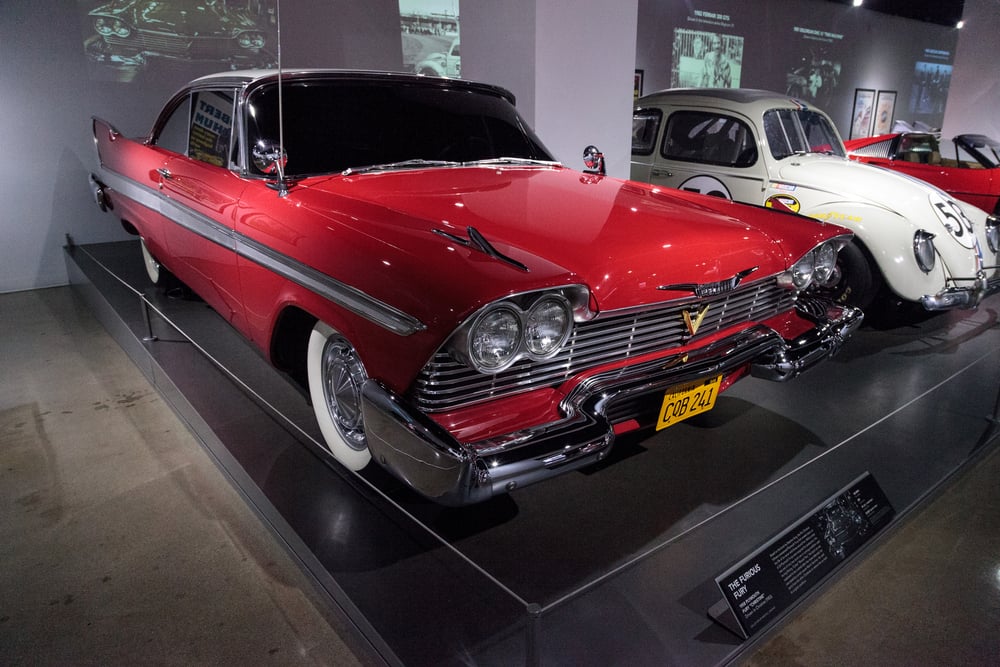
‘Christine’ took a beautiful classic car and turned it into a terrifying villain. The Fury’s distinctive fins and chrome trim made it gorgeous, but Stephen King’s story and John Carpenter’s direction made it deadly.
That bright red paint and white roof looked innocent until the car started rebuilding itself and hunting people down. Plymouth only made the Fury in red for one year, making the film’s choice perfect.
The car’s personality came through in every scene, proving that sometimes the vehicle tells the story better than the people do.
Lotus Esprit S1

James Bond drove another memorable vehicle in ‘The Spy Who Loved Me’ when his Lotus Esprit transformed into a submarine. The wedge-shaped design of the Esprit looked futuristic in 1977 and still holds up today.
That white exterior became famous when it drove straight off a pier and kept going underwater. Lotus built six Esprits for filming, including one that actually worked as a submarine with a different driver inside.
The car showed that Bond’s vehicles could do more than shoot and speed—they could adapt to any situation.
1951 Hudson Hornet

Pixar’s ‘Cars’ introduced Doc Hudson, a character based on the real Hudson Hornet that dominated NASCAR in the early 1950s. The actual Hornet’s low center of gravity and powerful six-cylinder engine made it nearly unbeatable on the track.
Its smooth, streamlined design influenced American car styling for years. The film’s animators studied the real car’s proportions and movement to create Doc’s character.
Young viewers learned about a classic car they might never have discovered otherwise.
1976 AMC Pacer

Wayne’s World showed off one of the dullest cars around – yet turned it into something likable. With its rounded shape and tons of windows, the Pacer seemed like a mobile aquarium.
Back then, AMC thought it’d feel modern, yet most people just saw it as odd. The movie didn’t hide that quirkiness; instead, it used it to fit Wayne and Garth’s quirky vibe.
Remember when they all sang along to ‘Bohemian Rhapsody’? That moment stuck, even if the car looked kinda sketchy.
Shelby Cobra

Ford v Ferrari introduced today’s viewers to the classic AC Cobra along with its powerful V8 muscle. Instead of just copying others, Shelby dreamed up stuffing a big Ford motor into a slim British roadster – turning heads instantly.
With smooth lines and a bold look, the vehicle felt both sleek and tough. That movie highlighted how building this machine shifted motorsport forever, showing US tech could stand tall beside European finesse.
Meanwhile, those side-mounted exhausts plus widened wheel arches started shaping what American speed looked like.
Volkswagen Beetle

Herbie took a plain German compact car, then turned it into a speedy underdog with charm. With its curvy shape and cheerful look, the Beetle felt warm and likable – something flashier like a Ferrari just couldn’t match.
People bought tons of them since they cost less and worked well, not because they wowed anyone visually. A couple racing lines along with the number 53 gave the simple ride extra flair while keeping its true nature intact.
Children seeing those movies later dreamed of owning one, even knowing it wouldn’t talk or steer on its own.
1949 Mercury

Cobra handed Sylvester Stallone a one-of-a-kind Mercury coupe, built to fit the movie’s raw 1950s vibe. With its lowered roof and huge motor, it screamed classic hot rod spirit that shaped U.S. car trends for years.
Dark finish paired with shiny trim – it seemed ready to attack, even parked. Long front end plus bold posture? Perfect match for a no-nonsense detective who ignored the rulebook.
Even today, modifiers look back at this flick when crafting their own Merc restomods.
1970 Chevrolet Chevelle SS

John Wick rolled up in a dark Chevelle SS, showing off his vibe without saying a word. This ride wasn’t flashy like a Mustang or loud like a Charger – yet real car fans gave it props.
Painted head to toe in black, barely any shine, it stayed low-key yet tough. It showed up hard during the wild first scene, kicking things off strong.
After the movie dropped, more folks remembered how cool these old-school beasts really are.
Where metal blends into old film

These rides shifted how moviemakers saw cars on screen. Not mere background items or brand deals – instead, they shaped stories and inspired countless creators, visionaries, and fans alike.
Top film vehicles act like real personalities, sticking in viewers’ minds just like the stars themselves. Modern EVs and digital-built models now have to match that deep fan appeal.
No matter what happens, those legendary builds will forever stay iconic – in both car culture and Hollywood lore.
More from Go2Tutors!

- The Romanov Crown Jewels and Their Tragic Fate
- 13 Historical Mysteries That Science Still Can’t Solve
- Famous Hoaxes That Fooled the World for Years
- 15 Child Stars with Tragic Adult Lives
- 16 Famous Jewelry Pieces in History
Like Go2Tutors’s content? Follow us on MSN.



