Biology Terms To Know
Biology class throws a lot of vocabulary at you. Some terms sound intimidating until you understand what they actually mean.
Others seem simple but carry more weight than you’d expect. Knowing these terms helps whether you’re studying for an exam, reading science news, or just trying to understand how living things work.
Homeostasis

Your body constantly adjusts itself to stay balanced. When you get too hot, you sweat. When your blood sugar drops, you feel hungry.
That’s homeostasis in action—the process living things use to maintain stable internal conditions despite changes in the environment. The concept applies to everything from single cells to entire ecosystems.
A cell maintains the right balance of water and salt. A forest maintains its temperature and humidity levels.
Without homeostasis, living systems fall apart quickly.
Metabolism

People talk about metabolism like it’s one thing, but it’s actually thousands of chemical reactions happening in your cells at once. Some reactions break down food to release energy.
Others use that energy to build new proteins, repair damage, and keep you alive. Fast metabolism, slow metabolism—these terms describe how quickly your body processes energy.
But metabolism does more than determine whether you gain weight easily. It controls growth, reproduction, and response to the environment.
Photosynthesis

Plants make their own food using sunlight, water, and carbon dioxide. The process seems almost magical when you think about it.
Light energy converts into chemical energy stored in sugar molecules. Oxygen gets released as a byproduct, which works out well for the rest of us who need it to breathe.
Photosynthesis happens in chloroplasts, the green structures inside plant cells. The green color comes from chlorophyll, a pigment that absorbs light.
Without photosynthesis, the entire food chain collapses since almost all energy on Earth ultimately comes from the sun.
Mitosis

Cells divide to create more cells. Mitosis is the process where one cell splits into two identical daughter cells.
Your body does this constantly to grow, repair injuries, and replace old cells. The process follows specific steps.
DNA copies itself first so each new cell gets a complete set of genetic instructions. Then the cell’s contents divide down the middle.
Each daughter cell ends up with the same genetic information as the parent cell. When mitosis goes wrong, you can end up with problems like cancer.
Meiosis
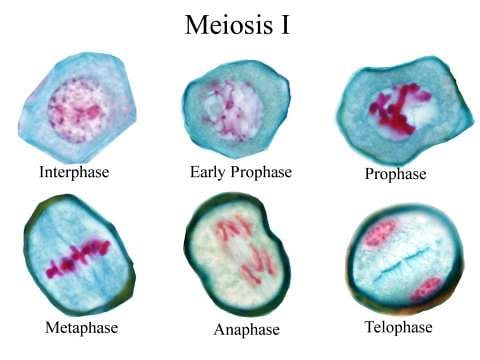
This type of cell division creates reproductive cells—sperm and eggs. Unlike mitosis, meiosis produces cells with half the normal amount of DNA.
That matters because when sperm and egg combine during fertilization, they create a cell with the full amount again. Meiosis also shuffles genetic information.
The reproductive cells you produce have different combinations of genes than either of your parents’ cells. This genetic mixing explains why siblings look similar but not identical (unless they’re identical twins).
DNA
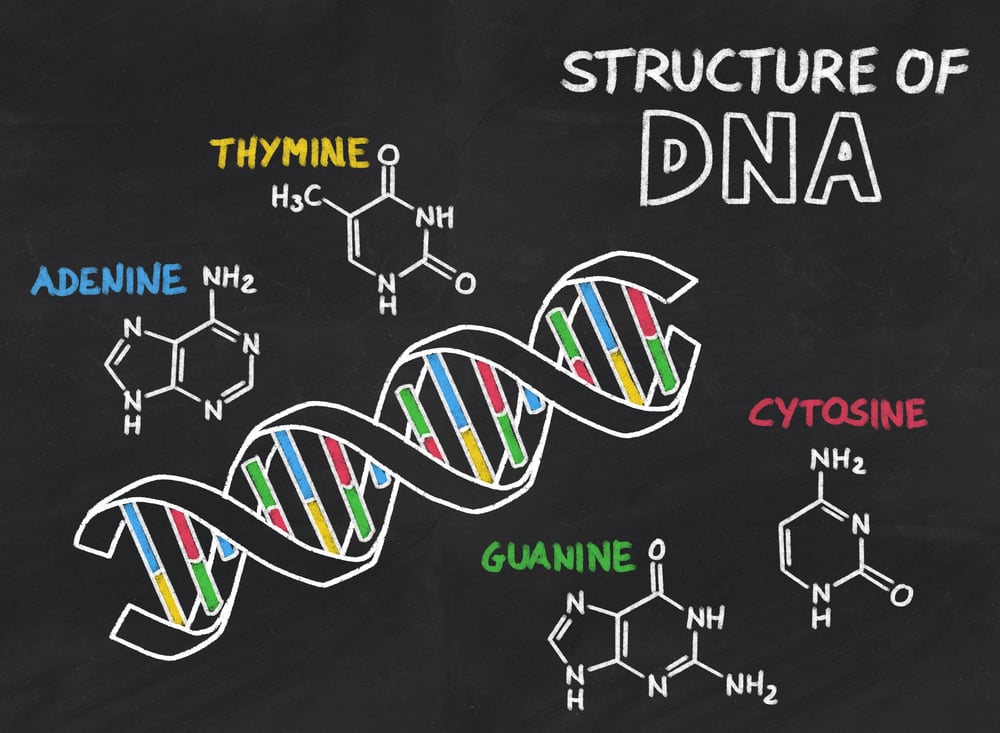
Deoxyribonucleic acid stores the instructions for building and maintaining every living organism. The molecule twists into a double helix shape, like a twisted ladder.
The rungs of that ladder are made from four bases: adenine, thymine, guanine, and cytosine. The sequence of those bases determines everything from your eye color to your risk for certain diseases.
DNA gets copied and passed down through generations. Mutations—changes in the DNA sequence—drive evolution by creating variation.
RNA
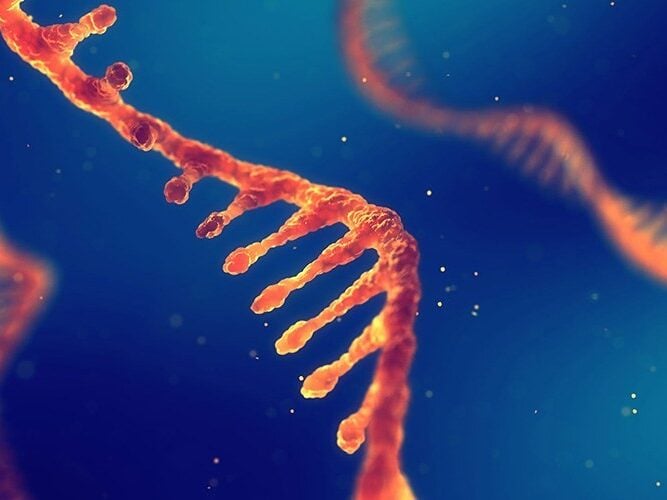
Ribonucleic acid works as DNA’s messenger and helper. When your cells need to make a protein, they copy the relevant DNA section into RNA.
That RNA molecule carries the instructions out of the nucleus to the ribosomes, which are the protein-making factories. RNA comes in several types.
Messenger RNA (mRNA) carries genetic information. Transfer RNA (tRNA) brings amino acids to build proteins. Ribosomal RNA (rRNA) helps assemble those proteins.
The COVID-19 vaccines that use mRNA technology work by giving cells instructions to make a harmless piece of the virus, which teaches the immune system to recognize the real thing.
Enzyme
Enzymes speed up chemical reactions without getting used up in the process. Your body needs these proteins to break down food, copy DNA, and perform countless other tasks.
Each enzyme works on specific molecules, fitting together like a lock and key. Temperature and pH affect how well enzymes function.
Too hot or too acidic, and the enzyme changes shape and stops working. That’s why your body temperature stays within a narrow range—your enzymes need specific conditions to do their jobs.
ATP

Adenosine triphosphate serves as the energy currency of cells. When cells break down glucose during cellular respiration, they produce ATP.
Then cells spend that ATP to power everything they do: muscle contractions, nerve signals, protein building, and active transport. The molecule has three phosphate groups.
Breaking the bond between the last two phosphate groups releases energy. Cells can recharge the molecule by adding the phosphate group back on.
This cycle of breaking and reforming happens billions of times every second in your body.
Osmosis
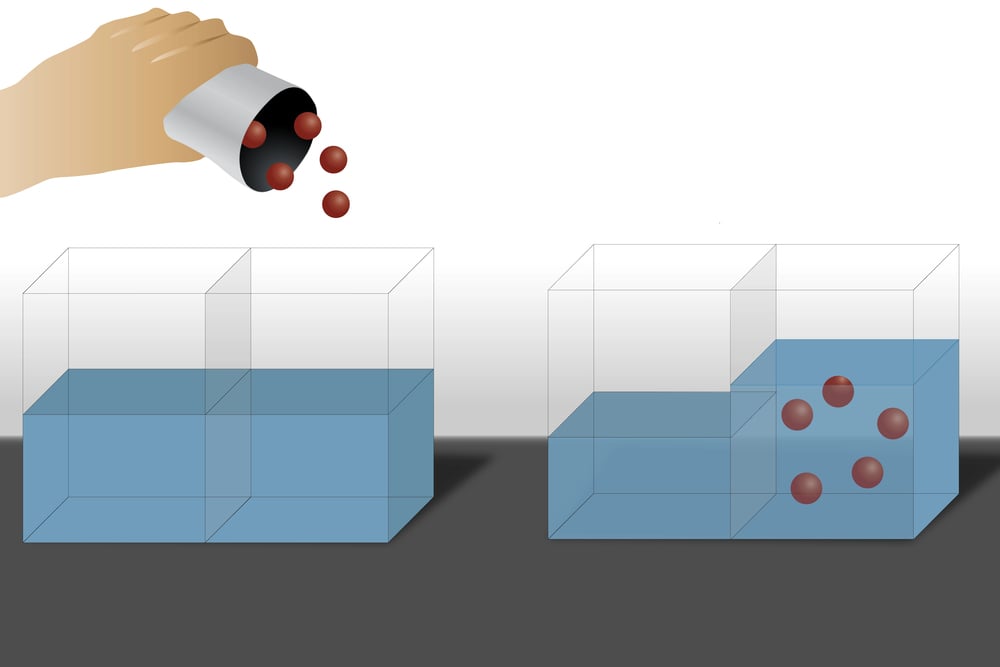
Water moves across cell membranes from areas of low solute concentration to high solute concentration. That’s osmosis.
The process happens automatically, driven by the natural tendency of molecules to spread out evenly.
Osmosis matters for cell survival. If you put a cell in pure water, water rushes in and the cell might burst.
Put it in very salty water, and water rushes out, shriveling the cell. Cells need the right balance, which brings us back to homeostasis.
Natural Selection
Charles Darwin’s big idea explains how species change over time. Organisms with traits that help them survive and reproduce pass those traits to more offspring.
Over many generations, helpful traits become more common while harmful ones disappear. The process doesn’t have a goal or plan.
It’s not “survival of the fittest” in the sense of being strongest. Fitness in biology means reproductive success—how many offspring you leave behind who also survive to reproduce.
A weak-looking organism that produces many offspring is more fit than a strong one that produces none.
Gene Expression
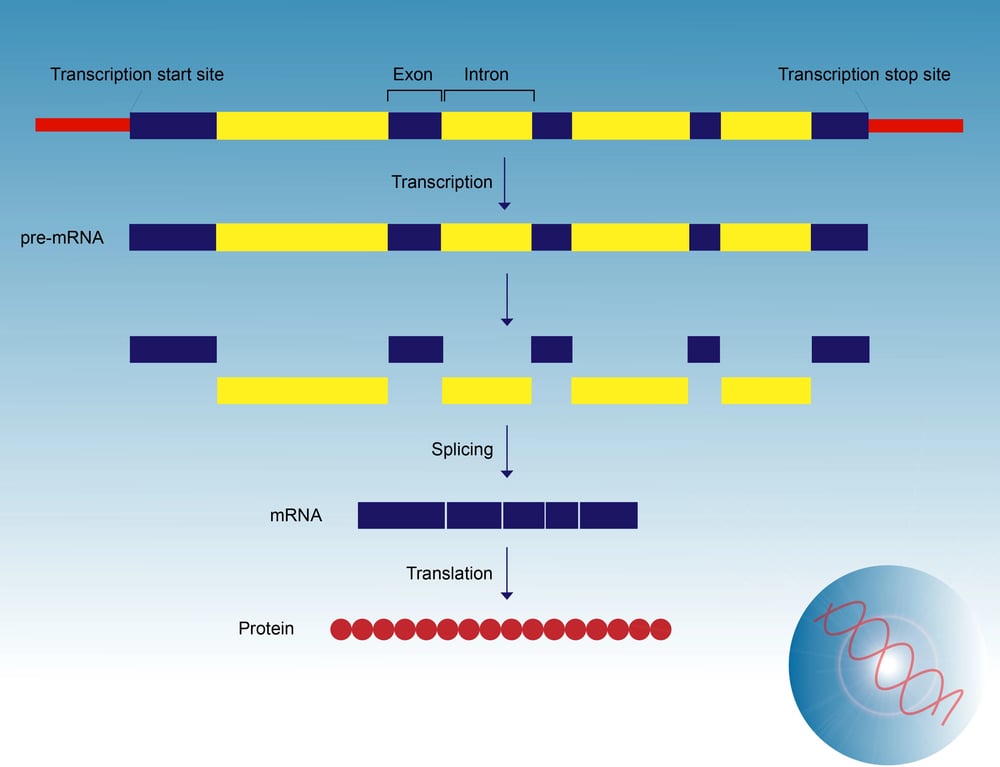
Having a gene doesn’t mean using it. Gene expression describes when and how much a gene gets turned on.
Your muscle cells have the same DNA as your brain cells, but they express different genes. That’s why they look and act differently.
Cells control gene expression through various mechanisms. Some genes stay off most of the time, switching on only when needed.
Others stay on constantly. Environmental factors can influence which genes get expressed, which explains some of the differences between identical twins.
Allele
Genes come in different versions called alleles. You inherit two copies of most genes—one from each parent.
Those copies might be identical or they might be different alleles. Some alleles are dominant, meaning you only need one copy for the trait to show up.
Others are recessive, requiring two copies. Eye color, blood type, and thousands of other traits depend on which alleles you inherited.
The specific combination you got makes you genetically unique.
Prokaryote and Eukaryote
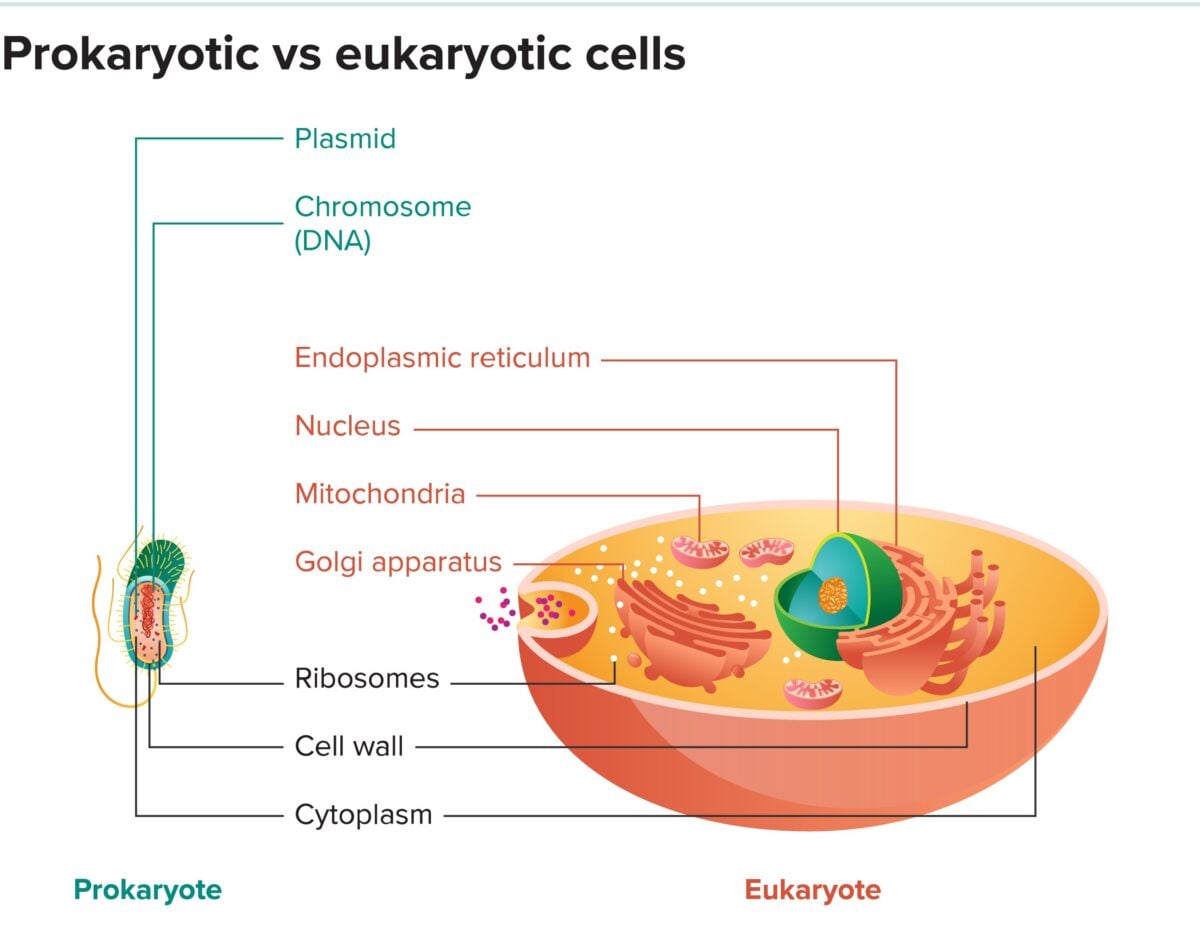
These terms divide all life into two basic categories based on cell structure. Prokaryotes are simple cells without a nucleus.
Bacteria and archaea fall into this group. Their DNA floats freely in the cell.
Eukaryotes have complex cells with a nucleus that houses the DNA. Animals, plants, fungi, and protists are eukaryotes.
Their cells also contain various organelles—specialized structures that perform specific functions. The difference between prokaryotes and eukaryotes represents one of the most fundamental divisions in biology.
The Language of Life

Biology vocabulary can feel overwhelming at first. Each new term seems to bring three more you don’t know.
But these words describe real processes happening in your body and in every living thing around you right now. The terms connect to each other too. Understanding homeostasis helps you grasp osmosis.
Knowing about DNA clarifies how genes and alleles work. Metabolism relies on enzymes and ATP.
Once the pieces start fitting together, biology stops being just memorization and becomes a way of seeing the world. The vocabulary gives you tools to understand the stunning complexity of life—including your own.
More from Go2Tutors!

- The Romanov Crown Jewels and Their Tragic Fate
- 13 Historical Mysteries That Science Still Can’t Solve
- Famous Hoaxes That Fooled the World for Years
- 15 Child Stars with Tragic Adult Lives
- 16 Famous Jewelry Pieces in History
Like Go2Tutors’s content? Follow us on MSN.



