The Most Powerful Volcanic Eruptions in History
There’s something unsettling about standing on the ground and knowing that, far beneath your feet, molten rock is moving through the earth at pressures that can shatter mountains. Volcanoes have been doing this for billions of years, long before anything walked the surface.
But in the few thousand years that humans have been keeping records, we’ve witnessed some eruptions that make everything else look small. These aren’t just geological events.
They ended civilizations, rewrote climates, and changed the course of history in ways that rippled across continents and centuries. Some of them are well-documented.
Others are still being pieced together from ice cores and tree rings and fragments of ancient text. All of them are worth knowing about.
Mount Tambora, 1815 — The Eruption That Stole a Summer

On April 10, 1815, Mount Tambora on the Indonesian island of Sumbawa erupted with a force that dwarfed anything recorded before or since. It ranks as a VEI-7 on the Volcanic Explosivity Index — the most powerful confirmed eruption in written history.
The eruption column shot more than 43 kilometers into the atmosphere, high enough to reach the stratosphere. Between 37 and 45 cubic kilometers of dense rock were blasted into the sky over the course of the event.
The immediate toll was staggering. Pyroclastic flows swept down every side of the mountain, wiping out villages and reaching the sea.
Pumice rafts stretched for miles across the ocean. An estimated 71,000 people died — some directly from the eruption, others in the months of famine that followed as ash buried farmland across the region.
But the effects of Tambora didn’t stay local. Fine particles of ash lingered in the atmosphere for years, reflecting sunlight back into space and cooling the planet.
The year 1816 became known as the Year Without a Summer. Crops failed across Europe and North America.
Temperatures in parts of the United States dropped so sharply that snow fell in June. The cold, the hunger, and the strange weather patterns of that period seeped into the culture — and some historians have linked the eerie atmosphere of 1816 to the birth of gothic literature, including Mary Shelley’s Frankenstein, written during that dark and dismal year.
The Minoan Eruption of Thera — A Civilization Swallowed by Fire
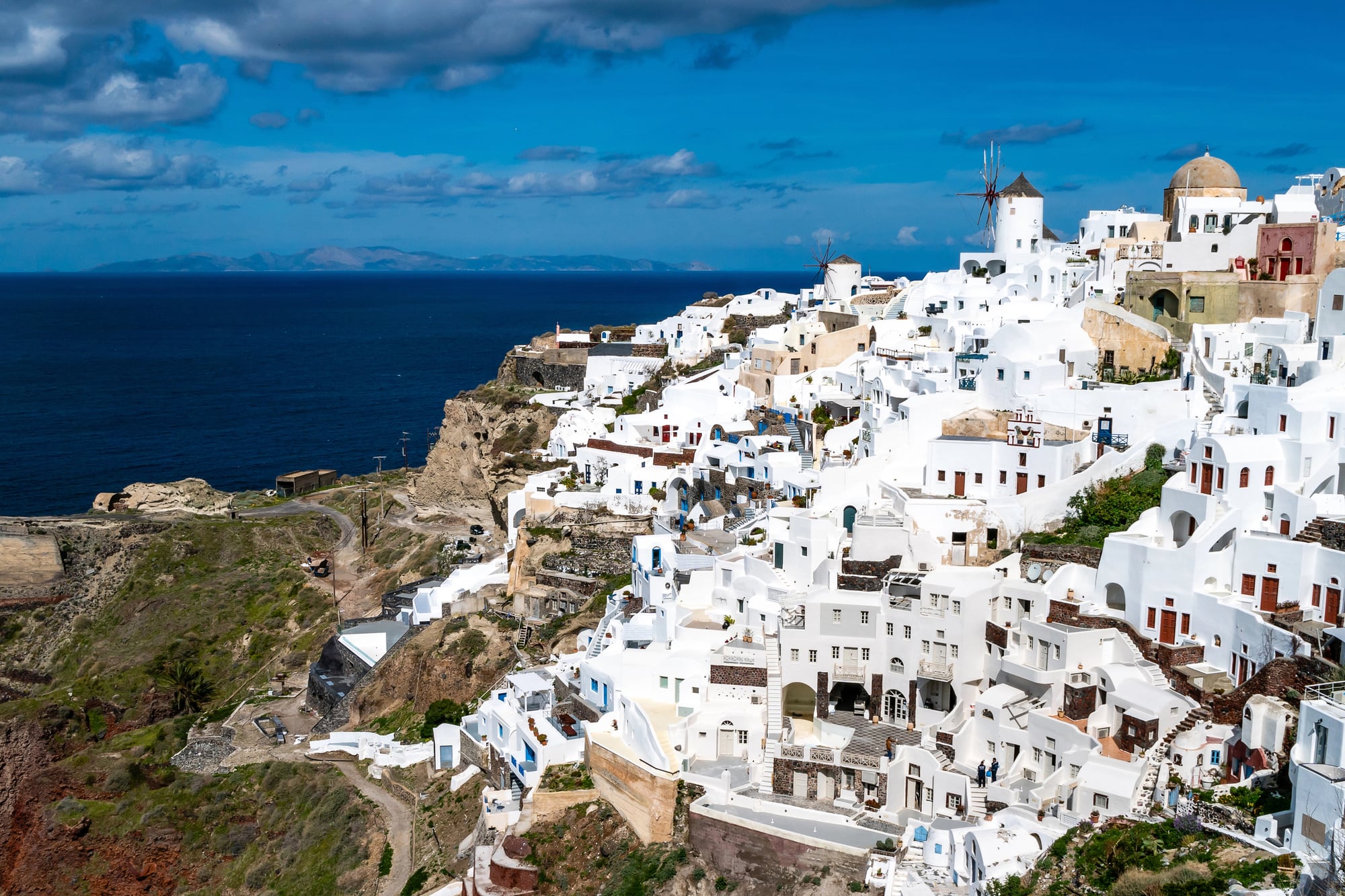
Around 1600 BC, the island of Thera — known today as Santorini — tore itself apart. The eruption carried a VEI of 7, and it ejected somewhere between 28 and 41 cubic kilometers of material.
It was one of the largest volcanic events in all of human history, and it happened during a time when the Minoan civilization was one of the most advanced in the ancient world. The settlement of Akrotiri on Santorini was buried under layers of volcanic ash, preserved in much the same way Pompeii would be preserved centuries later.
Archaeologists have found that the storage containers in many of the homes were still full, and no human remains have been found — which suggests that at least some of the inhabitants saw it coming and got out. But the civilization as a whole did not fare as well.
Tsunamis spawned by the eruption crashed into the coasts of Crete and other nearby islands. The massive amount of sulfur dioxide thrown into the atmosphere cooled temperatures across the Mediterranean for years, ruining harvests and destabilizing economies.
Within a few generations, the Minoan palace culture had collapsed entirely, giving way to the warring city-states of ancient Greece. Some scholars have even drawn a line between the eruption and the legend of Atlantis, though that connection remains deeply speculative.
The exact date of the eruption is still debated. Radiocarbon dating and archaeological evidence point to different years, and the argument has gone on for decades.
What’s not in question is the scale of what happened — or how fundamentally it altered the Mediterranean world.
Mount Vesuvius, 79 AD — The Day Pompeii Ended

The eruption of Mount Vesuvius on the shores of the Bay of Naples is one of the most vivid catastrophes ever recorded. Around 1 PM, the mountain exploded, sending a column of superheated gas, pumice, and ash more than 33 kilometers into the sky.
The eruption released roughly 100,000 times the thermal energy of the atomic bombings of Hiroshima and Nagasaki. Pompeii, about six miles from the volcano, was buried under nearly 10 meters of ash and pumice over the course of two days.
At first, people tried to shelter indoors as stones rained from the sky. Roofs collapsed under the weight of the debris.
Then came the pyroclastic surges — walls of superheated gas and rock that raced down the mountain at over 100 miles per hour. Temperatures in those surges exceeded 300 degrees Celsius.
Death was almost instant for anyone still in the city. Nearby Herculaneum was buried even deeper — under more than 20 meters of volcanic material.
Hundreds of people had taken refuge in boathouses near the shore, hoping to escape by sea. They never made it.
The total death toll is still unknown. Estimates range from a few thousand to over 16,000 across all the affected settlements.
But the eruption didn’t just kill people — it froze a moment in time. The ash preserved Pompeii so perfectly that when archaeologists began excavating centuries later, they found bread still in ovens and dogs still chained to their posts.
The city wasn’t rediscovered until the 18th century, after centuries of being completely forgotten. Today, it remains one of the most important archaeological sites on Earth.
Laki, 1783 — Iceland’s Silent Killer
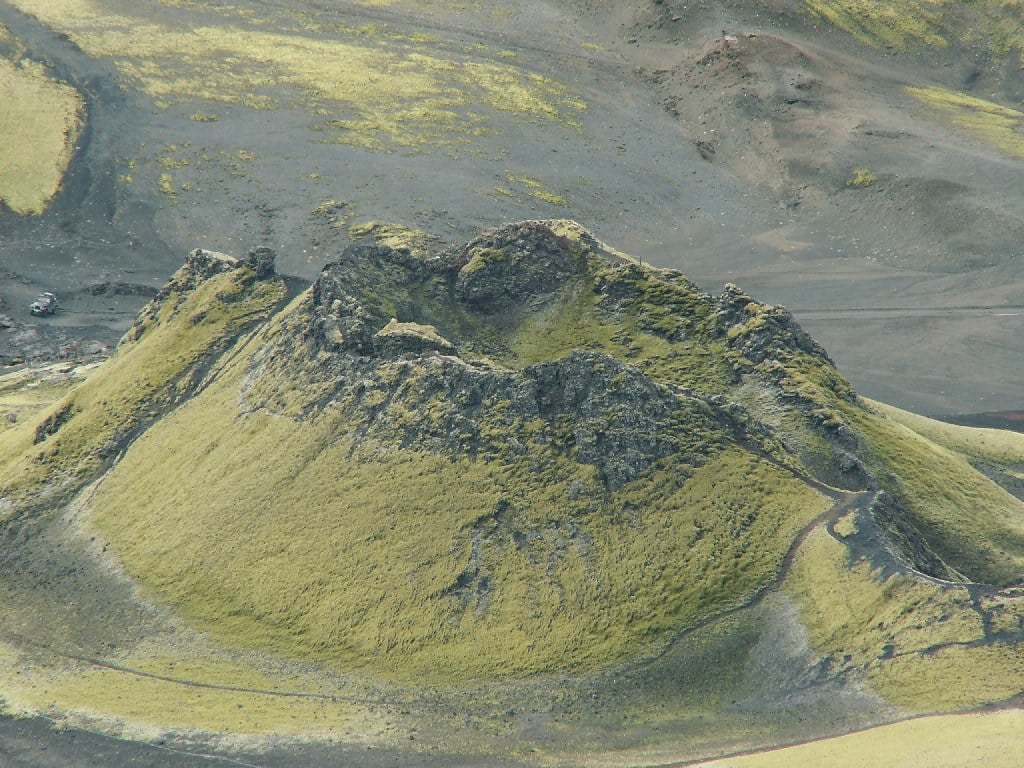
On June 8, 1783, a 25-kilometer-long fissure ripped open across the ground in southern Iceland. Over the next eight months, the Laki eruption poured out an estimated 14 cubic kilometers of basalt lava — more than any other eruption in Iceland’s recorded history.
But the lava itself wasn’t the worst part. The eruption released an estimated 120 million tonnes of sulfur dioxide and 8 million tonnes of fluorine into the atmosphere.
The fluorine contaminated the grass across Iceland. Livestock ate it and got sick.
Approximately 80 percent of sheep, half of cattle, and half of horses died. Without animals to work the land or produce milk, famine set in fast.
About 20 percent of Iceland’s entire population — roughly 8,000 people — died in the two years that followed. Some accounts claim the toll was even higher.
The famine became known as the Mist Hardships, a name that captures both the poisonous haze that hung over the island and the grinding misery of what came after. The effects weren’t confined to Iceland.
A thick haze drifted across Europe through the summer of 1783, causing respiratory problems and elevated mortality rates in England, France, and beyond. Temperatures in the Northern Hemisphere dropped.
Some historians have suggested that the crop failures and extreme weather in France during the mid-1780s — caused or worsened by Laki — contributed to the social instability that eventually led to the French Revolution. That’s a big claim, and Laki was only one factor among many.
But the eruption’s reach, both in distance and in consequence, is hard to overstate.
Krakatoa, 1883 — The Sound That Circled the Globe
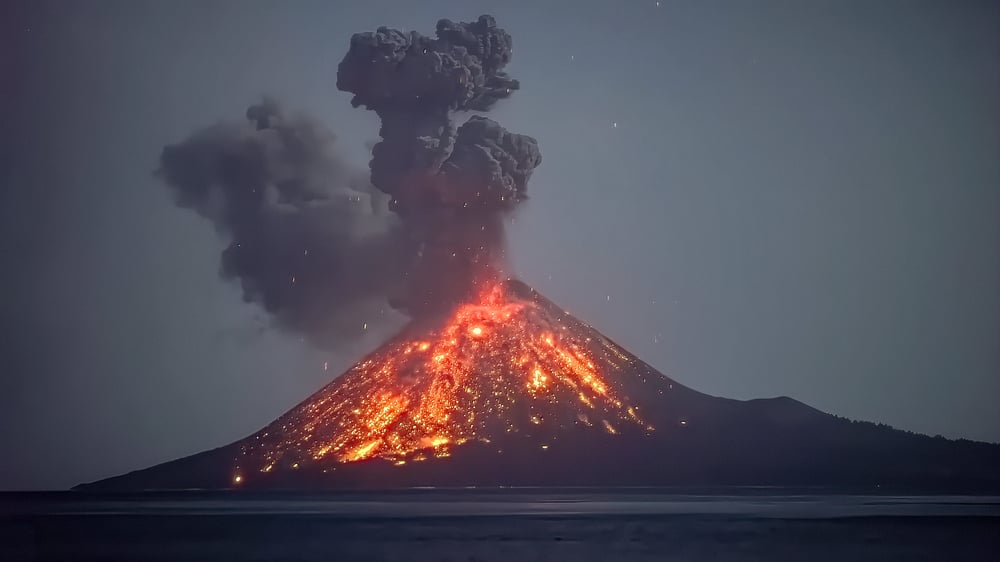
The eruption of Krakatoa on August 26 and 27, 1883 was, by many measures, one of the most violent volcanic events in modern history. The volcano sits in the Sunda Strait between Java and Sumatra in Indonesia, and when it finally let go, it did so with extraordinary force.
The most famous detail is the sound. The third explosion on the morning of August 27 produced a noise that has been calculated at around 310 decibels — loud enough to be heard in Perth, Australia, more than 3,000 kilometers away. It remains the loudest sound recorded in history.
The eruption triggered tsunamis that struck the coasts of Java and Sumatra with devastating speed. Pyroclastic flows raced across the Sunda Strait at over 100 kilometers per hour.
The death toll from the eruption and the resulting tsunamis is estimated at around 36,000 people, though some accounts put it higher.The ash cloud from Krakatoa was so dense and so widespread that it blocked sunlight over large parts of the globe, dropping global temperatures for the better part of five years.
It also changed the way sunsets looked around the world, flooding the skies with reds and oranges that artists noticed immediately. Some art historians have connected the fiery, blood-red sky in Edvard Munch’s painting The Scream to the atmospheric conditions created by Krakatoa’s ash.
Novarupta-Katmai, 1912 — The Eruption Nobody Noticed

On June 6, 1912, the Novarupta volcano erupted in a remote stretch of Alaska’s southern peninsula. It was the largest volcanic eruption of the entire 20th century.
And almost nobody knew it happened.The eruption sent three cubic miles of magma and ash into the air.
Ash fell over an area of 3,000 square miles, burying parts of the landscape under more than a foot of volcanic debris. The eruption column reached the stratosphere. By any objective measure, it was a massive event.
But Alaska in 1912 was sparsely populated. No major cities sat anywhere near the eruption. There were no deaths.
The ash and debris simply fell on the wilderness, and the world moved on without paying much attention.It wasn’t until years later that scientists and explorers began to appreciate the scale of what had happened.
The Valley of Ten Thousand Smokes — a landscape of thousands of fumaroles, or steam vents, that formed in the wake of the eruption — became one of the most studied volcanic landscapes on Earth. The eruption of Novarupta remains a reminder that the size of a volcanic event and the damage it does are two very different things.
Mount St. Helens, 1980 — America’s Deadliest Blast
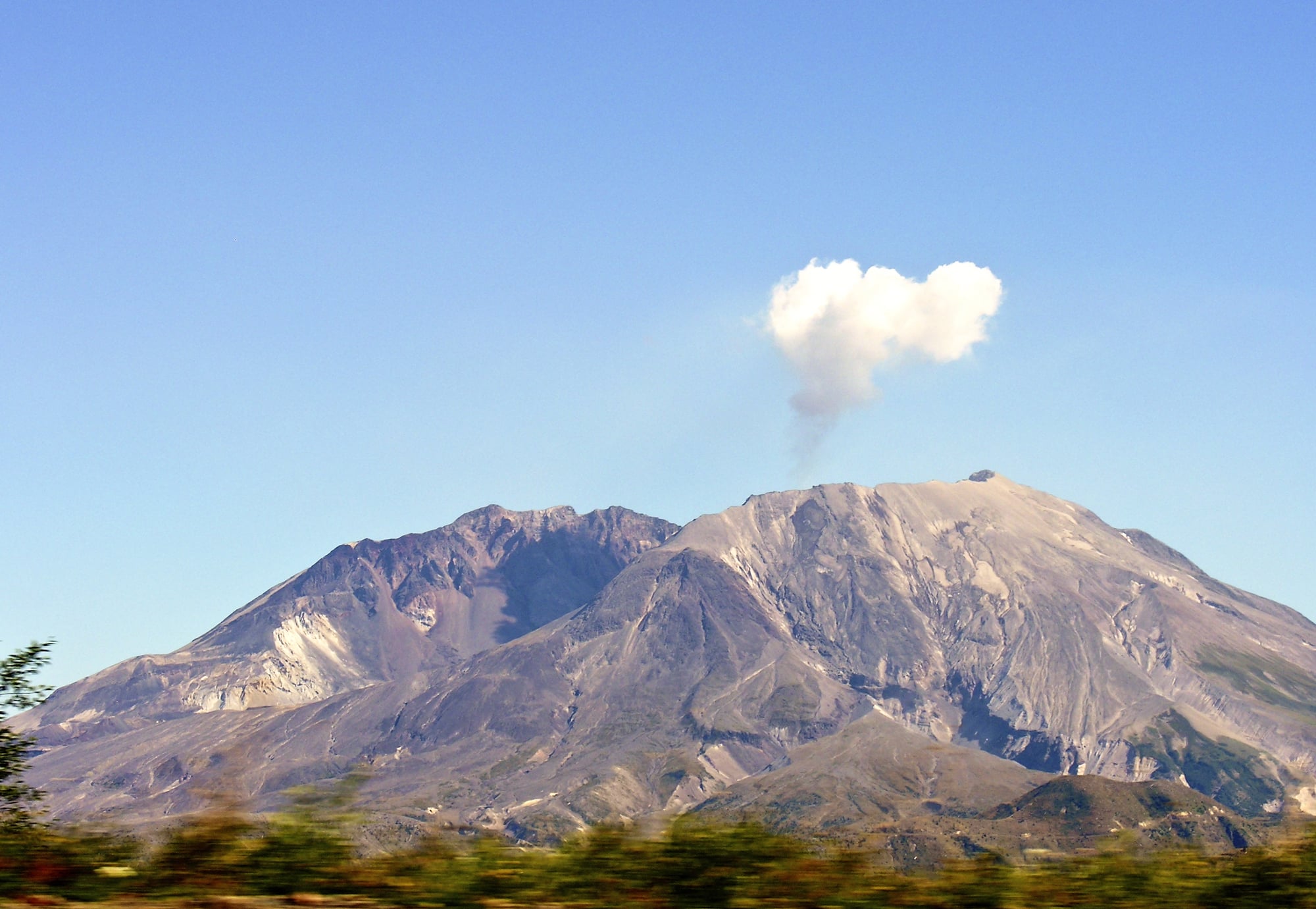
For months before the eruption, Mount St. Helens in Washington State showed signs of waking up. Earthquakes shook the ground repeatedly. A visible bulge grew on the north face of the volcano, swelling outward at a rate of about five feet per day. Scientists watched it closely. Everyone knew something was coming.
On the morning of May 18, 1980, the bulge collapsed. The entire north side of the mountain slid away in one of the largest landslides in recorded history, and the sudden release of pressure triggered an explosion of enormous force. The eruption sent a column of ash and gas 80,000 feet into the atmosphere. Pyroclastic flows and lateral blasts flattened forests for miles in every direction, snapping trees like matchsticks.
Fifty-seven people died in the eruption — the deadliest volcanic event in American history. Most of them were caught in the path of the lateral blast or buried under ash and debris. The eruption reshaped the entire summit of the mountain, carving out a crater more than a mile wide where the peak used to be.
Mount St. Helens wasn’t the largest eruption in North American history — the 1912 Novarupta eruption in Alaska ejected roughly 30 times more material. But St. Helens was the most destructive in the United States because of where it was and how many people lived nearby. It also became one of the most studied volcanic events in history, leading to major advances in how scientists monitor and predict eruptions.
Nevado del Ruiz, 1985 — A Town Buried in Mud
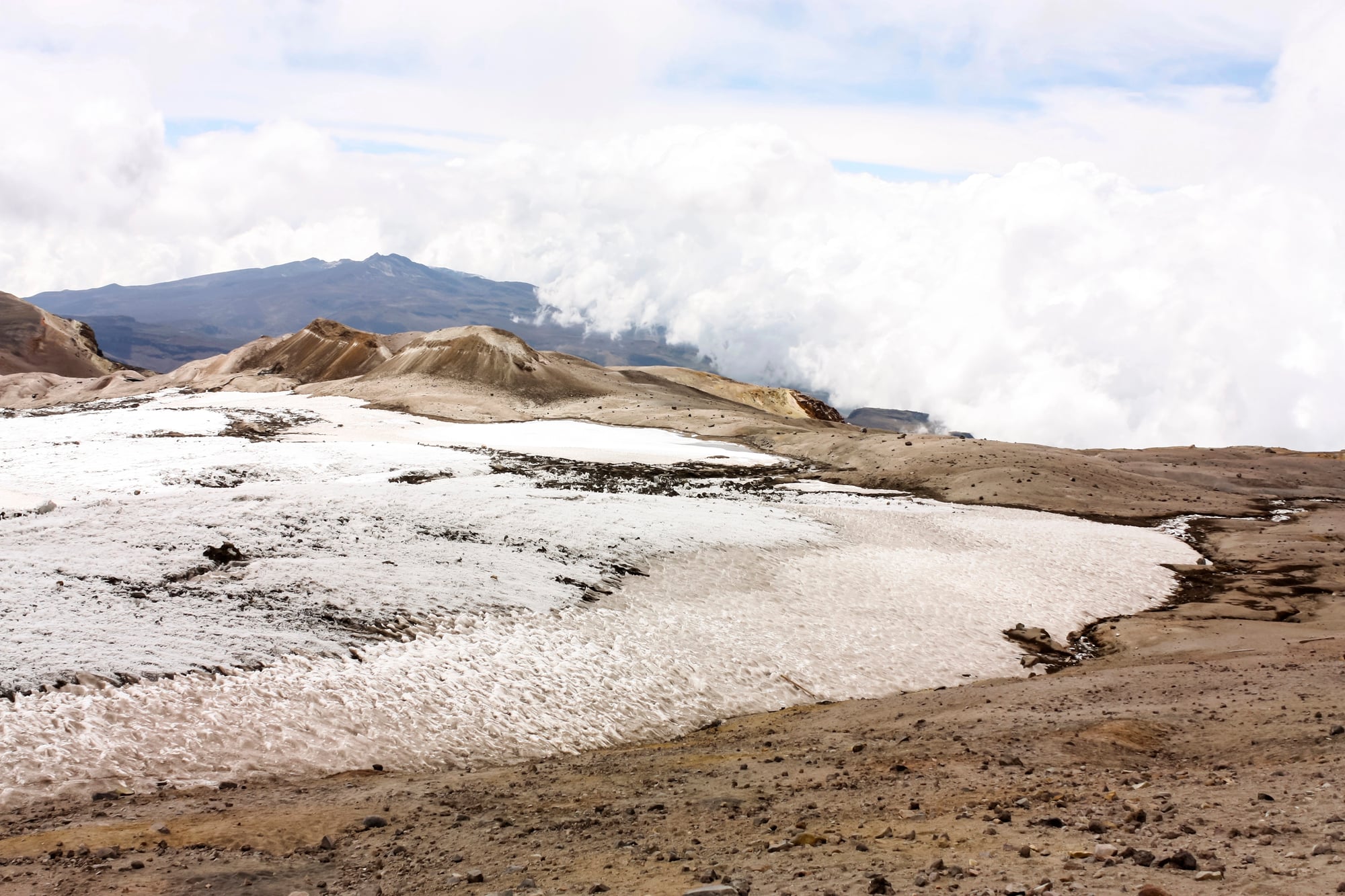
Nevado del Ruiz is a glacier-capped volcano in central Colombia, and it had erupted before — in 1595 and again in 1845, both times producing deadly mudflows that killed people in the valleys below. Scientists knew the risk. A hazard map had been drawn up showing exactly which areas were in danger. And yet, when the eruption came on the night of November 13, 1985, over 23,000 people died.
The eruption itself was relatively modest — a VEI-4 event. But the heat from the blast melted about 10 percent of the glacier covering the summit. The meltwater mixed with volcanic debris to form lahars — fast-moving rivers of mud, rock, and ash — that raced down the mountain’s valleys at speeds of up to 60 kilometers per hour.
The town of Armero, population roughly 29,000, sat directly in the path of one of these lahars. The mud reached the town just after 11:30 PM. Many residents were asleep. A storm was masking the sound of the approaching flow. Radio warnings had been attempted, but electrical problems and miscommunication meant they never got through. Within minutes, most of the town was gone — buried under a concrete-like mass of mud and debris.
The disaster was a turning point for volcanic disaster preparedness worldwide. It led directly to the creation of the international Volcano Disaster Assistance Program, which now monitors over 1,500 potentially active volcanoes. When a similar lahar threat emerged in Colombia in 2008, over 4,000 people were evacuated successfully — and no one died.
Mount Pinatubo, 1991 — The Eruption That Saved Lives
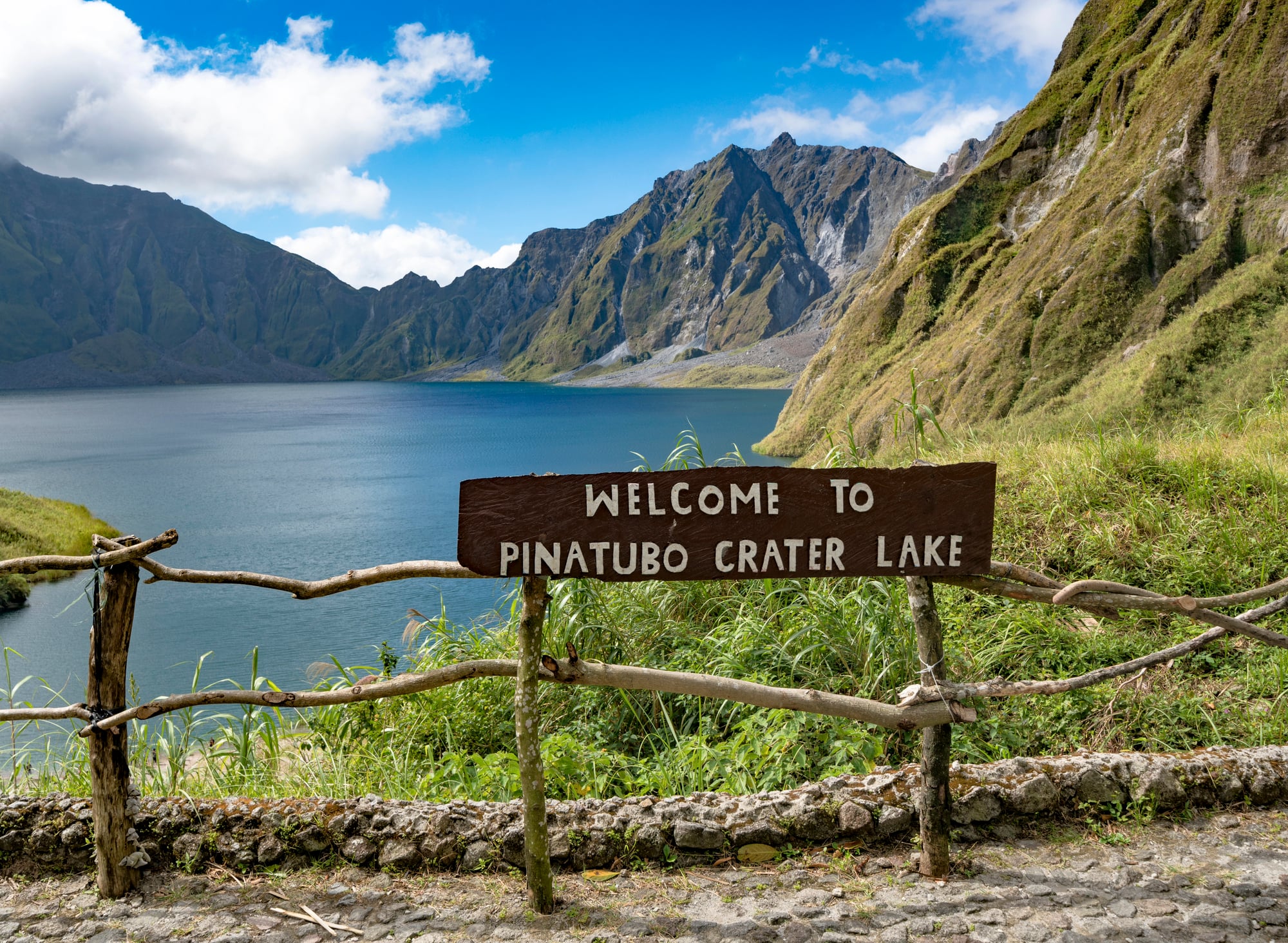
When Mount Pinatubo in the Philippines began showing signs of serious unrest in early 1991, volcanologists around the world took notice. The volcano had been quiet for over 600 years, and the signs of renewed activity were unmistakable — earthquakes, ground swelling, and increasing gas emissions.
On June 15, 1991, Pinatubo erupted with a force rated VEI-6 — the second-largest terrestrial eruption of the 20th century, behind only Novarupta in 1912. The eruption column reached 35 kilometers into the atmosphere. Roughly 10 cubic kilometers of volcanic material were ejected. Ash blanketed a vast stretch of the Philippines and drifted across Southeast Asia.
What made Pinatubo remarkable, though, was what didn’t happen. In the weeks before the eruption, authorities evacuated tens of thousands of people from the surrounding area. The Clark Air Base, a major U.S. military installation, was among the sites affected, and its evacuation was carried out with remarkable efficiency. Estimated deaths from the eruption were around 800 — a number that, given the scale of the blast, represented a massive success in disaster response.
Pinatubo also had significant global effects. The sulfur dioxide it injected into the stratosphere formed a layer of aerosols that reflected sunlight, cooling global temperatures by about 0.5 degrees Celsius for a couple of years. It became one of the key events that helped scientists understand how large eruptions influence the planet’s climate.
Eyjafjallajökull, 2010 — The Volcano That Grounded the World
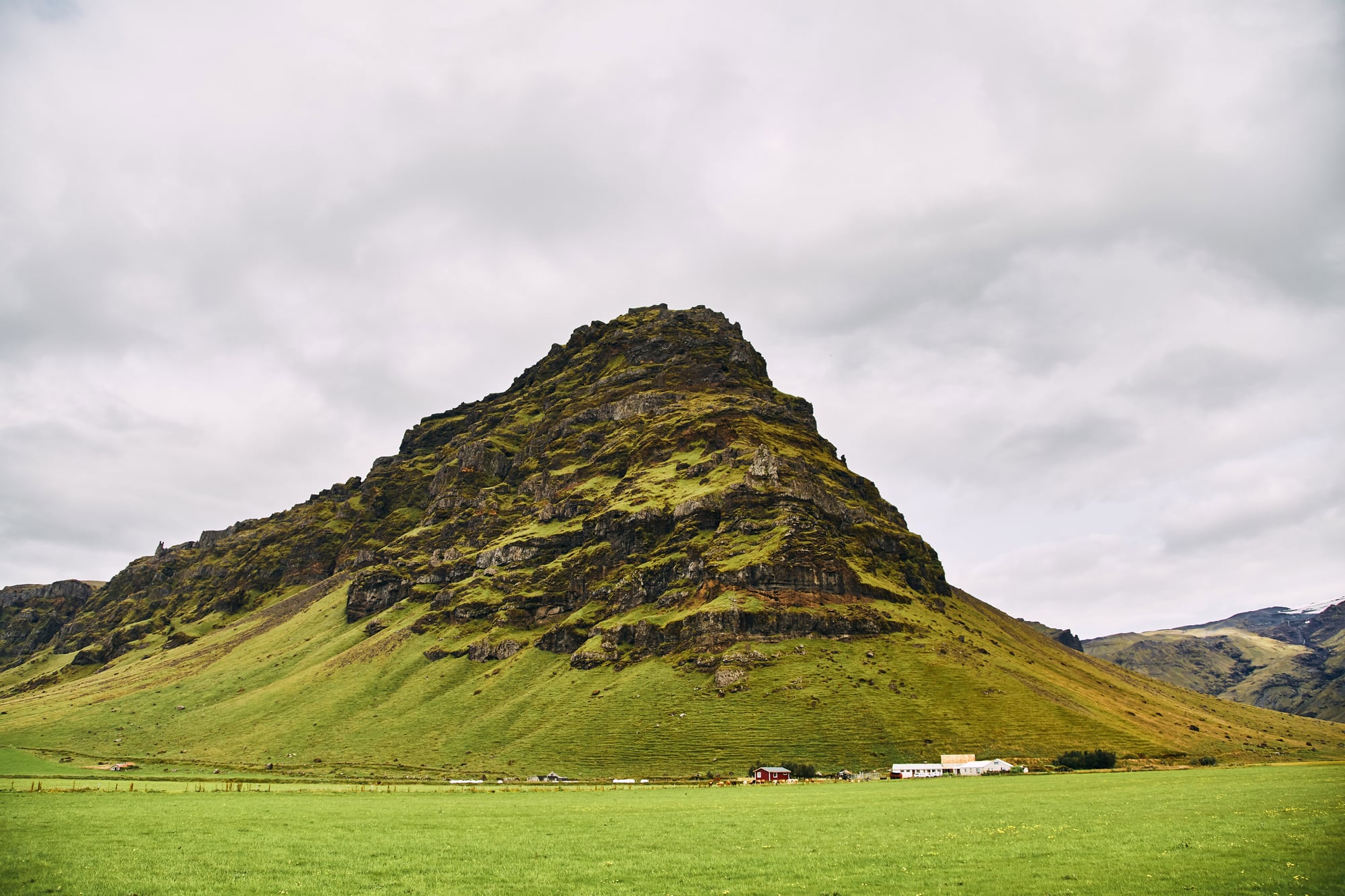
In April 2010, a volcano in Iceland with a name that most of the world had never tried to pronounce suddenly became one of the most talked-about on the planet. Eyjafjallajökull erupted on April 14, and within days, the skies over Europe were closed.
The eruption itself was not particularly large by volcanic standards — it rated around a VEI-4. But the type of ash it produced was the problem. The fine volcanic particles, carried northeast by wind patterns, drifted across Scandinavia, then into central and northern Europe. Aviation authorities determined that flying through volcanic ash could cause serious damage to jet engines, potentially shutting them down entirely.
For six days, airspace over much of Europe was shut down. Roughly 100,000 flights were canceled. Millions of passengers were stranded. Airlines lost hundreds of millions of dollars. The disruption was one of the largest to European air travel since World War II — all from an eruption that, in terms of raw volcanic power, was comparatively small.
Eyjafjallajökull became a case study in how volcanic eruptions interact with modern infrastructure. It forced a rethink of aviation safety protocols around ash clouds and exposed how vulnerable the global travel network is to events that, in an earlier era, would have gone largely unnoticed outside the immediate region.
Lake Toba — The Biggest Eruption Humans Almost Didn’t Survive

If you want to talk about truly massive volcanic events, you have to go back further than written history. About 74,000 years ago, a supervolcano beneath what is now the island of Sumatra in Indonesia erupted with a force that dwarfs everything else on this list combined.
The eruption ejected an estimated 2,800 cubic kilometers of material — over 60 times the volume of Tambora’s eruption, and roughly 10,000 times the volume of the 1980 Mount St. Helens blast. It created a caldera that is now filled by Lake Toba, the largest volcanic lake on Earth, stretching about 100 kilometers long and 30 kilometers wide.
Ash from the eruption has been found halfway across the Indian Ocean.For years, the dominant theory was that Toba nearly wiped out humanity.
The idea — known as the Toba Catastrophe Theory — held that the eruption triggered a volcanic winter lasting six to ten years, global temperatures plummeted, and the human population was reduced to somewhere between 3,000 and 10,000 individuals. That genetic bottleneck, the theory went, shaped the diversity (or lack thereof) in modern human DNA.
The picture has gotten more complicated since then. Archaeological evidence from sites in India, Africa, and elsewhere shows that human populations continued to thrive before and after the eruption with little obvious interruption. Some researchers now argue that the volcanic winter was far less severe than originally modeled, and that the genetic bottleneck had other causes.
The debate is far from settled. What everyone agrees on is the sheer scale of what happened — an eruption so large that it reshaped the surface of the Earth and, for a time, had the potential to reshape the species living on it.
The Earth Keeps Talking

Every one of these eruptions left a mark that persists long after the lava cooled. Some of them changed the weather for years.
Some of them ended cities or civilizations. A couple of them may have influenced the course of human evolution itself.
And all of them happened because the same geological forces that built the continents and kept the planet warm are still, very much, at work beneath your feet. If there’s a single thread running through every eruption on this list, it’s this: volcanoes don’t care about human plans.
Tambora didn’t know it was going to steal a summer. Vesuvius didn’t know it was going to freeze Pompeii in time.
Nevado del Ruiz didn’t know it was going to force a rethinking of disaster preparedness around the world. These events happened, and then humanity had to figure out what to do next.
What’s changed, slowly, is how well we listen. From the lessons of Armero to the evacuations before Pinatubo, from the satellite monitoring of Hunga Tonga to the painstaking reconstruction of ancient eruptions from ice cores, we’ve gotten better at reading what the Earth is telling us.
Not perfect. But better.
And given what’s still sleeping beneath places like Yellowstone, Toba, and dozens of other supervolcanoes scattered across the globe, paying attention has never been more important.
More from Go2Tutors!

- The Romanov Crown Jewels and Their Tragic Fate
- 13 Historical Mysteries That Science Still Can’t Solve
- Famous Hoaxes That Fooled the World for Years
- 15 Child Stars with Tragic Adult Lives
- 16 Famous Jewelry Pieces in History
Like Go2Tutors’s content? Follow us on MSN.