Bizarre Things the US Government Spent Money On
Anyone who’s ever wondered where their tax dollars actually go might want to sit down for this one. While government spending on roads, schools, and defense makes perfect sense, there’s a whole other category of expenditures that reads like someone’s fever dream.
These aren’t accounting errors or typos on budget reports. These are real projects that real people approved, funded, and somehow justified with straight faces in committee meetings.
The Great Whiskey Fire Investigation

The ATF spent $65,000 investigating arson at a whiskey warehouse in Kentucky. Nothing wrong with that.
But the investigation lasted seven years and involved testing 2,000 samples of burned bourbon to determine the exact cause of ignition. They never solved it.
Studying The Social Habits Of Barbershop Customers

The Department of Health and Human Services allocated $150,000 to study how men interact in barbershops, particularly focusing on the “cultural dynamics of male grooming spaces.” The researchers (who apparently had never been to a barbershop themselves) discovered that men talk about sports, work, and local gossip while getting haircuts — groundbreaking stuff that required a team of sociologists and eighteen months to determine.
Creating Holographic Tupac For Military Training

This one sounds like science fiction, but the Army Research Laboratory spent $2.3 million developing holographic projection technology that could create “realistic human avatars” for training purposes. The project, mysteriously codenamed “Digital Persona,” reportedly used deceased rapper Tupac Shakur’s likeness as a test subject (with estate permission, one hopes).
The idea was that holographic drill sergeants could train soldiers without risking actual human instructors, though anyone who’s been through basic training might question whether removing the human element defeats the entire purpose.
And here’s where it gets stranger: the holograms were supposed to respond to voice commands and adapt their behavior based on trainee performance. So essentially, the military was trying to create AI drill sergeants that looked like dead celebrities.
The project was quietly discontinued when someone apparently realized that shouting orders at a glowing Tupac might not prepare soldiers for actual combat scenarios — which seems like something they could have figured out before spending $2.3 million, but what do we know.
Teaching Shrimp To Run On Treadmills

Picture a laboratory where marine biologists convince tiny crustaceans to exercise on miniature treadmills. That’s exactly what happened when the National Science Foundation funded a $560,000 study examining how shrimp respond to different levels of physical exertion.
The shrimp treadmills — custom-built and apparently quite sophisticated — measured metabolic rates and stress responses in various species.
The research was meant to understand how pollution affects marine life stamina, which sounds reasonable until someone asks why we needed shrimp fitness equipment to figure that out. Like watching a nature documentary directed by someone who’s never seen the ocean, the whole project carried an air of profound disconnection from its stated purpose.
Developing Mind-Reading Technology For Airport Security
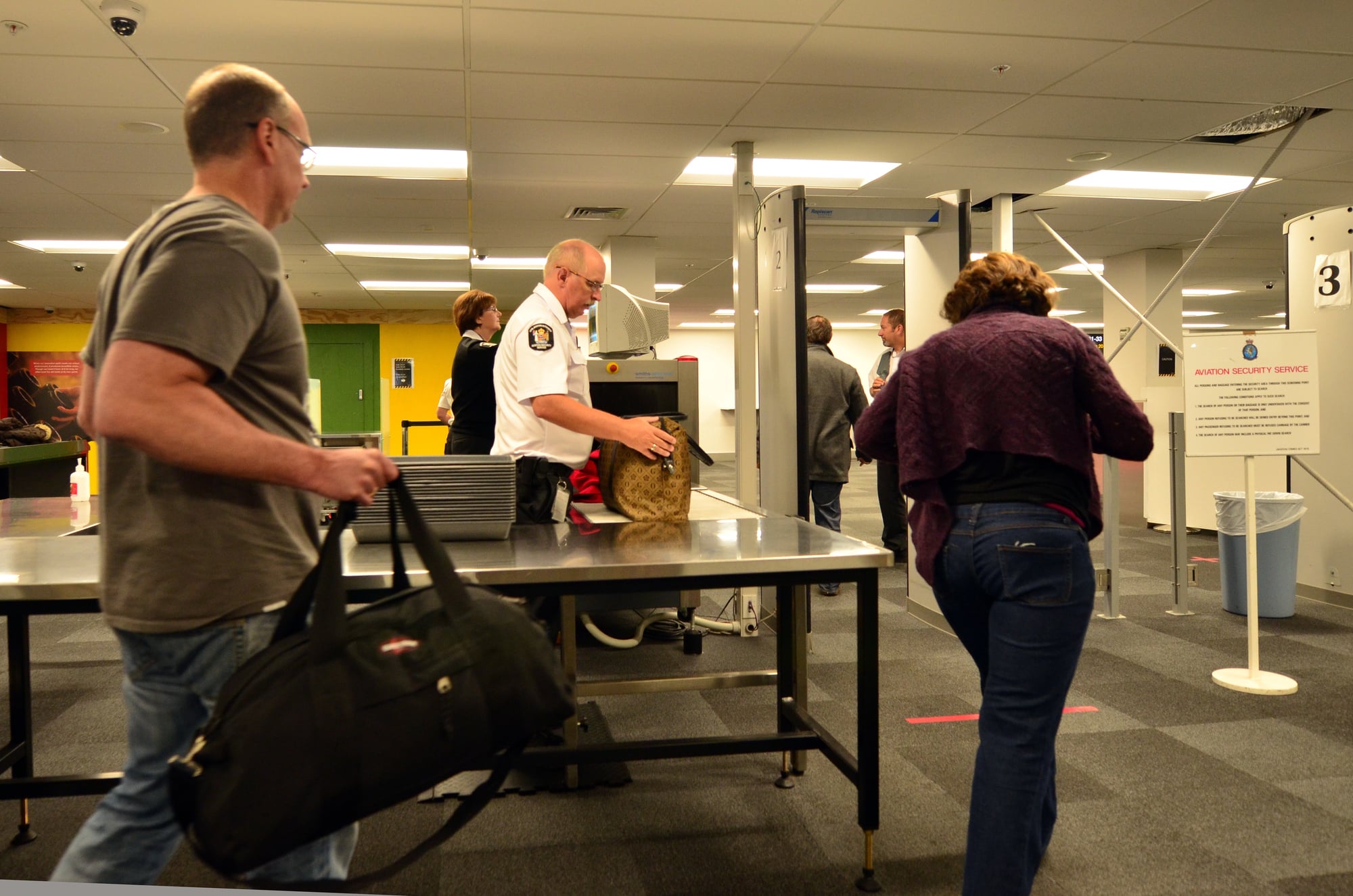
The Department of Homeland Security invested $3.2 million in a program called “Future Attribute Screening Technology” or FAST. The goal was ambitious: detect hostile intent by analyzing facial expressions, body language, heart rate, and breathing patterns.
Travelers would walk past sensors that could supposedly identify terrorists based on their thoughts and physiological responses alone.
The technology never worked. Turns out, nervous air travelers look remarkably similar to people planning attacks, and the system flagged roughly 80% of passengers as potential threats.
After years of testing and refinement, FAST was shelved when researchers concluded that mind-reading remains, surprisingly, impossible.
Investigating Whether Cats Prefer Jazz Or Classical Music

The National Institutes of Health spent $84,000 studying feline musical preferences. Researchers played different genres for shelter cats and measured stress hormones, activity levels, and “general contentment indicators.”
The study concluded that cats show slight preference for “species-appropriate music” — compositions that mimic purring frequencies and bird chirps.
Creating Robotic Squirrels To Spy On Real Squirrels

Wildlife biologists received $325,000 to build animatronic squirrels equipped with cameras and sensors. The robo-squirrels were designed to infiltrate real squirrel communities and observe natural behaviors without human interference.
The project faced immediate challenges when actual squirrels either attacked or completely ignored their mechanical counterparts, apparently possessing better fraud detection than the researchers anticipated.
Teaching Mountain Lions To Use IPads

Yes, this actually happened. The U.S. Fish and Wildlife Service funded a $75,000 study where researchers attempted to train captive mountain lions to interact with tablet computers.
The theory was that touchscreen interfaces could provide mental stimulation for big cats in captivity while gathering data about their cognitive abilities and preferences.
The mountain lions mostly ignored the iPads or tried to eat them, which probably could have been predicted by anyone who’s watched a house cat interact with technology.
But the research continued for two years, with scientists developing increasingly elaborate apps designed to capture feline attention. The final report concluded that mountain lions prefer hunting actual prey to playing digital games — another stunning revelation that apparently required federal funding to confirm.
Studying The Aerodynamics Of Flying Squirrels In Wind Tunnels

NASA’s Langley Research Center spent $1.2 million investigating how flying squirrels navigate through air currents, with the hope of improving aircraft design. The study involved placing live flying squirrels in wind tunnels while high-speed cameras recorded their gliding techniques and body positioning during flight.
The research produced detailed analyses of squirrel wing-loading ratios and glide path optimization, complete with mathematical models and computer simulations.
Whether any of this information actually improved airplane design remains unclear, though it did generate several academic papers with titles like “Biomechanical Analysis of Pteromys volans Glide Performance Under Controlled Laboratory Conditions.”
Building A Device To Detect Lonely Hearts Through Facebook Posts

The Department of Veterans Affairs allocated $2.8 million for artificial intelligence that could identify depression and suicidal ideation by analyzing social media activity. The program, called “Durkheim Project” after the sociologist who studied rates of self-harm, was supposed to scan veterans’ Facebook posts, Twitter activity, and other online behavior for warning signs of mental health crises.
But the technology struggled with context, sarcasm, and basic human communication patterns. The AI flagged movie quotes, song lyrics, and sports commentary as indicators of psychological distress, while missing actual cries for help that used different language patterns than programmers expected.
The system was eventually abandoned when researchers realized that effective mental health intervention requires human judgment that can’t be automated — a conclusion that seems obvious in hindsight but apparently needed $2.8 million worth of confirmation.
Investigating Whether Goldfish Make Better Drivers Than Humans

Israeli researchers, funded partly through a U.S. research collaboration grant, trained goldfish to operate miniature vehicles by swimming toward targets. The “fish-operated vehicle” was essentially a wheeled fishbowl that moved based on the fish’s swimming direction.
The study aimed to test spatial navigation abilities across species and determine whether driving skills transfer between different environments.
The goldfish learned to navigate toward food rewards and could even correct course when the vehicle went off track.
The research concluded that basic navigation principles work across species, though it’s hard to imagine practical applications for fish-driven transportation. The study did prove that goldfish have better spatial memory than previously believed, which is interesting if not particularly useful for anyone except goldfish.
Funding A Study On Whether Drunk Birds Slur Their Chirping

Researchers at Oregon Health & Science University received $188,000 to investigate how alcohol affects bird vocalizations, specifically whether intoxicated birds experience speech impediments similar to drunk humans. The study involved giving ethanol to zebra finches and recording changes in their song patterns, rhythm, and pitch accuracy.
The birds did indeed show degraded vocal performance after consuming alcohol, with slurred notes and timing problems that mirrored human speech impairment.
The research was presented as having implications for understanding how alcohol affects neural pathways involved in learned vocal behaviors, though the practical applications remain somewhat mysterious.
When Reality Becomes Stranger Than Fiction

Looking back through decades of creative government spending reveals something almost touching about bureaucratic optimism. These projects represent genuine attempts to solve problems or advance knowledge, even when the methods seem completely disconnected from common sense.
Someone, somewhere, believed that robotic squirrels and drunk bird studies would contribute meaningfully to human progress.
The real mystery isn’t why these projects got funded — it’s how they survived multiple levels of review and approval. Each one passed through committees, budget meetings, and oversight processes where presumably serious people nodded thoughtfully and allocated taxpayer money.
That might be the most bizarre part of all.
More from Go2Tutors!

- The Romanov Crown Jewels and Their Tragic Fate
- 13 Historical Mysteries That Science Still Can’t Solve
- Famous Hoaxes That Fooled the World for Years
- 15 Child Stars with Tragic Adult Lives
- 16 Famous Jewelry Pieces in History
Like Go2Tutors’s content? Follow us on MSN.