Certain Common Phrases People Use Daily Were Originally Meant as Insults
Language has a habit of forgetting where it came from. You’ll call a friend “nice” or admit you’re a bit of a “nerd” about something without ever wondering whether those words used to be weapons.
A surprising number of everyday terms started out as insults, sometimes brutal ones, before time sanded off the edges and left something ordinary behind. Looking at where they came from changes how they sound, even if you can never quite unhear it.
Idiot

Ancient Greeks used “idiotes” to describe a private citizen, someone who ignored public life and civic duty. That was the ultimate insult in a culture obsessed with politics.
Refusing to engage marked you as useless. The word never really recovered from that reputation.
Nice
“Nice” traces back to the Latin “nescius,” meaning ignorant or unaware, and for centuries in Middle English it meant foolish or wanton (a word you’d use to shame someone, not flatter them). So when someone called you “nice” in the 1300s, they meant you were something close to simple-minded — the word wandered through meanings like “fussy,” then “precise,” before landing, centuries later, on “pleasant,” a journey most words never survive intact.
The shift happened slowly: generation by generation, each one nudging the definition further from insult and closer to compliment. And somehow it stuck as one of the blandest words in English, which is its own kind of irony.
Snob
Snob started as slang for a shoemaker, then for anyone without a title trying to walk like they had one, a ladder-climber before ladder-climbing had a name. Picture a Cambridge student in the 1800s, sneering at classmates who worked with their hands, calling them by a word once used for the very people now above them.
The word flipped its aim entirely, pointing not at the striver anymore but at the one looking down from the top rung. There’s something almost poetic in a word that switched sides and never looked back.
Villain
Villain used to just mean a farmhand. The word came from “villein,” a term for a low-ranking peasant tied to a manor, and to the nobility, working the land apparently made you suspect by default.
Somewhere along the way “peasant” and “criminal” got treated as synonyms, which says more about medieval snobbery than it does about farmers. These days the word just means the guy in the movie you’re supposed to hate, no field required.
Barbarian
Barbarian comes from the Greek word “barbaros.” It described anyone who didn’t speak Greek, their language reduced to nonsense syllables like “bar bar bar.”
Sounding foreign was enough to earn the label. Rome later borrowed the insult and aimed it at anyone outside its own borders.
Philistine
Philistine comes from the Philistines of the Hebrew Bible, an ancient people who fought constantly with the Israelites, but the modern insult (oddly enough) didn’t show up until German university slang of the 1600s and 1700s — students used it to describe townspeople with no interest in art, ideas, or academic life. So a professor might call the local shopkeeper a philistine, meaning: uncultured, indifferent to beauty, content with comfort over meaning.
And the word crossed into English mostly intact, still aimed at anyone accused of caring more about furniture than philosophy. It’s a strange fate for a biblical nation, reduced centuries later to shorthand for bad taste.
Pagan
Pagan comes from the Latin “paganus,” meaning a country dweller, someone tied to the soil rather than the city or the empire’s business. Early Christians, mostly concentrated in urban centers, used it the way city people have always used words for the rural: as a quiet accusation of being behind the times.
The countryside became a symbol for everything considered unconverted and unsophisticated, a place where old ways lingered like smoke in a low valley. What began as a description of geography ended up as a judgment of soul.
Heathen
Heathen is basically the English version of the same insult. It comes from “heath,” referring to people who lived out on the open, uncultivated land, far from churches and city life.
Calling someone a heathen was a tidy way of saying they were spiritually behind, without bothering to check whether that was true. Geography got treated as proof of character, which is a shortcut people still take today, just with different words.
Dunce

Dunce comes from John Duns Scotus, a respected medieval philosopher. His followers, called Dunses, clung to his complex theological methods long after newer thinkers moved on.
Renaissance scholars mocked them as stubborn and old-fashioned. Their name became shorthand for anyone considered slow or foolish, a philosopher’s legacy reduced to a paper hat.
Cretin
Cretin traces back to a French dialect word used in the Alps to describe people with a specific medical condition tied to iodine deficiency (the term, oddly, started out almost pitying rather than cruel), a plain description, not an attack. But somewhere between the 1700s and the modern era, the word drifted away from medicine entirely: it got picked up as casual slang for anyone considered stupid, stripped of its original context and sharpened into an insult.
So a term that once described a real condition now gets thrown around in arguments and comment sections, usually by people who have no idea where it came from. That’s the strange thing about borrowed words, they rarely ask permission before changing jobs.
Buffoon
Buffoon comes from the Italian “buffone,” a stock clown figure whose whole job was to be laughed at, often by puffing out his cheeks and falling over on cue. The word carried the smell of the stage with it into English, still tied to someone performing foolishness rather than simply possessing it.
Calling someone a buffoon isn’t quite the same as calling them stupid, it’s closer to accusing them of turning their own dignity into a show. There’s a meanness in that distinction most people never notice.
Vandal
Vandal is named after an actual Germanic tribe, the Vandals, who sacked Rome in 455 AD. Whether they were any more destructive than other invading armies of the era is genuinely questionable, but Roman writers made sure their name stuck to the idea of senseless destruction anyway.
History is written by whoever survives to hold the pen, and in this case an entire people got turned into a synonym for property damage. Fair or not, nobody’s renaming spray paint crimes after the Romans instead.
Hooligan
Hooligan showed up in London in the 1890s. One theory ties it to a rowdy Irish family named Houlihan, notorious in newspaper crime reports of the time.
Whether the family was real or a reporter’s invention is still debated. Either way, the name stuck to rowdy troublemakers everywhere, and it never let go.
Nerd
Nerd first showed up in print in 1950, in a Dr. Seuss book called “If I Ran the Zoo,” where it named a small, disapproving-looking creature (nobody at the time expected it to escape the page and become an insult). Within a decade it had latched onto teenagers considered socially awkward or overly bookish, and for the next few decades it stayed almost entirely negative: something you called someone, not something anyone claimed for themselves.
So it’s strange, looking back, that a word meant to sting eventually got reclaimed by the very people it targeted, tech founders, scientists, people running companies worth more than entire countries. And somehow the label survived that reversal fully intact, still recognizable, just aimed differently now.
Geek

Geek once meant something far stranger than awkward: a carnival performer whose act involved biting the heads off live chickens for a shocked audience, the lowest rung of traveling show business. The word carried real dirt under its nails, a whiff of the sideshow tent and the audience’s disgust.
It drifted slowly toward general weirdness, then toward social awkwardness, before landing somewhere near “obsessive enthusiast,” a word that traveled from tent flaps to tech conferences without losing its edge entirely. Somewhere in that long walk, disgust turned into something closer to admiration.
Bigwig

Bigwig was originally a straightforward dig at 18th-century aristocrats and judges who wore enormous powdered wigs to signal their importance. The bigger the wig, the more self-important the wearer, at least according to the people mocking them from a safe distance.
Somewhere along the way the mockery faded and the term just settled into meaning “important person,” wig or no wig. It’s one of the few insults that got promoted instead of forgiven.
Basket Case
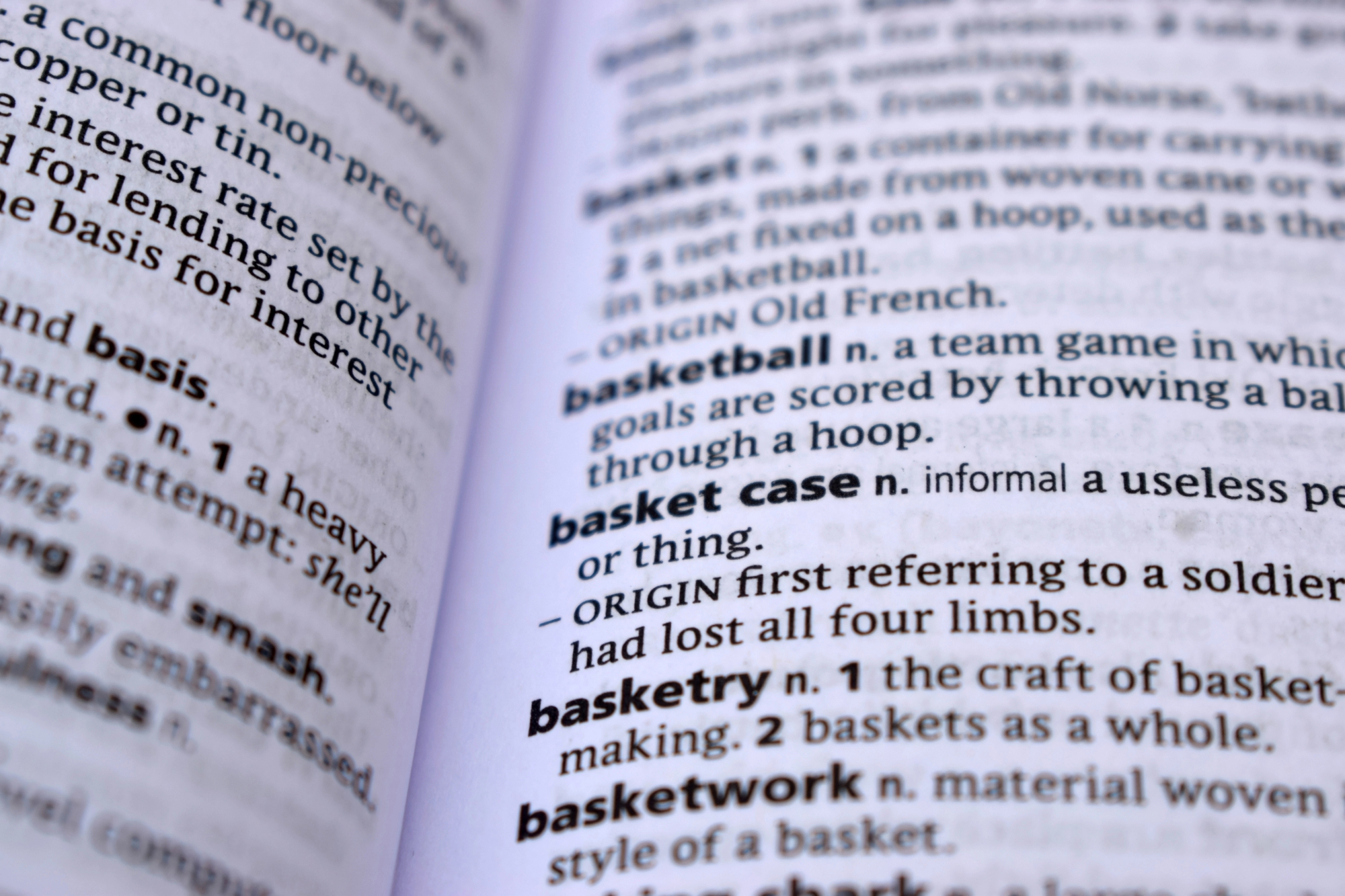
Basket case entered English during World War One. It described soldiers who had lost all four limbs, a term used bluntly by military medical staff.
The phrase was denied and disputed by the Army at the time, though it kept circulating anyway. Decades later it lost its grim original meaning and became a casual way to describe someone overwhelmed or falling apart.
Deadbeat
Deadbeat showed up in the 1800s as slang for someone who dodged paying debts, a loafer who lived off other people’s money without contributing anything back — the “dead” part implied uselessness, the “beat” part implied someone worn down to nothing worth collecting. So by the time it reached the 1900s, the word had narrowed onto a specific target: absent parents who skipped child support, a meaning that still dominates today.
And it’s one of the rare insults that never really softened or wandered far from its original sting, still landing exactly where it was aimed a century ago. That kind of staying power is rare for slang, most of which fades or drifts within a generation.
The Fingerprints Left Behind
None of this changes how these words get used at the dinner table or in a group chat, and nobody’s suggesting you retire “nerd” or apologize for calling a coworker a bigwig. But there’s something worth sitting with in the fact that language keeps its receipts, even when everyone stops reading them.
Every insult that softened into a compliment, every slur that got scrubbed into a compliment-adjacent shrug, carries a small history of who looked down on whom, and why. Words outlive the grudges that made them, which might be the closest thing English has to forgiveness.
More from Go2Tutors!

- The Romanov Crown Jewels and Their Tragic Fate
- 13 Historical Mysteries That Science Still Can’t Solve
- Famous Hoaxes That Fooled the World for Years
- 15 Child Stars with Tragic Adult Lives
- 16 Famous Jewelry Pieces in History
Like Go2Tutors’s content? Follow us on MSN.



