Children’s Book Characters We’ll Never Forget
Some characters stick around long after the last page is turned. They become part of our vocabulary, our imagination, and sometimes even our sense of self.
The best children’s book characters aren’t just names on a page — they’re companions who taught us lessons, made us laugh, or helped us feel less alone when we needed it most.From bears with a penchant for marmalade to mice who outwit monsters, these figures have transcended their original stories to become cultural touchstones.
They’ve inspired movies, merchandise, and countless hours of imaginative play. But what makes them truly unforgettable isn’t their commercial success — it’s the way they connected with readers across generations.
Here’s a closer look at the characters who’ve earned their place in literary history, and why they continue to matter.
Paddington Bear

A polite bear from Peru who wears a duffle coat and a battered hat shouldn’t work as a concept, but somehow Paddington does. Created by Michael Bond in 1958, this marmalade-loving immigrant arrived at Paddington Station with nothing but a suitcase and a note reading ‘Please look after this bear.’
The Browns took him in, and readers have been taking him into their hearts ever since.What makes Paddington memorable isn’t just his good manners or his disaster-prone nature.
It’s the gentle way his stories address themes of belonging, kindness toward strangers, and finding your place in an unfamiliar world. He gets things spectacularly wrong — flooding bathrooms, causing chaos at department stores — but his intentions are always pure.
That combination of earnestness and chaos feels deeply human, even for a bear.Paddington has survived multiple illustrators, two successful films, and shifting cultural attitudes because his core message remains relevant.
In a world that can be unkind to outsiders, he reminds us that a little courtesy and an open heart go a long way.
Winnie-the-Pooh
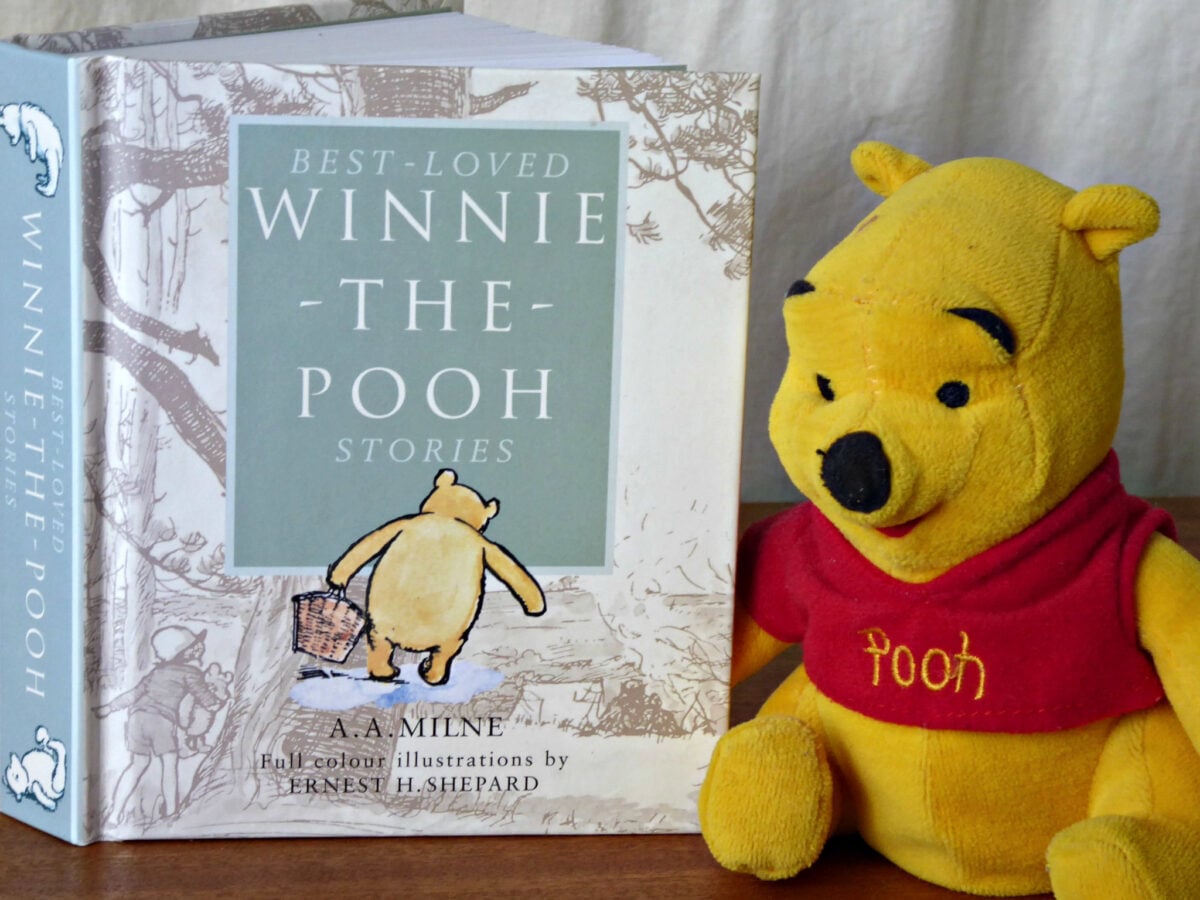
A.A. Milne’s ‘bear of very little brain’ has been wandering the Hundred Acre Wood since 1926, and he’s shown no signs of slowing down. Pooh, along with his anxious friend Piglet, gloomy Eeyore, and bouncy Tigger, created a blueprint for friendship that feels timeless.
These aren’t perfect characters — they worry, they mess up, they misunderstand each other — but they show up for one another anyway.What’s remarkable about Pooh is how much depth exists beneath the simple stories.
The philosophical undercurrents in Milne’s writing have inspired entire books analyzing Taoist principles hidden in Pooh’s simple approach to life. But you don’t need to dig that deep to appreciate him.
Sometimes a bear who just wants to find some honey and spend time with his friends is exactly the kind of character we need.E.H. Shepard’s original illustrations captured something essential about these characters — a softness and warmth that Disney’s later adaptations built upon but never quite replicated.
The books remain comfort reads for adults who grew up with them, proof that some characters age alongside us.
Alice

Lewis Carroll’s curious girl who tumbled down a rabbit pit in 1865 essentially invented the modern children’s book protagonist. Before Alice, children’s literature was largely didactic — designed to teach lessons rather than entertain.
Alice changed that. She questions everything, challenges authority, and refuses to accept nonsense even when she’s surrounded by it.
What makes Alice endure is her rationality in the face of absurdity. She’s dropped into a world where nothing makes sense, yet she maintains her composure and her critical thinking.
She’s neither a damsel waiting for rescue nor an unrealistically heroic figure. She’s just a kid trying to navigate a confusing world — something every reader can relate to.
The story’s scandalous origins (Carroll’s relationship with the real Alice Liddell has been debated for over a century) haven’t diminished the character’s appeal.If anything, Alice has transcended her creator, becoming a symbol of curiosity, independence, and the courage to speak truth to power, even when power wears a crown and plays croquet with flamingos.
Matilda Wormwood

Roald Dahl created plenty of memorable characters, but Matilda stands apart. This extraordinarily brilliant girl, ignored by her ghastly parents and terrorized by the truly frightening Miss Trunchbull, discovers she has telekinetic powers — and uses them to fight back.
Published in 1988, Matilda became an instant icon for bookish kids who felt underestimated.What resonates about Matilda isn’t just her magical abilities.
It’s the way Dahl portrays intellectual curiosity as a superpower in itself. Before she discovers telekinesis, Matilda has already been using her intelligence to outwit the adults who underestimate her.
She reads voraciously, teaches herself to solve complex problems, and eventually finds a loving home with Miss Honey, proving that chosen families can be stronger than biological ones.Dahl had a gift for creating villains so deliciously awful you almost enjoy hating them, and Miss Trunchbull might be his masterpiece.
But he balanced that darkness with genuine warmth and the radical idea that smart children deserve to be taken seriously.
The Very Hungry Caterpillar
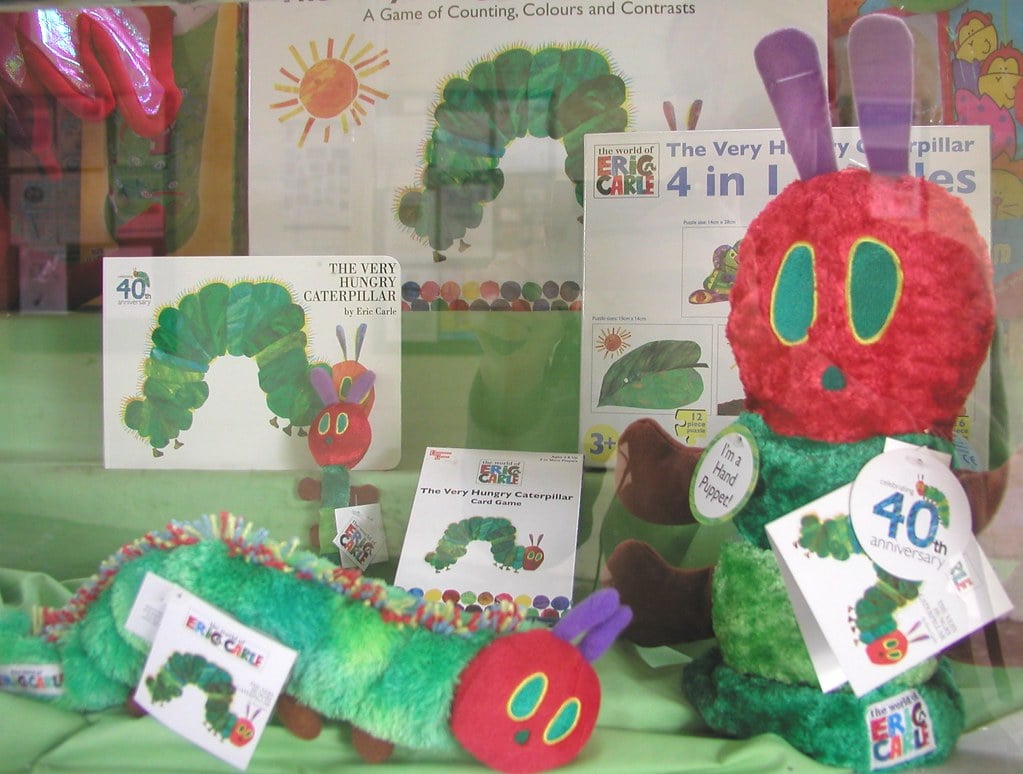
Eric Carle’s determined little caterpillar has eaten his way through multiple generations of readers since 1969. The story is simple — a caterpillar hatches, eats progressively larger amounts of food, builds a cocoon, and emerges as a butterfly.
Yet this straightforward narrative has become one of the best-selling children’s books ever published.Part of the caterpillar’s charm lies in Carle’s distinctive illustration style — vibrant tissue paper collages that feel both artistic and accessible.
But there’s something deeper at work. The caterpillar’s transformation mirrors every child’s growth, with the subtle message that becoming who you’re meant to be requires patience, nourishment, and trusting the process.
The book’s interactive elements — the pits punched through pages representing food — made it revolutionary for its time. Children could stick their fingers through, literally participating in the story.
It’s been translated into over 60 languages, proving that some characters transcend cultural boundaries entirely.
Max and the Wild Things

Maurice Sendak’s 1963 masterpiece ‘Where the Wild Things Are’ introduced Max, a boy in a wolf suit who gets sent to bed without supper and sails away to an island of monsters. The book was controversial when it first appeared — some adults worried it would frighten children or validate bad behavior.
They missed the point entirely.Max’s journey to where the wild things are is really a journey through his own anger and frustration.
The wild things themselves are magnificent — massive, clawed creatures who make Max their king after he proves he can be wilder than they are.
But the genius of the story lies in its ending. Max realizes that being wild and powerful isn’t as satisfying as being loved, and he sails home to find his dinner waiting, still hot.
Sendak understood something crucial about childhood emotions: they’re big, sometimes scary, and need to be acknowledged rather than suppressed. Max isn’t punished for his wild rumpus.
He works through his feelings and finds his way home. It’s a more sophisticated take on emotional regulation than most parenting books manage.
Charlotte

E.B. White’s ‘Charlotte’s Web’ gave us one of literature’s most selfless characters — a spider who saves a pig’s life through her intelligence and creativity. Charlotte A. Cavatica writes messages in her web to convince the farmer that Wilbur is ‘Some Pig,’ ‘Terrific,’ and ‘Radiant,’ ensuring he won’t be turned into bacon.
Charlotte’s wisdom extends beyond her vocabulary. She’s patient with Wilbur’s anxieties, practical about life’s realities, and works tirelessly to help her friend without seeking recognition.
Her death at the end of the book devastated readers in 1952, and it still does. White didn’t shy away from mortality — he faced it directly, showing children that loss is part of life but that love and sacrifice create legacies.
The book’s exploration of friendship, particularly between two creatures who have no logical reason to bond, remains its most powerful element. Charlotte proves that heroism isn’t about strength or bravery in battle.
Sometimes it’s about showing up for someone who needs you, day after day, until you’ve changed their entire world.
Peter Rabbit

Beatrix Potter’s mischievous rabbit has been squeezing under garden gates since 1902, making him one of the oldest characters on this list. Peter’s disobedience — sneaking into Mr. McGregor’s garden despite his mother’s explicit warnings — should make him an unlikable protagonist.
Instead, his narrow escape and subsequent bellyache taught generations of children that actions have consequences without being preachy about it.
Potter wrote the story originally as a letter to a sick child, and that intimate, caring tone permeates the text. Her illustrations, based on careful observations of actual rabbits, give Peter personality without over-anthropomorphizing him.
He’s recognizably a rabbit, just one with a blue jacket and a talent for getting into trouble.The book’s endurance comes partly from its perfect length and pacing.
It doesn’t overstay its welcome, and it trusts children to understand nuance. Peter’s mother isn’t portrayed as wrong for worrying, and Peter isn’t completely wrong for being curious.
It’s a rare balance that still feels fresh over 120 years later.
Harry Potter

J.K. Rowling’s bespectacled wizard arrived in 1997 and became arguably the most significant children’s book character of the modern era. Harry Potter transformed an entire generation’s relationship with reading, turning kids who claimed to hate books into devoted fans who would camp outside bookstores at midnight for the next installment.
Harry works as a character because he’s fundamentally decent without being boring.He makes mistakes, feels jealous, holds grudges, and sometimes treats his friends badly — then apologizes and tries to do better.
He’s given tremendous power and responsibility, yet his greatest strength isn’t magic but his capacity for love and his unwillingness to become what Voldemort represents.The books’ handling of death, prejudice, corruption, and authoritarianism gave young readers a framework for understanding complex moral issues.
Harry’s journey from an abused kid living in a cupboard to a young man willing to sacrifice himself for others provided a roadmap for growing up with courage and integrity.
Eloise

Kay Thompson and Hilary Knight’s precocious six-year-old has been ‘skibbling’ through the Plaza Hotel since 1955, and she remains gloriously, unapologetically herself. Eloise lives at the hotel with her nanny, her dog Weenie, and her turtle Skipperdee, creating elaborate mischief and viewing the world through her uniquely observant lens.
What makes Eloise remarkable is her voice. Thompson captured the stream-of-consciousness style of an energetic child perfectly, all run-on sentences and dramatic emphasis and absolute certainty.
Eloise isn’t cute or well-behaved. She’s loud, demanding, and occasionally exhausting — and she’s wonderful precisely because of these qualities, not despite them.
Knight’s illustrations brought Eloise’s world to vivid life, making the Plaza itself a character in her stories. But it’s Eloise’s confidence and imagination that keep readers coming back.
She creates her own adventures, defines her own rules, and never doubts her right to take up space. For children, especially girls, that kind of unshakable self-assurance can be revolutionary.
Why These Characters Last

The children’s book characters we remember best tend to share certain qualities. They’re specific enough to feel real but universal enough to resonate across cultures and generations.
They face genuine problems — loss, loneliness, injustice, fear — but approach them in ways that feel appropriate for their age and story world.These characters also respect their readers.
They don’t talk down, they don’t oversimplify, and they trust children to understand complexity. Paddington’s status as an immigrant, Alice’s challenges to authority, Harry’s trauma — these aren’t watered down.
They’re presented honestly, with faith that young readers can handle difficult truths when they’re wrapped in compelling stories.What’s striking is how many of these characters were created by authors who genuinely liked children and understood them.
They weren’t writing what they thought kids should read but what they believed kids would actually enjoy and connect with. That authenticity comes through on every page.
More Than Just Stories
The influence of these characters extends far beyond their original books. They’ve shaped how we think about childhood, imagination, and storytelling itself.
They’ve given us a shared cultural vocabulary — references we can make knowing others will understand. They’ve provided comfort during difficult times and sparked joy during good ones.
Some have evolved through different media, from page to screen to stage, adapting to new technologies and sensibilities while retaining their essential nature. Others remain forever linked to their original books, their impact rooted in the specific experience of reading those pages.
Both approaches work because the characters themselves are solid enough to withstand change and timeless enough not to require it.These literary figures have also influenced real-world behavior.
Libraries report that Matilda inspired kids to read more. Paddington’s kindness-to-strangers message has been cited in immigration debates.
Harry Potter fans have created real charities based on the books’ themes of justice and equality. The line between fiction and reality blurs when characters become beloved enough.
The Stories We Keep

Children’s book characters endure because they capture something essential about being human. They help us process emotions we don’t have words for yet, show us possibilities we hadn’t imagined, and remind us of truths we sometimes forget as we age.
They grow with us, revealing new layers as we return to them at different life stages.The best characters feel like old friends — ones you’re always glad to visit, who never change but somehow always have something new to offer.
They exist in that special place where imagination meets memory, forever frozen at the age we first met them yet somehow ageless. They taught us about courage, kindness, curiosity, and resilience without us even realizing we were learning.
These figures have earned their immortality not through perfection but through authenticity. They’re flawed, funny, brave, scared, generous, and real in the ways that matter most.
They remind us why stories matter and why, no matter how old we get, we never completely outgrow our need for them.
More from Go2Tutors!

- The Romanov Crown Jewels and Their Tragic Fate
- 13 Historical Mysteries That Science Still Can’t Solve
- Famous Hoaxes That Fooled the World for Years
- 15 Child Stars with Tragic Adult Lives
- 16 Famous Jewelry Pieces in History
Like Go2Tutors’s content? Follow us on MSN.