Curious Facts About Hanukkah Traditions and Symbols
The winter holidays bring out traditions that families hold close, and Hanukkah stands out with its unique blend of ancient history and evolving customs. You probably know about the menorah and the dreidel, but the stories behind these symbols run deeper than most people realize.
The eight-day festival carries meanings that shift depending on which part of the world you’re celebrating in, and some of the most familiar traditions actually started more recently than you’d think.
The Menorah’s Hidden Symbolism

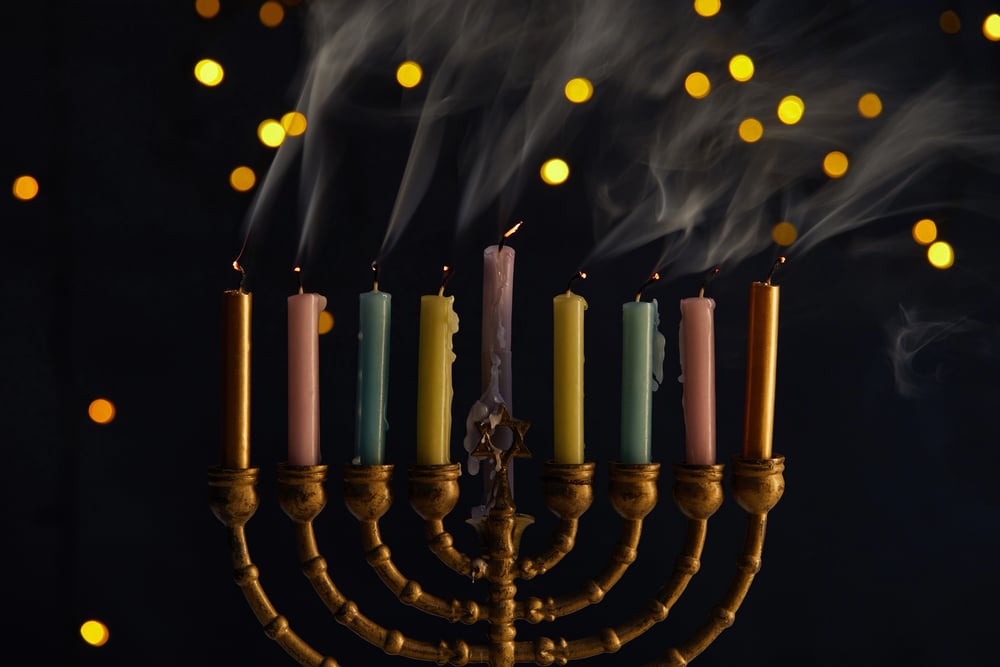
Most people focus on lighting the candles each night, but the menorah itself tells a story through its design. The nine-branched version used during Hanukkah differs from the seven-branched menorah that stood in the ancient Temple.
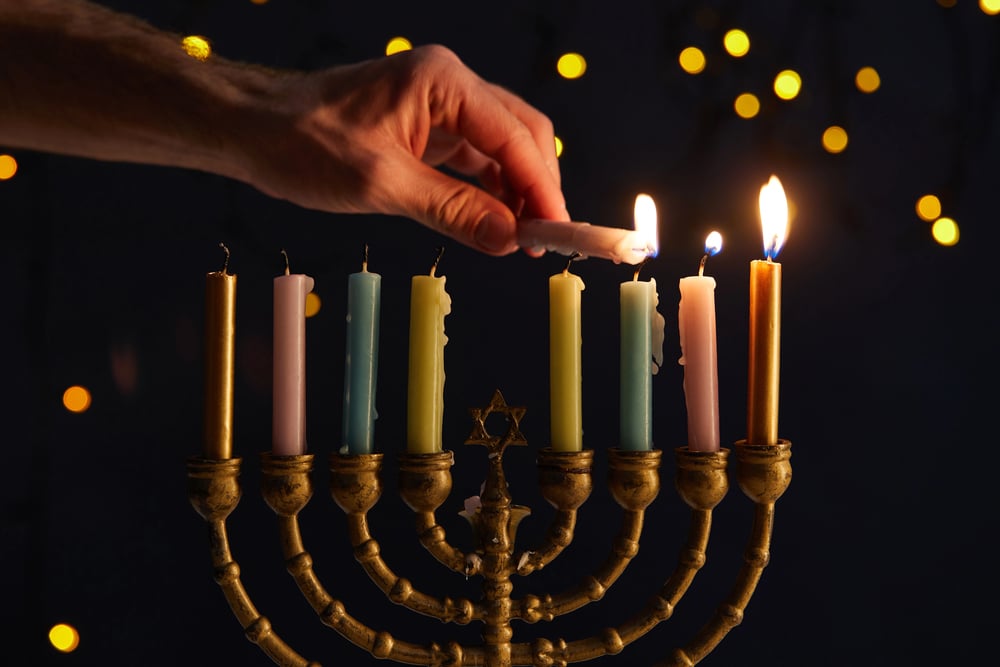
That ninth candle, called the shamash, serves as the helper candle that lights all the others. Its elevated or separated position reflects an important principle—you can’t use the Hanukkah lights for any practical purpose like reading or finding your way in the dark.
They exist purely for celebration and reflection.
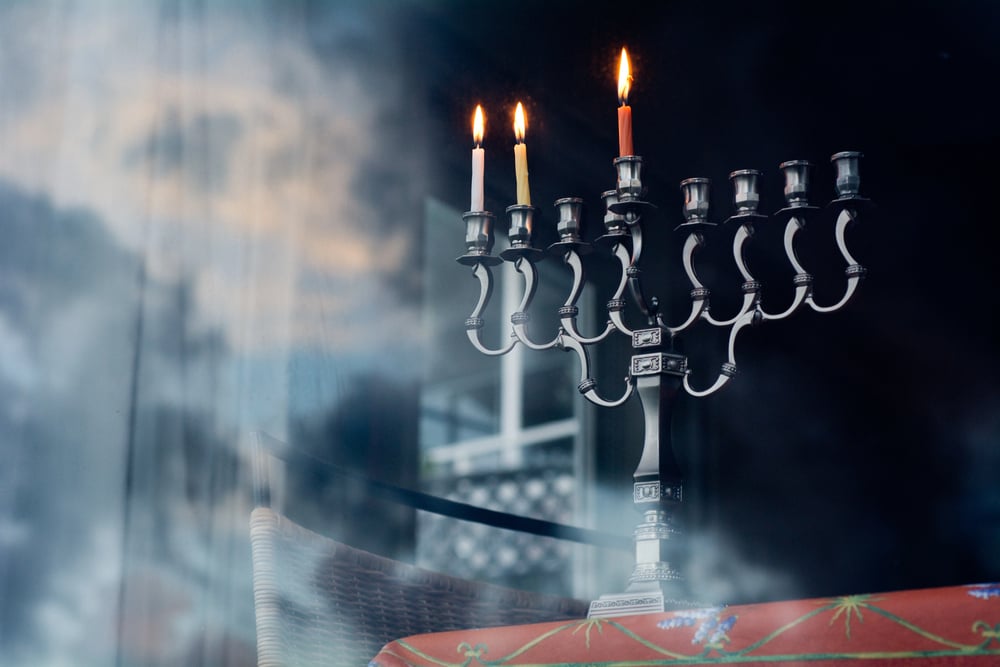
The traditional placement near a window or doorway isn’t just about aesthetics. Historically, displaying the menorah publicly served as an act of courage and identity, especially during times when practicing Judaism openly carried risks.
Today, that window placement reminds us to share light outward rather than keep it hidden.
Oil Over Candles

Walk into most homes during Hanukkah and you’ll see candles flickering in the menorah. But the original tradition called for olive oil, and many observant families still prefer it.
The miracle at the heart of Hanukkah involved oil, not wax. When the Maccabees reclaimed the Temple in Jerusalem, they found only enough pure oil to keep the menorah lit for one day.
That small amount burned for eight days instead.
Using oil connects you directly to that ancient story. The wicks float in small glass cups filled with olive oil, creating a different kind of flame—steadier and somehow more alive than candle flames.
The practice requires more preparation than simply unwrapping candles, which makes the ritual more intentional.
The Dreidel’s Gambling Roots
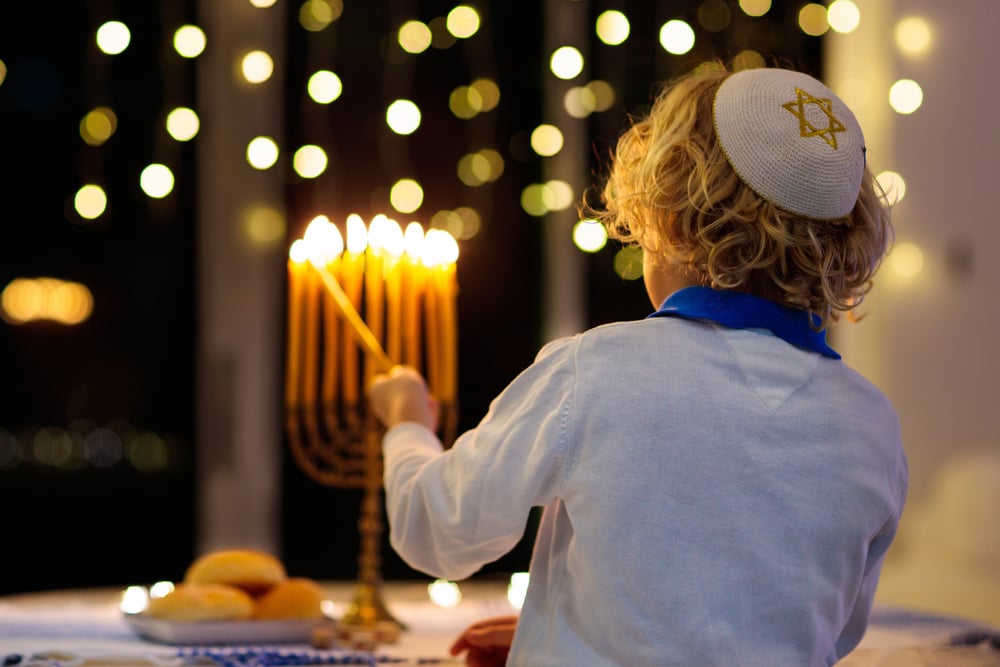
Children spin dreidels for chocolate coins or pennies, treating it as an innocent game. The reality involves a bit more edge than that.
The dreidel evolved from a gambling game played across Europe, and its four Hebrew letters—nun, gimel, hey, shin—stood for the phrase “a great miracle happened there.” But before these letters got their sacred meaning, similar spinning tops were used in games of chance throughout Germany and other regions.
During periods of persecution, Jewish children supposedly used the dreidel as cover. If soldiers appeared while people were studying Torah in secret, the children could quickly pull out spinning tops and pretend they were just playing games.
The story adds a layer of cleverness to what seems like simple entertainment.
Each letter determines whether you win or lose pieces from the pot. Nun means you get nothing, gimel means you take everything, hey means you take half, and shin means you put one in.
The gambling element survives in family living rooms across the world every December.
Why Eight Nights

The eight days of Hanukkah commemorate how long that small cruse of oil burned in the Temple. But if the oil was enough for one day and lasted eight, then the miracle really only covered seven days.
This mathematical puzzle bothers some people enough that various explanations have emerged over the centuries.
One theory suggests that the priests divided the oil into eight portions from the start, expecting each portion to burn for just a few hours. When each portion lasted a full 24 hours instead, all eight days qualified as miraculous.
Another explanation points to the eight days of dedication ceremonies prescribed in the Torah for the Tabernacle, making eight the appropriate length for rededicating the Temple.
The number eight also carries significance in Jewish tradition beyond Hanukkah. Circumcision happens on the eighth day of a boy’s life.
The Temple dedication ceremonies lasted eight days. Seven represents the natural world—seven days of creation, seven days in a week.
Eight represents something beyond nature, something supernatural.
Latkes and the Oil Connection

Potato pancakes dominate Hanukkah tables in many communities, but the tradition of eating fried foods extends well beyond latkes. The oil used for frying commemorates the miracle of the oil in the Temple.
Sephardic and Mizrahi Jewish communities fry doughnuts called sufganiyot or bimuelos instead of grating potatoes.
Potatoes didn’t arrive in Europe until the 16th century, which means latkes are actually a relatively modern addition to Hanukkah celebrations. Before potatoes became common, people fried pancakes made from cheese or other ingredients.
The switch to potatoes happened partly because they were cheap and filling, especially in Eastern European communities where money ran tight.
The amount of oil people consume during Hanukkah would horrify any nutritionist. But the tradition asks you to embrace it once a year—the sizzle of batter hitting hot oil, the crispy edges, the way paper towels can’t quite absorb all the grease.
You’re supposed to eat fried food during Hanukkah. It’s right there in the religious observance.
Gifts Weren’t Always Part of It

Children today expect presents each night of Hanukkah, but this tradition developed primarily in response to Christmas. Jewish families living in Christian-majority countries wanted to give their children something special during the winter holiday season.
The practice of giving gelt—money—during Hanukkah dates back centuries, but the nightly gift-giving is relatively new.
Traditionally, gelt was given to children and to teachers as a token of appreciation. The chocolate coins wrapped in gold foil represent this older custom, though real money works better for the dreidel game.
The escalation to toys and substantial gifts happened largely in North America during the 20th century.
Some families push back against the commercialization by limiting gifts to one per night or focusing on small, meaningful items. Others embrace the abundance, figuring eight nights offer plenty of room for generosity.
The tension between keeping things simple and celebrating fully plays out differently in every household.
The Maccabees’ Complicated Legacy
The heroes of the Hanukkah story fought against forced assimilation and won religious freedom for the Jewish people. That’s the version most children learn.
The fuller picture involves more complexity. The Maccabees led a revolt not just against the Seleucid Empire but also against fellow Jews who had adopted Greek customs.
Judah Maccabee and his brothers established a dynasty that eventually became as corrupt and problematic as the regimes they fought against. The Hasmonean dynasty lasted about a century before Rome took control.
Some scholars note the irony that Hanukkah celebrates a military victory and political independence, yet it became most important after Jewish sovereignty ended.
The rabbis who shaped Judaism after the Temple’s destruction in 70 CE downplayed the military aspects of the Hanukkah story. They emphasized the miracle of the oil instead.
Books like the Maccabees weren’t included in the Hebrew Bible, even though they tell the full story of the revolt. The spiritual lesson mattered more than the battlefield triumph.
Geographic Variations in Celebration

Travel to Israel during Hanukkah and you’ll notice the fourth letter on the dreidel changes. Instead of shin, Israeli dreidels have a peh, changing the phrase to “a great miracle happened here.”
This small difference reminds you that the Temple stood in Jerusalem, making the miracle a local event for Israelis.
Food traditions vary dramatically by region. Persian Jews make a rice dish called tahdig with a crispy bottom layer.
Syrian Jews prepare fried flatbreads. Italian Jews fry artichokes.
The common thread remains oil, but the specific dishes reflect whatever local ingredients people had available when they first started celebrating in that area.
The timing of candle lighting shifts based on local sunset times, which can create confusion for families with relatives in different time zones. Some communities light right after sunset, others wait until stars appear, and a few light earlier in the afternoon before Shabbat begins on Friday nights.
Women and Candlelighting
Hanukkah carries a special connection to women in Jewish tradition, though this isn’t widely known. The story of Judith, while not directly part of the Hanukkah narrative, gets associated with the holiday.
She saved her community by feeding the enemy general cheese and wine until he fell asleep, then beheaded him. This connection to cheese explains why some communities eat dairy foods during Hanukkah.
Because women played important roles in the Hanukkah story, some traditions excuse women from work while the candles burn—roughly 30 minutes each night. This practice varies widely, with some communities observing it strictly and others not at all.
Everyone in the household can light their own menorah, creating a beautiful display when families gather. Some traditions hold that all family members should light, while others designate one person to light for the entire household.
The multiplication of light sources in a home full of people, each with their own menorah, creates an effect that a single nine-branched candelabra can’t match.
The Addition of Music

“Ma’oz Tzur” (Rock of Ages) became the signature Hanukkah song in Ashkenazi communities, but its melody was borrowed from a German folk song. The tradition of singing after lighting the candles developed over centuries, with different communities adding their own songs.
In recent decades, Hanukkah music has exploded. Adam Sandler’s “Hanukkah Song” gave American Jews a humorous anthem.
Israeli musicians produce new Hanukkah songs each year. The attempt to create a Hanukkah music catalog to rival Christmas carols meets with mixed success—you can’t force cultural evolution.
Some families stick with traditional songs like “Hanerot Halalu” (These Candles) and “Maoz Tzur.” Others blast contemporary music or make up their own songs.
The flexibility around music reflects Hanukkah’s generally relaxed character compared to more stringent holidays in the Jewish calendar.
Publicizing the Miracle

The commandment to display your menorah publicly stems from the concept of pirsumei nisa—publicizing the miracle. This obligation shaped where people place their menorahs and when they light them.
The goal is to share the miracle with as many people as possible, which is why lighting should happen when people are likely to see it.
Chabad communities take this principle to an extreme with massive public menorah lightings in city squares and on street corners. These displays sometimes spark controversy about the separation of church and state, but they also make Hanukkah visible in the broader culture.
The rise of social media added a new dimension to publicizing the miracle. People post photos of their menorahs, share recipes, and document their celebrations online.
Whether this counts as fulfilling the mitzvah of pirsumei nisa depends on who you ask, but it certainly spreads awareness of the holiday far beyond traditional boundaries.
Games Beyond the Dreidel

The dreidel dominates Hanukkah game traditions, but other activities fill the eight nights. Card games, board games, and puzzles become family traditions.
Some communities play a game with nuts, and others have developed their own unique Hanukkah entertainments.
The focus on games and entertainment during Hanukkah stems partly from the holiday’s minor status in the Jewish calendar. Unlike Passover or Yom Kippur, Hanukkah doesn’t come with strict prohibitions against work or requirements to attend synagogue.
This flexibility allows families to create their own traditions around food, games, and gathering.
Children often receive special attention during Hanukkah precisely because the holiday offers fewer prescribed rituals. You can shape the celebration around what brings your family joy, as long as you light the candles and remember the story.
When Stars Mark Time
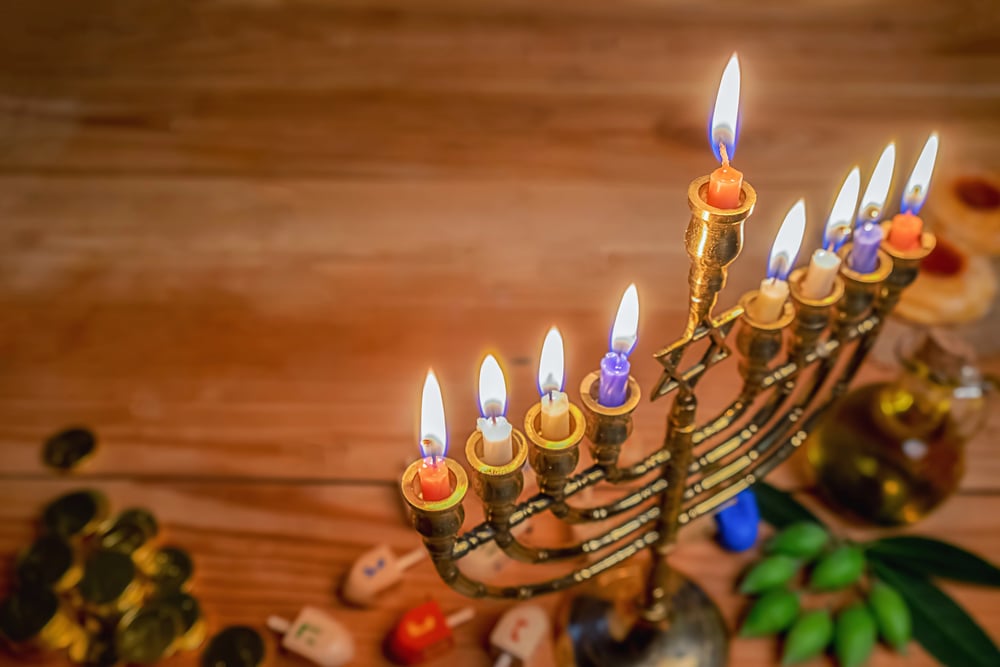
The timing of candle lighting follows a specific order. You light the candles after dark each night, but the definition of “after dark” varies.
Some communities wait until three stars appear in the sky—a poetic marker that predates precise timekeeping. Others light right at sunset.
The first night gets special attention because you’re starting something that will continue for eight nights. Some families make the first night the big celebration with extended family, while others build up to the eighth night as the culmination.
The flexibility lets you adapt to modern life and work schedules while still maintaining the core practice.
On Friday afternoon, you light the Hanukkah candles before lighting Shabbat candles. This creates a rush to get everything done before sunset, but it also produces a beautiful cascade of candlelighting that fills the home with light just as darkness falls.
The Saturday night candles get lit after Shabbat ends, extending the glow of the day of rest into the evening.
The Way Light Travels Through Generations
Watching your grandmother light candles the same way her grandmother did creates a thread that connects you to centuries of Jewish history. The words might be the same, the movements familiar, but each generation adds something new.
Your family’s specific traditions—the foods you eat, the games you play, the way you arrange the menorah—create your unique expression of an ancient story.
Children who grow up lighting menorahs in apartment windows or suburban living rooms carry those memories forward. They’ll teach their own children someday, adapting the traditions to fit new circumstances while keeping the essential elements alive.
The light from that ancient cruse of oil continues burning, not because it defies physics, but because people choose to remember and celebrate it year after year.
Some traditions feel rigid and demanding, but Hanukkah maintains a lightness that welcomes creativity. You can make it your own without losing what makes it meaningful.
That balance keeps the holiday relevant across time and geography, allowing each family to find their way of publicizing the miracle in their corner of the world.
More from Go2Tutors!

- The Romanov Crown Jewels and Their Tragic Fate
- 13 Historical Mysteries That Science Still Can’t Solve
- Famous Hoaxes That Fooled the World for Years
- 15 Child Stars with Tragic Adult Lives
- 16 Famous Jewelry Pieces in History
Like Go2Tutors’s content? Follow us on MSN.



