Curious facts about the wombat: Australia’s treasure
Of all the animals found in Australia, wombats may be the most underappreciated. These plump marsupials resemble a bear-potato hybrid that has been given an attitude issue.
They create some of the most bizarre excrement in the animal kingdom, dig tunnels that would make any engineer envious, and waddle around as if they own the place. There is much more going on beneath that fuzzy exterior than most people realize, despite the fact that they are typically thought of as those adorable, plump creatures from nature documentaries.
For millions of years, these stout little diggers have been quietly going about their business in Australia, evolving some genuinely strange adaptations in the process. These 14 amazing facts about wombats will completely change your perspective on these marsupials.
They’re the only animals that poop cubes

Wombats produce perfectly shaped cube poop, and they’re the only creatures on Earth that pull off this geometric feat. Each cube measures roughly 2 cm wide, and a single wombat can produce 80 to 100 of these geometric gems per night.
Scientists were stumped for years about how a round intestine could produce square droppings, leading to some pretty creative theories involving square butts and pelvic bone compression. The real answer turned out to be far more interesting—wombats have intestines with alternating stiff and stretchy sections that mold their poop into cubes through thousands of contractions over a 4 to 5 day process.
Their digestive system is ridiculously slow

While humans process food in about a day or two, wombats take their sweet time—anywhere from 8 to 14 days to fully digest a meal depending on their species and diet. This marathon digestion session happens in an intestine that’s between 26 to 33 feet long, about ten times the length of their entire body.
The extended process allows them to squeeze every last bit of nutrition and water from their food, which comes in handy when you’re living in the dry Australian bush where resources can be scarce.
Like Go2Tutors’s content? Follow us on MSN.
They use cube poop as territorial markers
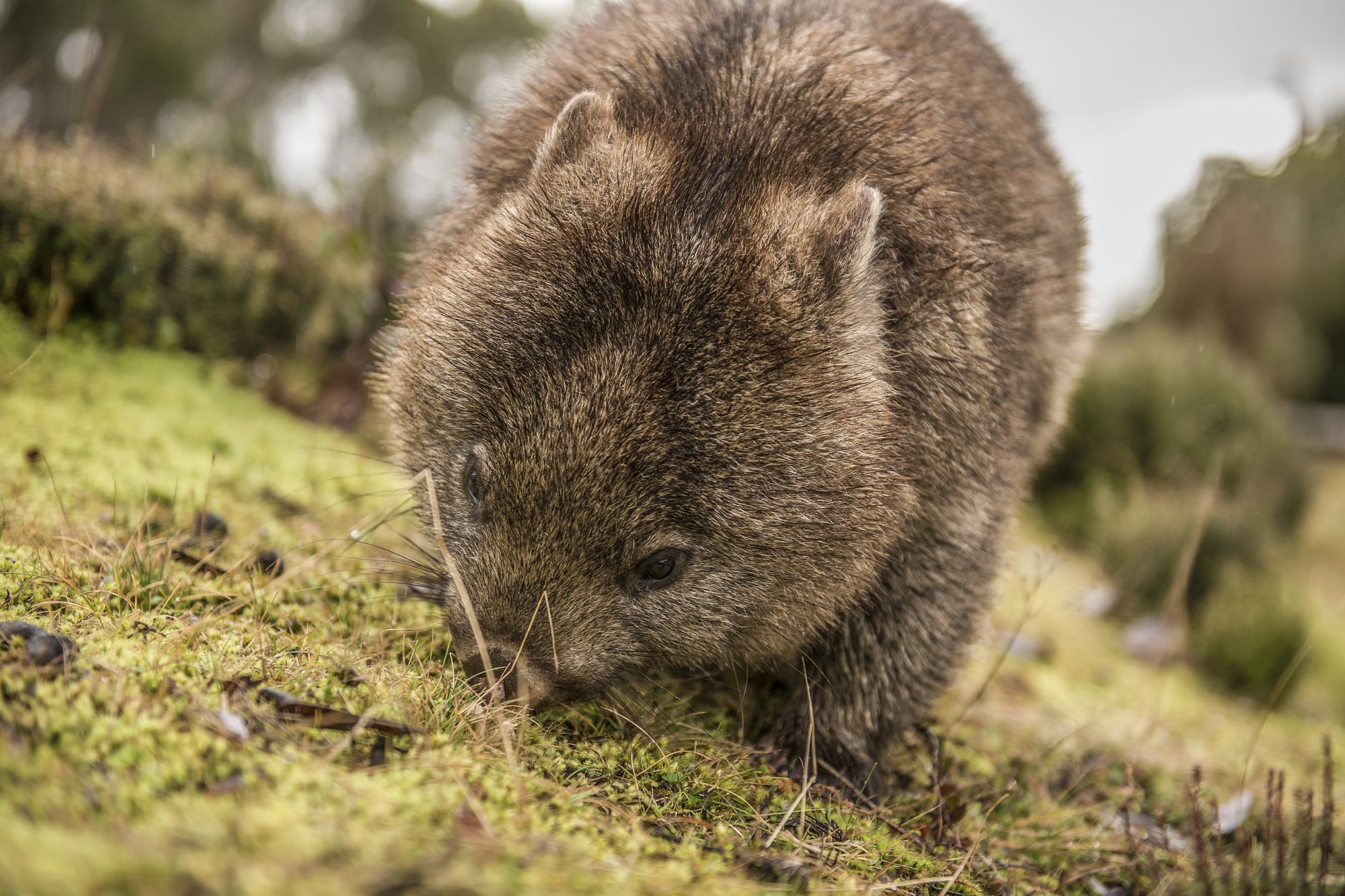
Those carefully crafted cubes aren’t just for show—wombats strategically place them on rocks, logs, and other prominent spots around their territory. The cubic shape means the droppings won’t roll away, staying put exactly where the wombat wants them as a message to other wombats.
These poop piles serve primarily as territorial markers and communication signals, letting other wombats know who owns what patch of land.
Their pouches face backwards

Unlike kangaroos and most other marsupials whose pouches open toward their heads, wombat pouches face backward toward their rear end. This adaptation appears in all three wombat species and also in their closest relatives, koalas.
The backward-facing design keeps soil from showering all over the tiny joey tucked inside while mom excavates another tunnel, making it perfectly suited for a life spent digging through dirt.
Baby wombats are impossibly tiny

When a wombat joey is first born, it weighs just one gram—about the weight of a paperclip. These jelly bean-sized babies crawl into their mother’s pouch where they’ll stay for around 6 to 7 months, slowly developing until they’re ready to peek out at the world.
Young wombats are usually weaned by about 12 to 15 months old, gradually learning to fend for themselves before striking out on their own.
Like Go2Tutors’s content? Follow us on MSN.
They’re surprisingly fast when they need to be

Don’t let that waddle fool you—when a wombat decides to book it, they can hit speeds of up to 40 kilometers per hour, which translates to about 25 miles per hour. Researchers in Australia figured this out by tracking how fast their vehicles needed to go when trying to catch wombats for monitoring studies.
They can maintain these impressive bursts for about 100 meters, which is pretty remarkable for an animal that looks like an overstuffed pillow with legs.
Their rear ends are weaponized

Wombats have what might be the most intimidating butts in the animal kingdom. Their rumps are reinforced with thick cartilage, bone, tough connective tissue, and extra padding that turns their backside into a virtual shield.
When a predator chases them into a burrow, wombats use this armored rear end to block the entrance, protecting their vulnerable head and body while pushing attackers away. The old myth about wombats crushing predator skulls against burrow roofs makes for a great story, but there’s no real evidence they actually do this—the defensive butt-blocking technique works just fine on its own.
They glow under UV light

In 2020, scientists at the Western Australian Museum discovered that wombats join platypuses and several other Australian marsupials in having a secret superpower—they glow under ultraviolet light. This bio-fluorescence creates a blue-green glow on their fur when exposed to UV light, creating an eerie effect that’s completely invisible under normal conditions.
Researchers are still trying to figure out exactly why some Australian animals developed this trait and what biological purpose it might serve.
Like Go2Tutors’s content? Follow us on MSN.
Their teeth never stop growing

Wombats have continuously growing incisors that work like self-sharpening tools throughout their entire lives. Like rodents, they have just one pair of upper and one pair of lower incisors, and they lack canine teeth entirely—a key difference from most other marsupials.
This specialized dental setup is essential because their diet consists of tough native grasses, sedges, and roots that would quickly wear down regular teeth. The constant grinding keeps their choppers in check, preventing them from growing too long while maintaining sharp edges perfect for slicing through fibrous vegetation.
Ancient wombats were absolute giants

The prehistoric relatives of modern wombats were massive creatures that would dwarf their pudgy descendants. The largest known wombat species, Phascolonus gigas, went extinct around 40,000 years ago and weighed up to 550 pounds—roughly the size of a large black bear.
Even more impressive was the related Diprotodon optatum, which wasn’t technically a true wombat but a close cousin. This beast is acknowledged as the largest marsupial in history, standing about 5.6 feet tall at the shoulder, stretching 10 feet long, and weighing up to 5,500 pounds.
Koalas are their closest living relatives
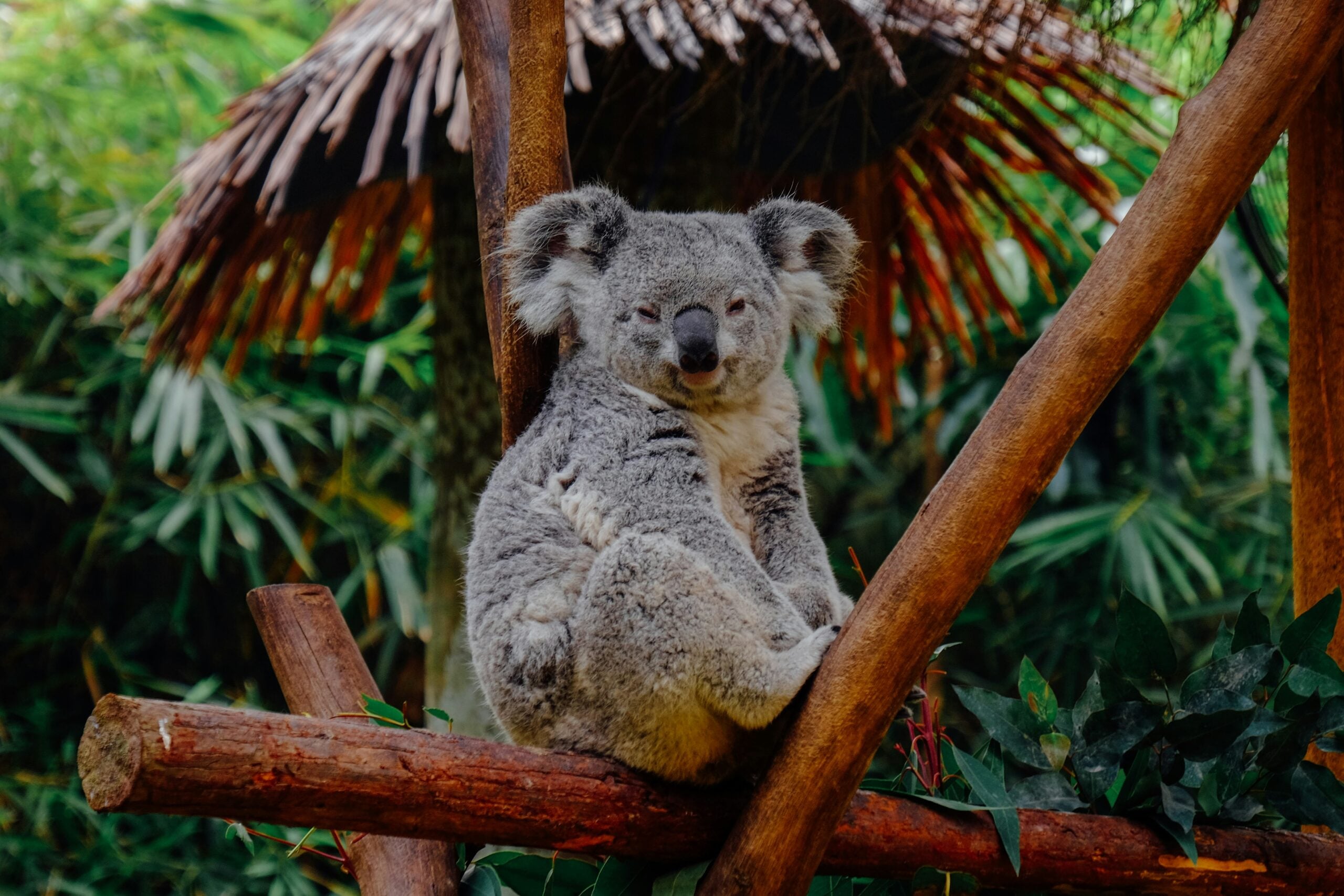
Despite looking nothing alike, wombats and koalas are evolutionary cousins. Both belong to the family Vombatiformes, which split from other marsupials around 25 million years ago.
Wombats carved out their own ecological niche as burrowing herbivores while koalas took to the trees, but genetic studies confirm these two are more closely related to each other than to any other marsupials. The family resemblance isn’t obvious when you compare a tree-climbing koala to a ground-dwelling wombat, but the DNA doesn’t lie.
Like Go2Tutors’s content? Follow us on MSN.
They’re master architects underground

Wombats can dig through up to three feet of hard-packed dirt in a single night using their powerful claws and rodent-like front teeth. Their burrow systems, called warrens, are incredibly complex networks with multiple entrances and tunnels that can stretch up to 100 feet long with multiple chambers.
Some of these underground mansions are extensive enough to be spotted in aerial surveys, and they don’t just benefit wombats—other animals use them as shelter, especially after bushfires sweep through.
The northern hairy-nosed wombat is critically endangered

This species holds the unfortunate distinction of being one of the rarest mammals on Earth, with only around 400 to 450 individuals remaining in the wild as of 2024. They’re restricted to just two protected areas in Queensland—Epping Forest National Park and Richard Underwood Nature Refuge—after being driven from their historic range by habitat loss, droughts, and competition for food.
The International Union for Conservation of Nature lists them as Critically Endangered, though conservation efforts have made some progress. In the 1980s, only 35 northern hairy-nosed wombats were left alive, so the population has more than tripled since then.
They’re ecosystem engineers

When wombats dig their elaborate burrow systems, they’re doing way more than just building homes for themselves. Their excavation work aerates compacted soil, improves water penetration, and cycles nutrients back into the earth.
A 2024 study found that wombat burrows become crucial refuges for other wildlife after bushfires, with camera traps capturing over 15,000 individual animals—including echidnas, wallabies, bush rats, lizards, and birds—using the burrows for shelter, water, and protection during recovery periods.
Like Go2Tutors’s content? Follow us on MSN.
From vermin to treasure

In the past, wombbats were not as beloved as they are now in Australia. Because common wombats were viewed by farmers as agricultural pests, Victoria actually paid bounties ranging from 10 shillings to one pound per wombat between 1926 and 1966.
In New South Wales, similar bounty programs operated at different times. During this gloomy period, countless wombats were killed for food and to safeguard farmland.
With the advent of protection laws in the 1970s, attitudes have drastically changed, and wombats are now acknowledged as the amazing and vital animals they have always been.
More from Go2Tutors!

- 16 Historical Figures Who Were Nothing Like You Think
- 12 Things Sold in the 80s That Are Now Illegal
- 15 VHS Tapes That Could Be Worth Thousands
- 17 Historical “What Ifs” That Would Have Changed Everything
- 18 TV Shows That Vanished Without a Finale
Like Go2Tutors’s content? Follow us on MSN.



