December 25: Events That Happened This Day
Most people think of December 25th as just Christmas Day. But history has a way of picking the same dates to stage its biggest moments, and this particular day has witnessed everything from coronations to wars to scientific breakthroughs.
The fact that it coincides with a major holiday doesn’t stop history from unfolding. Sometimes it even adds to the drama.
Charlemagne Becomes Emperor
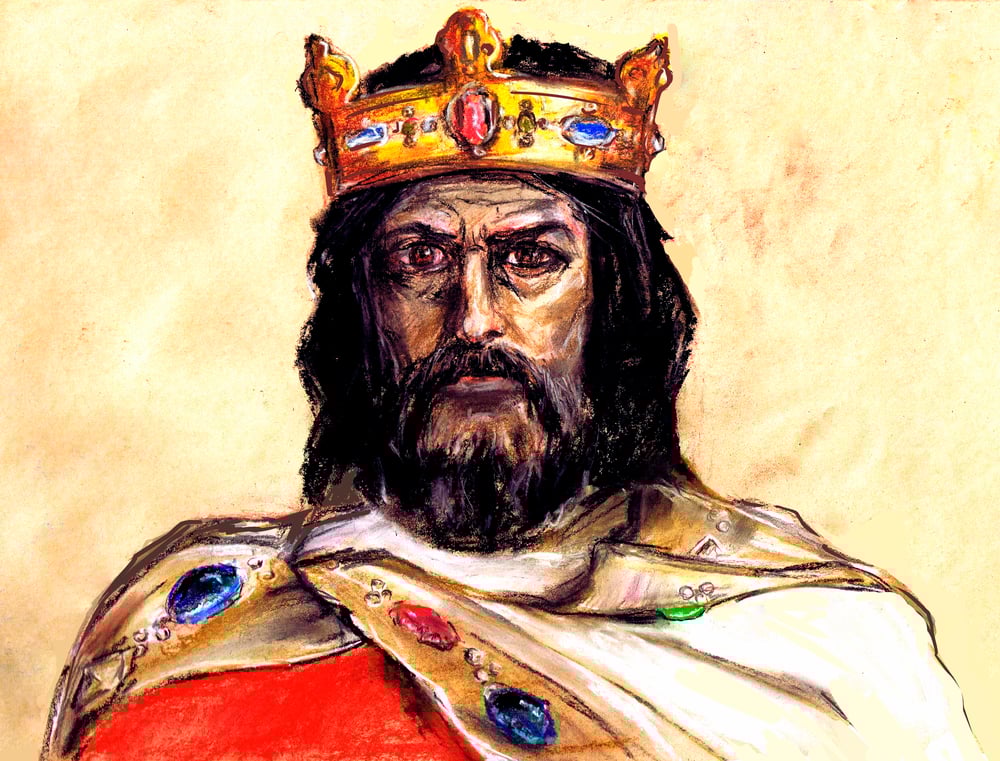
On December 25th, 800 AD, Pope Leo III crowned Charlemagne as the first Holy Roman Emperor in St. Peter’s Basilica. The ceremony marked a turning point in European history, establishing a new empire that would shape the continent for centuries.
Charlemagne had already controlled much of Western Europe through military conquests, but this coronation gave him religious authority to match his political power.
The moment itself came with some controversy. According to historical accounts, Charlemagne claimed he didn’t know the Pope planned to crown him, though most historians doubt this.
The coronation created tension with the Byzantine Empire, which saw itself as the only legitimate Roman authority. But it also set a precedent for the relationship between church and state that would define medieval Europe.
William the Conqueror’s Coronation

Westminster Abbey witnessed another coronation on December 25th, 1066. William the Conqueror, fresh off his victory at the Battle of Hastings, became King of England.
The ceremony tried to blend Norman and Anglo-Saxon traditions, an attempt to legitimize his rule over a conquered population.
The day didn’t go smoothly. When the congregation shouted their approval, Norman guards outside mistook the noise for an uprising and set fire to nearby buildings.
People fled the abbey in panic. William completed the ceremony in a nearly empty church while parts of London burned outside.
Not exactly the triumphant moment he’d probably imagined.
The First Christmas Truce
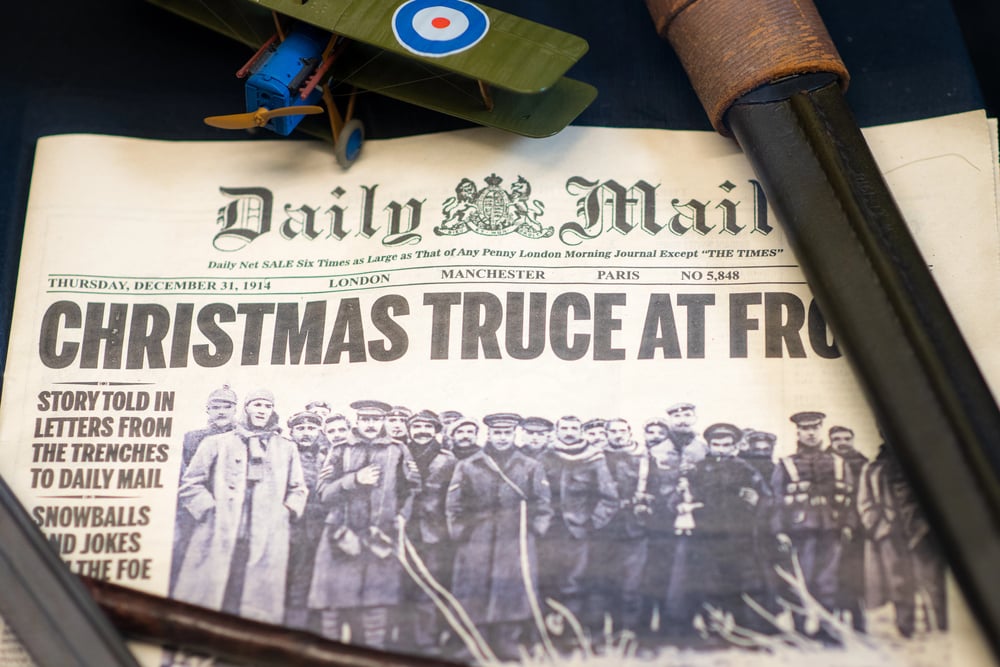
World War I had already turned Europe into a slaughterhouse by December 1914. Soldiers on both sides huddled in frozen trenches, fighting over yards of mud.
Then, on Christmas Eve and Christmas Day, something unexpected happened along various points of the Western Front. British and German soldiers called unofficial truces.
They climbed out of their trenches, met in No Man’s Land, exchanged food and small gifts, and even played impromptu football matches. Some buried their dead together.
The truces varied in length and participation, but they all represented a moment when common humanity broke through the machinery of war.
Military commanders on both sides hated these truces. They quickly issued orders to prevent them from happening again.
The war ground on for four more years, and by the next Christmas, the spontaneous goodwill had evaporated.
But that first Christmas truce remains one of history’s most poignant moments, a brief interruption in organized violence.
Isaac Newton’s Birthday (Old Calendar)

Isaac Newton was born on December 25th, 1642, according to the Julian calendar then used in England. By modern Gregorian calendar standards, his birthday falls on January 4th, but December 25th still claims him by historical record.
Newton grew up to become one of the most influential scientists in history. His work on gravity, motion, optics, and calculus fundamentally changed how humans understand the physical world.
The story about an apple falling on his head is probably exaggerated, but his insights into universal gravitation weren’t. He showed that the same force pulling that apple down also keeps planets in orbit.
He was also difficult, temperamental, and spent years pursuing alchemy and biblical chronology with the same intensity he brought to mathematics. Genius comes in complicated packages.
Washington Crosses the Delaware

On Christmas night, 1776, George Washington made a desperate gamble. The American Revolution was going badly.
His army was shrinking through desertion and expiring enlistments. Morale had collapsed. He needed a victory.
Washington ordered his troops to cross the ice-choked Delaware River in darkness and storm weather. The crossing took longer than planned, and his forces didn’t reach Trenton until morning.
But the Hessian soldiers they found there, groggy from Christmas celebrations, weren’t prepared for an attack. The Americans won decisively, capturing nearly a thousand prisoners.
The victory didn’t win the war, but it kept the revolution alive when it was closest to dying. It also became one of American history’s most romanticized moments, immortalized in Emanuel Leutze’s famous painting—though that painting gets almost every detail wrong.
Charlie Chaplin Dies
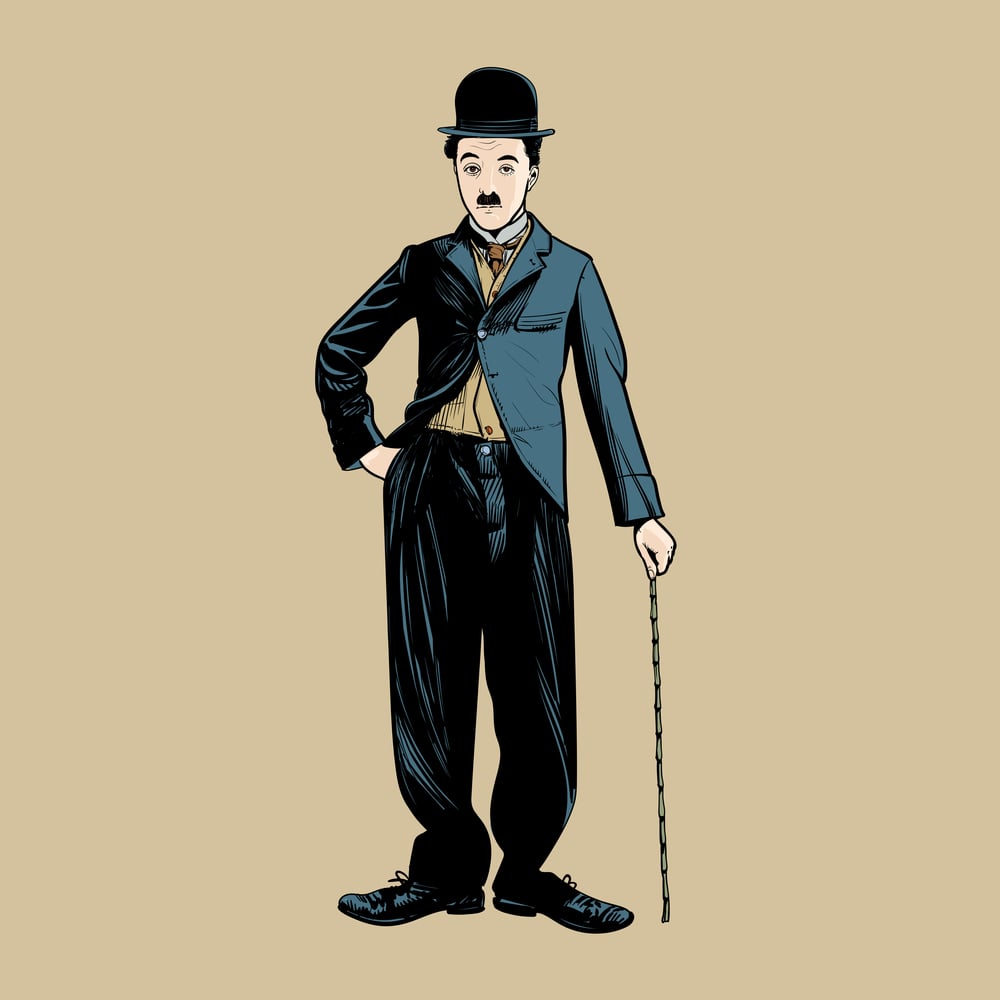
Charlie Chaplin died on Christmas Day, 1977, at his home in Switzerland. He was 88 years old and had lived long enough to see his status shift from controversial exile to beloved icon.
Chaplin’s career spanned the birth of cinema. He created the Tramp character that made him famous worldwide, directed and starred in films that mixed comedy with social commentary, and helped establish movies as an art form.
But his left-wing politics and personal scandals eventually made him unwelcome in America during the Red Scare era.
He spent his final decades in Switzerland, receiving honors and accolades from the film industry that once shunned him. His death on Christmas Day seemed fitting for someone whose Little Tramp character always carried a touch of both joy and melancholy.
The Soviet Union’s Final Christmas

Christmas Day, 1991, marked the official end of the Soviet Union. Mikhail Gorbachev resigned as president and the Soviet flag was lowered over the Kremlin for the last time.
The superpower that had defined Cold War geopolitics simply ceased to exist.
The dissolution didn’t happen in one day, of course. The Soviet system had been crumbling for years, accelerated by Gorbachev’s reforms, economic stagnation, and independence movements in various republics.
But December 25th became the official date when the largest country on Earth broke apart into fifteen independent nations.
The timing struck many as symbolic. Christmas, a religious holiday suppressed throughout most of Soviet history, became the day the atheist state disappeared.
Russia and other former Soviet republics suddenly had to figure out what came next.
Bing Crosby’s “White Christmas” Legacy

“White Christmas” became the best-selling single of all time largely because of its association with this date. Bing Crosby first performed the song in the 1942 film “Holiday Inn,” and it resonated with Americans fighting in World War II who dreamed of being home for Christmas.
The song has sold over 50 million copies worldwide. Crosby’s version remains the definitive recording, though hundreds of artists have covered it.
The song’s success turned December 25th into something more commercially powerful than ever before, helping create the modern American Christmas industry.
Irving Berlin wrote the music and lyrics, and he considered it his finest work. He was right.
Apollo 8 Circles the Moon

On Christmas Eve and Christmas Day, 1968, the Apollo 8 crew became the first humans to orbit the moon. Frank Borman, Jim Lovell, and William Anders spent 20 hours circling Earth’s nearest neighbor, seeing sights no one had seen before.
The mission was risky. NASA had accelerated the timeline after intelligence suggested the Soviets planned their own circumlunar flight.
The crew launched on a Saturn V rocket that had never carried humans before, heading for a destination no one had visited. If anything went wrong, they’d die in space.
But everything worked. On Christmas Eve, the astronauts read from the Book of Genesis during a live broadcast watched by millions around the world.
Anders photographed “Earthrise,” the image of our blue planet rising over the moon’s gray horizon. That photograph changed how humanity saw itself—a fragile world floating in darkness.
James Brown’s Christmas Performance

James Brown gave one of his most famous performances on December 25th, 1968, in Vietnam. He flew to the war zone to perform for American troops during what would become one of the conflict’s bloodiest years.
Brown had resisted the trip at first. His career was peaking, and the Vietnam War had grown increasingly unpopular.
But he eventually agreed, seeing it as a duty to the soldiers. He brought his full revue, performing multiple shows over several days.
The performances were filmed and later released as a documentary.
Watching Brown sweat through “Papa’s Got a Brand New Bag” on a makeshift stage in Southeast Asia, surrounded by young soldiers far from home, captures something about the strange intersection of entertainment, war, and American culture during that era.
Romania’s Revolution Ends

Nicolae Ceaușescu and his wife Elena were executed on Christmas Day, 1989, ending their brutal regime in Romania. The execution came after a hasty trial following their capture during the Romanian Revolution.
The Ceaușescus had ruled Romania for decades with increasing paranoia and repression. Nicolae built a massive palace while his people starved.
His secret police terrorized anyone suspected of dissent. But when the Berlin Wall fell and communist governments collapsed across Eastern Europe, Romania erupted too.
The revolution turned violent in ways that other Eastern European transitions didn’t. Fighting in Bucharest killed over a thousand people.
The execution of the Ceaușescus on Christmas Day was meant to prove the old regime had truly ended. It worked, though it left Romania with difficult questions about justice, revenge, and how to build a democracy from dictatorship’s ruins.
George Michael’s “Last Christmas” Release

Wham! released “Last Christmas” on December 3rd, 1984, but the song has become inseparable from December 25th itself. The track tells a story of heartbreak from the previous Christmas, becoming one of the most recognizable holiday songs in pop music.
George Michael wrote and produced the entire song, donating all proceeds to Ethiopian famine relief. The song has earned millions since then, becoming a seasonal fixture that returns to the charts every December.
Michael died on December 25th, 2016, adding another layer to the song’s meaning. “Last Christmas” now carries both its original melancholy and the sadness of Michael’s death on the holiday his most famous song commemorates.
When History Picks Its Dates

December 25th keeps appearing in history books not because of any mystical property of the date itself. Some of these events happened on Christmas intentionally—coronations scheduled for symbolic power, military actions timed to catch enemies off guard during holiday celebrations.
Others just coincided with the date by chance.
But the accumulation creates its own meaning. When you dig into any single day’s history, you find this same density of human experience.
Wars and births and deaths and discoveries all piling up, year after year. December 25th simply lets us see that pattern more clearly because we’re already paying attention to the date.
History doesn’t take holidays. It keeps moving forward, picking the same dates over and over to stage its next scenes.
And December 25th, between all the religious observances and family gatherings and commercial frenzy, has witnessed its share of moments that changed the world. The date keeps collecting new stories, adding chapters to a very long book that people usually associate with just one story.
But history has always been bigger than our expectations.
More from Go2Tutors!

- The Romanov Crown Jewels and Their Tragic Fate
- 13 Historical Mysteries That Science Still Can’t Solve
- Famous Hoaxes That Fooled the World for Years
- 15 Child Stars with Tragic Adult Lives
- 16 Famous Jewelry Pieces in History
Like Go2Tutors’s content? Follow us on MSN.