Design Fails That Cost Millions
The dream is flawless execution.
It’s messier in reality.
Things take a detour somewhere between the blueprint and the ribbon-cutting ceremony.
A computation is overlooked.
A material exhibits unexpected behavior.
An architect becomes too intelligent for their own good.
Sometimes the fix is more costly than the original error.
The outcome can range from mildly embarrassing to extremely costly.
Every industry experiences design failures.
Cars are melted by skyscrapers.
New products are met with instant derision.
Bridges fall apart.
Structures have leaks.
The unsettling reality that even bright minds miss important details is what ties these catastrophes together, not ineptitude.
One missed factor.
One hasty choice.
One wildly incorrect assumption can often make the difference between a success and a disaster.
A closer look at some of the most costly design errors ever made is provided here.
Each one cost the industry millions in repairs, legal fees, or lost profits.
Each one imparted lessons that they wish they had learned at a lower cost.
The Walkie-Talkie Building (2013)

London’s 20 Fenchurch Street building earned the nickname ‘Walkie-Talkie’ for its distinctive curved shape.
In 2013, it earned a second nickname: the Walkie-Scorchie.
The 37-story building’s concave glass facade inadvertently turned it into a massive magnifying glass.
It concentrated sunlight into an intense beam that scorched everything in its path.
The reflected light created temperatures exceeding 90 degrees Celsius at street level.
It was hot enough to do real damage.
Business owner Martin Lindsay discovered this the hard way when he parked his Jaguar XJ near the building.
After just two hours, he returned to find melted panels, a warped wing mirror, and a deformed Jaguar badge.
The developers paid £946 for repairs, but the Jaguar wasn’t the only casualty.
Local shopkeepers reported melted signage, scorched carpets, and shattered tiles.
One enterprising reporter even fried an egg on the pavement using the concentrated heat.
The media had a field day with headlines dubbing it the ‘Fryscraper.’
The fix required installing a permanent brise soleil sunshade system at a cost of approximately £10 million.
Architect Rafael Viñoly later admitted he knew reflections could be an issue but didn’t realize how intense they’d be.
The horizontal louvered screens that would have prevented the problem were removed from the design to save money during construction.
That cost-saving decision ended up costing far more to fix.
In 2015, the building received the Carbuncle Cup from Building Design magazine.
It was awarded to the worst new building in the UK.
Samsung Galaxy Note 7 (2016)

When Samsung launched the Galaxy Note 7 in August 2016, it positioned the phone as a flagship device with cutting-edge features.
Within weeks, reports surfaced of phones catching fire and exploding.
The problem stemmed from two separate battery design flaws that caused overheating.
Samsung issued a global recall of 2.5 million devices.
They then released replacement units which also caught fire due to a different battery defect from a different supplier.
The first batch used batteries from Samsung SDI, while replacements used batteries from ATL (Amperex Technology Ltd.).
Both had critical flaws.
The company permanently discontinued the entire product line in October 2016 and took a financial loss of approximately $5 billion.
Airlines banned the phones from flights.
The Federal Aviation Administration issued warnings.
Samsung’s reputation took a serious hit.
The company responded by building a massive testing facility and implementing new battery safety protocols.
They tested 200,000 devices and 30,000 batteries with a team of 700 engineers to understand exactly what went wrong.
The lesson proved expensive but clear.
Rushing a product to market without adequate safety testing can destroy far more value than any competitive advantage gained by launching first.
Samsung survived because it had the resources and brand strength to absorb the blow.
A smaller company making the same mistake might not have recovered at all.
John Hancock Tower (1970s)

Boston’s John Hancock Tower became a landmark for all the wrong reasons during its construction in the early 1970s.
The building’s massive 500-pound window panes began detaching and crashing hundreds of feet to the sidewalks below due to thermal stress.
The falling glass created a legitimate public safety hazard.
Police had to evacuate neighboring streets whenever winds reached 45 miles per hour.
For months, plywood sheets replaced missing windows, earning the building the unfortunate nickname ‘Plywood Palace.’
The solution required replacing all 10,344 windows at a cost of approximately $7 million in 1970s dollars.
Even after the window fix, the building had another problem.
Skyscrapers are designed to sway in strong winds, but the Hancock Tower swayed so dramatically that occupants on upper floors experienced motion sickness.
Engineers installed tuned mass dampers in 1975–76 to reduce the movement to acceptable levels, finally solving the swaying issue.
The tower stands today as one of Boston’s most recognizable buildings, but its troubled construction became a cautionary tale about the importance of materials testing.
The original single-pane reflective glass simply couldn’t handle the thermal expansion and contraction caused by temperature changes.
What looked spectacular on paper proved disastrous in practice.
Aon Center (1990)

Chicago’s Aon Center – originally completed in 1973 as the Standard Oil Building and renamed in 1999 – initially dazzled with its exterior cladding of Italian Carrara marble.
It created a distinctive and elegant appearance.
The architect chose the material for its beauty but didn’t adequately account for its structural properties.
Carrara marble is thin and relatively fragile.
Within a year of completion, giant slabs began detaching from the building and crashing into neighboring structures, including the Prudential Center next door.
Engineers determined the thin marble couldn’t withstand Chicago’s temperature extremes and the building’s movement.
The entire facade needed replacement with a more suitable material.
The re-cladding project in 1990 cost approximately $80 million (roughly $170 million in today’s dollars).
It required resurfacing the entire building with Mount Airy granite.
That’s paying to build the exterior twice.
The Aon Center failure highlighted a fundamental problem in architecture.
Prioritizing aesthetics over engineering practicality.
Carrara marble looked stunning in renderings and might work fine in milder climates or on smaller structures.
On a 100-story Chicago skyscraper exposed to brutal winters and scorching summers, it was the wrong choice from day one.
Tropicana Orange Juice Rebrand (2009)

Not all expensive design failures involve buildings.
In 2009, Tropicana hired design agency Arnell Group to refresh its orange juice packaging with a cleaner, more minimalist look.
The redesign removed the iconic orange-with-a-straw image and replaced it with a generic glass of orange juice.
The new cartons confused loyal customers who could no longer quickly identify their preferred product on crowded supermarket shelves.
Sales dropped 20 percent, plummeting in just two months and costing parent company PepsiCo approximately $30 million in lost revenue.
The backlash was immediate and fierce.
Within eight weeks, PepsiCo hastily reverted to the original design, but the damage was done.
The failure became a case study in the dangers of fixing what isn’t broken and ignoring the value of established brand recognition.
Consumers didn’t want modern minimalism.
They wanted the familiar orange they’d been buying for years.
The Tropicana disaster demonstrated that good design isn’t just about aesthetics.
It’s about function, recognition, and understanding how customers actually interact with products.
When your entire business model depends on people grabbing your product off a shelf in three seconds, making it harder to identify is a costly mistake.
Google Glass (2013–2015)
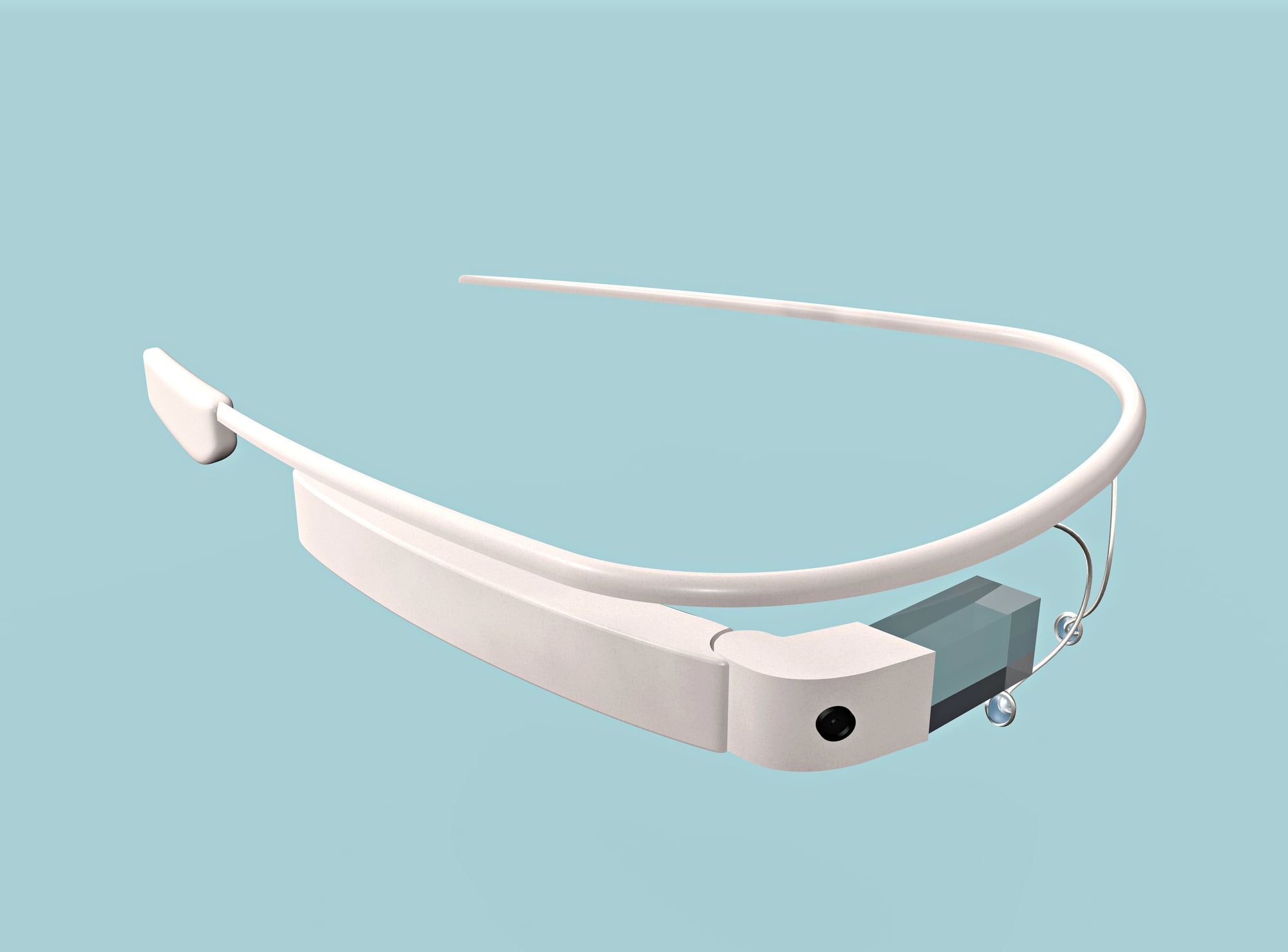
Google’s augmented reality glasses promised to revolutionize how people interact with technology.
The company invested heavily in development and launched the Explorer Edition in April 2013 with a $1,500 price tag.
The product flopped spectacularly.
The design was unfashionable.
Wearing them made users look awkward.
Privacy concerns emerged because the glasses could record video without obvious indicators, leading to bans in bars, restaurants, and other public spaces.
More fundamentally, consumers couldn’t figure out what problem Google Glass actually solved.
The device answered questions nobody was asking.
It was innovation for innovation’s sake without clear practical applications that justified the high price and social awkwardness of wearing a computer on your face.
Google discontinued the consumer version in 2015 after disappointing sales and relentless mockery, though an enterprise version continued until 2023.
The failure reportedly cost Google approximately $1 billion in development and marketing.
The real loss was the damage to the company’s reputation for understanding consumer needs.
Google Glass became shorthand for technology that’s clever but useless.
A solution desperately searching for a problem.
Juicero (2016–2017)

Few product failures achieve the instant infamy of Juicero.
The company, founded in 2013, raised $120 million from investors for a Wi-Fi-connected juicer that used proprietary fruit packets costing $5 to $8 each.
The device launched in 2016 retailing at $699 (later reduced to $400) and delivered four tons of force to squeeze the packets.
The company marketed it as revolutionary kitchen technology.
Then in April 2017, Bloomberg reporters discovered you could squeeze the packets by hand and get the same result.
The revelation turned Juicero from a Silicon Valley darling into a social media laughingstock overnight.
The over-engineered machine with 400 custom parts was completely unnecessary.
The company shut down in September 2017, burning through $120 million in investor money to create a product the market emphatically didn’t want or need.
Juicero exemplifies the danger of creating complex solutions to simple problems.
Sometimes simpler really is better.
No amount of engineering sophistication can overcome a fundamentally flawed product concept.
The lesson applies beyond consumer products.
In any field, complexity for its own sake often creates more problems than it solves.
What Separates Success From Disaster

The common thread running through these failures isn’t stupidity or carelessness.
It’s hubris.
Designers and engineers were too confident, too rushed, or too focused on innovation to properly test their assumptions.
The Walkie-Talkie architect admitted he knew about potential reflection issues but didn’t think they’d be serious.
Samsung rushed batteries to market to beat competitors.
The Aon Center prioritized beauty over structural integrity.
These mistakes cost millions because fixing them required retroactive solutions that were exponentially more expensive than getting it right the first time.
Testing takes time.
Research costs money.
Conservative material choices lack drama.
Skipping those steps in favor of speed or aesthetics creates risks that often materialize in expensive, embarrassing ways.
The projects that succeed are usually the ones where someone asked the unglamorous questions and actually waited for answers before proceeding.
More from Go2Tutors!

- The Romanov Crown Jewels and Their Tragic Fate
- 13 Historical Mysteries That Science Still Can’t Solve
- Famous Hoaxes That Fooled the World for Years
- 15 Child Stars with Tragic Adult Lives
- 16 Famous Jewelry Pieces in History
Like Go2Tutors’s content? Follow us on MSN.