Design Ideas Borrowed from Ecosystems
Engineers plus designers sit through years of classes studying ideas nature nailed ages back. Plants aren’t stressing over how to do photosynthesis right.
Birds skip arguing about why flying works. Instead, they use whatever mutations gave them an edge – tweaking things bit by bit over countless lifetimes.
People though? We love rebuilding everything from zero – even when a glance at bugs or trees could cut decades off our lab time.
Burrs That Stick to Everything
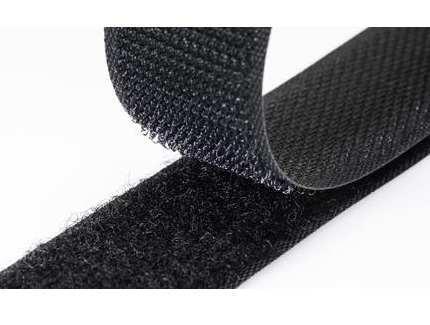
George de Mestral’s Velcro idea wasn’t a stroke of pure imagination—he literally found the concept stuck to him. After a walk left his clothes and his dog covered in burrs, curiosity got the best of him.
Under magnification, he noticed each burr was armed with tiny hooks that grabbed onto loops in fabric. Nature built that system simply to move seeds around, but it translated perfectly into a fastener humans now use in everything from kids’ shoes to NASA gear.
Velcro didn’t reinvent sticking things together; it just formalized what burrs had quietly perfected.
Buildings That Breathe Like Termite Mounds

African termite mounds pull off a climate-control trick that modern buildings still struggle with. They stay cool inside even when the outside temperature hits sweltering highs. The secret lies in a network of tunnels that shuttles hot air upward while drawing cooler air in from below.
Architect Mick Pearce studied this setup when designing Zimbabwe’s Eastgate Centre. By mimicking the termite ventilation pattern, the building cut its cooling needs dramatically—running on only a fraction of the energy similar structures require.
Termites engineered the airflow instinctively; humans had to reverse-engineer it to learn the same lesson.
Lotus Leaves and Self-Cleaning Surfaces

Lotus leaves manage to look spotless despite living in muddy water. Their surfaces are textured with microscopic bumps coated in waxy material, preventing dirt from hanging on.
When rain lands, it forms beads that roll off and carry grime away. Once researchers understood this, they applied the concept to car finishes, outdoor fabrics, and coatings for glass.
If you’ve ever watched water slide cleanly off a windshield, you’ve seen the lotus strategy in action—nature’s take on “low maintenance” long before humans coined the phrase.
The Kingfisher’s Beak and Faster Trains

Japan’s early bullet trains had a noise problem—tunnel exits produced booming sounds that irritated nearby residents. Engineers searching for a fix ended up looking at kingfishers, which dive into water at high speed with barely a ripple.
Their narrow beaks cut through air and water smoothly. By reshaping the train’s nose to resemble the bird’s profile, designers reduced the sonic boom, saved energy, and actually made the trains faster.
A hunting bird inadvertently solved a modern engineering headache.
Sharkskin That Reduces Drag

Sharks don’t glide through the ocean because they’re smooth. Their skin is covered in tiny tooth-like scales arranged in a pattern that reduces drag and discourages grime from attaching.
Once scientists mapped these textures, sportswear and boat engineers jumped on the idea. The same pattern helped swimmers break records and enabled ships to cut fuel consumption.
Hospitals even adopted shark-inspired surfaces to limit bacterial buildup. Sharks weren’t trying to innovate—they were just trying to catch dinner—but the results translated into major human breakthroughs.
Spider Silk Stronger Than Steel
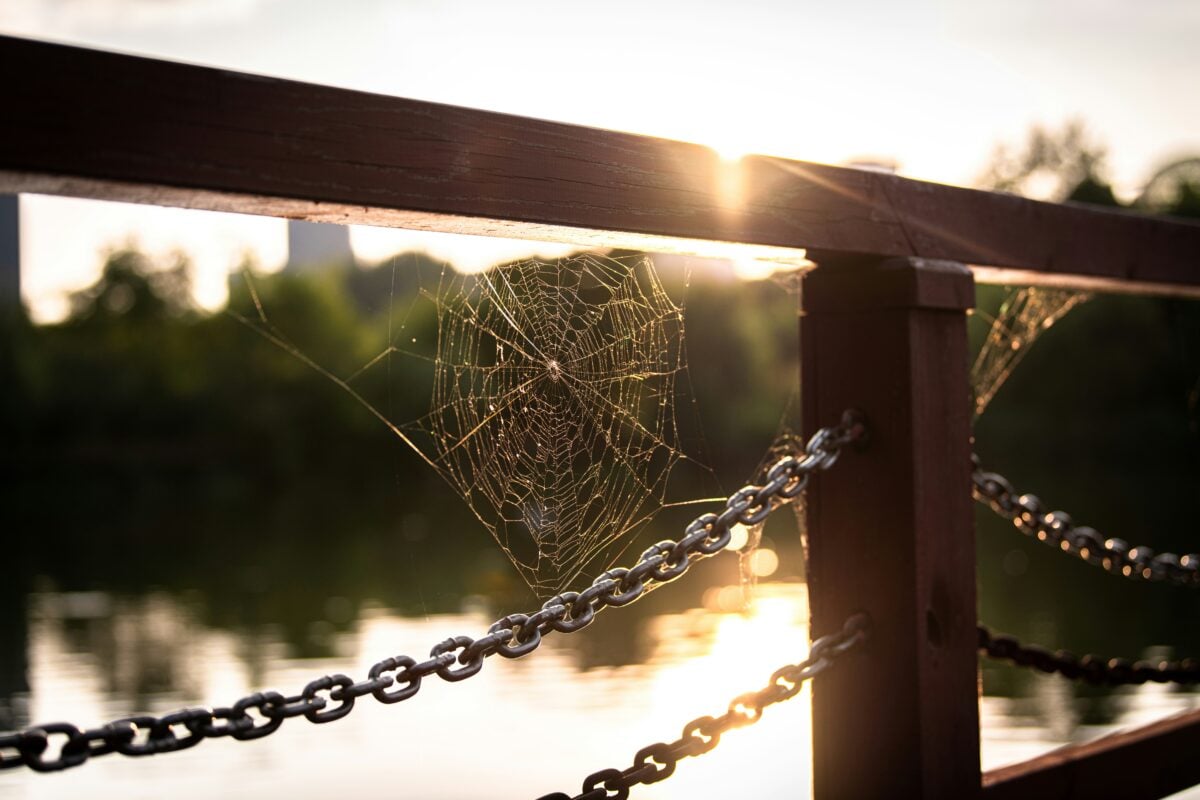
Spider silk seems fragile until you measure it properly. Adjusted for weight, certain silks outperform steel in strength while stretching far more than rubber.
Researchers have been trying to replicate its chemistry for decades. If they fully crack the formula, the potential uses span across lightweight armor, medical implants, outdoor gear, and more.
Spiders create this material using simple biological processes, not high heat or toxic ingredients. They spin it because they need webs—and humans are still playing catch-up.
Honeycomb Structures Everywhere

Honeybees stumbled on a near-perfect structural design: the hexagon. It uses little material, forms a tight grid without wasted gaps, and distributes force efficiently. Humans borrowed the layout for building aircraft parts, packaging, and panels meant to be sturdy but lightweight.
The beauty is in the simplicity—bees weren’t optimizing for engineering standards, but their wax-saving habit ended up inspiring some of our most reliable structural concepts.
Gecko Feet and Adhesive Technology

A gecko’s ability to run across ceilings isn’t magic—it’s physics. Their toes are lined with microscopic hairs that multiply contact at a small scale, allowing weak electrical forces to create strong grip. They can latch, unlatch, and repeat without leaving residue.
Engineers adapted the idea to reusable adhesives that stick firmly without glue and can be applied repeatedly without damaging surfaces. It’s one of those cases where a small animal demonstrates a trick that labs spend years trying to replicate.
Butterfly Wings and Color Without Pigment

Many butterflies shine with brilliant blues, yet their wings contain no blue pigment at all. The color comes from nanostructures that bounce and interfere with light.
Because the hues rely on structure instead of dye, they don’t fade easily. This principle has been reused in brighter screens, anti-counterfeit money features, and materials designed to avoid staining.
Butterflies developed these shimmer patterns for survival and attraction—not innovation—yet their wings sparked ideas across tech and design.
Whale Fins and Wind Turbine Efficiency

Humpback whales shouldn’t be agile—they’re massive—but the bumps along the leading edge of their fins help them turn with surprising precision. Those bumps, called tubercles, channel water more efficiently and reduce drag.
When engineers added similar ridges to wind turbine blades, the machines performed better in low winds and produced less noise. A marine predator’s natural steering system ended up improving renewable energy tech.
Fungal Networks and Decentralized Systems

Mycelium—the branching threads beneath mushrooms—forms a vast underground network that moves water, nutrients, and even chemical signals between plants. There’s no central command center, yet the system reroutes efficiently when part of it gets damaged.
Computer scientists studying this behavior adapted some of the logic to routing methods used in digital communication and traffic flow. Fungi don’t strategize; they react locally—but their collective behavior inspired smarter infrastructure.
Coral Reefs and Urban Planning

Coral reefs cram immense biodiversity into tight spaces by arranging structures in ways that maximize water flow, sunlight, and shelter. Urban planners have studied these natural layouts when designing dense, walkable neighborhoods.
Ideas like layered spacing, mixed-use zones, and airflow-friendly orientation parallel what corals figured out through slow growth and constant competition. The reefs didn’t set out to be architects, yet they’ve quietly influenced how we shape human spaces.
Mangrove Roots and Coastal Protection

Mangroves thrive in coastal areas where waves and tides constantly shift the shoreline. Their tangled roots act like natural filters, slowing water and trapping sediment. Because of this, mangrove forests protect coastlines better than many artificial barriers.
Engineers designing flood defenses have started adapting these root-inspired structures—systems that soften wave impact while supporting marine life. Instead of resisting nature, the mangrove approach works with it.
Trees and Efficient Distribution Networks

Tree branches split at patterns that balance sunlight capture with efficient fluid transport. The same branching logic appears in river systems, lightning, and even blood vessels.
Engineers use similar principles when laying out heating networks, pipelines, and communication lines. Trees didn’t calculate optimal branching angles; natural selection refined those forms over millennia.
Humans simply recognized the template and applied it.
Learning to Look Sideways
The space between what humans create and how nature works is closing fast – not since nature’s changed, but ’cause folks are finally looking closer. Take a kid staring at a bug; they could spot what some expert walked right past.
Or picture a farmer tracking rainwater seeping into dirt – might crack a flow issue that left planners scratching their heads. The solutions exist already – shaped by eons, tried through endless creatures.
Find the right place to peek, then stay open to wisdom even if it’s got no diploma.
More from Go2Tutors!

- The Romanov Crown Jewels and Their Tragic Fate
- 13 Historical Mysteries That Science Still Can’t Solve
- Famous Hoaxes That Fooled the World for Years
- 15 Child Stars with Tragic Adult Lives
- 16 Famous Jewelry Pieces in History
Like Go2Tutors’s content? Follow us on MSN.