Early Census Questions That Reveal Changing Priorities
A census is a government asking its people a list of questions, and the list says as much about the government as it does about the people. Early forms asked about what rulers wanted most: soldiers, taxpayers, laborers, and land.
As societies changed, the questions shifted with them. Machines, radios, religion, and family size all appeared on census forms at the moment they became matters of public concern.
The Han Dynasty Count of 2 AD

The census of 2 AD in Han China recorded about 57.7 million people in roughly 12.4 million households. It is widely cited as the earliest census whose records survive in detail. The main purpose was practical, since rulers needed to know how many households could be taxed and drafted for labor.
New France Counted Door to Door in 1666

Jean Talon, the first intendant of New France, conducted the colony’s first census largely by himself between 1665 and 1666, traveling door to door. He counted 3,215 inhabitants of European descent, with 2,034 men and 1,181 women. The imbalance between men and women was precisely the kind of problem the colony’s planners wanted to measure.
The First United States Census of 1790
— Photo by dennizn
The first United States census, taken in 1790, was required by the Constitution as the basis for apportioning representation. Its questions were limited to the household head and tallies by category, rather than names for every person. The goal was political arithmetic, determining how many seats each state deserved.
Britain Counts Its People in 1801
England and France both carried out their first national censuses in 1801. In Britain, the early counts were mainly about numbers, with limited detail on occupations sorted into broad categories. The questions reflected a government that wanted to understand its population during a period of war and rapid growth.
The 1840 American Census and Its Mental Health Questions

The 1840 United States census was the first to attempt to count Americans labeled “insane” or “idiotic,” at a time when reformers were interested in building institutions for people with mental disabilities. The results sparked a controversy over the apparently high rates among free Black people in the North. Edward Jarvis, a physician, later documented errors in the returns, and his work helped push for reform of the next census.
The 1841 British Census Names Everyone

The 1841 census in Britain began recording individual names, ages, and occupations in a modern format. Enumerators visited households and collected the details, which made the census useful to family historians centuries later. The shift from simple tallies to named individuals marked a new interest in people as persons rather than totals.
The 1850 American Census Lists Every Free Person by Name

Beginning in 1850, the United States census recorded each free person by name, instead of listing only the head of household. That change came after criticism of the household-based schedules used in 1840. It also marked a shift toward treating the census as a tool of social science rather than only a headcount.
Britain’s Religious Census of 1851

In March 1851, England and Wales conducted a census of religious worship alongside the ordinary population count, asking about church accommodation and attendance on a single Sunday. Horace Mann tabulated the results and published them in 1854. His report warned that a large portion of the English people were habitual neglecters of public worship, and the findings stirred alarm across churches.
The 1890 Census and the Machines
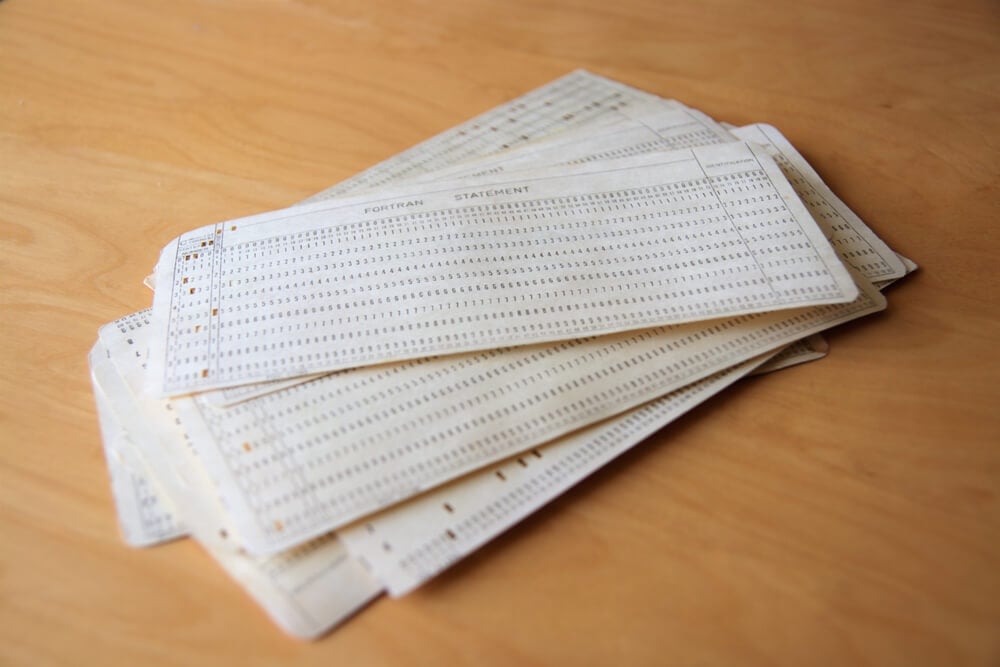
The 1890 American census famously used punched cards and tabulating machines designed by Herman Hollerith. The questions were still about people, but the speed of processing changed what was possible. A census that might have taken years to tally could now be analyzed far more quickly.
The 1900 Census and the Question of Language

By the early 20th century, large waves of immigration had made language and birthplace urgent political questions in the United States. Census forms gathered details on birthplace, years in the country, and ability to speak English. The questions reflected a nation trying to understand how new arrivals were reshaping it.
Britain’s Fertility Census of 1911

The British census of 1911 was nicknamed the fertility census because it asked married women how long they had been married and how many children had been born, were living, or had died. It was the first time the census made a direct inquiry into the fertility of marriage. The questions grew out of government concern about falling birth rates and child mortality.
The Suffragette Boycott of 1911

The same 1911 census became a protest target, as suffragette organizations urged women to refuse to be counted. Their slogan was essentially that women who could not vote should not be counted. The boycott shows that people could respond to a census as a political act, using the form itself as a stage.
The 1930 American Census Asks About Radios

The 1930 United States census included a first-of-its-kind question about a consumer item, asking whether a household owned a radio set. Around 40 percent of households had at least one radio by April 1930. The Radio Manufacturers’ Association had asked the government to include the question to help plan where broadcasting stations should be placed.
Age at First Marriage in 1930

The same 1930 census asked for each person’s age at first marriage, a detail that was thought to have interesting social implications. Officials believed the national age at first marriage was rising and wanted to confirm it. The question shows a government interested in tracking social trends rather than just counting heads.
Who the Questions Were Really For

Looking back, early census questions function like a record of anxieties. Rulers asked about taxpayers and soldiers, reformers asked about illness and belief, and modern states asked about family, work, and technology.
The questions that disappear are as revealing as the ones that appear. Each change on the form marks a moment when a society decided that a particular fact had become important enough to ask every household for it.
More from Go2Tutors!

- 27 Silver Dollars and Half Dollars Worth Keeping
- 28 Restaurant Menu Items Nobody Orders Anymore
- 17 Places Built in Seemingly Impossible Spots
- 27 Vintage Rings Worth More Than They Look
- 25 Restricted Sites Tourists Can’t Enter
Like Go2Tutors’s content? Follow us on MSN.