World’s Most Iconic Fountains
Fountains have been part of human civilization for thousands of years. They started as practical water sources but became symbols of wealth, power, and artistic achievement.
Today, they stand as beloved landmarks that draw millions of visitors each year. Some shoot water hundreds of feet into the air, while others create intricate dancing displays that mesmerize crowds.
These water features represent the creativity and engineering skills of different cultures across time. Let’s explore some of the most famous fountains that have captured the world’s imagination and continue to inspire awe in everyone who sees them.
Trevi Fountain

Rome’s Trevi Fountain stands 86 feet tall and 161 feet wide, making it the largest Baroque fountain in the city. The tradition of tossing coins into the water brings in roughly $1.5 million each year, which the city donates to charity.
Built in 1762, the fountain depicts Neptune, the god of the sea, riding a chariot pulled by seahorses. The dramatic sculptures seem to emerge from the palace wall behind them, creating an effect that still stops tourists in their tracks.
Fountains of Bellagio
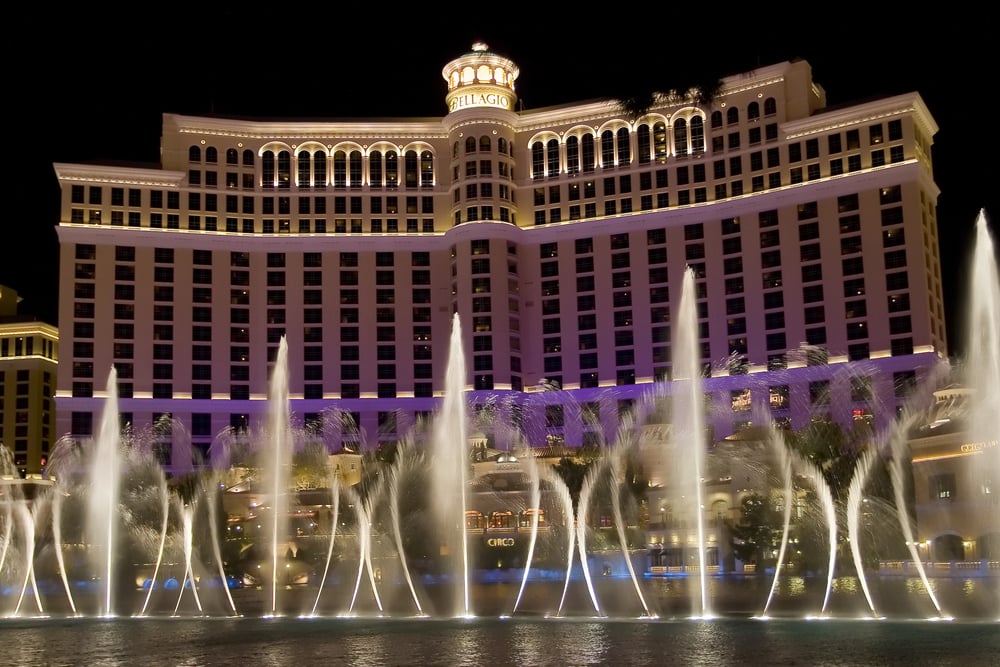
Las Vegas brought fountain design into the modern era with this massive water show on an 8-acre lake. The Bellagio fountains use 1,200 nozzles and 4,500 lights to create performances choreographed to music ranging from opera to pop songs.
Jets can shoot water up to 460 feet high, synchronized so perfectly that the display looks like liquid dance. Shows run every 30 minutes during the day and every 15 minutes at night, never costing visitors a single penny to watch.
Dubai Fountain
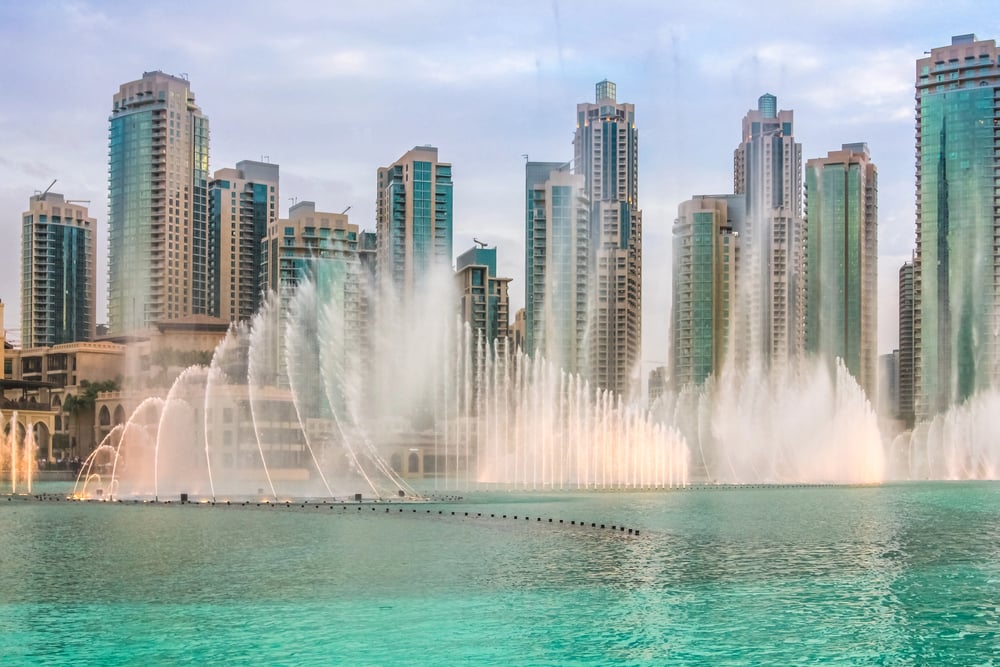
The world’s largest choreographed fountain system stretches across 900 feet of the Burj Khalifa lake. This engineering marvel cost $218 million to build and uses 22,000 gallons of water at any given time.
The fountain can shoot water jets as high as a 50-story building while performing to a library of Arabic, classical, and contemporary music. Over 6,600 lights and 25 color projectors illuminate the water, creating shows that look like the lake itself has come alive.
Magic Fountain of Montjuïc
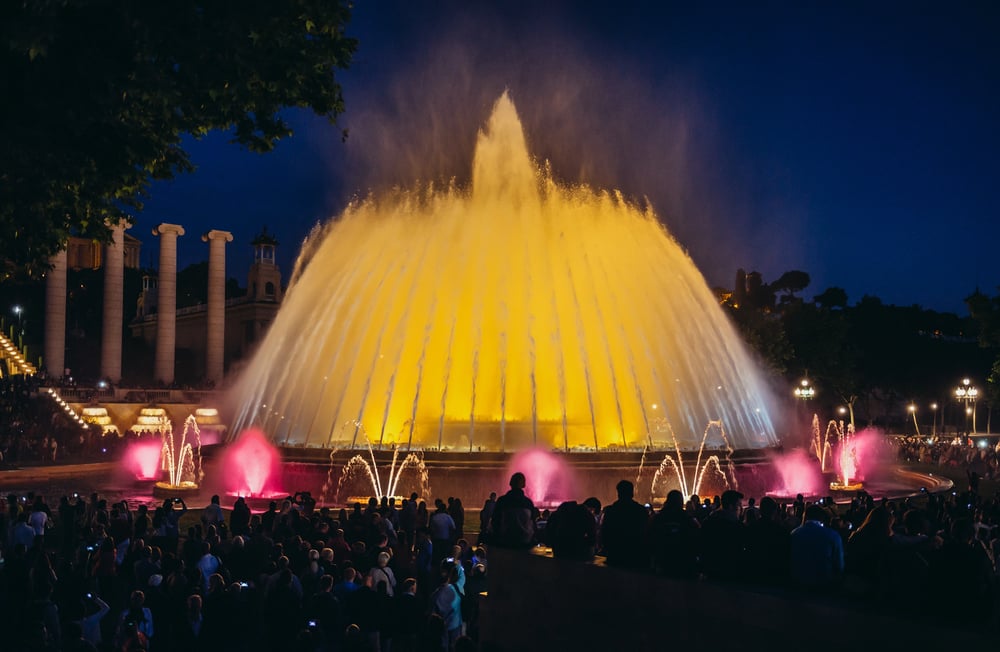
Barcelona’s fountain puts on a spectacular show that combines water, light, and music in a way that feels almost otherworldly. Built for the 1929 International Exhibition, it uses 3,620 water jets and features a color palette created by 4,760 lights.
The fountain holds 3,000 workers and was built in less than a year, a remarkable achievement for the technology available in the 1920s. Free shows attract millions of visitors annually who gather on the steps leading up to the National Art Museum of Catalonia.
Buckingham Fountain
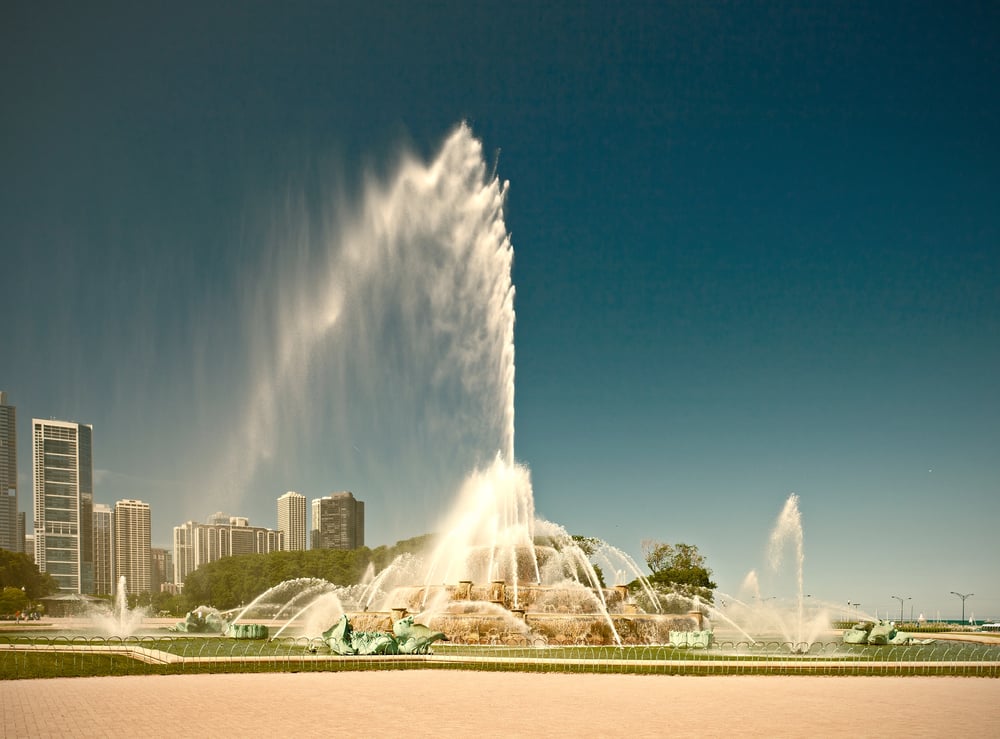
Chicago’s centerpiece fountain in Grant Park ranks as one of the largest in the world at 280 feet across. The design represents Lake Michigan, with four seahorses symbolizing the states that border the lake.
Every hour, the central jet shoots water 150 feet into the air during its 20-minute display sequence. The fountain uses 1.5 million gallons of water and operates from May through October, with evening light shows that transform the cascading water into a glowing spectacle.
Fountain of Wealth

Singapore’s fountain held the Guinness World Record as the world’s largest fountain when it opened in 1995. The bronze ring measures 216 feet in diameter and sits on four large pillars that represent the hands of different races in Singapore.
Visitors can walk beneath the ring and touch the smaller fountain at its center, following a ritual believed to bring good fortune. The fountain operates at reduced capacity most of the time to conserve energy, only running at full power during special occasions.
King Fahd’s Fountain

Jeddah’s coastline features a fountain that holds the current record for tallest water jet in the world. The fountain launches seawater 1,023 feet into the air at a speed of 233 miles per hour.
Over 500 spotlights illuminate the water column at night, making it visible throughout the city. The fountain uses seawater instead of fresh water, which requires special pumps and nozzles to handle the salt and prevent corrosion.
Peterhof Fountains
Russia’s answer to Versailles features 173 fountains spread across elaborate gardens near Saint Petersburg. The Grand Cascade alone includes 64 fountains and 255 bronze sculptures, all powered entirely by gravity through an ingenious system of pipes and aqueducts.
Peter the Great commissioned the palace and fountains in the early 18th century to demonstrate Russia’s growing power and sophistication. The golden statues shine against the water, creating a display that looks almost too elaborate to be real.
Gardens of Versailles Fountains
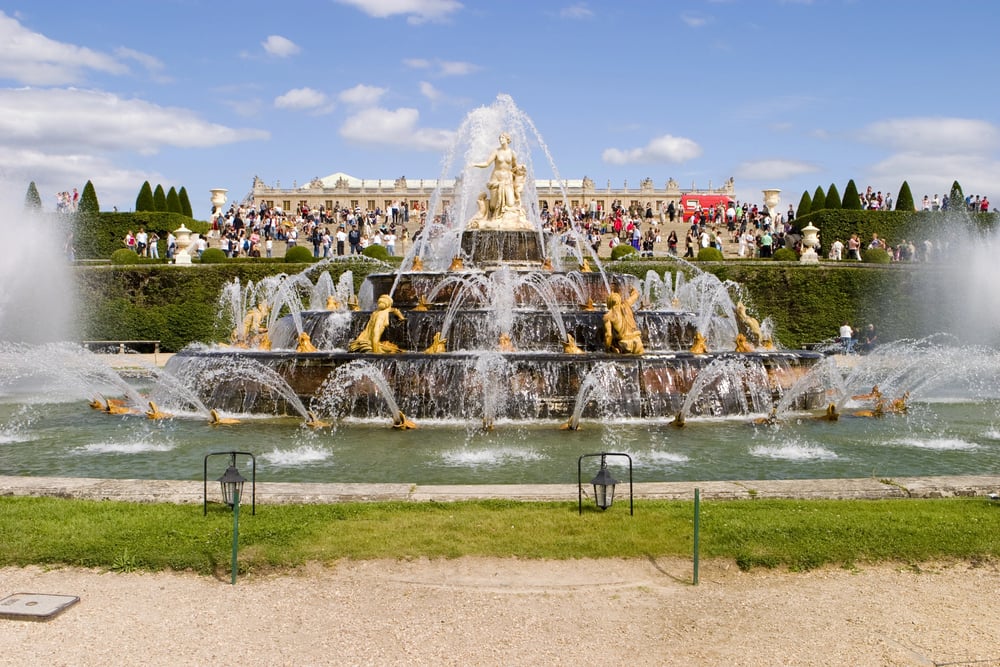
The French palace grounds contain 50 fountains and 600 water features that showcase the ultimate expression of royal power through water. The fountains required so much water that engineers diverted entire rivers and built massive pumping stations to keep them running.
Louis XIV loved the fountains so much that he wrote a guide on how visitors should tour the gardens to see them in the proper sequence. Modern sound and light shows called ‘Grandes Eaux Nocturnes’ let visitors experience the fountains much like 17th-century courtiers did.
People’s Friendship Fountain

Moscow’s golden fountain stands as a reminder of Soviet-era ambitions and propaganda. The fountain features 16 golden statues representing the republics of the Soviet Union, all arranged in a circle around a central golden wheat sheaf.
Built in 1954, it was designed to celebrate agricultural abundance and the unity of different Soviet peoples. The fountain still operates in the All-Russia Exhibition Center, where it serves as a popular photo spot and a historical curiosity.
Fountain of the Four Rivers

Rome’s Piazza Navona centers around this Baroque masterpiece designed by Gian Lorenzo Bernini in 1651. Four figures represent major rivers from four continents known at the time: the Nile, Ganges, Danube, and Rio de la Plata.
The figures sit around an Egyptian obelisk that Pope Innocent X had moved to the location as a symbol of papal power. Legend says Bernini had the Nile figure covering its eyes because it faced a church designed by his rival, though historians doubt this snarky story.
Fountain of Neptune

Bologna’s central square features a 16th-century fountain that caused controversy when it was unveiled. The muscular bronze statue of Neptune towers over the fountain, surrounded by cherubs and four figures representing the world’s major rivers at that time.
The sculptor deliberately made Neptune’s proportions exaggerated to emphasize power and masculinity, which some church officials initially found too provocative. The fountain has become Bologna’s most photographed landmark and a popular meeting spot for locals and tourists.
Swann Memorial Fountain
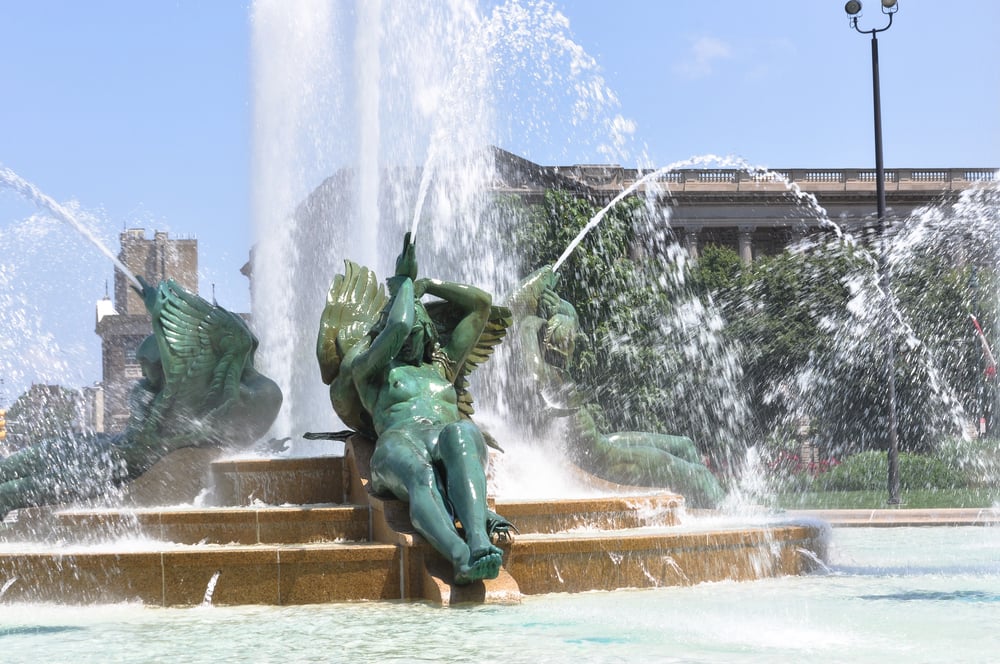
Philadelphia’s Logan Square fountain celebrates the city’s three major waterways through three Native American figures. The central jet shoots 50 feet high while the surrounding figures represent the Delaware River, Schuylkill River, and Wissahickon Creek.
Alexander Stirling Calder designed the fountain in 1924, and his grandson would later become famous for creating mobile sculptures. The fountain sits on the Benjamin Franklin Parkway, often called Philadelphia’s Champs-Élysées, and provides a beautiful foreground for photos of the Philadelphia Museum of Art.
Samson Fountain

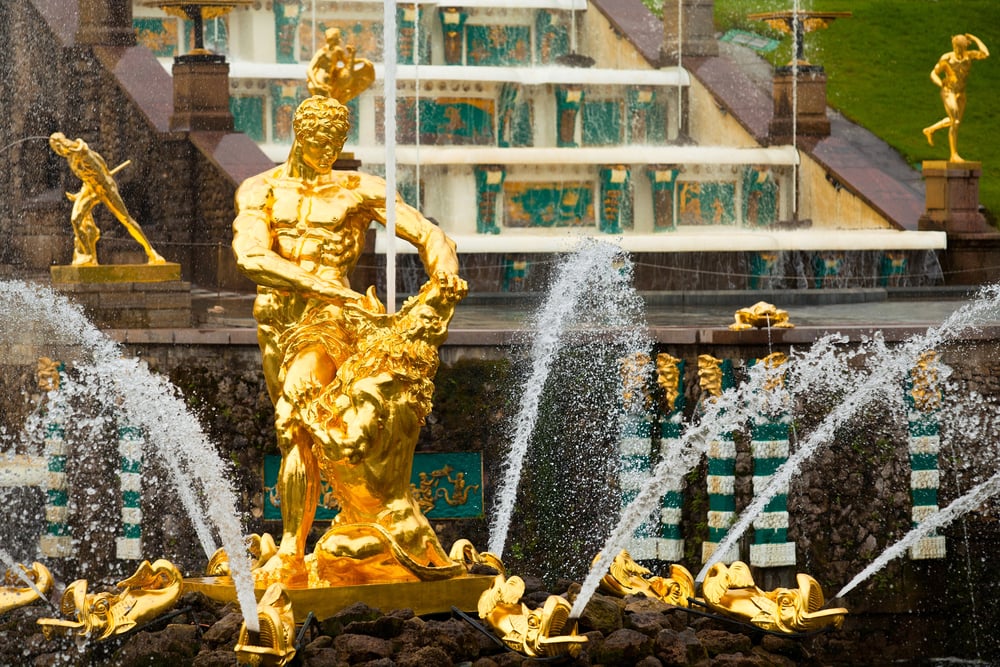
Another highlight of Peterhof, this fountain depicts the biblical hero Samson tearing open a lion’s jaws. Water shoots 66 feet from the lion’s mouth, symbolizing Russia’s victory over Sweden in the Great Northern War.
The original gilded statue was stolen by Nazi forces during World War II and never recovered. Russia commissioned a replica after the war, and the fountain continues to serve as a powerful symbol of Russian strength and resilience.
Fountain of the Tritons

Malta’s capital city of Valletta features this striking bronze fountain completed in 2018. Three muscular tritons hold up a large bowl from which water cascades down into a circular pool below.
The modern design stirred debate when it was first installed, with some praising its contemporary aesthetic and others preferring more traditional styles. The fountain replaced one from the 1950s and has become a popular gathering spot at the entrance to Valletta.
Crown Fountain

Chicago’s Millennium Park brought fountain design into the digital age with this interactive installation by Jaume Plensa. Two 50-foot glass towers face each other across a shallow reflecting pool, displaying LED videos of Chicago residents’ faces.
Water spouts from a pit where the mouth appears on the video screens, making it look like the faces are spitting water at delighted children playing below. The fountain operates from May through October and encourages visitors to wade in the shallow pool during hot summer days.
Fountain of Apollo

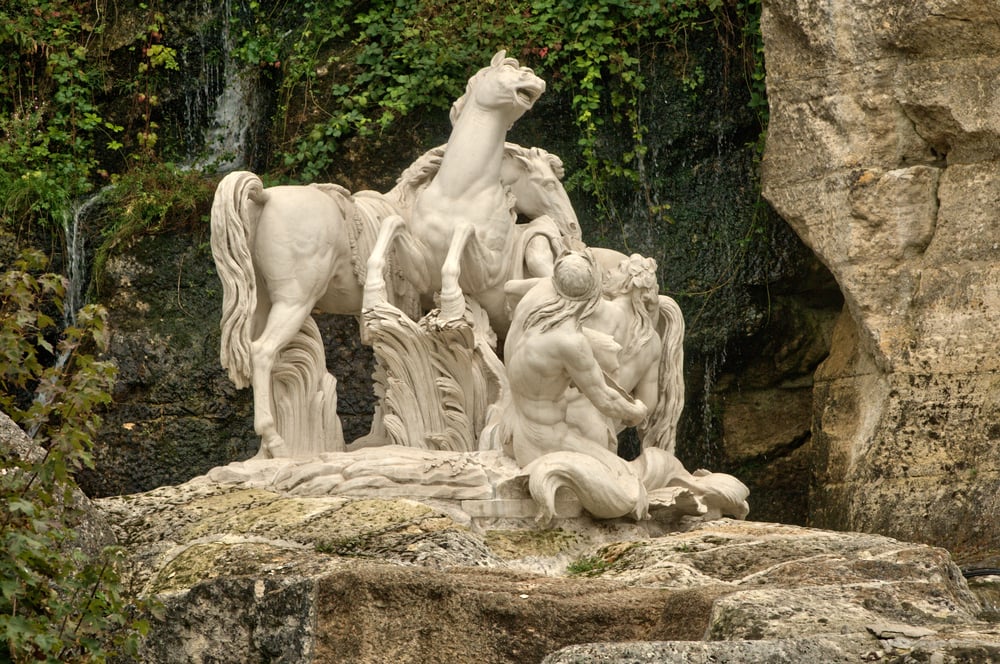
Versailles gardens include this dramatic fountain showing Apollo rising from the water in his chariot at the start of each day. Four horses pull the sun god’s chariot while tritons blow conch shells to announce his arrival.
The fountain sits at the end of a long canal, positioned so the setting sun aligns with the sculpture during summer months. This alignment was no accident but rather a deliberate choice to associate Louis XIV with the sun god Apollo, reinforcing the king’s image as the ‘Sun King.’
Where Water Meets Wonder
These fountains represent human achievement across centuries and continents. Engineers solved complex problems to make water dance, architects created beauty from function, and entire cities rallied around these liquid landmarks.
Modern fountains use computer controls and LED lights, while older ones still rely on gravity and centuries-old pipe systems. The appeal remains the same though: watching water defy gravity and move in ways that seem almost impossible.
These monuments prove that humans have always found ways to turn something as simple as flowing water into unforgettable experiences that bring communities together.
More from Go2Tutors!

- The Romanov Crown Jewels and Their Tragic Fate
- 13 Historical Mysteries That Science Still Can’t Solve
- Famous Hoaxes That Fooled the World for Years
- 15 Child Stars with Tragic Adult Lives
- 16 Famous Jewelry Pieces in History
Like Go2Tutors’s content? Follow us on MSN.