Extreme Jumps That Redefined Human Limits
Humans have always wanted to go higher, farther, and faster. That desire to push beyond what seems possible has led to some truly wild moments in history.
From mountains to space to city streets, people have launched themselves into the air in ways that seemed completely impossible before someone actually did it. These weren’t just stunts for show.
They were moments that changed what everyone thought the human body could survive. Each of these jumps required guts, planning, and a willingness to risk everything.
Here are the leaps that rewrote the rules.
Felix Baumgartner’s stratosphere jump

Felix Baumgartner stepped out of a capsule 24 miles above Earth in 2012 and fell for over four minutes. The Austrian skydiver broke the sound barrier during freefall, reaching speeds around 843 miles per hour.
His body experienced temperatures near minus 70 degrees Fahrenheit while spinning uncontrollably at certain points during the descent. The Red Bull Stratos project took years of preparation and required a specially designed pressure suit to keep Baumgartner alive in the thin atmosphere.
This jump proved humans could survive supersonic speeds outside an aircraft and opened new research into high-altitude bailouts for pilots and astronauts.
Evel Knievel’s Snake River Canyon attempt

Evel Knievel tried to rocket across Idaho’s Snake River Canyon in 1974 using a steam-powered cycle called the Skycycle X-2. The canyon stretched roughly 1,600 feet across and dropped about 600 feet to the river below.
His parachute deployed too early during launch, causing the craft to drift backward and land on the canyon’s edge rather than the other side. Despite the technical failure, Knievel walked away with minor injuries and the attempt became one of the most watched events of the decade.
The sheer audacity of trying to jump a canyon in what was basically a rocket with wheels inspired countless daredevils and stunt performers who came after him.
Alan Eustace’s record-breaking freefall

Alan Eustace, a senior vice president at Google, broke Felix Baumgartner’s record in 2014 by jumping from 135,890 feet. He used a different approach than Red Bull Stratos, ascending via a helium balloon while wearing his spacesuit rather than riding in a capsule.
The jump was done with far less publicity and a smaller team, focusing more on scientific data collection than spectacle. Eustace spent over two years training and developing the technology needed for the attempt.
His freefall lasted over 15 minutes and provided valuable research data about human survivability at extreme altitudes.
Travis Pastrana’s New Year’s Eve jump
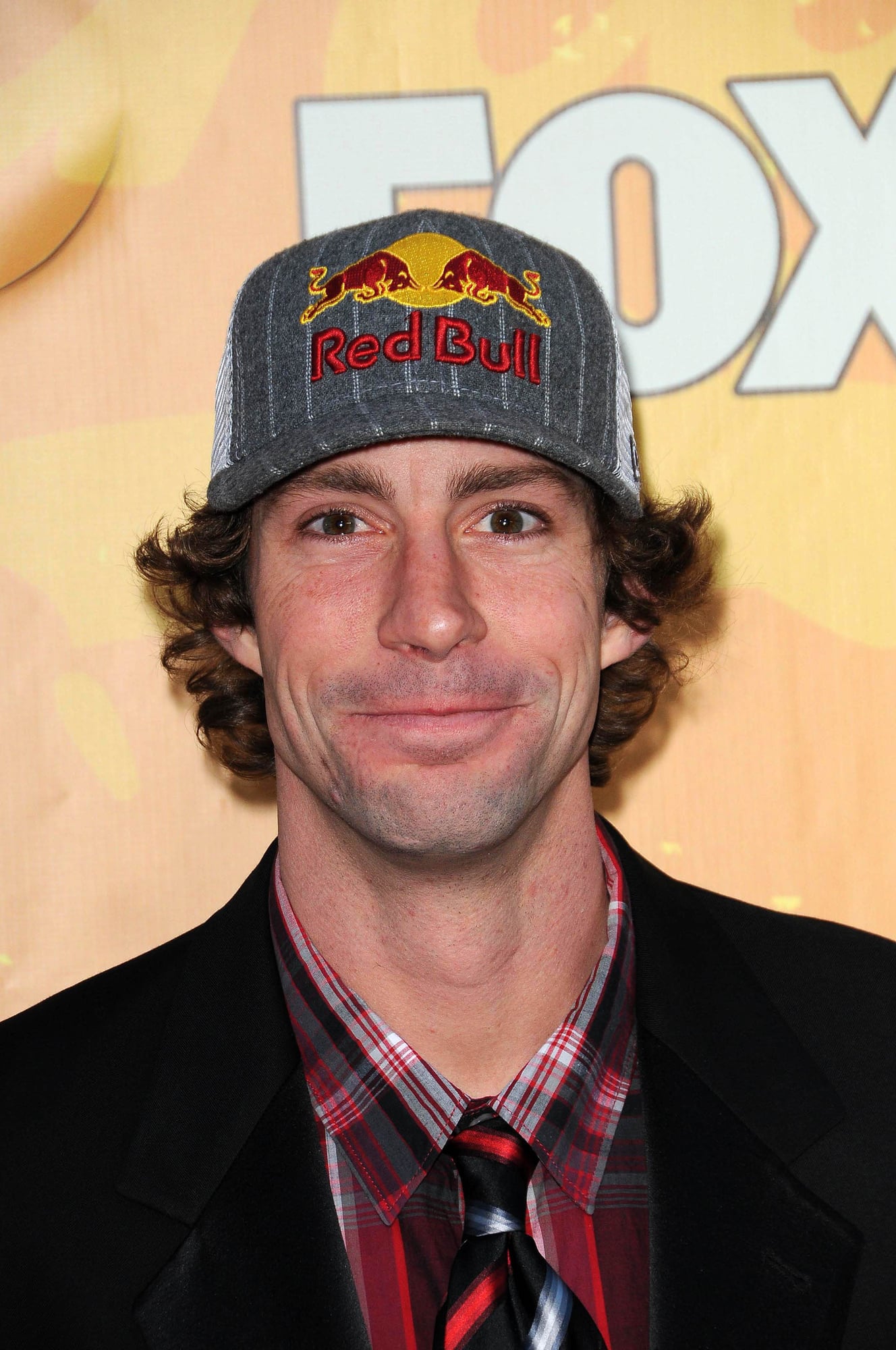
Travis Pastrana welcomed 2010 by jumping his rally car off a ramp on the Long Beach Pine Avenue Pier and landing on a barge floating in the harbor. The ramp sat 269 feet from the landing zone, and Pastrana launched the Subaru at about 90 miles per hour into complete darkness over water.
One miscalculation would have sent him straight into the Pacific Ocean with no chance of escape from the sinking vehicle. The landing ramp on the barge measured only 200 feet long, leaving almost no room for error.
This jump combined precise speed calculation, perfect trajectory, and nerves that most people simply don’t possess.
Robbie Maddison’s Arc de Triomphe jump

Australian motocross rider Robbie Maddison jumped his motorcycle over the Arc de Triomphe in Paris on New Year’s Eve 2008. He cleared the monument by launching off a ramp, flying through the air for about 100 feet, and landing on the famous Champs-Élysées.
French authorities initially denied permission for the stunt due to safety concerns, but eventually allowed it with strict conditions. Maddison had to calculate wind speed, ramp angles, and landing zone precision while knowing that millions watched live on television.
The jump required him to clear not just distance but also significant height to avoid clipping the historic structure.
Danny Way’s Great Wall of China jump

Skateboarder Danny Way launched himself over a 70-foot gap in the Great Wall of China in 2005 without using any motors or vehicles. He built a massive MegaRamp that allowed him to generate enough speed on his skateboard to clear the distance.
Way actually tore his ACL during practice but completed the jump anyway, landing successfully despite the injury. The ramp stretched several stories high and Way reached speeds around 50 miles per hour on just a skateboard.
This jump proved that human-powered extreme sports could achieve distances previously thought impossible without mechanical assistance.
Alain Robert’s Burj Khalifa climb and descent

French climber Alain Robert, known as the ‘French Spider-Man,’ scaled the Burj Khalifa in Dubai, the world’s tallest building at 2,722 feet. While not a traditional jump, his descent involved controlled rappelling and several leap-and-catch movements between sections of the building’s exterior.
Robert performed the climb in 2011 using only his hands and climbing shoes, with safety equipment required by building management. The physical strain of maintaining grip strength for over six hours while the desert sun beat down on the building’s surface pushed human endurance limits.
His various building climbs and descents have redefined what’s possible in urban free climbing.
Jeb Corliss’s Table Mountain flight
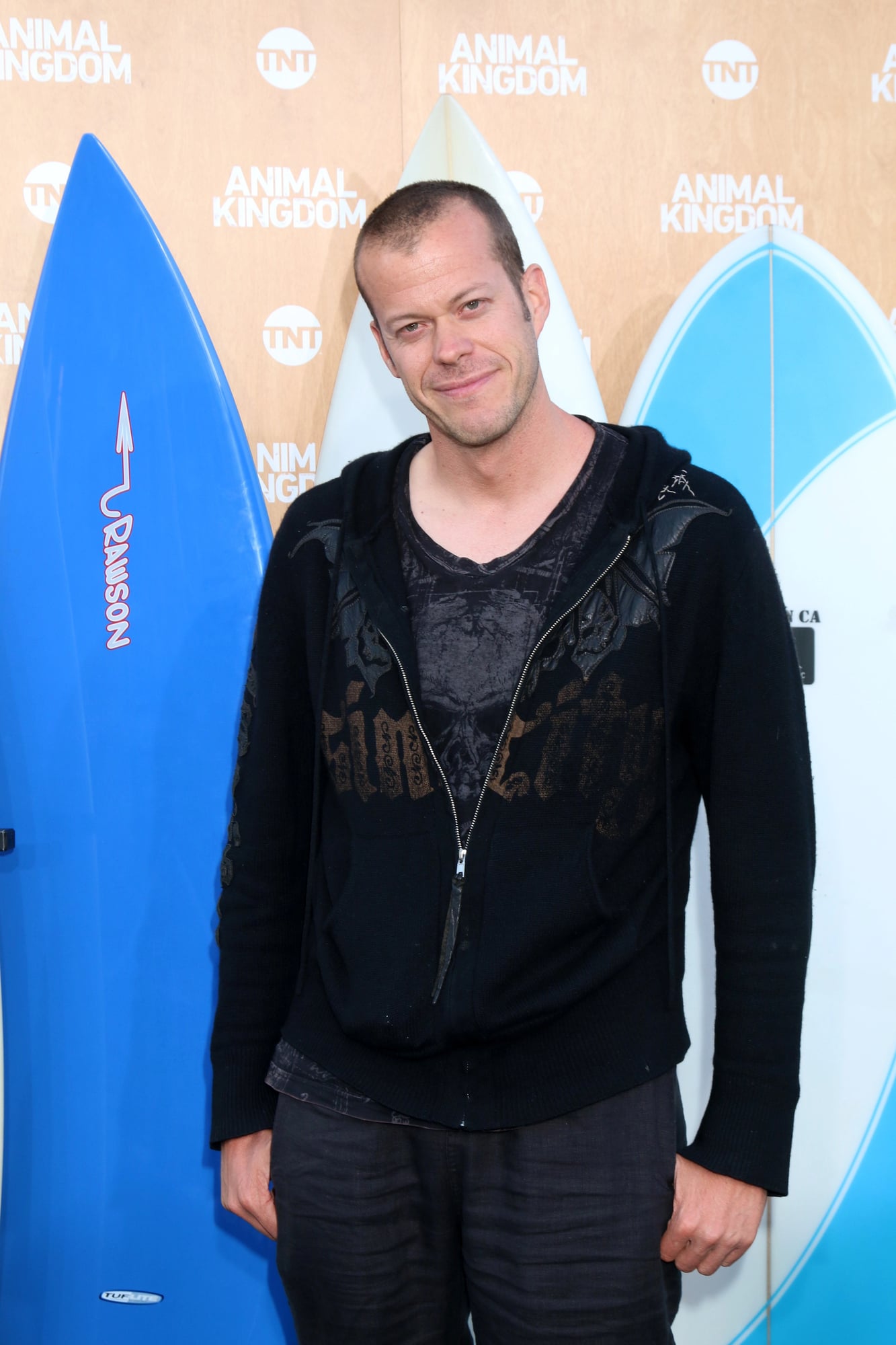
BASE jumper Jeb Corliss flew through a narrow crack in Table Mountain, South Africa, wearing a wingsuit in 2012. The gap measured only about 10 feet wide in places, and Corliss zipped through it at speeds exceeding 120 miles per hour.
He had to maintain perfect body position because any deviation would have meant hitting the rock walls on either side. The flight path dropped roughly 3,000 feet vertically while threading through the mountain’s natural formation.
Corliss had previously suffered a severe leg injury during a wingsuit accident, making this successful flight even more remarkable as a comeback.
Mike Metzger’s backflip over the fountains at Caesars Palace

Motocross rider Mike Metzger successfully landed a backflip over the Caesars Palace fountains in Las Vegas in 2006. The jump covered 125 feet and required Metzger to rotate his motorcycle completely backward while maintaining forward momentum.
Evel Knievel had famously crashed attempting to jump these same fountains decades earlier, making Metzger’s successful attempt particularly meaningful. The rotation had to be timed perfectly so the motorcycle’s wheels faced downward at exactly the right moment for landing.
This jump advanced freestyle motocross by proving complex aerial tricks could be done over extreme distances.
Gary Connery’s wingsuit landing without a parachute
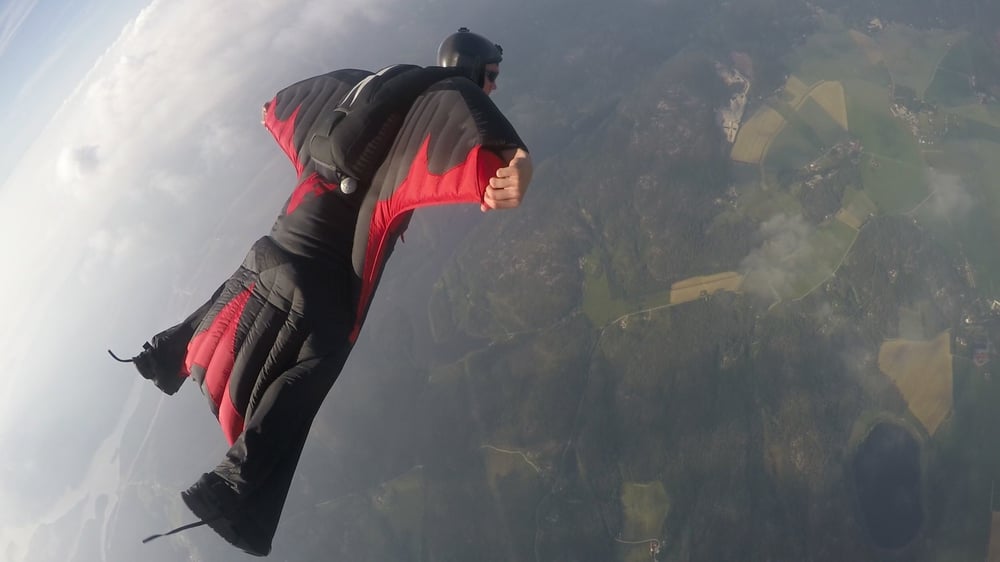
British stuntman Gary Connery became the first person to complete a wingsuit jump and land without deploying a parachute in 2012. He jumped from a helicopter at 2,400 feet and flew his wingsuit toward a landing zone made of 18,600 cardboard boxes stacked 12 feet high.
The landing zone stretched only 350 feet long and 45 feet wide, requiring precise navigation during the entire flight. Connery hit the boxes at around 80 miles per hour, and the cardboard absorbed the impact enough to keep him alive.
This jump fundamentally changed what people thought was survivable and opened new possibilities for wingsuit technology.
Bob Burnquist’s mega ramp loop

Skateboarding legend Bob Burnquist successfully completed a full 360-degree loop on a mega ramp in 2013. The loop stood several stories tall and required Burnquist to maintain exact speed throughout the rotation to avoid falling.
Too slow and gravity would pull him down before completing the circle; too fast and he would launch off the top. He achieved this feat at age 36, proving that age doesn’t necessarily limit what athletes can accomplish.
The mega ramp provided the speed needed, but Burnquist’s body positioning and board control during the G-forces made the difference between success and a devastating crash.
Pastrana’s double backflip at X Games

Travis Pastrana landed the first double backflip on a motorcycle at X Games 12 in 2006. The trick involved rotating the bike backward twice in the air before landing, something most riders considered physically impossible.
Pastrana launched off the ramp knowing he had practiced the move only a handful of times and that failure likely meant serious injury or death. The rotation required precise timing, perfect body position, and the strength to control a 200-pound motorcycle through two complete flips.
This moment changed freestyle motocross permanently, as riders suddenly had a new ceiling for what tricks could be attempted.
Freddy Nock’s tightrope walk between mountains

Swiss tightrope walker Freddy Nock walked a cable stretched between two mountains in the Swiss Alps at an altitude of 11,590 feet in 2011. The cable stretched roughly 1,920 feet long and swayed in mountain winds while Nock crossed without a safety harness.
Thin air at that elevation made breathing difficult and affected balance, adding danger beyond just the height. Temperature changes caused the cable to contract and expand, creating additional instability.
Nock had to time his crossing with weather windows and maintain concentration despite the physical strain of high altitude.
Laso Schaller’s cliff diving world record
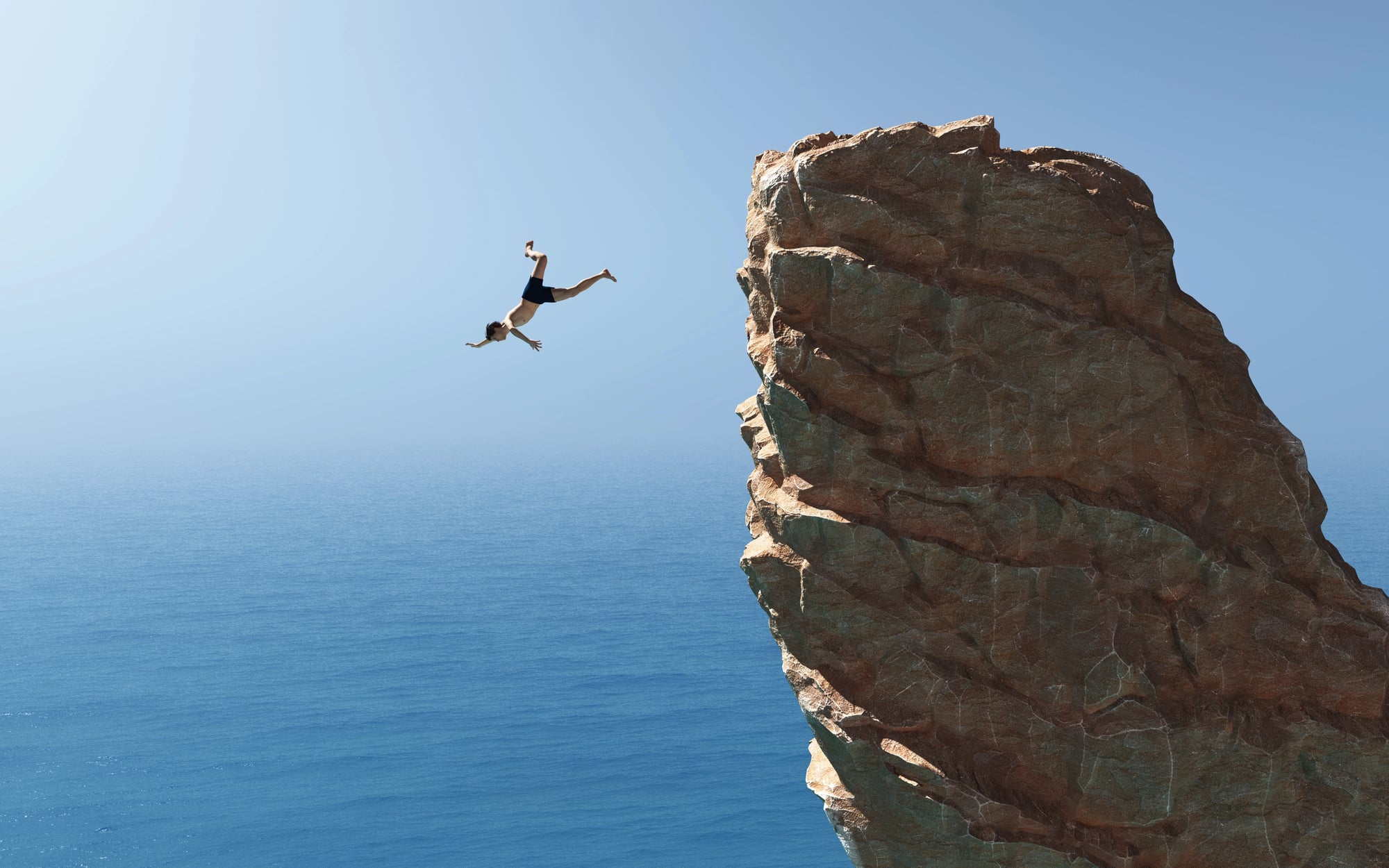
Swiss-Brazilian diver Laso Schaller jumped from 192 feet into a pool of water in Switzerland in 2015, setting the cliff diving world record. He hit the water at approximately 76 miles per hour after falling for roughly 3.5 seconds.
The impact force was so intense that Schaller dislocated his hip and tore several muscles despite perfect entry form. Divers at this height experience forces up to eight times their body weight upon water entry.
The jump required years of progression, starting from lower heights and gradually building up tolerance to extreme impacts.
Guerlain Chicherit’s unintentional car backflip survival

French rally driver Guerlain Chicherit attempted a car backflip in 2013 that went wrong, yet he walked away. The Mini he was driving didn’t complete the full rotation and landed on its roof after flipping about 270 degrees.
The roll cage and safety equipment saved his life, but the crash demonstrated the extreme forces involved in automotive aerial stunts. Chicherit later successfully completed a car backflip in 2014, becoming the first person to do so.
His survival of the failed attempt showed how far safety technology had advanced in extreme motorsports.
Jeb Corliss’s proximity flight to the ground

That day in 2011, Jeb Corliss soared just above the road carved into Tianmen Mountain in China, wingsuit hugging the terrain. Instead of soaring high, he moved fast – over 100 mph – as he shot through a rock arch formed by time and weather.
People standing nearby didn’t need tools to spot him; he passed so near they might’ve felt the rush of air. Focus slipped, even once, or a sudden gust shifted things, then it would’ve ended hard against stone.
Because he flew that low, so fast, right next to cliffs and earth, others saw what was possible – and began chasing similar edges.
Valery Rozov Jumps from Everest

From the edge of Mount Everest, Valery Rozov leapt into open air back in 2013 – launching himself from 23,687 feet, a record height for BASE jumping then. Because the sky up there holds so little density, his chute pulled slower, raising risks when opening.
Getting to that spot took hours of climbing, leaving him drained long before flight began. Winds howled near the glacier far beneath, where one slip in steering could mean disaster upon touchdown.
He lost his life four years later while jumping in Nepal; still, what he did on Everest stands apart in daring feats.
When gravity meets courage

Falling from high up isn’t only about excitement or showing off. From every leap, scientists learned more – about motion, gear performance, how much stress a person can handle.
Information gathered during upper-atmosphere leaps shapes emergency exit plans for those flying planes or spacecraft. Scaling tall city buildings tests how safe structures really are under rare pressure.
When race machines survive wild stunts, engineers borrow that wisdom to make regular cars safer. Folks making such bold moves spark change far beyond where they land.
Willingness to go all in – whether chasing answers or testing limits – shapes how we grow, often in directions nobody predicts.
More from Go2Tutors!

- The Romanov Crown Jewels and Their Tragic Fate
- 13 Historical Mysteries That Science Still Can’t Solve
- Famous Hoaxes That Fooled the World for Years
- 15 Child Stars with Tragic Adult Lives
- 16 Famous Jewelry Pieces in History
Like Go2Tutors’s content? Follow us on MSN.