Facts about the Burj Khalifa
Dubai’s skyline wouldn’t be the same without the needle-thin tower that punches through the clouds and dominates every view. The Burj Khalifa stands as the world’s tallest building, a title it has held since 2010.
This isn’t just a skyscraper—it’s a statement about ambition, engineering, and what humans can build when money and determination align. The tower reshaped Dubai’s identity, turning a desert city into a global destination that attracts millions of visitors who want to see what standing on the 124th floor feels like.
The numbers behind this building tell only part of the story. What really matters is how it changed what people thought was possible.
The height keeps changing depending on what you measure
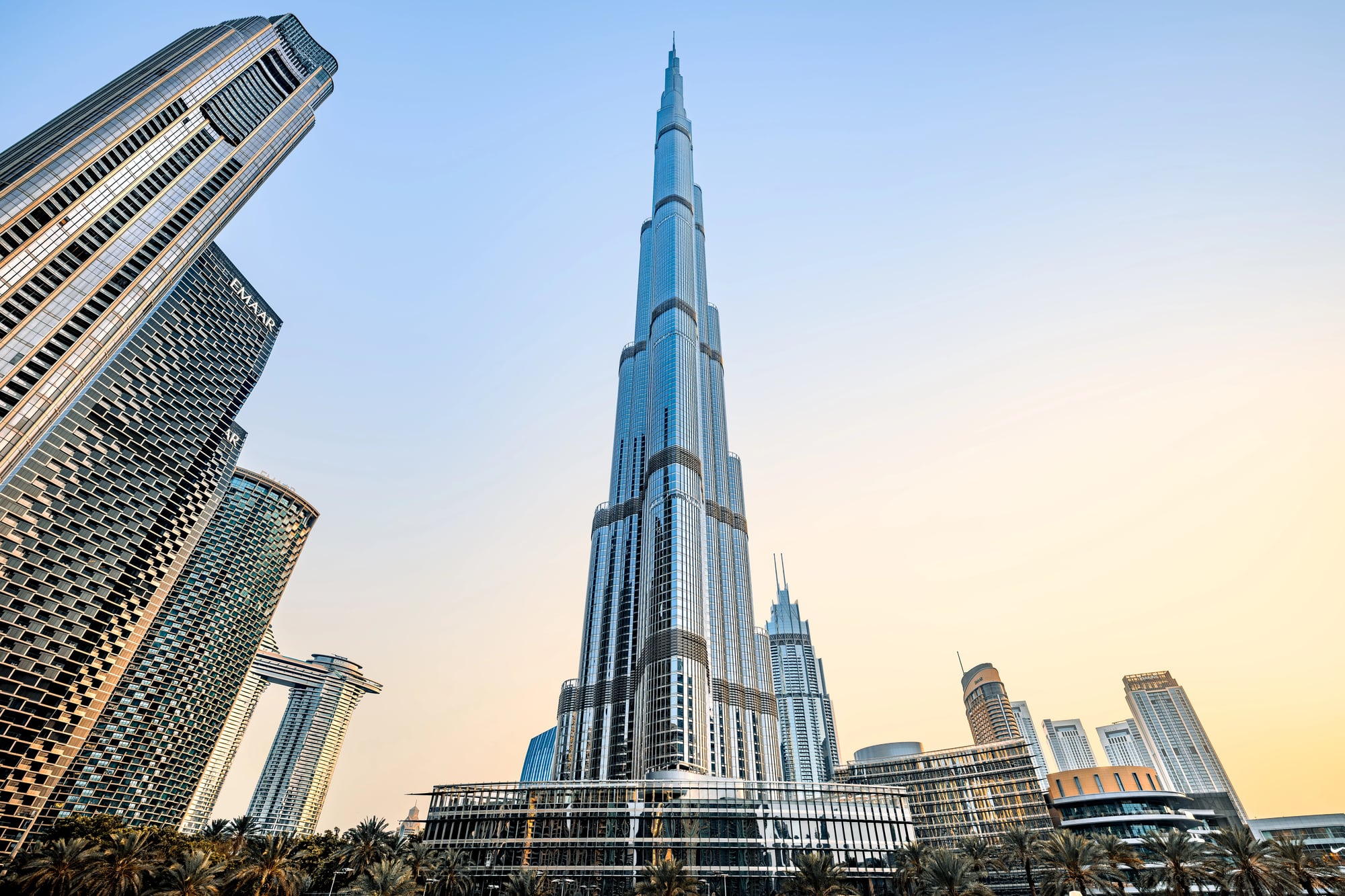
Official measurements put the Burj Khalifa at 2,722 feet tall, but that includes the massive spire on top. To the highest occupied floor, it measures 1,918 feet.
The roof sits at 2,717 feet. These distinctions matter because different organizations measure buildings differently, and the spire itself accounts for nearly a quarter of the total height.
Without that spire, other buildings would come much closer to claiming the tallest title.
It took only six years to build

Construction started in 2004 and the building officially opened on January 4, 2010. Six years might sound like a long time until you consider they built over 160 floors reaching more than half a mile into the sky.
At peak construction, about 12,000 workers labored on the site each day. The speed came from working 24 hours a day and using a specialized concrete mixture that could be pumped to extreme heights without losing strength.
The design mimics a desert flower

Architect Adrian Smith based the tower’s shape on the Hymenocallis flower, which grows in the region. The building’s footprint uses a three-lobed design that spirals upward, with each section stepping back at different heights.
This shape isn’t just pretty—it helps the building handle Dubai’s strong winds by confusing the airflow and reducing the forces trying to push it over. The setbacks also meant the building could rise much higher than a simple rectangular tower could manage.
Concrete was poured at night to fight the heat

Dubai’s extreme daytime temperatures would have caused the concrete to cure too quickly and crack. Workers poured concrete primarily at night when temperatures dropped.
They also added ice to the mixture and used chilled water to keep everything cool. Over 431,000 cubic yards of concrete went into the foundation and structure, all carefully mixed and monitored to ensure it could handle the immense weight pressing down from above.
The elevators travel faster than most cars on a highway

The tower’s elevators move at speeds up to 33 feet per second, which translates to about 22 miles per hour. That might not sound incredibly fast, but when you’re going straight up inside a building, it feels plenty quick.
The main elevator system includes 57 elevators and 8 escalators. Special double-deck elevators serve the observation decks, carrying visitors at speeds that can make ears pop from the pressure changes.
The outdoor observation deck sits on the 148th floor

At The Top SKY holds the record for the highest observation deck in the world at 1,821 feet up. Visitors who make it to this level get 360-degree views of Dubai, the Persian Gulf, and the surrounding desert.
On clear days, you can see roughly 60 miles in any direction. The experience includes walking on transparent floor panels that let you look straight down at the streets below, which isn’t for anyone afraid of heights.
Lightning strikes it multiple times every year

The tower’s height and the spire make it a natural target for lightning during Dubai’s occasional thunderstorms. Engineers designed a comprehensive lightning protection system that safely channels electrical strikes down through the building’s structure to the ground.
The system includes multiple lightning rods and conductors that can handle multiple simultaneous strikes. Cameras have captured spectacular footage of lightning hitting the spire, creating images that look like something from a science fiction movie.
The building consumes electricity like a small town

Daily power consumption reaches about 250,000 kilowatt-hours, equivalent to roughly 360 average American homes running for a full day. This massive energy need powers everything from the elevators and lighting to the air conditioning system that keeps the interior comfortable despite Dubai’s brutal heat.
The tower has its own power substation in the basement that manages this electrical load and ensures backup systems kick in if the main grid fails.
Window washers need three months to clean the whole building

The exterior features over 24,000 windows covering 1.2 million square feet of glass. A team of 36 window cleaners work continuously, and by the time they finish cleaning every window, it’s time to start over again at the beginning.
The cleaning crews use a track-mounted system that lets them access even the highest windows safely. The job requires special training and equipment because working at these heights means dealing with extreme winds and temperatures.
The foundation goes 164 feet underground

You can’t build the world’s tallest building without an incredibly strong foundation. The tower sits on a concrete and steel foundation supported by 192 piles driven deep into the desert sand and bedrock.
Each pile measures about 5 feet in diameter and extends down to reach stable ground that can support the structure’s weight. The foundation alone used 110,000 tons of concrete and 55,000 tons of steel reinforcement.
Temperature differences between floors can reach 15 degrees

The top of the building experiences temperatures noticeably cooler than the bottom, especially during summer when desert heat radiates from the ground. Air conditioning systems must account for these variations, cooling some floors more than others.
The building’s climate control system uses enough chilled water daily to fill 20 Olympic-sized swimming pools. Managing this vertical climate change represents one of the hidden engineering challenges that most visitors never think about.
The swimming pool sits on the 76th floor
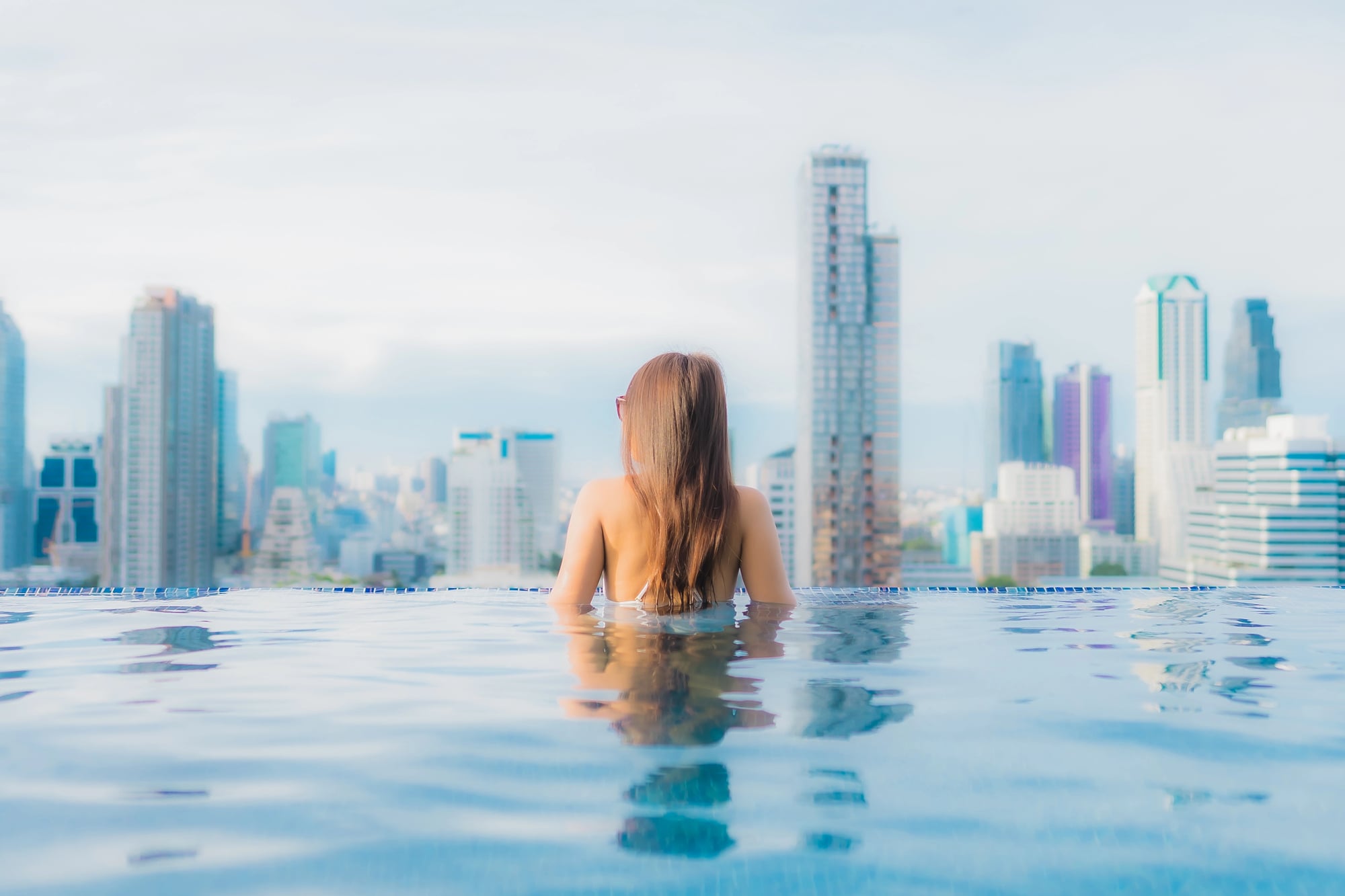
For a while, this was the world’s highest swimming pool, though other buildings have since topped it. Residents and hotel guests can swim at about 950 feet above street level with views across Dubai.
The pool uses advanced filtration and treatment systems because hauling water up 76 floors takes significant energy. Everything about maintaining a pool at this height costs more than ground-level versions, from the chemicals to the repairs.
New Year’s Eve fireworks cover the entire tower

Dubai rings in the new year by turning the Burj Khalifa into a giant glowing canvas, blasting out lights and sparks. Built-in LEDs on its surface flash colorful animations you can spot from far away.
Explosions blast upward from different floors, making a towering burst of color that runs nonstop for minutes. Huge crowds pack downtown just to see it live, snapping pics or cheering as it goes off.
Getting everything ready means teams work for months, syncing every detail behind the scenes.
That’s about 22 million gallons yearly

Dubai’s dry heat makes every drop count, but the Burj Khalifa still uses massive quantities – for showers, sinks, AC units, even watering plants. Inside, there’s a setup pulling humidity out of cooled air.
That gathered moisture? It goes straight to feeding green spaces or flushing toilets instead of going down the drain.
So while less tap water gets wasted, this skyscraper guzzles more than entire rural communities do daily.
The overall price went past 1.5 billion bucks

The final bill came in around $1.5 billion, but once you factor in nearby projects, it might’ve actually hit $2 billion. Emaar Properties covered the costs, hoping fame from creating the planet’s highest tower would boost property deals and bring in tourists.
It paid off – instead of fading away, the Burj Khalifa turned into Dubai’s top landmark and a go-to spot for travelers everywhere.
Armani handled the interior design of the hotel

Giorgio Armani himself created the look of the Armani Hotel, spread across levels 1 to 8, plus floors 38 and 37. It’s got 160 rooms done up in his classic stripped-back fashion, each filled with one-of-a-kind furniture pieces.
This marked his debut in hospitality, yet he oversaw everything – right down to the shape of light switches or which sweets land on your bed cushion. Prices sit way above most high-end stays in Dubai; still, people book it for that sky-high location mixed with big-name design flair.
Where dirt touches air
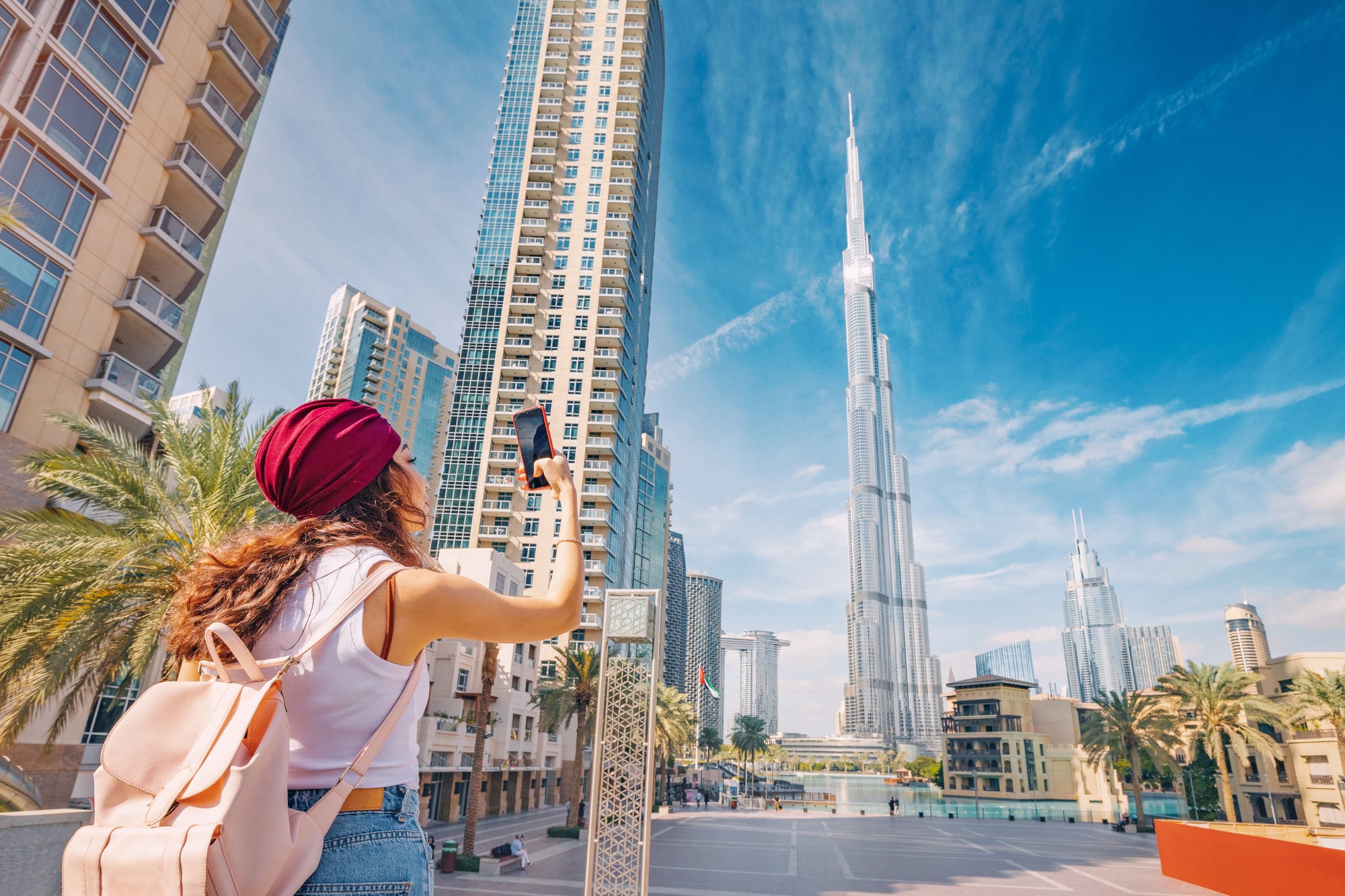
Looking up from the bottom of the Burj Khalifa gives you a strange sensation – hard to put into words. Its peak vanishes into the clouds, way beyond what your mind usually handles.
Instead of blending in, it shouts; Dubai used this tower to say “we’re here,” showing a half-century-old city can stand tall beside ancient ones. It worked – not only as a structure, but as proof: throw cash, willpower, and smart design together, and people can make wild ideas real.
Still, if that’s wise? That’s another story.
More from Go2Tutors!

- The Romanov Crown Jewels and Their Tragic Fate
- 13 Historical Mysteries That Science Still Can’t Solve
- Famous Hoaxes That Fooled the World for Years
- 15 Child Stars with Tragic Adult Lives
- 16 Famous Jewelry Pieces in History
Like Go2Tutors’s content? Follow us on MSN.



