Facts About Washington, D.C. Landmarks
Every monument and structure in Washington, D.C., which is known as America’s living history book, narrates a tale that influenced the country.
The capital city is home to some of the most iconic buildings in the world, each with a rich history spanning decades or even centuries.These landmarks, which range from political strongholds to engineering wonders, are much more than just attractive exteriors.
This list of 12 fascinating facts about the most well-known landmarks in Washington, D.C., reveals the unexpected backstories of these iconic locations.
The Washington Monument’s Secret Recipe

The Washington Monument looks like it’s made from one type of stone, but it’s actually a patchwork of different materials. Construction stopped for 23 years due to funding issues and the Civil War, and when work resumed, builders couldn’t find marble that matched the original.
You can actually see the color change about one-third of the way up if you look closely.
Lincoln Memorial’s Acoustic Marvel

The Lincoln Memorial creates a unique acoustic experience that amplifies speakers’ voices naturally. The chamber’s design bounces sound off the marble walls and ceiling, making every word resonate clearly throughout the space.
This architectural feature helped carry Martin Luther King Jr.’s voice to the 250,000 people gathered on the National Mall during his famous 1963 speech.
Like Go2Tutors’s content? Follow us on MSN.
The Capitol Building’s Iron Hat

That gorgeous dome on the U.S. Capitol isn’t made of stone like it appears from the ground. Engineers constructed it entirely from cast iron and painted it white to look like the original sandstone base.
This clever trick made the dome much lighter than stone would have been, preventing the building from collapsing under the weight.
White House’s Colorful Past
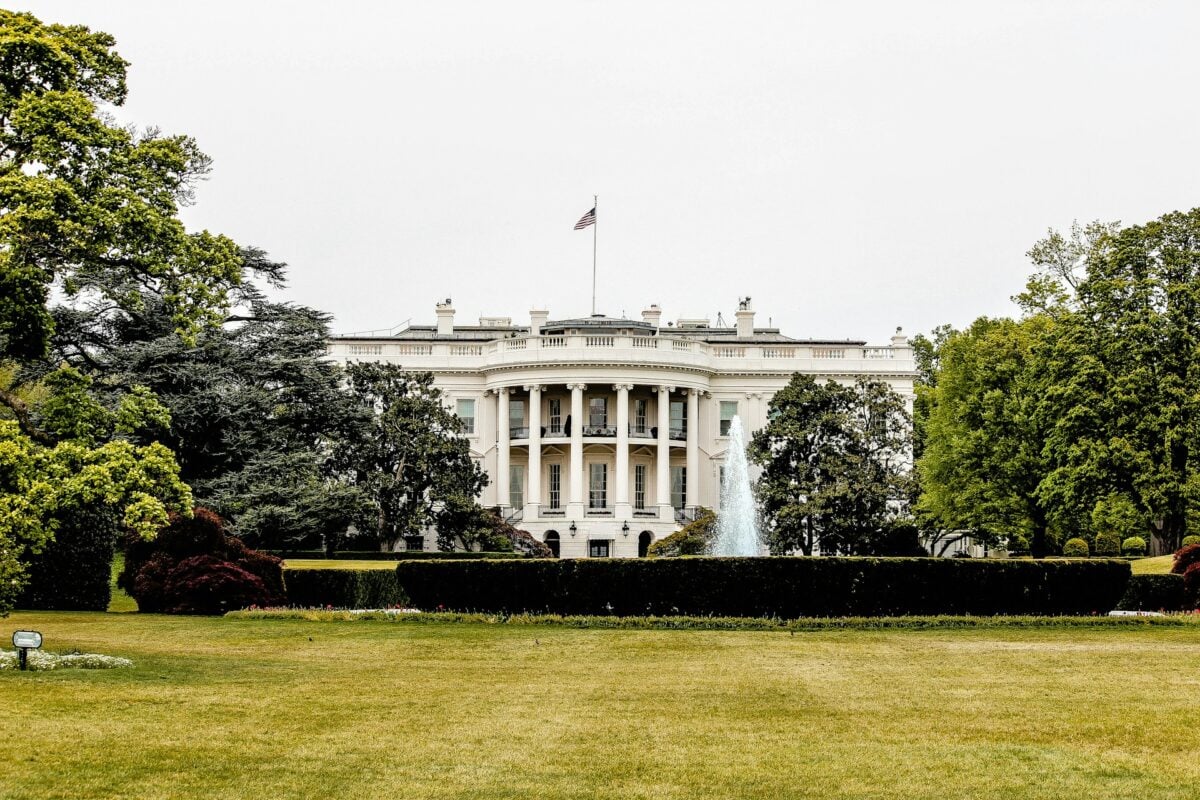
The White House wasn’t always white, and it got its famous color for a pretty practical reason. After the British burned it during the War of 1812, workers painted the rebuilt structure white to cover up the scorch marks and water damage.
The nickname ‘White House’ stuck around long before it became the official name in 1901.
Jefferson Memorial’s Tree Controversy

The Jefferson Memorial required removing about 88 cherry trees from the Tidal Basin area, which sparked protests from local garden clubs and citizens. The controversy became so intense that women chained themselves to the doomed trees in a dramatic act of civil disobedience.
The government eventually replaced the removed trees with new plantings, but the original battle over each cherry tree showed how much Washingtonians loved their spring blossoms.
Like Go2Tutors’s content? Follow us on MSN.
Supreme Court’s Tiny Detail

The Supreme Court building contains a basketball court on its top floor, earning it the nickname ‘the highest court in the land.’ Justice Byron White, a former NFL player, often used the court to stay in shape.
The court sits directly above the main courtroom where the country’s most important legal decisions happen.
Library of Congress’s Daily Growth

The Library of Congress adds approximately 10,000 items to its collection every working day. The building consumes content like a hungry giant, housing everything from medieval manuscripts to modern digital files.
If you lined up all the bookshelves end to end, they would stretch from Washington, D.C. to Chicago.
Vietnam Veterans Memorial’s Controversial Birth

The Vietnam Veterans Memorial initially faced harsh criticism for being too modern and abstract. Critics called it a ‘black gash of shame’ and demanded a more traditional statue.
The compromise solution added the Three Servicemen statue nearby, but Maya Lin’s original wall design ultimately won over the public and became one of the most visited memorials.
Like Go2Tutors’s content? Follow us on MSN.
Washington National Cathedral’s Modern Gargoyle

Among the Washington National Cathedral’s traditional gothic gargoyles sits an unexpected modern addition: Darth Vader’s head. A 1980s design competition for kids resulted in this pop culture reference being carved in stone and permanently mounted on the cathedral’s northwest tower.
Finding it requires binoculars and a good sense of humor.
Kennedy Center’s Floating Foundation

The Kennedy Center appears to float on the Potomac River, and that illusion comes from some serious engineering magic. The building sits on a platform supported by massive concrete pillars driven deep into the riverbed.
This design allows the center to host performances without vibrations from nearby traffic interfering with the acoustics.
Smithsonian Castle’s Early Zoo Connection

The Smithsonian Castle served as headquarters when the institution managed early live animal collections before the National Zoo opened. Joseph Henry, the first Secretary, oversaw these specimens housed on the Smithsonian grounds rather than in his personal residence.
The building became a coordination center for America’s first serious scientific animal research, connecting natural history study with live observation.
Like Go2Tutors’s content? Follow us on MSN.
Lincoln Memorial’s Hidden Basement

Underneath the Lincoln Memorial lies a large basement filled with stalactites and graffiti from construction workers. The space looks like a cave because of moisture seeping through the marble over the decades.
Park rangers occasionally give tours of this hidden underground world that most visitors never see.
From Foundation Stones to Living History

These landmarks demonstrate that Washington, D.C. is more than just a city full of monuments and government buildings.
Every building tells a tale of political compromise, cultural development, and human ingenuity that still shapes American identity today.Both historical relics and active participants in the ongoing American experiment are represented by the capital’s landmarks.
These locations serve as a reminder that history is alive and well in the present, whether they are used for Supreme Court basketball games or to conceal enigmatic time capsules.
More from Go2Tutors!

- 16 Historical Figures Who Were Nothing Like You Think
- 12 Things Sold in the 80s That Are Now Illegal
- 15 VHS Tapes That Could Be Worth Thousands
- 17 Historical “What Ifs” That Would Have Changed Everything
- 18 TV Shows That Vanished Without a Finale
Like Go2Tutors’s content? Follow us on MSN.