Fake Archaeological Discoveries Pushed by the Media
For over a century, scientists have pieced together the story of human evolution like detectives working a cold case. Each fossil discovery, genetic analysis, and archaeological find adds another clue to our understanding of where we came from. Yet despite remarkable advances in technology and methodology, many popular beliefs about early human evolution remain stubbornly incorrect. These misconceptions persist not just among the general public, but sometimes even within scientific circles, passed down through outdated textbooks and oversimplified explanations.
The reality is that human evolution is far messier, more complex, and more fascinating than the neat linear progression often portrayed. Our ancestors didn’t follow a predetermined path from ape to human, and the story involves multiple species, dead ends, and surprising discoveries that continue to reshape our understanding of what it means to be human.
The Cardiff Giant

The Cardiff Giant was pure theater masquerading as archaeology. In 1869, workers digging a well on a farm in Cardiff, New York, unearthed what appeared to be a 10-foot-tall petrified man. News spread quickly, and thousands of people paid to see the “ancient giant.”
The discovery seemed to validate biblical accounts of giants walking the earth, which made it irresistible to newspapers of the era. Publications ran breathless accounts of the find, with some claiming it proved the literal truth of scripture. The New York Tribune called it “the most remarkable object yet brought to light in this country.”
But the Cardiff Giant was an elaborate hoax orchestrated by George Hull, an atheist who wanted to fool his fundamentalist neighbors (and make money doing it). Hull had commissioned a sculptor to carve the figure from gypsum, artificially aged it with sulfuric acid, and buried it on his relative’s farm. Even after Hull confessed to the deception in 1870, the story had taken on a life of its own. The media had turned a practical joke into archaeological fact.
Piltdown Man
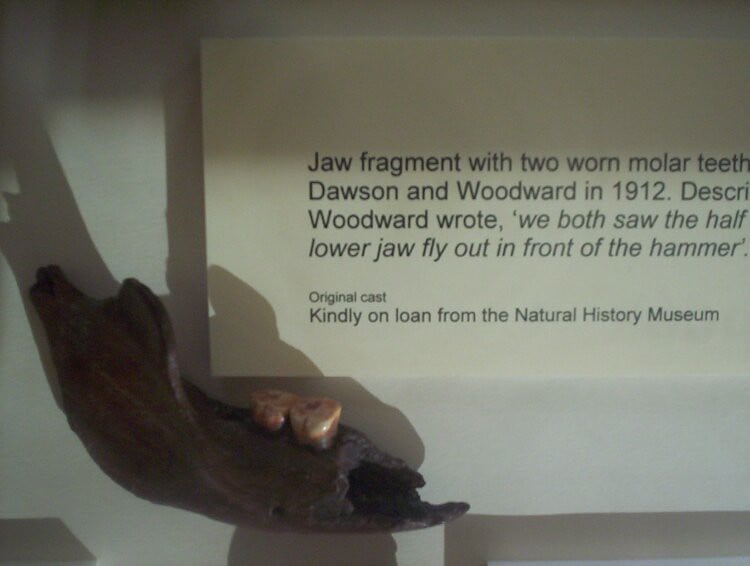
The Piltdown Man fraud demonstrates how scientific bias and media enthusiasm can create archaeological mythology that persists for decades. In 1912, amateur archaeologist Charles Dawson claimed to have discovered skull fragments in a gravel pit in England that represented the “missing link” between apes and humans.
British newspapers seized on the discovery with nationalistic fervor. Here was proof that England, not Africa, was the cradle of human evolution. The London Illustrated News published detailed reconstructions of what “Piltdown Man” might have looked like, complete with artistic renderings that made the findings seem more concrete than they actually were.
The scientific community wanted to believe it too. The fragments fit prevailing theories about human evolution and British assumptions about their place in natural history. So when inconsistencies emerged, they were explained away rather than investigated. Newspapers continued to report on Piltdown Man as established fact, citing it in articles about human origins well into the 1940s.
It wasn’t until 1953 that rigorous testing revealed the hoax: the skull was human, the jaw belonged to an orangutan, and both had been chemically treated to appear ancient. By then, four decades of media coverage had embedded the fraud so deeply in popular consciousness that it still appears in discussions of archaeological hoaxes today.
The Bat Creek Inscription

When archaeologist Cyrus Thomas excavated a mound in Tennessee in 1889, he found a stone tablet with mysterious markings alongside Native American artifacts. The inscription didn’t match any known Native American writing system, so it was filed away and largely forgotten.
Decades later, the inscription caught the attention of amateur historians who claimed it was written in ancient Hebrew—proof that Jewish settlers had reached America long before Columbus. This interpretation transformed a puzzling archaeological anomaly into a sensational story about pre-Columbian contact between the Old and New Worlds.
Media coverage amplified these claims without much scrutiny. Magazines and newspapers ran articles about the “Hebrew inscription” as though it were accepted archaeological fact, often alongside speculation about lost tribes of Israel and ancient transatlantic voyages. The story gained momentum precisely because it challenged conventional historical narratives in exciting ways.
Modern analysis tells a different story entirely. The inscription matches 19th-century Hebrew script, not ancient forms, and appears to have been copied from an illustration in a Masonic reference book. What likely happened was straightforward: someone planted the tablet, probably as a hoax or to support their own theories about American prehistory. The media’s eagerness to embrace an extraordinary claim transformed archaeological contamination into historical “evidence.”
The Japanese Paleolithic Hoax

Shinichi Fujimura earned the nickname “God’s hands” for his remarkable ability to discover ancient artifacts in Japan. For over two decades, his finds pushed back the timeline of human habitation in Japan by hundreds of thousands of years, earning extensive coverage in Japanese media and international archaeological journals.
Fujimura’s discoveries were exactly what people wanted to hear: they gave Japan a deeper prehistoric heritage and challenged assumptions about early human migration patterns. Media outlets reported breathlessly on each new find, often describing Fujimura as a visionary who was revolutionizing understanding of Japanese prehistory.
The truth was more mundane and more damaging. In 2000, hidden cameras caught Fujimura burying artifacts at excavation sites before “discovering” them the next day. He had been planting evidence for years, fooling not just the media but professional archaeologists who trusted his reputation.
The revelation sent shockwaves through Japanese archaeology and forced a fundamental reassessment of what was actually known about early human presence in Japan. But the damage had already been done—years of media coverage had embedded false information into popular understanding, and correcting that record proved far more difficult than creating it had been.
The Kensington Runestone
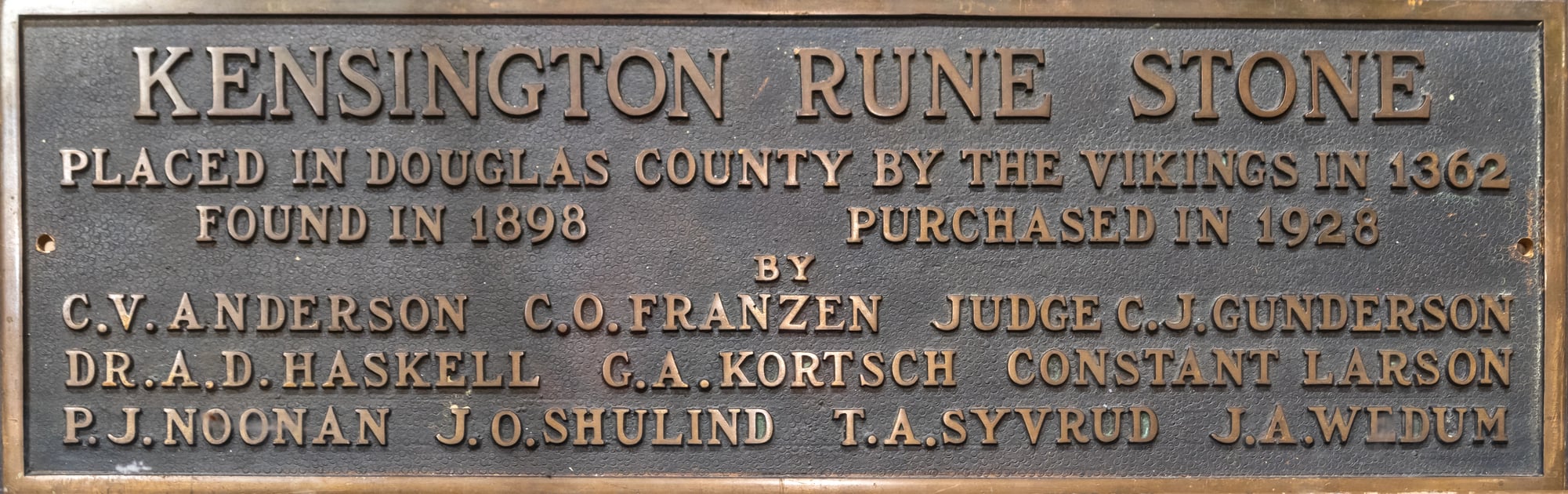
A Swedish immigrant named Olof Ohman claimed to find a stone covered in runic inscriptions on his Minnesota farm in 1898. The inscription told the story of Scandinavian explorers reaching North America in 1362, more than a century before Columbus.
Local newspapers picked up the story, and it gradually spread to national publications eager for a tale that challenged established historical narratives. The discovery offered a romantic vision of Viking exploration in the American interior.
Academic linguists quickly identified problems. The runes mixed different historical periods, included modern elements, and used grammatical constructions that did not exist in medieval Scandinavian languages. But media coverage largely ignored these objections.
The Kensington Runestone still attracts believers today because early media coverage established it as a legitimate mystery rather than a hoax. Once that narrative took hold, scholarly corrections could not fully undo it.
The Bosnian Pyramids

In 2005, Semir Osmanagić announced that hills near Visoko in Bosnia were actually ancient pyramids built by an advanced civilization. According to him, they were larger than the pyramids at Giza and over 12,000 years old.
The story spread rapidly through media outlets drawn to its sensational implications. International coverage framed the site as a potential rewrite of human history.
Professional archaeologists saw natural geological formations with some later human modification. Core samples showed natural sediment layers, not engineered structures.
Still, media attention had already turned speculation into perceived discovery. The site became a tourist attraction, sustained more by narrative than evidence.
Crystal Skulls
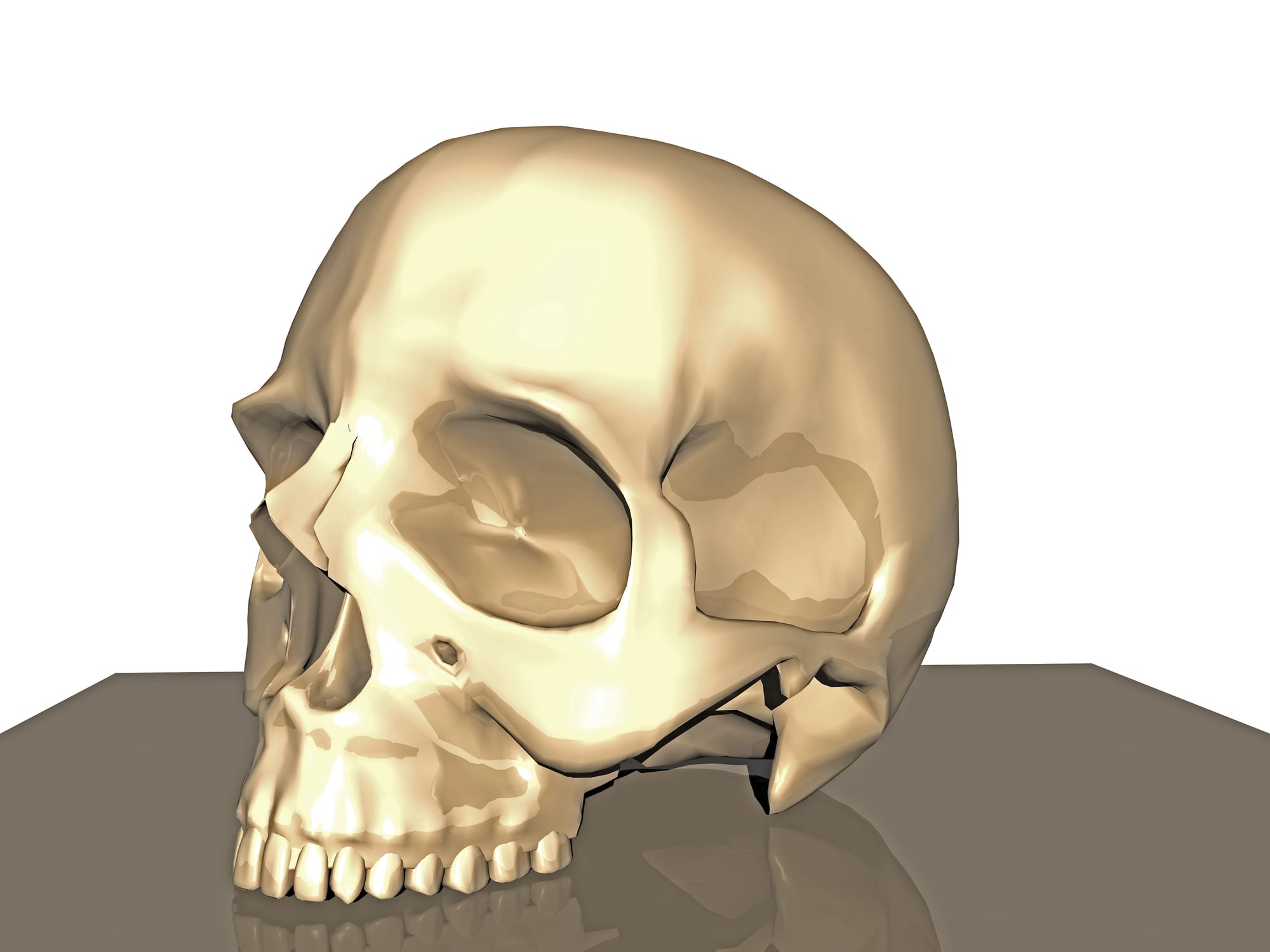
Crystal skulls became famous because they combined archaeology with mystery and supernatural speculation. Claimed to be ancient Mesoamerican artifacts, they were said to possess mystical properties and advanced craftsmanship.
Museums and media outlets amplified their supposed significance. They appeared in documentaries and popular culture as symbols of lost knowledge.
Modern analysis showed they were made using 19th- and 20th-century tools, with machining marks inconsistent with ancient production. They were modern creations sold as antiquities.
Yet debunking them only increased their cultural visibility, as media treated the exposure of the hoax as another chapter in the story rather than its conclusion.
The James Ossuary

In 2002, a limestone ossuary surfaced with an Aramaic inscription reading “James, son of Joseph, brother of Jesus.” If authentic, it would be one of the most significant archaeological finds related to early Christianity.
Media coverage was immediate and global, framing it as potentially groundbreaking evidence.
Scholars noted inconsistencies in the inscription and lack of provenance. Investigation later concluded that while the box itself was ancient, the inscription had been added in modern times.
The story illustrates how quickly extraordinary claims can shape public understanding before verification catches up.
The Micmac Hieroglyphs
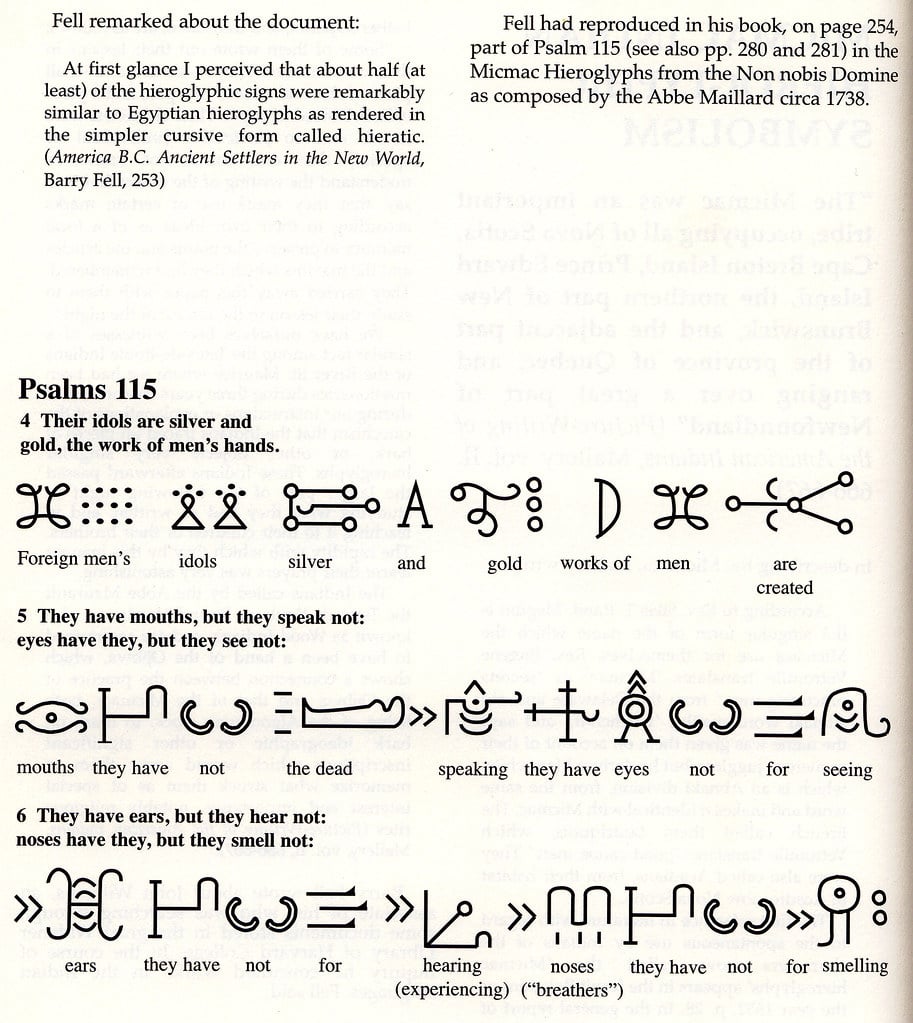
In the 19th century, missionary accounts suggested that the Micmac people had an ancient writing system predating European contact. Media and academic publications framed this as evidence of unexpected indigenous literacy.
Later research showed the system had been developed by missionaries for teaching Christian doctrine, not as a pre-contact writing system.
But by then, the idea of ancient Micmac hieroglyphs had already circulated widely, and correcting it required dismantling assumptions that had become culturally embedded.
The Stone Spheres of Costa Rica
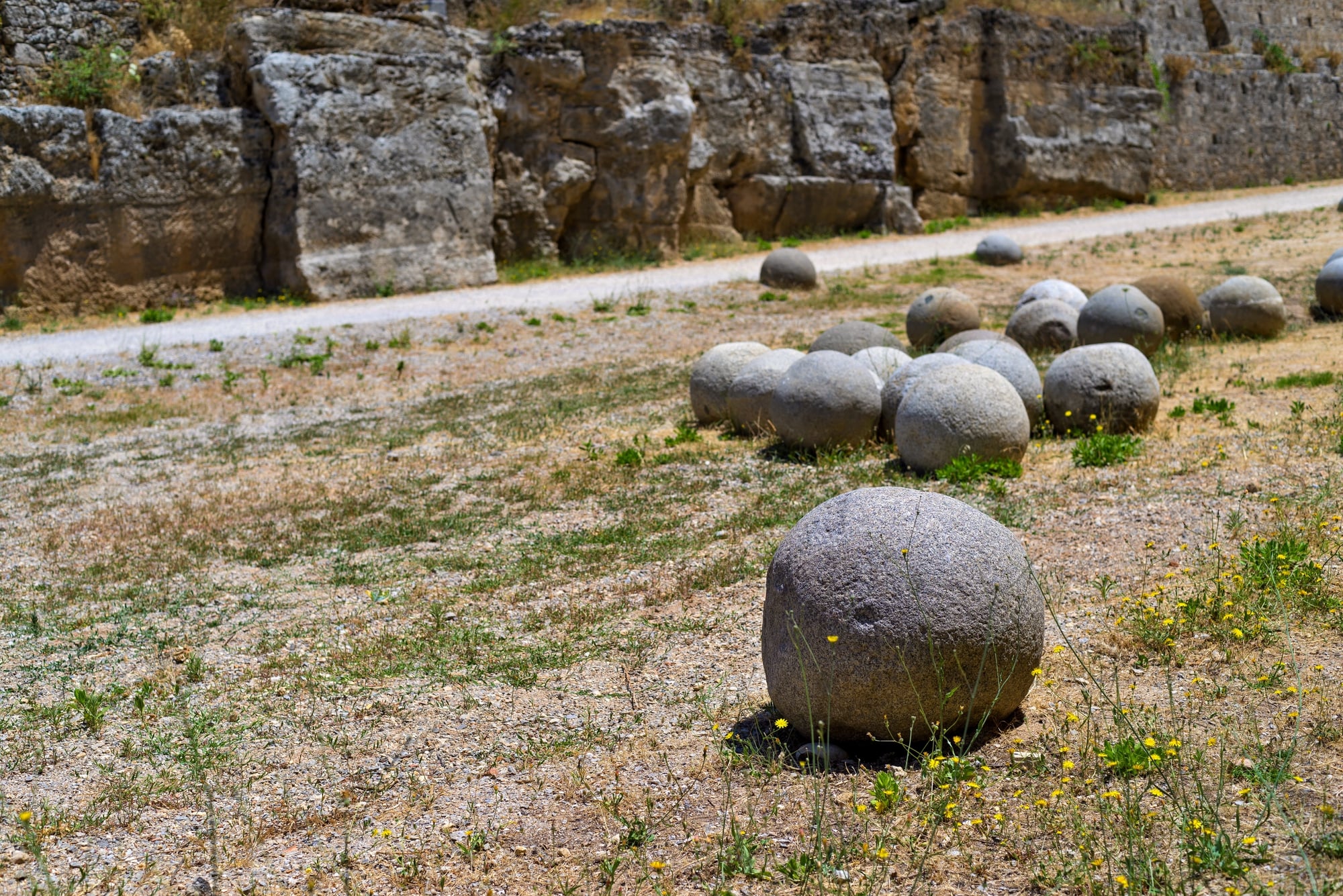
Perfectly carved stone spheres discovered in Costa Rica in the 1940s sparked decades of speculation about lost civilizations and advanced ancient technologies.
Media coverage emphasized mystery and precision while downplaying archaeological context.
Research shows they were created by the Diquís culture between 600 and 1000 CE using known techniques. Many were relocated, obscuring their original arrangement.
Still, media narratives continue to frame them as enigmatic artifacts rather than culturally grounded objects.
The Michelsberg Culture Tools

In the 1970s, alleged discoveries of advanced prehistoric tools in Germany were widely reported as evidence of lost technological sophistication.
Media coverage emphasized revolutionary implications.
Later analysis showed the tools were modern objects introduced into archaeological contexts, not ancient artifacts.
The story highlighted how easily sensational framing can transform contemporary objects into supposed ancient evidence.
When Sensationalism Meets Science

The relationship between archaeology and media will always be complicated because they serve different purposes. Archaeology advances through slow accumulation of evidence and cautious interpretation, while media prioritizes speed and narrative clarity.
This mismatch creates space for distortion. Extraordinary claims travel faster than careful corrections, and once a story enters public imagination, it becomes difficult to dislodge.
The result is an archaeological landscape where the most memorable stories are often the least accurate, and where truth arrives long after belief has already settled in.
More from Go2Tutors!

- The Romanov Crown Jewels and Their Tragic Fate
- 13 Historical Mysteries That Science Still Can’t Solve
- Famous Hoaxes That Fooled the World for Years
- 15 Child Stars with Tragic Adult Lives
- 16 Famous Jewelry Pieces in History
Like Go2Tutors’s content? Follow us on MSN.