Fake Tourist Attractions Built Entirely for Profit
Sometimes the internet presents us with stories so perfectly crafted, so delightfully absurd, that we almost want them to be true. The realm of completely fabricated celebrity historical encounters has become its own peculiar art form—part creative writing exercise, part wishful thinking, and entirely entertaining.
The world is full of wonders, both natural and human-made. But somewhere between genuine historical landmarks and authentic cultural sites, a different breed of attraction has emerged. These places exist for one reason only: to separate travelers from their money. They masquerade as must-see destinations, complete with gift shops and inflated entrance fees, yet offer little more than manufactured experiences designed by marketing committees.
You’ve probably encountered them without realizing it. The roadside oddities that promise “world’s largest” this or “only authentic” that. The theme parks built around dubious historical claims. The fabricated cultural villages that bear no resemblance to actual local traditions. They’re everywhere, and they’re surprisingly good at what they do.
Wall Drug
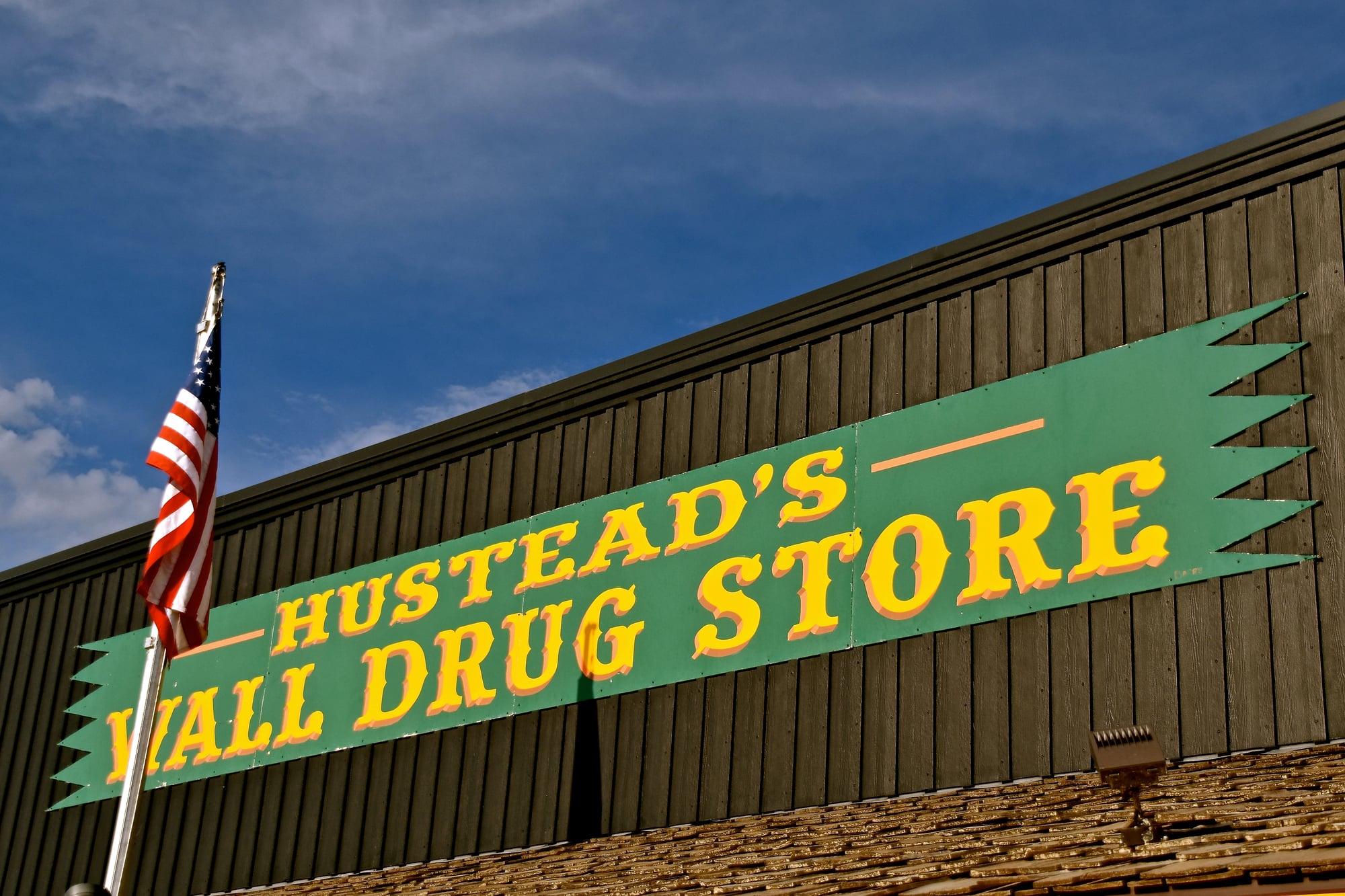
A pharmacy in the middle of South Dakota shouldn’t be a tourist destination. Wall Drug proves otherwise.
It started as a genuine small-town drugstore in 1931. The owners put up signs offering free ice water to travelers crossing the badlands. Smart move.
The signs multiplied across state lines, then across the country, then around the world. Free ice water became the hook that built an empire.
Carhenge
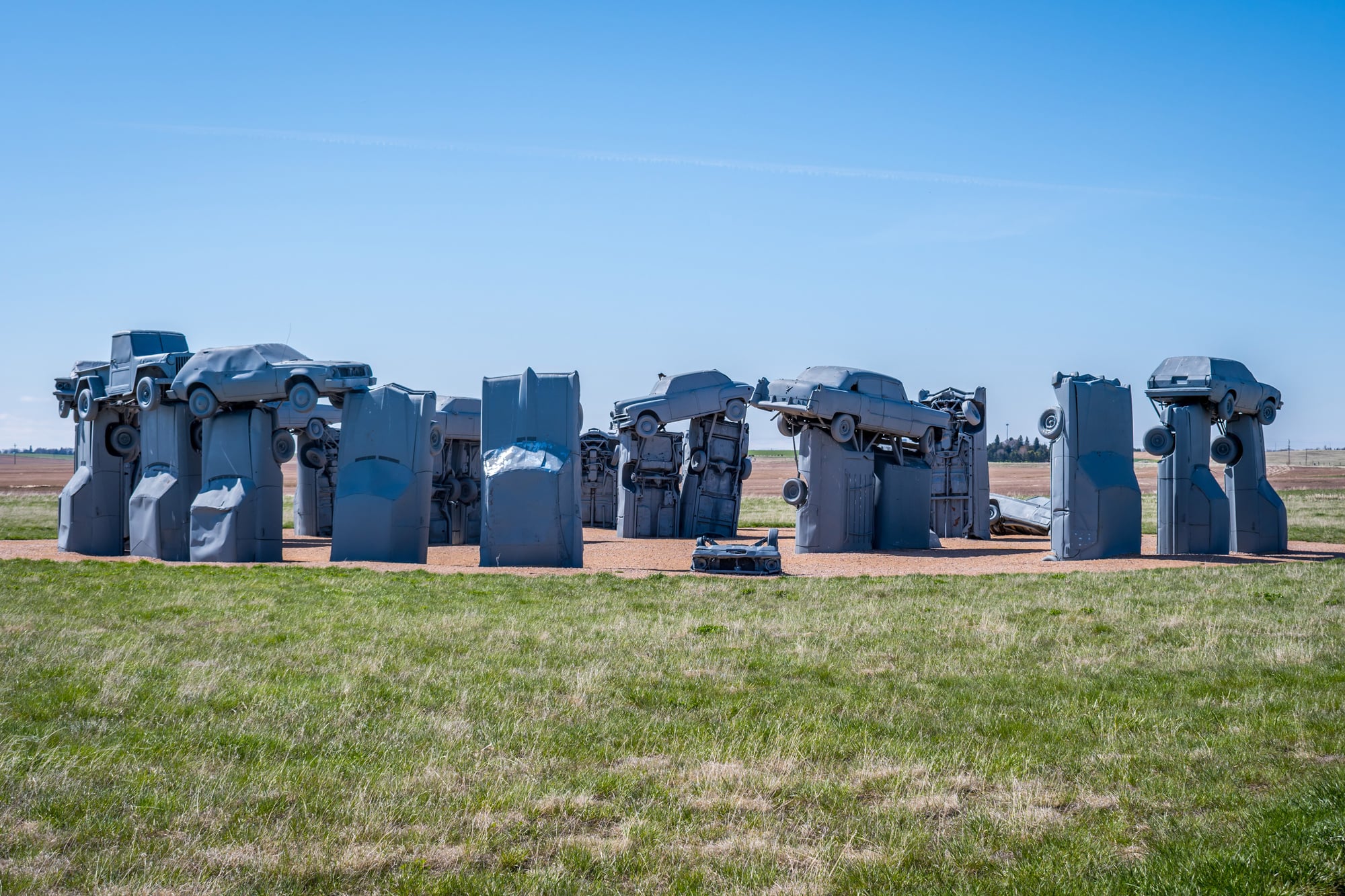
Someone looked at Stonehenge and thought, “This needs more automobiles.” So they built it in Nebraska using old cars instead of ancient stones.
The proportions match the original (which is something, at least), but the mystique evaporates when your sacred circle consists of spray-painted sedans and pickup trucks. And yet people drive hundreds of miles to see it, because humans are drawn to spectacle regardless of its origins — even when that spectacle involves a 1962 Cadillac standing upright in a cornfield, pretending to channel the wisdom of ancient druids.
Gatorland
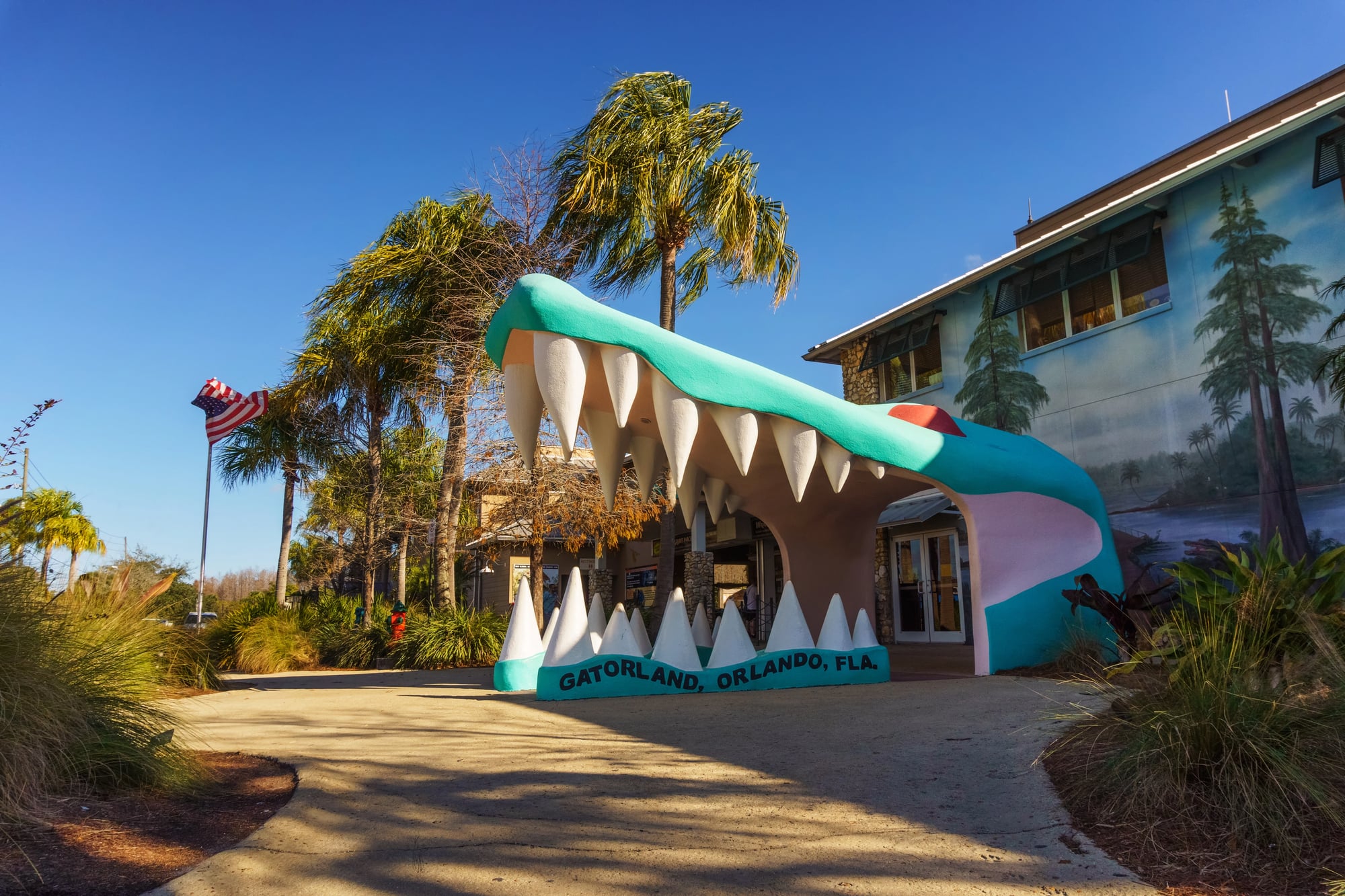
Florida’s swamplands teem with actual alligators living actual lives in actual wilderness. But why experience nature when you can pay to see captive reptiles perform tricks for dead chickens?
The attraction presents itself as educational, which provides moral cover for what amounts to a carnival sideshow with better marketing. Visitors watch feeding demonstrations and wrestling exhibitions that bear no resemblance to how these animals behave in their natural habitat. The gift shop sells alligator-themed everything, because nothing says “conservation awareness” quite like a plastic snow globe filled with miniature predators.
House on the Rock
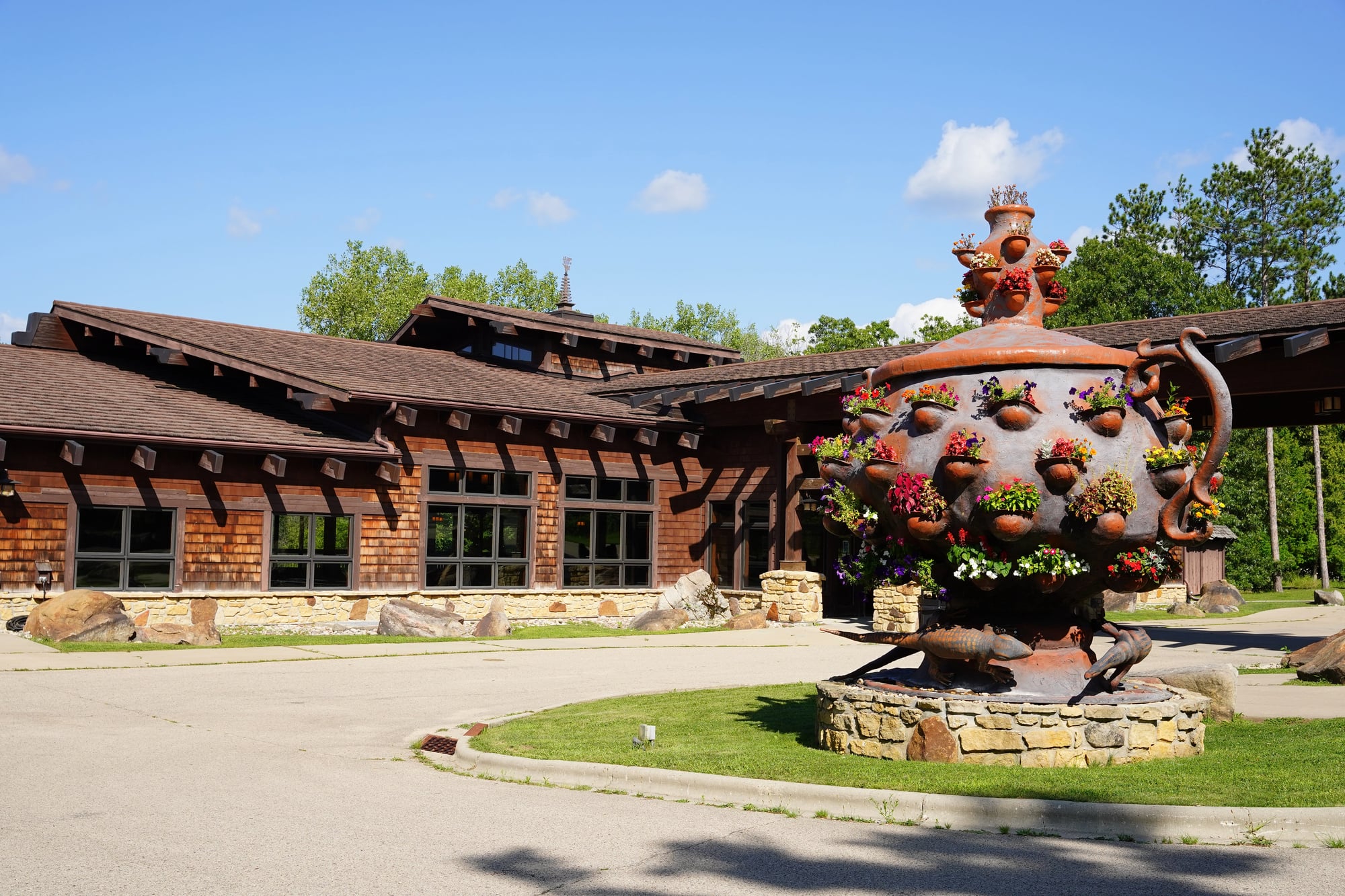
Wisconsin’s strangest attraction began as one man’s architectural fever dream and evolved into something far more calculated.
Alex Jordan built his house on a rock formation in the 1940s, then kept adding rooms and collecting objects until the structure became a maze of themed areas filled with automated musical instruments, carousel horses, and dollhouses. The infinity room stretches 218 feet into space without visible support — genuinely impressive engineering serving no particular purpose. But the experience feels less like visiting someone’s home and more like walking through a very expensive garage sale that never ends. The admission price reflects this ambition.
Foamhenge
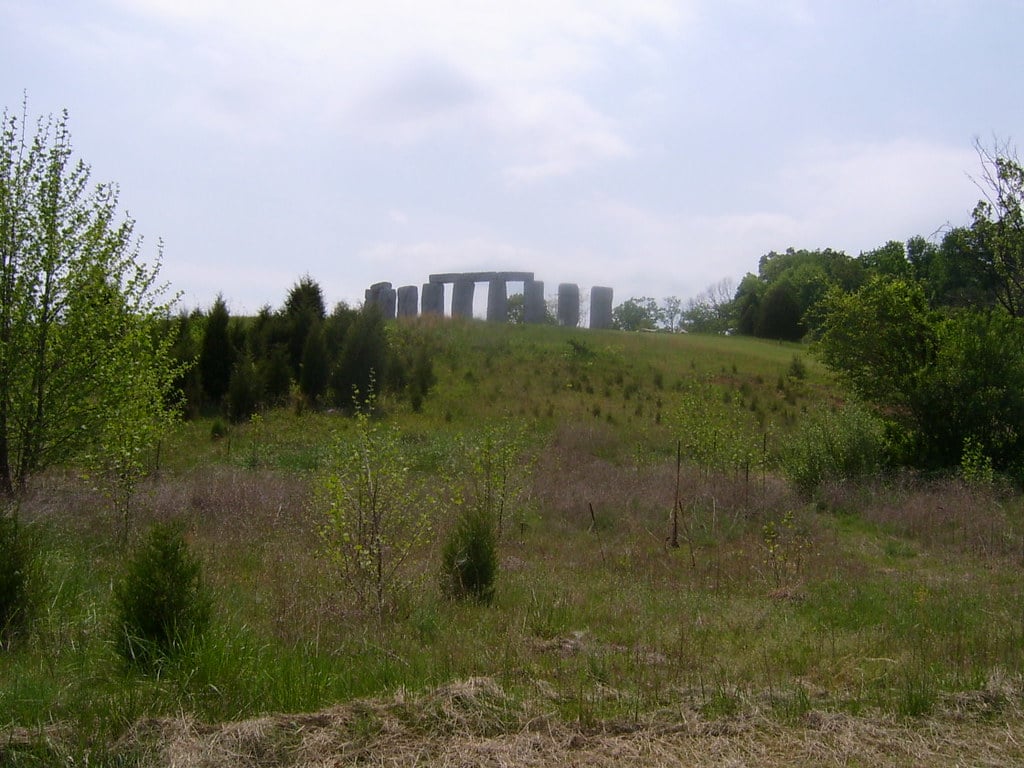
Virginia decided it needed its own Stonehenge replica. Rather than use stone, they chose foam.
The result weighs considerably less than the original and lacks any connection to astronomical phenomena, ancient rituals, or archaeological significance. It exists purely because someone thought a foam version of humanity’s most mysterious monument might draw curious motorists off the highway. The logic is sound, if depressing. People do stop. They do take photos. They do leave wondering why they came.
Largest Round of Twine
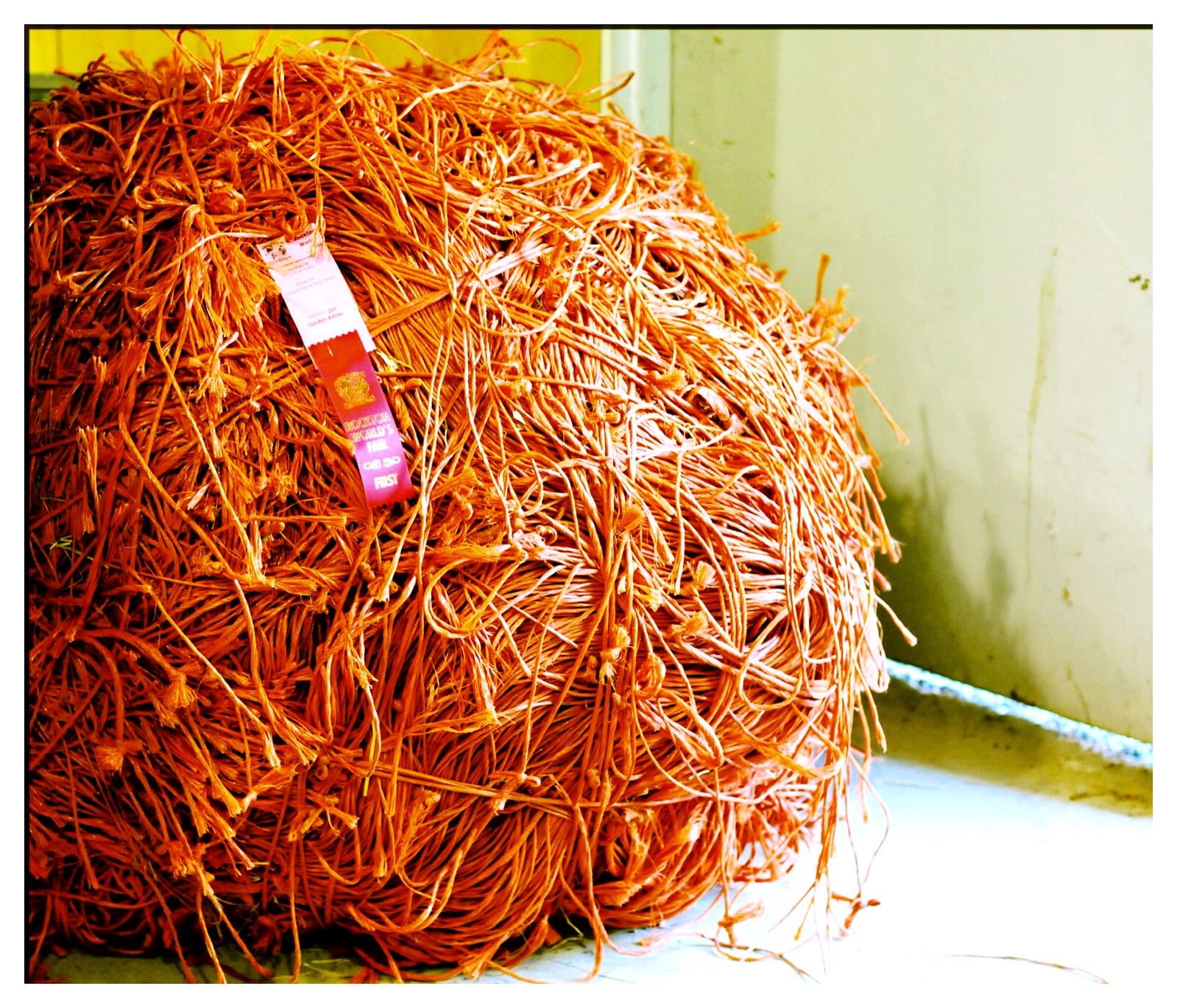
Kansas takes credit for the world’s largest round of twine, though several other states make competing claims.
Frank Stoeber spent 29 years winding twine into an increasingly massive sphere that now weighs over 17,000 pounds. The dedication is admirable in its pointlessness. A small museum houses the orb under glass, protecting it from weather and souvenir hunters. The gift shop sells — predictably — twine-related merchandise and postcards documenting this triumph of persistence over purpose.
Enchanted Highway
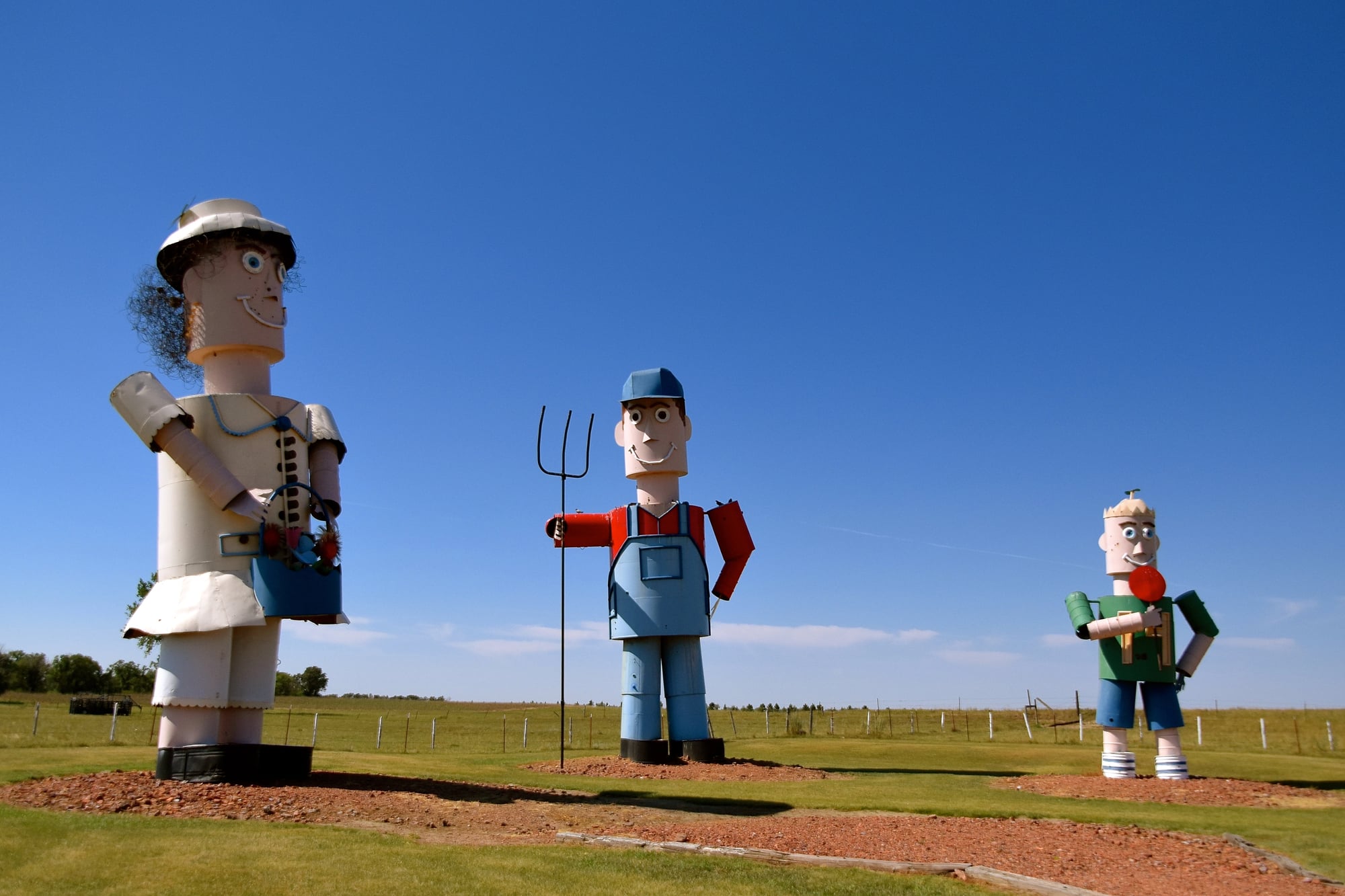
North Dakota’s Enchanted Highway stretches 32 miles between small towns, featuring enormous scrap metal sculptures visible from considerable distances.
The project aimed to boost tourism in a region that tourism typically ignores entirely. Metal grasshoppers, fish, and families tower over empty prairie, their painted surfaces gleaming against vast skies. The sculptures possess undeniable artistic merit, but their placement feels arbitrary — monuments to the hope that spectacle alone can generate economic activity (which, to be fair, sometimes works). The highway succeeds in stopping traffic, though whether visitors leave with any deeper appreciation for the area remains questionable.
Mystery Spot
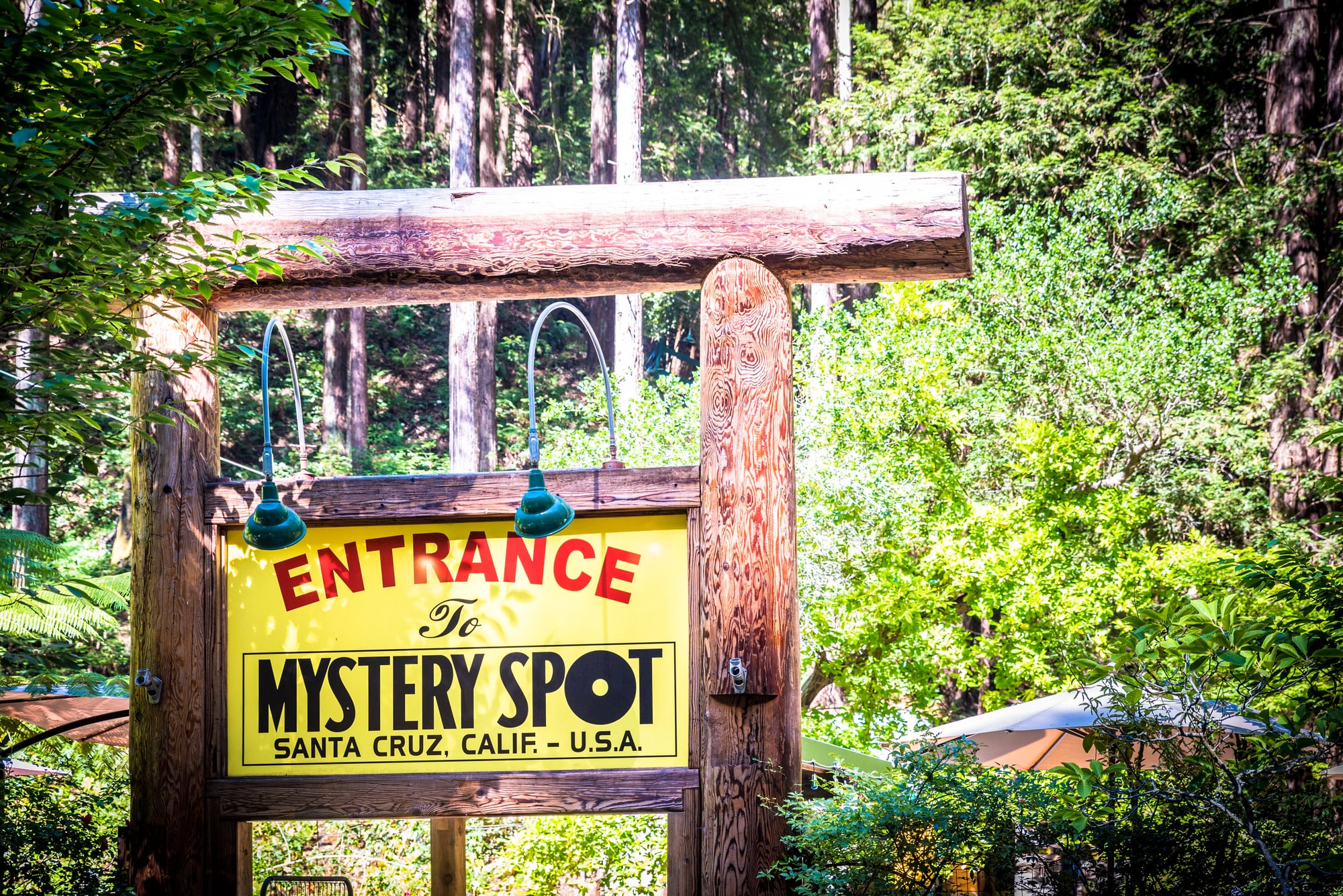
California’s Mystery Spot claims to be a gravitational anomaly where the normal laws of physics don’t apply. Tour guides demonstrate water flowing uphill, people standing at impossible angles, and rounds rolling toward higher elevations.
The explanations involve magnetic fields, alien encounters, or secret government experiments, depending on which guide tells the story. The actual explanation involves carefully constructed optical illusions and tilted floors designed to confuse the inner ear. Visitors know they’re being fooled but participate in the charade anyway — partly because the illusions work effectively, partly because admitting the deception would diminish their entertainment investment. The gift shop sells “I Survived the Mystery Spot” t-shirts to people who experienced no actual danger.
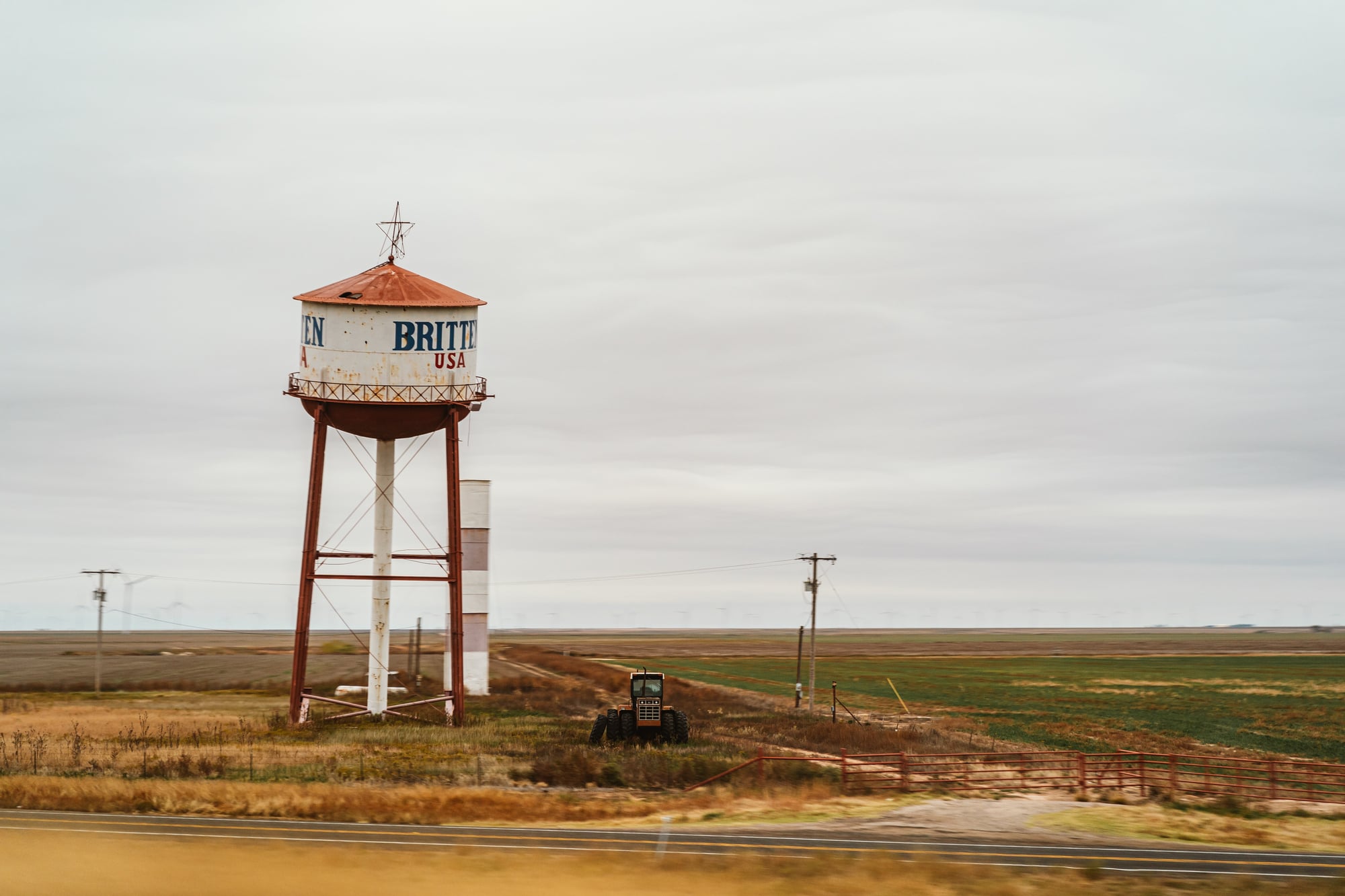
Leaning Water Tower of Britten
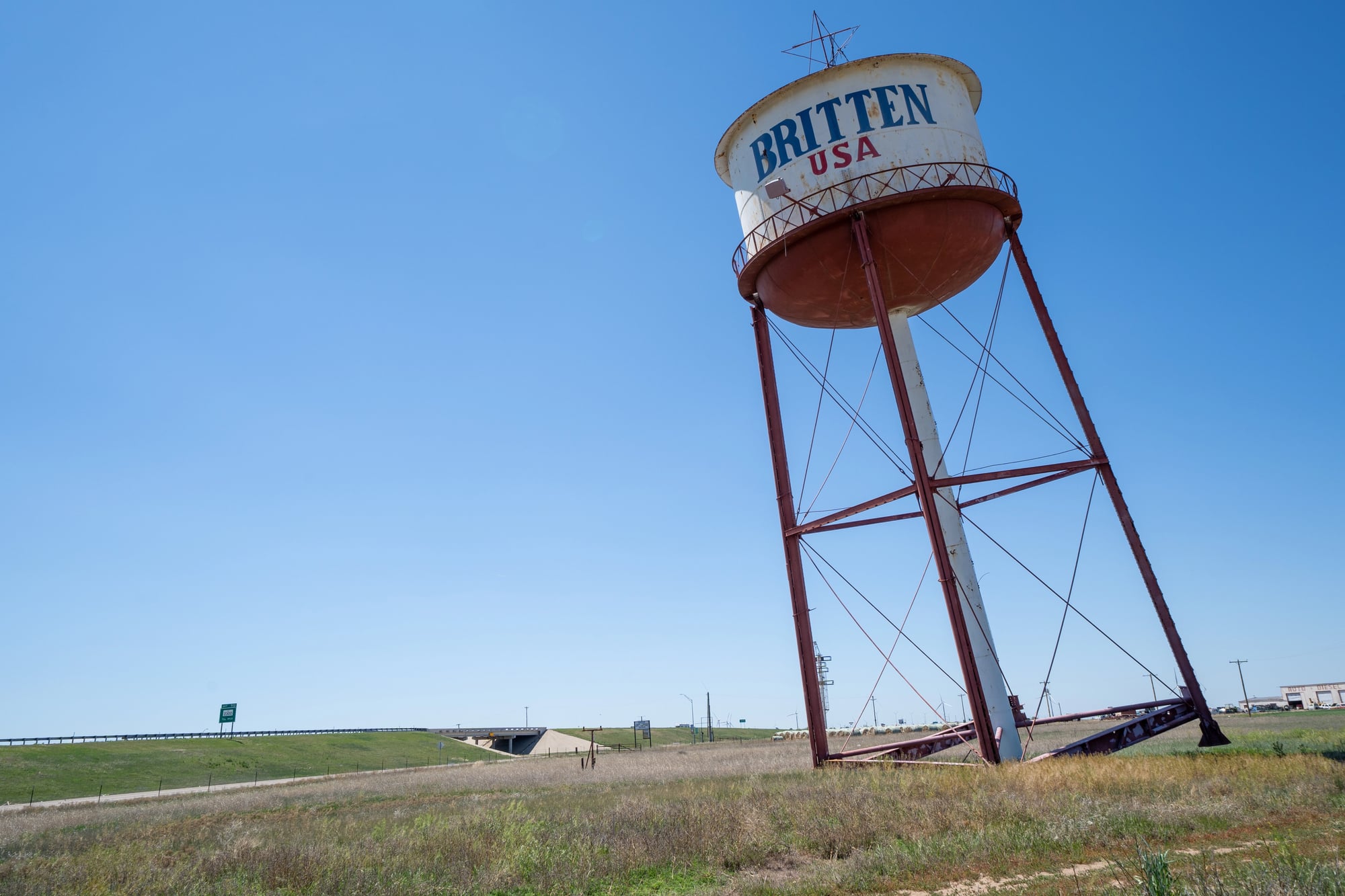
Texas built a water tower that appears to be falling over, complete with fake spilled water pooled around its base.
The illusion convinces passing motorists that they’re witnessing a disaster in progress. Many stop to help or call emergency services, only to discover they’ve been pranked by municipal infrastructure. The tower actually tilts at a carefully calculated angle that suggests imminent collapse without creating genuine structural instability. Local businesses benefit from the confusion as concerned travelers need food, fuel, and explanations. The town embraces its reputation for fooling people, which says something about small-town economic development strategies.
World’s Largest Ketchup Bottle
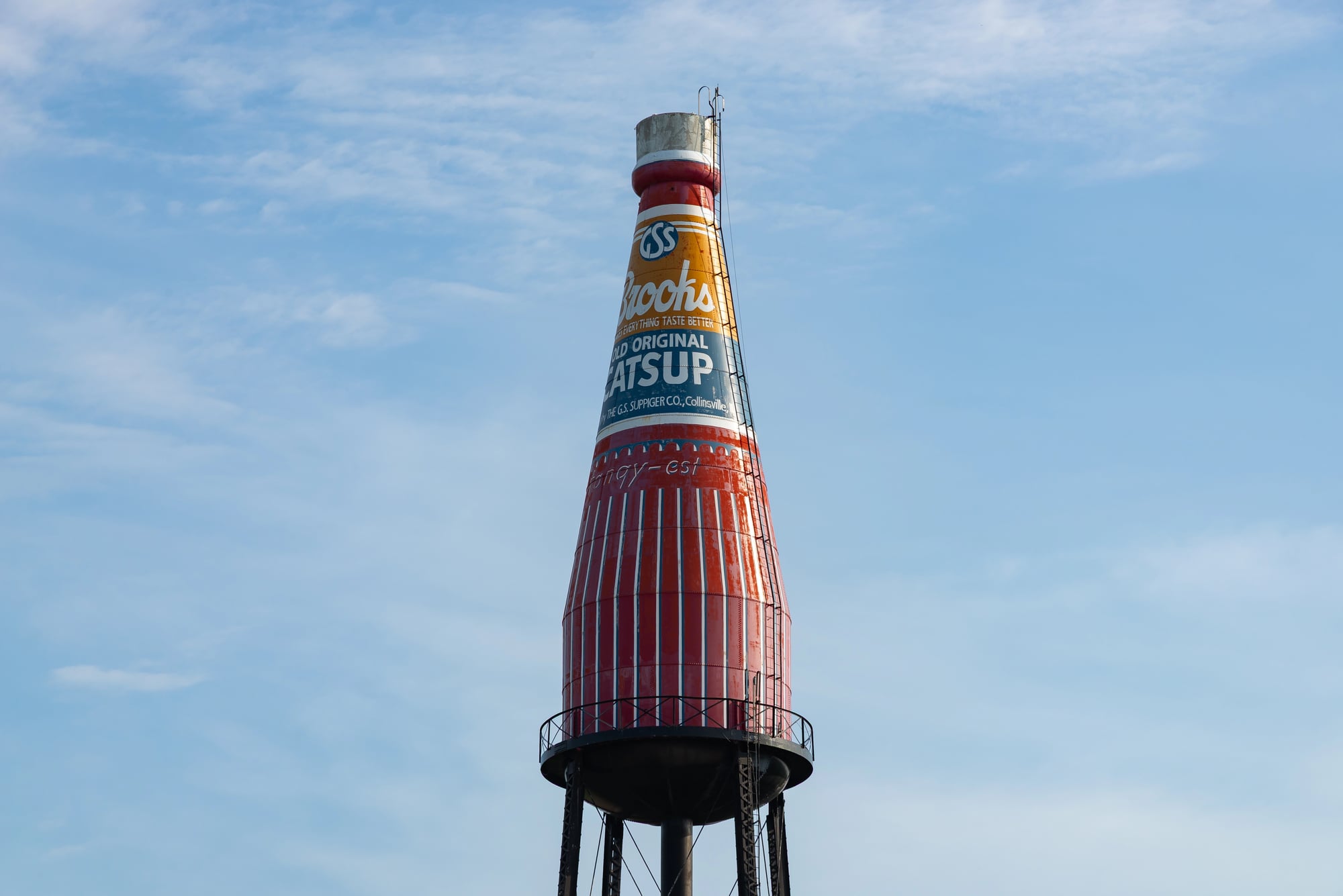
Illinois converted an old water tower into a monument to condiment consumption.
The Brooks Catsup Bottle Water Tower stands 170 feet tall and accurately replicates a vintage ketchup bottle design, complete with logo and nutritional information. The attention to detail is impressive — someone clearly spent considerable time ensuring the proportions matched those of an actual bottle scaled up several thousand times. But the end result remains a water tower painted to resemble a condiment container, which raises questions about what constitutes legitimate roadside architecture versus elaborate municipal advertising.
Corn Palace
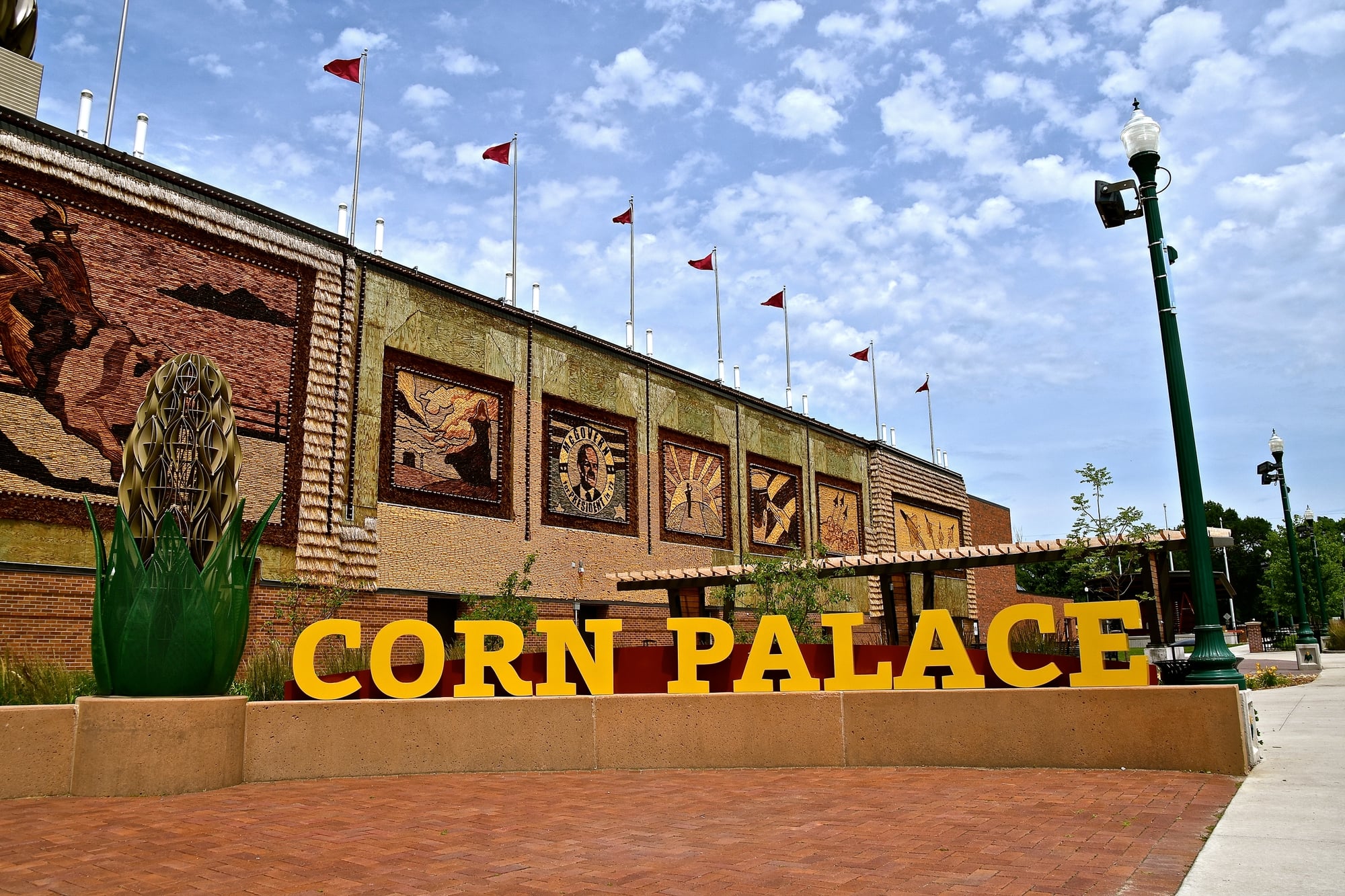
South Dakota’s Corn Palace rebuilds itself annually using thousands of bushels of corn arranged in decorative patterns across its exterior walls.
The building functions as a civic arena hosting basketball games and concerts, but tourists come for the corn murals that cover every outside surface. Local artists design elaborate scenes depicting regional history, wildlife, and cultural themes, then execute these visions using different varieties and colors of corn kernels. The artistry is genuine and the effort considerable, yet the entire enterprise feels like agricultural performance art designed to attract bus tours during harvest season.
Lucy the Elephant
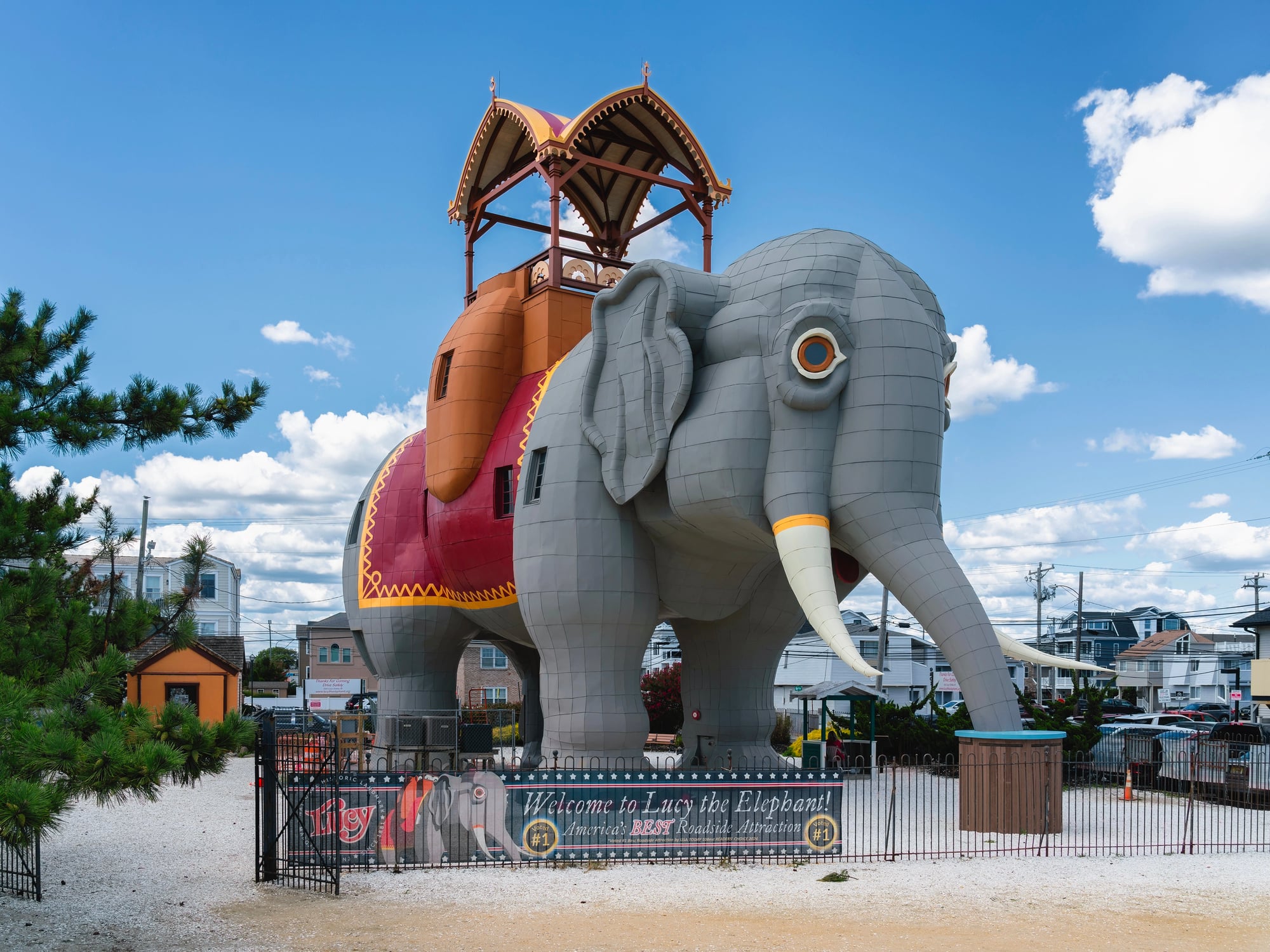
New Jersey’s Lucy stands six stories tall and has served various functions since 1881, when real estate developer James Lafferty built her to attract buyers to his beachfront property.
The elephant-shaped building worked exactly as intended — people came to see the novelty and some stayed to purchase lots. Lucy survived hurricanes, neglect, and several relocations before being restored as a historical landmark. Her interior contains spiral staircases, small rooms, and windows positioned behind the elephant’s eyes, offering views of the surrounding area. The structure proves that effective marketing gimmicks can outlast their original purpose and achieve legitimate historical significance through sheer persistence.
Thing
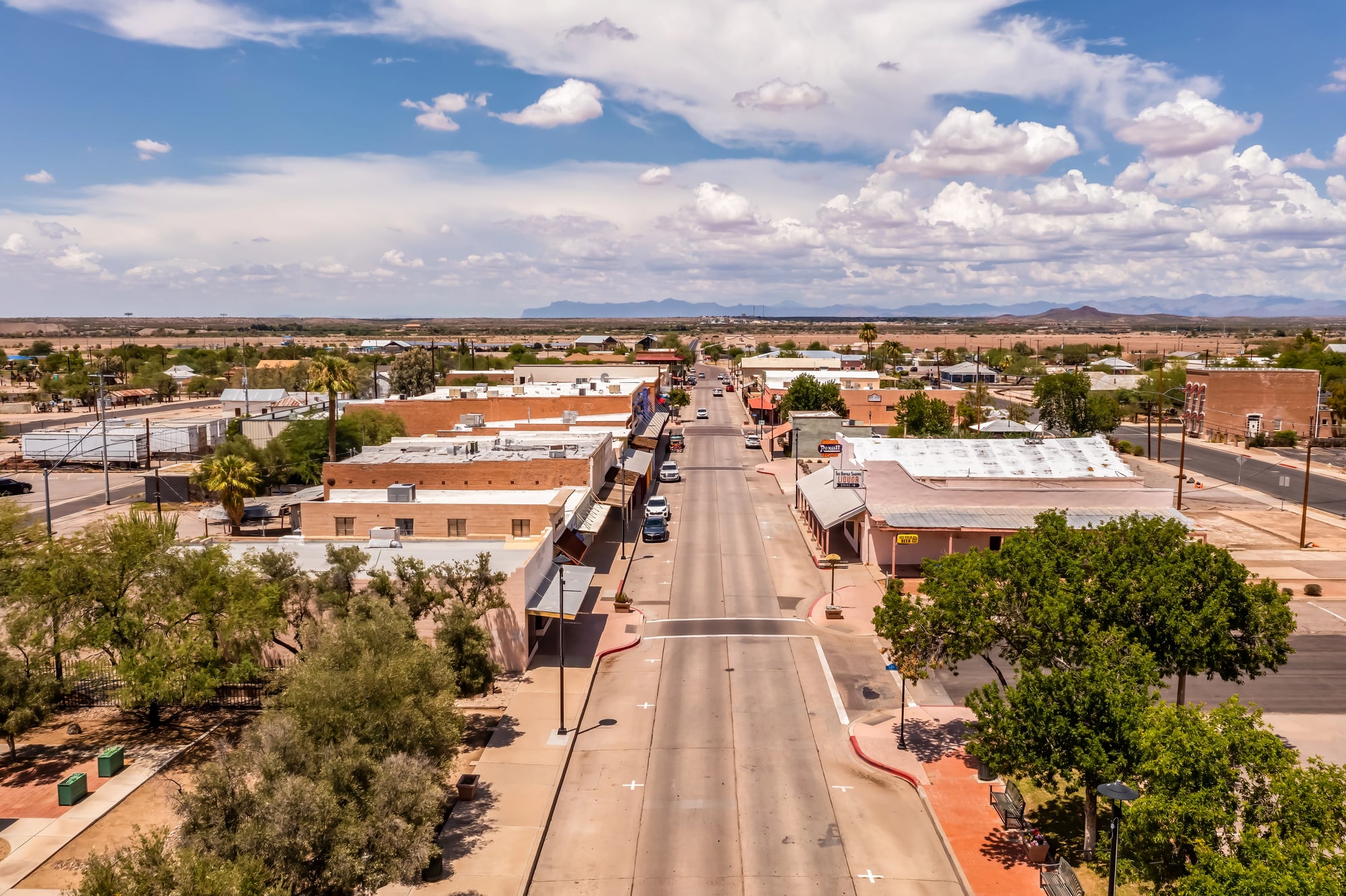
Arizona’s Thing refuses to reveal what it actually is until visitors pay admission to find out.
Roadside billboards build anticipation for hundreds of miles with cryptic messages: “What is the Thing?” and “Mystery of the Desert.” The marketing campaign creates expectation without providing information, a strategy that works remarkably well on travelers curious enough to pay for answers. The Thing itself disappoints most visitors, but by then they’ve already bought tickets and driven significant distances based on advertising alone. The gift shop sells “I Saw the Thing” merchandise to people who technically did see it, even if they remain unclear about what they witnessed.
When Spectacle Becomes Purpose
These attractions succeed because they understand something fundamental about human nature: curiosity beats authenticity when the price is reasonable and the drive isn’t too far. They don’t pretend to offer profound experiences or life-changing insights. They promise mild amusement and deliver exactly that, which makes them more honest than many legitimate tourist destinations that oversell their significance.
The real mystery isn’t why these places exist, but why they work so consistently. Perhaps the answer lies not in what they offer, but in what they don’t — expectations that can’t be met, histories that can’t be verified, or experiences that can’t be replicated elsewhere. Sometimes the most manufactured attraction is also the most genuine about its own artificial nature.
More from Go2Tutors!

- The Romanov Crown Jewels and Their Tragic Fate
- 13 Historical Mysteries That Science Still Can’t Solve
- Famous Hoaxes That Fooled the World for Years
- 15 Child Stars with Tragic Adult Lives
- 16 Famous Jewelry Pieces in History
Like Go2Tutors’s content? Follow us on MSN.



