Famous Dive Bars With Incredible Backstories
Dive bars have a way of capturing history that fancy establishments never could.
They’re the kind of places where sawdust covers the floor.
The regulars know your name by the second visit.
The walls tell stories that no museum could ever match.
These aren’t just places to grab a cheap beer.
They’re living pieces of American culture.
Each one has a past that’s stranger, wilder, or more interesting than you’d ever expect.
Here’s a closer look at some of the country’s most storied watering establishments and the incredible histories hiding behind their worn-down doors.
McSorley’s Old Ale House
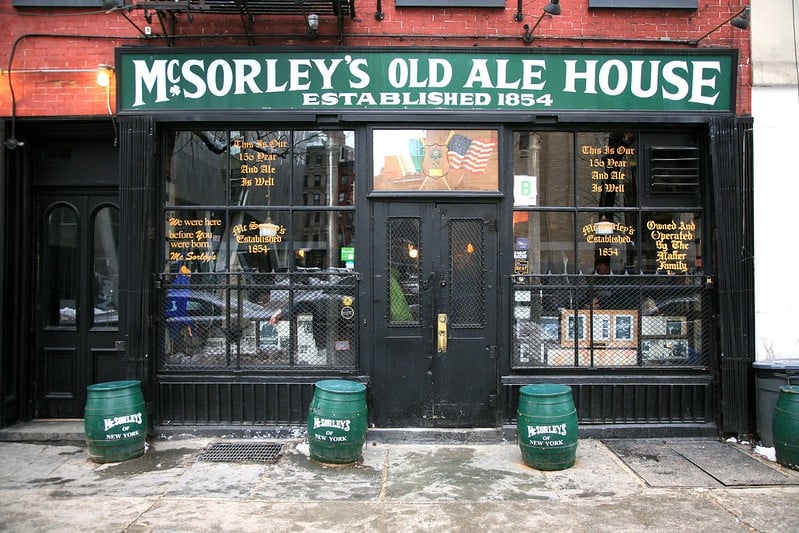
This New York City institution opened in 1854 and claims the title of oldest Irish pub in America.
The bar was originally called ‘The Old House at Home’ and was founded by Irish immigrant John McSorley.
No piece of memorabilia has been removed from the walls since 1910.
It has a museum-like atmosphere with items including a pair of Houdini’s handcuffs connected to the bar rail.
Wishbones hang above the bar.
They were supposedly placed there by boys going off to World War I to be removed when they returned.
The place survived Prohibition by selling what they called ‘near beer’ with just enough alcohol to stay legal.
It only started admitting women in 1970 after losing a discrimination lawsuit.
The Green Mill
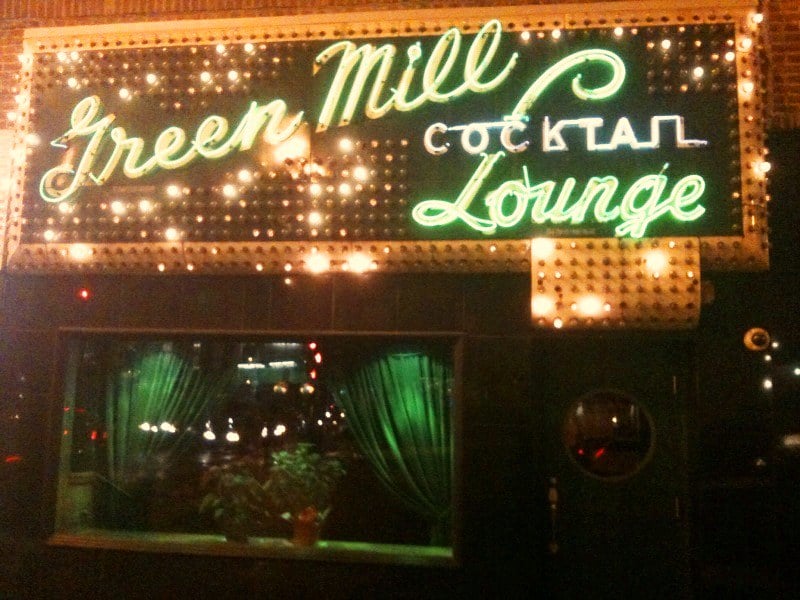
Chicago’s Green Mill traces its roots to the late 1890s, with city records indicating the saloon opened in 1898.
Around the 1920s, ‘Machine Gun’ Jack McGurn of Al Capone’s Chicago Outfit became part-owner of the club.
Capone had his own booth positioned so he could watch both entrance doors.
The bar featured underground tunnels that were originally built to transport coal but were reportedly used by the mob to smuggle liquor and provide escape routes when police showed up.
Singer Joe E. Lewis was attacked by McGurn’s men after he refused to leave the Green Mill for another venue.
The place has hosted everyone from Billie Holiday to Louis Armstrong.
It’s still packing in crowds for live jazz seven nights a week.
White Horse Tavern

The White Horse Tavern opened in 1880 in Manhattan and was initially a longshoreman’s bar before becoming a literary center in the early 1950s.
Welsh poet Dylan Thomas holds the unfortunate distinction of drinking his last whiskey here in November 1953.
He downed eighteen shots before stumbling outside and collapsing.
He was taken to the Chelsea Hotel and fell into a coma.
He was then transferred to St. Vincent’s Hospital where he died.
Jack Kerouac was bounced from the establishment more than once.
Someone scrawled ‘KEROUAC GO HOME!’ on the bathroom wall.
The place became a haven for writers including James Baldwin, Norman Mailer, and Bob Dylan.
All were drawn to its gritty authenticity.
Earnestine & Hazel’s
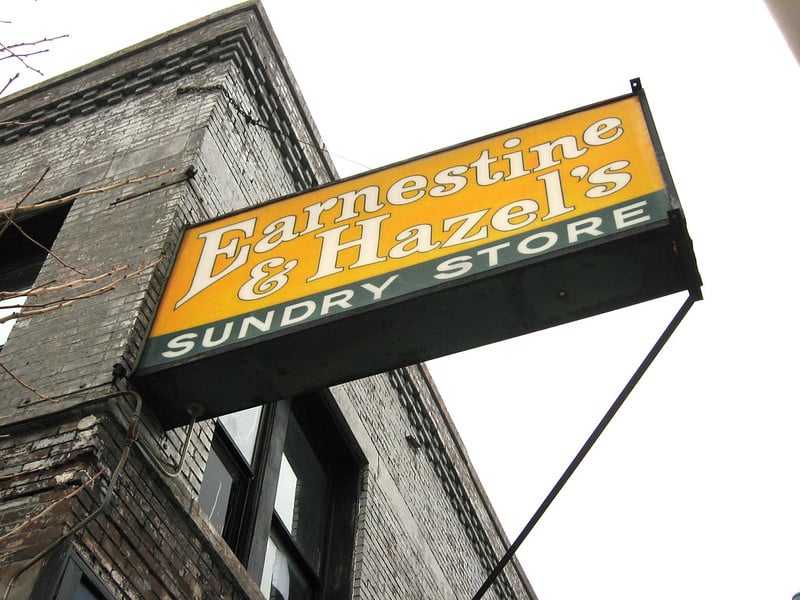
This Memphis dive started as a pharmacy owned by Abe Plough, who created a hair-straightening product that made him wealthy enough to give the building to two hair stylists, Earnestine Mitchell and Hazel Jones.
The cousins turned the building into a cafe, while Earnestine’s husband opened Club Paradise nearby.
Club Paradise hosted legends like B.B. King, Tina Turner, Aretha Franklin, Ray Charles, and Chuck Berry.
Musicians would walk from Club Paradise to Earnestine & Hazel’s each night for food and to find company from women working upstairs in what was essentially a brothel.
The building is the site of 13 known deaths and is considered one of the most haunted dives in the country.
Today it’s famous for the Soul Burger, invented by Russell George when he reopened the place in 1992.
Tootsie’s Orchid Lounge
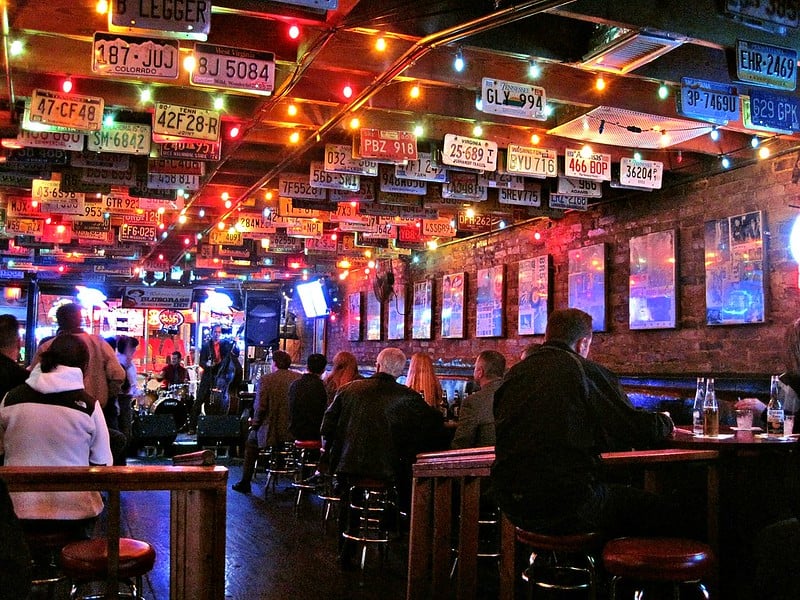
Located behind Nashville’s Ryman Auditorium, Tootsie’s opened in 1960 when Hattie Louise ‘Tootsie’ Bess bought a bar called ‘Mom’s’.
The building got its signature purple color and new name when a painter mistakenly used orchid paint on the exterior.
Grand Ole Opry performers would duck out the Ryman’s backstage door between shows and slip across the alley to have beers in Tootsie’s industry-only back room.
Willie Nelson, Patsy Cline, Kris Kristofferson, and Waylon Jennings were early regulars.
Nelson received his first songwriting gig after singing at Tootsie’s.
Tootsie was known to keep a box full of IOUs from struggling musicians she’d fed and helped.
Opry performers settled the tab at year’s end so she wouldn’t lose money.
Chumley’s
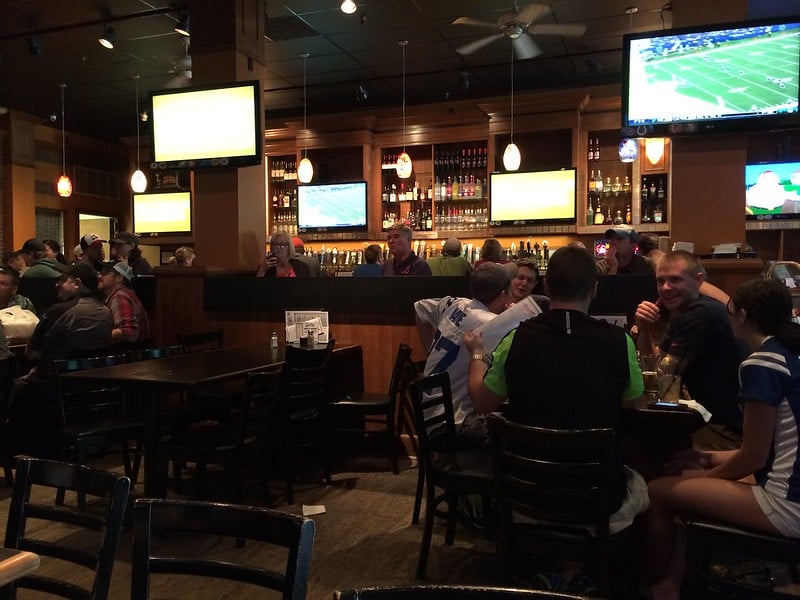
This Greenwich Village speakeasy operated throughout Prohibition without a sign on the door, relying entirely on word of mouth.
The bar had two exits so patrons could escape during police raids.
The phrase ’86 it’ supposedly originated here when the bartender would yell to dump the illegal liquor out the 86 Bedford Street entrance when cops approached.
Writers like F. Scott Fitzgerald, John Steinbeck, and Edna St. Vincent Millay were regulars.
Their book covers still line the walls.
The place closed in 2007 after a chimney collapse but eventually reopened.
It maintained its no-sign policy and speakeasy atmosphere that made it legendary in the first place.
The Frolic Room
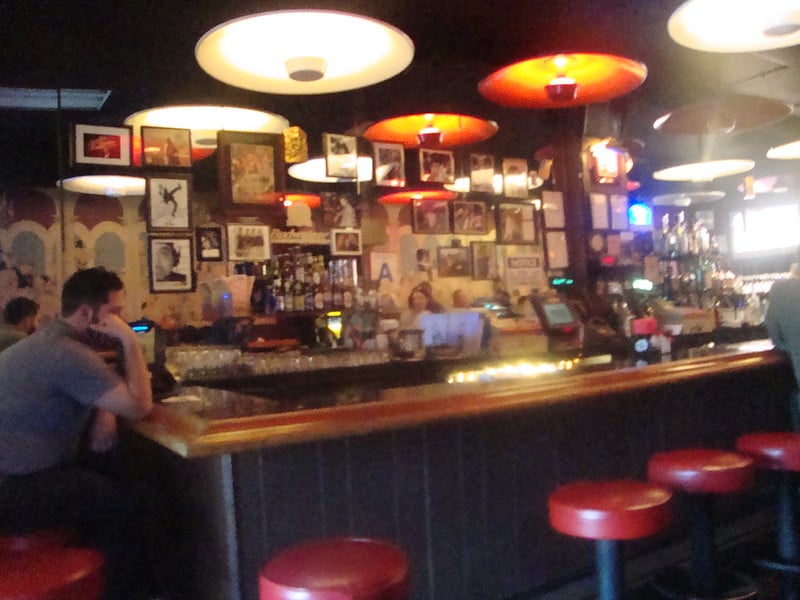
Located next to the Pantages Theatre on Hollywood Boulevard, this tiny bar opened in 1930 as an entertainment room for theatergoers.
The walls feature a famous mural by Al Hirschfeld depicting caricatures of Hollywood stars from the golden era.
The bar was a favorite hangout for everyone from Frank Sinatra to Kiefer Sutherland.
It has appeared in countless films including ‘L.A. Confidential.’
The owner eventually had to put glass over the Hirschfeld mural because drunk patrons kept defacing the celebrity faces with crude messages.
It remains one of the last authentic old Hollywood dives in a neighborhood transformed by gentrification and million-dollar condos.
Vesuvio Cafe
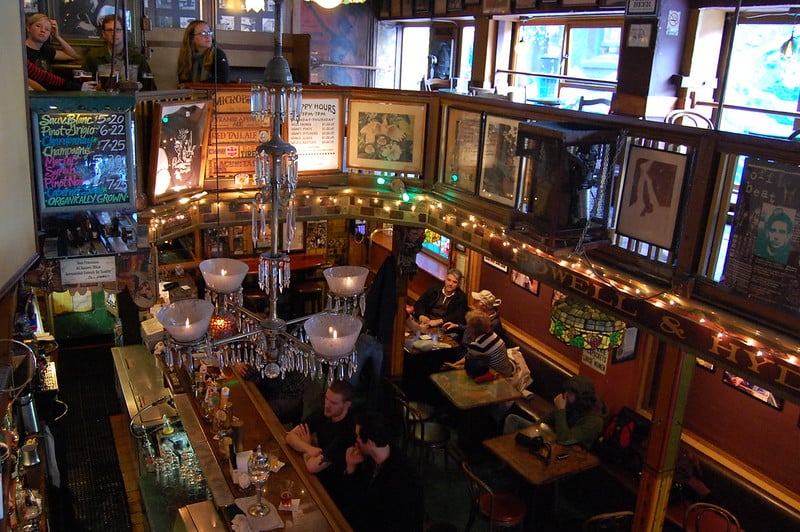
This San Francisco bar opened in the 1940s and became a central gathering spot for Beat Generation writers and artists.
Jack Kerouac, Neal Cassady, and Allen Ginsberg were all regulars.
The place is right next door to the famous City Lights Bookstore.
The bar features bohemian decor with old paintings and artifacts covering every surface.
The windows are adorned with vintage stained glass.
It stayed open during the 1960s counterculture movement and became a haven for hippies and artists.
The place has managed to survive San Francisco’s rapid gentrification.
It stands as one of the few remaining links to the city’s bohemian past.
Nancy Whiskey
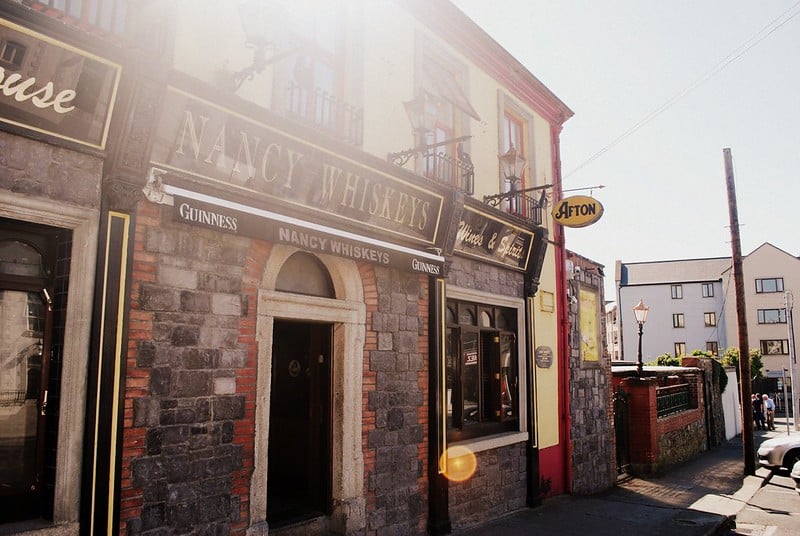
Detroit’s Nancy Whiskey sits in the historic Corktown neighborhood and holds a liquor license old enough that it claims to be the first American bar to serve Tullamore Dew Irish whiskey.
First-time visitors are treated to a free shot of the stuff as an initiation.
The bar opened in the 1900s and has maintained its authentic Irish pub atmosphere through Detroit’s many ups and downs.
The interior features dark wood paneling and memorabilia covering every inch of wall space.
It’s one of the few bars that can legitimately claim to have survived Prohibition, multiple economic depressions, and the near-collapse of Detroit itself.
Snake and Jake’s Christmas Club Lounge
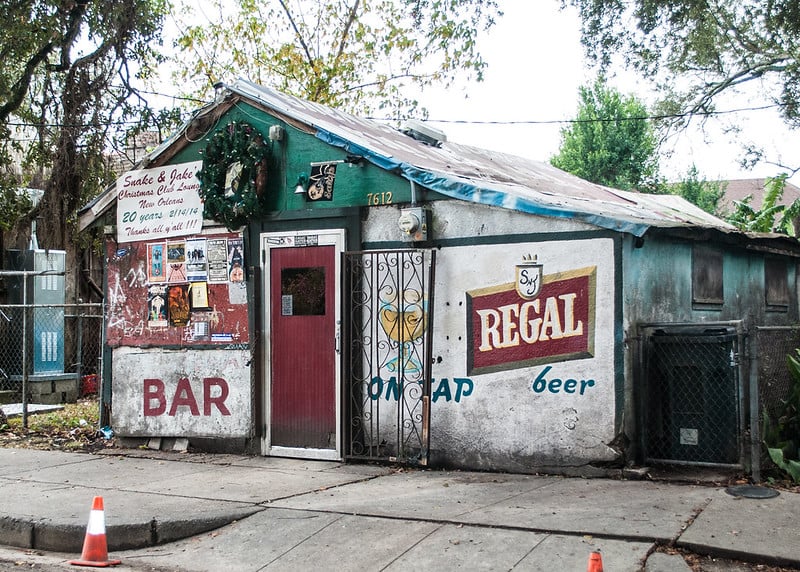
This New Orleans dive operates in near-total darkness with only Christmas lights providing illumination.
The bar doesn’t have regular hours and opens whenever the owner feels like it, usually late at night.
There’s no sign outside, and first-timers often walk past it several times before finding the entrance.
The place has a reputation for being where bartenders and service industry workers go after their own shifts end.
It’s so dark inside that patrons have been known to trip over people passed out on the floor.
The bar survived Hurricane Katrina and remains one of the most authentic and unpretentious spots in a city that’s become increasingly touristy.
The Pink Flamingo
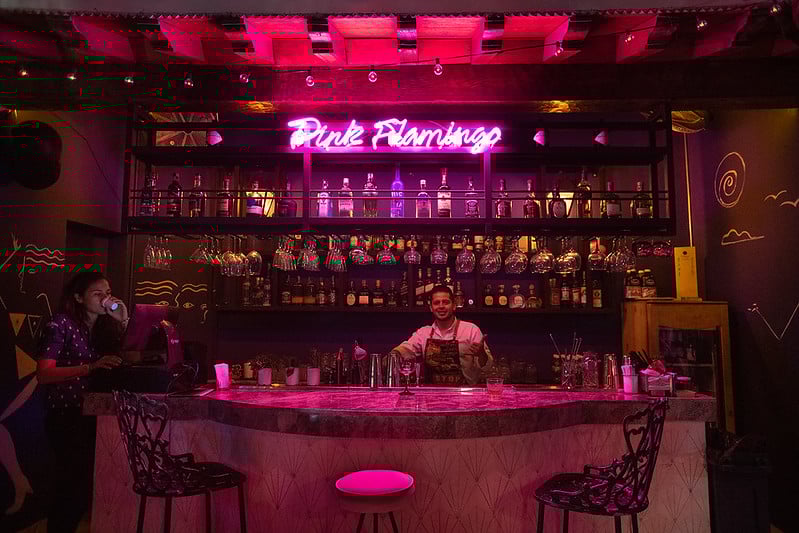
Buffalo’s Pink Flamingo lives in a bright pink house with green painted flames shooting from the ground.
It looks like a cartoon villain’s lair.
The interior features graffiti-covered walls, a perpetually sticky floor, and hundreds of stickers plastered everywhere with messages like ‘Fight Prime Time… Read A Book.’
The bar is famous for serving massive steak sandwiches at 2 a.m. to drunk patrons who stumble in after the other bars close.
Despite its chaotic appearance, the place was recognized by the National Trust for Historic Preservation as one of the nation’s most historic watering establishments.
The Christmas lights stay up year-round, and nobody questions it.
Nisei Lounge
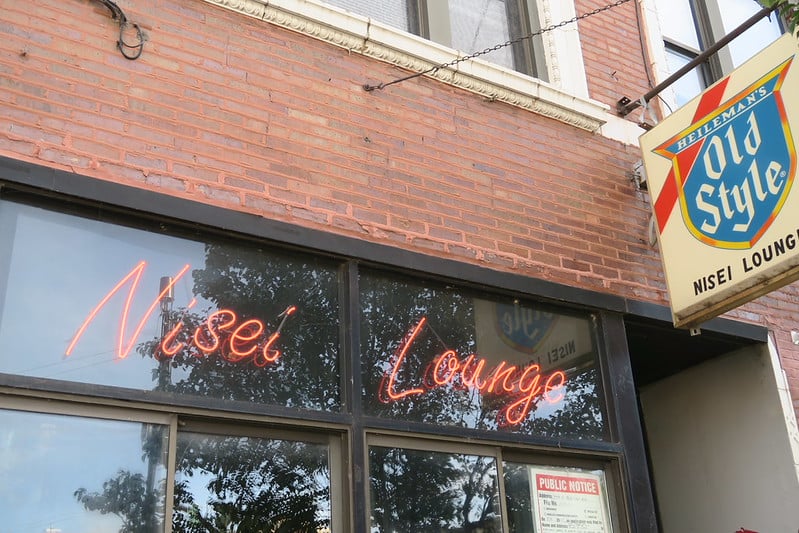
This Chicago bar opened in 1951 and was named for second-generation Japanese immigrants who relocated to the Wrigleyville neighborhood after President Roosevelt closed the Japanese internment camps following World War II.
The bar became a gathering place for the Japanese American community during the 1950s and 60s.
Most of the original Nisei who made it their regular spot eventually moved to the suburbs.
The bar transitioned into a neighborhood joint for locals and Cubs fans.
It’s one of the few remaining authentic dives in Wrigleyville.
The area has been increasingly bought up and corporatized by the billionaire Ricketts family who own the Cubs.
Montero Bar & Grill
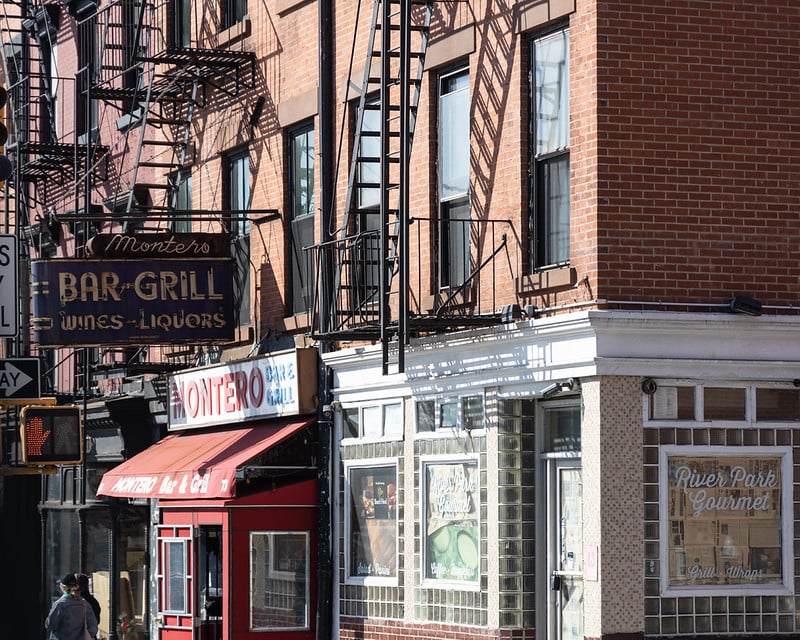
This Brooklyn Heights establishment opened in 1939 as a longshoreman’s bar and has kept every nautical decoration from its original purpose.
Ship wheels, anchors, and maritime memorabilia cover every surface, creating an authentic dockworker atmosphere.
The bar has resisted at least half a dozen buyout attempts over the decades.
It is one of the oldest continuously operating dive bars in New York City.
It sits in a neighborhood that’s become increasingly expensive and gentrified.
Montero’s has somehow held on to its working-class roots.
The place attracts a dedicated crowd of regulars who are fiercely protective of its authentic character.
Rosa’s Cantina
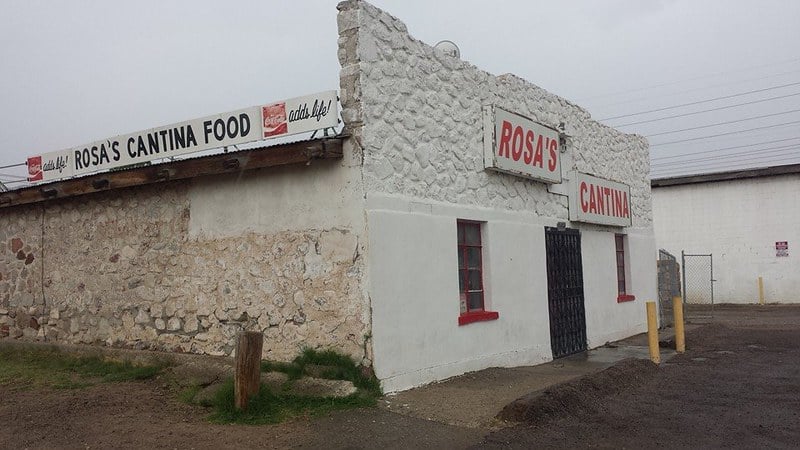
Located in El Paso, Texas, Rosa’s Cantina inspired Marty Robbins’ famous ballad ‘El Paso’ when the country singer stopped to stretch his legs during a drive between Nashville and Phoenix.
Robbins walked around the closed bar and looked through the windows.
He surveyed the surrounding badlands across the street.
By the time he reached Phoenix, the complete ballad was finished.
The bar has since embraced its connection to the song and country music history.
It serves cheap drinks and lots of tequila to locals and tourists alike.
It’s become a pilgrimage site for country music fans who want to see the place that inspired one of the genre’s most enduring story-songs.
Pearl Street Pub
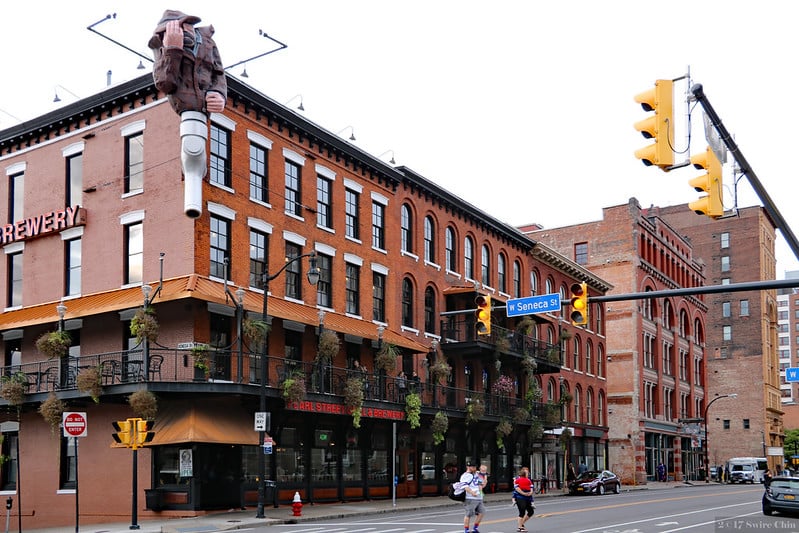
Boulder’s Pearl Street Pub sits in a building with wobbly brick floors and walls, the result of a massive flood that hit downtown decades ago.
The flood left a trail of dirt and silt that caused the second floors of many buildings to effectively become the first floors.
Rumors persist about underground tunnels running beneath the bar, connecting to other buildings along Pearl Street.
The dive has managed to survive in Boulder despite the city’s increasing gentrification and the influx of wealthy tech workers.
It remains a spot where university students, old-timers, and locals can all gather without pretension.
Where the stories live on
These dive bars represent something that’s increasingly rare in modern America.
They’re places where history isn’t polished or packaged for consumption but instead lives in the scuff marks on the floor and the photos yellowing on the walls.
Each one survived economic depressions, changing neighborhoods, Prohibition, and the constant pressure to sell out or clean up.
They stayed true to what they were, even when that meant being a little rough around the edges.
Walking into any of these establishments feels like stepping into a time machine.
That time machine is still very much alive and serving drinks to anyone who appreciates a good story along with their beer.
More from Go2Tutors!

- The Romanov Crown Jewels and Their Tragic Fate
- 13 Historical Mysteries That Science Still Can’t Solve
- Famous Hoaxes That Fooled the World for Years
- 15 Child Stars with Tragic Adult Lives
- 16 Famous Jewelry Pieces in History
Like Go2Tutors’s content? Follow us on MSN.



