20 Bizarre Court Cases That Set Surprising Legal Precedents
The legal system occasionally produces cases that are so unusual that they seem more like fiction than reality. Behind their strange circumstances, however, many of these cases have established important precedents that continue to influence law today.
Here is a list of 20 bizarre court cases that went beyond their odd circumstances to shape legal thinking and practice in surprisingly important ways.
Frigaliment Importing v. B.N.S. International (1960)

This case revolved around the surprisingly complex question: what exactly is chicken? A Swiss company ordered ‘chicken’ from a US supplier but received older birds they considered ‘stewing chickens’ rather than young ‘broilers.’
The court ruled that both qualified as ‘chicken,’ establishing an important principle about contract interpretation and showing how everyday language can become legally significant. The case is now taught in virtually every contract law class in America.
United States v. Approximately 64,695 Pounds of Shark Fins (2008)

When authorities seized a massive shipment of shark fins from a vessel in US waters, it triggered a complicated legal battle over maritime jurisdiction. The fins were harvested through the controversial practice of ‘shark finning’ but occurred beyond US territorial waters.
The court ruling clarified the reach of US environmental laws over activities in international waters, creating an important precedent for marine conservation enforcement globally.
Donaldson v. O’Connor (1975)

This case began with a Florida man’s involuntary commitment to a mental institution for nearly 15 years without receiving meaningful treatment. The Supreme Court’s decision established that states cannot constitutionally confine mentally ill individuals who are not dangerous if they aren’t providing treatment.
This landmark case fundamentally transformed mental health law and patients’ rights across America, despite its relatively obscure origins.
The Case of the Speluncean Explorers (1949)

This famous hypothetical case presented in Harvard Law Review involved cave explorers trapped by a landslide who resorted to cannibalism to survive. Though fictional, this thought experiment has influenced legal reasoning about necessity defenses and has been cited in real cases.
The brilliantly constructed scenario continues to challenge law students by demonstrating how different legal philosophies would approach identical facts.
Nix v. Hedden (1893)

The Supreme Court tackled a surprisingly contentious question in 1893: is a tomato a fruit or a vegetable? While botanically a fruit, the Court unanimously ruled tomatoes should be classified as vegetables for import tax purposes.
The justices reasoned that in everyday usage, tomatoes were served with dinner, not dessert. This case demonstrates how legal classifications can diverge from scientific ones based on common understanding and practical concerns.
Marvin v. Marvin (1976)

When actor Lee Marvin’s long-term unmarried partner Michelle sought financial support after their relationship ended, it created a landmark case for non-married couples. The California Supreme Court ruled that express or implied contracts between unmarried partners could be legally enforceable, establishing the concept of ‘palimony.’
This case fundamentally changed family law by recognizing that legal obligations could arise from non-marital relationships.
Liebeck v. McDonald’s Restaurants (1994)

Often mischaracterized as frivolous, this famous ‘hot coffee’ case involved a 79-year-old woman who suffered third-degree burns requiring skin grafts after spilling coffee purchased at McDonald’s. Evidence revealed the company kept its coffee at dangerously high temperatures despite hundreds of previous burn incidents.
The case established important precedents about corporate liability for known product dangers and highlighted the responsibilities businesses have toward consumer safety.
United States v. Forty Barrels and Twenty Kegs of Coca-Cola (1911)

The government sued Coca-Cola for adding caffeine to its drinks, claiming it violated the Pure Food and Drugs Act as an ‘added poisonous ingredient.’ The case ultimately established that the government bore the burden of proving an ingredient was harmful rather than companies having to prove ingredients were safe.
This burden-of-proof precedent significantly shaped American food and drug law for decades afterward.
Miller v. California (1973)

This obscenity case began with unsolicited sexually explicit material being mailed to a restaurant owner. The resulting Supreme Court decision established the Miller Test for determining what constitutes legally prohibited obscenity.
This three-part standard remains the primary legal test for obscenity in America today, demonstrating how even cases involving unusual circumstances can create enduring legal frameworks.
Palsgraf v. Long Island Railroad (1928)

A bizarre chain of events—railroad employees helping a passenger aboard dropped a package of fireworks, causing an explosion that knocked over a scale and injured a woman standing far away—led to a fundamental reshaping of negligence law.
The court’s ruling established the principle that liability extends only to injuries that could reasonably be foreseen, creating a cornerstone concept in tort law that continues to influence liability cases today.
Burton v. Islington Health Authority (1993)

This unusual British case addressed whether a child could sue for damages that occurred before they were born. A doctor had negligently given a pregnant woman inappropriate medication, resulting in the child being born with serious disabilities.
The court ruled that once born, a child could bring claims for injuries sustained in the womb, establishing an important precedent for prenatal injury cases throughout common law jurisdictions.
R v. Dudley and Stephens (1884)

After their yacht sank, four men were stranded in a lifeboat for weeks. Three of the survivors eventually killed and ate the cabin boy, claiming necessity as their defense when rescued.
The court rejected the necessity defense for murder, establishing the fundamental principle that necessity cannot justify taking an innocent life. This case remains a cornerstone of criminal law regarding the limits of the necessity defense.
Pierson v. Post (1805)

This early American case concerned a hunter who had been pursuing a fox when another man captured and killed it. The court had to determine who owned the fox—the pursuer or the captor.
The ruling established that mere pursuit doesn’t create property rights; actual possession or control does. This seemingly trivial fox-hunting dispute established fundamental principles of property acquisition that still influence property law today.
United States v. One Package of Japanese Pessaries (1936)

This oddly-named case challenged the Comstock Act, which prohibited mailing contraceptives. The court ruled that the law couldn’t prevent doctors from receiving contraceptive devices for legitimate medical purposes.
This decision began dismantling federal anti-contraception laws and laid the groundwork for later reproductive rights cases. The precedent helped establish that medical professionals should have access to necessary medical devices despite moral objections.
Carlill v. Carbolic Smoke Ball Company (1893)

When a company advertised that its ‘smoke ball’ would prevent influenza and offered £100 to anyone who used it properly but still got sick, they probably didn’t expect Mrs. Carlill to take them up on it.
After using the product as directed and contracting influenza, she sued for the promised reward. The landmark ruling established that advertisements can constitute legally binding unilateral contracts, fundamentally shaping modern consumer and contract law.
PGA Tour, Inc. v. Martin (2001)

Professional golfer Casey Martin, who had a degenerative leg condition, sued for the right to use a golf cart in tournaments when the PGA denied his request. The Supreme Court ruled that allowing Martin to use a cart would not ‘fundamentally alter’ the game, setting an important precedent for reasonable accommodations under the Americans with Disabilities Act.
This unusual sports case significantly expanded my understanding of disability accommodations in competitive environments.
Summers v. Tice (1948)

When two hunters simultaneously fired in the direction of their companion and one bullet struck him, it created a legal conundrum: both defendants claimed the other was responsible. Unable to determine which hunter caused the injury, the court shifted the burden of proof to the defendants, creating the ‘alternative liability’ doctrine.
This case established that when multiple negligent actors could have caused harm, they must prove they didn’t—rather than requiring the victim to prove who did.
Leonard v. Pepsico (1999)

When Pepsi jokingly offered a military Harrier jet for 7 million Pepsi points in a commercial, a man attempted to claim the prize by submitting points and cash. The court ruled that the commercial was obvious hyperbole that no reasonable person would take seriously as an offer.
This case established an important precedent about when advertisements constitute legitimate offers and the role of obvious exaggeration in commercial speech.
Katko v. Briney (1971)
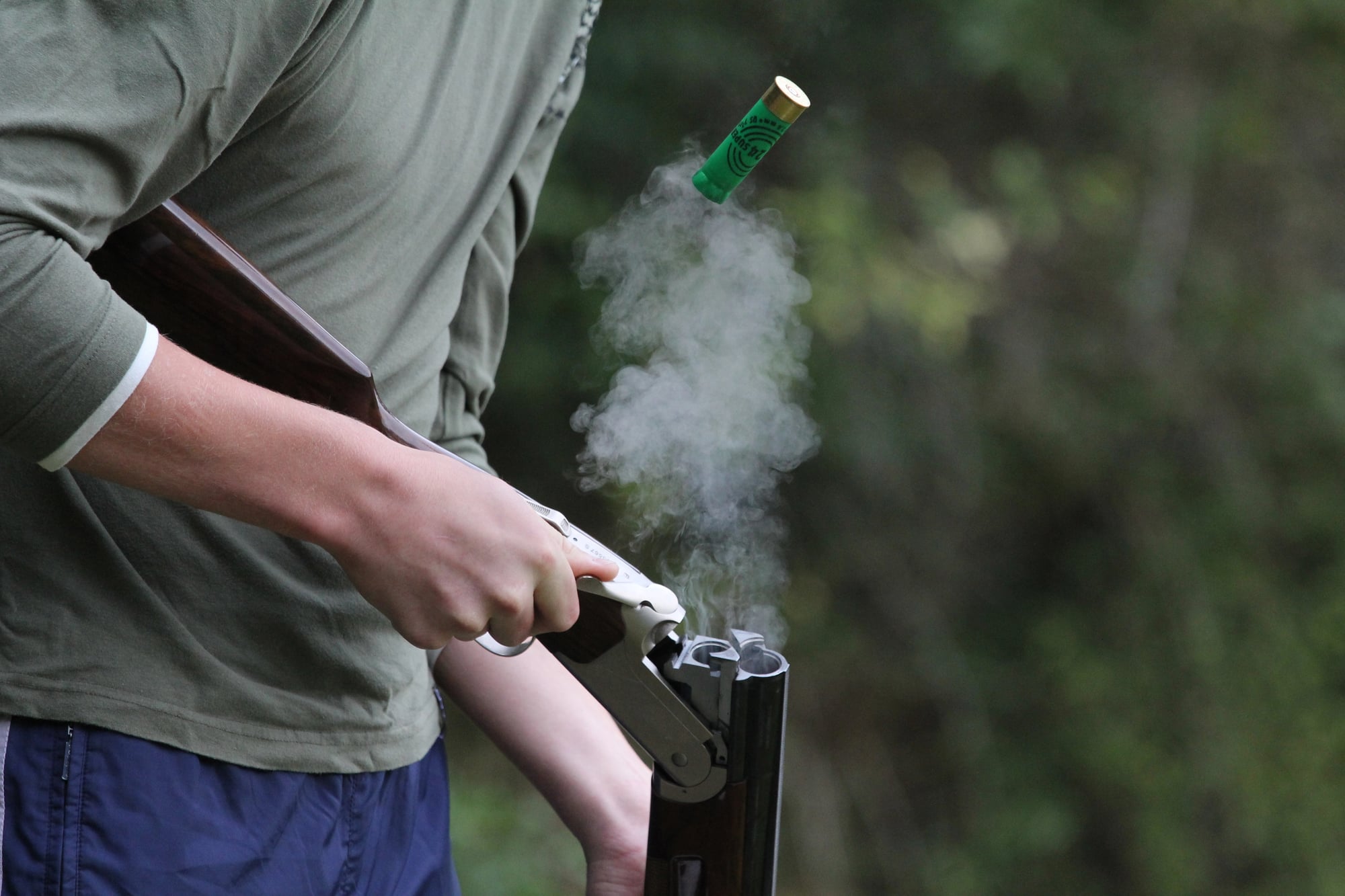
After experiencing multiple break-ins at their unoccupied farmhouse, the Brineys set up a shotgun trap that injured a trespasser. The court ruled that property owners cannot set deadly traps for intruders, establishing that human life holds greater value than property in the eyes of the law.
This case created important limitations on the actions property owners can take to protect unoccupied property and remains influential in property and tort law today.
Moore v. Regents of the University of California (1990)

When doctors at UCLA Medical Center discovered that patient John Moore’s cells had unique cancer-fighting properties, they developed and patented a profitable cell line without his knowledge or consent. Moore sued, claiming ownership of cells derived from his body, but the California Supreme Court ruled patients don’t retain property rights to cells after they’re removed.
This landmark case established crucial precedent regarding human tissue rights and continues to influence bioethics and medical research law today.
Law’s Strange But Significant Evolution

These bizarre cases demonstrate the legal system’s remarkable ability to extract principled guidance from unusual circumstances. What begins as a dispute over fox hunting or tomato classification can crystallize into an enduring legal doctrine that affects millions of lives.
The peculiar facts of these cases might make them memorable teaching tools, but their lasting significance comes from how they’ve shaped legal reasoning and precedent. As our society continues to face new and unexpected legal questions, these older strange cases remind us that today’s oddity might become tomorrow’s foundational precedent, guiding courts through yet-unimagined legal territory.
More from Go2Tutors!

- The Romanov Crown Jewels and Their Tragic Fate
- 13 Historical Mysteries That Science Still Can’t Solve
- Famous Hoaxes That Fooled the World for Years
- 15 Child Stars with Tragic Adult Lives
- 16 Famous Jewelry Pieces in History
Like Go2Tutors’s content? Follow us on MSN.



