Famous Festivals with Bizarre Traditions
Humanity has always found reasons to celebrate. But somewhere along the way, the celebration took some strange turns.
What started as simple harvest festivals or religious ceremonies evolved into events where people throw tomatoes at strangers, jump over infants, or feed thousands of monkeys. These traditions make perfect sense to the communities that practice them, even if outsiders scratch their heads in confusion.
La Tomatina: Spain’s Tomato War

Every August, the small Spanish town of Buñol transforms into a red battlefield. Participants hurl overripe tomatoes at each other for exactly one hour.
The streets run with tomato juice, and by the end, everyone looks like they’ve been dipped in marinara sauce. The festival started in 1945 when a fight broke out during a parade.
Someone grabbed tomatoes from a nearby vegetable stand, and chaos erupted. The town tried to ban it.
People kept doing it anyway. Eventually, authorities gave up and made it official.
You need a ticket now because too many people show up. The town provides the tomatoes—about 150,000 of them.
Fire trucks spray water to clean the streets afterward, and the acid from the tomatoes actually leaves the pavement spotless.
El Colacho: Jumping Over Babies
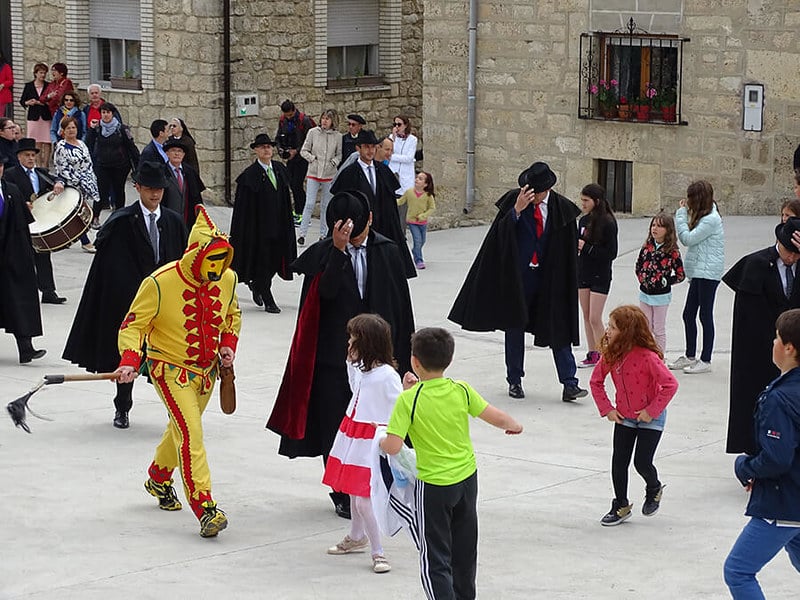
In the village of Castrillo de Murcia, men dressed as devils leap over rows of infants lying on mattresses in the street. This happens every June during the feast of Corpus Christi.
Parents volunteer their babies, believing the ritual cleanses original sin and protects against illness. The tradition dates back to 1620.
The devil character, called El Colacho, runs through the streets scaring spectators with a whip before making his jumps. He wears a bright yellow costume and a grotesque mask.
The Catholic Church doesn’t officially endorse this practice, but that hasn’t stopped families from participating for four centuries. Tourists flock to watch, though most admit they hold their breath during the actual jumping.
Lopburi Monkey Buffet Festival
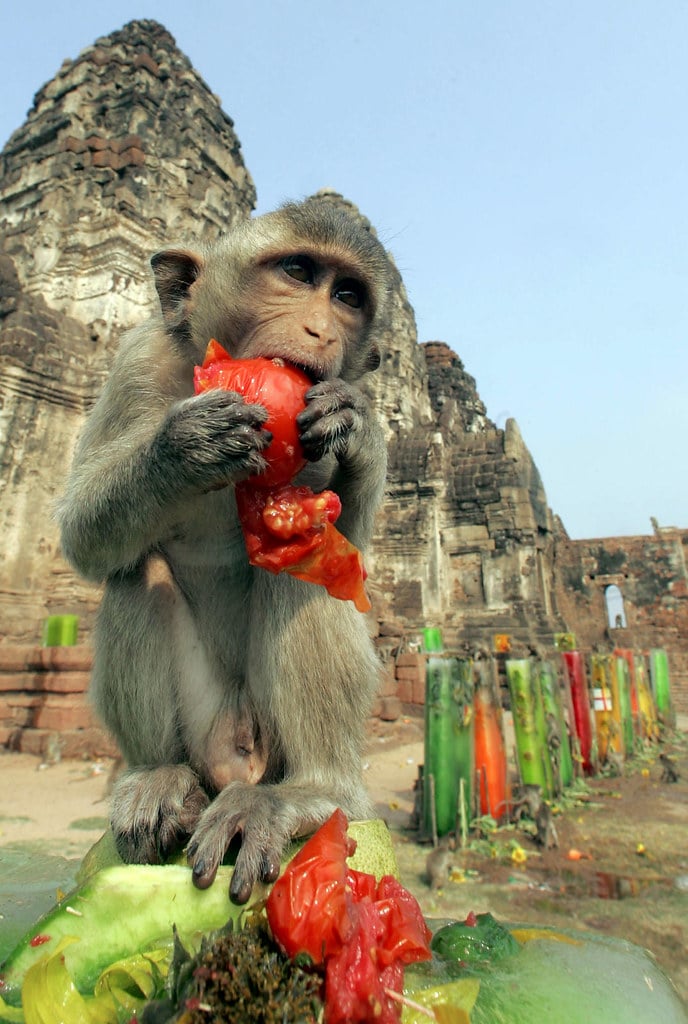
Thailand takes hospitality seriously, even when the guests are macaques. Each November in Lopburi, locals prepare an elaborate feast of fruits, vegetables, and sweets for the city’s monkey population.
The spread covers multiple tables and includes ice sculptures and decorative arrangements that put most human buffets to shame. Lopburi has lived alongside thousands of long-tailed macaques for generations.
The monkeys roam freely through the ancient ruins and modern streets. The festival started in 1989 as a way to promote tourism and thank the monkeys for attracting visitors.
The buffet costs thousands of dollars to prepare. Monkeys swarm the tables, grabbing food and occasionally fighting over the best items.
They eat what they want and throw the rest around. Cleanup takes hours.
Cooper’s Hill Cheese Rolling

A nine-pound wheel of Double Gloucester cheese rolls down a steep hill in Gloucestershire, England. Dozens of people chase it.
The hill has a gradient that makes falling almost guaranteed. Competitors tumble, flip, and slide their way down, trying to catch cheese that reaches speeds of 70 miles per hour.
The winner gets the cheese. Most participants get injured.
The event attracts so many people that officials tried to cancel it several times due to safety concerns. It happens anyway, organized unofficially by locals who refuse to let the tradition die.
No one knows exactly when this started, though some claim it goes back hundreds of years. Theories about its origins range from pagan rituals to boundary disputes.
What matters is that people keep showing up, ready to risk broken bones for dairy products.
Boryeong Mud Festival

South Korea’s Boryeong Mud Festival turns a beach into a giant mud pit every July. Millions of visitors cover themselves in mineral-rich mud from the Boryeong mudflats.
They wrestle in it, slide through it, and smear it on strangers. The festival began in 1998 as a marketing campaign for mud cosmetics.
The mud contains minerals that supposedly benefit skin. Whether that’s true or not, people enjoy the excuse to act like children again.
The event includes mud pools, mud slides, and mud obstacle courses. A mud prison holds participants who haven’t gotten dirty enough.
By evening, the beach looks like a disaster zone, and everyone walks away coated head to toe.
Night of the Radishes
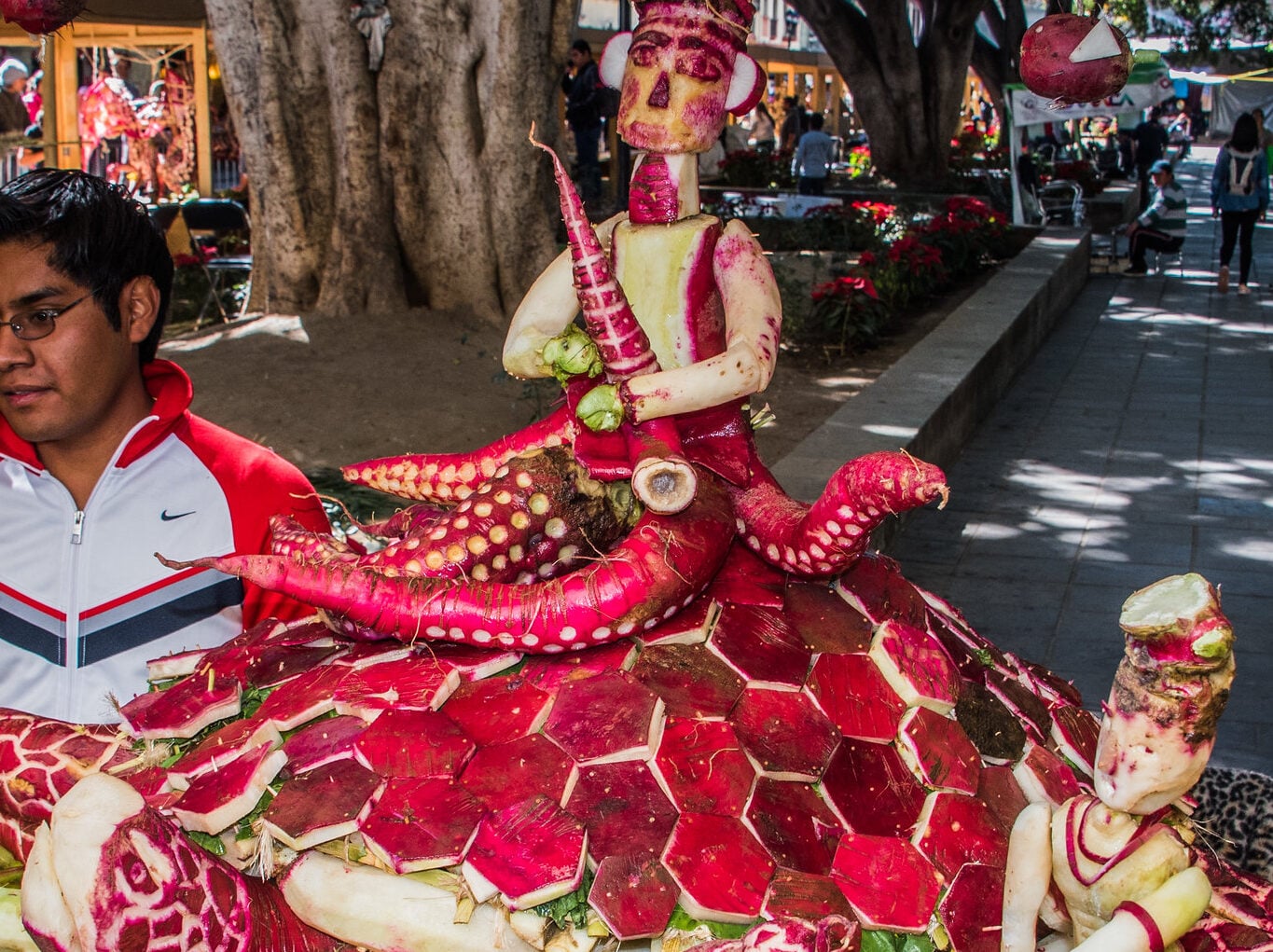
Oaxaca, Mexico, hosts a radish carving competition each December 23rd. Artists transform ordinary radishes into intricate sculptures depicting nativity scenes, historical figures, and elaborate landscapes.
The radishes grow to enormous sizes specifically for this purpose. The tradition started in 1897 when merchants decorated their market stalls with carved radishes to attract Christmas shoppers.
The practice grew into a formal competition with prizes and thousands of spectators. Carvers work frantically because radishes decay quickly once cut.
They have mere hours to complete their pieces before the vegetables start to wilt. The sculptures last just one night, then get thrown away.
All that work for a few hours of display.
Wife Carrying Championship

Finland’s wife-carrying competition has competitors racing through obstacle courses while carrying a woman on their backs. The track includes water hazards, sand pits, and hurdles.
The prize equals the wife’s weight in drinks. The event references old legends about men stealing women from neighboring villages.
Whether that actually happened remains debatable, but it makes for good storytelling. The competition started in Finland in 1992 and has spread to other countries.
You don’t actually need to carry your wife. Any woman over 17 years old and 108 pounds works.
Competitors use different carrying techniques—piggyback, fireman’s carry, or the Estonian method where the woman hangs upside down with her legs around the man’s shoulders. That last one looks uncomfortable but wins races.
Bognor Birdman Festival

People in homemade flying contraptions launch themselves off Bognor Regis pier in England, trying to fly as far as possible before plunging into the sea. Most barely make it past the end of the pier.
The rare few who fly more than 100 meters win a cash prize. The festival began in 1971 in Selsey before moving to Bognor.
Early participants used modified hang gliders and parachutes. Modern competitors get creative with cardboard wings, inflatable costumes, and increasingly absurd designs that prioritize entertainment over aerodynamics.
You watch people dress as everything from eagles to Superman, sprint down the pier, and immediately drop into the water. Some manage a brief glide.
Most just fall. The crowd cheers either way.
Up Helly Aa: Viking Fire Festival
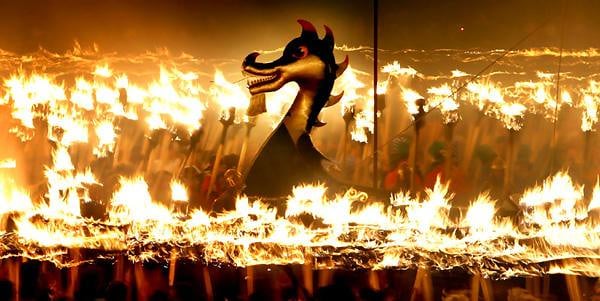
Shetland Islands residents spend months building a Viking longship, then set it ablaze in spectacular fashion. Up Helly Aa takes place every January, marking the end of Yule season.
Participants dress as Vikings and march through Lerwick carrying torches before hurling them at the ship. The festival replaced tar-barrel rolling, which authorities banned as too dangerous.
Apparently, burning a 30-foot replica Viking ship seemed safer. The tradition started in the 1880s and has grown more elaborate over time.
Nearly 1,000 people participate in costume squads, each following the main procession. After the burning, the squads visit local halls for parties that last until dawn.
The entire town shuts down for this event.
Songkran Water Festival

Thailand’s New Year celebration turns the entire country into a massive water fight. For three days in April, people armed with water guns, buckets, and hoses drench everyone they encounter.
No one stays dry. Trying to avoid the water just makes you a bigger target.
The festival traditionally involved gently sprinkling water on Buddha statues and elders as a sign of respect. That evolved into full-scale water warfare.
Pickup trucks cruise the streets with barrels of water and groups of shooters in the back. Streets become rivers.
Traffic moves at a crawl. Tourists pack their electronics in waterproof bags and embrace the chaos.
The heat of April makes the constant soaking feel refreshing rather than annoying.
Frozen Dead Guy Days

Nederland, Colorado, celebrates a frozen corpse. Bredo Morstoel, a Norwegian man, has been cryogenically frozen in a Tuff Shed since 1993.
His grandson moved him there hoping to establish a cryonics facility. That plan failed, but the body stayed, preserved with dry ice.
When authorities discovered the illegal corpse storage, the town faced a dilemma. They couldn’t move him without thawing him, and they couldn’t let him stay without changing local laws.
They changed the laws. Then they created a festival.
Every March, Nederland hosts coffin races, polar plunges, frozen t-shirt contests, and tours of the facility where Grandpa Bredo remains frozen. The event raises money for the dry ice needed to keep him preserved.
Tourism revenue helps too.
Kirkpinar Oil Wrestling

Turkish men cover themselves in olive oil and wrestle in a field. Kirkpinar, held annually in Edirne, is the world’s oldest continuously running sporting competition, dating back to 1362.
Wrestlers wear special leather pants called kisbet and try to pin opponents despite the slippery conditions. The name means “forty springs” and comes from a legend about forty soldiers who wrestled until they died of exhaustion.
A spring supposedly appeared where they fell. The event lasts several days, with hundreds of wrestlers competing in different weight categories.
Matches can last hours because oil makes gripping nearly impossible. Wrestlers develop specialized techniques to handle the slippery conditions.
Victory requires pinning your opponent or making them quit, neither of which comes easily when everyone resembles a greased seal.
Hadaka Matsuri: The Scramble for Fortune

Every February, crowds of guys in light traditional gear rush into Saidaiji Temple in Japan – trying to grab holy wooden sticks flung by monks. Lights are dim inside; just a few spots glow.
People shove through the freezing cold, packed tight together. It’s loud, chaotic, bodies pressed everywhere.
The celebration started half a millennium ago. Folks figure grabbing one of the rods means fortune sticks around till next time.
Since hardly any sticks are tossed, things get intense real quick. It looks like a wild clash – part field game, part concert chaos – with bumps and bruises common by the end.
The temple fills up fast, making it tough to even shift position. Once the priests toss the sticks, waves of people might just carry you away.
Spotting those sticks later needs a mix of chance and grit.
The Traditions That Bind

Some odd festivals have more in common than just being weird. While they build a sense of belonging, they also let folks break usual rules.
Most days, chucking tomatoes at someone would be wild – yet during La Tomatina, that’s exactly what you’re supposed to do. When the setting shifts, bizarre acts start feeling meaningful.
Not every custom has to seem logical to those outside the group. What matters is that it holds value for those taking part.
Odd celebrations often begin by chance, out of real need, or from a crazy thought that somehow lasted. Let a habit run long enough, and strange turns into history.
This is why the festivals survive – even if officials attempt to shut them down or progress tries to wipe out ancient customs. Because folks cherish having a reason to come together, honor what’s special about their town, reenact practices passed from earlier generations.
It’s not really about the tomatoes, cheese, or mud; those are merely tools. What actually matters? Being there in person.
More from Go2Tutors!

- The Romanov Crown Jewels and Their Tragic Fate
- 13 Historical Mysteries That Science Still Can’t Solve
- Famous Hoaxes That Fooled the World for Years
- 15 Child Stars with Tragic Adult Lives
- 16 Famous Jewelry Pieces in History
Like Go2Tutors’s content? Follow us on MSN.