Famous Last Meals of Historical Figures
Death eventually finds everyone, from ancient philosophers to modern celebrities. When it comes, those final hours often include one last meal—sometimes lavish, sometimes simple, occasionally poisoned.
These last bites tell stories about the people who took them, revealing character, circumstance, and occasionally cruel irony in ways obituaries never could.
Some knew exactly what was coming. Others had no clue their next meal would be their last.
The condemned ate with resignation, the unsuspecting with appetite, and the suddenly struck-down mid-bite never finished chewing.
Still, the details of these final meals often come from secondhand accounts, faded memories, and stories retold so many times that legend and fact blur together.
Here’s what was reportedly on the plate when history’s notable figures took their final taste of the world.
Abraham Lincoln

President Lincoln wasn’t known for caring much about food. Growing up on the frontier meant plain cooking and simpler tastes, habits he carried into the White House.
Historical accounts confirm his usual breakfast consisted of coffee and an egg, with dinner rarely exceeding one or two simple courses—maybe corned beef and cabbage or chicken with biscuits.
Nothing fancy, nothing memorable. April 14, 1865, Good Friday, was different.
According to some accounts, that evening around 7 PM, Lincoln sat down with friends including Illinois Governor Richard Oglesby for an elaborate holiday meal.
The reported spread included mock turtle soup, roast Virginia fowl stuffed with chestnuts, baked yams, and cauliflower draped in cheese sauce, though historians note the exact menu remains uncertain.
Whatever Lincoln actually ate, it was far removed from his usual fare.
After finishing the meal, Lincoln and his wife Mary headed to Ford’s Theatre to watch a comedy called Our American Cousin.
Actor John Wilkes Booth interrupted the performance with a gunshot that ended the president’s life.
Elvis Presley

The King of Rock and Roll had eating habits as excessive as his stage presence. He favored peanut butter and banana sandwiches, sometimes adding bacon for good measure.
His appetite for both salty and sweet foods became legendary, and by the final years of his life, his weight had ballooned considerably.
On August 15, 1977, Elvis spent the day with his daughter Lisa Marie, though accounts of what he ate for dinner that evening vary.
What’s more reliably documented are the early morning hours of August 16.
Elvis was pulling one of his characteristic all-nighters when, around 4 AM, he reportedly ate ice cream and cookies—accounts suggest four scoops and six chocolate chip cookies.
He played racquetball, then headed to the bathroom before planning to sleep.
A few hours later, he was found dead on the bathroom floor. His heart had given out, weakened by years of prescription drug use and poor health choices.
James Dean
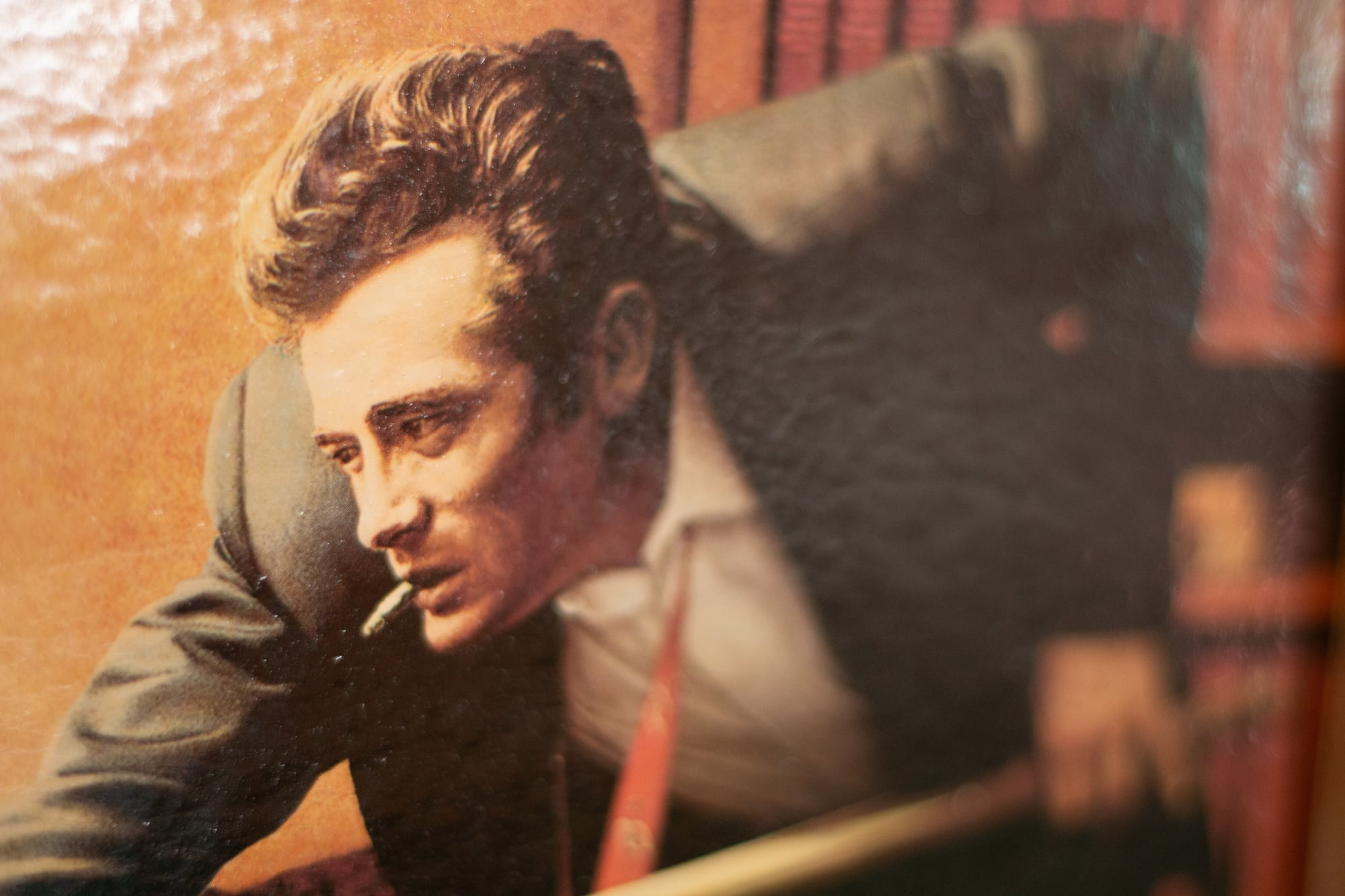
September 30, 1955. The 24-year-old actor was riding high with only one film released to theaters, but two more in the can that would cement his legacy as a cultural icon.
Dean had developed a passion for motor racing that rivaled his interest in acting.
That Friday afternoon, he was driving his new Porsche 550 Spyder—nicknamed Little Bastard—north toward Salinas to compete in weekend races.
According to local accounts, Dean stopped at a coffee shop called Tip’s in Castaic Junction.
There’s considerable debate about whether this actually happened, as his mechanic Rolf Wütherich never mentioned the stop and no contemporary accounts confirm it.
But staff at Tip’s remembered him ordering apple pie and a glass of milk, an all-American combination that seemed almost too perfect for the rebel icon.
Hours later, near the town of Cholame, Dean’s Porsche collided with an oncoming Ford sedan.
Dean died in the ambulance on the way to the hospital, his neck broken from the impact.
Julia Child

The woman who brought French cuisine to American kitchens reportedly ate appropriately on her final day.
At 91 years old, living in an assisted care facility in Montecito, California, Child was nearing the end after kidney failure had taken its toll.
According to widely circulated accounts, on August 13, 2004, just days before her 92nd birthday, she sat down to a bowl of homemade French onion soup.
Her longtime assistant Stephanie Hersh reportedly prepared it, likely following the recipe Child herself had perfected and published in Mastering the Art of French Cooking.
If the account is accurate, the choice was fitting. Child had spent decades teaching Americans that French food wasn’t intimidating or pretentious, just delicious when done right.
She died two days later.
Frank Sinatra

Ol’ Blue Eyes maintained a fairly routine schedule in his final years.
He’d wake up in the early afternoon at his Palm Springs home, eat breakfast by the pool, then settle into the comfortable rhythm of a man who’d lived a full life.
According to accounts of his habits, lunch often featured his favorite sandwich: grilled cheese, nothing fancy, just the classic combination of bread, butter, and melted cheese.
May 14, 1998, reportedly followed that same pattern.
His wife Barbara encouraged him to eat his lunch outside, and according to some sources, Sinatra had his usual grilled cheese.
That afternoon, at age 82, he died peacefully with Barbara by his side.
The Chairman of the Board had sung his last note and gone out as unpretentiously as anyone could hope.
Mahatma Gandhi

Gandhi was famous for fasting as both spiritual practice and political tool.
But on January 30, 1948, the 78-year-old leader of India’s independence movement actually ate breakfast.
According to accounts, his meal aligned with his lifelong vegetarian principles and reportedly included cooked vegetables, tomatoes, oranges, goat milk, carrot juice, and a mixture of aloe, lime, and ginger.
It was healthy, simple, and consistent with the discipline he’d maintained throughout his campaigns of nonviolent resistance.
That evening, as Gandhi walked to a prayer meeting in New Delhi, an assassin approached and fired three shots at close range.
The man who’d helped free India from British rule through peaceful means died from violence, his modest breakfast the last food he’d ever consume.
Marie Antoinette

The last queen of France spent her final days in a prison cell, awaiting execution after being convicted of treason in 1793.
The woman supposedly associated with extravagant desserts for breakfast and the apocryphal phrase “Let them eat cake” found herself reduced to dire circumstances.
According to historical retellings, she consumed little more than thin chicken bouillon in her final hours, though precise documentation of her last meal remains elusive.
On the morning of her execution, a prison attendant reportedly urged the 37-year-old former queen to eat something before facing the guillotine.
By most accounts, Marie Antoinette managed only a few spoonfuls of broth.
She had no appetite for more. Within hours, the blade fell, ending her life and symbolically closing the chapter on French royalty.
John Lennon

December 8, 1980. The former Beatle was working in a recording studio in New York City but wanted to head home to see his son rather than go out for dinner.
According to accounts of that evening, around 10:30 PM, he ate a simple corned beef sandwich—a classic British staple with roots in England and Ireland stretching back centuries.
It was the kind of unpretentious food that required no fuss or ceremony. Shortly after his meal, Lennon and his wife Yoko Ono returned to their apartment building, The Dakota.
As they walked toward the entrance, Mark David Chapman stepped out of the shadows and fired four shots.
Lennon was rushed to the hospital but died from his wounds.
The world mourned one of music’s most influential figures, whose last meal had reportedly been as simple and straightforward as his message of peace.
The Stories We Tell

Food connects us to our humanity in ways few other things can.
It doesn’t matter if you’re royalty or a rock star, philosopher or president—everyone needs to eat.
These final meals, whether documented with certainty or passed down through stories and recollections, strip away the mythology and show us regular people experiencing regular moments just hours or minutes before everything ended.
The truth is that many details about last meals come from witnesses who spoke years later, staff who remembered what they could, or accounts that grew more elaborate with each retelling.
Contemporary records often focused on the deaths themselves rather than what someone ate beforehand.
Still, these stories persist because they matter.
They give us one more human detail about people who’ve become larger than life.
Some chose comfort food. Others ate what circumstances provided.
A few unknowingly consumed their last bite while thinking about tomorrow.
These weren’t just famous people eating. They were human beings taking what nourishment they could from a world that was about to let them go.
More from Go2Tutors!

- The Romanov Crown Jewels and Their Tragic Fate
- 13 Historical Mysteries That Science Still Can’t Solve
- Famous Hoaxes That Fooled the World for Years
- 15 Child Stars with Tragic Adult Lives
- 16 Famous Jewelry Pieces in History
Like Go2Tutors’s content? Follow us on MSN.