Famous Mansions No One Wants to Buy
Money might buy happiness.
It sure doesn’t guarantee someone will want to buy your house.
Across the country, multimillion-dollar estates owned by everyone from basketball legends to tech moguls sit gathering dust on the market.
Some have dropped their asking prices by half or more.
Others have been delisted, relisted, and delisted again in an endless cycle that would make any homeowner break out in a cold sweat.
The luxury real estate market has always been unpredictable.
These properties represent a special kind of stuck.
They’re too big, too expensive, too customized, or simply too notorious to attract buyers willing to write eight-figure checks.
Even in neighborhoods where $50 million homes are common, certain mansions remain firmly planted on the market.
They resist every price cut and staging effort thrown at them.
Here’s a closer look at what happens when fame, fortune, and real estate collide in the most awkward way possible.
Michael Jordan’s Highland Park Estate

Michael Jordan’s Chicago-area mansion spent 12 years on the market before finding a buyer.
It became one of the most stubborn celebrity properties in modern real estate history.
Originally listed in 2012 for $29 million, the 56,000-square-foot compound eventually sold for just $9.5 million.
That’s less than a third of the asking price.
The property was heavily customized with Jordan’s personal touches.
His jersey number 23 was emblazoned on the front gates.
Air Jordan logos appeared on both the indoor basketball court and outdoor putting green.
What seemed like thoughtful personalization turned into a major turnoff for potential buyers.
The estate featured nine bedrooms, 19 bathrooms, and an NBA regulation-sized basketball court.
Unless you’re another basketball legend with identical branding needs, those custom details just don’t translate.
The property’s struggles highlight a fundamental problem in ultra-luxury real estate.
When you design a home around your specific identity and lifestyle, you narrow your buyer pool to people who share your exact taste.
Most people aren’t willing to spend hundreds of thousands renovating.
That’s too much trouble for too much money.
The Gotti Family Properties

Victoria Gotti’s Old Westbury mansion lingered on the market for over a decade.
It was first listed in 2013 for $2.5 million.
The 6,000-square-foot estate, which appeared on her reality show “Growing Up Gotti,” fell into disrepair after a federal raid in 2016.
The property went into foreclosure, was purchased by JP Morgan Chase for $2.65 million in 2022, and finally sold in 2024 for just $1.1 million.
Even more dramatic is the Staten Island mansion built by late Gambino family boss Paul Castellano.
First listed in October 2023 for $16.8 million, the property fell out of contract, was delisted, then reappeared in October 2024 with an increased price of $18 million before being pulled again without a sale.
Real estate agents point to the same problem plaguing many luxury properties.
Over-customization.
Agent Tom Le noted that these mob-linked homes are filled with expensive marble interiors that would cost a fortune to renovate.
The issue isn’t the notorious history.
Buyers are more practical than that.
They’re looking at the astronomical cost of updating outdated design choices and deciding it’s not worth the hassle.
No matter how many episodes of “The Sopranos” they’ve watched.
Celine Dion’s Florida Water Park Estate

Celine Dion built a 20,000-square-foot mansion in Florida complete with its own water park.
She listed it for $72.5 million.
The property sat on the market for years before eventually selling.
While the exact final sale price represented a significant discount, the real story is what happens when someone builds a home that’s more theme park than residence.
After four years on the market, the property finally sold for $38.5 million.
That’s nearly half the original asking price.
Water slides and lazy rivers might sound fun in theory.
They also come with maintenance costs that would make most people faint.
The property’s extreme features appealed to exactly one buyer.
Celine Dion herself.
Finding someone else willing to take on that level of upkeep proved nearly impossible.
The mansion market often reveals a harsh truth.
The more you customize, the harder you make it to sell.
Personal touches that seem brilliant during construction become liabilities when it’s time to move.
Derek Jeter’s Castle on the Lake

Baseball legend Derek Jeter’s castle-style mansion on New York’s Greenwood Lake has been on and off the market since 2018.
The price dropped from an initial $14.8 million to $6.5 million.
The six-bedroom, eight-bathroom property sits on four acres and looks like a colonial estate crossed with a fantasy pirate island.
That description alone explains the problem.
Unique architecture might win design awards.
It severely limits your buyer pool.
Despite being built in 1915 and having historic charm, the property remains unsold nearly five years after its initial listing.
Jeter’s golden touch with a baseball bat doesn’t extend to real estate sales.
The lesson applies to anyone selling property, not just celebrities.
The more your home looks like something out of a storybook, the fewer people can picture themselves living there.
Real estate agents call this a “polarizing property.”
People either love it completely or hate it immediately.
That’s great for magazine spreads.
It’s terrible for actually closing a sale.
The San Francisco Struggle

Even in one of the most expensive real estate markets in the country, certain mansions refuse to move.
San Francisco’s most expensive mansion, the Jewett House at 2990 Broadway Street, listed at $32 million, remains unsold despite the city experiencing strong luxury home sales in 2024.
Another Pacific Heights property dropped from $32 million to $29 million and still couldn’t find a buyer.
A Sea Cliff mansion originally listed in October 2023 for $25 million received a $5 million price cut but remains on the market asking $20 million.
These properties have jaw-dropping amenities, historic pedigrees, and prime locations.
What they don’t have is someone willing to pay the asking price.
Market analysts point to broader economic factors.
While tech wealth has surged, particularly from artificial intelligence companies, buyers at this level are increasingly selective.
They want modern features, privacy, and properties that won’t become money pits.
Historic mansions, no matter how beautiful, often fail on at least one of those criteria.
The Maintenance Money Trap

One underappreciated aspect of why these mansions won’t sell involves the terrifying ongoing costs.
Utility bills for mega-mansions can exceed $50,000 monthly.
Maintaining elaborate swimming pools, climate control systems, and extensive grounds creates ongoing financial obligations that deter even wealthy buyers.
Insurance presents another obstacle.
Annual premiums for high-value properties often reach six figures.
This creates a paradox.
You need to be wealthy enough to afford a $20 million mansion.
You also need to be willing to spend millions more maintaining it over the years.
Many people who can technically afford the purchase price take one look at the operating costs and decide they’d rather put that money anywhere else.
Insurance costs have increased substantially in recent years due to natural disaster risks and security concerns.
Properties in fire-prone areas or hurricane zones carry premium costs that can make even billionaires think twice.
The Size Problem

Bigger isn’t always better.
A 20,000-square-foot home sounds impressive until you actually try to live in it or, more relevantly, try to sell it.
The pool of people who want that much space shrinks dramatically once you factor in lifestyle preferences and practical concerns.
Most luxury buyers today prefer homes that feel grand but manageable.
They want a property they can actually use, not a sprawling estate that requires a full-time staff just to keep clean.
This shift in preferences has left many older mega-mansions stranded on the market.
They’re too large for modern tastes but too expensive to downsize through renovation.
The trend is visible across multiple markets.
Properties offering 10,000 to 15,000 square feet are moving.
Anything approaching 30,000 square feet sits unsold.
Buyers are voting with their wallets.
They’re choosing convenience over bragging rights.
Dark History as a Sales Killer

You might think a property’s connection to famous crimes or notorious figures would hurt sales.
Real estate agents consistently say otherwise.
A Beverly Hills mega-mansion built by “Full House” creator Jeff Franklin on the former site of the Manson murders originally listed for $85 million but has since been reduced to just under $55 million.
The property’s gory past certainly doesn’t help.
Agents note that poor design choices matter more than historical infamy.
The real issue with mob-connected properties isn’t their infamous pasts but their extravagant and outdated design choices.
Buyers can overlook history.
They can’t overlook the prospect of spending millions to tear out marble fixtures and update 1990s-era design choices.
Those choices seemed luxurious at the time but now scream dated.
This holds true across the luxury market.
A home’s story might make for great cocktail party conversation.
It won’t close a sale if the bones of the property don’t work for modern buyers.
The Market Correction
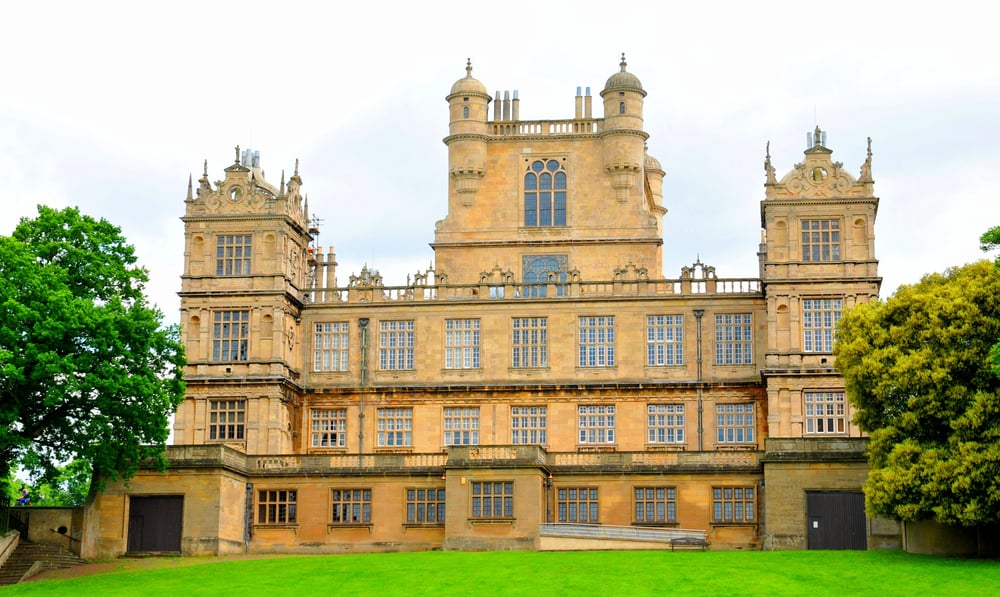
The current state of unsellable mansions reflects a broader recalibration in luxury real estate.
For decades, bigger and more expensive was the goal.
Now, buyers want properties that balance luxury with livability, privacy with convenience, and prestige with actual value.
Today’s elite increasingly seek properties that balance luxury with practicality, privacy, and sustainable value.
They no longer want mansions that serve as ultimate status symbols.
This shift means properties built during the “bigger is better” era are increasingly stuck on the market.
They’re victims of changing preferences they can’t easily adapt to.
Price cuts alone won’t solve the problem.
Many of these properties need reimagining.
The cost of renovation often exceeds what buyers are willing to spend.
The result is a standoff.
Sellers hope the market will recognize their property’s value.
Buyers wait for prices to drop further or move on entirely.
Why This Matters Now

The phenomenon of unsellable mansions isn’t just gossip fodder.
It represents a fundamental shift in how wealth gets displayed and what luxury actually means.
The days when a massive estate automatically signaled success are fading.
Buyers today care more about sustainability, efficiency, and personal space that actually enhances their lives rather than impresses their neighbors.
More from Go2Tutors!

- The Romanov Crown Jewels and Their Tragic Fate
- 13 Historical Mysteries That Science Still Can’t Solve
- Famous Hoaxes That Fooled the World for Years
- 15 Child Stars with Tragic Adult Lives
- 16 Famous Jewelry Pieces in History
Like Go2Tutors’s content? Follow us on MSN.