Fascinating Facts About Modern Internet Slang Origins
The words we type every day carry more history than most people realize. That “lol” you just sent? It predates Google.
The “spam” cluttering your inbox borrowed its name from canned meat and British comedy. Internet slang didn’t emerge from nowhere — it grew from bulletin boards, chat rooms, and the peculiar creativity that happens when people try to squeeze human expression through a keyboard.
Each term tells a story about the moment it was born, the community that shaped it, and the cultural forces that made it stick. Some evolved from typos that became too popular to correct.
Others emerged from the practical need to say complicated things quickly. The origins are rarely what you’d expect.
LOL
“LOL” appeared in the 1980s on bulletin board systems, long before the web existed. Wayne Pearson, a regular user of Viewline, claims he coined it during a chat session when someone made him laugh out loud — literally.
He needed a way to express genuine laughter, not just mild amusement. The abbreviation caught on because it solved a real problem.
Text couldn’t convey tone, and “haha” felt flat. “LOL” indicated that something was actually funny enough to provoke physical laughter.
By the early 1990s, it had spread across different online communities, each adopting it independently until it became universal shorthand for humor.
Spam

The term “spam” for unwanted email comes from a 1970 Monty Python sketch where Vikings in a cafe chant “Spam, spam, spam” until it drowns out all other conversation. Early internet users in multi-user dungeons (MUDs) adopted the word to describe repetitive, disruptive messages that overwhelmed chat channels — just like the Vikings’ chanting.
When unsolicited bulk email became a problem in the 1990s, “spam” was the natural choice. The connection was perfect: unwanted, repetitive messages that cluttered up communication spaces.
Hormel, the maker of SPAM luncheon meat, initially objected to the usage but eventually accepted that language had moved beyond their control.
Troll

Before trolls lived under internet bridges, they practiced a different kind of deception: trolling for fish. The fishing technique involves dragging bait through water to see what bites.
And that’s exactly what internet trolls do (though the mythological creature that guards bridges and demands payment has contributed to the modern understanding as well). So the internet troll emerged in the 1990s from Usenet newsgroups, where users would post intentionally provocative messages — the digital equivalent of dangling bait in front of unsuspecting fish.
But here’s where it gets interesting: the most skilled trolls weren’t just causing chaos for its own sake; they were often testing the intellectual rigor of a community, seeing who would engage thoughtfully versus who would simply react emotionally. The term caught on because it captured both the methodical patience of the angler and the mischievous nature of someone lying in wait for the perfect victim to take the bait.
Meme
Richard Dawkins coined “meme” in his 1976 book “The Selfish Gene,” decades before cat videos existed. He needed a word for cultural information that spreads and evolves like genetic material — ideas that replicate, mutate, and survive based on their fitness for transmission.
Internet users discovered Dawkins’ term in the late 1990s and realized it perfectly described the way jokes, images, and phrases spread online. The word captured something essential about digital culture: content doesn’t just get shared, it gets modified, improved, and adapted by each person who passes it along.
Emoji

Emoji are a Japanese invention — not to be confused with emoticons, which are the sideways faces typed with punctuation marks like 🙂 that preceded them. Shigetaka Kurita created the first widely recognized set of emoji in 1999 for NTT Docomo’s mobile internet platform.
He designed 176 simple 12×12 pixel images to convey information efficiently on small screens. Kurita drew inspiration from weather symbols, Chinese characters, and manga.
The word itself combines the Japanese “e” (picture) and “moji” (character). When other mobile carriers adopted similar systems, emoji became a new form of universal communication, transcending language barriers in ways that simple emoticons never could.
Hashtag

The hashtag symbol existed long before Twitter — it was the pound sign on telephone keypads and the number symbol in mathematics. But Chris Messina suggested using it to group conversations on Twitter in 2007, borrowing the concept from IRC channels that used # to designate chat rooms.
Twitter initially resisted the idea, thinking hashtags looked too technical for mainstream users. They preferred a more elegant solution.
The community disagreed and started using hashtags organically until Twitter had no choice but to make them clickable links. Sometimes the best features aren’t designed by companies — they’re discovered by users.
Selfie

“Selfie” feels ancient now, but Oxford Dictionary only added it in 2013. The term appeared on an Australian internet forum in 2002 when someone posted a photo of their injured lip with the caption: “Um, drunk at a mates 21st, I tripped ofer and landed lip first on a set of steps. I had a hole about 1cm long right through my bottom lip. And sorry about the focus, it was a selfie.”
The Australian context matters — the “-ie” suffix fits the country’s pattern of casual abbreviations. But the concept exploded globally once front-facing smartphone cameras made self-portraits effortless.
The word succeeded because it captured both the action and the attitude: taking your own photo, for your own reasons.
GOAT
“GOAT” as an acronym for “Greatest Of All Time” comes from hip-hop culture, specifically LL Cool J’s 2000 album titled “G.O.A.T.” The rapper used it to declare his supremacy in the rap game, and the term slowly spread beyond music into general internet discourse about excellence.
The acronym works because it’s both humble and boastful — it acknowledges that greatness exists while making a definitive claim. When internet users adopted it, they kept that tension.
Calling someone the GOAT is serious praise, but typing “goat emoji” feels playful enough to use casually.
Stan

“Stan” comes from Eminem’s 2000 song about an obsessed fan named Stanley who writes increasingly desperate letters to the rapper. The song depicts unhealthy fandom taken to its extreme conclusion, but internet users adopted “stan” to describe intense appreciation for celebrities, artists, or even ideas.
The transformation from cautionary tale to positive descriptor shows how language evolves online. What started as a warning about toxic obsession became a way to express passionate support.
When someone says they “stan” an artist, they’re claiming that level of dedication while usually stopping short of Stanley’s destructive behavior.
Noob
“Noob” evolved from “newbie,” which appeared in the 1960s among military personnel to describe newcomers. When early internet users needed a term for inexperienced participants, “newbie” was the obvious choice.
But typing efficiency mattered in text-based games and chat rooms, so “newbie” became “newb,” then “n00b” (with zeros replacing O’s in leetspeak fashion), and finally “noob.” Each variation carried slightly different connotations.
“Newbie” remained neutral or even sympathetic. “Noob” developed an edge — it suggested not just inexperience, but willful ignorance or refusal to learn established community norms.
Rickroll

The Rickroll emerged from 4chan in 2007, but it built on an earlier prank called “duckrolling” where users would post a picture of a duck on wheels instead of expected content. Someone replaced the duck with Rick Astley’s “Never Gonna Give You Up” music video, and the internet found its perfect bait-and-switch.
The song choice was brilliant. “Never Gonna Give You Up” is catchy enough to be tolerable but dated enough to be unexpected.
Getting Rickrolled became a shared experience — annoying but harmless, and ultimately kind of endearing. The prank succeeded because it brought people together through mild frustration and nostalgic music.
Ghosting
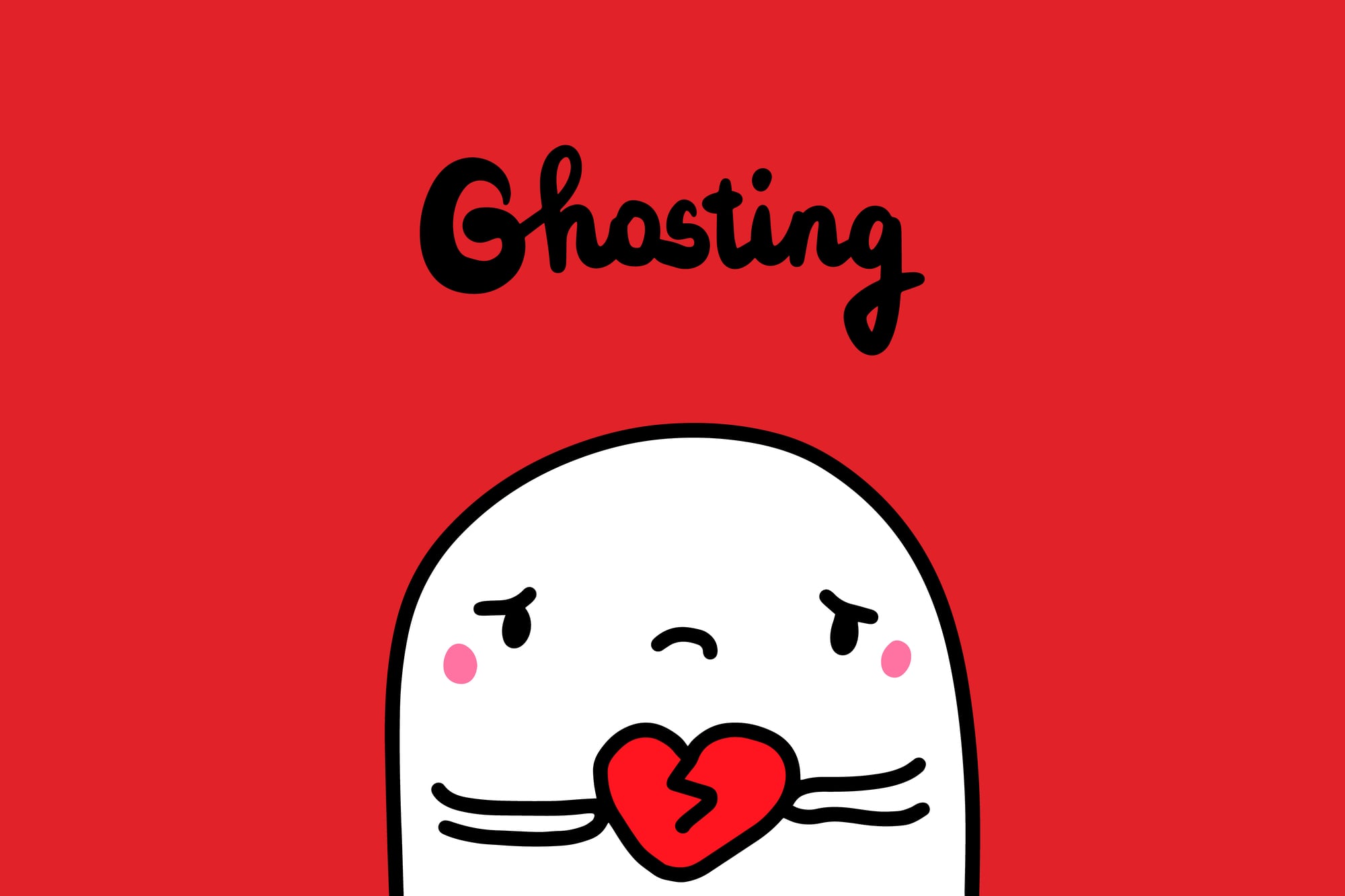
“Ghosting” predates dating apps, appearing first in online gaming communities where players would suddenly disconnect and disappear from servers without explanation. The term captured the abrupt, mysterious nature of the vanishing — one moment someone was there, the next they were gone without a trace.
When modern dating adopted the term, it fit perfectly. The behavior was the same: sudden, unexplained disappearance from ongoing communication.
Dating apps made ghosting easier and more common, but they didn’t invent the concept or the word. They just provided a new context for an already-named behavior.
Viral

The concept of “going viral” borrowed medical terminology to describe how content spreads across networks. The metaphor appeared in the 1990s as internet users recognized that information could spread like infectious disease — rapidly, exponentially, and often unpredictably.
The medical comparison wasn’t entirely positive. Viruses can be harmful, and viral content often spreads faster than people can verify its accuracy.
But the term stuck because it captured the organic, unstoppable nature of mass sharing. Content doesn’t just become popular — it infects networks, spreading from person to person until it reaches saturation.
Where Language Lives Now

Internet slang doesn’t just document how people communicate — it reveals how communities form, evolve, and influence each other across digital spaces. Every abbreviation, acronym, and inside joke represents a moment when someone solved a communication problem creatively enough that others wanted to copy the solution.
The most successful terms spread because they filled genuine needs, whether that was expressing laughter more efficiently or describing new behaviors that didn’t have names yet.
These words carry the DNA of their origins, but they’ve also adapted to survive in contexts their creators never imagined. Language moves faster online than it ever has before, but the basic human impulses remain the same: the desire to be understood, to belong to something, and to find better ways to say what matters.
More from Go2Tutors!

- The Romanov Crown Jewels and Their Tragic Fate
- 13 Historical Mysteries That Science Still Can’t Solve
- Famous Hoaxes That Fooled the World for Years
- 15 Child Stars with Tragic Adult Lives
- 16 Famous Jewelry Pieces in History
Like Go2Tutors’s content? Follow us on MSN.