Fastest Birds in the Sky
Flying fast does not happen by chance in nature. For birds, generations upon generations have fine-tuned their motion – driven by hunger, long journeys, or threats closing in.
Being airborne sets them apart from many creatures on land. Yet for certain types, how swiftly they move through air decides if they catch food, complete seasonal travel, or escape death.
It’s the variety that catches attention when talking about how fast birds fly. Not every high velocity comes from plummeting downward, though some rely on steep drops where falling helps them gain extreme momentum.
A few stick to level paths, covering long distances at steady, impressive rates without diving at all. Speed means different things depending on who’s moving through air.
Each quick wingbeat serves a purpose shaped by survival needs. Watch closely and you start seeing which ones earn their title, not just through numbers but what they do with them.
Peregrine Falcon

The peregrine falcon is widely recognised as the fastest animal on Earth, a title earned through its extraordinary diving ability. During a hunting dive, often called a stoop, this bird can exceed 200 miles per hour as it drops from high altitude toward its target.
The speed is not achieved through flapping or muscle power alone, but through precise positioning that turns the falcon into a living projectile. Its body shape is compact and streamlined, with wings tucked close and feathers aligned to minimise drag.
Even at extreme velocity, the peregrine remains fully aware of its surroundings, adjusting its angle and timing with remarkable accuracy. This precision allows it to strike other birds mid-air, often ending a chase before the prey has time to react.
What is especially notable is how adaptable peregrine falcons have proven to be. Once associated mainly with coastal cliffs and mountain ranges, they now thrive in cities where tall buildings replicate their natural hunting platforms.
In both wilderness and urban environments, speed remains the falcon’s most effective tool, turning open air into a controlled hunting ground.
Golden Eagle

Golden eagles approach speed from a different angle. They are larger, heavier, and more muscular than falcons, and their flight reflects that difference.
When diving toward prey, golden eagles can reach speeds close to 200 miles per hour, relying on momentum and strength rather than compact aerodynamics alone. These birds often hunt animals much larger than typical avian prey, which means speed must be paired with power and control.
Their broad wings allow them to make subtle adjustments even during rapid descent, ensuring accuracy despite their size. Unlike falcons, which often rely on a single decisive strike, golden eagles may use speed to close distance quickly before overpowering their target.
Across open plains, mountainous terrain, and remote wilderness, golden eagles demonstrate that speed does not always look sleek. In their case, it appears as force, presence, and authority in the air, reinforcing their status as one of the most formidable birds of prey in the world.
White-Throated Needletail
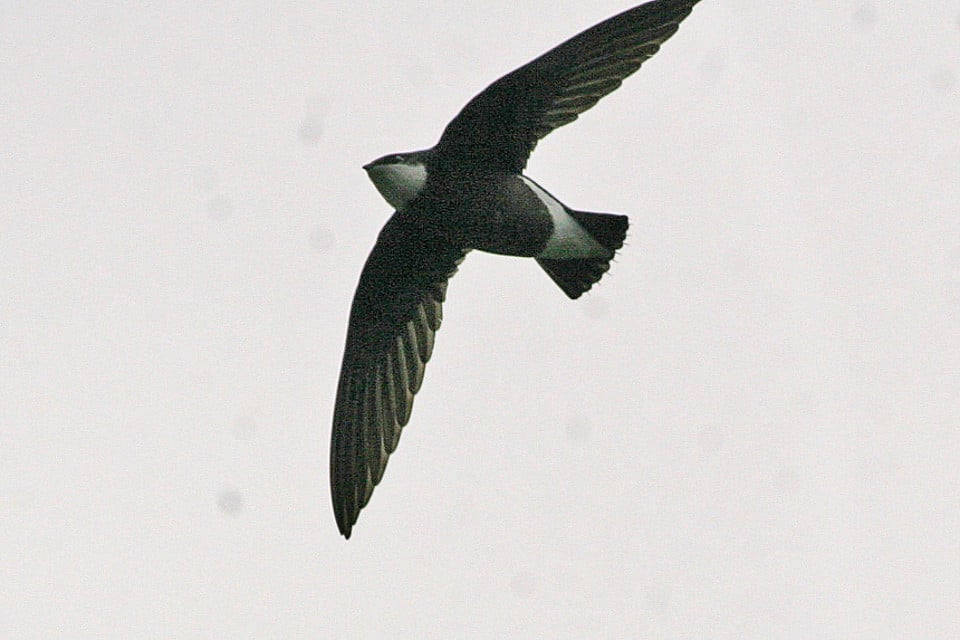
When it comes to level flight, few birds rival the white-throated needletail. This swift species has been recorded flying close to 105 miles per hour without diving, a remarkable feat that places it among the fastest birds in sustained horizontal movement.
Needletails spend the vast majority of their lives in the air. They feed on insects while flying, drink on the wing, and only land to nest.
Their long, narrow wings are built for efficiency, allowing them to maintain high speeds with minimal energy loss. Unlike diving birds, which rely on brief bursts, needletails depend on consistency.
This kind of speed is less dramatic but arguably more demanding. Maintaining such pace over extended periods requires precise energy management and exceptional aerodynamic design.
The white-throated needletail shows that speed does not always announce itself with spectacle. Sometimes it appears as relentless motion, carried quietly across the sky.
Common Swift
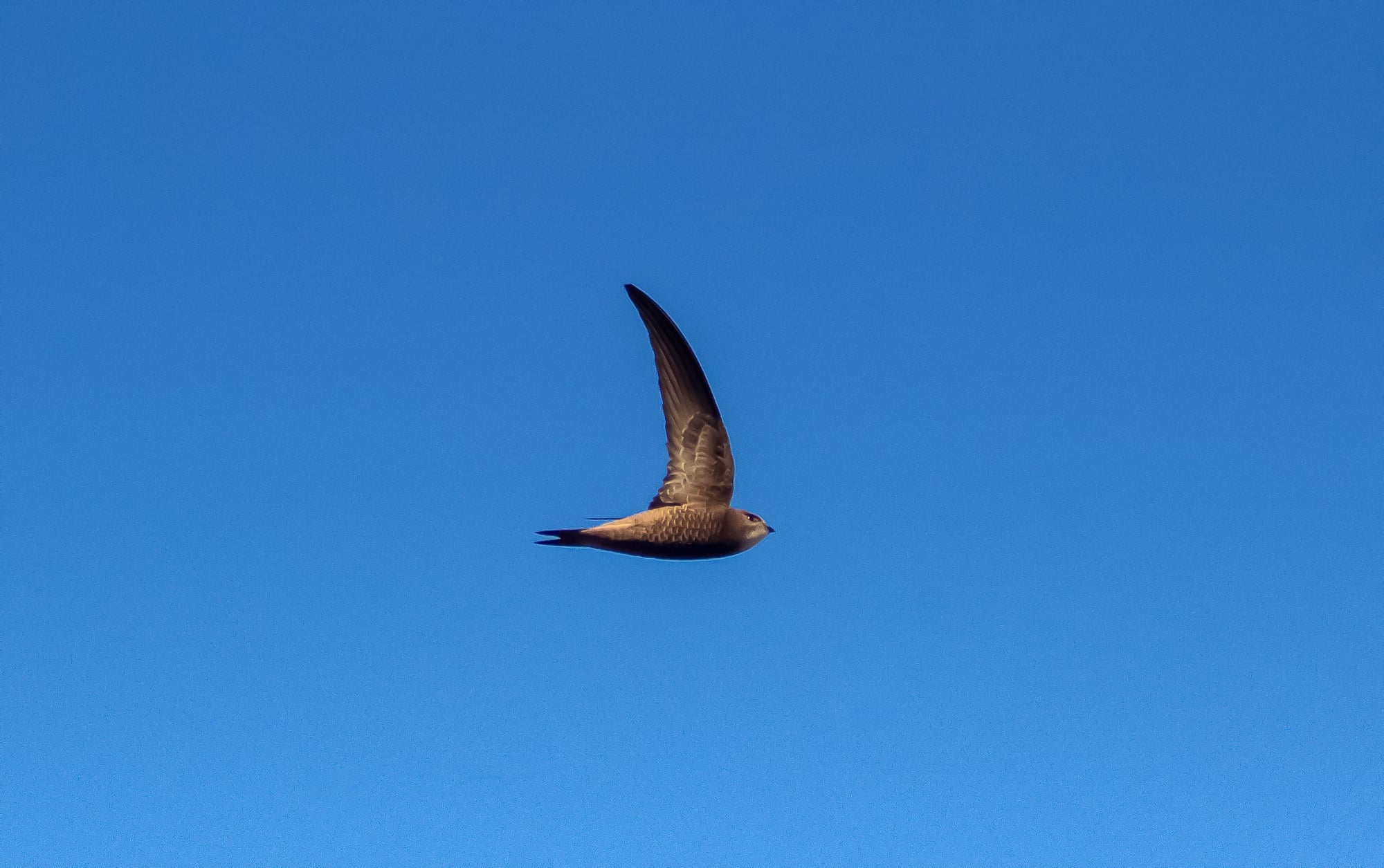
The common swift may not break speed records in the same way as needletails, but its capabilities remain impressive. In level flight, it can reach around 70 miles per hour, a pace it sustains with remarkable efficiency.
What sets this bird apart is not just how fast it flies, but how rarely it stops. Young common swifts are known to remain airborne for months at a time, navigating weather systems, feeding on insects, and resting while still in motion.
Their speed supports a lifestyle built almost entirely around flight, where landing becomes the exception rather than the rule. In this context, speed functions less as a weapon and more as a rhythm.
It allows swifts to move smoothly through vast airspaces, avoiding threats while conserving energy. The result is a form of flight that feels effortless, even though it demands extraordinary endurance.
Gyrfalcon
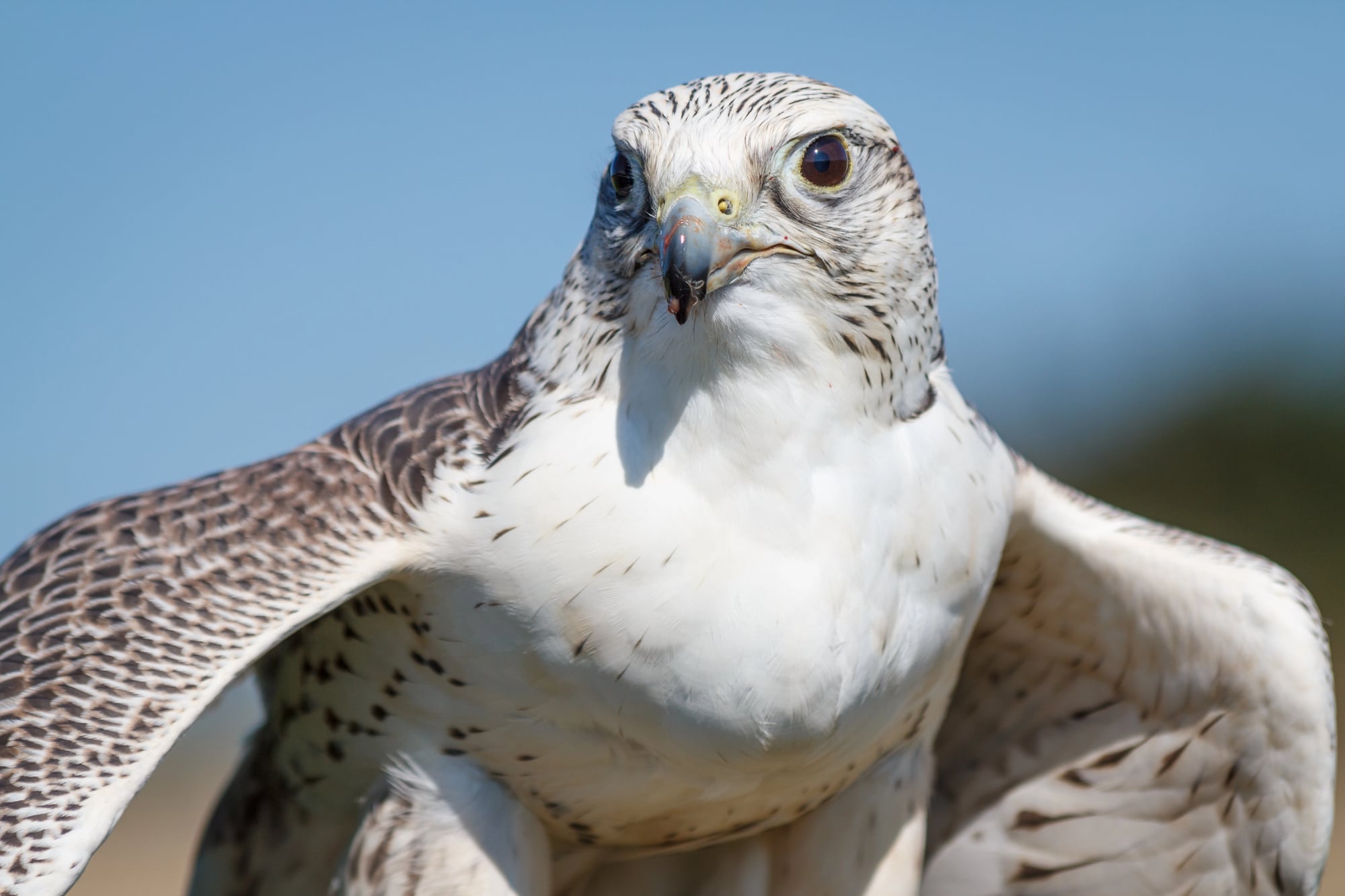
The gyrfalcon combines size and speed in a way few birds manage. As the largest member of the falcon family, it lacks some of the compactness of the peregrine, yet it compensates with powerful, sustained pursuit.
During chases, gyrfalcons can exceed 130 miles per hour, maintaining pressure over longer distances rather than relying on a single dive. This hunting style reflects the environments in which gyrfalcons live.
Arctic and sub-Arctic regions offer little cover and vast open spaces, making long pursuits more effective than ambush tactics. Speed becomes a way to outlast prey rather than surprise it.
In such harsh landscapes, every advantage matters. The gyrfalcon’s ability to maintain high velocity over extended periods ensures that it remains an apex predator even in some of the planet’s most unforgiving conditions.
Red-Breasted Merganser

Speed is not usually associated with ducks, but the red-breasted merganser is a notable exception. In level flight, it can reach speeds close to 80 miles per hour, placing it among the fastest water birds in the sky.
This capability plays a crucial role during migration, when mergansers travel long distances over open water. Speed reduces exposure to threats and allows them to take advantage of favorable weather windows.
Their narrow bodies and rapid wingbeats create a flight style that appears urgent and purposeful. While they may not match raptors or swifts in raw numbers, red-breasted mergansers demonstrate that speed has value well beyond hunting.
In their case, it is a tool for movement, timing, and survival across vast aquatic landscapes.
Frigatebird

Frigatebirds present a different interpretation of speed altogether. While they have been recorded reaching bursts of around 95 miles per hour, their true strength lies in efficiency rather than constant pace.
These seabirds are masters of soaring, using wind currents and thermal lift to stay aloft for hours with minimal effort. When speed is required, frigatebirds can summon it quickly, often during aerial chases or evasive maneuvers.
These moments are brief but effective, layered on top of a flight style built around patience and energy conservation. Covering enormous stretches of ocean without landing, frigatebirds show that speed does not always dominate the journey.
Sometimes it appears only when needed, reserved for moments when timing matters more than distance.
Spine-Tailed Swift

Closely related to the white-throated needletail, the spine-tailed swift reinforces the idea that swifts are unmatched in horizontal flight. Reports place this species near 100 miles per hour in level movement, achieved without the assistance of a dive.
Their bodies are designed almost entirely around motion. Narrow wings, stiff feathers, and streamlined silhouettes reduce drag, while their behavior keeps them in near-constant flight.
This design allows spine-tailed swifts to move through the sky with remarkable consistency. In many ways, they represent the purest expression of avian speed.
There is no reliance on gravity or sudden bursts, only continuous forward motion shaped by air and instinct.
Why Speed Still Shapes Survival

Flying fast isn’t about winning races or showing off. Speed answers needs. Predators catch meals easier when they move quickly.
Long journeys become possible across vast lands. In wide-open spaces, moving swiftly means less time exposed – hesitation can be dangerous there.
It’s striking just how varied nature’s answers can be. Rather than lasting long, certain birds pour everything into bursts of effort.
Meanwhile, some swap raw power to save fuel, moving smarter instead of harder. Still, each finds its way to one goal – staying alive by never stopping.
Moving fast isn’t about going all out; it’s finding rhythm among effort, moment, and precision. When today’s world shifts and air routes tangle overhead, old survival tricks still hold ground.
Speed kings among birds show clearly – nature does not care for flash. What counts is staying strong through endless stretches of wind and space.
More from Go2Tutors!

- The Romanov Crown Jewels and Their Tragic Fate
- 13 Historical Mysteries That Science Still Can’t Solve
- Famous Hoaxes That Fooled the World for Years
- 15 Child Stars with Tragic Adult Lives
- 16 Famous Jewelry Pieces in History
Like Go2Tutors’s content? Follow us on MSN.



