Fascinating Facts About Modern Robotics
The robotics industry has entered a phase that would’ve seemed like science fiction just a decade ago.
Robots are no longer confined to factory floors doing repetitive tasks behind safety cages.
They’re learning to navigate unpredictable environments, work alongside humans without rigid barriers, and even adapt their behavior based on what they observe.
The field is evolving at a pace that’s reshaping manufacturing, healthcare, exploration, and countless other sectors—in ways that go far beyond simple automation.
Here’s a closer look at some of the most remarkable developments transforming modern robotics.
Humanoid robots are finally becoming practical
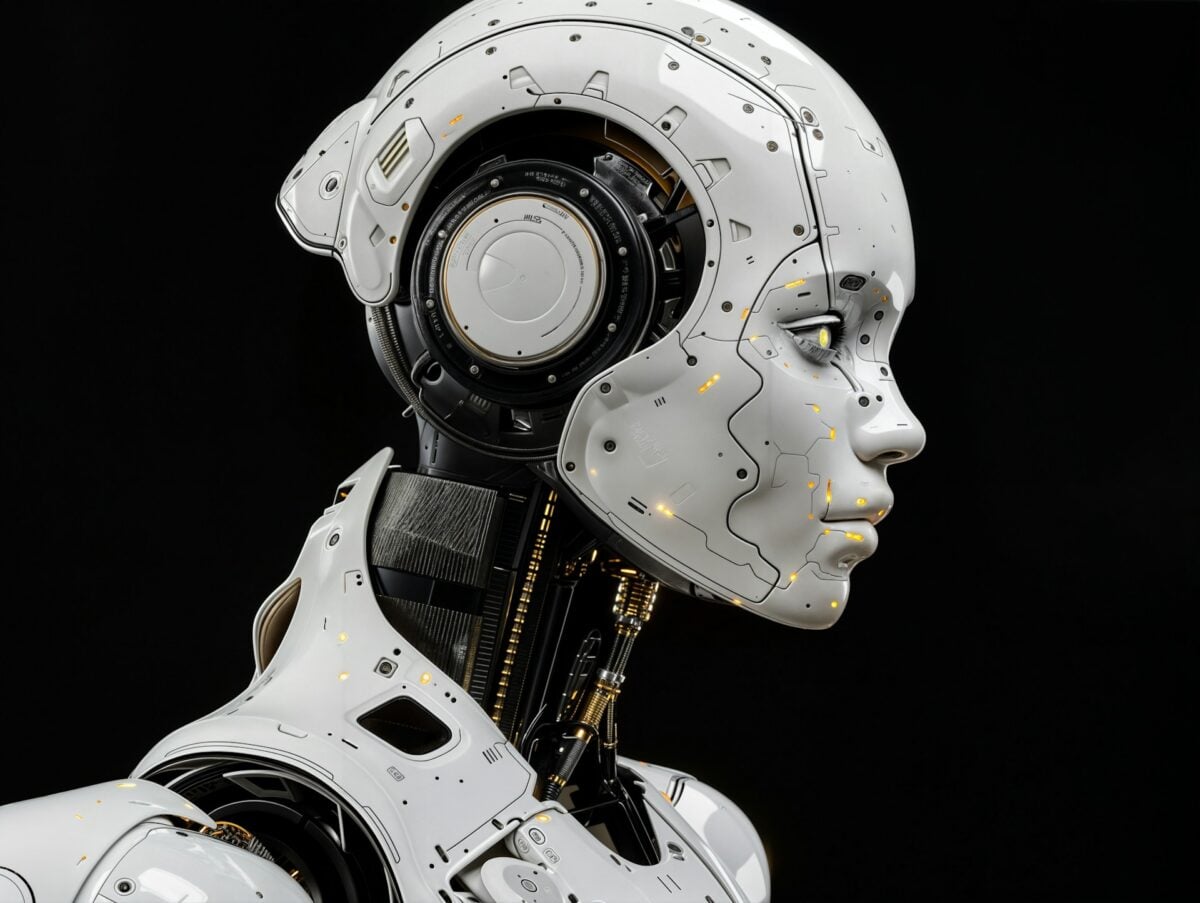
The humanoid robot concept has existed for decades, yet 2024 marked a turning point where these machines moved from research labs into actual commercial use.
Boston Dynamics unveiled an all-electric version of its Atlas robot—designed specifically for real-world work rather than viral backflip videos.
Agility Robotics achieved something even more significant when its Digit humanoid became the first of its kind deployed in a paying customer’s facility at a Spanx warehouse in Georgia.
Figure AI began shipping its Figure 02 system to customers. Meanwhile, companies like Schaeffler invested in humanoid technology for their global manufacturing network.
The push toward humanoid designs isn’t just about making robots look human, though.
These machines can navigate spaces built for people without requiring expensive retrofitting of existing infrastructure.
China’s Ministry of Industry and Information Technology has set ambitious goals to mass-produce humanoids by 2025—predicting they could become as transformative as smartphones or personal computers.
AI foundation models are teaching robots to generalize

One of the biggest headaches in robotics has always been programming.
Teaching a robot to perform a specific task traditionally required extensive coding and countless hours of testing.
Foundation models borrowed from the artificial intelligence revolution are changing that equation dramatically, though.
NVIDIA launched Project GR00T, developing general-purpose AI models that let humanoid robots understand natural language commands and learn by watching humans perform tasks.
Startups are pouring resources into this approach.
Skild AI emerged with $300 million in funding to develop its Skild Brain robotics foundation model, while Physical Intelligence raised $400 million for similar work.
These foundation models could enable robots to transfer knowledge between different tasks—adapting to new situations without extensive retraining.
A robot that learns to pick up one type of object might apply that understanding to handle completely different items it’s never encountered before.
Collaborative robots are getting smarter about safety
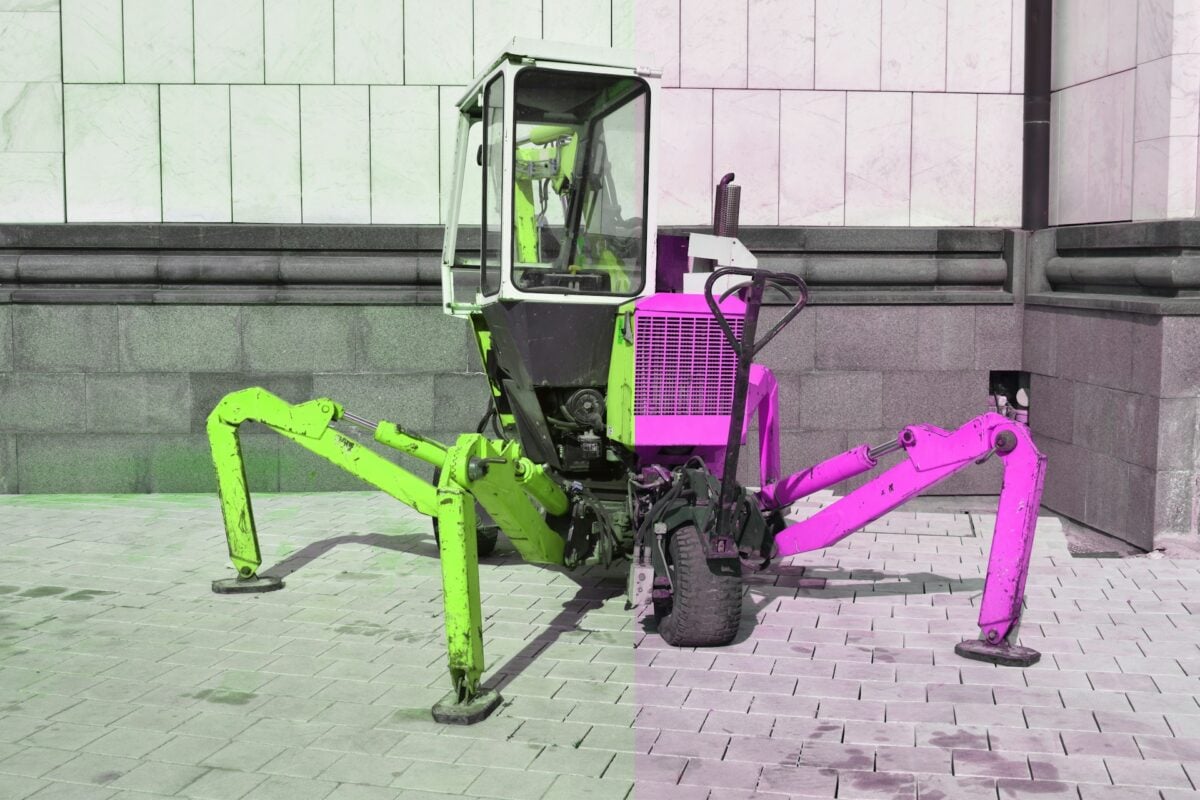
Cobots, or collaborative robots, are designed to work directly alongside humans without safety cages.
Recent advances have made these machines remarkably sophisticated at detecting and responding to human presence.
Researchers at Qingdao University developed touch sensors that can detect objects without direct contact—sensing changes in electric fields at distances up to about 4 inches.
This means a cobot can slow down or stop before it ever makes contact with a person.
The cobot market is expanding into unexpected areas.
Welding applications have surged as companies struggle to find skilled welders, demonstrating that automation often solves labor shortages rather than creating them.
The newest cobots combine advanced sensors and AI to make real-time decisions about how to interact safely with their human coworkers.
They can adjust their movements based on whether someone is nearby, hand off objects gently, and even learn the work patterns of the people around them.
Soft robotics opens entirely new applications
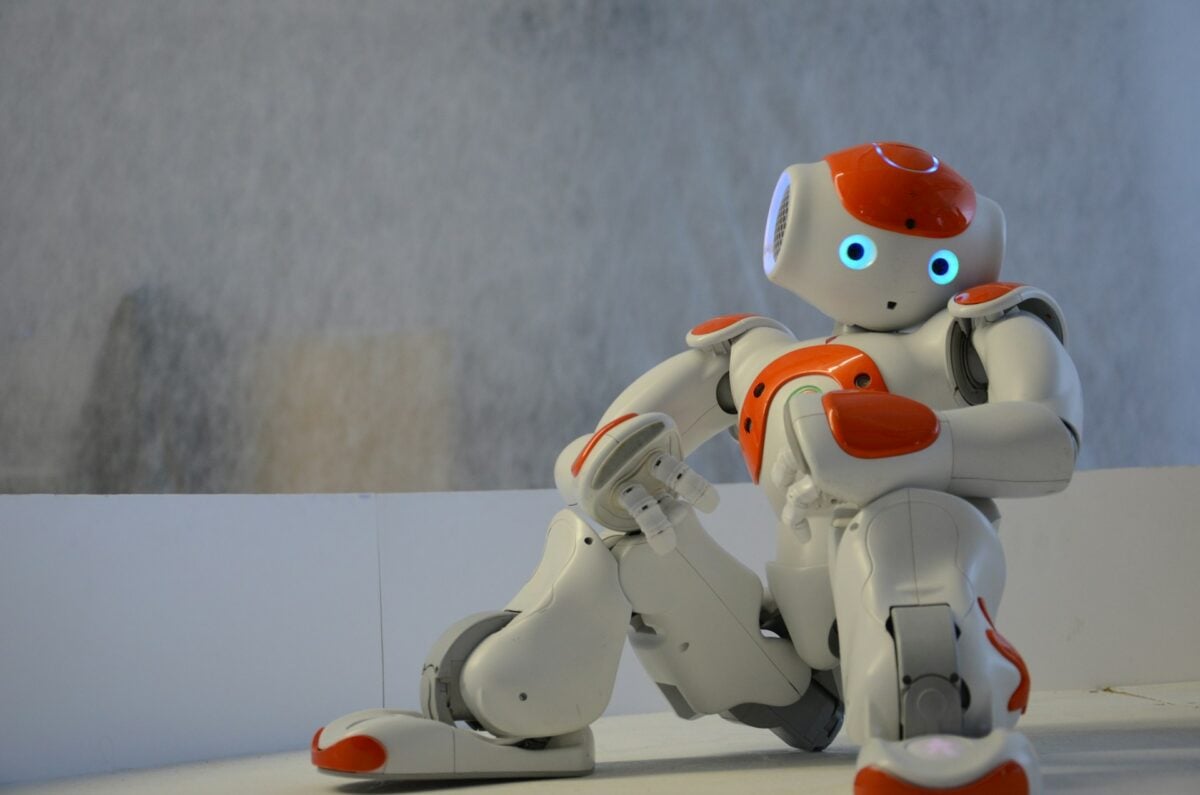
Most robots are built from rigid materials like metal and hard plastics.
Soft robotics takes a completely different approach, though, using flexible materials like silicone and elastomers.
These squishy machines can squeeze through tight spaces, handle delicate objects without damaging them, and interact safely with human tissue.
Harvard researchers created the Octobot—an autonomous soft robot inspired by octopuses that costs less than a fancy coffee drink to build.
The medical field is where soft robotics truly shines.
Surgeons are using soft robotic instruments like endoscopes that can navigate around internal structures more easily than traditional rigid tools.
Soft exosuits help stroke patients regain mobility by providing gentle assistance that mimics natural body movements.
NASA is even exploring soft robots for planetary exploration since their flexibility makes them ideal for navigating unpredictable terrain.
A soft robot could theoretically squeeze through a crack, reform on the other side, and continue its mission.
Swarm robotics mimics nature’s collective intelligence

Individual ants aren’t particularly smart, yet an ant colony can accomplish remarkable feats through simple rules and local communication.
Swarm robotics applies this same principle to groups of robots working together.
Researchers at Harvard’s Wyss Institute developed Kilobots—a system where 1,024 simple robots coordinate to form complex patterns and behaviors.
Each robot follows basic rules and communicates only with its immediate neighbors.
Even so, the swarm as a whole can perform sophisticated tasks like foraging and collective transport.
The applications for robot swarms are diverse and sometimes surprising.
They’re being developed for search and rescue missions where small robots can spread out to explore disaster sites more efficiently than a single large machine.
Agricultural applications include robotic swarms that monitor crops for disease or coordinate harvesting activities.
The U.S. Navy has tested swarms of autonomous boats that can navigate and take defensive actions independently.
Microsoft and University of Washington researchers even created acoustic swarms of tiny robots that work together to create shape-changing smart speakers—using sound signals rather than cameras to coordinate their movements.
Digital twins are optimizing robot performance

Digital twin technology creates virtual replicas of physical robots that mirror their real-world counterparts in real time.
As robots on factory floors go about their work, their digital twins collect operational data and run simulations to predict potential problems before they occur.
This approach enables predictive maintenance that can save manufacturers enormous costs from unexpected downtime.
In the automotive parts industry alone, each hour of unplanned downtime is estimated to cost around $1.3 million.
These virtual models do more than just prevent breakdowns, though.
Engineers can test different operational strategies on the digital twin without disrupting actual production.
They can simulate how a robot will perform under different conditions or optimize movement patterns for efficiency.
Machine learning algorithms analyze data from multiple robots performing the same process, identifying optimization opportunities that might not be obvious to human operators.
Robots are handling increasingly complex manipulation tasks

Picking up and manipulating objects sounds simple.
Yet it’s incredibly challenging for robots when those objects vary in shape, weight, texture, and fragility.
Recent advances in gripper technology and AI-powered vision systems have made robots surprisingly dexterous.
Soft grippers can conform to irregular shapes and handle delicate items like food or biological specimens without damage.
More sophisticated systems use machine learning to determine the optimal grip strategy for unfamiliar objects.
Mobile manipulators—sometimes called MoMas—combine robotic arms with autonomous mobile platforms.
These machines can navigate to a location and then perform precise manipulation tasks.
They’re automating material handling in automotive plants, logistics centers, and aerospace facilities.
The combination of mobility and dexterity opens up use cases that weren’t possible with stationary robotic arms or simple mobile platforms alone.
The robotics market is navigating growing pains

Despite all the technological excitement, the robotics industry faced economic headwinds in 2024.
North American robot orders declined slightly compared to the previous year, with particularly sharp drops in semiconductor and automotive component sectors.
High interest rates, tight capital budgets, and uncertainty around electric vehicle production contributed to the slowdown.
Some companies didn’t survive—Guardian Agriculture shut down after failing to secure additional funding, while Rethink Robotics closed for a second time.
Still, the long-term trajectory remains positive.
The global stock of operational robots hit a record 3.9 million units.
The United States generated the highest robotics revenue worldwide at nearly $785 billion in 2024.
Robotaxi services like Waymo continued expanding despite setbacks for competitors like Cruise.
Investment in foundation models for robotics attracted hundreds of millions in funding.
The current challenges appear to be a temporary adjustment period rather than a fundamental problem with the technology itself.
Why this matters more than ever
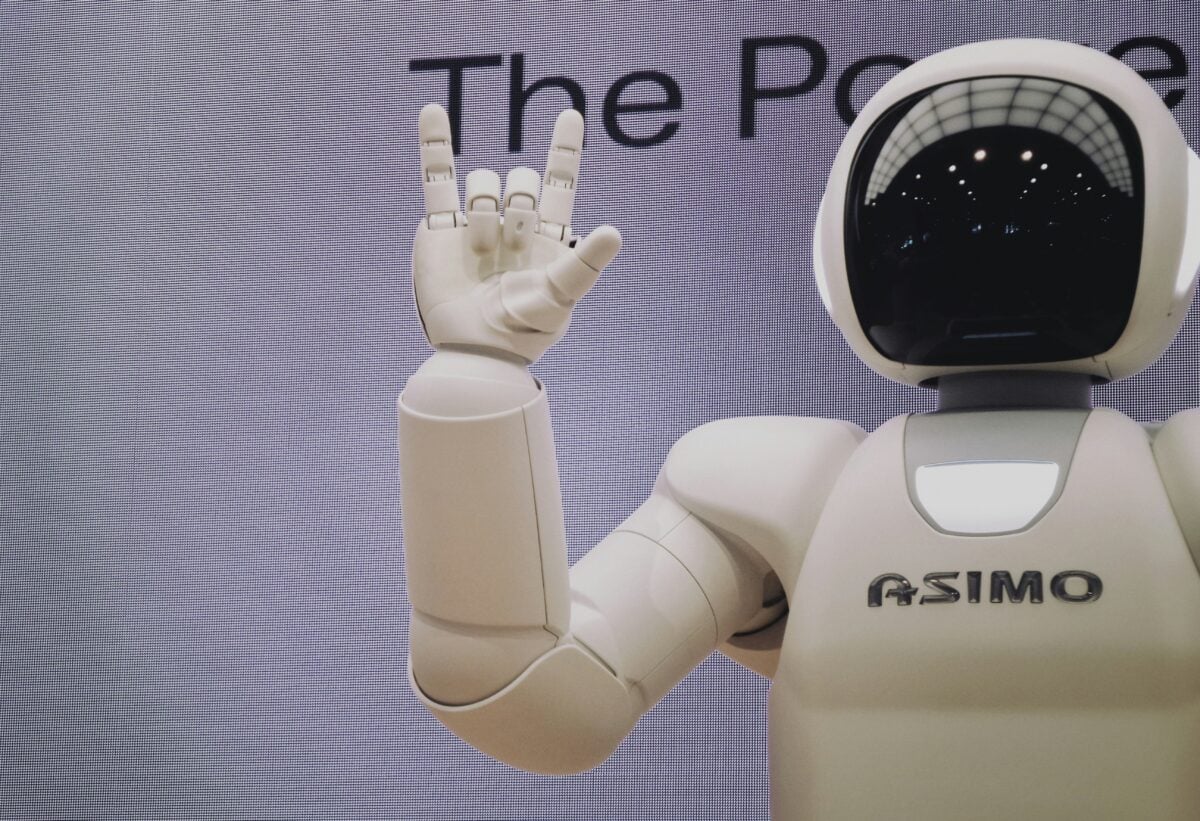
Modern robotics isn’t following the path most people expected.
Rather than replacing human workers wholesale, robots are filling gaps created by labor shortages, handling tasks too dangerous for people, and enabling new capabilities that weren’t previously possible.
The convergence of AI, advanced sensors, new materials, and innovative control systems is creating machines that are more adaptable, safer, and capable than ever before.
What’s emerging isn’t a future where robots simply do what humans do—but one where human and machine capabilities complement each other in ways we’re only beginning to explore.
The robots arriving now aren’t the rigid, predictable machines of past decades.
They’re learning, adapting, and increasingly ready for a world that doesn’t always follow a predetermined script.
More from Go2Tutors!

- The Romanov Crown Jewels and Their Tragic Fate
- 13 Historical Mysteries That Science Still Can’t Solve
- Famous Hoaxes That Fooled the World for Years
- 15 Child Stars with Tragic Adult Lives
- 16 Famous Jewelry Pieces in History
Like Go2Tutors’s content? Follow us on MSN.