Fascinating Secrets of the Terracotta Army
Silence hangs around them, these thousand warriors made of earth, pulled from under Chinese ground. Not simply found – arranged. Each figure placed on purpose, not random, not accidental.
Power shows in their stillness, in how they face forward without moving. Order matters here, strict lines like rules carved into dirt.
Control stretches through the rows, row after row built to outlive whoever first gave the command. Time meant nothing when shaping this kind of permanence.
Out here among the buried rows, power shows up not in gold but in dirt-stained decisions made long ago. Each soldier stands because someone decided exactly where, why, and how.
As shovels peel back another layer, what once looked like statues now feels like machinery paused mid-step. Fifty years on, secrets still slip out between cracks no one noticed before.
Peering behind the scenes reveals hidden details about the Terracotta Army few ever notice. What lies beneath the surface adds depth to its lasting enigma.
Each figure carries secrets shaped by time and silence. Surprisingly quiet clues linger in their postures, not just their numbers.
Hidden patterns emerge when you stop expecting grand revelations. Mystery sticks around because answers rarely show up where we think.
It Was Built to Mirror a Real Military Structure
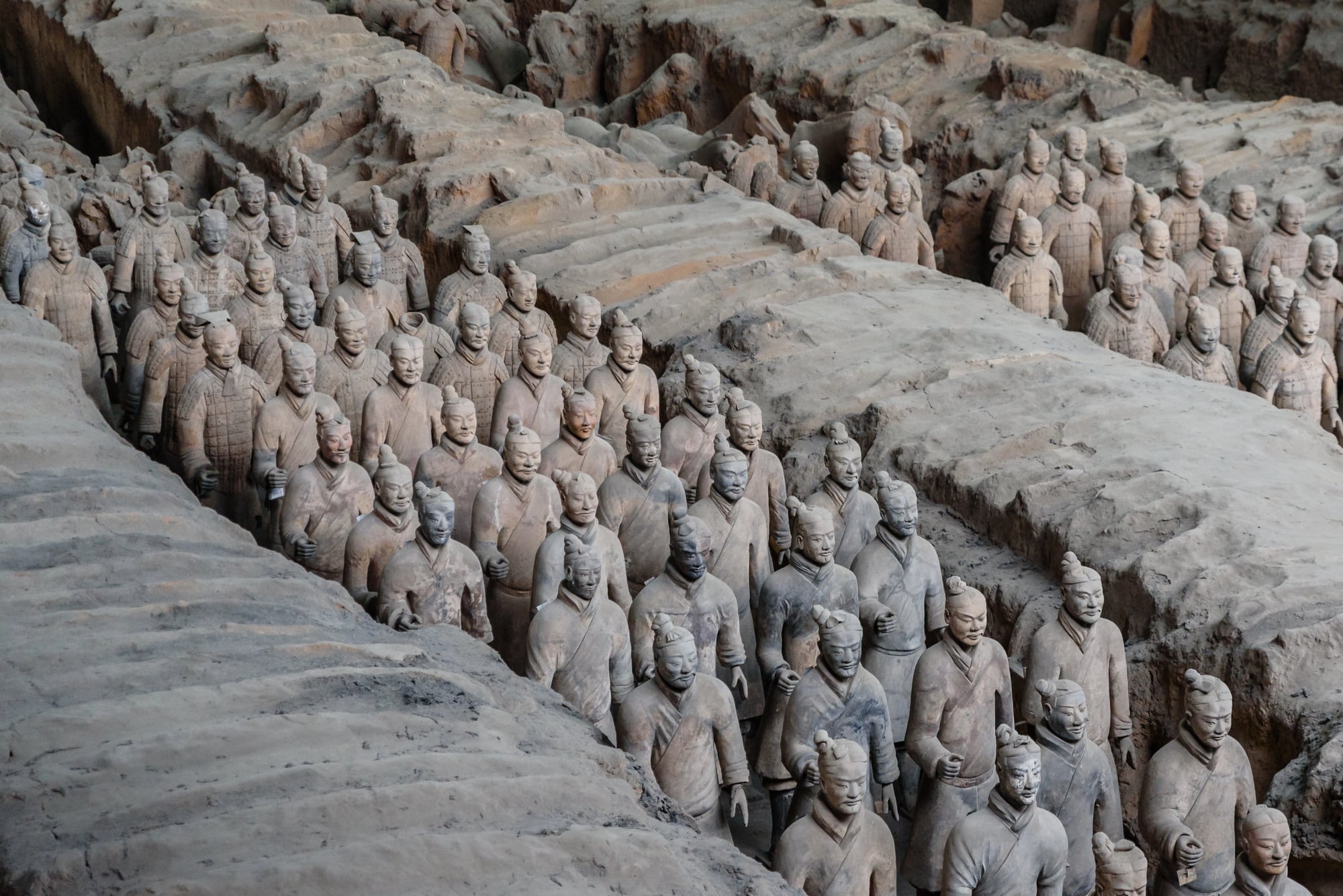
The Terracotta Army was not arranged randomly or purely for spectacle. Its layout closely follows the organisation of an actual Qin military force, complete with infantry units, chariots, cavalry, and commanding officers positioned exactly where they would stand in formation.
This precision suggests that planners used real military doctrine rather than symbolic placement. That level of accuracy matters.
It shows that the army was intended to function, at least conceptually, as a defensive force. The underground arrangement reflects how seriously the Qin state treated hierarchy and order, even in death.
The army was not decorative; it was operational in design.
No Two Soldiers Are Truly Identical
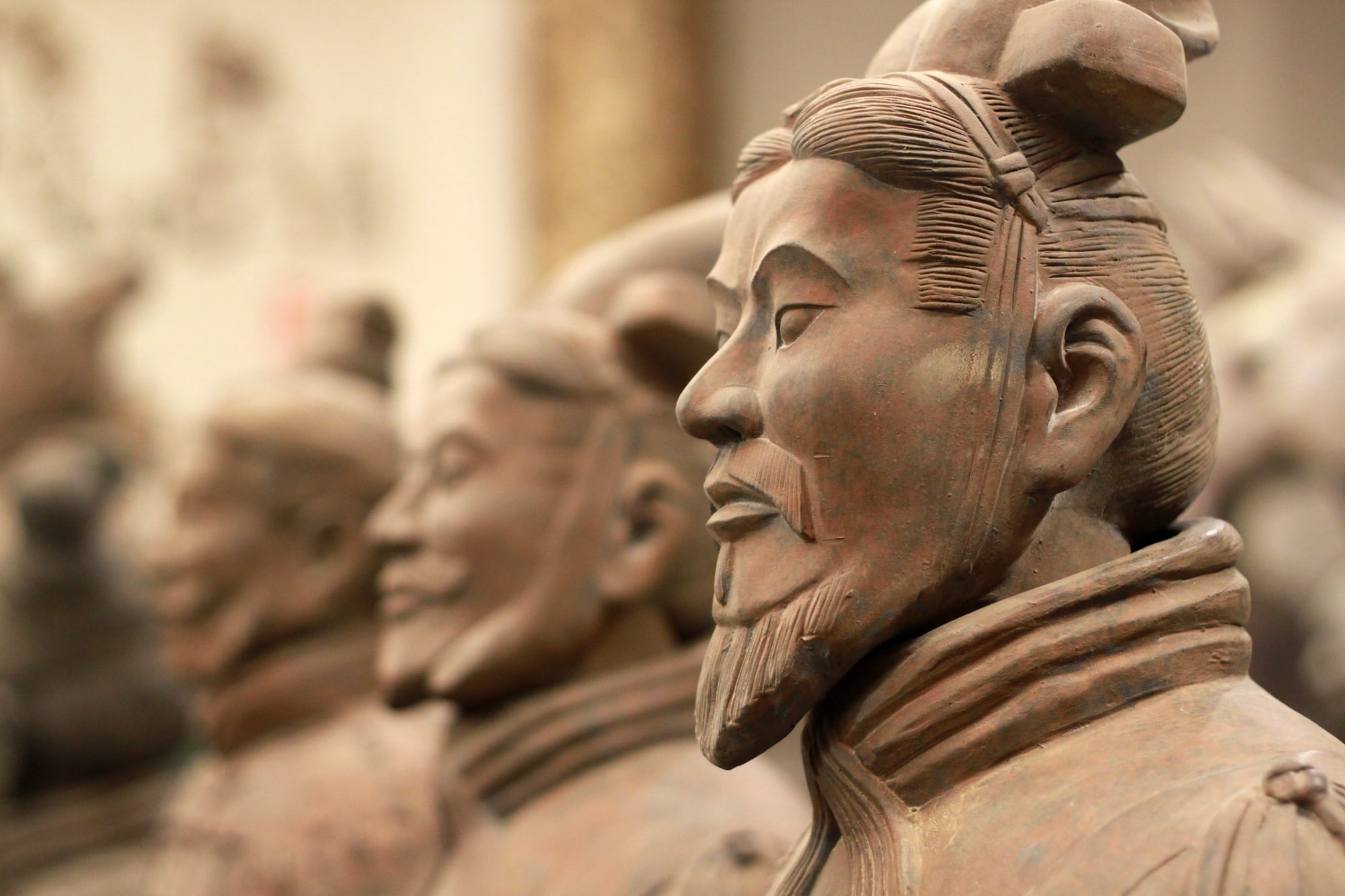
At first glance, the figures appear uniform. Look closer, and individuality emerges. Facial features, hairstyles, expressions, and even ear shapes vary from figure to figure.
This was not an accident of craftsmanship, but a deliberate choice layered on top of standardised production. That said, the process balanced efficiency with detail.
Bodies were assembled using moulded parts, while faces and finer elements were finished by hand. The result was controlled variation, allowing thousands of figures to feel human without slowing construction beyond feasibility.
It is mass production with personality built in.
The Army Was Once Vividly Coloured
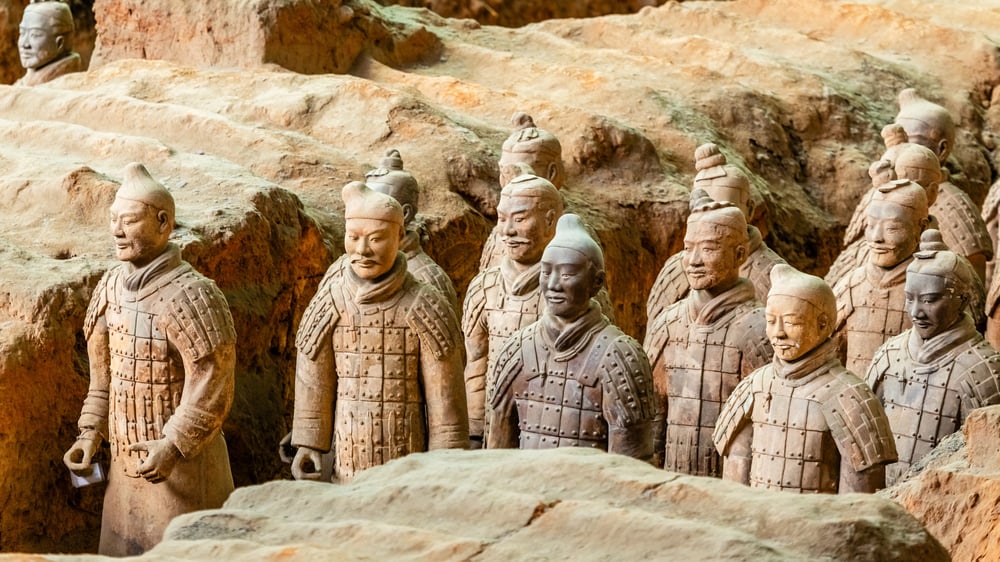
Today, the figures appear muted and earthen, but they were originally painted in bright, mineral-based pigments. Armour details, facial features, and clothing patterns were carefully applied, giving the army a striking visual presence underground.
Reds, blues, greens, and purples once defined the scene. Still, exposure changed everything.
When excavated, many pigments faded rapidly due to contact with air and moisture. This loss reshaped public perception, turning what was once visually bold into something solemn and restrained.
Conservation efforts now focus on preserving colour where possible, revealing glimpses of the original intensity.
Real Weapons Were Part of the Design
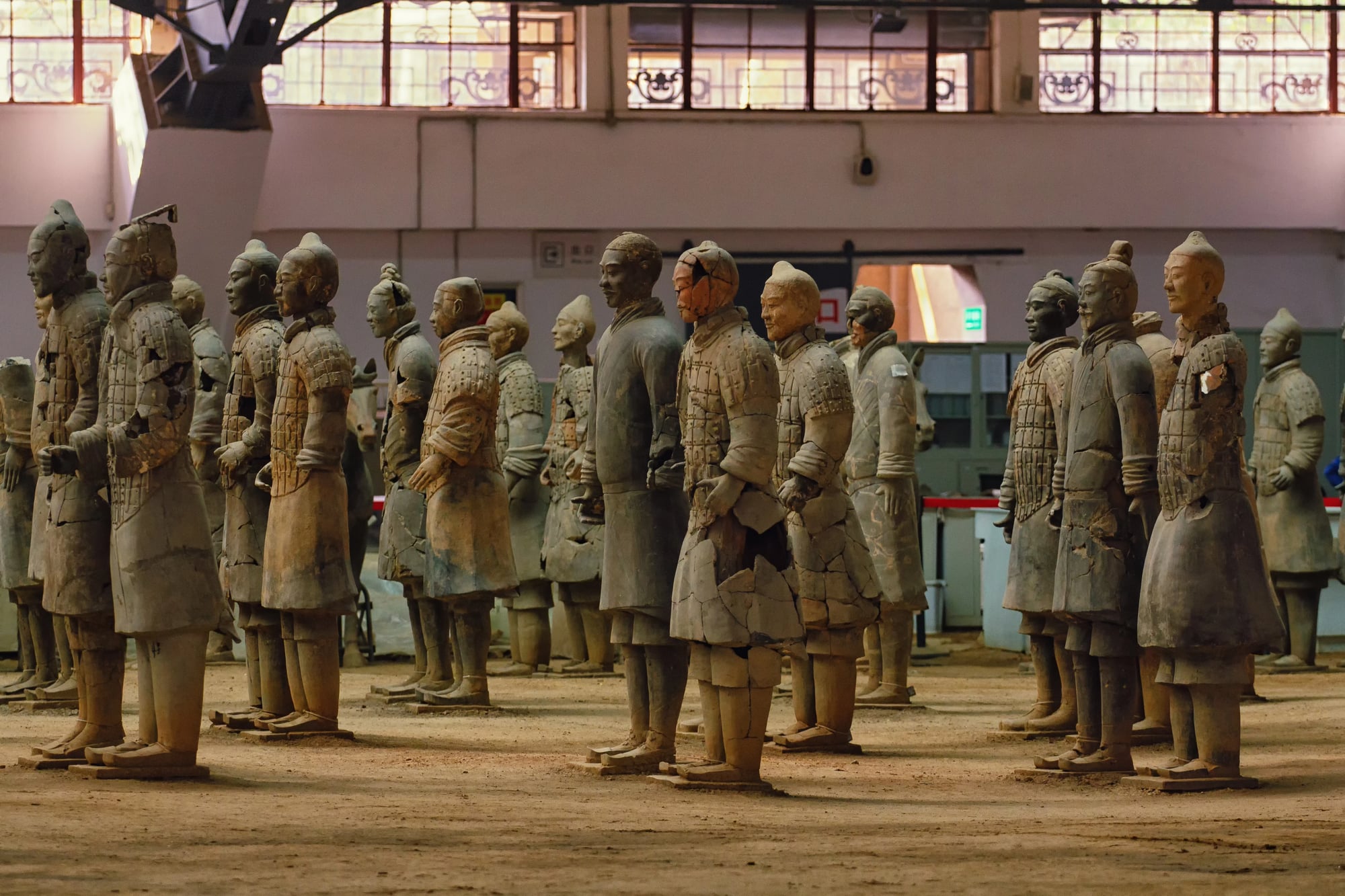
The Terracotta Army was not armed with replicas alone. Many figures were equipped with real bronze weapons, including swords, spears, and crossbow components.
These weapons were manufactured to high standards and show signs of careful treatment. Even so, the weapons reveal something unexpected.
Many remain remarkably well preserved, with surfaces that resisted corrosion. This durability suggests advanced metallurgical techniques and quality control.
The army was not symbolic in armament; it was prepared with genuine tools of warfare.
The Scale Required a Vast Labour Network
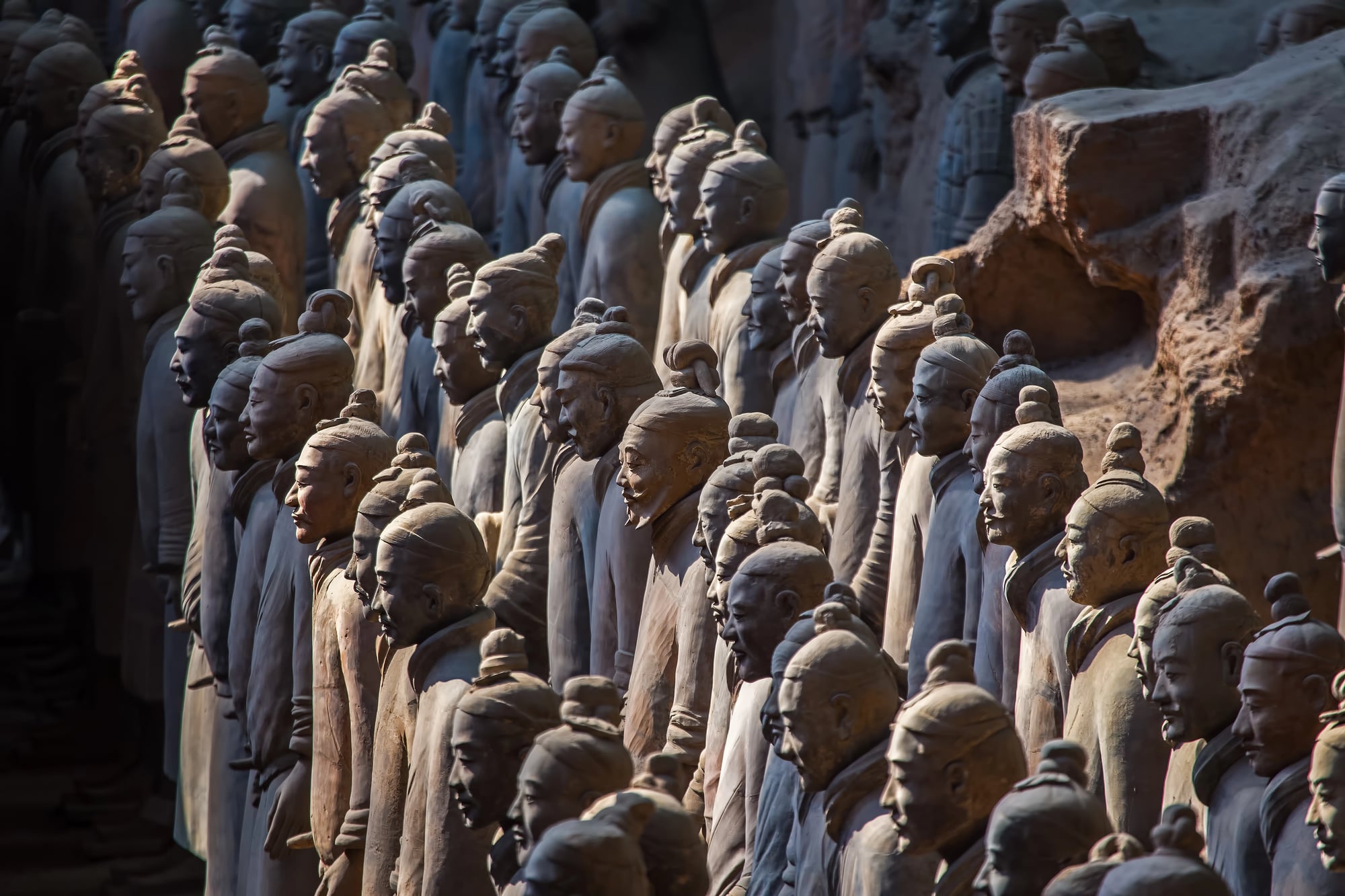
Constructing the Terracotta Army demanded more than artistic skill. It required coordination across mining, transport, pottery workshops, metalworking, and logistics.
Clay had to be sourced, processed, shaped, fired, and assembled in quantities rarely seen in the ancient world. That scale implies state-level organisation.
Labourers, artisans, and supervisors worked within a tightly controlled system, likely overseen by officials reporting directly to the central authority. The project reflects how power translated into production, turning human effort into a lasting physical legacy.
It Was Part of a Much Larger Burial Complex
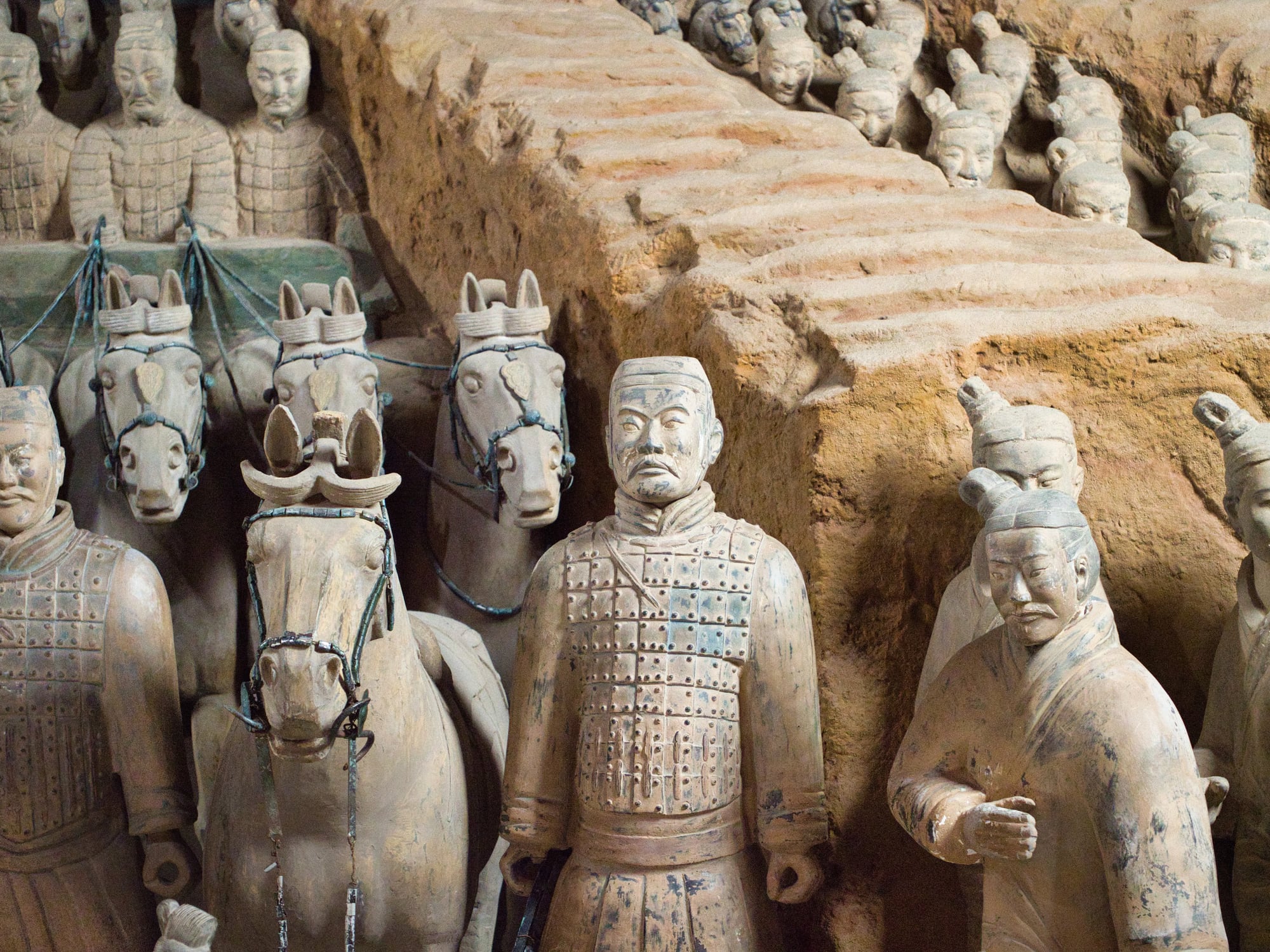
The army is only one component of a sprawling mausoleum built for Qin Shi Huang. The full complex covers many square miles and includes pits, walls, roads, and unexcavated structures.
Ancient texts describe rivers, palaces, and symbolic geography beneath the earth. That context shifts how the army is understood.
It was not meant to stand alone, but to function as one element within a complete underground world. The emperor’s vision extended beyond protection, aiming to recreate the structure of his realm in perpetuity.
The Figures Were Never Meant to Be Seen Again
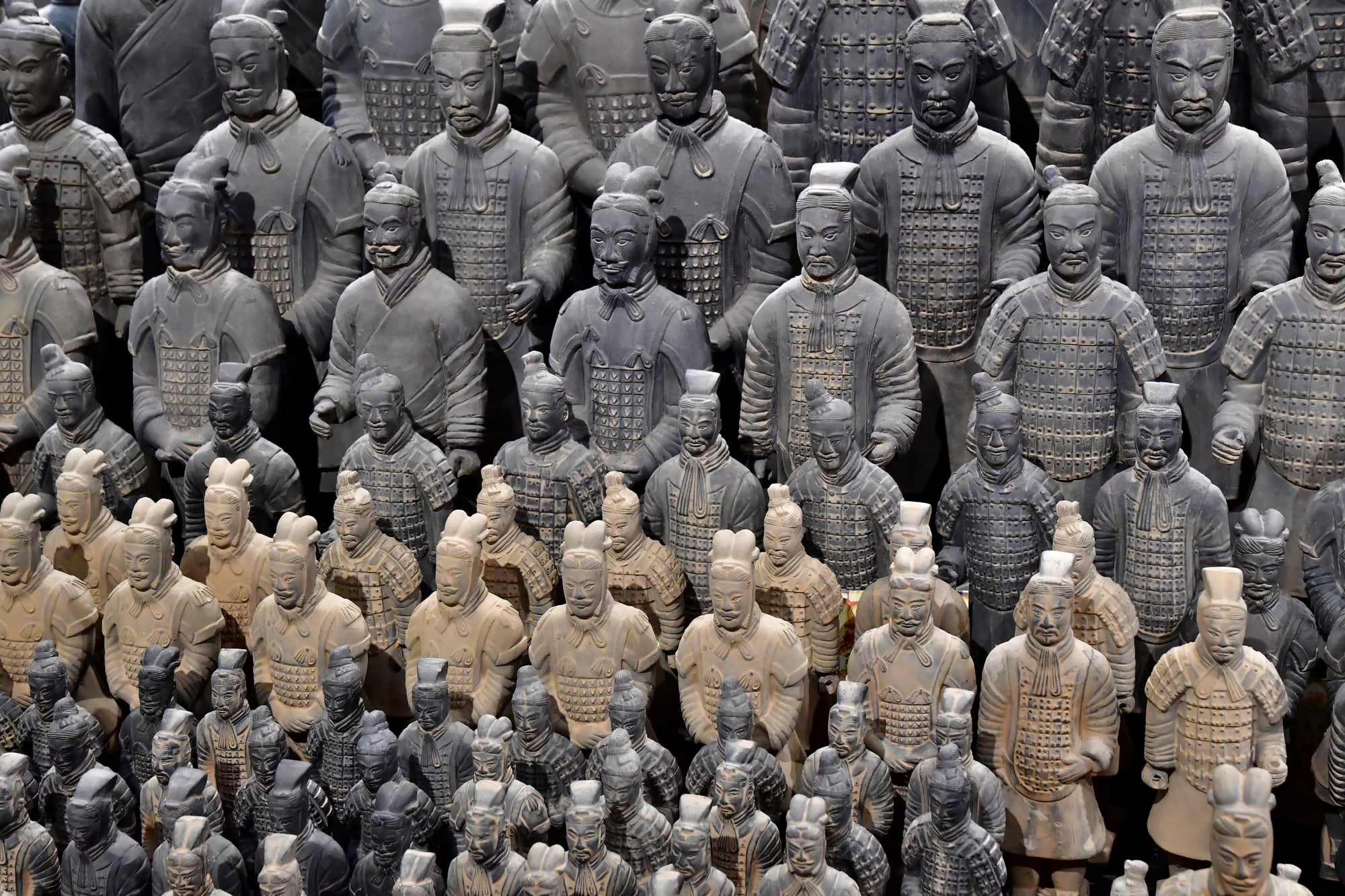
One of the most striking secrets is that the army was designed for concealment, not display. After construction, the pits were roofed, sealed, and buried.
There was no expectation of visitation, reverence, or rediscovery. That permanence underscores intent.
The army existed solely for the afterlife, not for history books or future admiration. Its rediscovery was accidental, the result of farming activity more than two millennia later.
This makes the find feel less like a monument and more like an interruption.
Ranks and Roles Are Communicated Through Detail
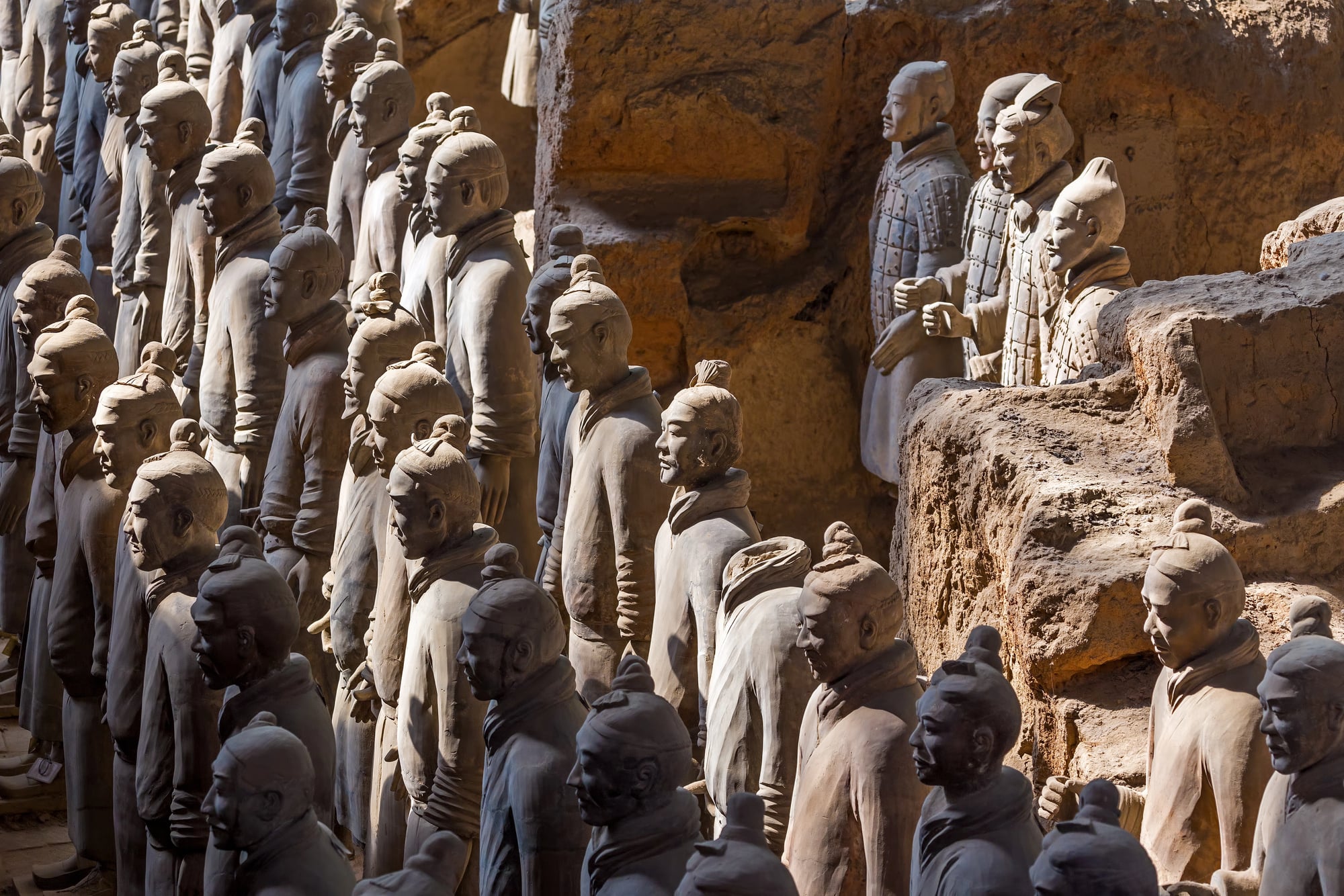
Status within the army is visible through subtle design choices. Officers wear different armour, headgear, and footwear than foot soldiers.
Hairstyles indicate rank, while posture and stance reinforce authority. Still, these details are understated.
There are no exaggerated symbols or oversized markers. The hierarchy is legible but restrained, reflecting a culture that valued discipline over ornament.
The army communicates order quietly, relying on consistency rather than spectacle.
The Pits Show Signs of Ancient Destruction
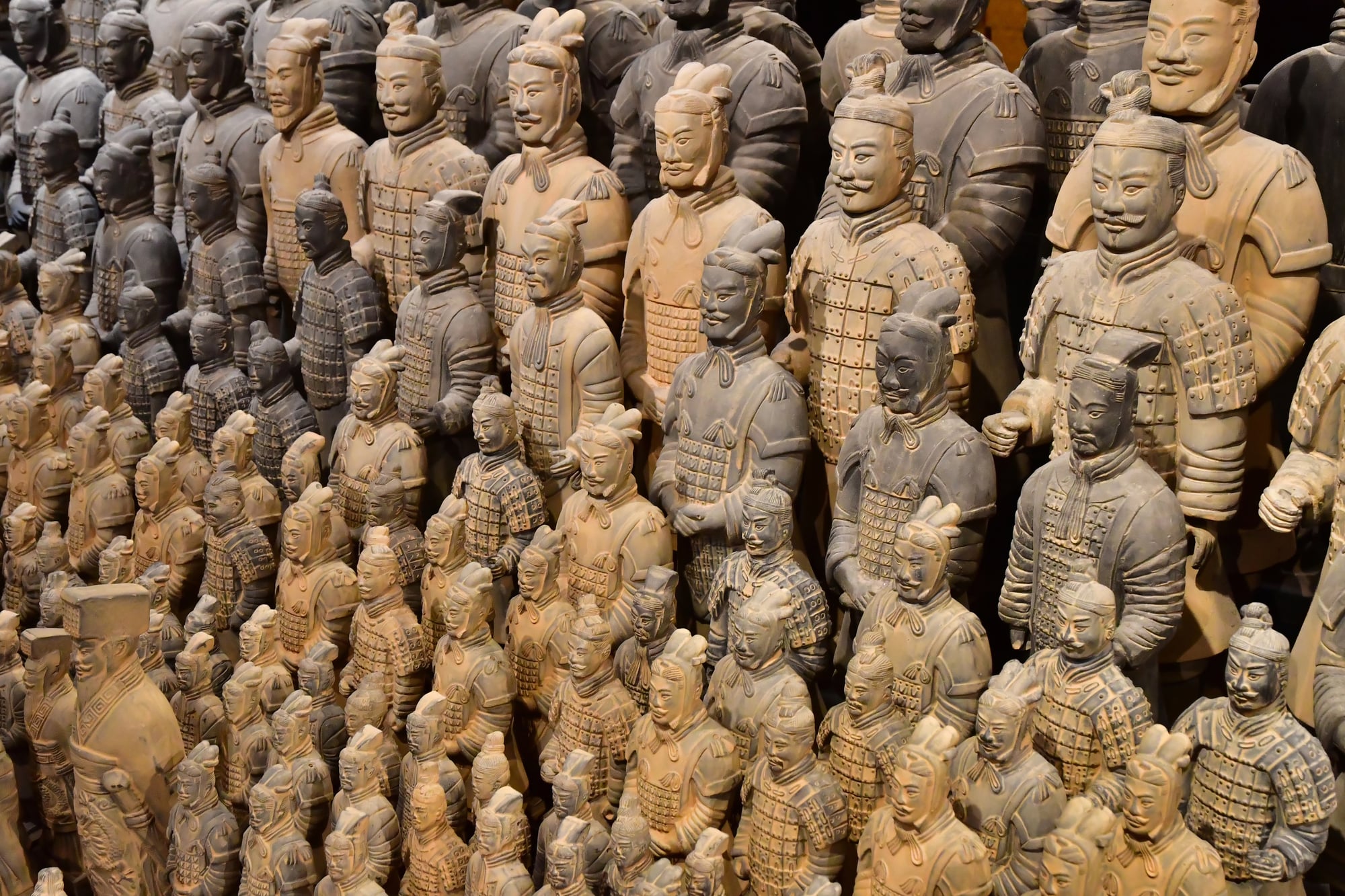
Archaeological evidence suggests that parts of the Terracotta Army were damaged not long after completion. Burned roof beams, collapsed tunnels, and displaced figures point to destruction caused by rebellion and conflict following the fall of the Qin dynasty.
That damage adds a layer of irony. The army built to guard eternal power was itself vulnerable to political change.
What survives today does so not because it was untouched, but because parts of it endured upheaval, collapse, and burial under shifting history.
Some Areas Remain Deliberately Unexcavated
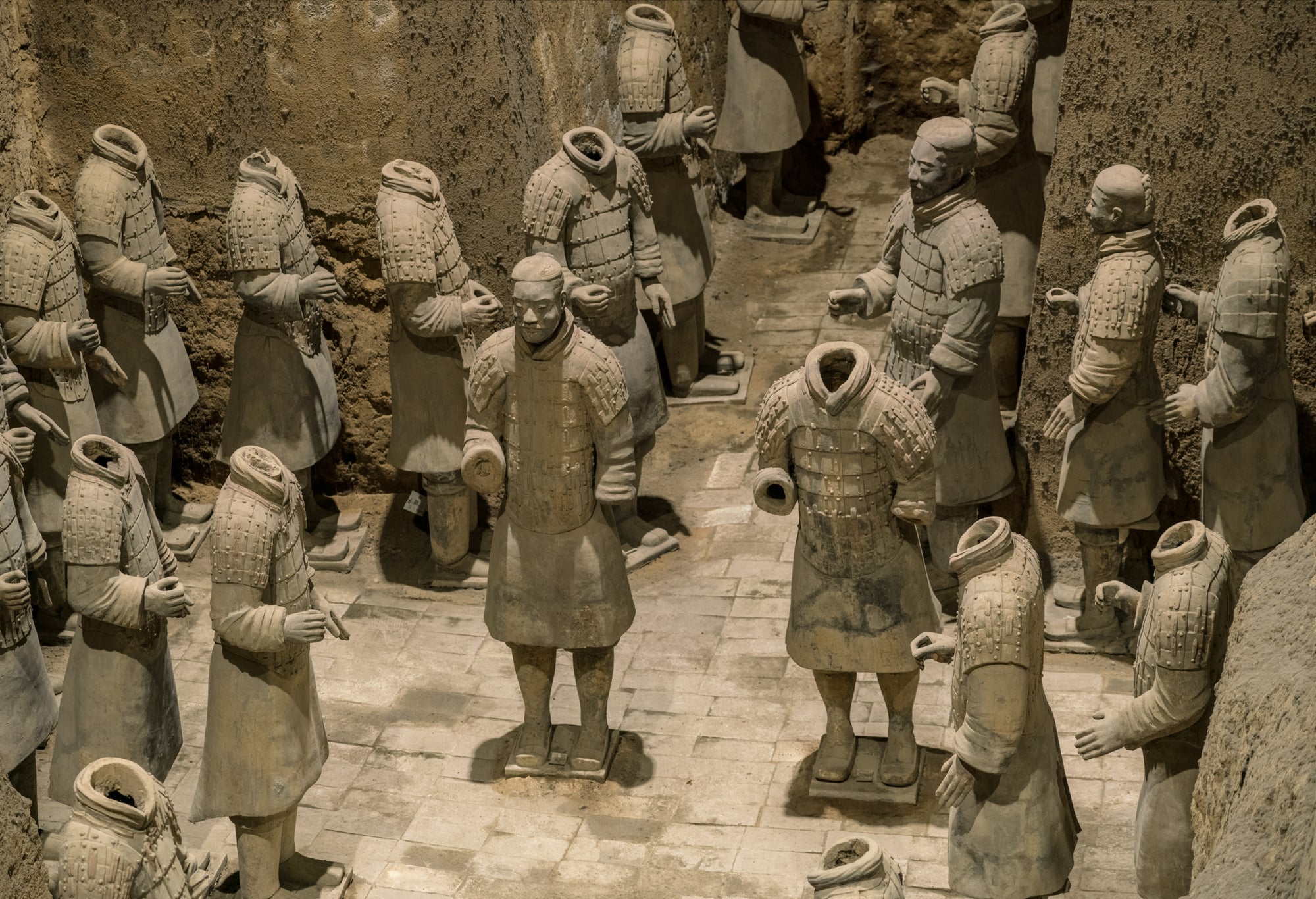
Despite decades of study, large portions of the complex remain underground. Archaeologists proceed cautiously, aware that excavation can cause irreversible damage, especially to pigments and organic materials.
That restraint reflects modern priorities. Preservation now outweighs exposure, with researchers choosing to wait for better techniques rather than risk loss.
The army continues to keep its secrets, not through mystery alone, but through careful stewardship.
The Craftsmanship Reveals Pride, Not Anonymity
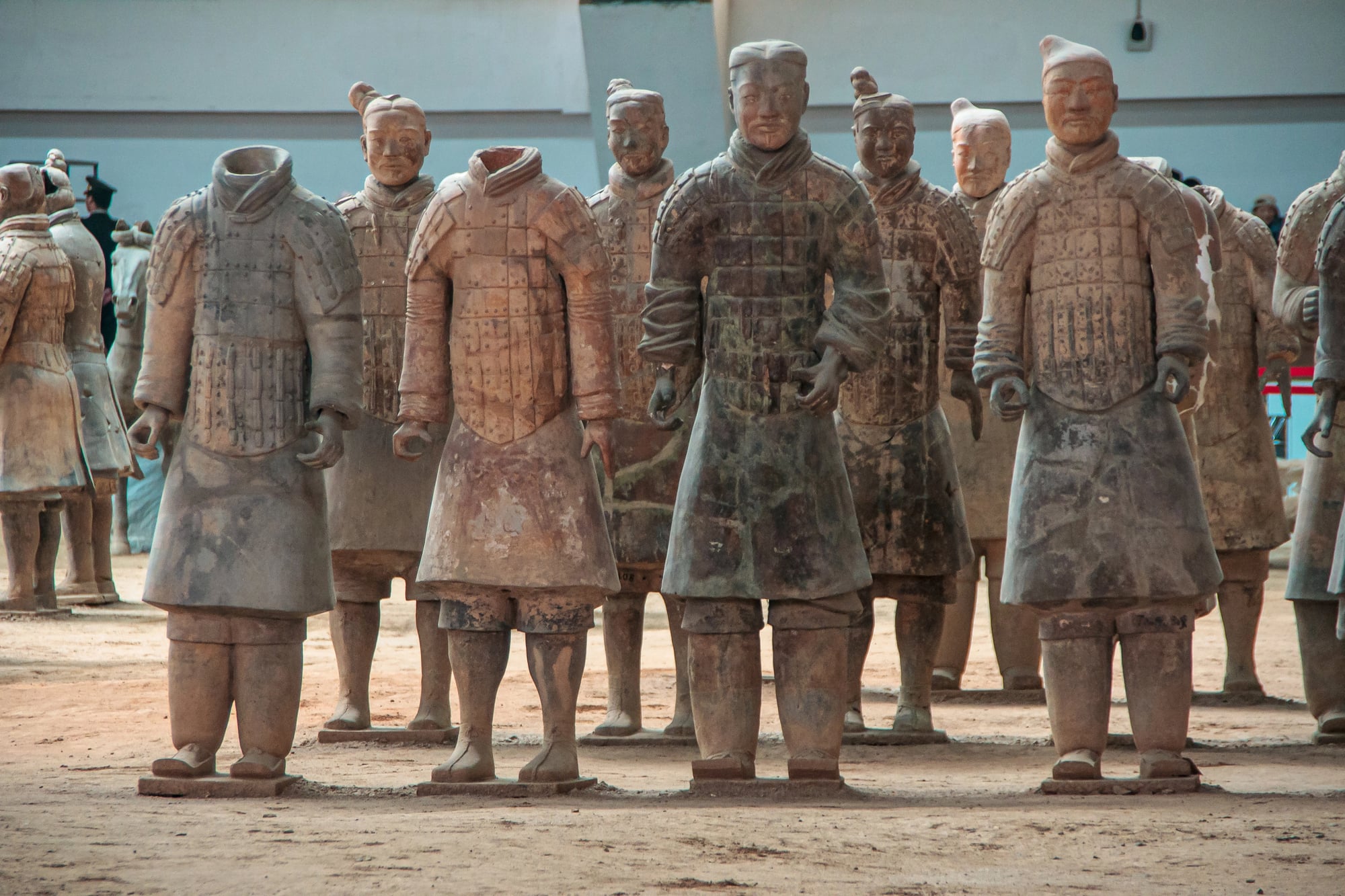
Although the project was state-driven, signs of individual craftsmanship remain visible. Tool marks, stylistic quirks, and workshop patterns suggest that artisans took ownership of their work within the limits imposed on them.
That human element softens the scale. Behind the thousands of figures were people shaping clay day after day, leaving traces of their presence.
The army is as much a record of labour as it is of authority.
Why the Terracotta Army Still Resonates
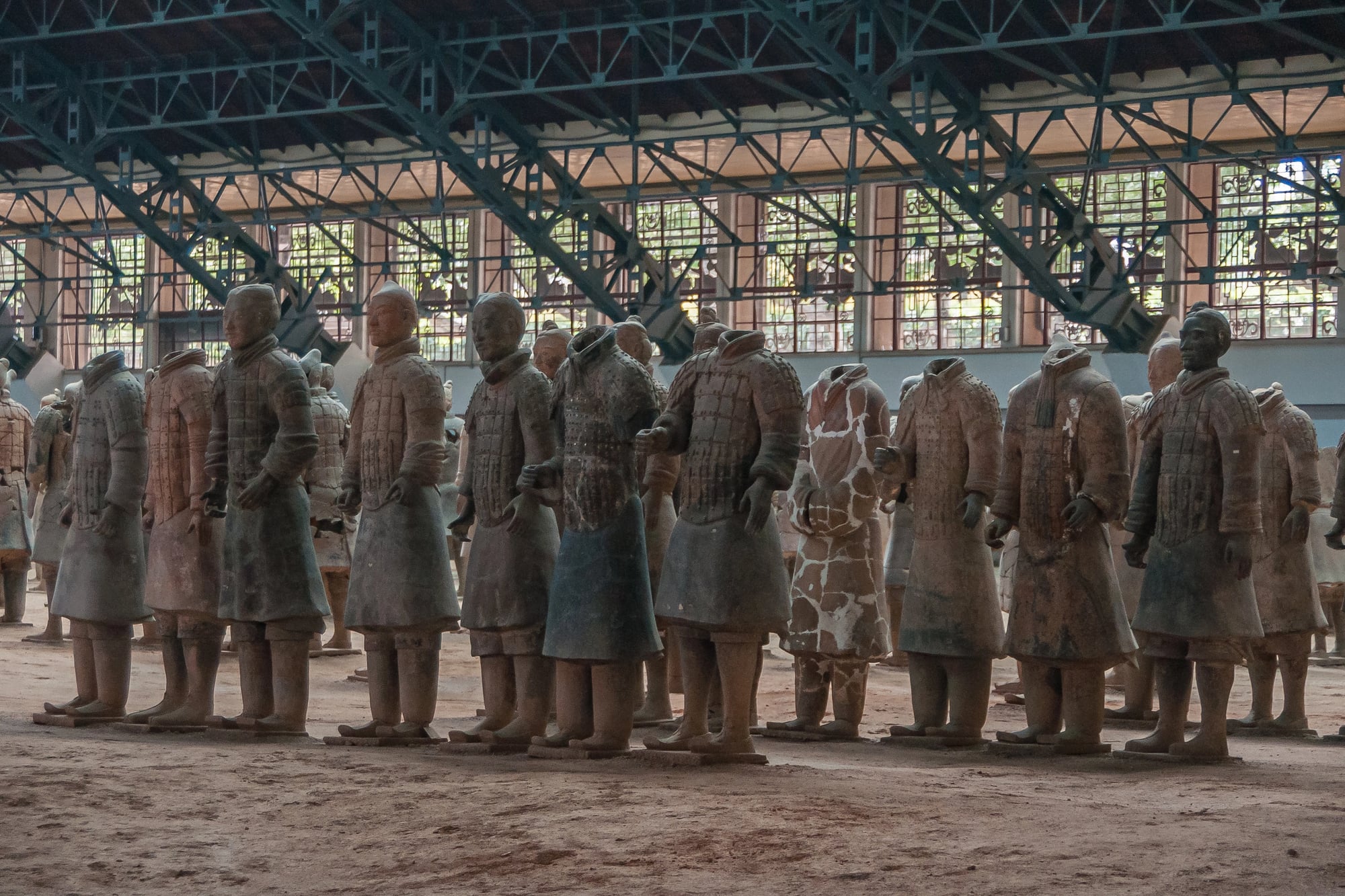
What sticks about the Terracotta Army is how quietly massive its intent feels. Not a trace of legend props it up, nor any need for grand tales.
Order shapes its impact – row after row, figure following figure, each one holding still like it was meant to last forever. Right now, it gives something beyond old facts.
What shows up in design, work patterns, and signs points to deeper authority moves. That military presence hints at an old urge – shaping what comes after.
Carefully built plans never fully escape shifting moments, accidents, or being found again later.
More from Go2Tutors!

- The Romanov Crown Jewels and Their Tragic Fate
- 13 Historical Mysteries That Science Still Can’t Solve
- Famous Hoaxes That Fooled the World for Years
- 15 Child Stars with Tragic Adult Lives
- 16 Famous Jewelry Pieces in History
Like Go2Tutors’s content? Follow us on MSN.