Fastest Roller Coasters in Operation
Speed changes everything about a roller coaster. Once you cross certain thresholds, the experience stops being about drops and loops and becomes purely about velocity.
Your face gets pressed back. Your vision blurs slightly.
The wind becomes a physical force. These are the coasters that prioritize acceleration above all else, where the entire design exists to answer one question: how fast can we make this thing go?
Here are the fastest roller coasters currently operating around the world.
Formula Rossa, Ferrari World, UAE

This is the fastest. Formula Rossa hits 149 miles per hour in 4.9 seconds.
The acceleration matches a modern fighter jet launch. You go from standing still to highway speeds before your brain fully processes what’s happening.
The coaster sits inside Ferrari World in Abu Dhabi. The entire experience is themed around Formula One racing, which makes sense given the speeds involved.
Riders wear protective goggles because bugs and sand at that velocity can actually hurt. The launch uses a hydraulic system similar to what aircraft carriers use for catapults. The force pins you to your seat.
Your cheeks pull back. Breathing becomes difficult for those few seconds.
Then you’re flying across the track, covering distance so fast that the landscape becomes a blur. The rest of the ride feels almost anticlimactic after that launch. Nothing else compares to those first five seconds.
Kingda Ka, Six Flags Great Adventure, USA

Kingda Ka held the speed record for years before Formula Rossa opened. It reaches 128 miles per hour and climbs to 456 feet, making it the tallest coaster in the world.
The launch takes 3.5 seconds. The coaster stands in New Jersey, visible from miles away.
That tower dominates the skyline. You can see it from the highway.
The ride itself lasts less than a minute, but most of that time is spent climbing and dropping. The actual speed phase is over quickly.
The launch feels violent. There’s no buildup, no warning.
You go from zero to 128 in less time than it takes to read this sentence. Then you’re shooting straight up, decelerating as you climb, reaching the peak, and plummeting back down in a 270-degree spiral.
Your stomach doesn’t catch up until you’re back in the station.
Top Thrill Dragster, Cedar Point, USA
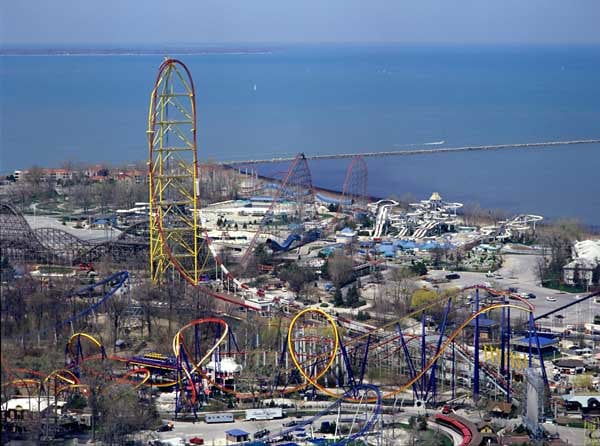
Top Thrill Dragster reaches 120 miles per hour in 3.8 seconds. It held the height record before Kingda Ka opened. The coaster is simpler than most—launch, climb, drop, brake.
No loops, no inversions. Just pure speed and height.
Cedar Point in Ohio is famous for coaster collections. Top Thrill Dragster might be the park’s most iconic ride despite its simplicity.
The red and yellow tower is immediately recognizable. When it’s running, you hear the launches from anywhere in the park—a loud whoosh followed by screams that doppler away as the train climbs.
The ride experiences frequent downtime. The launch system is temperamental.
Hydraulic launches break often, and fixing them takes time. When it works, though, the experience delivers.
You accelerate so fast that your vision narrows. Then you’re at the top, getting a brief view of Lake Erie before dropping back down the other side.
Red Force, Ferrari Land, Spain

Red Force hits 112 miles per hour in five seconds. It’s Europe’s fastest and tallest coaster, located at Ferrari Land in Spain.
The acceleration is smooth compared to hydraulic launches, using a magnetic system instead. The coaster follows a simple layout—launch, climb, drop, brake. The tower reaches 367 feet.
You get a spectacular view of Port Aventura resort and the Mediterranean coast during that brief moment at the peak. Then you’re diving back down.
Magnetic launches feel different from hydraulic ones. The acceleration is more consistent, less jerky.
You’re still pinned to your seat, but it doesn’t have that violent snap. The tradeoff is that magnetic systems can’t quite match the raw power of hydraulics, which is why Red Force is slower than Kingda Ka despite being newer.
Dodonpa, Fuji-Q Highland, Japan

Dodonpa used to hold the acceleration record. It reaches 107 miles per hour in 1.56 seconds.
That’s faster acceleration than Formula Rossa, compressed into an even shorter timeframe. The g-forces involved are intense enough that the ride experience has been modified over the years due to safety concerns.
The coaster sits at the base of Mount Fuji. The setting is spectacular on clear days.
The ride itself combines the insane launch with a twisted layout full of airtime hills and tunnels. Unlike pure speed coasters that end quickly, Dodonpa keeps going after the launch.
The compressed air launch system is unique. Most coasters use either hydraulics or magnetics.
Dodonpa uses compressed air tanks that release all at once, creating that explosive acceleration. Your chest compresses.
Your vision goes slightly grey. Then you’re through it and climbing the first hill, wondering what just happened.
Superman: Escape from Krypton, Six Flags Magic Mountain, USA

This coaster is unusual. It launches backward at 100 miles per hour straight up a 415-foot tower. You can’t see where you’re going.
You’re facing the ground as you accelerate skyward, which messes with your sense of orientation completely. The ride started as Superman: The Escape, launching forward.
Six Flags reversed the trains to make the experience more intense. The change worked. Launching backward adds a psychological element that forward launches don’t have.
You feel the speed but can’t anticipate what’s coming. At the peak, you experience a moment of weightlessness before falling back down the tower.
The whole sequence takes less than a minute. The queue moves slowly because the ride capacity is terrible—only one train per tower, and two towers total.
But the experience is unique enough that people wait anyway.
Ring Racer, Nürburgring, Germany
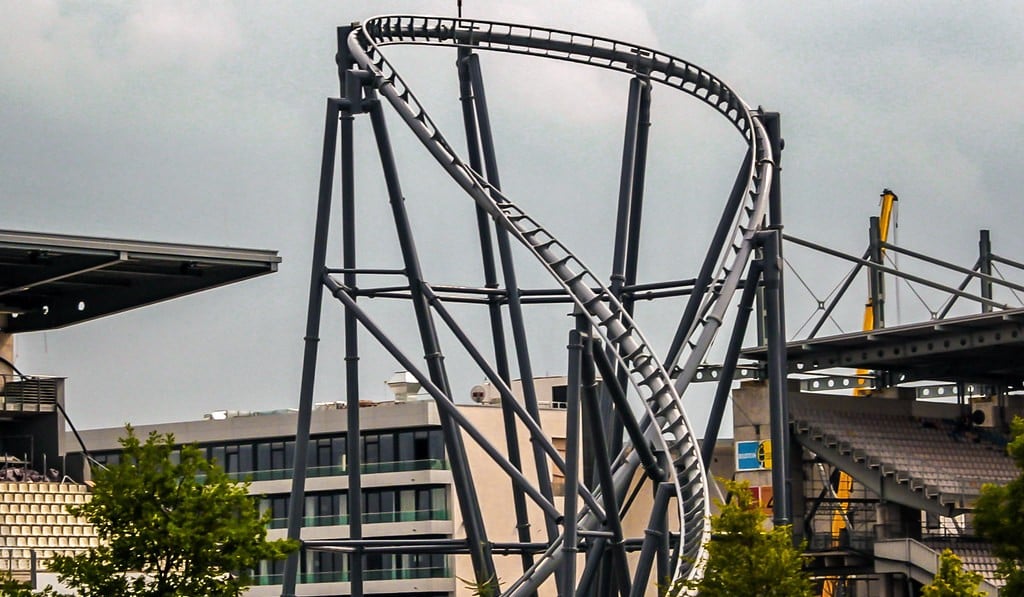
Ring Racer was supposed to reach 99.4 miles per hour in 2.5 seconds. The coaster sits at the famous Nürburgring racing circuit.
It was designed as a racing simulation, launching riders from a mock pit lane. The ride has barely operated since opening.
Technical problems plagued it from the start. The compressed air launch system proved unreliable.
The coaster would open for brief periods, then close for months of repairs. Eventually, it stopped running altogether.
It still stands at the circuit, a monument to ambitious engineering that couldn’t quite work. When it did run, the launch was supposedly spectacular.
Riders wore helmets. The theming included actual race car sound effects.
But the reality is that most people never get to experience it. The coaster exists now mainly in lists of failures and lost opportunities.
Tower of Terror II, Dreamworld, Australia

This coaster launches at 100 miles per hour straight into a 377-foot tower. Like Superman at Magic Mountain, you shoot up and fall back down.
The difference is the track layout—Tower of Terror has you facing forward the entire time. The launch uses a Linear Synchronous Motor system.
The acceleration is smooth and powerful. You’re pushed into your seat as the track ahead blurs.
Then you’re climbing the tower, watching the park drop away beneath you. At the peak, you experience several seconds of weightlessness before dropping backward down the same track.
Dreamworld is on Australia’s Gold Coast. The park has faced challenges in recent years, but Tower of Terror remains operational.
The coaster is older now, dating back to the late 1990s, but the speed still delivers. Physics doesn’t age.
Steel Dragon 2000, Nagashima Spa Land, Japan

Steel Dragon reaches 95 miles per hour, making it one of the fastest traditional coasters. Unlike the pure launch coasters, this one uses a lift hill.
It climbs 318 feet, then drops and maintains high speeds through a long layout. The coaster was the longest in the world when it opened.
The track stretches over 8,000 feet. You spend several minutes on it, rare for high-speed coasters that usually end quickly.
The first drop gives you time to accelerate naturally, building speed rather than launching. The structure is reinforced beyond typical coaster standards because Japan requires earthquake-resistant design.
That extra steel makes it one of the heaviest coasters ever built. You can see the robust construction in the thick support columns.
Everything about it feels solid and permanent.
Fury 325, Carowinds, USA
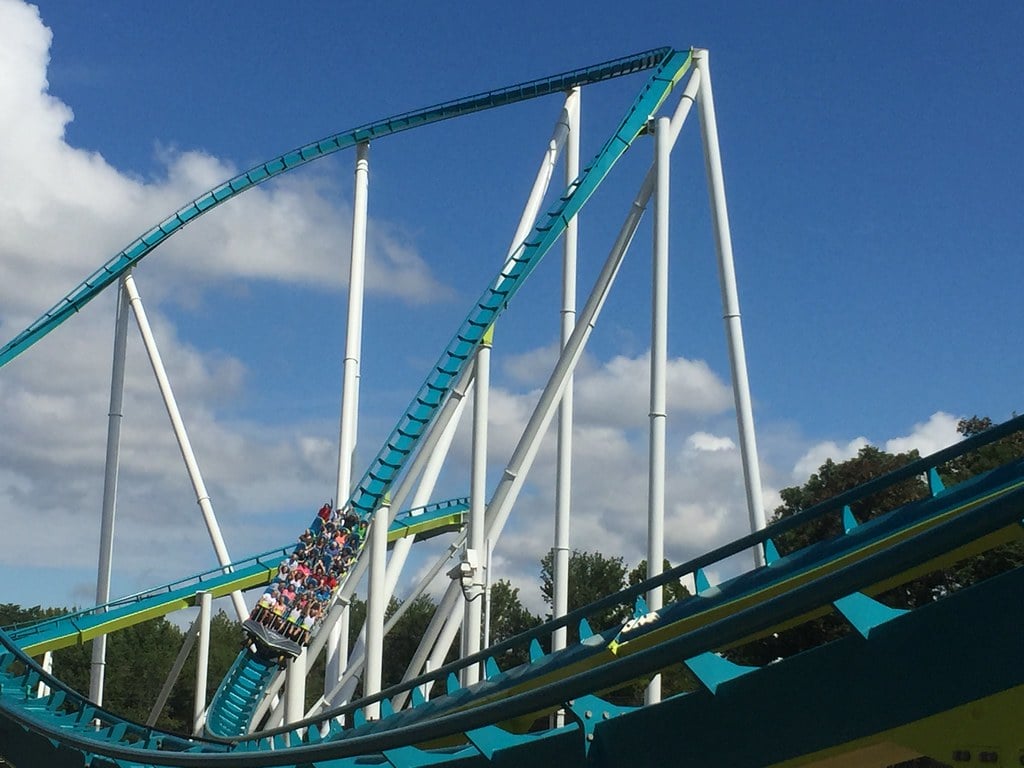
Fury 325 tops out at 95 miles per hour. The coaster uses a traditional lift hill and first drop to build speed.
It’s one of the tallest and fastest giga coasters, a category defined by heights above 300 feet. The layout is long and fast.
You maintain speed through most of the ride rather than having one intense moment followed by coasting. The first drop is 81 degrees, nearly vertical.
You accelerate the entire way down, hitting maximum speed at the bottom. Carowinds sits on the North Carolina-South Carolina border.
Fury 325 actually crosses state lines during the ride. That’s not relevant to the experience, but it’s a fun fact.
What matters is the sustained speed and smooth transitions. The coaster flows rather than jerking you around.
Millennium Force, Cedar Point, USA

Millennium Force reaches 93 miles per hour and was the first giga coaster ever built. It opened in 2000 and changed what people expected from roller coasters.
Before the Millennium Force, most coasters either went fast or stayed smooth. This one did both.
The lift hill uses a cable system instead of a chain, pulling the train up faster than traditional coasters. You’re at the top in less time, building anticipation.
Then you drop 300 feet at an 80-degree angle. The speed builds naturally, hitting maximum at the bottom.
The ride stays fast throughout. You cross islands in the park’s lagoon, cut through tunnels, climb hills that create airtime.
The pacing is relentless. By the end, you’re exhausted. Cedar Point has built several taller and faster coasters since, but Millennium Force still has a following.
Sometimes the original stays special.
Intimidator 305, Kings Dominion, USA

Intimidator 305 hits 90 miles per hour and features one of the most intense first turns in coaster design. The turn is banked at 85 degrees and taken at nearly full speed.
Riders regularly grey out—partial loss of vision due to g-forces. The coaster was inspired by NASCAR, specifically Dale Earnhardt.
The track mimics a racing circuit with fast transitions and sustained forces. The first drop is 300 feet at 85 degrees.
You accelerate down, then immediately slam into that turn. The g-forces hit 4.5, enough to make many riders lose peripheral vision temporarily.
Kings Dominion modified the turn shortly after opening, raising it slightly to reduce forces. Even adjusted, it remains one of the most physically demanding coasters operating.
You need to be ready for it. Tensing your legs helps maintain blood flow.
Otherwise, you’re spending the rest of the ride trying to recover.
The Physics of Going This Fast

Speed on a coaster creates challenges beyond just building a powerful launch. Wind resistance increases exponentially.
At 150 miles per hour, the air feels like a solid mass pushing against you. That’s why Formula Rossa requires goggles and why faster speeds become impractical.
The track needs perfect alignment. Minor imperfections that don’t matter at 30 miles per hour become violent jolts at 100.
Maintenance schedules are rigorous. Any wear on wheels, any slight warping of track, any looseness in restraints—all of it gets magnified by speed.
G-forces also limit design options. You can’t take sharp turns at these speeds without injuring riders.
Most ultra-fast coasters follow simple layouts—straight launch, climb, maybe one or two gentle curves, then brake. Complex elements work better at moderate speeds where the human body can handle the forces involved.
Why Faster Isn’t Always Better

There’s a point where speed stops improving the experience. Your brain can’t process what’s happening fast enough to enjoy it.
The difference between 120 and 150 miles per hour feels incremental, not transformative. You’re already maxed out on sensory input.
Many enthusiasts prefer coasters in the 70 to 90 mile per hour range. Fast enough to be thrilling, but not so fast that the experience becomes one-dimensional.
Those coasters can include more varied elements—loops, corkscrews, airtime hills that last longer than a second. The fastest coasters are impressive as engineering achievements.
They push the boundaries of what’s possible. But they rarely become people’s favorite coasters.
They’re bucket list rides—do them once, appreciate what they accomplish, then go back to coasters that offer more complete experiences. Speed is one element of what makes a coaster great.
By itself, it’s not enough.
When Steel Moves Like Thunder

Every launch hits right in the soles. Underfoot, the ground shivers slightly. Overhead, metal creaks when the frame sways.
Then comes that burst – a sound like ripping wind – colors dragging by in jagged lines. Staggering back, riders blink hard, jackets half-untucked, mouths hanging open.
Each sudden lurch ahead squeezes the breath a little tighter. Here it begins.
You settle in, sliding the bar down onto your thighs, holding steady. A countdown might whisper through speakers, or perhaps only stillness answers – then a sudden jolt tells you: go.
Your heart picks up speed. Breath pulls deep into the chest.
Here comes the surge. Every other idea disappears.
Only movement now, weight pressing into your ribs, an instinctive need to trap this sensation before it slips. Quiet settles after.
Drifting into stillness, thoughts fumbling for meaning, knowing words would fall short anyway. And that fits.
Some experiences reject explanation. They exist solely in their own unfolding – made of speed, heartbeat, muscles stretched tight, form breaking rules set for steady steps. Sound lingers longest.
More from Go2Tutors!

- The Romanov Crown Jewels and Their Tragic Fate
- 13 Historical Mysteries That Science Still Can’t Solve
- Famous Hoaxes That Fooled the World for Years
- 15 Child Stars with Tragic Adult Lives
- 16 Famous Jewelry Pieces in History
Like Go2Tutors’s content? Follow us on MSN.



