Forgotten 2000s Websites That Were Something Special
The rhythm of the early internet was different. Websites experimented, took chances, and occasionally altered the way millions of people used the internet.
Although many of these sites disappeared or became obscure, they influenced later developments. You may use some innovative features on a daily basis without being aware of their origins.
StumbleUpon provided you with a button before algorithms determined what you should see. When you click it, a random website that someone else deemed worthy of sharing will appear.
The whole point was the unpredictability. A page about deep-sea animals, an oddball webcomic, or someone’s photo essay about deserted buildings could all be found there.
The service evolved to function without a browser toolbar, although it was used in earlier iterations. You could lose hours of your day to that one button.
You gave what you discovered a thumbs-up or thumbs-down rating, which is supposed to improve future recommendations. In reality, though, people simply kept clicking to see what would happen next.
Back when the internet still seemed to have uncharted territory, it transformed browsing into something more akin to exploration.
Digg Proved Crowds Could Curate

Reddit gets the credit now, but Digg came first with the idea that users should decide what’s important. You submitted links, other people voted them up or down, and the front page reflected what was getting attention.
Simple concept, massive impact. For a few years, getting to the Digg front page meant your server would probably crash from the traffic.
The site had genuine cultural weight. Tech news, weird stories, videos—all filtered through collective voting.
The 2010 Digg v4 redesign accelerated its collapse by favoring power users and advertisers, but the site was already losing ground to Reddit and struggling with its advertising strategy. The voting model it validated lives on across the internet.
Del.icio.us Organized the Chaos

Bookmarking has always been a solo activity trapped in your browser. Del.icio.us made it social and useful.
You saved links with tags, other people did the same, and suddenly you could see what everyone was bookmarking about photography or cooking or web design.
The name was clever (if annoying to type), the interface was clean, and the idea that your bookmarks could be public and searchable felt radical. It popularized tagging as an organizational method before Twitter and Instagram made hashtags ubiquitous.
Yahoo bought it, then basically let it die, but the concept of social bookmarking had already spread everywhere.
Geocities Let Anyone Build Something

Before social media profiles, people built entire websites on Geocities. The results were often terrible—flashing text, auto-playing MIDI files, tiled backgrounds that hurt your eyes.
But that wasn’t the point. The point was that millions of people who’d never touched code suddenly had a space online that was theirs.
You picked a “neighborhood” that matched your interests, got free hosting, and started making pages. The tools were basic but accessible.
Every Geocities site looked different because everyone was figuring it out as they went. Yahoo shut down the North American version in 2009, deleting millions of these weird, personal corners of early internet culture.
The Japanese version survived until 2019.
Last.fm Tracked What You Actually Listened To
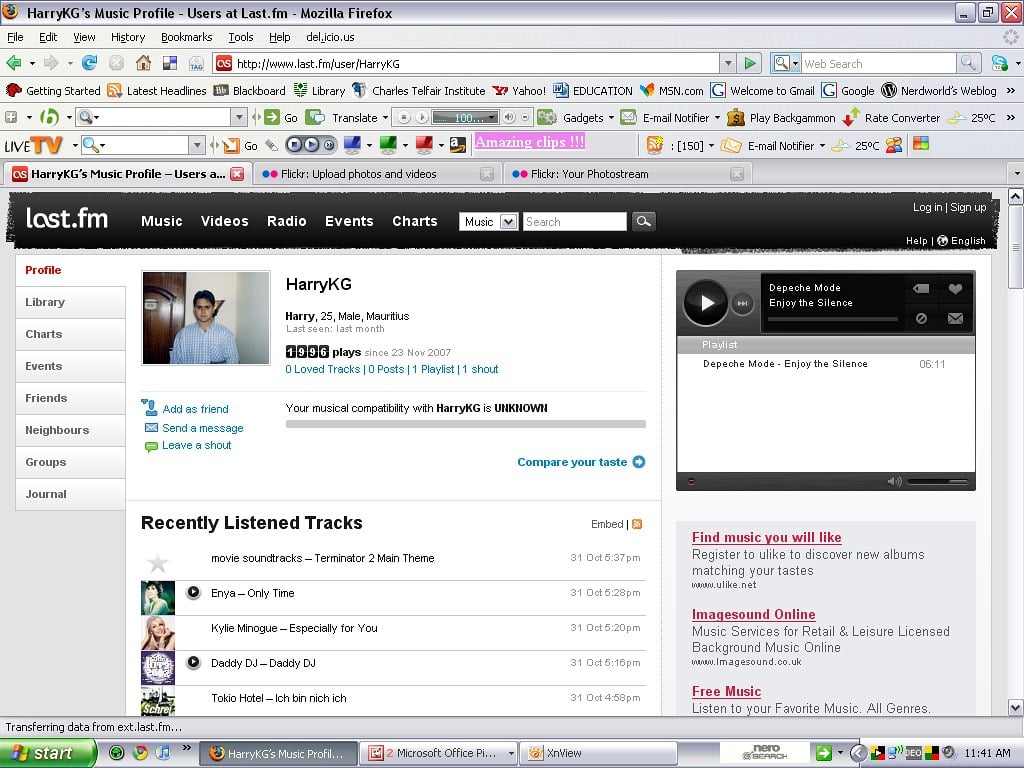
Music recommendations before Last.fm were mostly guesswork or editorial picks. Last.fm popularized the scrobbler—software that tracked every song you played, built a profile of your taste, and connected you with people who listened to similar things.
The data was the product, and it worked. You could see charts of your most-played artists, discover bands based on actual listening patterns, and attend concerts with strangers who shared your obscure music taste.
Spotify eventually absorbed this functionality, but Last.fm made the idea that your listening history could be social, shareable, and useful for finding new music mainstream.
Ning Let You Launch Your Own Social Network
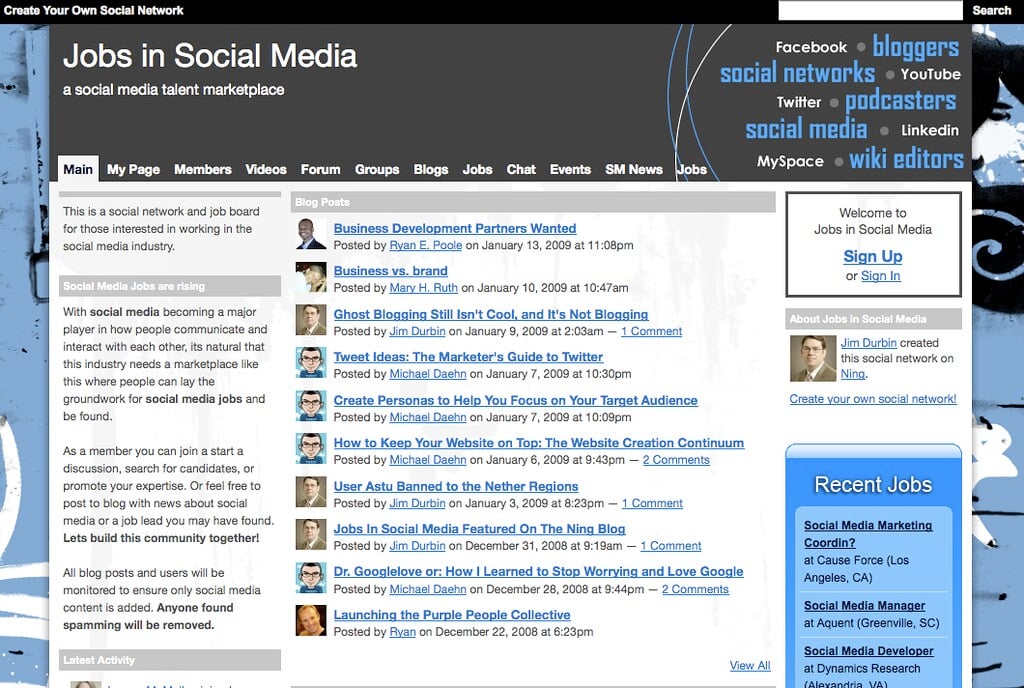
Facebook was taking over, but Ning offered something different: create your own social network for your specific community. Hobbyists, professionals, fan groups—anyone could spin up a network with profiles, forums, and media sharing.
Thousands of niche communities formed this way. It proved that not everyone wanted to be on one giant platform.
Some people preferred smaller spaces built around specific interests. The company shifted to paid plans and lost momentum, but the desire for community-owned spaces it tapped into keeps resurfacing.
Friendster Almost Got There First

Friendster launched before MySpace and way before Facebook. For a brief moment, it looked like it might become a social network.
You connected with friends, left testimonials, browsed connections—the basics were all there. Then technical problems destroyed its momentum.
The infrastructure couldn’t handle the growth, leading to frustrating load times and system failures. The company also refused to let users customize their profiles the way MySpace did, which pushed people toward platforms that gave them more control.
Friendster eventually pivoted to gaming and shut down, but it showed everyone what social networking could look like.
Meetup Turned Online Connections Into Real Ones

The internet was supposed to keep you isolated at your computer, except Meetup did the opposite. The site organized in-person gatherings around shared interests.
Book clubs, hiking groups, tech meetups, language exchanges—if you wanted to meet people nearby who cared about the same stuff, Meetup made it happen.
The site charged organizers but offered genuine value: tools to schedule events, message members, and handle RSVPs. It’s still around, actually, but its peak influence was in the 2000s when turning internet friendships into real-world hangouts still felt kind of novel.
Flickr Made Photo Sharing Make Sense

Instagram simplified photo sharing into phone snapshots and filters. Flickr was for people who actually cared about photography.
You uploaded high-resolution images, organized them into sets, added detailed descriptions and tags, and joined groups focused on specific styles or subjects.
The community took photography seriously. People left thoughtful comments, participated in weekly challenges, and genuinely engaged with the medium.
Yahoo bought Flickr and struggled to figure out what to do with it while Facebook and Instagram ate the casual photo-sharing market. But Flickr established that online photo communities could have real depth.
Newgrounds Gave Flash Creators a Platform

YouTube wasn’t around yet, so if you made Flash animations or games, you uploaded them to Newgrounds. The site became home to thousands of animators and game developers, many of whom were teenagers figuring out how to create interactive content.
Some incredibly popular internet content started here—the sort of weird, violent, experimental stuff that wouldn’t fly on corporate platforms. The voting system let good work rise to the top, and the community was actively involved in rating and reviewing.
Flash is dead now, but Newgrounds proved that user-generated entertainment could build a devoted audience.
Xanga Connected Through Longer Thoughts

Blogging platforms multiplied in the 2000s, and Xanga carved out space for people who wanted something between LiveJournal’s personal diary vibe and Blogger’s more public writing. Teenagers especially flocked to it, customizing their pages and following friends’ posts.
The subscription model and “eProps” system encouraged regular posting and engagement. The site tried several relaunches and pivots but never recaptured its peak years.
What it offered—a place for slightly longer, more personal writing than MySpace but more social than traditional blogs—eventually got absorbed by platforms that did one thing better.
Second Life Built an Entire Virtual World
Before Fortnite map creators and Roblox developers, Second Life let people build detailed virtual environments, create avatars, attend concerts, buy virtual real estate, and develop entire digital lives. Major companies opened virtual stores.
Musicians held concerts. People made actual money designing and selling virtual goods.
The concept was ambitious—maybe too ambitious for its time. The interface was clunky and the learning curve was steep.
Mainstream attention moved elsewhere, but Second Life never shut down. It’s still running today with over half a million monthly users, proving that some people genuinely want persistent virtual worlds where they can create and socialize.
Technorati Tried to Make Sense of Blogs

Technorati tried to keep track of all the millions of voices that were represented by millions of blogs. The website allowed you to search the blogosphere as if it were one big conversation, indexed blog posts, and ranked blogs by authority and links.
A high Technorati ranking had real significance for a while. Bloggers used it to gauge their reach, compete for positions, and check their numbers.
Around 2014, the company shut down its search capabilities and changed its focus to an advertising network. It caught an instant when blogs seemed like the future.
Where They Went

These websites didn’t simply vanish. They were outcompeted, acquired, or mismanaged.
A few turned into irrelevance. Technically speaking, a few are still in operation, but they serve much smaller audiences with different functions.
What they created can be found in bits and pieces on the internet today. These concepts—discovery mechanisms, social features, and information organization techniques—were incorporated into platforms that either improved their execution or increased their marketing.
In many ways, the modern internet isn’t as messy and experimental as the web of the 2000s. Some of what they attempted is still relevant, and these forgotten sites were a part of that mess.
More from Go2Tutors!

- The Romanov Crown Jewels and Their Tragic Fate
- 13 Historical Mysteries That Science Still Can’t Solve
- Famous Hoaxes That Fooled the World for Years
- 15 Child Stars with Tragic Adult Lives
- 16 Famous Jewelry Pieces in History
Like Go2Tutors’s content? Follow us on MSN.