Games That Came Pre-Installed on Old PCs
Before high-speed internet and massive game downloads, new computers came with simple games already loaded up and ready to play. These pre-installed games didn’t require fancy graphics cards or complicated controls.
They just worked right out of the box. Office workers snuck in quick sessions during lunch breaks, kids discovered them after finishing homework, and entire families gathered around clunky monitors to watch someone try to beat a high score.
These games became shared experiences that connected millions of people who never realized they were all playing the exact same thing. The beauty of these games was their simplicity.
Anyone could figure them out in about two minutes, but mastering them took real skill.
Minesweeper
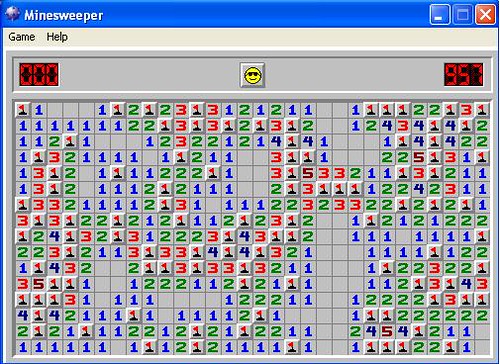
Minesweeper appeared on Windows computers starting in 1990 and confused countless people who never quite figured out what those numbers meant. The goal was clicking squares to reveal safe spaces while avoiding hidden mines, with numbers showing how many mines sat in adjacent squares.
Players who understood the logic could work through puzzles methodically, while others just clicked randomly and hoped for the best. The game came from even older computer traditions but found its biggest audience through Windows.
That little smiley face at the top would grimace when players hit a mine, adding just enough personality to make losing feel personal.
Solitaire
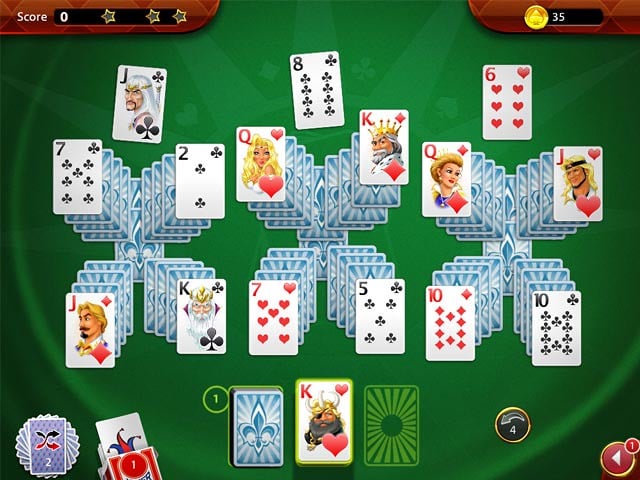
Solitaire became the most-played computer game in history simply by being there when people turned on their Windows machines. Microsoft included it starting with Windows 3.0 in 1990, partly to teach users how to drag and drop with a mouse.
The card game itself dated back centuries, but the computer version added something special: cards cascading down the screen when you won. That little victory animation probably wasted countless hours of work time as people played ‘just one more game’ trying to see it again.
The game required zero explanation for anyone who’d ever played cards, making it instantly accessible across age groups and skill levels.
3D Pinball Space Cadet
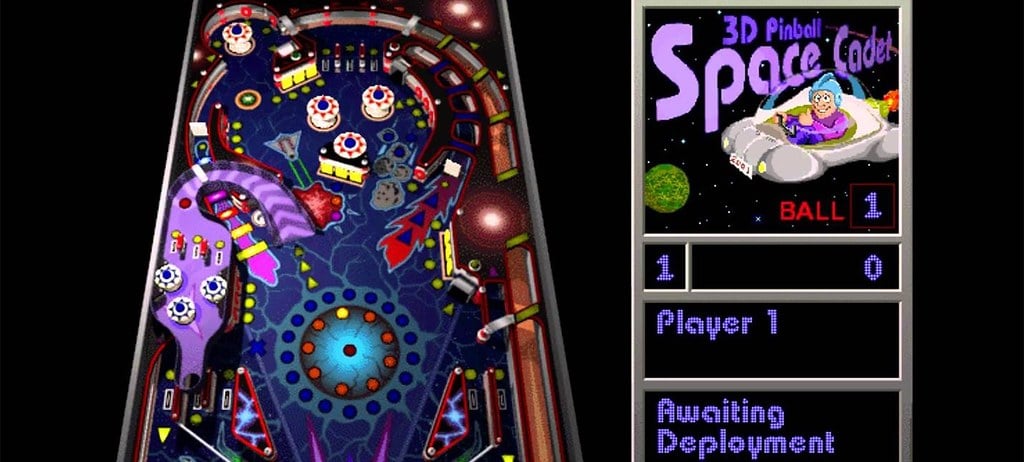
This pinball game came with Windows 95 Plus Pack and later versions, turning computers into virtual arcade machines. The table featured a space theme with missions to complete, bumpers to hit, and that satisfying sound of the orb clanking around.
Players used keyboard keys to control the flippers, which felt weird at first but became second nature after a few games. The physics weren’t perfect, but they were good enough to create the tension of watching an orb drain right between the flippers.
High scores got saved, creating competition between family members and coworkers who’d never admit how much time they spent trying to beat each other.
FreeCell
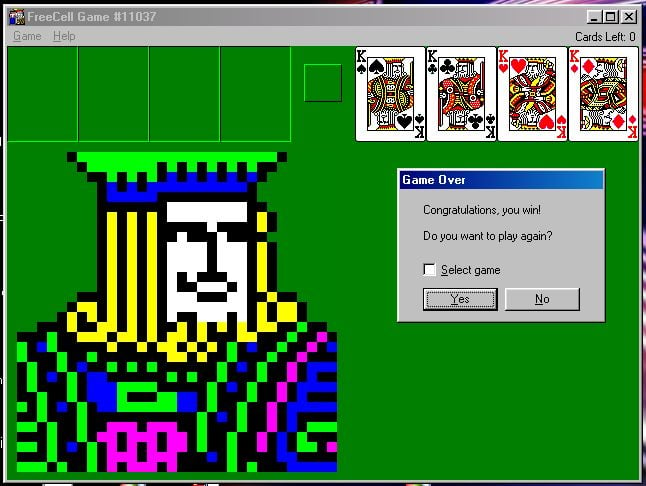
FreeCell showed up alongside Solitaire but demanded more strategic thinking. Unlike regular Solitaire where luck determined if you could win, FreeCell dealt almost every game as winnable with the right moves.
Players had to plan several moves ahead and use the four free cells strategically to shuffle cards around. The challenge attracted people who found regular Solitaire too simple or too dependent on the shuffle.
Windows kept track of win-loss records, and some determined players spent months trying to achieve a perfect winning streak. Game number 11982 became internet-famous as one of the few supposedly impossible deals.
Hearts
This multiplayer card game came pre-installed and let up to four people play against computer opponents with distinct personalities. The goal was avoiding hearts and especially the Queen of Spades, which carried massive point penalties.
Computer players had names and different playing styles, with some being aggressive and others more cautious. The game introduced many people to this classic card game who’d never played it with physical cards.
Hearing the computer announce ‘You shoot the moon’ became a moment of triumph, as this risky strategy required collecting all the penalty cards to stick opponents with maximum points instead.
Reversi
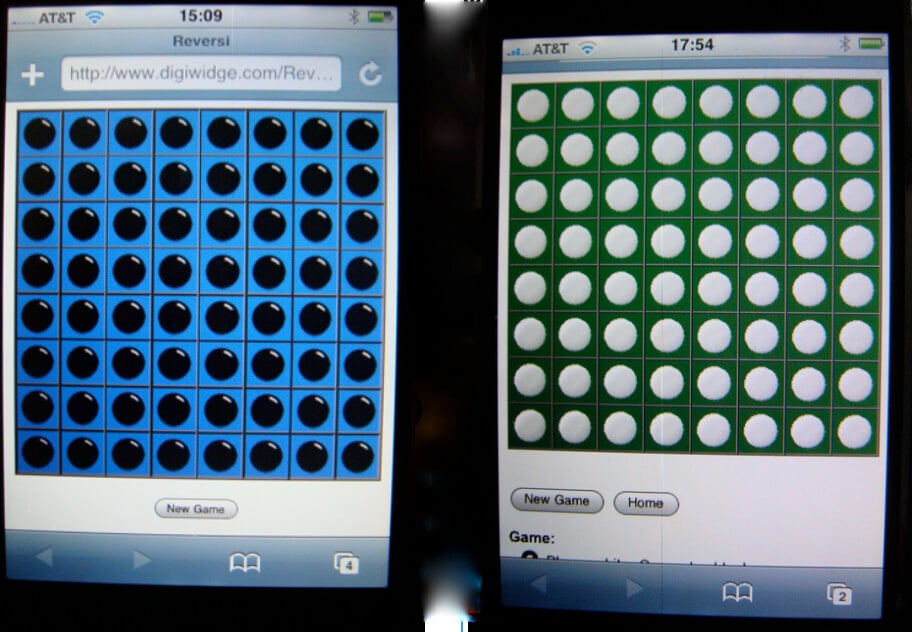
Reversi, also called Othello, challenged players to flip colored pieces by trapping opponent pieces between their own. The game board started mostly empty but filled up quickly as pieces changed colors with each move.
Microsoft’s version lets players compete against a computer opponent with adjustable difficulty levels. The simple rule of ‘a minute to learn, a lifetime to master’ definitely applied here.
Corner positions became valuable real estate since pieces placed there couldn’t be flipped back, leading to intense battles for board control. The game taught basic strategy concepts without feeling like a lesson.
Ski Free
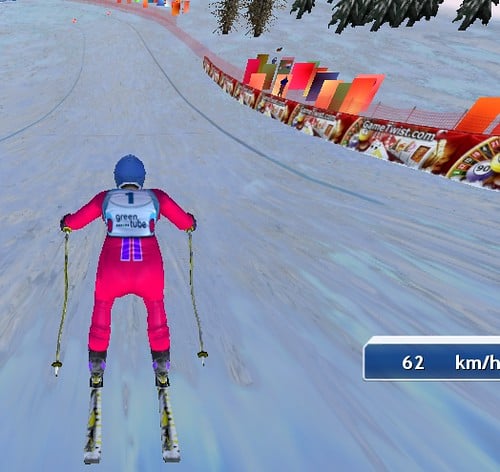
This simple skiing game featured a stick figure schussing down an endless slope while avoiding obstacles. Players steered left and right to dodge trees, rocks, and other skiers, occasionally hitting jumps that sent them flying through the air.
The game became infamous for the abominable snowman that would eventually chase down and eat the skier no matter how well they played. Many players didn’t know you could actually escape the monster by going fast enough, leading to years of unnecessary deaths.
The graphics were primitive even by early 1990s standards, but the straightforward gameplay kept people coming back.
Chips Challenge
This puzzle game followed Chip as he collected computer chips and navigated through increasingly difficult levels. Each stage presented unique challenges with enemies, locked doors, ice patches, and timing puzzles.
Players needed both quick reflexes and careful planning to succeed. The game came with Windows Entertainment Pack and hooked people with its ‘just one more level’ design.
Some puzzles required memorizing patterns or discovering hidden paths, while others demanded split-second timing. Getting past particularly tough levels felt genuinely rewarding, especially before the internet made walkthrough guides common.
Rodent’s Revenge
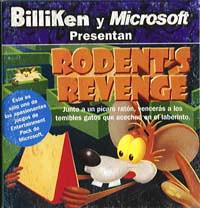
This clever puzzle game flipped the usual cat-and-mouse dynamic by putting players in control of a mouse trying to trap cats. The mouse pushed blocks around to corner cats and turn them into cheese.
Cats moved around the board trying to catch the mouse, creating genuine tension as they closed in. The game required planning several moves ahead while adapting to unpredictable cat movements.
Later levels added more cats and fewer blocks, ramping up difficulty considerably. The concept was simple enough for kids but challenging enough to frustrate adults who thought they’d breeze through it.
Hover
This futuristic game came on the Windows 95 CD-ROM as a showcase for the operating system’s multimedia capabilities. Players piloted a hovercraft around 3D mazes collecting flags while bumping into opponent vehicles.
The game featured surprisingly smooth 3D graphics for the time and introduced many people to three-dimensional computer gaming. Controls took practice since navigating in 3D space felt awkward with just a keyboard.
The techno soundtrack and geometric environments screamed mid-1990s design. Finding Hover on a new computer felt like discovering a secret bonus since it wasn’t prominently advertised.
Taipei
This tile-matching game, also called Mahjong Solitaire, challenged players to clear elaborate tile structures by matching identical pairs. Only tiles with at least one free side could be selected, requiring players to think about which matches to make first.
The three-dimensional pile of tiles created a puzzle where order mattered as much as finding matches. Different layouts offered varying difficulty levels, from simple flat patterns to complex multi-layered structures.
The game combined memory, pattern recognition, and strategy in a relaxing package that could eat up entire lunch breaks without anyone noticing.
Jezzball
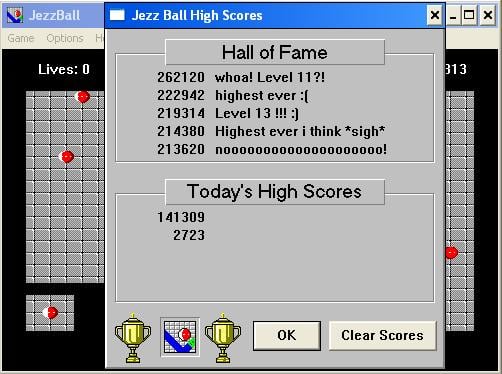
This arcade-style game tasked players with claiming territory by drawing lines across a playing field while avoiding bouncing atoms. Each line took time to complete, and if an atom touched it before finishing, players lost a life.
The goal was capturing a certain percentage of space to advance to harder levels with more atoms. Success required predicting atom movement and choosing safe moments to make a move.
The tension built as the playing area shrank and atoms bounced faster in later levels. Simple graphics and basic sounds were all the game needed to create genuinely stressful situations.
Tetris
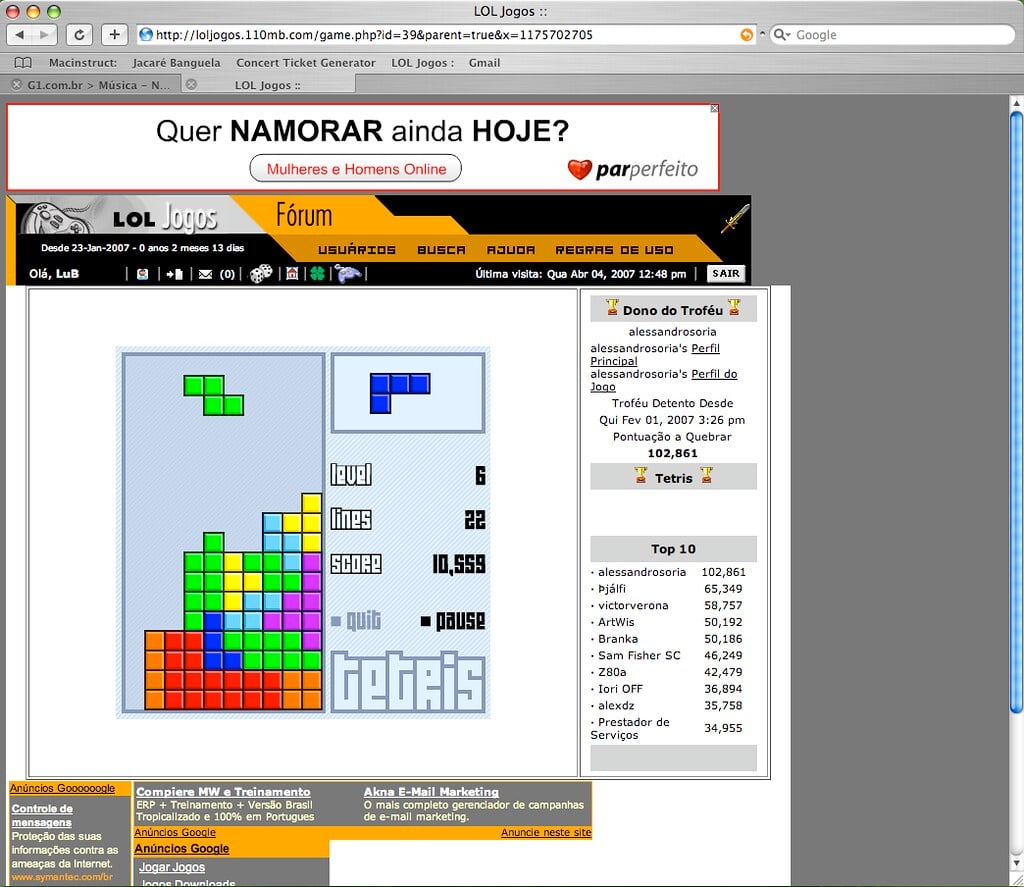
While not always officially pre-installed, Tetris clones appeared on countless computers and became synonymous with early PC gaming. The falling block puzzle game needed no introduction since it had already conquered arcades and Game Boys.
Computer versions let people play endlessly while pretending to work, with easy controls and addictive gameplay. The increasing speed as levels progressed created natural difficulty progression.
That moment when blocks stacked too high and the game ended always came with the thought of ‘just one more try.’ Tetris proved that simple mechanics and tight execution beat fancy graphics every time.
TriPeaks Solitaire
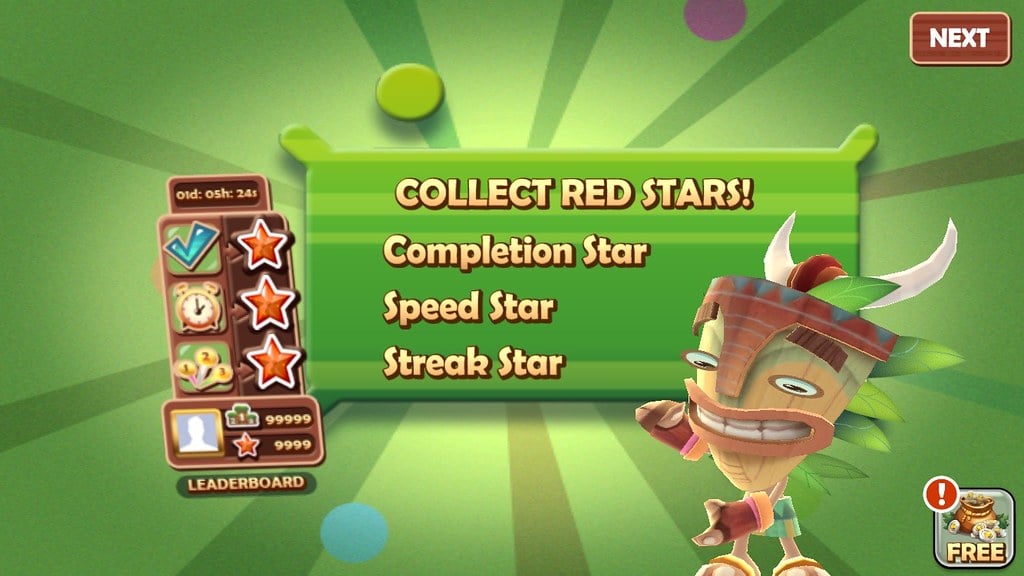
This Solitaire variant arranged cards in three connected pyramids and challenged players to clear them by selecting cards one rank higher or lower. The game moved faster than regular Solitaire and rewarded quick thinking with bonus points.
Streaks of successful moves built multipliers, encouraging risky plays that might pay off big or end the game. TriPeaks appeared in later Microsoft Solitaire collections but never achieved the same cultural penetration as classic Solitaire.
Players who discovered it often preferred its quicker pace and more strategic gameplay over the original version.
Pipe Dream
Picture a game where odd-shaped pipes fall one by one from above. As each lands, you shift them into position without delay.
A timer ticks down before fluid begins moving through the system. Once it starts, any gap or dead end stops everything instantly.
Long chains of connected segments keep things going smoothly. What shows up next is never certain – each piece arrives by chance.
Speed grows tighter with every new stage. Longer routes become necessary just to survive.
Quick thinking matters as much as foresight when fitting parts together under pressure. Faster it came, that liquid, inching toward weak spots in your shaky pipe layout.
Some folks figured out ways to stall – looping things around until the right parts showed up.
Tinker
Starting with nothing but a box of odd tools, Tinker drops you into a world where gumballs must travel strange routes. Instead of straight shots, pieces such as slopes, tubes, or pivoting arms twist their way across tight spaces.
When things click, tiny spheres roll just right – bouncing through loops or sliding under barriers. Often though, one wrong angle sends them tumbling off track.
Each failed run teaches something quiet, shaping better tries later on. Success feels soft at first – a small hum, a rhythm forming – but it sticks around longer than expected.
Most puzzles in Tinker didn’t have just one answer – players could find several ways forward. Found inside the Windows Entertainment Pack on certain machines, it stood apart from typical built-in games by testing logic differently.
From pixels to memories
Built on barebones code, those little programs became digital playgrounds when nothing else was around. Mastering the click felt like learning a new hand trick for countless office workers back then.
Fancy visuals? Not here. Instead, clean shapes and instant starts won the day.
Today’s versions connect continents, yet often demand setup, updates, time. Back then, opening the laptop usually meant one thing: solitaire loading fast.
No downloads, no logins – just immediate play while thinking through next moves. Few clicked to add them, nor handed over money; they simply showed up alongside things such as background images or alert tones.
This quiet presence gave each person common ground in play – think stuck on Minesweeper or watching cards fall neatly in Solitaire.
More from Go2Tutors!

- The Romanov Crown Jewels and Their Tragic Fate
- 13 Historical Mysteries That Science Still Can’t Solve
- Famous Hoaxes That Fooled the World for Years
- 15 Child Stars with Tragic Adult Lives
- 16 Famous Jewelry Pieces in History
Like Go2Tutors’s content? Follow us on MSN.