Global Schools That Shaped Famous Leaders
Behind most of history’s influential leaders is a school that left its mark before the world did. Not always the most prestigious institution, not always the most obvious choice — but a place that shaped how a person thought, argued, carried themselves, and understood the world.
Some of these schools are ancient. Some are surprisingly ordinary.
And some produced so many heads of state, presidents, and prime ministers that the pattern is impossible to ignore.
Eton College, England

No school on earth has produced more heads of government than Eton College in Berkshire. Twenty British prime ministers attended Eton, including Robert Walpole, William Gladstone, Harold Macmillan, David Cameron, and Boris Johnson.
The school sits across the River Thames from Windsor Castle and has operated for nearly 600 years, originally founded by King Henry VI in 1440 to provide free education to poor scholars. That mission shifted dramatically over the centuries.
What Eton became was a training ground for a particular kind of confidence — the sort that assumes leadership is natural rather than earned. Whether that’s admirable or troubling depends on your politics, but the results are historically undeniable.
Harrow School, England
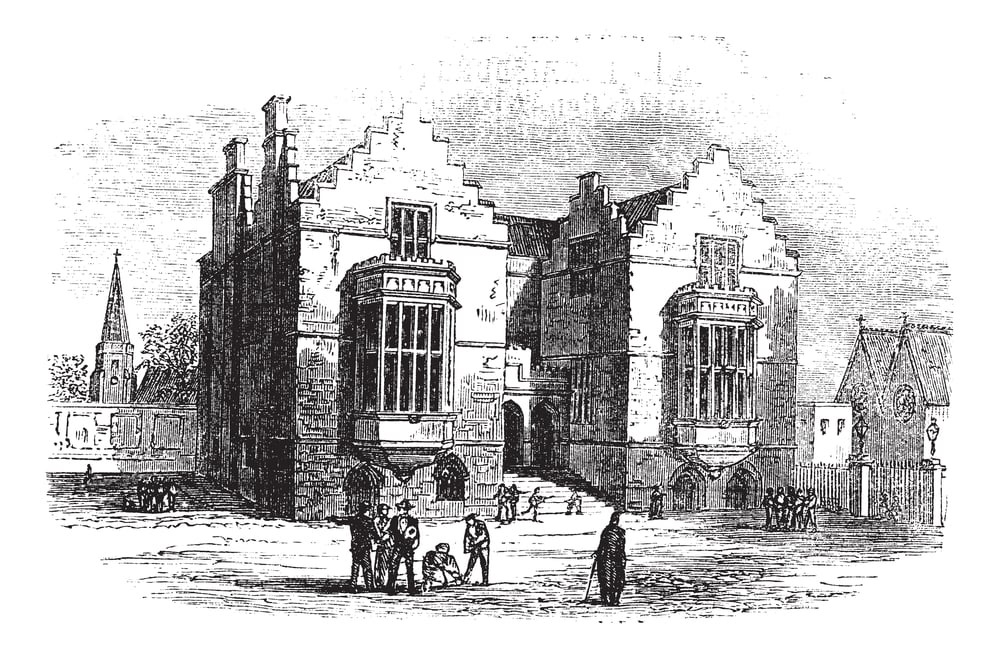
A few miles from central London, Harrow has produced a remarkable spread of global leaders rather than concentrating its influence in a single country. Winston Churchill attended Harrow, as did Jawaharlal Nehru — men who would later sit on opposite sides of one of the most consequential political relationships of the 20th century.
King Hussein of Jordan, Salman of Saudi Arabia, and several South Asian prime ministers also passed through its doors. Harrow built its reputation partly through a boarding culture that placed enormous emphasis on resilience, public speaking, and operating under pressure — qualities that its alumni carried into very different political contexts around the world.
Punahou School, Honolulu, Hawaii

Barack Obama attended Punahou School from fifth grade through his senior year, and the school’s influence on his development is something he has spoken about at length. Founded in 1841 by Protestant missionaries, Punahou grew into one of the largest independent schools in the United States.
For Obama, it was a place where he navigated questions of identity, race, and belonging in a genuinely diverse environment — Hawaii’s multicultural makeup meant that Punahou reflected a wider range of backgrounds than most American schools. The experience of being a mixed-race student in a school that didn’t map neatly onto America’s racial binaries shaped how he later talked about identity and national unity.
Clarkebury Boarding Institute, South Africa

Nelson Mandela arrived at Clarkebury in the Eastern Cape in 1934, the first member of his family to attend a Westernized school. The institution, run by Methodist missionaries, exposed Mandela to a world considerably beyond the village of Qunu where he grew up.
It was at Clarkebury that he first encountered students from different tribal backgrounds, where academic ambition became normalized, and where he developed habits of discipline and study that stayed with him for life. He later attended Healdtown and the University of Fort Hare.
But Clarkebury was the beginning — the place where the scope of what was possible first expanded.
Raffles Institution, Singapore

Lee Kuan Yew, the founding father of modern Singapore, attended Raffles Institution before going on to Cambridge. Founded in 1823 by Stamford Raffles, the school was established with the explicit intention of educating local elites who would eventually help govern the region.
Lee was among its most consequential alumni. The school’s emphasis on rigorous academics, discipline, and civic responsibility mapped directly onto the style of governance Lee later applied to Singapore — precise, demanding, results-focused, and deeply invested in meritocracy.
Raffles Institution continues to produce a disproportionate share of Singapore’s political and professional leadership.
Phillips Academy Andover, Massachusetts

Phillips Academy in Andover has shaped American political life for over two centuries. George H.W. Bush attended, and so did his son George W. Bush.
The school also educated Humphrey Bogart, though its influence in the political sphere is the more consistent thread. Founded in 1778 — before the United States Constitution was ratified — Andover was built on the idea of preparing young people for citizenship and public service.
It has since become one of the most selective and well-resourced secondary schools in the world, with an endowment larger than many universities and an alumni network that runs through every major American institution.
The Jesuit Network, Global

The Society of Jesus, founded in 1540, built a global network of schools and universities that educated an astonishing number of world leaders. Jesuit institutions placed enormous emphasis on rhetoric, classical learning, ethical reasoning, and the examination of conscience — a combination that produced graduates who could argue a position clearly and think seriously about the moral dimensions of power.
Among Jesuit-educated leaders: Fidel Castro attended Colegio de Belén in Havana, François Hollande attended Sciences Po (itself shaped by Jesuit pedagogy), and numerous Latin American presidents passed through Jesuit institutions. The Jesuit model spread from Europe across Africa, Asia, and the Americas, making it arguably the most geographically widespread educational influence on global leadership in history.
The Gymnasium, Germany and Austria

The Gymnasium is a German-language secondary school designed to prepare students for university. It emphasizes classical languages, philosophy, mathematics, and rigorous analytical thinking.
Angela Merkel attended a Gymnasium in the small town of Templin in East Germany, where she excelled in mathematics and Russian. Konrad Adenauer, Helmut Kohl, and Willy Brandt all came through the Gymnasium system.
The intellectual culture of the institution — demanding, structured, deeply serious about ideas — tends to produce leaders who approach governance as a problem-solving exercise rather than a performance. Germany’s political stability over the past several decades reflects, in part, the culture of careful reasoning that the Gymnasium instills.
Le Rosey, Switzerland

Le Rosey, founded in 1880 on the shores of Lake Geneva, is often described as the most expensive school in the world, and its alumni list reads like a directory of hereditary power. The Shah of Iran attended, as did King Albert II of Belgium, King Farouk of Egypt, and various members of European royal families.
Le Rosey’s particular contribution to leadership development is less about academic rigour and more about the informal education that happens when you spend your formative years surrounded by the children of heads of state, industrialists, and royalty. The school teaches how to move through elite spaces as though you belong there — a skill that, for better or worse, matters considerably in the world of global politics.
Stuyvesant High School, New York City
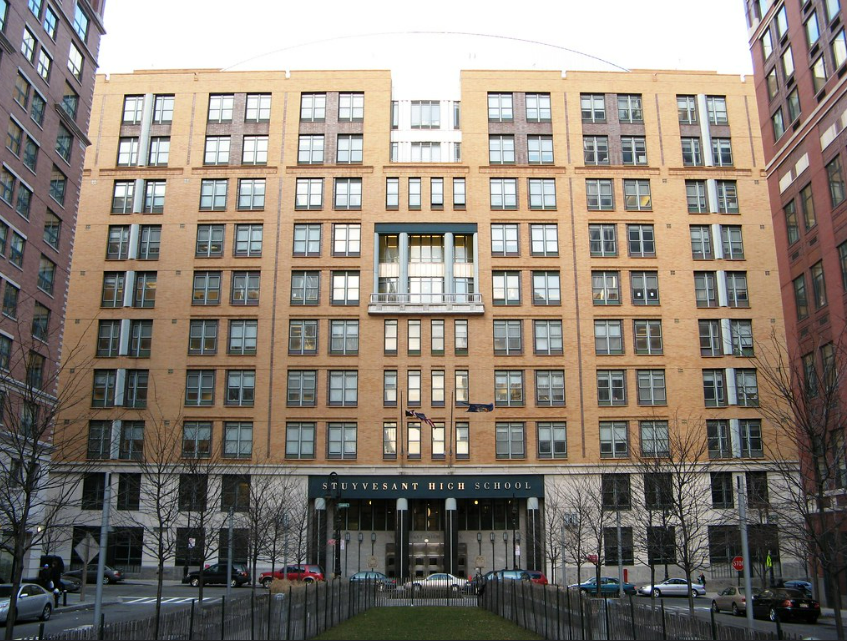
Stuyvesant is a different kind of school from most on this list. There are no fees, no legacy admissions, and no family connections.
Entry depends entirely on performance in a single competitive exam. Founded in 1904 and now located in lower Manhattan, Stuyvesant has produced four Nobel Prize winners and a string of influential figures across government, business, science, and the arts.
Its alumni include multiple US senators, judges, and prominent civic leaders. What Stuyvesant offers is a concentrated environment of academically driven students from across New York City’s five boroughs — a diverse, high-pressure institution that rewards intellectual ability regardless of background.
The contrast with Eton or Le Rosey is sharp, but the outcomes in terms of producing influential people are comparable.
The Cathedral and John Connon School, Mumbai

Among India’s most prestigious secondary schools, The Cathedral and John Connon School in Mumbai has educated several generations of the country’s intellectual, judicial, and political elite.
Founded in 1860, the school has long attracted families from across India’s professional classes. Its alumni include Supreme Court judges, prominent journalists, senior diplomats, and business figures who shaped modern India.
The school’s culture blends rigorous academics with an expectation of public contribution — an ethos that has remained consistent across more than 160 years and several dramatic shifts in Indian society.
Nalanda, Ancient India

Nalanda operated from roughly the 5th century CE to the late 12th century and stood as one of the greatest centres of learning the ancient world produced. Located in what is now Bihar in northeastern India, it attracted scholars and students from China, Korea, Japan, Tibet, Mongolia, Sri Lanka, and Southeast Asia.
At its peak, Nalanda housed thousands of students and hundreds of teachers, covering subjects from theology and philosophy to medicine, mathematics, and astronomy. The leaders it shaped weren’t heads of state in the modern sense — they were religious scholars and monks who carried Buddhist thought across an enormous geographic area, shaping governance, ethics, and culture in ways that persisted for centuries after Nalanda itself was destroyed.
École Normale Supérieure, Paris
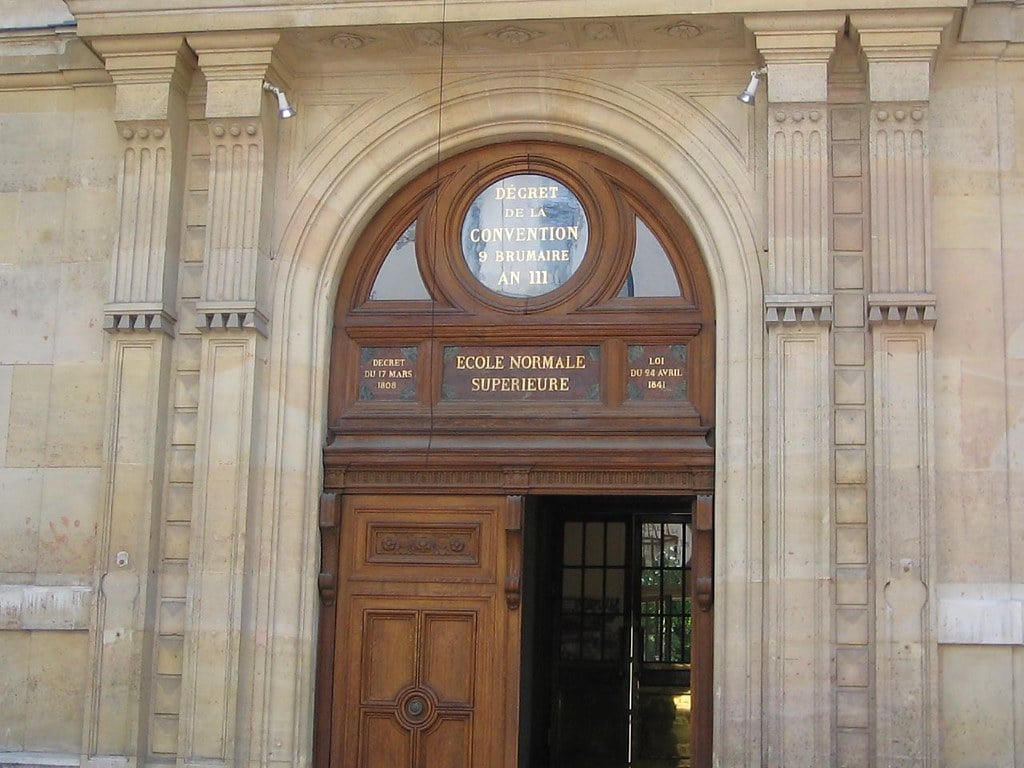
The École Normale Supérieure, founded during the French Revolution, was designed explicitly to train the republic’s intellectual leadership. It has done exactly that ever since.
French presidents Georges Pompidou and Valéry Giscard d’Estaing attended, as did philosopher Michel Foucault, sociologist Pierre Bourdieu, and writer Simone de Beauvoir. The school’s culture is fiercely intellectual, deeply competitive, and shaped by the French tradition of producing thinkers who engage directly with public life.
In France, the boundary between academic life and political leadership has always been more porous than in most countries, and the ENS sits at the centre of that overlap.
King’s School, Canterbury, England
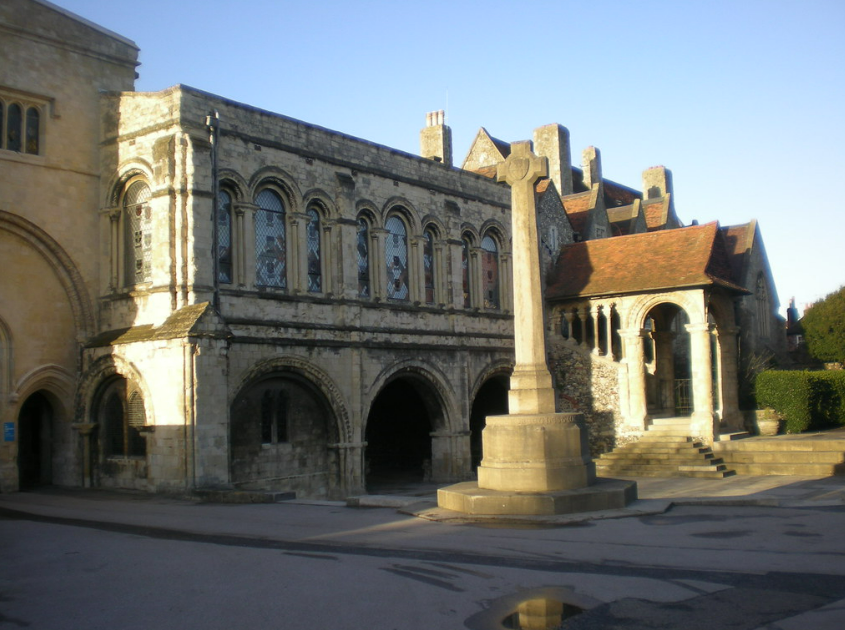
Founded in 597 CE — making it one of the oldest schools in the world — King’s Canterbury has operated for nearly 1,500 years. While its alumni list doesn’t include the volume of heads of government that Eton can claim, its historical reach is remarkable.
The school educated Christopher Marlowe, the playwright who shaped the English theatrical tradition from which Shakespeare emerged. In more recent decades, it has produced senior figures in British diplomacy, academia, and public life.
King’s represent a different kind of influence — less about producing prime ministers and more about forming the intellectual culture that shapes how a society thinks about itself.
What the Classroom Left Behind

This list of schools covers a very long time and is located in different parts of the world. Some of the schools were so expensive that only really rich people could afford to attend them.
Others were picking their students by merit only. Some of the schools were running in the colonial era and they educated future independence leaders as well as the children of their colonizers.
A few of the schools no longer exist. What they have in common is probably much less tangible than say a school curriculum or a school location.
Each of them, in their own style, set up a certain intellectual atmosphere or habit: a way of arguing, a way of leading, a way of handling stress, a way of thinking about responsibility. Not all the leaders coming out of them had the same values, methods, or legacy.
However, at some point in their development, a certain classroom, a certain teacher, a certain debate, or a certain year with certain people left something that remained. Actually, college education is so unpredictable in its aspects that the effects of a specific teacher or a single, well-remembered class may only become apparent after many years.
It is not something that any school is in a position to plan for. It l just, self l quietly, l happens l, and l the l, effect l take, l decades l, to l become, l, visible.
More from Go2Tutors!

- The Romanov Crown Jewels and Their Tragic Fate
- 13 Historical Mysteries That Science Still Can’t Solve
- Famous Hoaxes That Fooled the World for Years
- 15 Child Stars with Tragic Adult Lives
- 16 Famous Jewelry Pieces in History
Like Go2Tutors’s content? Follow us on MSN.



